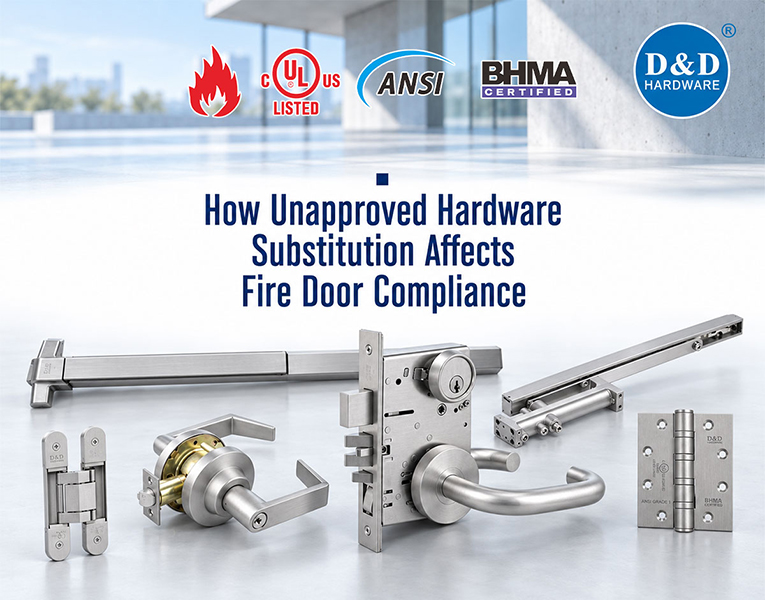
A contractor installs a different lock because the specified model is unavailable. The substitute carries a UL mark, fits the cutout and operates smoothly. Is the opening still compliant? Those facts alone do not answer the question.
An unapproved hardware substitution can leave a fire door outside its permitted application or create a documentation gap that prevents acceptance. The result depends on what changed, what the applicable listings allow and whether the installed arrangement satisfies fire protection and egress requirements.
UL Listed Fire Rated Commercial Door Hardware must be assessed at model and opening level. A certification mark on one component does not authorize every combination of door, frame, hardware and preparation.

1 What Makes a Hardware Substitution Unapproved
A substitution occurs when the supplied hardware differs from the reviewed specification or approved arrangement. It may involve another model, operating function, mounting method, strike or fixing system. Changing brands is only one possibility.
Project approval and certification suitability are separate checks. A formally accepted substitution must still comply with applicable listings. Conversely, a technically suitable alternative may still require submission under the project’s approval process.
The Steel Door Institute confirms that labeled hardware may be used across fire door brands when the door is properly listed for that hardware application. Brand matching alone therefore does not establish compatibility.
The reviewer needs evidence that the alternative is permitted, not simply a supplier’s description of it as “equivalent.”
2 Where Equivalence Claims Break Down
Two products can share a fire test standard while differing in their permitted use. A UL 10C reference does not establish that their installation templates, door applications or accessories are interchangeable.
Review the proposed substitute against:
· The required opening rating and door construction.
· The exact model’s certification scope and limitations.
· The approved locking and egress function.
· Preparations, reinforcement, fasteners and associated components.
For a fire rated mortise lock, the strike and latch arrangement matter alongside the lock case. For a fire door closer, a different mounting configuration may require different preparations. A concealed hinge can introduce substantial mortising even when its load capacity appears suitable.
Intertek identifies incompatible hardware swaps as a source of listing and documentation gaps. Restoring everyday operation is not sufficient evidence of continued compliance.

3 How Substitutions Affect the Installed Opening
An alternative can create a problem without causing an obvious operational failure. New fixing holes may fall outside permitted preparations. A changed strike may require cutting the frame. A different hinge arrangement may affect alignment and latch engagement.
Other substitutions are visible during operation: the door stops short of closing, the latch fails to engage or paired leaves close in the wrong sequence.
These situations require different responses. Adjustment may resolve an installation defect within an approved configuration. It does not establish acceptance of an otherwise unsupported modification.
Intertek explains that field assessment considers labels, hardware, clearances, condition and modifications against applicable listing information. Some preparations are permitted; work beyond those allowances should be referred to the listing agency before it begins.
4 Exit Devices Require Particular Care
Replacing fire exit hardware with panic-only hardware is a significant specification error, even when the devices look similar.
UL distinguishes panic hardware intended for non-rated exit doors from fire exit hardware intended for fire door assemblies. For fire exit hardware, confirm the appropriate designation and coverage under UL 305 and UL 10C.
D&D’s UL 305 panic hardware reference, SA45817, must not be treated by itself as evidence of fire door suitability. When specifying a model from the fire exit hardware range associated with R40486, request documentation establishing the applicable certifications and configuration.
Do not combine file references belonging to different products to imply dual certification for a substitute. Evidence must identify the device actually supplied.

5 Use D&D Certification References at Model Level
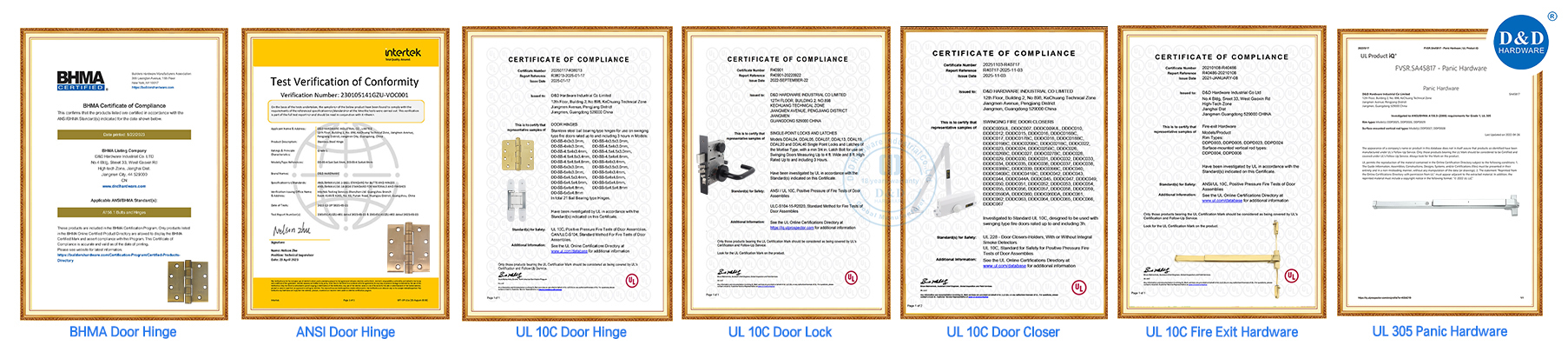
D&D Hardware provides the following UL series information as starting references for a substitution review. These references should be matched to current records for the selected model.
| Hardware category | Stated certification and performance information |
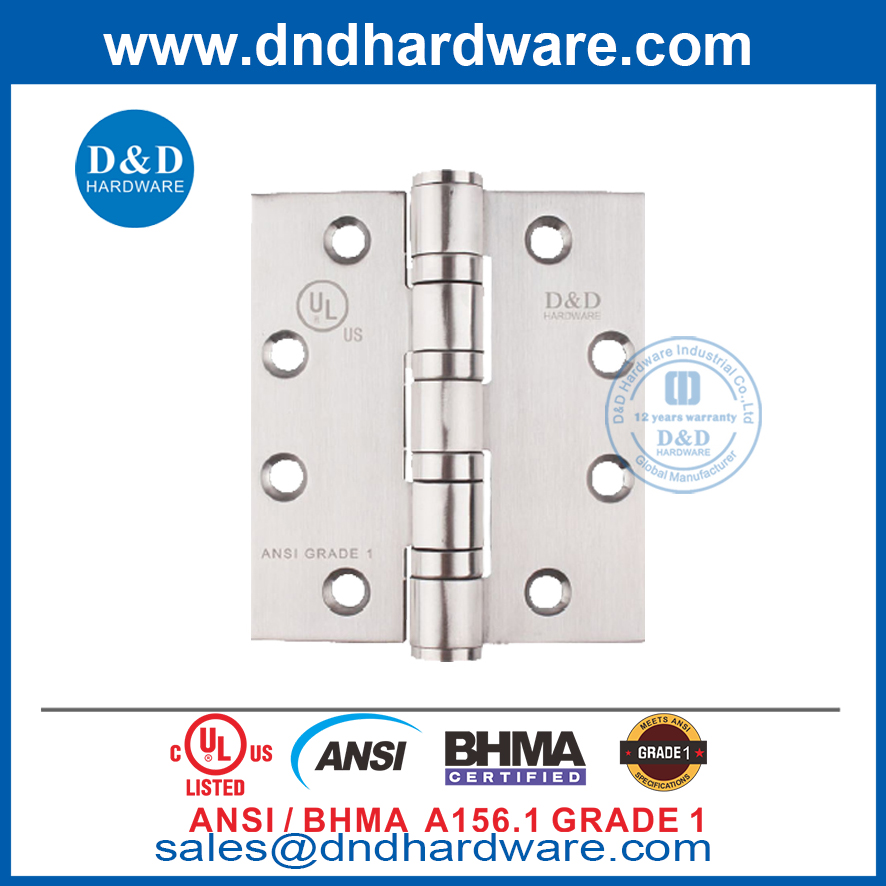 | Door hinge | UL/cUL UL 10C, three-hour fire-rated coverage; R38013; ANSI/BHMA Grade 1, 2,500,000 cycles, and Grade 2, 1,500,000 cycles |
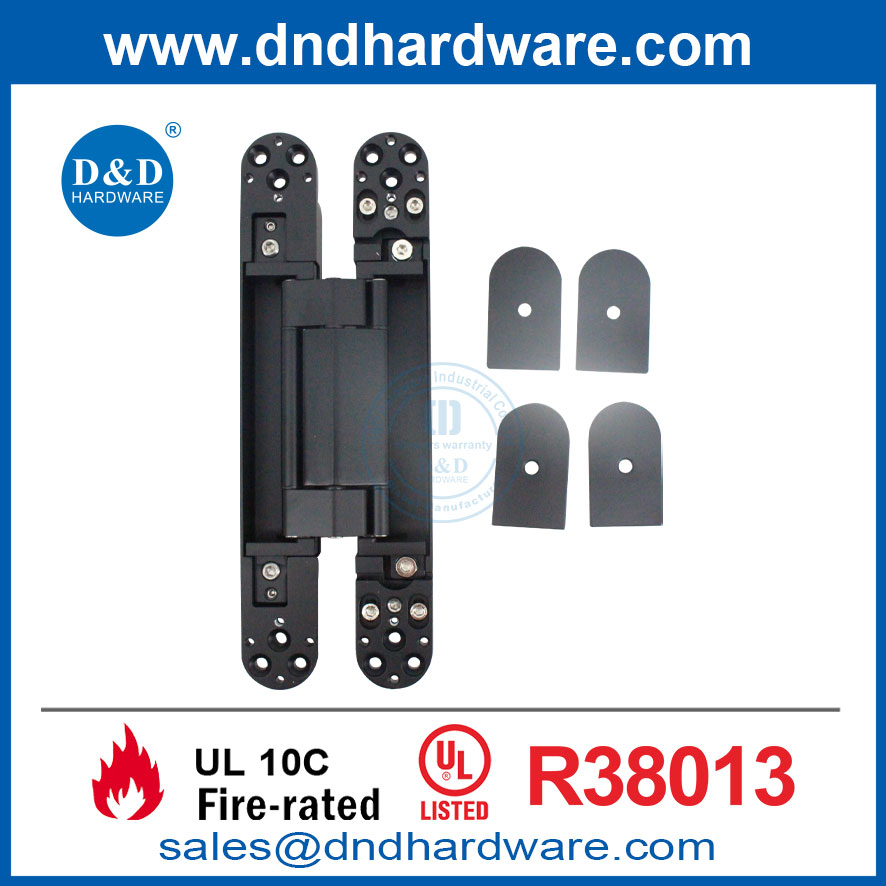 | Concealed hinge | UL 10C fire-rated coverage; R38013; confirm the selected model’s rating |
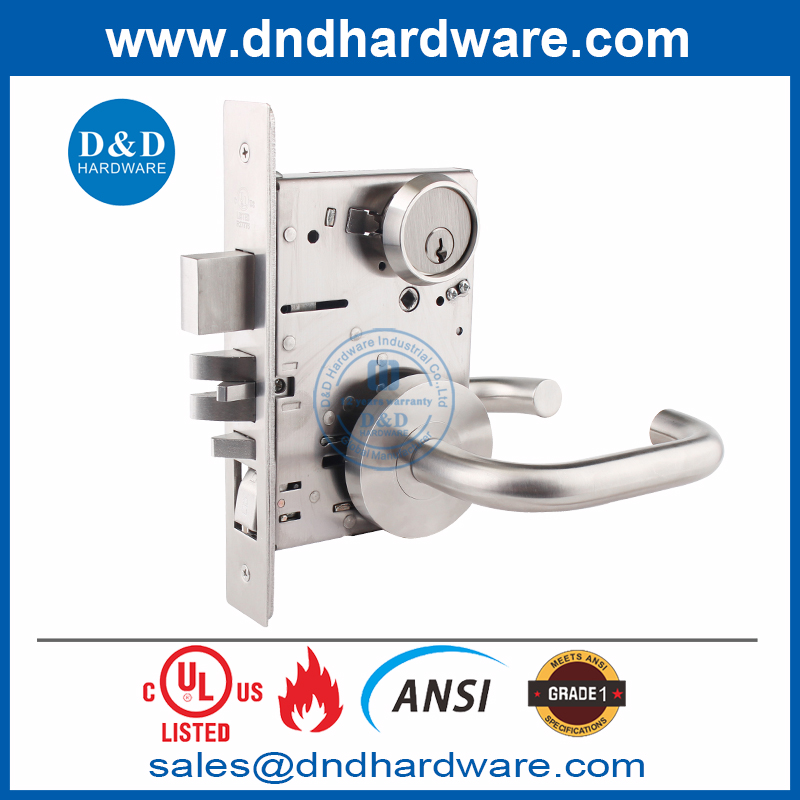 | Door lock | UL 10C, three-hour fire-rated coverage; R40901 |
 | Door closer | UL 10C, three-hour fire-rated coverage; R40717 |
 | Fire exit hardware | UL 10C, three-hour fire-rated coverage; R40486 |
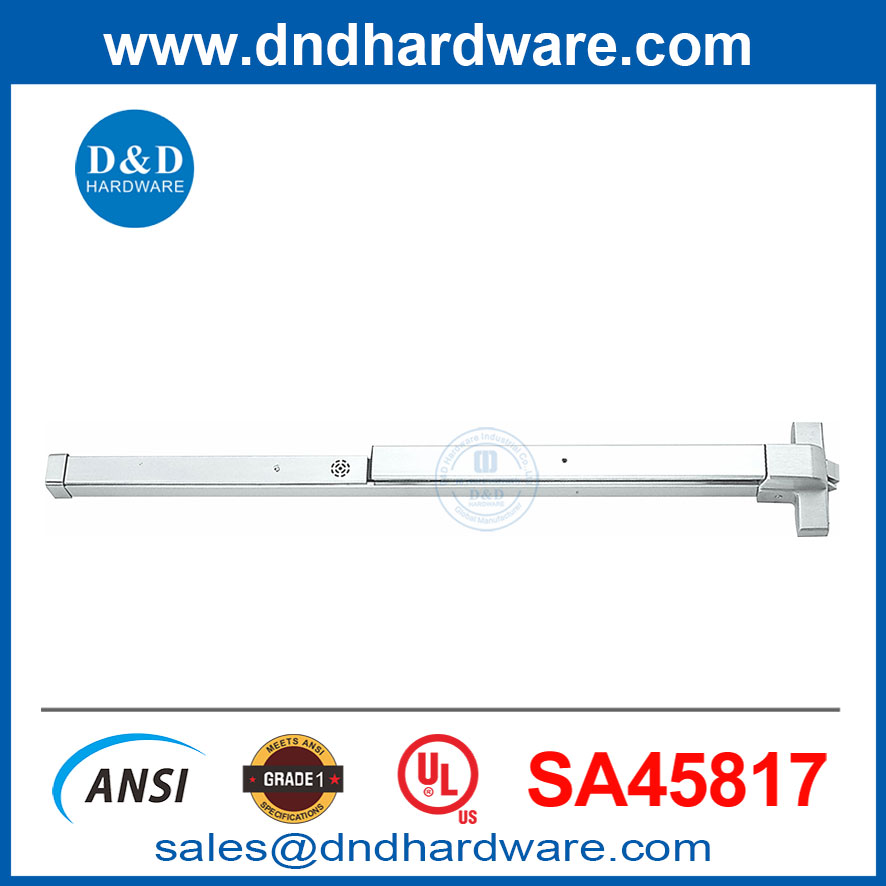 | Panic hardware | UL 305; SA45817 |
A higher stated rating does not automatically make a substitute acceptable. Three-hour hardware cannot upgrade the existing door assembly, and ANSI/BHMA hinge grades address performance criteria separate from fire certification.
For UL Listed door hinges, compare the approved size, quantity, fixing method and door application. For concealed hinges under R38013, confirm the model-specific rating and permitted preparations rather than assuming the three-hour coverage stated for the conventional hinge range applies.
6 Resolve an Unauthorized Substitution Before Closing the Record
When a discrepancy is discovered, identify affected openings and document the installed condition before further alterations obscure the evidence. Compare the supplied model with the approved schedule and obtain its certification and installation documents.
If the alternative fits the permitted application, submit the evidence through the project’s review process. If it does not, determine whether restoring the specified arrangement is sufficient. New cutouts or abandoned preparations may need separate repair or modification review.
Where a change exceeds permitted conditions, consult the relevant manufacturer and listing agency. Field evaluation may be appropriate, but acceptance is not guaranteed. UL distinguishes routine inspection, which identifies deficiencies, from evaluation of eligible modified assemblies.
After corrective work, verify operation and retain the decision, supporting documents and inspection findings against each door number. Follow the adopted NFPA 80 edition and local authority requirements.

FAQ
Does every unapproved substitution invalidate the fire label?
No. It creates a discrepancy requiring assessment. The consequences depend on compatibility, alterations and applicable certification conditions; automatic acceptance or automatic rejection would both be premature.
Is another UL Listed model an acceptable equivalent?
Possibly. Verify its exact scope, function, preparations and installation conditions, then complete the required project review.
Can a contractor approve a change by testing door operation?
An operational check cannot establish certification compatibility. It must accompany the required documentary and technical review.
Can UL 305 panic hardware replace fire exit hardware?
A UL 305-only device is insufficient for fire door use. Confirm fire exit hardware designation, applicable standards and opening compatibility.
What evidence should support a substitution request?
Provide the exact model, certification records, installation template, function, accessories and a comparison with the approved arrangement. Identify any new holes or cutouts explicitly.
Need certification information for a proposed hardware alternative? Contact D&D Hardware with the approved hardware schedule, opening details and substitute model to request relevant model-specific documentation.
Contact us Now:
Contact: David Jian
Mob:0086-139 2903 7292
Email: David@dndhardware.com, sales@dndhardware.com,
Contact: Jobby Zhang
Mob:0086-137 2599 9617
Email: jobby@dndhardware.com
D&D HARDWARE INDUSTRIAL CO.,LTD
ADD:12th Floor, Building 2, No.898, KeChuang Technical Zone, Jiangmen Avenue, Pengjiang District, Jiangmen City, Guangdong, China (Postcode:529000)
https://www.dndhardware.com
Tel: +86-750-3856396
Fax: +86-750-3856395
 English