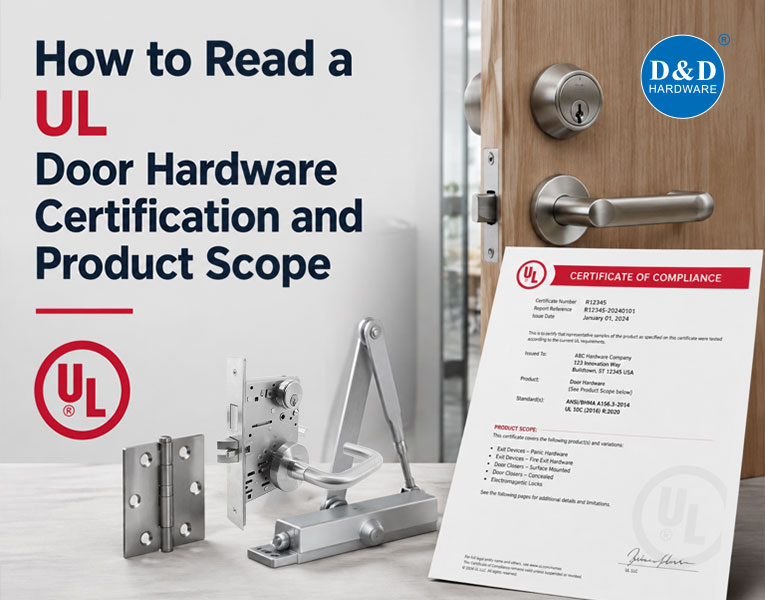
Finding a UL certificate is easy. Understanding what it actually covers—that's where most project teams get stuck. As a fire door hardware manufacturer, we've seen specifiers approve hardware based on a file number alone, only to discover later that the exact model or configuration wasn't within the certified scope.
Here's how we read UL certifications, and what we check before confirming a product is suitable for a fire-rated opening.
What "Product Scope" Really Means
Product scope defines what a certification covers—and what it doesn't. It answers:
•Which manufacturer or certification holder is listed?
•What product category was evaluated?
•Which models or series are included?
•Which UL standard applies?
•What ratings were established?
•What markings are required?
•Are there installation conditions or limitations?
A UL File Number is not a blanket approval. It covers a defined scope. If a hinge model isn't listed under that file, it's not certified—even if it looks identical to a listed one.

The 7 Parts We Check on Every UL Door Hardware Certification
1. Manufacturer or Certification Holder
The company name on the certificate should match the manufacturer in your submittal. This matters when dealing with trading companies, OEM arrangements, or private-label hardware. The brand on the box isn't always the certification holder.
2. Product Category
Door hinges, locks, closers, panic hardware, and fire exit hardware fall under different UL categories. For an exit device on a fire-rated opening, you're looking at fire exit hardware—not just panic hardware. The category tells you what requirements apply.
3. UL Standard
The standard defines the technical basis of the evaluation.
•UL 10C — Positive Pressure Fire Tests of Door Assemblies
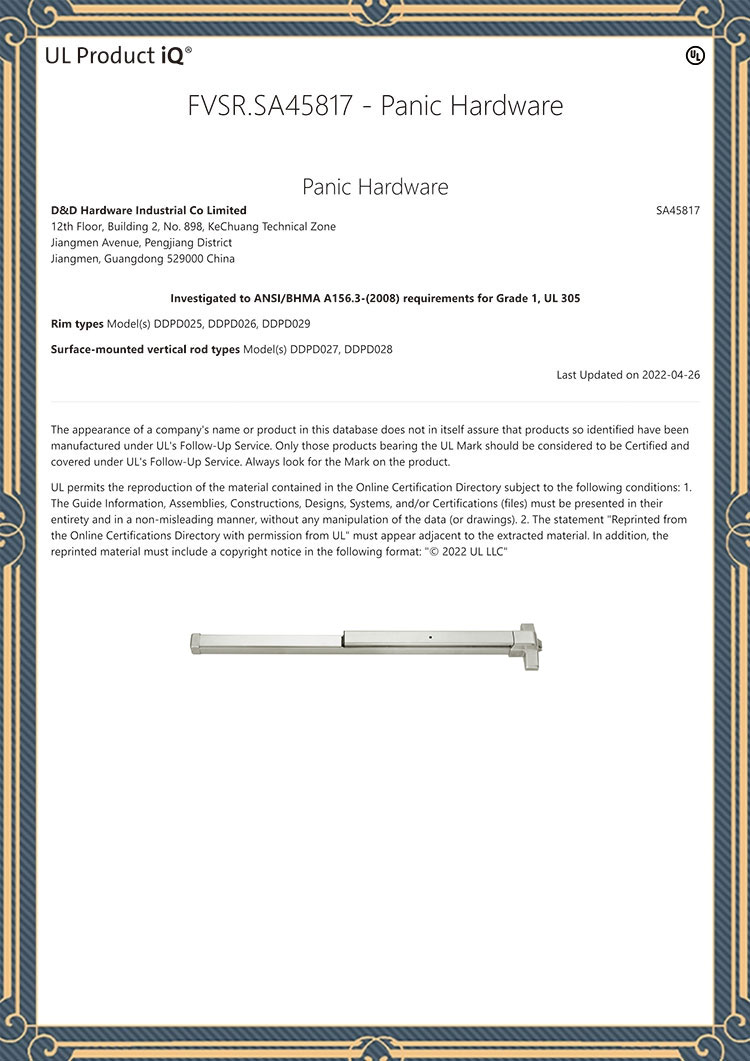
•UL 305 — Panic Hardware
These aren't interchangeable. If your spec calls for UL 10C, a generic "UL certified" statement doesn't cut it. The certification record must identify the standard.
4. Model Number or Product Series
This is where most mistakes happen. A valid UL File Number doesn't certify every product a factory makes. If a supplier proposes an alternative model, check it against the scope. For hardware with multiple sizes, functions, or finishes, model-level verification is essential.
5. Fire Rating or Performance Rating
Read the rating together with the product, assembly, and conditions. A "3-hour" claim should be tied to the certification scope that supports it—not copied from another model in the same family.
6. Required Markings
The physical UL Mark and product identification connect the installed hardware to its certification record. During inspection and handover, markings are evidence that what's on the door matches what was approved.
7. Conditions of Use and Limitations
Never skip this. Conditions define where and how the product may be installed—door construction, frame type, size, hardware configuration, installation method. A product can be UL certified and still be unsuitable if the installation falls outside those conditions.

How to Read a UL Fire Rating Correctly
A fire rating isn't a product slogan. It's part of a defined certification and application.
UL 10C concerns the performance of the door assembly under positive-pressure fire test conditions. When reviewing UL 10C fire rated hardware, examine how the hardware is covered within the certification and the door assembly requirements.
A supplier might say a hinge is "UL 10C 3-hour fire rated." The project team should still verify the exact model, certification file, door application, and installation requirements.
A useful specification doesn't say "UL fire rated hardware." It identifies:
Product + Model + UL Standard + Certification Reference + Rating + Application Conditions
UL 10C covers positive-pressure fire testing of door assemblies. UL 305 covers panic hardware for safe egress.
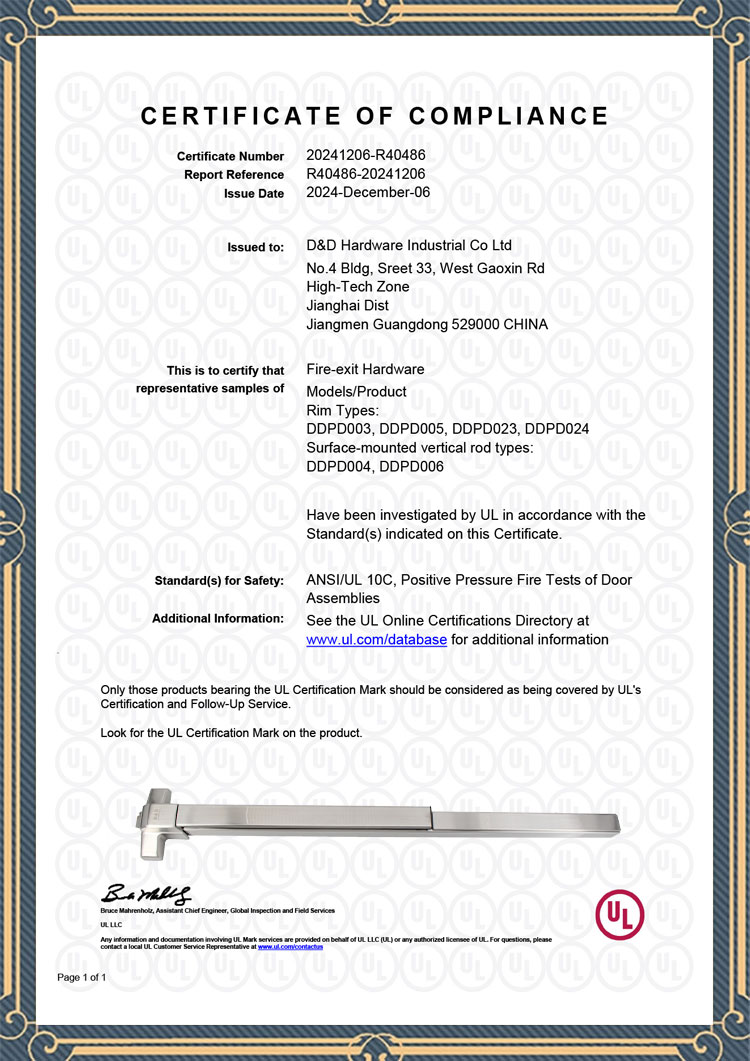
Fire Exit Hardware combines both: the egress function of exit hardware with fire-rated door requirements. UL Solutions identifies fire exit hardware with both UL 305 and UL 10C requirements.
If the product is panic hardware for a non-rated opening, UL 305 may be the key standard. If it's fire exit hardware for a fire-rated opening, check the certification for both UL 305 and UL 10C.
The certification record—not the product name—determines what the hardware is qualified for.
Matching the Certification to the Actual Door
A UL certification should be reviewed alongside the door assembly specification. We ask:
•Is the door fire-rated?
•What fire rating is required?
•Single or pair door?
•What frame and door construction?
•Is the hardware installed in a configuration covered by the certification?
•Are egress or panic requirements involved?
•Does the model match the approved submittal?
This matters for fire exit hardware, hinges, locks, and closers because door assembly performance depends on compatible components and correct installation.

Our UL Certifications
As a fire door hardware manufacturer, we hold UL certifications across our commercial door hardware range:
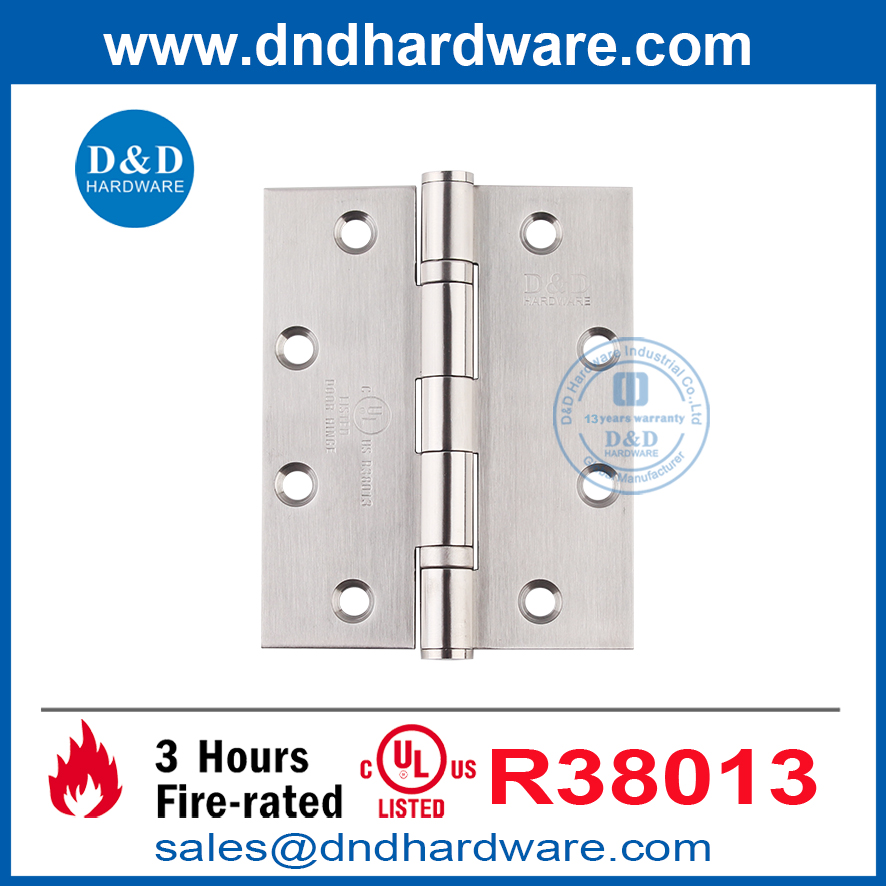
✔️ Door Hinge — UL/cUL UL 10C Fire Rated 3 Hours, File No. R38013; ANSI/BHMA Grade 1 & Grade 2
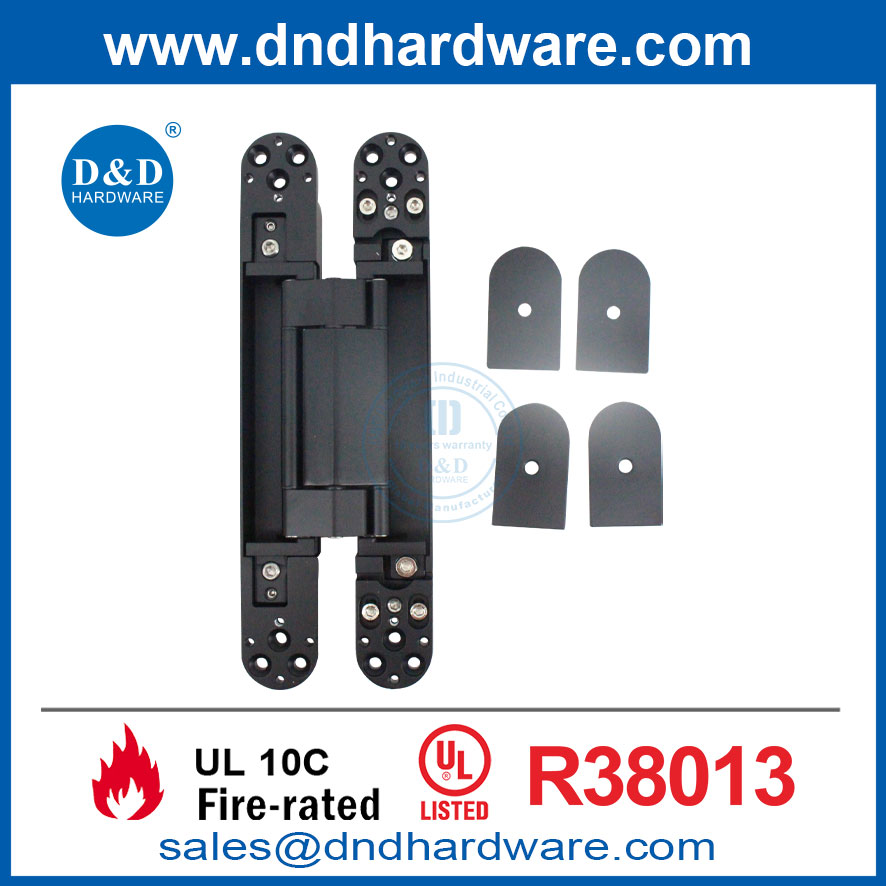
✔️ Concealed Hinge — UL 10C Fire Rated, File No. R38013
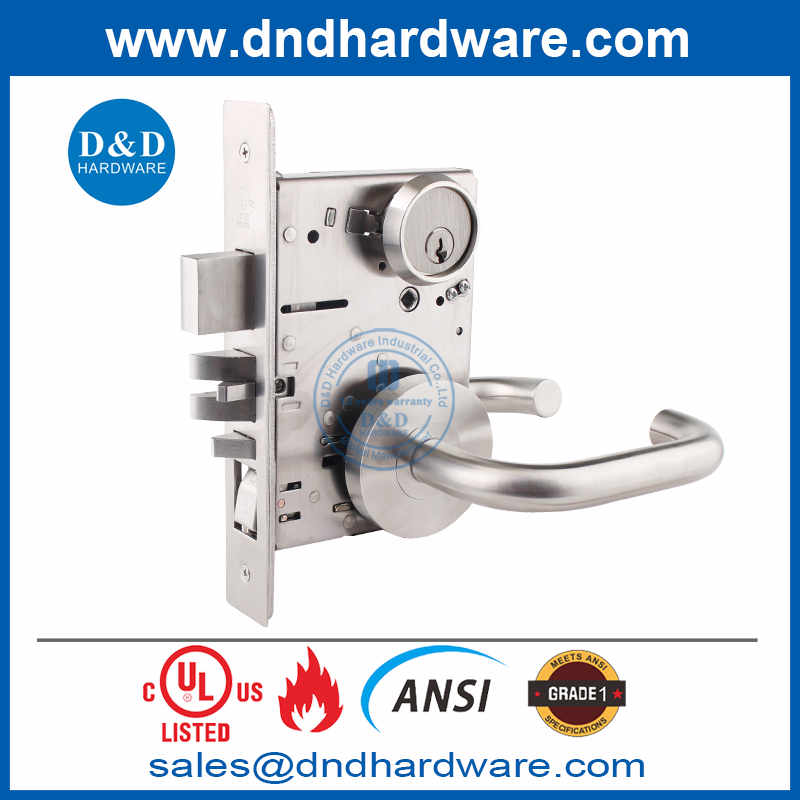
✔️ Door Lock — UL 10C Fire Rated 3 Hours, File No. R40901
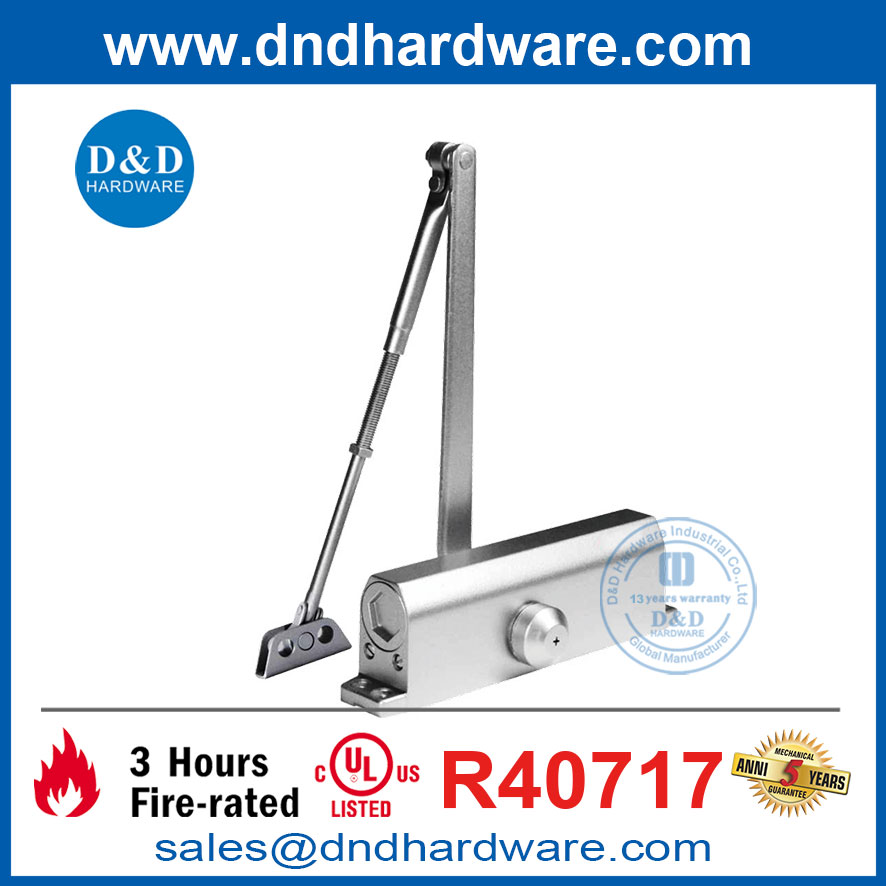
✔️ Door Closer — UL 10C Fire Rated 3 Hours, File No. R40717
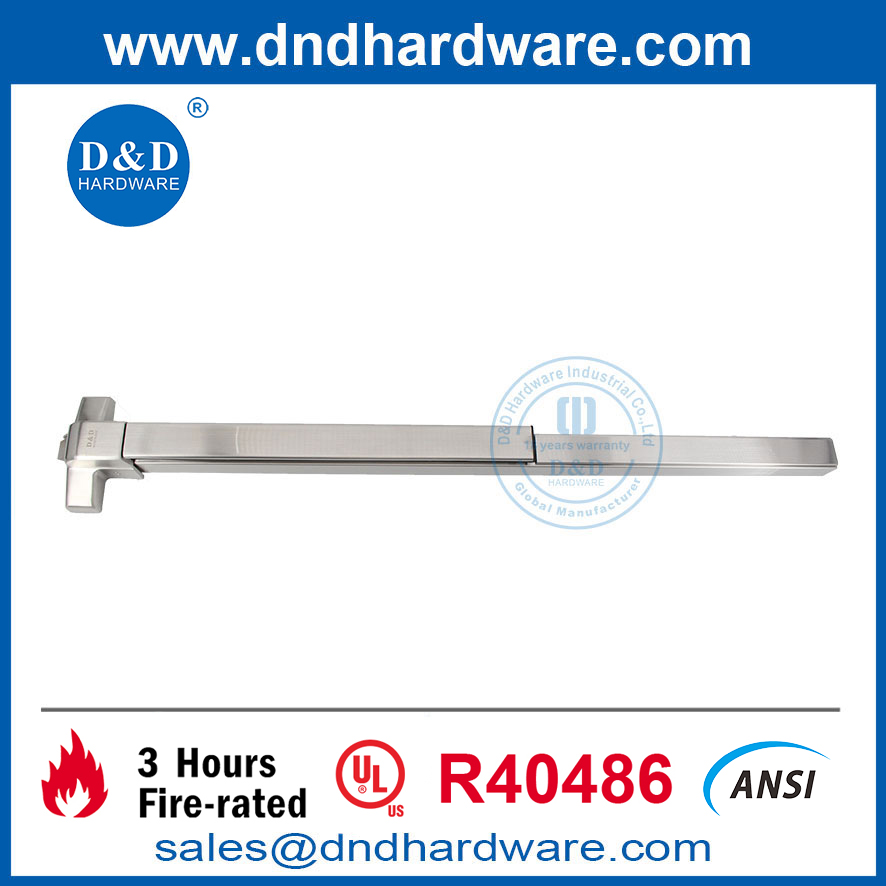
✔️ Fire Exit Hardware — UL 10C Fire Rated 3 Hours, File No. R40486
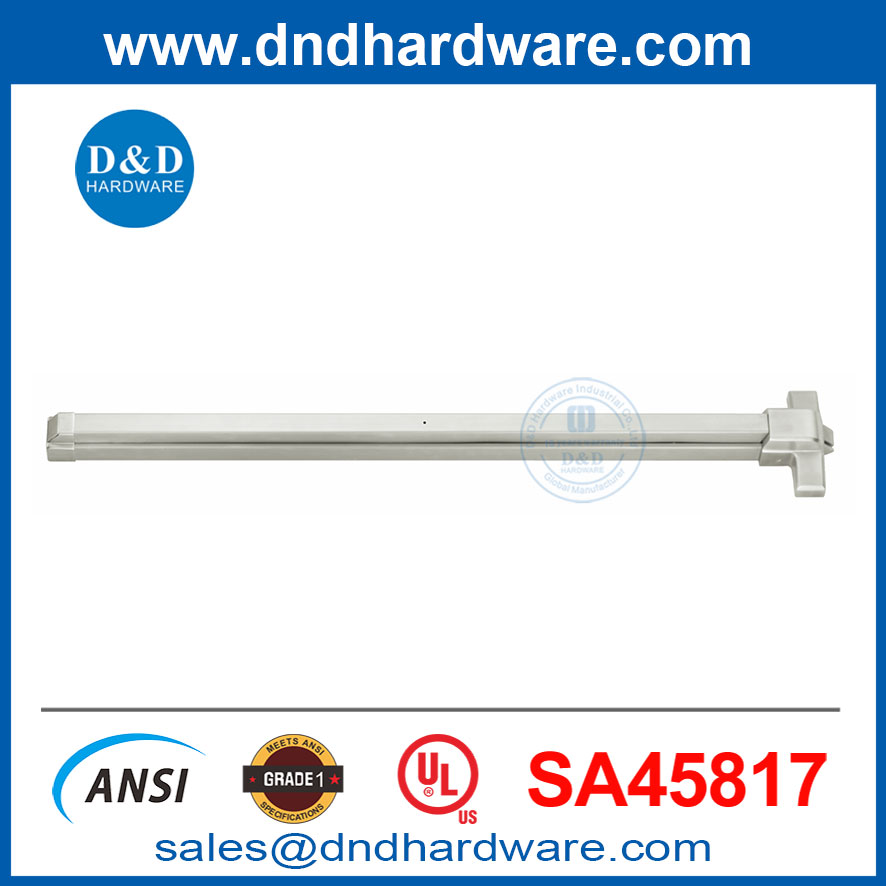
✔️ Panic Hardware — UL 305, File No. SA45817
These file numbers are starting points for verification. The product scope determines what can be claimed for each product.
Common Mistakes We See
The most common mistake is reading only the first line of a certification record. A buyer sees a manufacturer name and UL File Number and assumes coverage. The model and product category may tell a different story.
Another mistake: focusing on the fire rating while ignoring conditions of use. A 3-hour rating is useful only when the product and installation fall within the scope supporting it.
A third: treating UL 10C, UL 305, and ANSI/BHMA A156.3 as interchangeable. They serve different purposes.
Finally, some teams verify certification during specification and never recheck when a substitute is proposed. Any model change should trigger another scope review.

FAQ: Reading a UL Door Hardware Certification
What should I look for first on a UL door hardware certification?
Start with the manufacturer, product category, UL standard, exact model or series, and certification reference. Then review the rating and conditions of use.
Does a UL File Number certify every product from a manufacturer?
No. A UL file covers a defined certification scope. The exact product or model must fall within that scope.
Where can I verify a UL door hardware certification?
UL Product iQ is the primary UL Solutions database. You can search by File Number, model number, product type, or CCN.
What does UL 10C mean for door hardware?
UL 10C is the Standard for Positive Pressure Fire Tests of Door Assemblies. Check the exact hardware certification and door assembly application—don't treat UL 10C as a generic product label.
What does UL 305 mean for door hardware?
UL 305 is the Standard for Panic Hardware. It's relevant to panic hardware and is part of the certification framework for fire exit hardware.
Does a UL 10C rating automatically mean every installation is three-hour rated?
No. The stated rating must be tied to the applicable certification scope, product configuration, and installation conditions.
Can UL-listed door hardware be used on any fire-rated door?
Not automatically. The hardware must be appropriate for the specific door assembly and fall within the applicable certification and installation requirements.
Contact us Now:
Contact: David Jian
Mob:0086-139 2903 7292
Email: David@dndhardware.com, sales@dndhardware.com,
Contact: Jobby Zhang
Mob:0086-137 2599 9617
Email: jobby@dndhardware.com
D&D HARDWARE INDUSTRIAL CO.,LTD
ADD:12th Floor, Building 2, No.898, KeChuang Technical Zone, Jiangmen Avenue, Pengjiang District, Jiangmen City, Guangdong, China (Postcode:529000)
https://www.dndhardware.com
Tel: +86-750-3856396
Fax: +86-750-3856395
 English