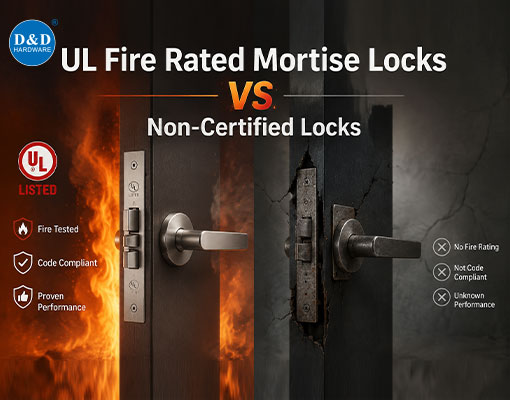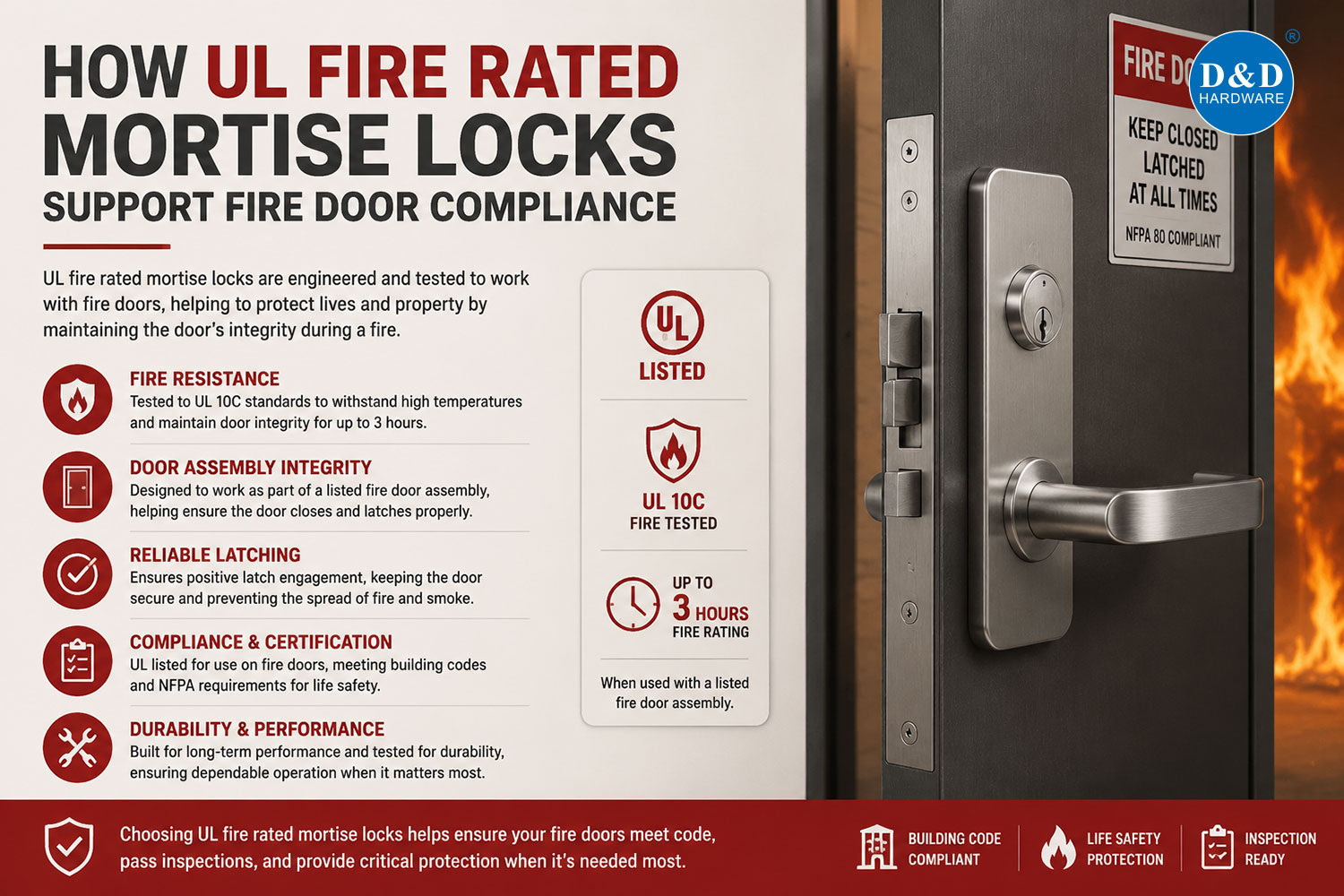
2026-06-05 How UL Fire Rated Mortise Locks Support Fire Door ComplianceFire door compliance is not a matter of preference—it is a matter of life safety, code adherence, and legal liability. At D&D HARDWARE Industrial Co., Ltd, we do not view fire-rated hardware as a product category; we view it as an engineeri
Read More
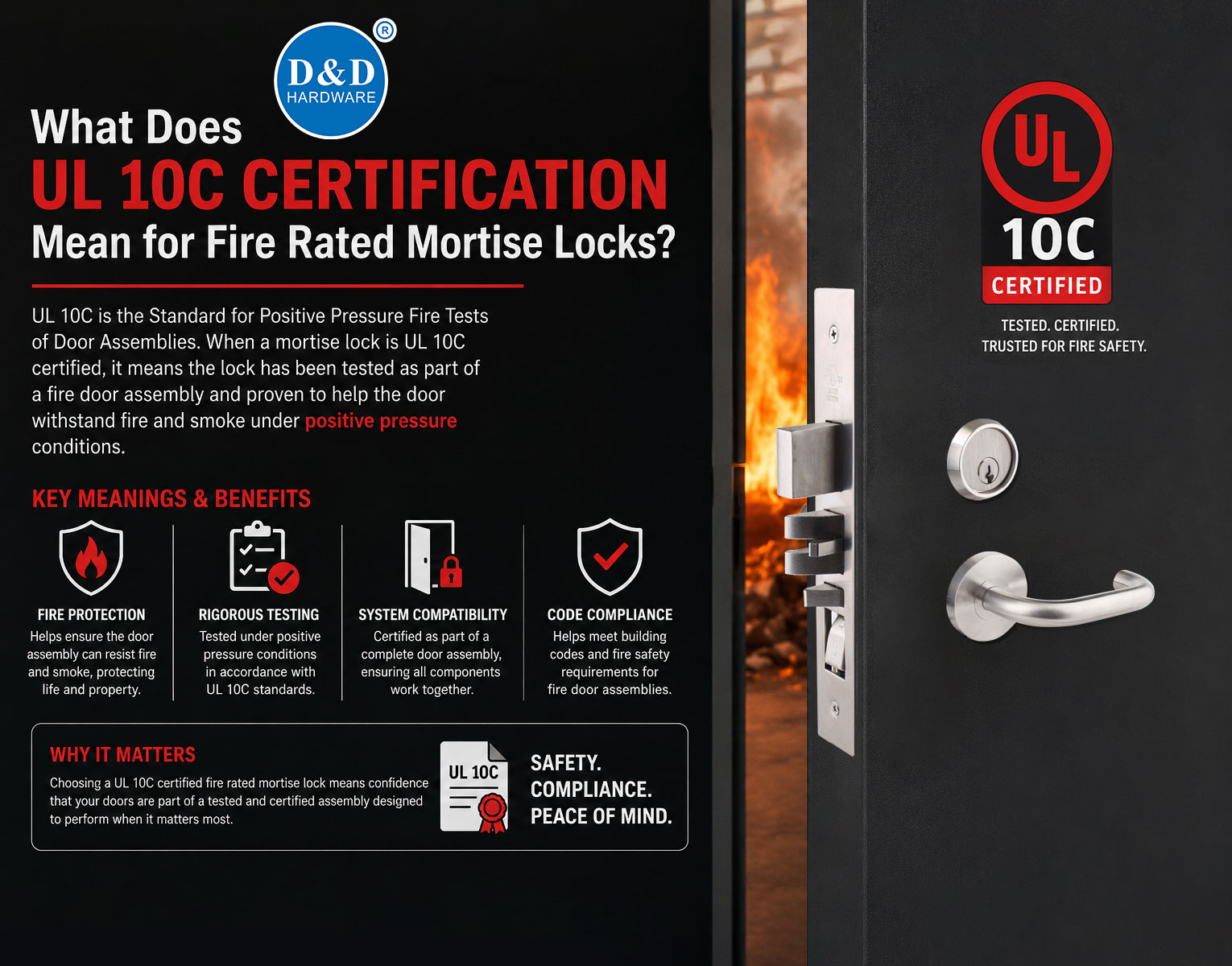
2026-06-02 When specifying access solutions for commercial buildings, hospitals, or multi-family housing, one question comes up repeatedly: What does UL 10C certification actually mean for a fire rated mortise lock?As a fire door hardware manufacturer, I have seen too many spec sheets list certifications witho
Read More
2026-05-29 Specifying mortise lock hardware for a commercial or institutional project means more than selecting a finish or a function code. It means choosing the right ANSI/BHMA grade—because that single designation determines how long the lock body will last, how much force it can withstand under attack, and
Read More
2026-05-26 Specifying door hinges for a commercial project means more than picking a finish or a material. It means selecting the right ANSI/BHMA grade—because that single number determines how long the hinge will last, how much wear it can withstand, and whether it meets the performance requirements for the b
Read More
2026-05-23 When constructing or renovating commercial and industrial facilities, ensuring life safety is the paramount objective. The integrity of a building's fire compartmentalization relies heavily on its fire doors, and a fire door is only as reliable as the hardware that secures it. As a specialized UL fi
Read More
2026-05-09 In the world of commercial construction and life safety, fire protection is not just a regulatory requirement; it is a critical component of building design that saves lives. Among the various components of a fire-rated door assembly, the UL 10C Mortise Lock plays a pivotal role. But how exactly are
Read More
2026-05-06 A UL Listed Mortise Lock is far more than a security component. It is an important part of a fire-rated door assembly and a key contributor to overall Fire Door Compliance. Understanding What is a UL Listed Mortise Lock, how UL certification works, and why certified hardware is required can help project teams make informed decisions when specifying hardware for commercial buildings. Whether the project involves healthcare facilities, educational campuses, office towers, or hospitality developments, selecting a compliant Fire Rated Mortise Lock helps support life safety objectives, code compliance, and long-term building performance. As fire safety regulations continue to evolve, certified products supplied by experienced UL Fire Rated Door Hardware Manufacturers and reliable UL Listed Hardware Suppliers will remain essential components of compliant commercial door systems.
Read More
2026-03-31 Key Takeaway: For commercial and fire-rated buildings, door hardware certification is not an optional quality label — it is a strict regulatory and engineering requirement. Installing non-compliant hardware on fire-rated metal doors can lead to project rejection, failed safety inspections, and sever
Read More
2025-12-15 UL 10C Fire Test Explained: How Door Hardware Must Perform in Fire-Rated AssembliesIntroduction: Why UL 10C Matters for Fire Door HardwareIn fire-rated door assemblies, door hardware is not an accessory — it is a life-safety component. Hinges, locks, closers, and exit devices must continue to functi
Read More
2025-11-18 The core distinctions between UL10C and UL10B fire resistance testing lie in the test environment, sealing requirements, scope of application, and certification complexity, as detailed below:1. Test Environment: Atmospheric Pressure vs Positive PressureUL10B: Conducted under atmospheric pressure fir
Read More