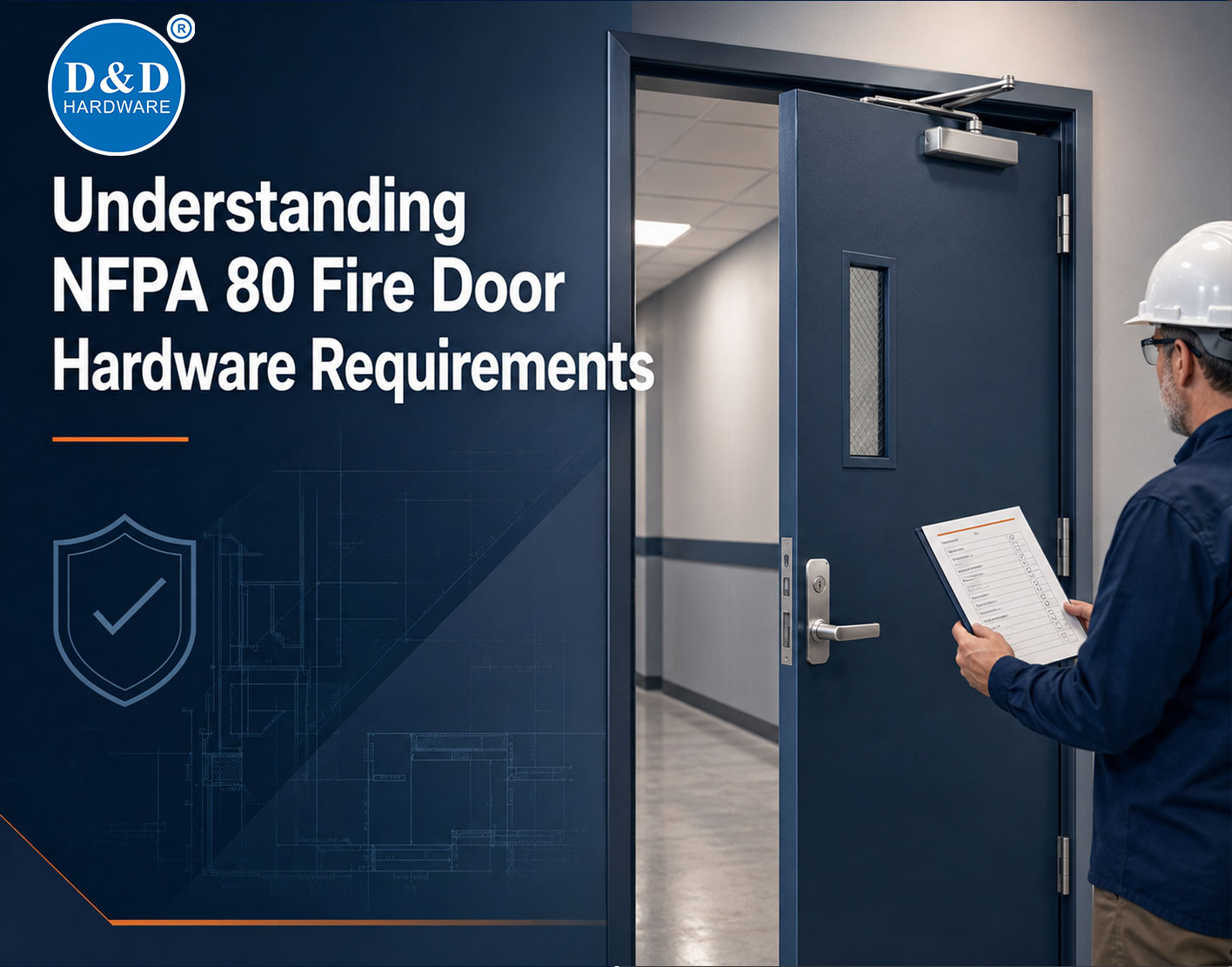
A practical guide to selecting, installing and maintaining hardware as part of a compatible fire door assembly
A fire door can carry the correct label and still fail at the moment it is needed if its hardware does not work as a coordinated system. A worn hinge can pull the leaf out of alignment, an incorrectly adjusted closer may not bring it fully shut, and a poorly matched lock or exit device may prevent positive latching. These are not minor hardware issues; they directly affect the performance of the complete fire door assembly.
NFPA 80 addresses this relationship by setting requirements for the installation, inspection, testing and maintenance of fire doors and their operating components. For architects, door manufacturers, contractors, distributors and facility teams, the practical task is to select hardware that suits the rated opening, install it according to the approved details and keep every closing and latching function operational throughout the door's service life.
The following sections explain how NFPA 80 applies to hinges, door closers, locks, latches, fire exit hardware, coordinators and related mechanical accessories, with emphasis on specification, installation and field verification.

What Does NFPA 80 Require from Fire Door Hardware?
NFPA 80 governs the installation, inspection, testing and maintenance of fire doors and other opening protectives. For a typical swinging fire door, the hardware must support the leaf, permit it to close, secure it in the closed position when latching is required, and remain suitable for the listed door and frame. Hardware must not introduce an unapproved opening, attachment or operating condition that weakens the assembly.
The exact hardware set depends on the door type, rating, size, material, use, egress function and pair configuration. A component may be listed for fire door use yet still be unsuitable for a particular opening because its certification scope, dimensions, function or installation method does not match the approved assembly.
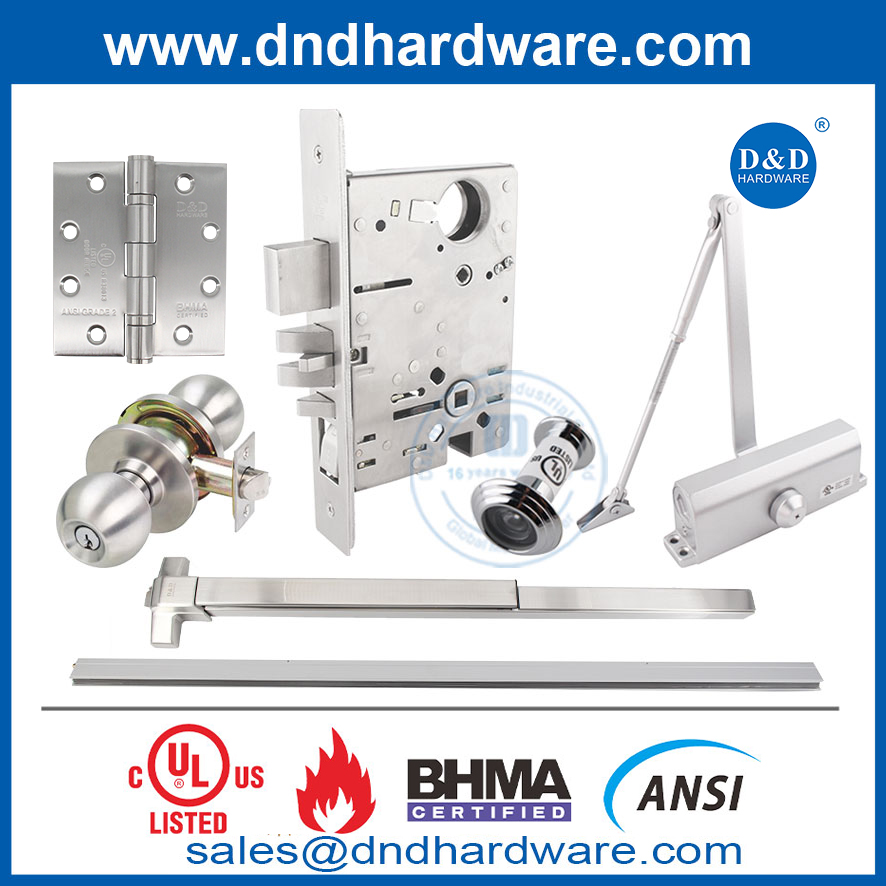
D&D’s UL Door Hardware range includes fire-rated hinges, mortise locks, door closers and fire exit hardware. These categories are useful starting points, but the exact model must be verified against the opening schedule and current listing information.
Start with the Complete Fire Door Assembly
A hardware schedule should be built around the opening, not around isolated products. Before selecting hardware, record the door and frame manufacturer, material, thickness, dimensions, weight, hourly rating, positive-pressure requirements, handing, swing, usage level, wall condition and required egress function. For pairs, also record the active and inactive leaf, meeting-stile condition, astragal arrangement and latching sequence.
This information matters because one component affects another. A hinge with insufficient capacity can allow the leaf to sag, which changes clearances and strike alignment. A closer may be powerful enough to move the leaf but unable to overcome an incorrectly installed seal. A lock may have an appropriate fire listing but fail to latch because the door bevel, backset or strike preparation is wrong.
UL’s application guide identifies locks, latches, hinges, bolts, fire exit hardware, coordinators, gasketing and closers among the hardware and accessories used with fire doors. It also emphasizes certification markings, intended use, limitations and manufacturer instructions. The practical rule is simple: verify the assembly, the exact product and the installation condition together.
1. Hinges, Continuous Hinges and Pivots
Hanging hardware carries the door and controls its relationship to the frame. NFPA 80 requirements and the applicable listing address the permitted type, number, size, material, fastening and preparation. The selection must also account for door height, width, weight, frequency of operation and any surface hardware that adds load.
A fire rating alone is not a hinge-sizing method. A heavy or unusually wide leaf can require ball-bearing or heavy-duty hardware even when a lighter leaf has the same hourly rating. Reinforcement and fasteners must suit both the door and frame, and shimming or substitution should not create an unapproved installation.
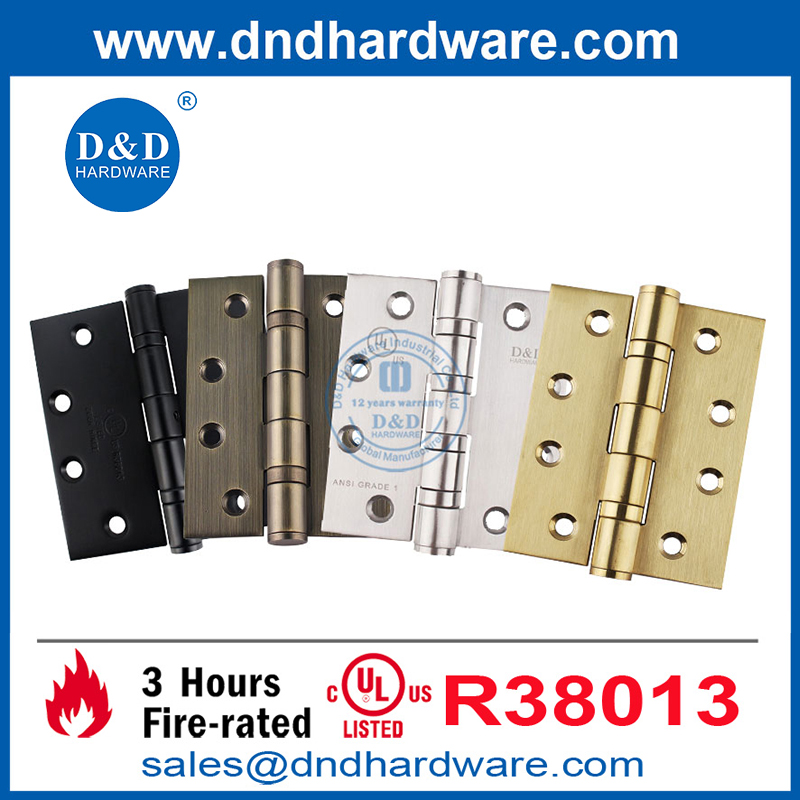
For compatible commercial openings, D&D UL-listed fire door hinges are covered under UL File R38013 and include UL 10C options rated up to three hours. Project review should still confirm the hinge model, size, bearing construction, screw pattern and quantity for the actual leaf.
During inspection, look beyond missing screws. Check for looseness, wear, cracked or spread hinge leaves, oil leakage where applicable, nonstandard fasteners, binding and door sag. The leaf should move freely without contacting the frame, floor, threshold or adjacent leaf.
2. Door Closers and Automatic-Closing Arrangements
A swinging fire door generally must be self-closing or automatic-closing as required for its application. The closing device must return the leaf to the fully closed position from an open position and allow the required latch to engage. Closing speed, power, arm geometry, mounting position and interaction with seals all influence this result.
The closer should not be used to conceal another defect. Increasing spring power may force a misaligned door shut, but it can also create excessive opening force and accelerate wear. First correct hinge, frame, threshold, seal or latch problems; then adjust the closer so the door closes reliably under realistic conditions.
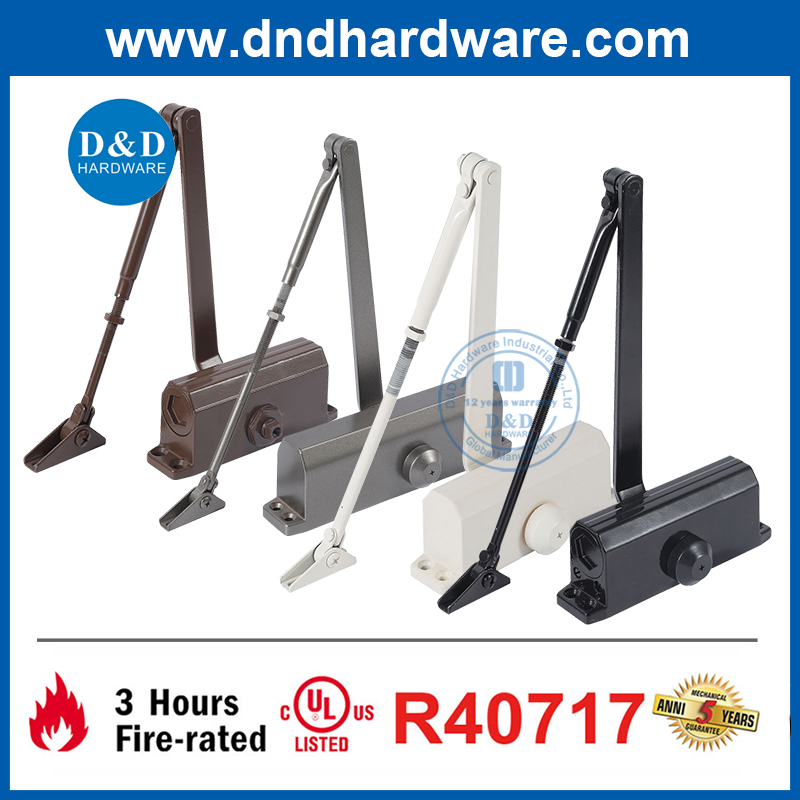
D&D UL door closers under UL File R40717 provide 67 listed model options for compatible fire door applications, with ratings up to three hours. The selected model and mounting method must match the door size, weight, swing, usage and approved installation.
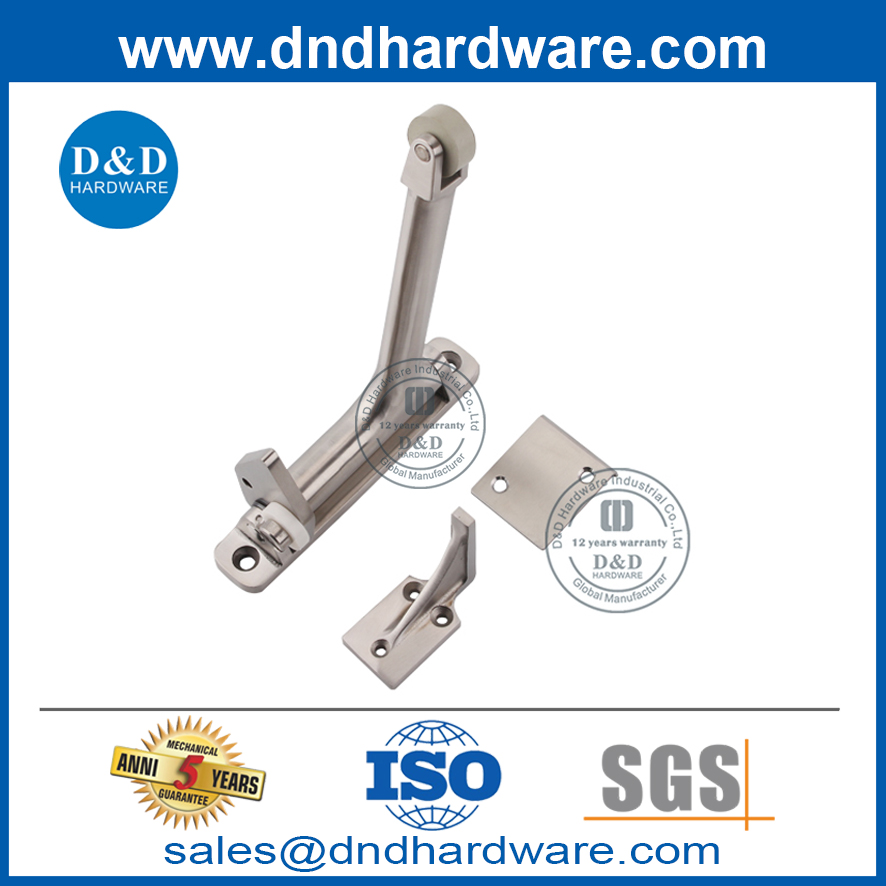
Hold-open practices need special attention. Mechanical wedges, kick-down stops and improvised devices can prevent a fire door from closing and should not be used to hold an operational fire door open. The specified mechanical closer must remain securely mounted, correctly adjusted and capable of completing the full closing and latching cycle.
3. Locks, Latches and Positive Latching
Closing and latching are different functions. A door can reach the frame yet fail to secure in the closed position. Where positive latching is required, the latch must engage the strike without manual assistance and keep the leaf closed against the forces expected during fire exposure.
Selection involves more than matching a faceplate. Confirm the mechanical lock function, backset, case dimensions, latch projection, door bevel, strike, lever trim, cylinder, handing and preparation. Each item must correspond with the approved door and frame preparation so the latch can engage without grinding, enlarging or improvising openings on site.
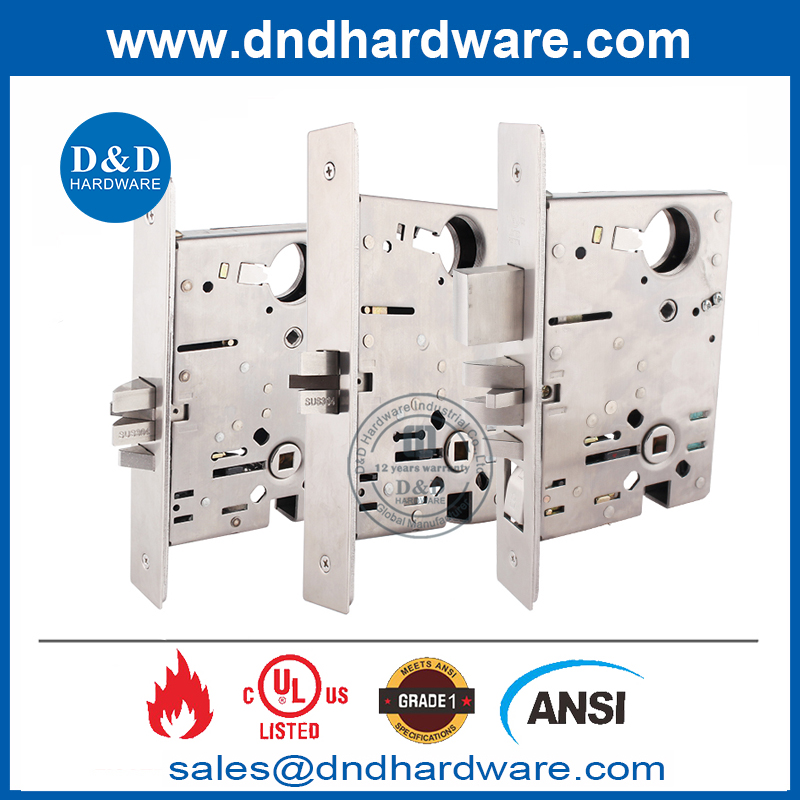
D&D UL mortise locks under UL File R40901 include UL 10C three-hour options for suitable fire-rated openings. When a lock is proposed as a replacement, its exact model and certification scope should be verified rather than relying on similar dimensions or a general product-family certificate.
Inspection should confirm that the latch engages fully, the strike is secure, the trim operates correctly and no tape, magnet or altered strike prevents latching. Grinding a strike or enlarging a preparation may appear to solve an alignment problem but can create an unapproved field modification.
4. Panic Hardware versus Fire Exit Hardware
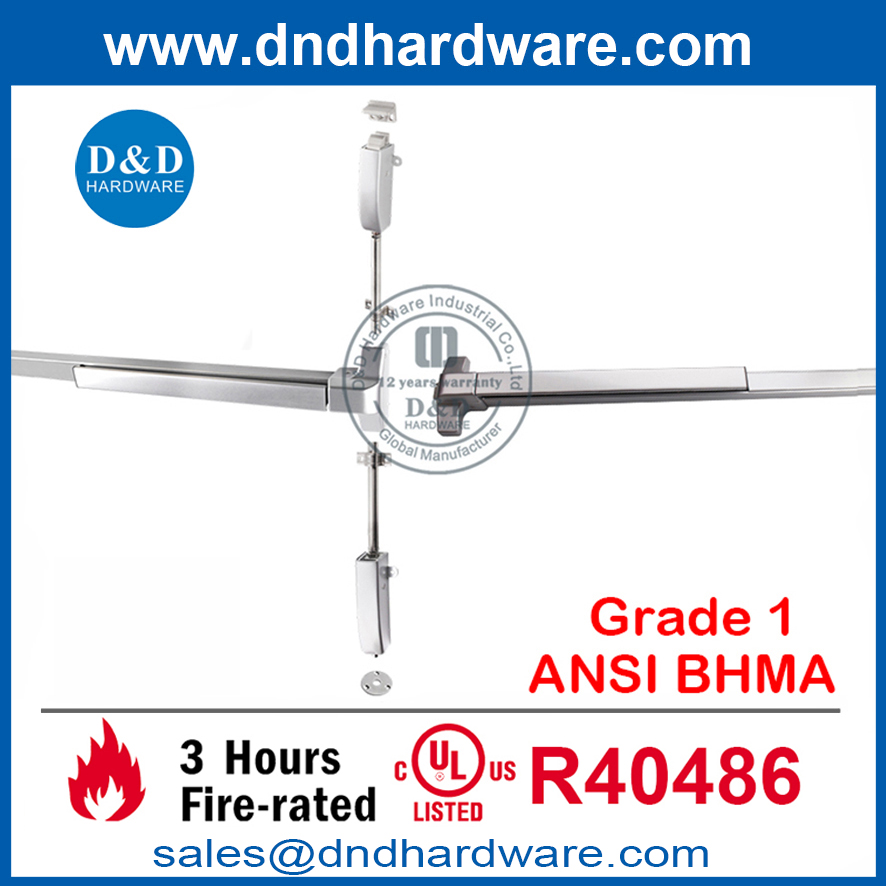
Panic hardware and fire exit hardware both release an egress door through an actuating surface, but they are not interchangeable labels. Panic hardware is evaluated for egress use on non-rated doors. Fire exit hardware combines the necessary egress function with suitability for a fire-rated door assembly.
UL’s guide specifically warns that hardware marked only as panic hardware should not be confused with fire exit hardware rated for fire door assemblies. On a rated exit door, confirm that the device bears the appropriate fire exit hardware identification and that its latching arrangement is compatible with the door label, frame preparation and approved hardware set.
D&D panic and fire exit hardware are maintained under separate certifications: UL 305 panic hardware under File SA45817 and UL 10C three-hour fire exit hardware under File R40486. The project schedule should identify the required category explicitly so a non-fire-rated panic device is not ordered for a rated opening.
Fire exit hardware must maintain latching. Mechanical dogging or any field practice that holds the latch retracted can defeat the protective function and should not be used on a fire-rated opening. The device must release readily for egress while allowing the latch to project and secure the door again after it closes.
5. Hardware for Pairs of Fire Doors
Pairs require additional coordination because each leaf can affect the other. The approved arrangement may include automatic or self-latching bolts, an astragal, a coordinator, carry-open hardware and closers. Whether a specific component is required depends on the door construction, meeting stiles, labels and hardware set.
Where the inactive leaf must close before the active leaf, the coordinator holds the active leaf until the inactive leaf reaches the correct position. Both closers must then provide enough controlled movement for the sequence to finish and the required latches or bolts to engage.
D&D door coordinators can be coordinated with closers and suitable flush-bolt arrangements for pairs in which closing order is critical. Selection should be based on the actual leaf widths, astragal condition, projection clearances and approved door assembly—not simply on the phrase “double fire door.”
Commissioning should test several conditions: both leaves fully open, the active leaf open farther than the inactive leaf, and each leaf released independently where the arrangement permits. The test is incomplete if the leaves close in order but the final latching or bolt engagement does not occur.
6. Protection Plates, Seals and Other Accessories
Kick plates, armor plates, gasketing, edge seals, automatic door bottoms, viewers and other accessories can affect a rated assembly. Some are limited by size, location, attachment method or listing. Their presence should be coordinated before fabrication so field drilling and improvised fasteners are minimized.
Seals have distinct functions. A product evaluated for smoke leakage, edge protection or positive-pressure fire exposure should be selected for the required application. Gasketing should not be assumed to repair excessive clearances, replace a required astragal or compensate for a door that does not close and latch.
D&D’s broader commercial door hardware range includes door seals, automatic drop seals, protection hardware and accessories. For a rated opening, verify whether the proposed accessory requires a specific fire or smoke listing and follow the door, frame and accessory installation instructions.

7. Fasteners, Preparations and Field Modifications
A listed product can still be installed incorrectly. Fastener type and length, reinforcement, through-bolting, sex bolts, templates and mounting location all matter. Substituting screws because they are convenient, drilling outside a template or attaching hardware where reinforcement is absent can affect both operation and the approved construction.
Field modifications require particular care. Preparations permitted by the adopted NFPA 80 edition, the door or frame listing, and manufacturer instructions are not unlimited permission to cut or drill. Larger changes, damaged labels or uncertain existing conditions may require the door manufacturer, listing agency, field evaluation service or AHJ to determine an acceptable path.
How to Verify Listed Hardware
A catalog page or certificate image is useful evidence, but verification should reach the exact model. Before approval or purchase:
· Match the product model and function to the current certification record and category.
· Confirm the fire-test standard, rating and any size, material or application limitations.
· Check that the label or certification mark will be present on the supplied product.
· Review the installation instructions, template, required fasteners and reinforcement.
· Confirm compatibility with the door, frame, other hardware and approved opening schedule.
· Retain submittals and model-level evidence for commissioning, inspection and future replacement.
D&D product documentation can support this review, but the purchase order should use exact model numbers rather than a broad description such as “UL hinge” or “fire-rated lock.” This reduces the risk that a compliant product family is represented by the wrong size, function or model at the job site.
Installation and Commissioning Checks
After installation, test the complete opening rather than each product in isolation. The leaf should move freely, close from representative open positions, latch without manual assistance, and remain aligned. On pairs, verify closing sequence and final engagement. On automatic-closing systems, test the approved release condition and reset operation.
· Labels are visible and correspond to the approved door, frame and hardware.
· Hanging hardware is secure, correctly fastened and free of excessive wear or play.
· The closer and arm are mounted to the correct template and do not bind or leak.
· Locks, latches, bolts and exit devices operate smoothly and engage completely.
· No wedge, auxiliary stop, altered strike or unauthorized attachment interferes with closing.
· Clearances, seals, threshold conditions and meeting stiles match the applicable requirements.
· Deficiencies are corrected and the final functional result is documented.
Inspection, Maintenance and Replacement
NFPA 80 addresses inspection and testing after installation and at required intervals; UL also notes annual inspection and record retention for fire doors. Hardware deficiencies commonly include loose or missing fasteners, worn hinges, leaking or disconnected closers, damaged latches, altered strikes, missing coordinator components and nonapproved hold-open practices.
Maintenance should restore the approved function with compatible parts. When replacement is necessary, record the opening number, existing model, certification label, function, dimensions, preparation, fasteners and observed failure. Photographs of the door edge, frame, labels and hardware can help a supplier confirm a suitable model without guessing.
Avoid “like-for-like” assumptions based only on appearance. Two devices may share an envelope dimension yet differ in latch function, fire listing, projection, fastener pattern or approved door application. D&D can use complete opening information to review relevant listed hinge, lock, closer or exit-device options before an order is finalized.
Common Fire Door Hardware Mistakes
· Selecting a listed product without checking whether its exact model covers the intended opening.
· Using closer power to overcome door sag, binding, excessive seal resistance or poor strike alignment.
· Ordering panic hardware for a rated opening that requires fire exit hardware.
· Installing a coordinator without testing the complete closing and latching sequence of the pair.
· Using wedges, kick-down stops or improvised hold-open devices on an operational fire door.
· Drilling, grinding or enlarging preparations without confirming that the modification is permitted.
· Treating an annual inspection as a visual label check instead of a functional assembly test.

Frequently Asked Questions
Does every item of hardware on a fire door need a UL mark?
Requirements depend on the hardware category, assembly listing and adopted code. Do not assume either that every visible item requires the same marking or that an unmarked component is acceptable. Verify the applicable certification category, product label and opening documents.
Can standard panic hardware be installed on a fire door?
Hardware identified only as panic hardware is intended for non-rated egress doors. A rated exit door requires appropriately listed fire exit hardware and the required latching function.
Can a stronger closer solve a door that will not latch?
Not necessarily. The cause may be hinge wear, frame distortion, floor contact, seal resistance, strike alignment or incorrect installation. Correct the underlying condition before final closer adjustment.
Can fire door hardware be replaced in the field?
Replacement can be possible when the new product is suitable for the rated assembly and the work does not introduce an unapproved preparation. Verify the listing, template, fasteners and manufacturer instructions before modification.
Who makes the final compliance decision?
The authority having jurisdiction enforces the adopted requirements. Designers, manufacturers, suppliers and installers provide technical evidence, but approval should not be inferred from a product claim alone.
Conclusion
NFPA 80 fire door hardware compliance is a coordination task. Hinges maintain alignment; closers return the leaf; locks, latches or fire exit devices secure it; and coordinators manage certain pairs. Each component must be appropriate for the rated opening, installed to its approved details and maintained so the full assembly performs when required.
For model-level product review, provide D&D with the door and frame material, dimensions, weight, rating, handing, hardware function, pair configuration and project code basis. That information allows listed hardware options to be evaluated against the actual opening rather than selected from a generic description.
Application note: Use the NFPA 80 edition adopted or referenced by the governing jurisdiction. Confirm the applicable building, fire and life safety codes, local amendments, product listings, manufacturer instructions and authority having jurisdiction (AHJ) before specifying or modifying a fire door opening.
Contact us Now:
Contact: David Jian
Mob:0086-139 2903 7292
Email: David@dndhardware.com, sales@dndhardware.com,
Contact: Jobby Zhang
Mob:0086-137 2599 9617
Email: jobby@dndhardware.com
D&D HARDWARE INDUSTRIAL CO.,LTD
ADD:12th Floor, Building 2, No.898, KeChuang Technical Zone, Jiangmen Avenue, Pengjiang District, Jiangmen City, Guangdong, China (Postcode:529000)
https://www.dndhardware.com
Tel: +86-750-3856396
Fax: +86-750-3856395

 English