 English







How To Select The Right Door Hinge

Selecting the appropriate door hinge is crucial for ensuring seamless door functionality, extended durability, and adherence to building regulations. Whether for residential or commercial use, the optimal choice hinges (no pun intended) on several critical factors: door type, weight, size, usage frequency, environmental conditions, and certification needs. Here’s a comprehensive guide to streamline your decision-making process.
1. Identify Door Type and Purpose
Begin by classifying the door—interior, exterior, fire-rated, or specialized.
· Interior doors typically utilize standard butt hinges or concealed hinges for aesthetic consistency.
· Exterior or security doors demand robust hinges, ideally featuring non-removable pins or security studs.
· Fire-rated doors must incorporate CE EN1935 or UL10C-certified fire hinges to comply with safety standards.
2. Align Hinge Size with Door Specifications
Hinge dimensions should correlate with the door’s height, thickness, and weight:
· Doors up to 2100 mm in height generally require 100 mm (4") hinges.
· Thicker or taller doors may necessitate 125 mm (5") or 150 mm (6") hinges.
· Heavier doors mandate larger, thicker hinges to distribute weight effectively.
As a general rule, two hinges suffice for standard doors, while three or more are advisable for taller or heavier variants. Continuous hinges are ideal for full-height commercial doors.
3. Factor in Door Weight and Usage Intensity
Hinge selection is heavily influenced by frequency of use and door weight.
· Light interior doors (under 20 kg): Standard butt hinges are adequate.
· Medium-duty doors (20–60 kg): Opt for ball-bearing hinges for smoother operation.
· Heavy-duty or high-traffic doors (60–120 kg+): Select stainless steel hinges with bearings, rated for 200,000+ cycles (EN1935 Grade 11–13).
4. Opt for the Right Material
Material selection impacts both performance and longevity:
· Stainless steel: Ideal for moisture-prone or coastal areas due to its corrosion resistance.
· Brass: Offers decorative appeal and smooth motion, perfect for interior doors.
· Mild steel: A cost-effective option for indoor applications where corrosion resistance is not a priority.
5. Choose the Appropriate Hinge Type
Various hinge designs cater to specific requirements:
· Butt hinge: The most common choice for general doors.
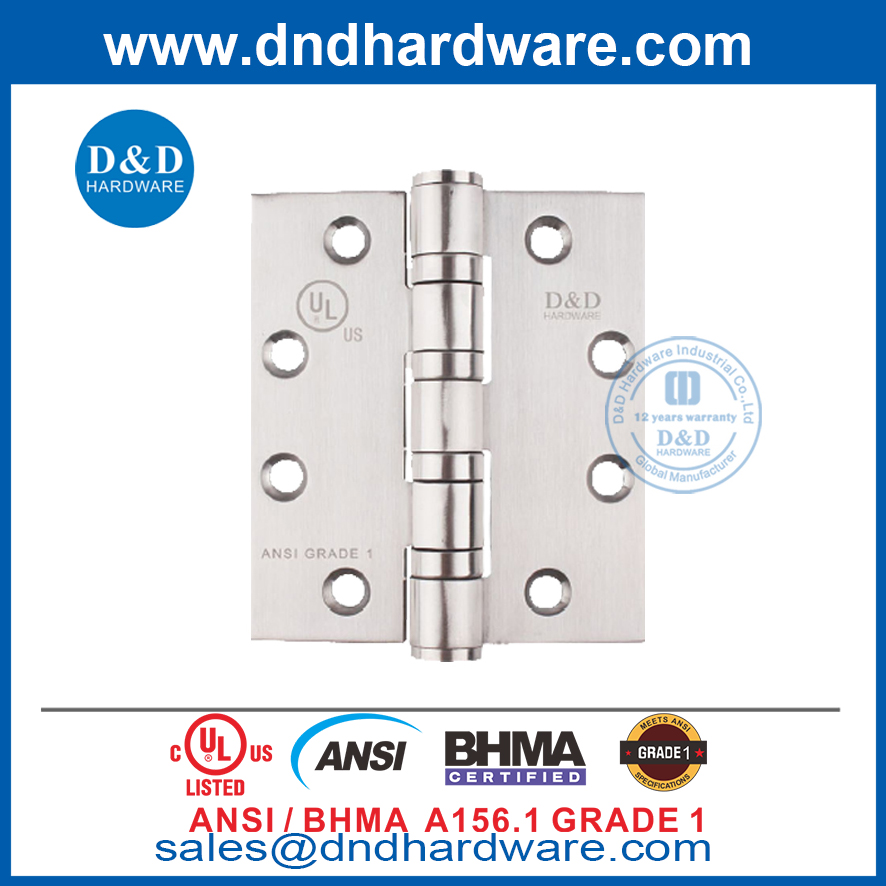
· Ball bearing hinge: Minimizes friction for frequently used or heavy doors.
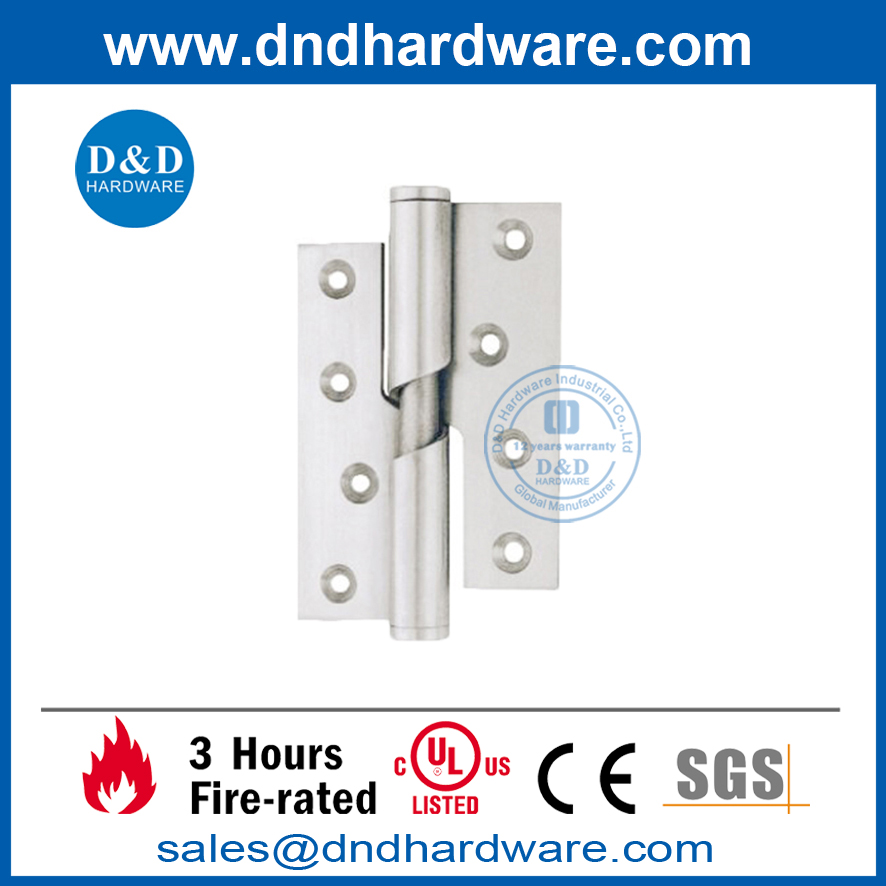
· Rising/falling hinge: Facilitates door clearance over carpets or uneven floors.
· Self-closing hinge: Automatically returns the door to a closed position.
· Lift-off hinge: Simplifies door removal for maintenance purposes.
· 3D concealed hinge: Features a hidden design with adjustable alignment for modern interiors.

6. Coordinate Finish and Aesthetics
Hinges contribute to the door’s overall visual appeal. Select finishes that complement the design, such as satin stainless steel, matte black, polished chrome, antique brass, or PVD gold. Durable finishes enhance corrosion resistance and reduce upkeep.
7. Verify Certifications and Standards
For commercial and fire-rated projects, certifications are indispensable:
· CE EN1935: European certification for performance and durability.
· UL10C: American fire-resistance certification (up to 3 hours).
· ANSI/BHMA A156.1: U.S. standard for commercial-grade durability.
Certified hinges ensure compliance with local regulations and instill confidence in quality, fire safety, and longevity.
8. Account for Environmental and Usage Factors
In humid, coastal, or industrial settings, opt for stainless steel grade 304 or 316 hinges with EN1670 corrosion test certification. For public buildings like hospitals or hotels, prioritize fire-rated, noise-reducing, and self-closing hinges to meet performance demands.
9. Select a Reputable Manufacturer or Supplier
Choose a professional supplier with proven testing capabilities and international certifications.
For instance, D&D Hardware provides a comprehensive range of CE EN1935 and UL10C-certified hinges, including butt hinges, self-closing hinges, security hinges, and concealed hinges. Each hinge undergoes 200,000-cycle durability testing, 240-hour corrosion resistance testing, and is available in multiple finishes and sizes for global projects.
10. Final Selection Recommendations
· Match hinge grade to door function and environmental conditions.
· Avoid using uncertified hinges on fire-rated doors.
· Confirm product certificates and test reports prior to purchase.
· Use consistent materials for hinges and screws to prevent galvanic corrosion.
In conclusion, the right door hinge guarantees smooth operation, safety, and long-term reliability. By considering door size, weight, environmental factors, and certifications, and partnering with a trusted supplier like D&D Hardware, you can achieve professional, compliant, and durable door solutions for any project.
Contact: David Jian
Mob:0086-139 2903 7292
Email: David@dndhardware.com, sales@dndhardware.com,
Contact: Jobby Zhang
Mob:0086-137 2599 9617
Email: jobby@dndhardware.com
D&D HARDWARE INDUSTRIAL CO.,LTD
ADD:12th Floor, Building 2, No.898, KeChuang Technical Zone, Jiangmen Avenue, Pengjiang District, Jiangmen City, Guangdong, China (Postcode:529000)
https://www.dndhardware.com
Tel: +86-750-3856396
Fax: +86-750-3856395
-
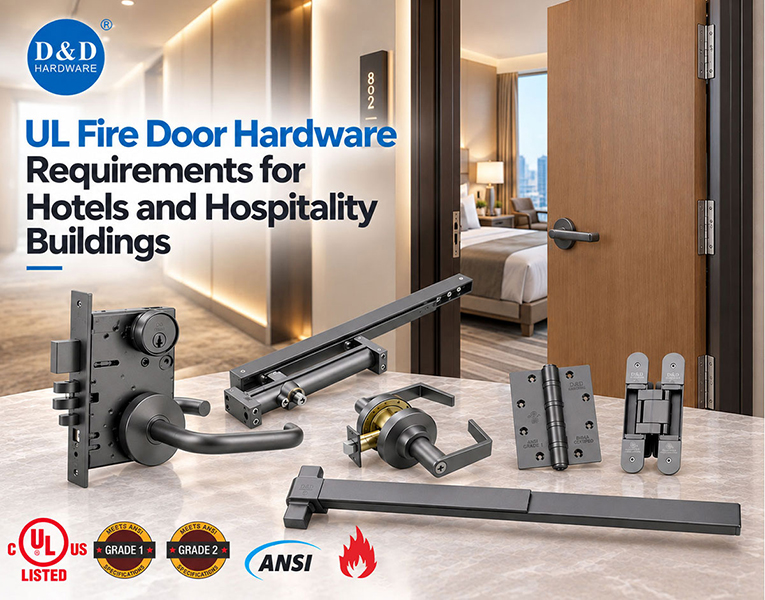 1. Why UL Fire Door Hardware Requirements Matter in HotelsHotels and hospitality buildings contain multiple types of fire door openings, including guestroom corridors, stair enclosures, service areas, fire barriers, and other locations designated by the building's fire protection design. The hardwarDoor Hardware Instruction for Project
 -
 UL vs CE Fire Door Hardware: Standards, Testing and Application DifferencesGuide to choosing door hardware
 -
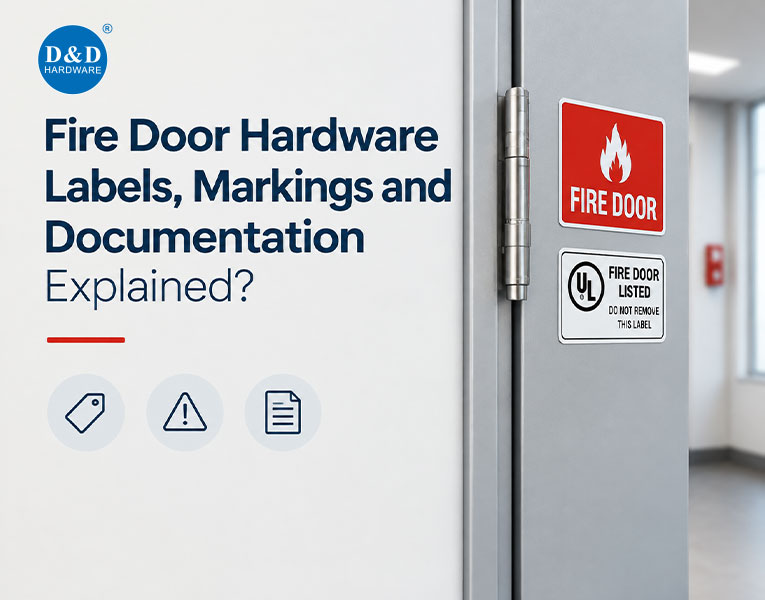 Fire Door Hardware Labels, Markings and Documentation ExplainedGuide to choosing door hardware
 -
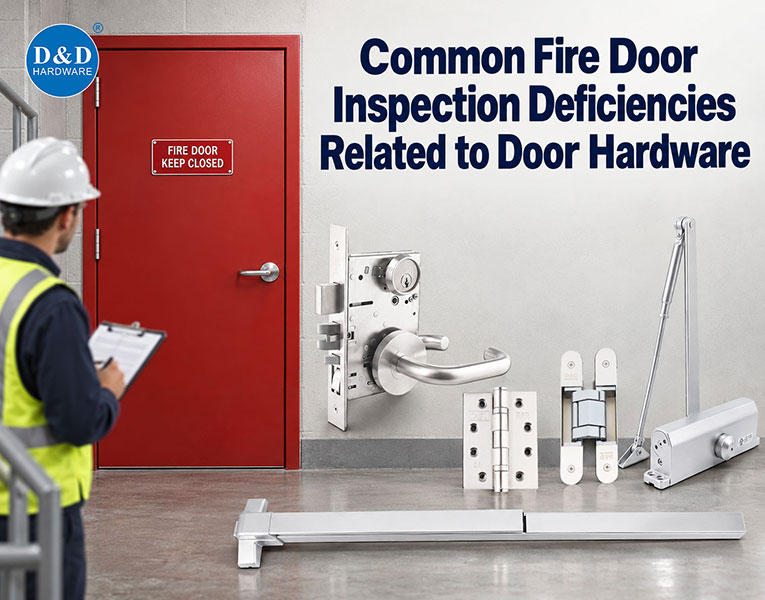 Why Hardware, Not the Door Leaf, Fails InspectionsUnder NFPA 80's periodic inspection requirements, hardware deficiencies rank among the most frequently cited findings on fire-rated openings. The door leaf usually keeps its rating for decades; what fails is the hardware attached to it—the closer thaGuide to choosing door hardware
 -
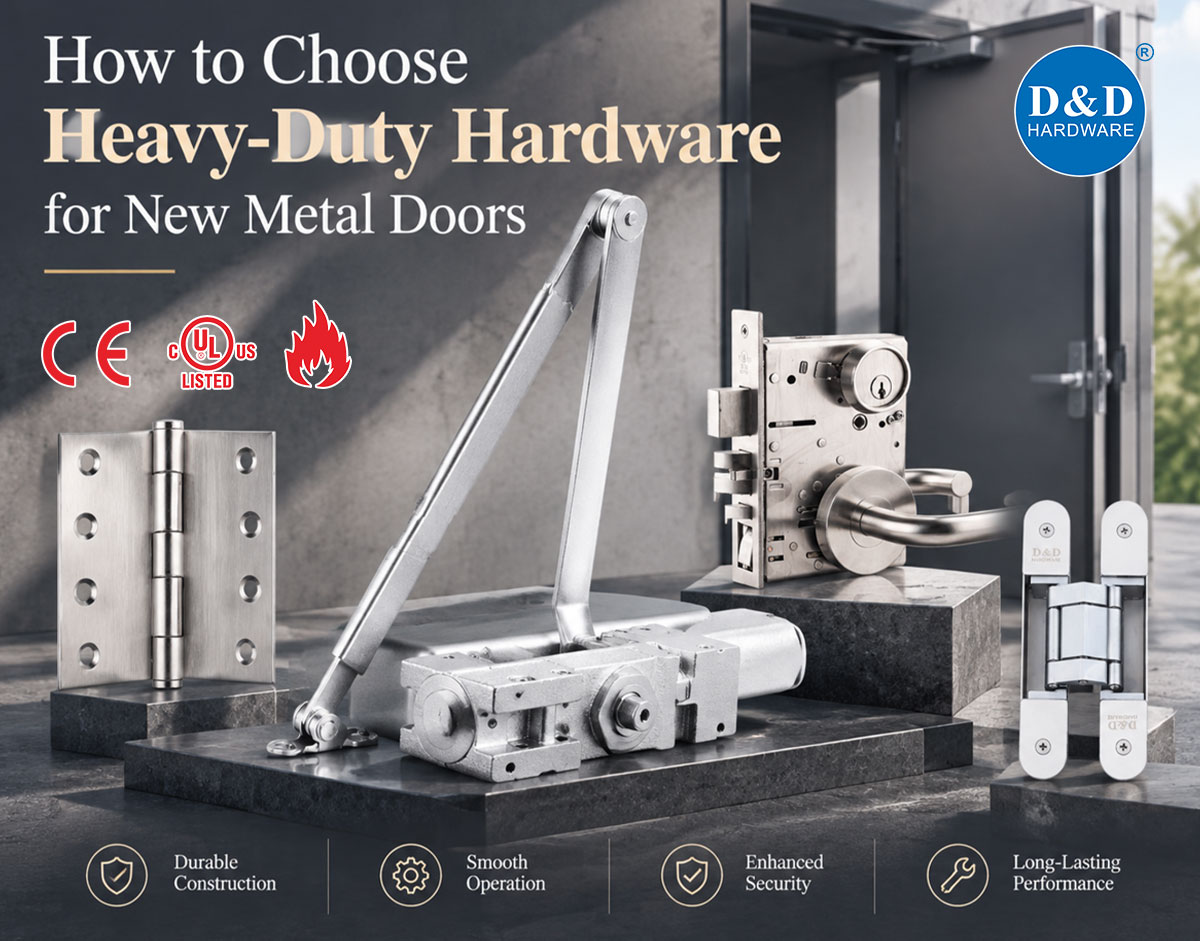 Order heavy-duty hardware for new metal door installations by selecting products that adhere to safety regulations. You need certified door hardware to ensure your building's security and maintain the strength of your door over time. D&D Hardware offers options specifically designed for metal doors,Metal Door & Hardware Information
 -
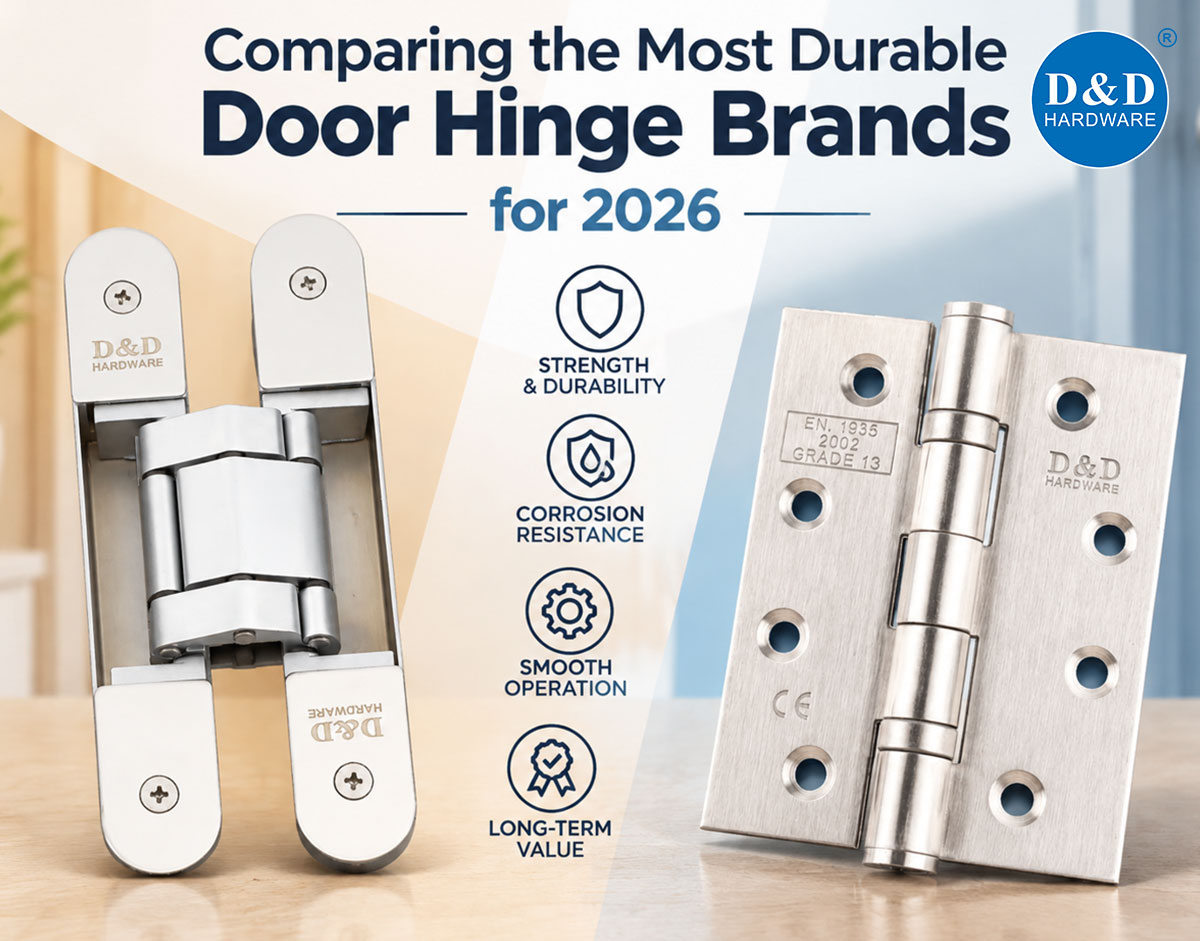 You want durable door hinges that last a long time. In 2026, reports say Allegion plc, Hager Companies, Blum Inc., and D&D Hardware are very durable. Picking hinges with world certifications is important for safety and quality. D&D Hardware is special because it has CE, UL, and ANSI/BHMA A156.1 certMetal Door & Hardware Information




FAQ
What are the key performance standards (CE EN1935, UL10C, ANSI/BHMA A156.1) that commercial door hinges must comply with?
These standards evaluate durability, fire resistance, and safety. CE EN1935 tests up to 200,000 cycles, UL10C verifies 3-hour fire endurance, and ANSI/BHMA checks load capacity and operational smoothness. Certified hinges guarantee compliance with global building codes.
What are the differences between ball bearing hinges and plain bearing hinges in heavy-duty applications?
How does hinge material (stainless steel vs brass vs steel) affect long-term performance?
For doors in commercial or public buildings that are used frequently, which type of hinge is more suitable?
How to choose the right hinge based on the door’s weight and size?
What is the purpose of non-removable pins (NRP) or security studs in exterior hinges?
How do hinge finishes impact both performance and aesthetics in large projects?
How does hinge lubrication type affect longevity and operation smoothness?
What are the signs of hinge failure in long-term building maintenance?
What differentiates a professional B2B hinge manufacturer like D&D Hardware from general hardware traders?