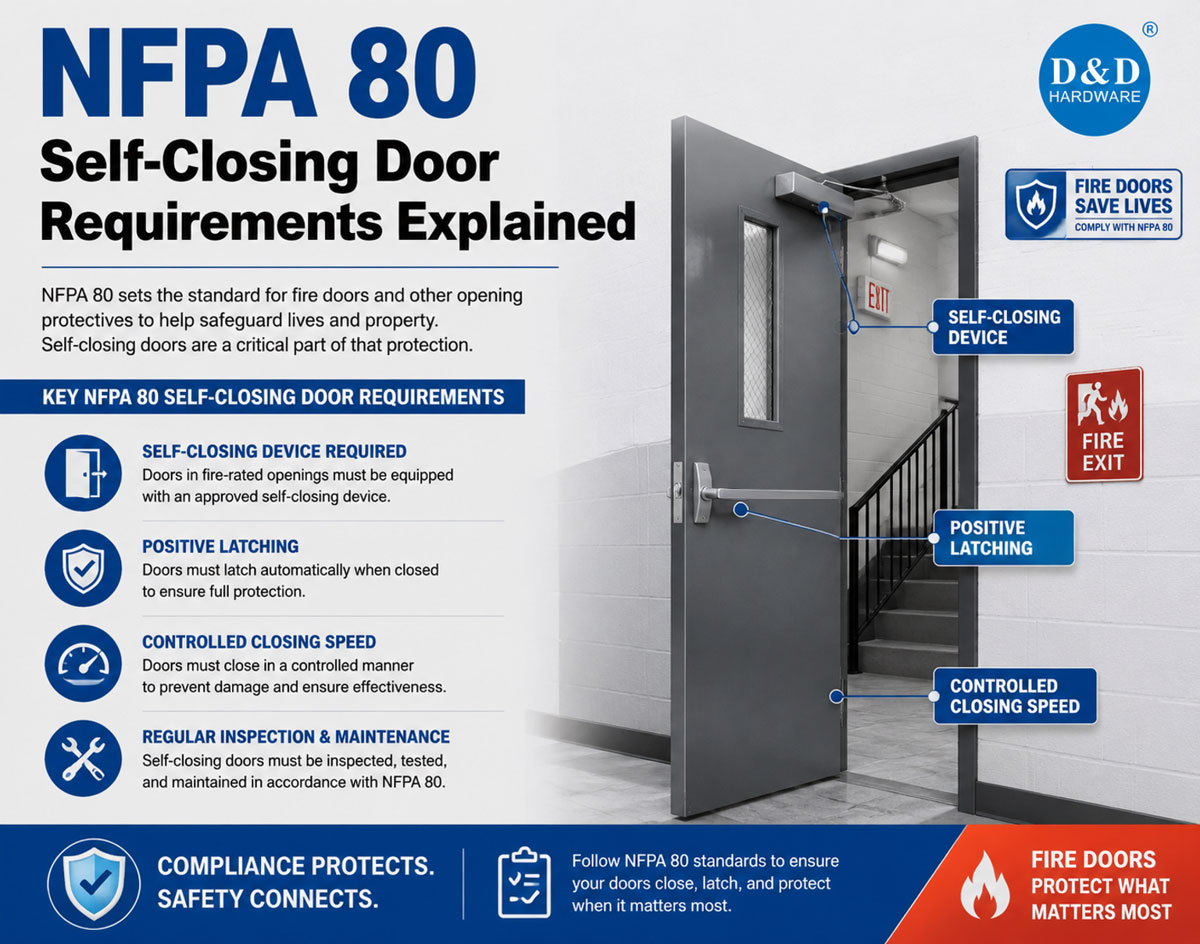
A fire door protects an opening only when it is in the closed position. During everyday use, however, doors are opened repeatedly for people, carts and equipment. The self-closing function bridges that gap: after a person releases the leaf, the closing device must return it to the frame so the required latch can engage without manual help.
That simple description hides a coordinated mechanical process. The hinges must allow free movement, the closer must deliver enough controlled energy, the seals and floor condition must not create excessive resistance, and the latch must align with the strike. NFPA 80 therefore evaluates self-closing performance as a property of the installed fire door assembly rather than as a feature of the closer alone.

What Does Self-Closing Mean Under NFPA 80?
A self-closing fire door is equipped with a closing device that causes the door to close each time it is opened. For a typical swinging fire door, the functional expectation is that the leaf returns to the fully closed position and becomes positively latched where latching is required. The user should not have to push the door through the final part of its travel.
NFPA 80 governs the installation, inspection, testing and maintenance of the assembly. The building or life safety code generally determines where a rated opening is required and whether a particular opening must be self-closing or may use another permitted arrangement. The adopted code, door labels, hardware listing and approved opening schedule must therefore be reviewed together.
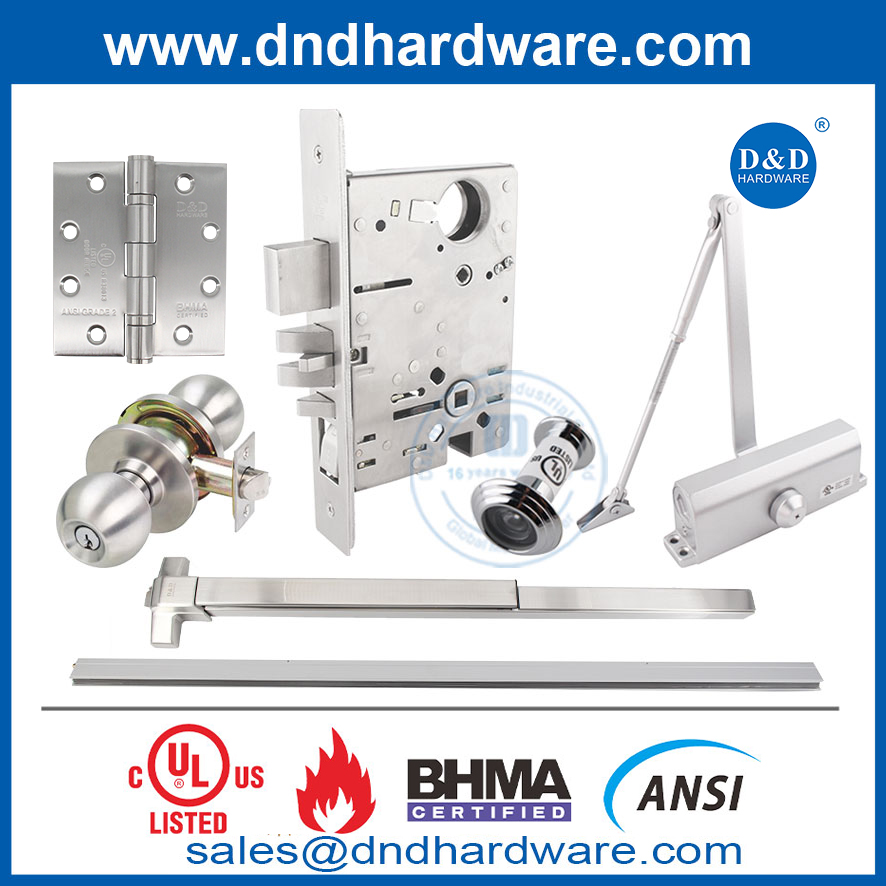
D&D's UL Door Hardware range includes listed mechanical products for compatible fire door openings. Product certification supports compliance only when the exact model, function, mounting and complete assembly match the project requirements.
Self-Closing Is Not the Same as Automatic-Closing
The terms are often used interchangeably in ordinary conversation, but they describe different operating arrangements.
· Self-closing door: the leaf closes whenever it is opened and released. A surface closer, concealed closer or suitable spring hinge can provide the closing force.
· Automatic-closing door: the leaf may normally remain open but closes automatically when an approved releasing condition occurs. The release and closing arrangement must comply with the applicable code and listing.
· Power-operated fire door: the opening uses powered operation but must meet the applicable fire-door closing and safety requirements under the approved arrangement.
This article concentrates on mechanically self-closing swinging doors. A labeled electromagnetic holder or other approved automatic-closing arrangement is not equivalent to a wedge, kick-down stop or improvised hook. Unapproved devices that prevent a fire door from closing defeat the protective function.
The Complete Self-Closing Cycle
A reliable test follows the entire movement of the leaf rather than watching only the closer arm. The cycle includes five linked stages.
1. Free opening and release
The leaf must swing without binding at the frame, floor, threshold, adjacent leaf or installed seals. When released, it should begin moving under the closing device's control rather than remain stationary because of friction or poor alignment.
2. Controlled sweep
The closer moves the door through the main arc at a stable speed. Excessive speed can create impact, noise and safety concerns; insufficient speed or power can allow air pressure and seal resistance to stop the leaf before it reaches the latch zone.
3. Latch-range movement
Near the closed position, the closer must deliver controlled movement sufficient to overcome the latch, gasketing and pressure at the opening. Latch speed is not permission to make the door slam. The installer should correct friction and alignment problems before increasing closer settings.
4. Positive latching
Closing and latching are separate outcomes. The door may touch the stop but remain unsecured if the latch does not enter the strike. Where positive latching is required, engagement must occur automatically and hold the leaf in the closed position.
5. Stable closed position
After latching, the leaf should remain properly seated. Rebound, loose strikes, worn latches or misaligned pairs can cause a door to appear closed momentarily and then move out of position.
Selecting the Correct Door Closer
Closer selection should begin with the complete opening: door width, height, weight, material, handing, swing, mounting space, frequency of use, environmental exposure, expected pressure differences and accessibility requirements. The door's fire rating alone does not determine the correct closer size.
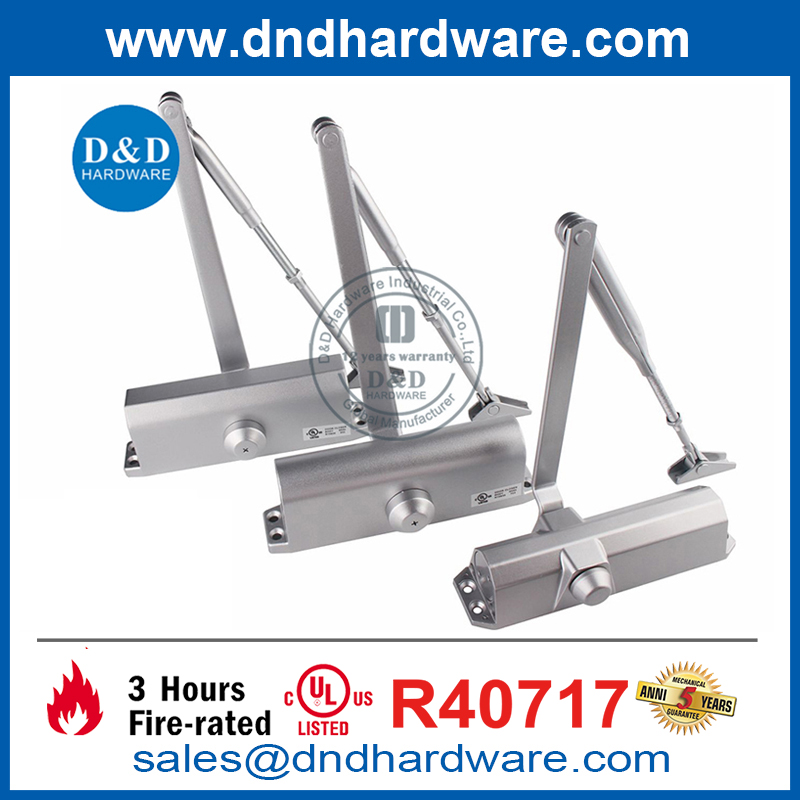
D&D UL-listed door closers are covered under UL File R40717, with UL 10C options rated up to three hours for compatible fire door assemblies. The proposed model and arm configuration should be checked against the actual door dimensions, mounting method, usage level and current listing information.
Mounting geometry matters as much as nominal power. Regular arm, top-jamb and parallel-arm installations change leverage and may have different size or efficiency limits. A template must be followed accurately; moving the body or shoe to convenient holes can reduce closing performance and introduce unapproved preparations.
Spring Hinges and Other Mechanical Closing Devices
NFPA 80 can permit suitable spring hinges or other listed closing devices where the opening and listing allow them. A spring hinge stores energy as the leaf opens and uses that energy to return the door. It does not provide the same hydraulic speed control as a conventional closer, so selection, adjustment and field testing are especially important.
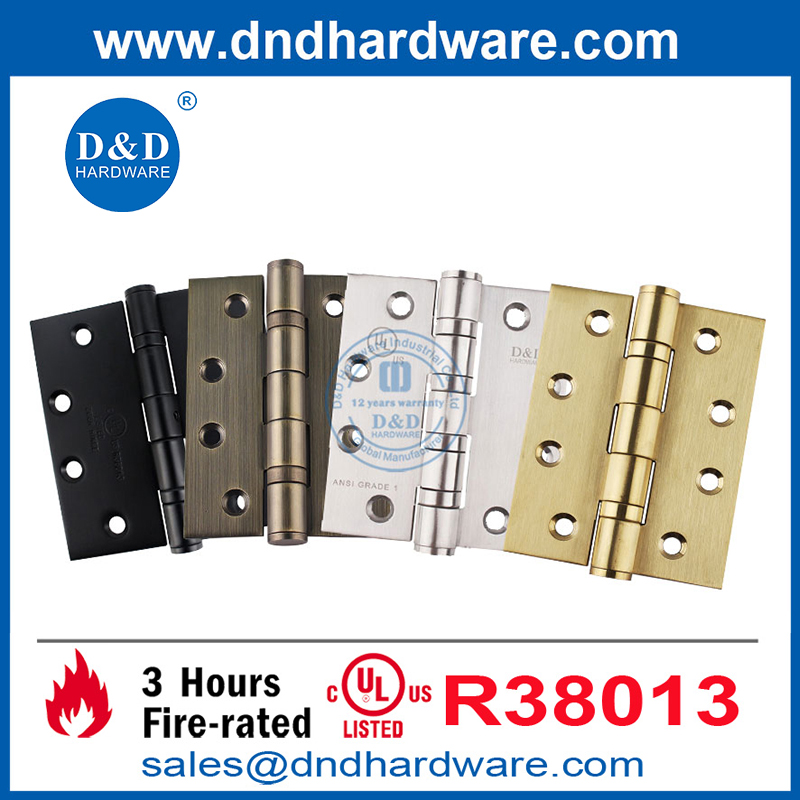
D&D commercial door hinges include configurations for different door types and duty levels. For a fire-rated opening, verify whether the exact hinge or spring hinge is permitted, whether it must be listed, and how many devices are required by the door height, weight and approved assembly.
A conventional bearing hinge is also part of self-closing performance even when it does not provide closing force. Worn knuckles, loose screws, damaged reinforcement or incorrect shimming can make the leaf sag and increase the force required from the closer.
Closer Adjustment: Power, Sweep, Latch and Backcheck
Hydraulic closers commonly provide several adjustments, but each has a different purpose. Spring power determines the available closing force. Sweep-speed control regulates most of the closing arc. Latch-speed control affects the final portion of travel. Backcheck manages rapid opening near the end of the opening swing; it is not a door stop and should not be adjusted to block normal opening.
Adjustments should be made in small increments according to the manufacturer instructions. Valves should never be removed or loosened until fluid escapes. A leaking closer, bent arm, loose shoe or stripped fastener requires repair or replacement rather than repeated adjustment.
Practical rule: Use the lowest closer power that reliably closes and latches the correctly aligned door under expected conditions. Excessive power can increase opening force and wear, while insufficient power may leave the fire door unlatched.
Self-Closing and Positive Latching
A closer brings the door to the frame; the latch secures it. If the latch bolt does not project fully, the self-closing test is incomplete. Common causes include door sag, an incorrectly located strike, excessive seal compression, a damaged latch, insufficient latch projection or an incompatible lock preparation.
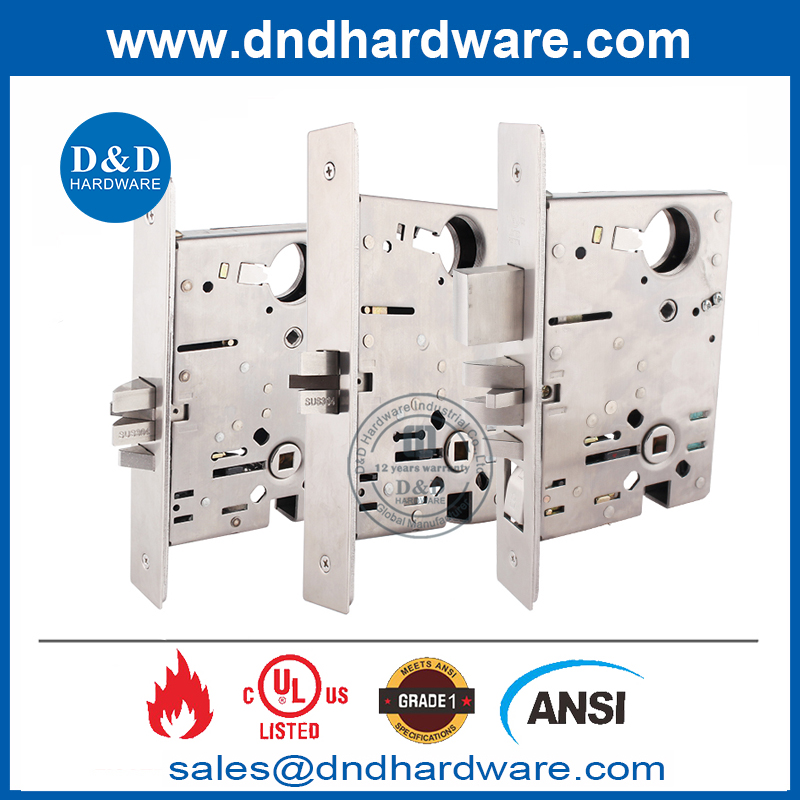
For suitable commercial openings, D&D UL mortise locks under UL File R40901 include UL 10C three-hour options. The exact lock function, case size, backset, latch projection, strike and door preparation must be coordinated with the listed assembly rather than selected only by faceplate appearance.
Do not grind the strike, tape the latch or increase closer force before identifying the cause. An improvised modification may make the door appear functional while damaging the approved preparation or creating unreliable engagement.
Pairs of Fire Doors and Closing Sequence
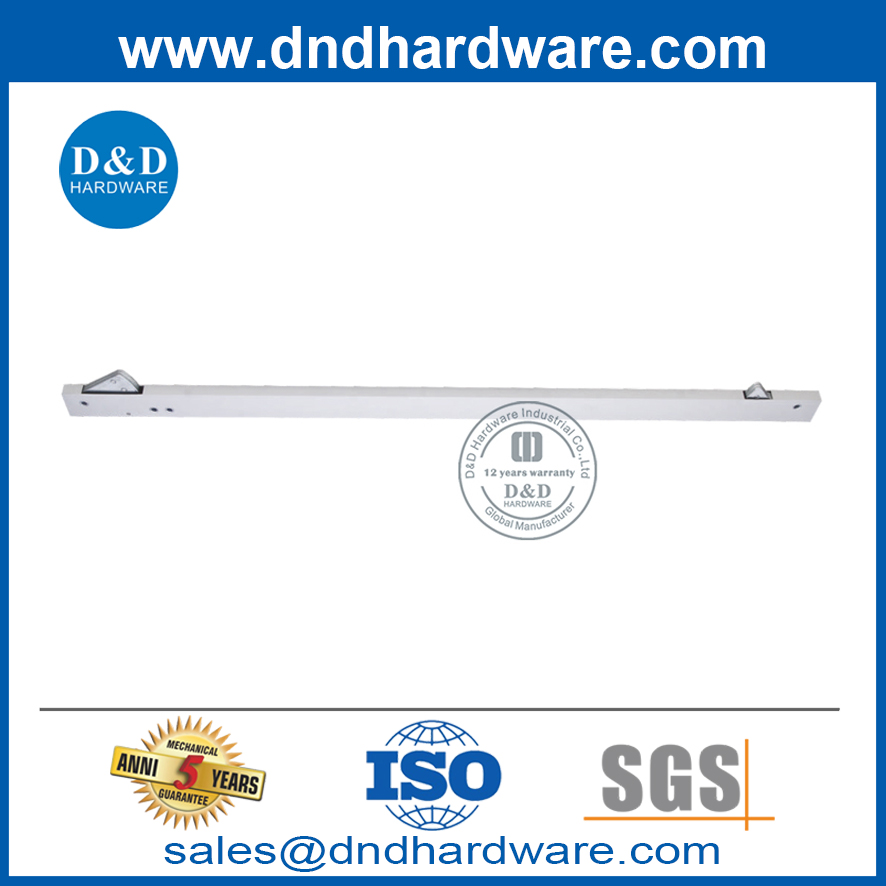
A pair can contain two individually self-closing leaves and still fail as an assembly. Where an astragal or latching arrangement requires the inactive leaf to close first, the active leaf must be held until the inactive leaf reaches its proper position. Only then can the active leaf close and latch correctly.
D&D door coordinators can be matched with appropriate closers for pairs requiring controlled closing order. Selection should account for both leaf widths, projection, astragal condition, carry-open requirements and the approved hardware schedule.
Testing should cover more than one starting position. Open both leaves fully, release the active leaf from a wider angle than the inactive leaf, and test each leaf separately where the hardware arrangement permits. A passing result requires the correct sequence plus complete bolt or latch engagement.
Pressure, Seals and Environmental Conditions
A door that closes in an empty building may fail when HVAC systems are operating. Stack effect, wind and pressure differences can resist or accelerate the leaf. Perimeter seals and door bottoms also add friction or compression near the end of travel. These influences must be considered without using an oversized closer to conceal installation defects.
Check the actual operating condition: normal HVAC mode, installed floor finishes, final seals and the expected state of adjacent doors. If pressure is outside the design basis, the solution may involve building balancing or opening design rather than closer adjustment alone.
Hold-Open Devices and Prohibited Practices
A self-closing fire door should not be defeated for convenience. Wedges, floor stops with hold-open features, kick-down holders, ropes and furniture placed in the swing path prevent the assembly from performing. Removing the obstruction for an annual inspection does not correct the everyday hazard.
Where a project needs a door to remain open during normal use, the design team should determine whether an approved automatic-closing arrangement is permitted. The holding and release components, detection basis, power condition, closer and latching function must form an approved system. This is different from a purely mechanical self-closing door and should be documented accordingly.

How to Test a Self-Closing Fire Door
NFPA guidance identifies inspection and testing after installation and at least annually thereafter. Facility teams should also address observed damage or operational complaints promptly rather than waiting for the next scheduled inspection.
· Remove only temporary obstructions; document any wedge or device found during normal operation.
· Inspect labels, hinges, closer body, arm, mounting screws, lock, strike, seals, threshold and clearances.
· Open the leaf fully and release it without pushing. Confirm controlled movement to the frame and complete latching.
· Repeat from a smaller angle, including a position within the latch range, to reveal marginal closing force.
· Test with normal HVAC and final building conditions where practical.
· For pairs, operate both leaves from different positions and verify sequence and final latching or bolt engagement.
· Record the opening number, result, deficiency, corrective action and date; retest after repair.
Common Self-Closing Failures and Their Causes
· Door stops before reaching the frame: binding, floor contact, seal resistance, low closer power or adverse pressure.
· Door reaches the stop but does not latch: strike misalignment, damaged latch, inadequate latch-range movement or door sag.
· Door slams: excessive speed or power, incorrect valve setting, failed closer or unsuitable mounting geometry.
· Door closes only from a wide-open position: marginal spring force, friction or poor latch adjustment becomes apparent at smaller angles.
· Closer arm disconnects or flexes: loose fasteners, incorrect template, damaged reinforcement or incompatible components.
· Pair closes in the wrong order: missing, damaged or incorrectly selected coordinator or carry-open component.
· Performance changes with HVAC operation: pressure differential or airflow exceeds the margin available at the opening.
Repair and Replacement Priorities
Begin with diagnosis, not valve adjustment. Verify that the frame is square, clearances are acceptable, hinges and reinforcement are secure, seals are suitable, the threshold is not obstructing travel and the latch aligns. Correct these conditions before final closer adjustment.
When a closer or other component must be replaced, match the exact certification, door size range, mounting configuration, arm type, function, fastener requirements and approved preparation. A device with similar dimensions is not necessarily an acceptable substitute. Retain model-level product data and document the completed functional test.
D&D can review relevant listed closer, hinge, lock and coordinator options when supplied with the door and frame material, dimensions, weight, handing, rating, mounting condition, pair configuration and current hardware schedule.

Frequently Asked Questions
Must every fire door be self-closing?
The applicable building or life safety code and the opening's approved design determine the required closing arrangement. Many swinging fire doors are self-closing, while some applications may use a permitted automatic-closing or other approved arrangement. Confirm the project code basis and labels.
Does touching the frame count as closing?
Not where positive latching is required. The door must reach the closed position and the latch must engage automatically without manual assistance.
From what angle should a fire door close?
A meaningful inspection includes full-open release and smaller opening angles, particularly near the latch range. The adopted standard, manufacturer instructions and inspection procedure should govern the exact test method.
Can stronger closer power solve every failure?
No. Excessive power can mask hinge, frame, seal, floor or strike defects and can increase opening force. Repair the underlying condition before selecting or adjusting the closer.
Can a fire door be held open with a wedge?
No. A wedge or improvised holder prevents a self-closing fire door from performing. If operational needs require hold-open use, the opening must use an approved arrangement permitted by the applicable code and listing.
Conclusion
NFPA 80 self-closing performance depends on the whole opening. The closing device supplies controlled energy, the hinges preserve alignment, the seals and floor permit free travel, and the latch secures the leaf. A door that closes only with assistance, only from one angle or only when building pressure is absent is not demonstrating dependable performance.
Specification and inspection should therefore follow the same sequence: select compatible listed components, install them to the approved templates, correct resistance and alignment problems, adjust the closer, and test the complete closing and latching cycle under realistic conditions.
Application note: Code requirements vary by jurisdiction and adopted edition. Confirm the applicable NFPA 80 edition, building and life safety codes, local amendments, product listings, manufacturer instructions and project conditions with the authority having jurisdiction (AHJ).
Contact us Now:
Contact: David Jian
Mob:0086-139 2903 7292
Email: David@dndhardware.com, sales@dndhardware.com,
Contact: Jobby Zhang
Mob:0086-137 2599 9617
Email: jobby@dndhardware.com
D&D HARDWARE INDUSTRIAL CO.,LTD
ADD:12th Floor, Building 2, No.898, KeChuang Technical Zone, Jiangmen Avenue, Pengjiang District, Jiangmen City, Guangdong, China (Postcode:529000)
https://www.dndhardware.com
Tel: +86-750-3856396
Fax: +86-750-3856395


 English