
 English

Common Challenges in Door Hardware Integration
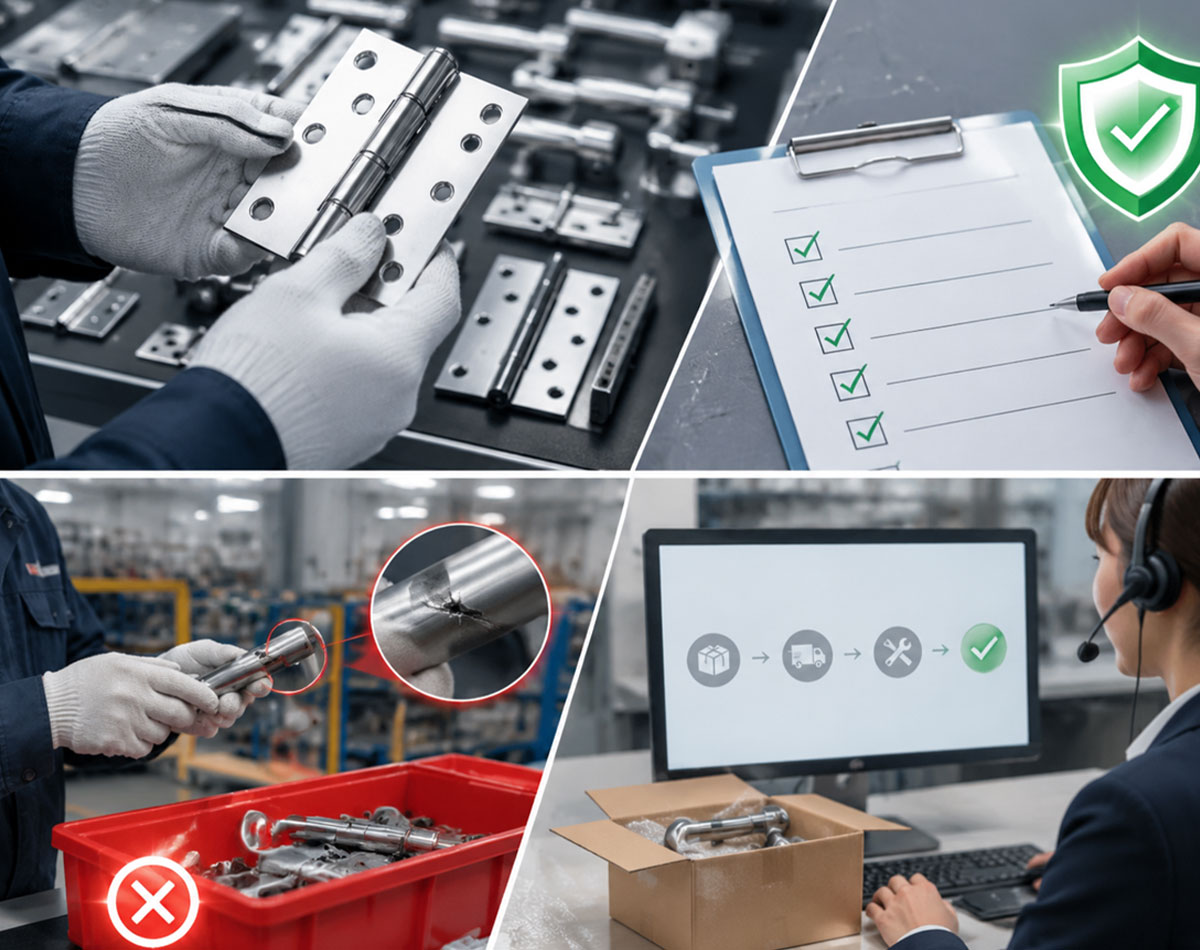
Hardware decisions affect how a door is prepared, assembled and supplied. Reviewing dimensions, functions and documentation before production helps identify avoidable gaps.
Hardware doesn't match door opening
Lock body cutout doesn't fit, hinge mortise is wrong, door closer interferes with frame.
Root cause: Suppliers sell individual products without verifying installation dimensions against your door.
Result: On-site rework, project delays, even entire door sets scrapped.
Certified model ≠ actual product
The model and specs on the certificate don't match what actually gets shipped.
Root cause: Suppliers use generic certificates or pass sub-models off as certified main models.
Result: Fire/safety inspection fails, project delays and fines, lost clients.
No compatibility check across the set
Lock body doesn't match trim, handle doesn't fit cylinder, hinges can't bear the load.
Root cause: Hardware pieced together from multiple suppliers — no one validates the whole set.
Result: Binding, noise, poor operation discovered after installation. Skyrocketing service costs.
Sample quality ≠ production quality
Samples are solid and well-finished, but quality drops when you place the bulk order.
Root cause: Suppliers use Grade A materials for samples, Grade B for production, or switch subcontractors.
Result: Satisfied on first order, complaints on reorders. Customers leave and don't come back.
Too Many Suppliers, No Accountability
Locks from vendor A, hinges from vendor B, door closers from vendor C.
Root cause: Categories are fragmented — each supplier only stands behind their own piece.
Result: Door problem? Lock vendor blames hinges. Hinge vendor blames the lock.
Slow technical support kills project timelines
Wait a week for drawings, three days for technical answers, no one picks up after-sales calls.
Root cause: Suppliers don't have a dedicated technical team — salespeople double as engineers.
Result: Project rhythm slows down. Missed bid windows and delivery deadlines.
A Complete Hardware Package for Your Door Production
D&D coordinates hardware selection and supporting documents around your door requirements. Available support includes hardware schedules, product drawings, technical datasheets, samples and OEM options, subject to the selected products and order scope.
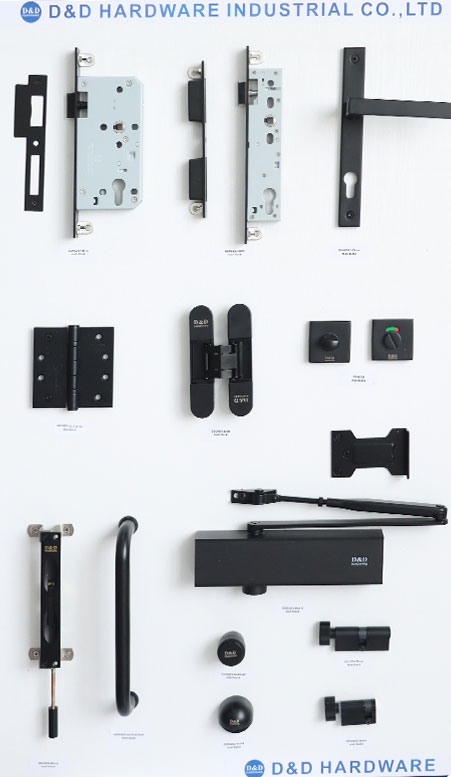
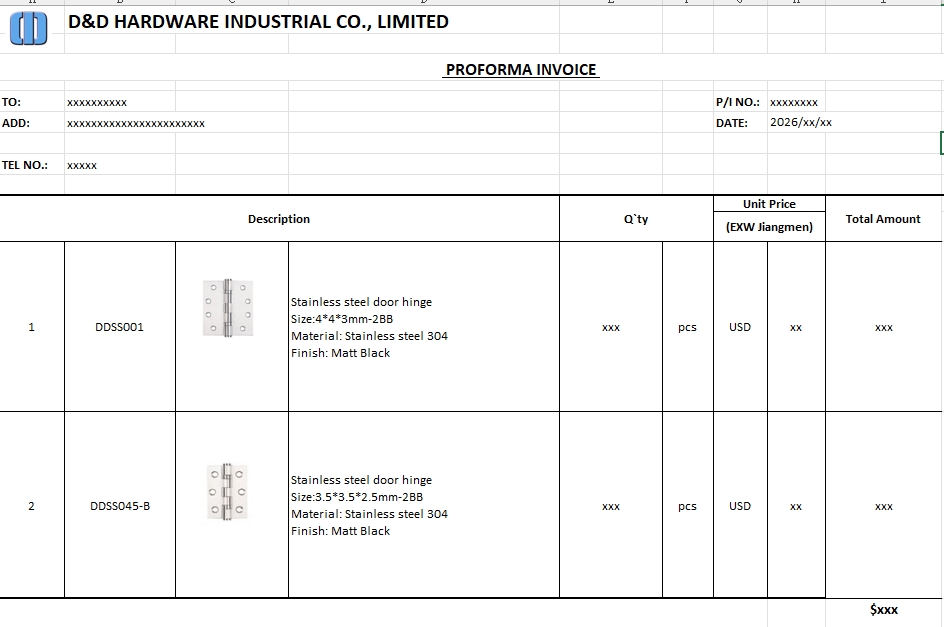
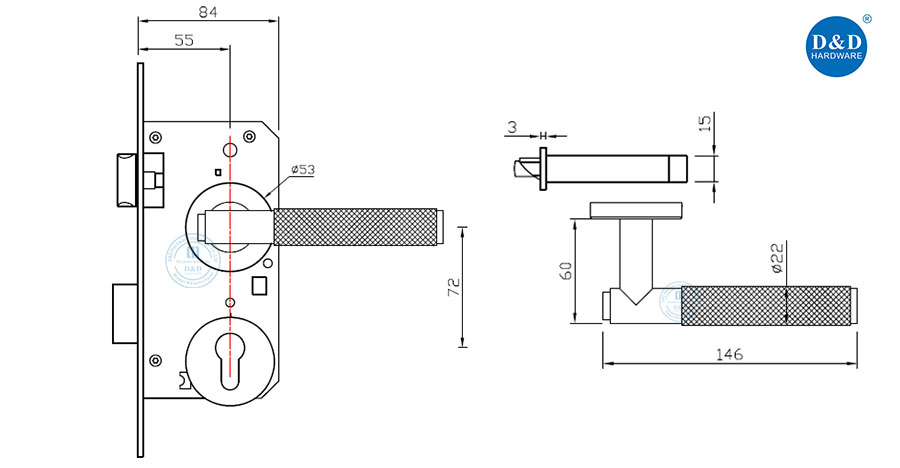
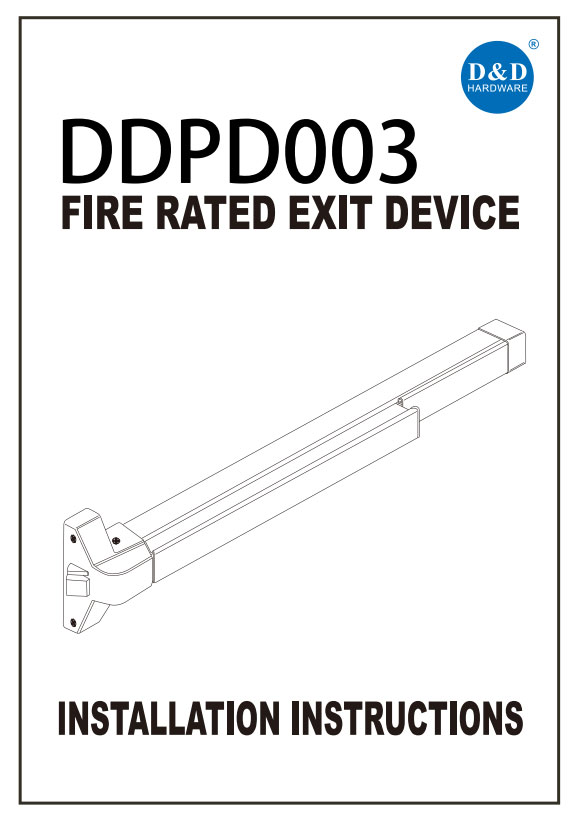
Start with your door construction and operating requirements. The final hardware set is selected for the door dimensions, functions, target market and applicable evidence.
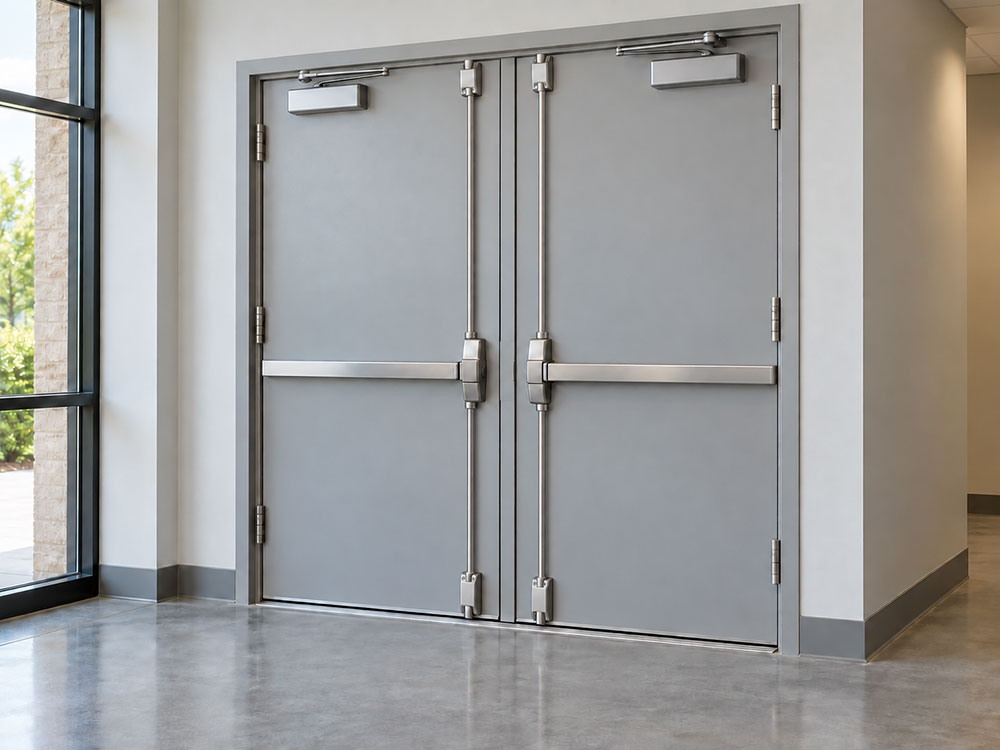
Escape / Panic Door
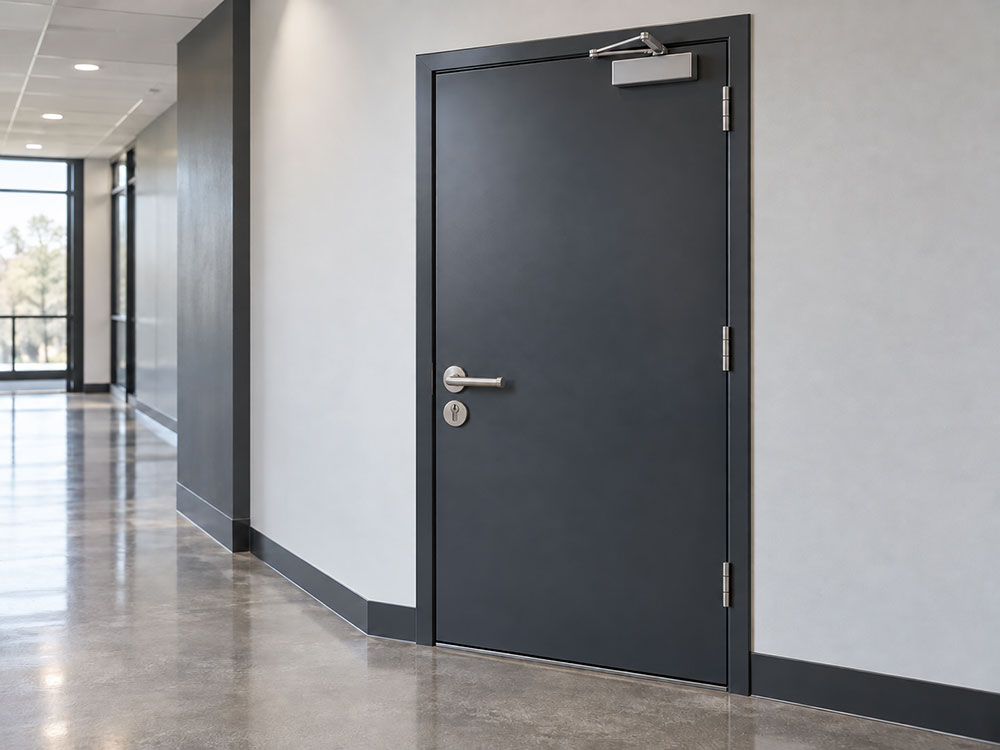
Fire Rated Steel Door
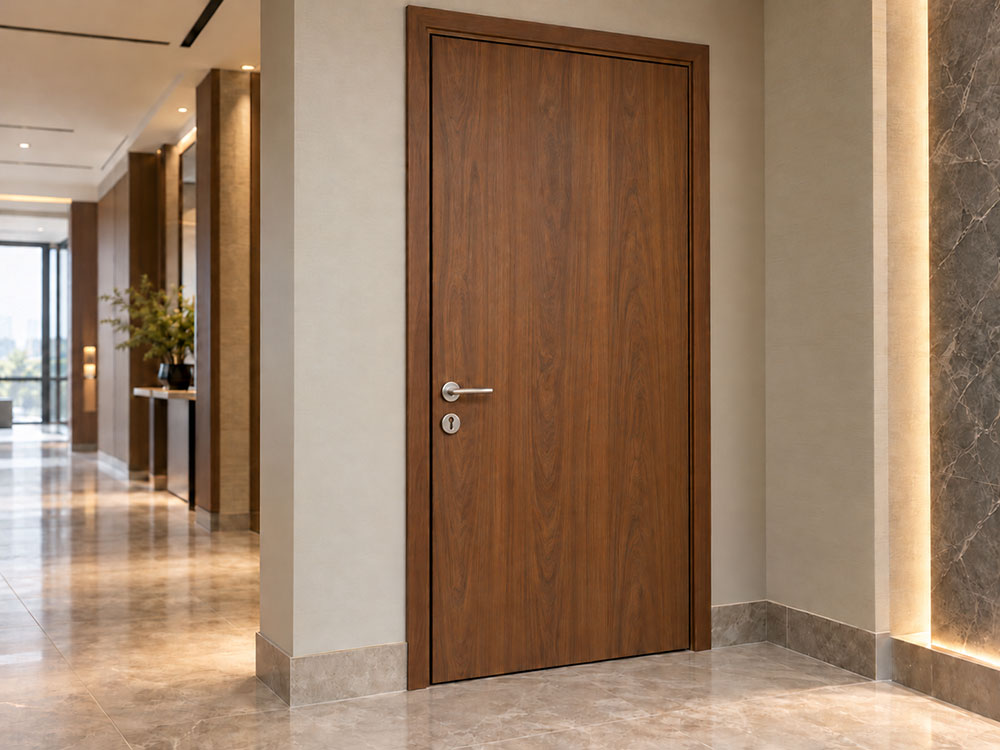
Fire Rated Timber Door
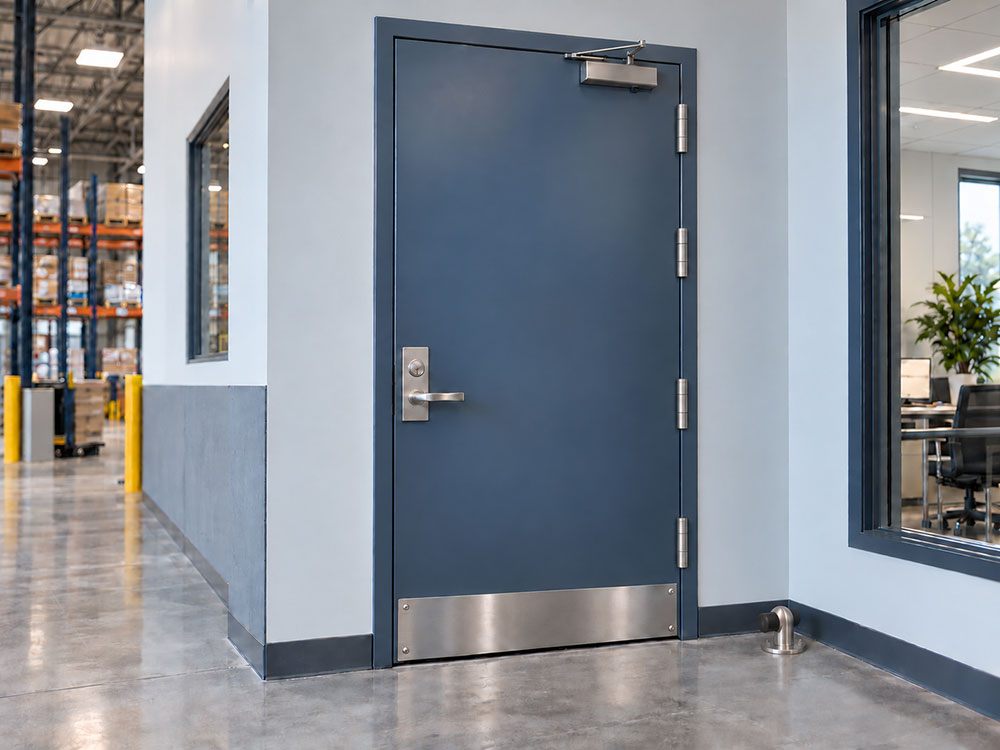
Heavy Duty Commercial Door
Coordinated Hardware for Each Door Opening
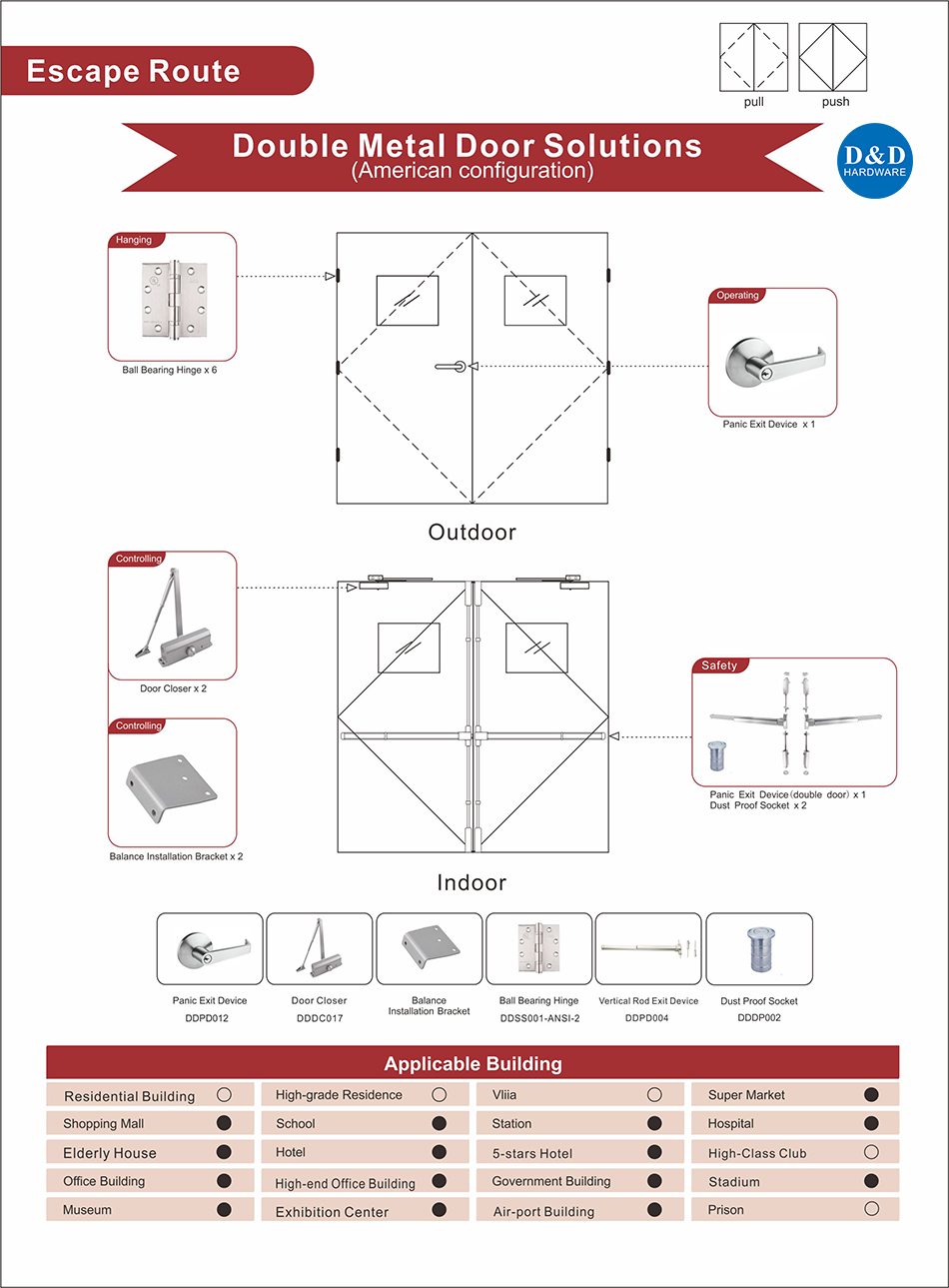
A coordinated hardware schedule connects every selected product to the actual door opening. Door dimensions, handing, swing direction, fire rating, traffic flow, operating functions and fixing positions should be reviewed together before the hardware set is approved.
For a fire-rated outward-opening double metal escape door, a typical American-standard configuration may include:
Certification Support for Global Door Projects


View More⨠

View More⨠

View More⨠

From Hardware Selection to Delivery and Repeat Orders
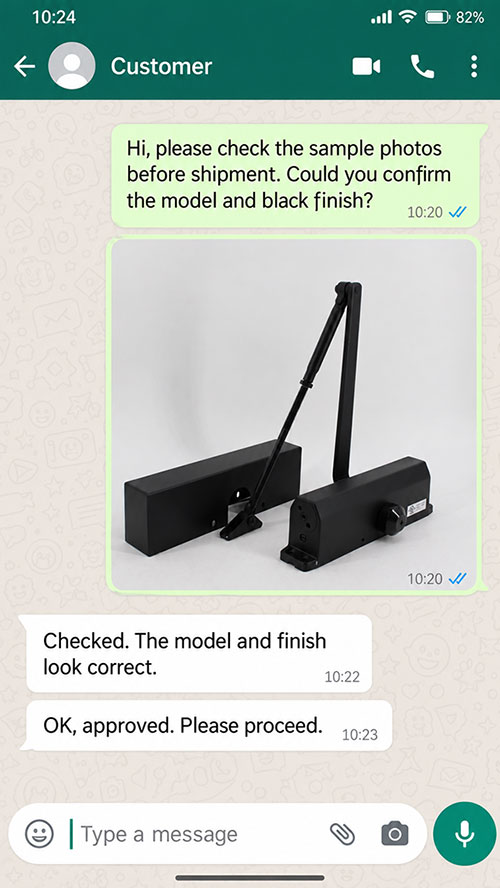
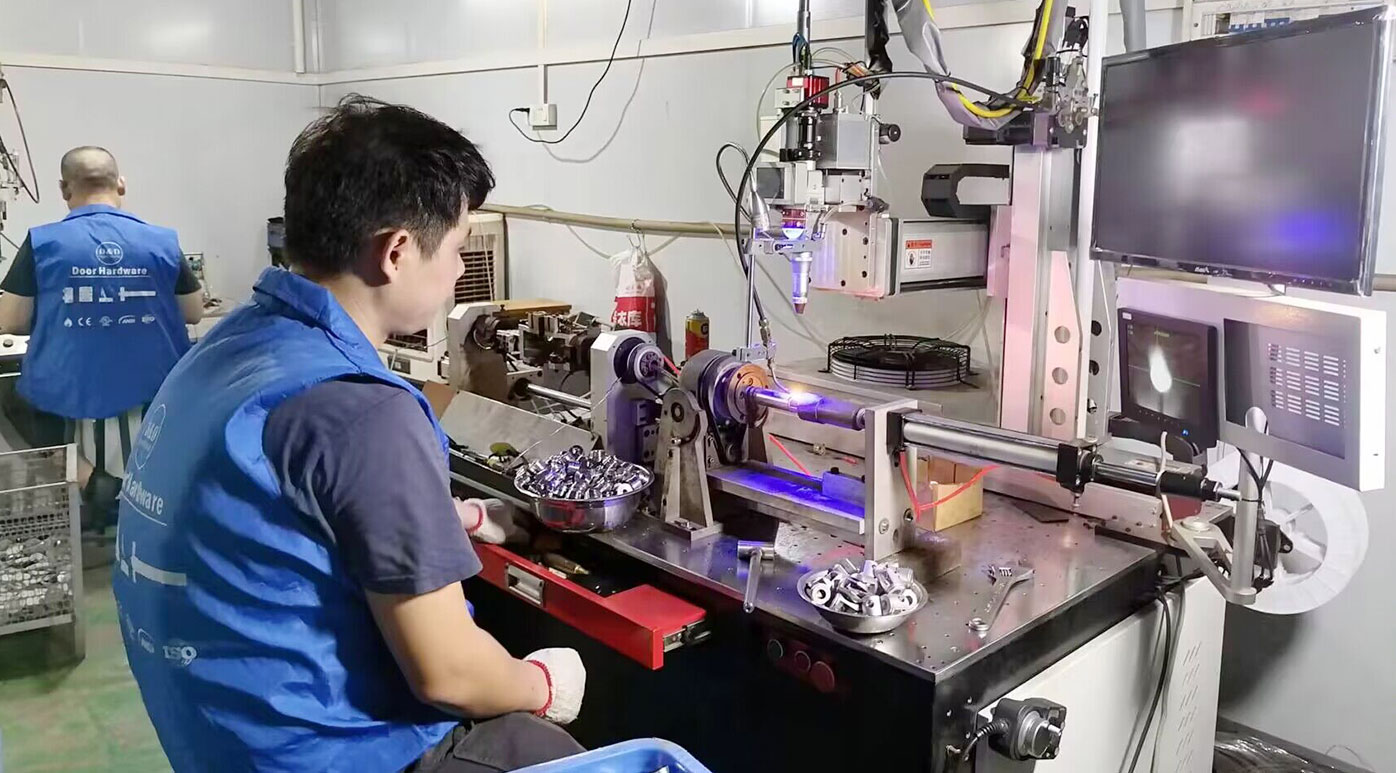
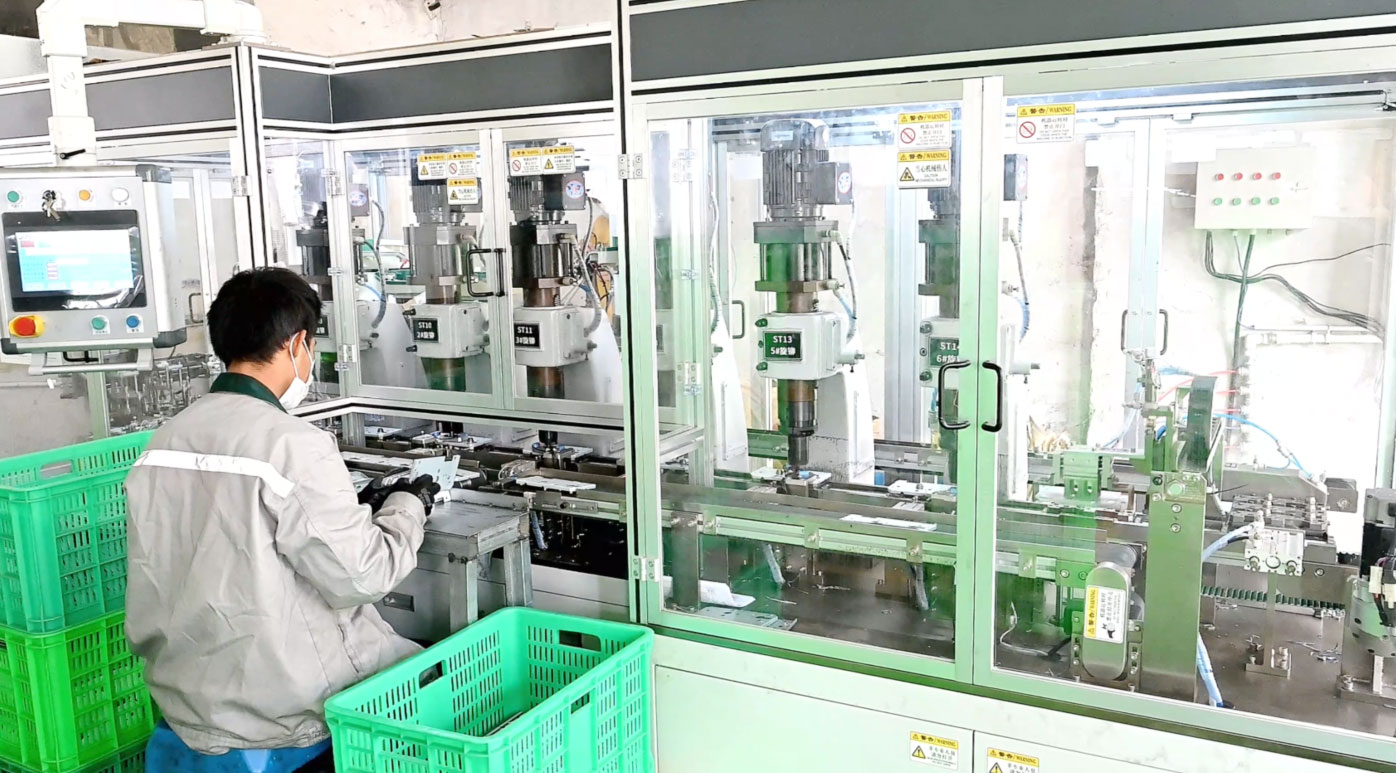
Send us Your Sample and Quality Requirements
SAMPLE & QUALITY SUPPORT
A coordinated hardware schedule connects every selected product to the actual door opening. Door dimensions, handing, swing direction, fire rating, traffic flow, operating functions and fixing positions should be reviewed together before the hardware set is approved.
For a fire-rated outward-opening double metal escape door, a typical American-standard configuration may include:
OEM Hardware for Your Door Brand
D&D supports OEM requirements such as product logos, labels, packaging and finish options. Available changes, minimum order quantities and lead times depend on the selected products and customization scope.