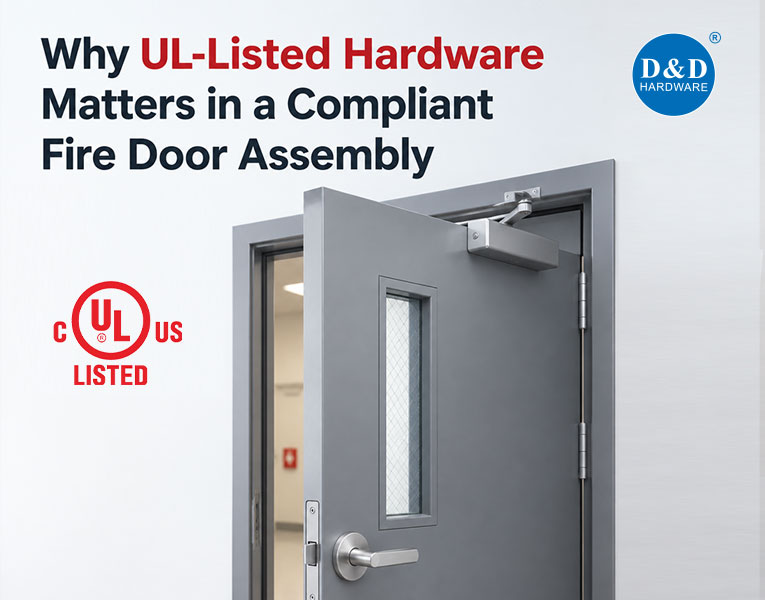
A labeled fire door leaf alone does not establish that an installed opening meets the specified fire protection requirements. The door and frame must work with the hinges, latching hardware, closer and, where required, fire exit device as an assembly. UL listed fire door hardware gives the project team a traceable basis for checking these components. The decisive question is whether the exact hardware model and its permitted use suit the intended opening.

Why the assembly matters
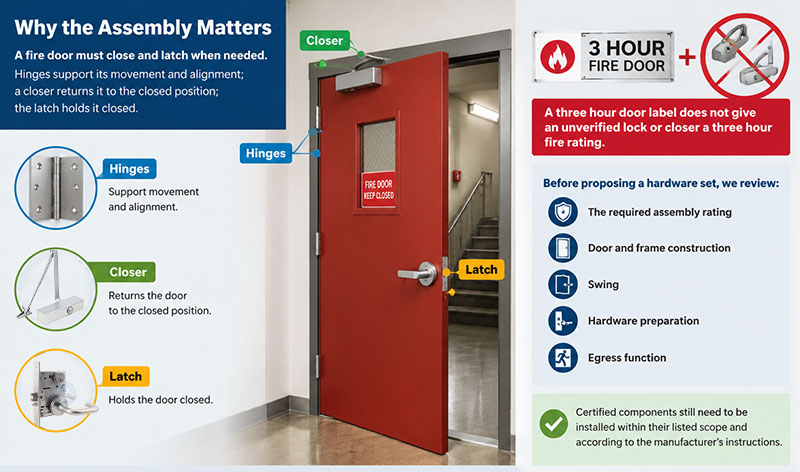
A fire door must close and latch when needed. Hinges support its movement and alignment; a closer returns it to the closed position; the latch holds it closed. These roles sound straightforward, but a mismatch in mounting, door preparation or hardware function can undermine the opening. A three hour door label does not give an unverified lock or closer a three hour fire rating.
We review the required assembly rating, door and frame construction, swing, hardware preparation and egress function before proposing a hardware set. Certified components still need to be installed within their listed scope and according to the manufacturer’s instructions. The adopted code, NFPA 80 requirements and the authority having jurisdiction also govern the completed installation. Certification is evidence about a product’s evaluated use, not automatic approval of every possible combination.
What UL 10C and UL 305 tell you
UL 10C is the Standard for Positive Pressure Fire Tests of Door Assemblies. It is relevant to fire door applications and the certification of associated hardware categories. A claim such as “UL 10C fire rated” needs the product’s actual certification record, rating and application conditions behind it. Hardware should never be assigned a rating merely because another model under the same brand passed a test.
UL 305 addresses panic hardware used for egress. The two standards answer different questions. UL Solutions’ door hardware guidance states that fire exit hardware for rated doors must be listed to both UL 305 and UL 10C, while ordinary panic hardware is listed to UL 305. Before specifying an exit device on a fire door, confirm that the proposed model is certified as fire exit hardware for the intended opening. An ordinary panic device cannot be substituted on the strength of a UL 305 claim alone.

Check each product against the opening
Start with the exact model, function and configuration on the door schedule. Search its file number or model in UL Product iQ and compare the certification holder, product category, applicable standard, rating and restrictions with the submittal. The UL file number is a search reference; it is not a blanket certification for every product in that file or every item our factory makes. Keep the drawing, product marking and installation instructions with the review record.
Then look at the opening as a whole. Does the hinge arrangement suit the labeled door and frame? Does the lock provide the required positive latching? Is the closer installed in the permitted configuration so the door can close and latch? If the opening requires an exit device, is its fire exit certification appropriate? Check any glazing, gasketing or other accessories against the assembly requirements as well. These questions matter whenever the door and hardware arrive from separate sources.
Our UL hardware references
As a fire door hardware manufacturer, D&D supplies hinges, locks, closers and exit hardware for commercial openings. The following references help project teams locate the relevant certification information for our applicable models:
Hardware | Certification stated | UL file number |
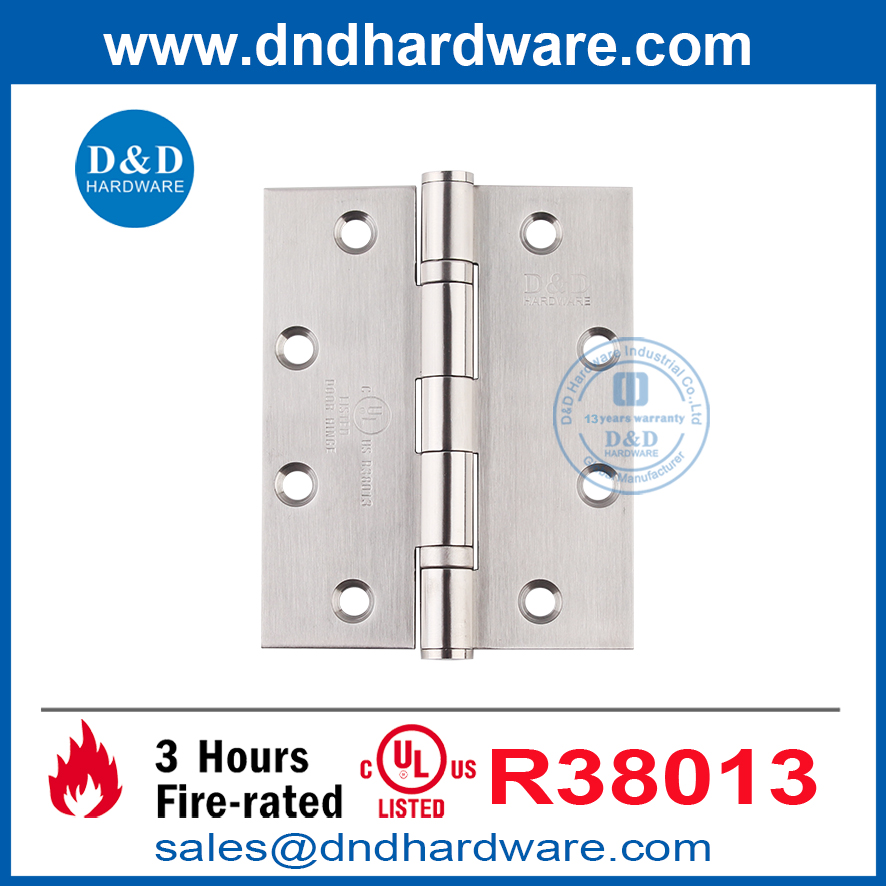
Door hinge | UL/cUL UL 10C, 3 hours; ANSI/BHMA Grade 1 and Grade 2 | R38013 |
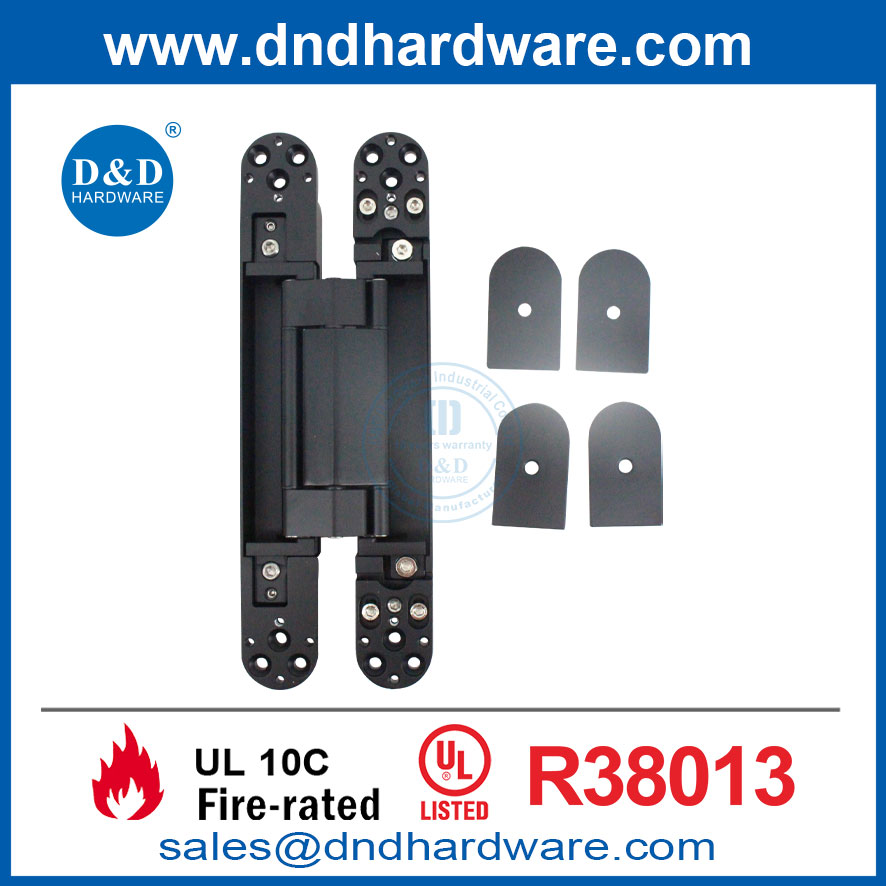
Concealed hinge | UL 10C fire rated | R38013 |
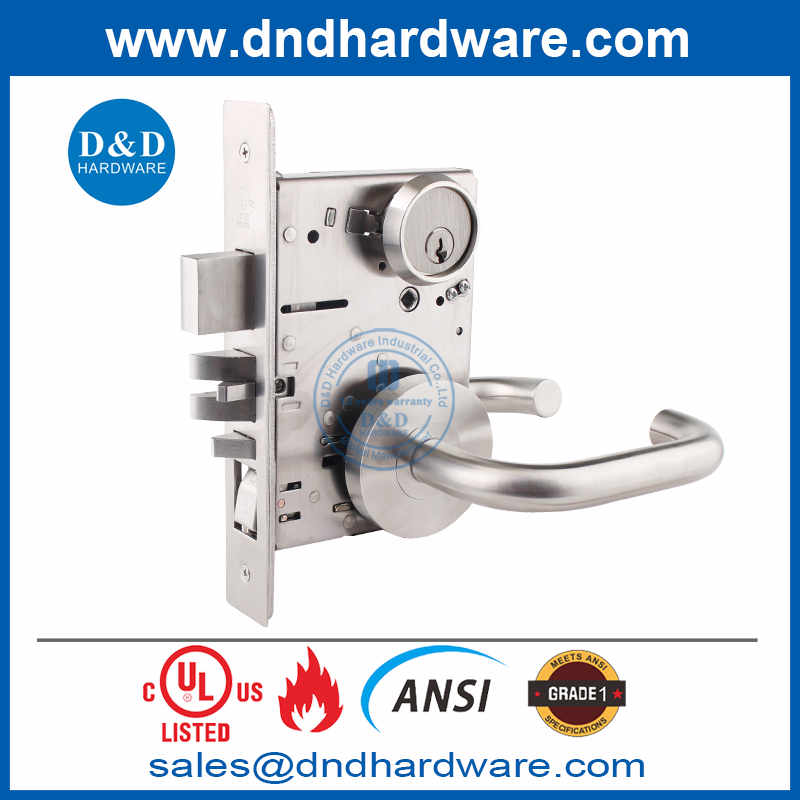
Door lock | UL 10C, 3 hours | R40901 |
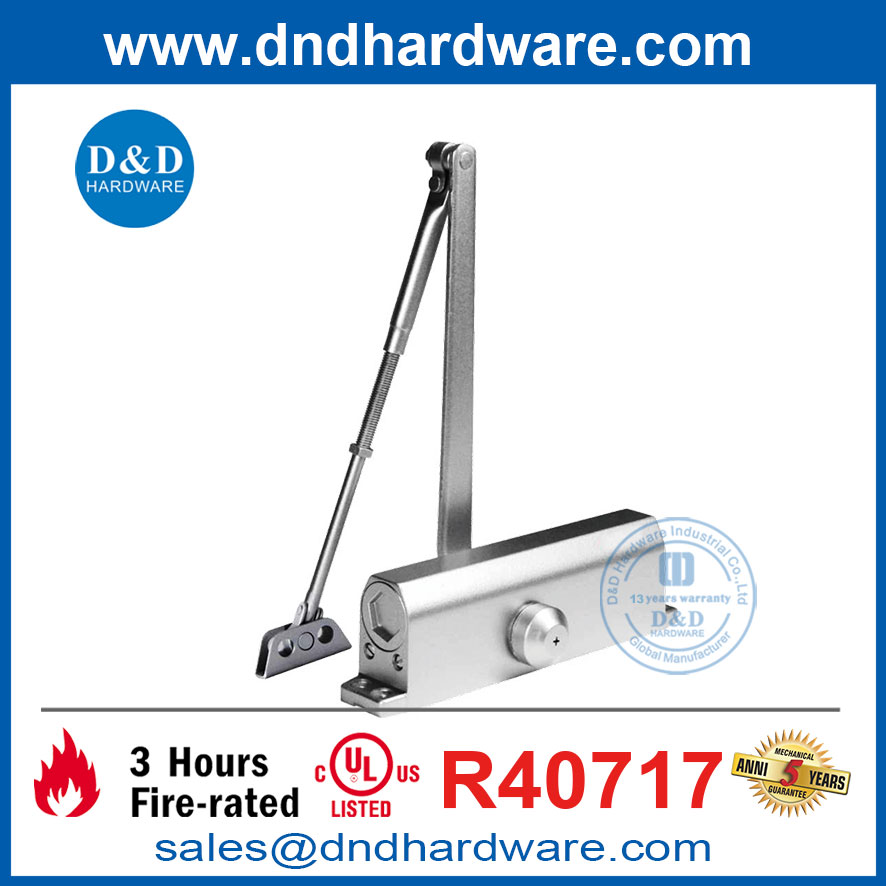
Door closer | UL 10C, 3 hours | R40717 |
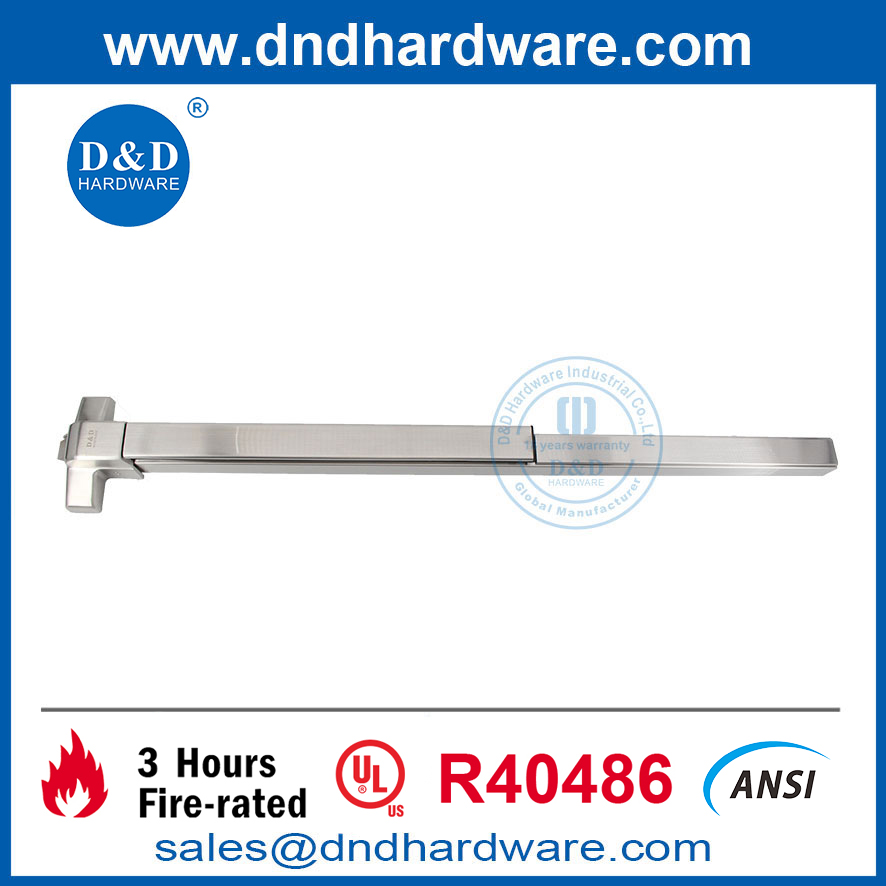
Fire exit hardware | UL 10C, 3 hours; check UL 305 coverage for selected device | R40486 |
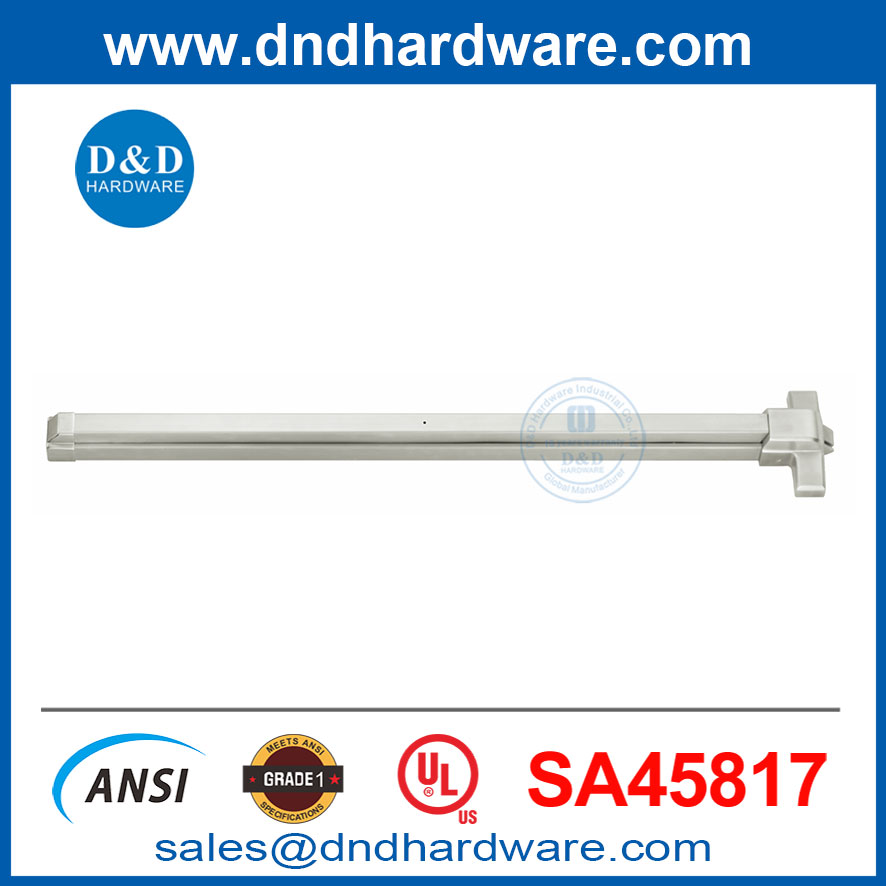
Panic hardware | UL 305 | SA45817 |
These are file references supplied for our product range. Confirm the exact model, current certification scope and stated rating before using one in a project specification. The ANSI/BHMA hinge grade concerns performance under a different standard and should be documented separately from the UL fire certification.
Five questions before approving a submittal
Can you identify the door assembly rating and intended application? Does every proposed hardware model match its certification record and any marked rating? Do the door, frame, strike, preparation and mounting instructions agree? Is a device on a rated exit door certified as fire exit hardware? Can the installed products and their markings be traced back to the approved schedule? If an answer is unclear, resolve it before release for production or installation.

Frequently asked questions
Does a UL labeled door make the whole assembly compliant?
No. The frame, hardware and other components must suit the labeled opening and be installed as required. Check the completed assembly against the applicable project requirements.
Are all UL listed hinges suitable for any fire door?
No. Verify the specific model, size, configuration and permitted application. A file number shared by several models does not make them interchangeable.
Can UL 305 panic hardware be used on a fire rated door?
UL 305 alone does not establish fire exit suitability. Confirm the specific device’s applicable UL 10C and UL 305 fire exit hardware certification.
Does UL 10C automatically mean a three hour rating?
No. UL 10C identifies the positive pressure test standard. Read the product certification and assembly information for the rating and conditions that actually apply.
What documentation can D&D provide for review?
Send us the door schedule and proposed hardware functions. We can identify our matching models and supply the corresponding file references, data sheets and installation documents for project review.
Contact us Now:
Contact: David Jian
Mob:0086-139 2903 7292
Email: David@dndhardware.com, sales@dndhardware.com,
Contact: Jobby Zhang
Mob:0086-137 2599 9617
Email: jobby@dndhardware.com
D&D HARDWARE INDUSTRIAL CO.,LTD
ADD:12th Floor, Building 2, No.898, KeChuang Technical Zone, Jiangmen Avenue, Pengjiang District, Jiangmen City, Guangdong, China (Postcode:529000)
https://www.dndhardware.com
Tel: +86-750-3856396
Fax: +86-750-3856395
 English