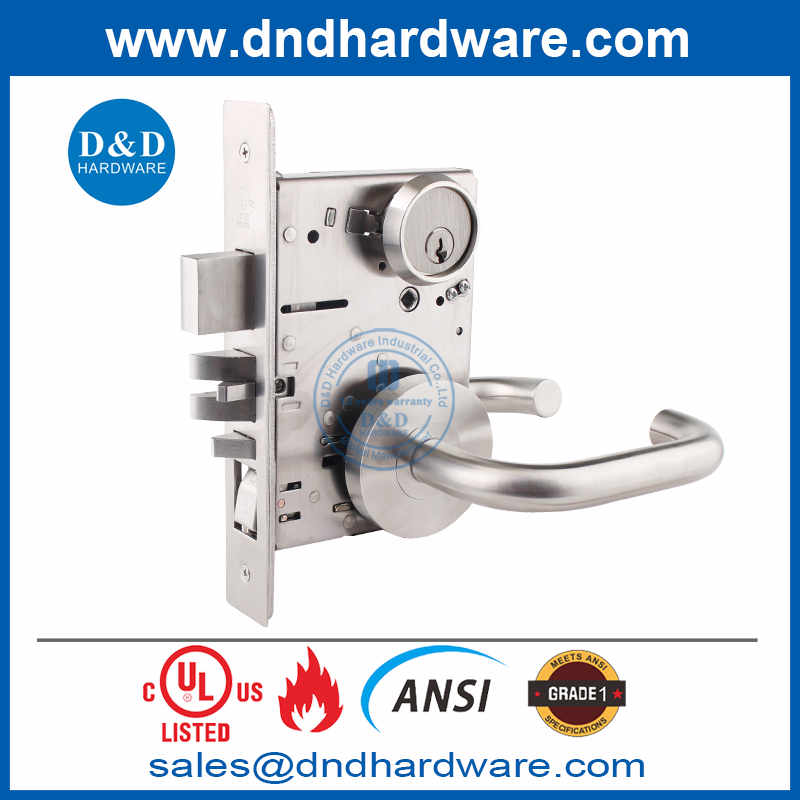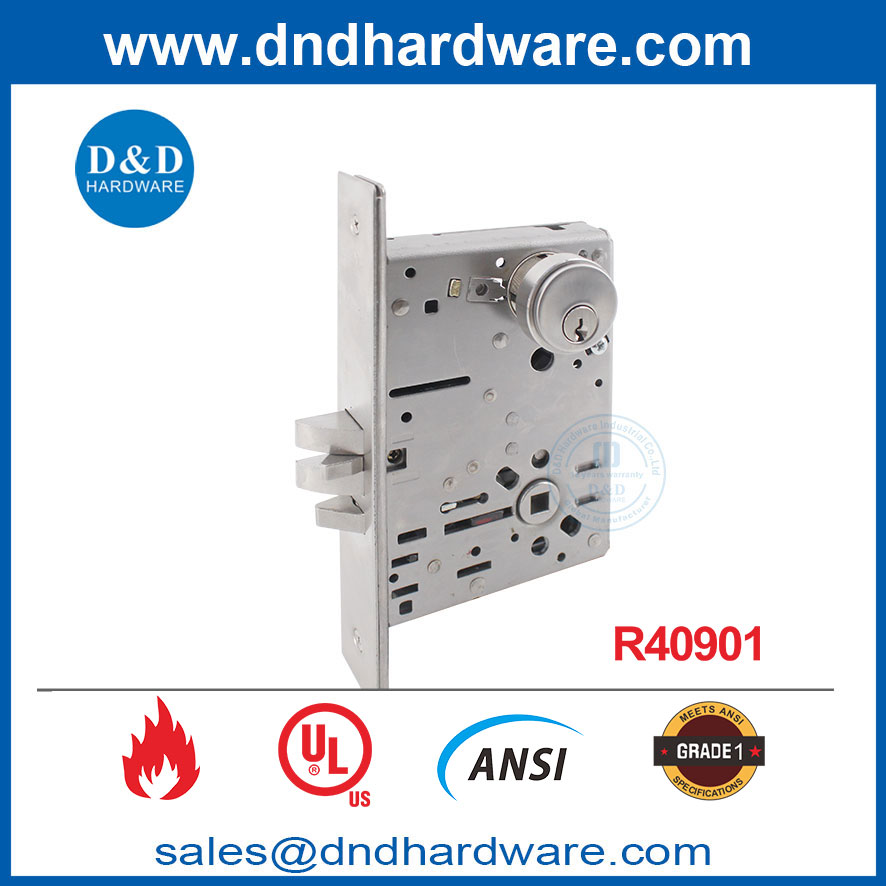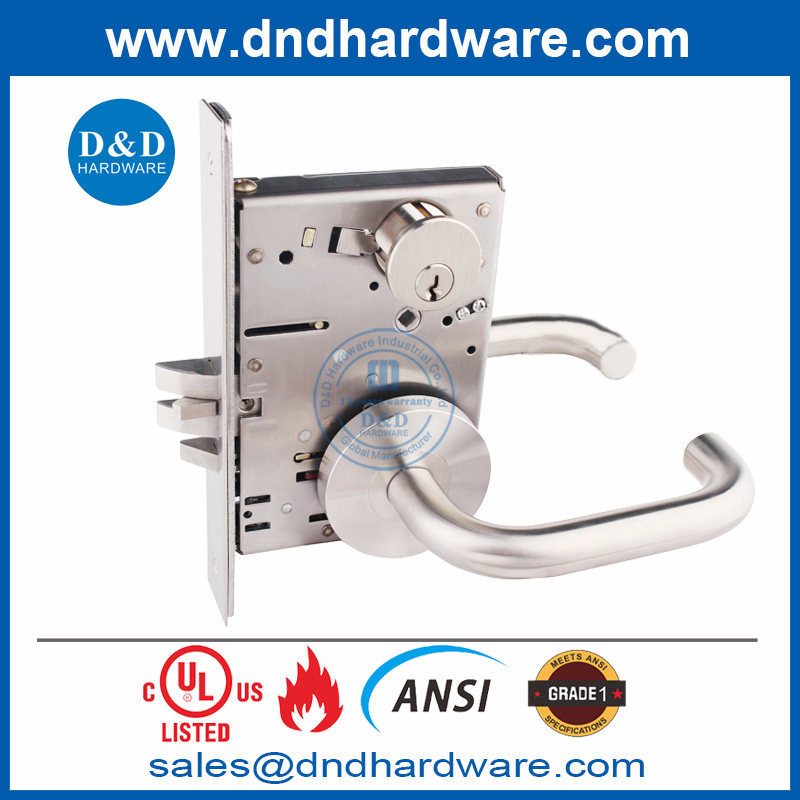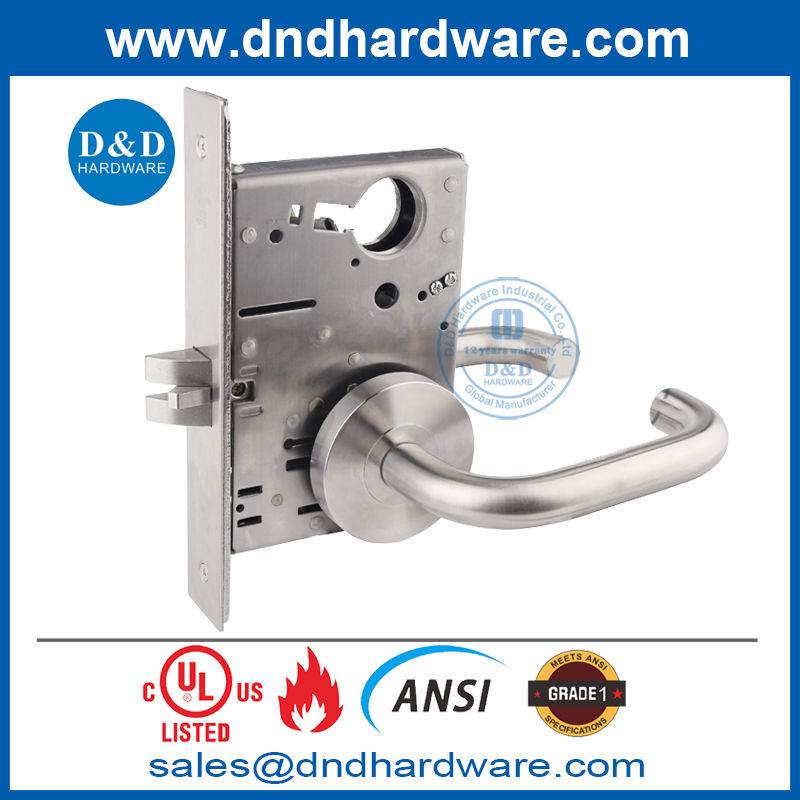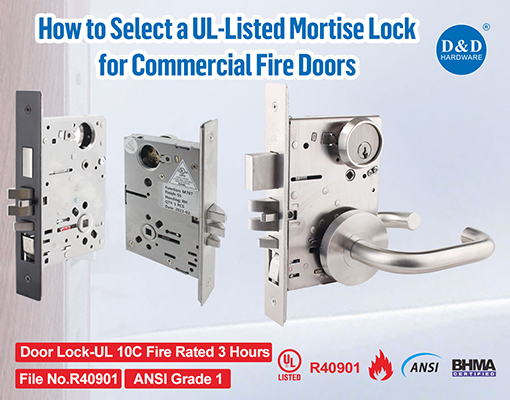
Fire-rated door hardware is not a place to cut corners. Install the wrong lock on a commercial fire door assembly, and you risk more than a failed inspection—you face potential code violations, voided warranties, and a door that may not hold when it matters most. For contractors, architects, and procurement teams, specifying a UL listed mortise lock is one of the most critical decisions in the hardware schedule.
This guide breaks down exactly what to look for when selecting a commercial fire door lock for fire-rated assemblies. We cover the difference between UL 10C and older standards, why the three-hour rating matters, and the practical specifications that determine whether the lock will actually fit your door and pass inspection.

Why UL 10C Matters More Than the Lock Itself
Most specifiers understand that fire doors need fire-rated hardware. What frequently gets missed is the distinction between UL 10B and UL 10C.
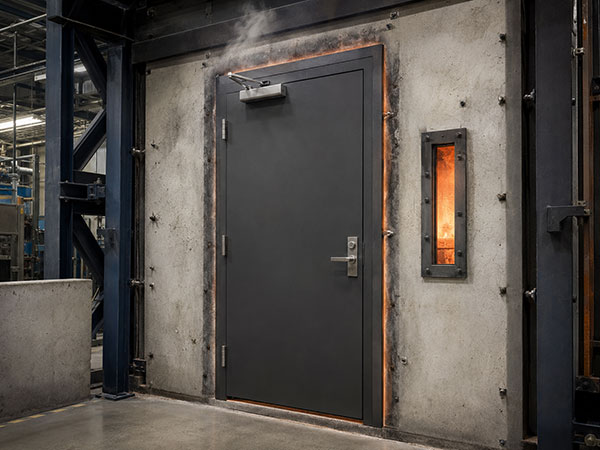
UL 10B tests door assemblies under neutral pressure—essentially a controlled lab environment. UL 10C tests under positive pressure, which replicates what actually happens in a building fire: pressure builds on the fire side, pushing heat and smoke through every gap, seam, and hardware interface.
A mortise lock tested only to UL 10B might hold together in a neutral test but deform or lose latching integrity when the door bows outward under positive pressure. That is why NFPA 80, the Standard for Fire Doors and Other Opening Protectives, requires UL 10C listing for positive-pressure-rated assemblies. If your project is in the United States or any jurisdiction following NFPA 80, a UL 10C mortise lock is not optional—it is the baseline.
The lock does not work in isolation. It is tested as part of a complete door assembly: the leaf, frame, hinges, closer, and seals. But here is the catch—the lock must carry its own UL listing to be eligible for that assembly. An unlisted lock voids the rating, regardless of how well the door itself performs.
UL 10B vs. UL 10C: Key Differences
Parameter | UL 10B | UL 10C |
Test Condition | Neutral pressure | Positive pressure (real-fire simulation) |
NFPA 80 Compliance | Limited applications | Required for positive-pressure assemblies |
Hardware Behavior Under Fire | May deform under real conditions | Tested to maintain latching integrity |
Industry Acceptance | Older standard, phasing out | Current standard for commercial projects |
The Three-Hour Rating: Where It Applies
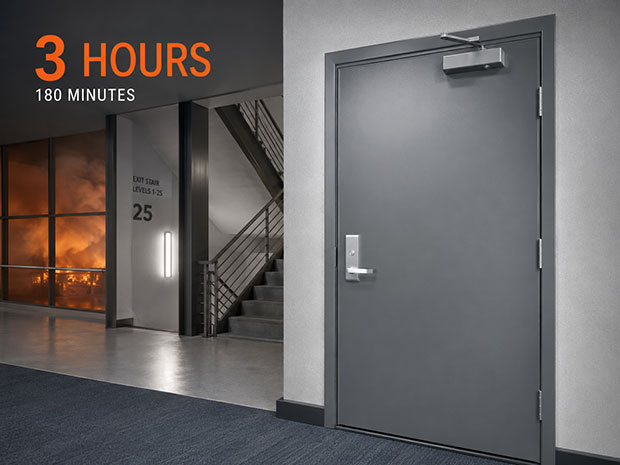
A 3-hour fire rating means the assembly is tested to resist fire for 180 minutes. This is the highest standard commonly applied to door openings, and it is reserved for the most critical barriers in a building. You will typically see this spec on:
·Fire walls separating buildings or major fire compartments
·Exit stairwell enclosures in high-rise construction
·Any opening in a wall rated at three or four hours
Lower ratings—20 minutes, 45 minutes, 90 minutes—serve corridor doors, standard stairwells, and room separations. The rule is straightforward: the door opening rating must match or exceed the wall rating. If you are working on a 3-hour wall, you need 3-hour hardware.
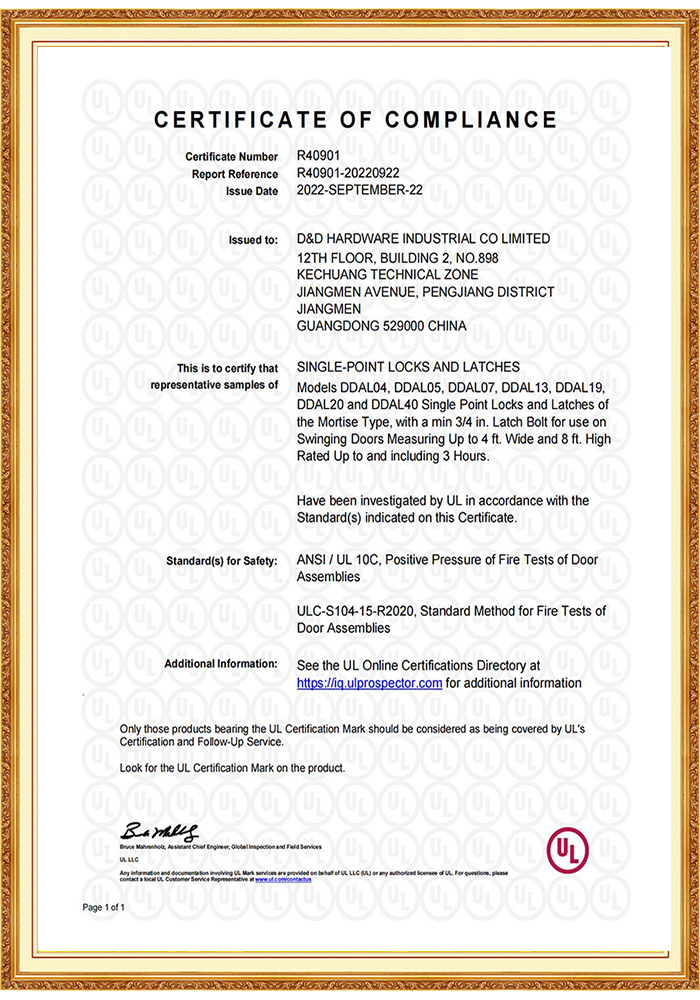
Our mortise locks carry UL 10C Fire Rated 3 Hours certification under File No. R40901, which covers these high-risk applications directly. This listing is publicly verifiable through the UL Product iQ database.
A Practical Selection Checklist
Choosing the right commercial fire door lock comes down to six concrete parameters. Miss one, and you are ordering a part that will not install correctly or will fail to maintain the assembly's listing.
1. Verify the UL File Number
Every legitimate UL-listed lock has a file number. Before you place an order, cross-check that number in the UL Product iQ database. A manufacturer should be able to give you the exact model numbers that appear under their file. If they cannot, or if the database shows a different product range, that is a red flag.
For reference, our listing under File No. R40901 is publicly verifiable and covers our full UL 10C 3-hour mortise lock range.
2. Match Door Thickness and Backset
Door thickness determines whether the lock case will seat properly in the mortise pocket. The standard for commercial hollow metal and wood fire doors is 1-3/4 inches (44.5 mm). Heavy-duty steel doors or solid wood cores may run 2 inches (51 mm) or thicker. Always confirm the lock manufacturer's specified thickness range before the door shop prepares the mortise.
Backset—the distance from the door edge to the center of the cylinder or spindle—is equally critical. For commercial mortise locks in North America, 2-3/4 inches (70 mm) is the standard. The alternative, 2-3/8 inches (60 mm), appears occasionally on narrow stile doors or retrofit jobs, but getting this wrong means the latch will not align with the strike plate.
3. Specify the Correct Lock Function
Mortise locks offer multiple ANSI functions, and the function must match the door's life-safety role. Common configurations for UL commercial door hardware include:
Function | Description |
Entrance/Office | Lockable from the outside, free egress inside |
Storeroom | Always locked from the outside, key retracts latch |
Classroom | Key locks or unlocks the outside lever |
Passage | No locking function |
On a fire-rated opening, the function affects how the latch engages during a fire event. A storeroom function, for instance, keeps the latch projected at all times—critical for maintaining positive latching under pressure. Match the function to the occupancy requirements and the hardware schedule, not just the room name.
4. Check ANSI/BHMA Grade 1 Certification
UL 10C covers fire performance. ANSI/BHMA A156.13 Grade 1 covers mechanical durability. A lock can be UL 10C listed but built to a lower ANSI grade, which means it may not survive the operational cycles expected in a high-traffic commercial building. Grade 1 requires 1,000,000 operating cycles. For hospitals, schools, hotels, and office towers, Grade 1 is the only spec that makes sense. Do not assume UL listing implies mechanical grade—verify both.

5. Confirm Material, Finish, and Corrosion Resistance
Fire-rated mortise locks use steel and high-temperature alloys for internal components, not the zinc or aluminum alloys found in lower-grade hardware. The latchbolt, hubs, and case must resist warping under heat. For the exterior, SUS304 stainless steel is the standard for commercial applications, offering corrosion resistance and clean aesthetics. Finishes like satin stainless steel (SSS) or polished stainless steel (PSS) should match the project's hardware schedule and environmental exposure. Coastal or high-humidity buildings may need PVD finishes for extended salt resistance.
6. Validate Strike Plate and Cylinder Compatibility
The strike plate is part of the fire-rated assembly. A non-handed stainless steel strike that fits standard ANSI preparations will cover most commercial steel and wood frames. For cylinder compatibility, confirm whether the project requires a standard mortise cylinder, an SFIC (Small Format Interchangeable Core), or a full-size IC core for master keying. Ordering the lock body without confirming the cylinder format will delay installation.
Common Mistakes That Delay Projects
Even experienced contractors get tripped up by a few recurring issues when specifying UL listed mortise lock products:
·Assuming "fire-rated" means "UL listed." A lock marketed as "fire-rated" may only carry a European EN 1634-1 listing or an internal factory test. For North American commercial projects, you need the UL mark specifically, and for positive-pressure assemblies, that means UL 10C.
·Mixing UL 10B and UL 10C hardware on the same assembly. If the door is rated under UL 10C, every component in that assembly—lock, hinges, closer, exit device—must be UL 10C listed. Mixing standards invalidates the certification.
·Ignoring the door manufacturer's listing. The lock must be compatible with the specific door manufacturer's UL-listed assembly. Just because a lock is UL 10C listed does not mean every fire door manufacturer has tested and approved it for their assembly. Check the door manufacturer's submittal data before finalizing the hardware schedule.
· Ordering based on price without verifying file numbers. The cheapest quote often comes from suppliers who cannot provide current UL certificates or whose listing does not cover the exact model being shipped. Always request the UL certificate and cross-reference it against the quote.

How to Verify Certification in Three Steps
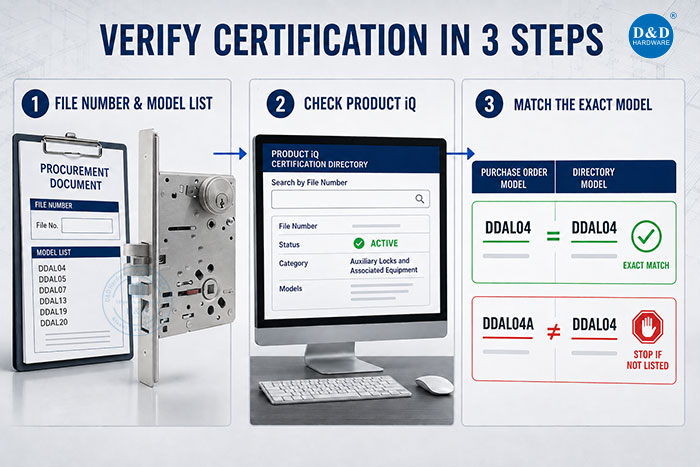
Step 1: Request the file number and model list. The manufacturer should provide the UL file number and the specific model numbers covered under that file.
Step 2: Check UL Product iQ. Enter the file number at iq.ul.com. Confirm the listing is active and covers the product category you need—Auxiliary Locks and Associated Equipment for mortise locks.
Step 3: Match the model number to the quote. Ensure the exact model number on your purchase order appears in the UL directory. If the supplier offers a "similar" model not listed, stop the order.
Selecting a UL listed mortise lock for commercial fire doors is not about finding a lock that fits the door. It is about finding a lock that maintains the integrity of a tested, listed assembly under conditions no one wants to experience. The right lock carries a verifiable UL 10C listing, matches the door's physical dimensions, meets Grade 1 durability standards, and aligns with the project's hardware schedule.
For specifiers working on high-stakes commercial projects—hospitals, high-rises, government facilities, and educational campuses—the checklist above eliminates the guesswork. Start with the file number, confirm the physical specs, and validate every component against the assembly requirements. That is how you get a door that passes inspection and performs when it counts.
Contact us Now:
Contact: David Jian
Mob:0086-139 2903 7292
Email: David@dndhardware.com, sales@dndhardware.com,
Contact: Jobby Zhang
Mob:0086-137 2599 9617
Email: jobby@dndhardware.com
D&D HARDWARE INDUSTRIAL CO.,LTD
ADD:12th Floor, Building 2, No.898, KeChuang Technical Zone, Jiangmen Avenue, Pengjiang District, Jiangmen City, Guangdong, China (Postcode:529000)
https://www.dndhardware.com
Tel: +86-750-3856396
Fax: +86-750-3856395
 English