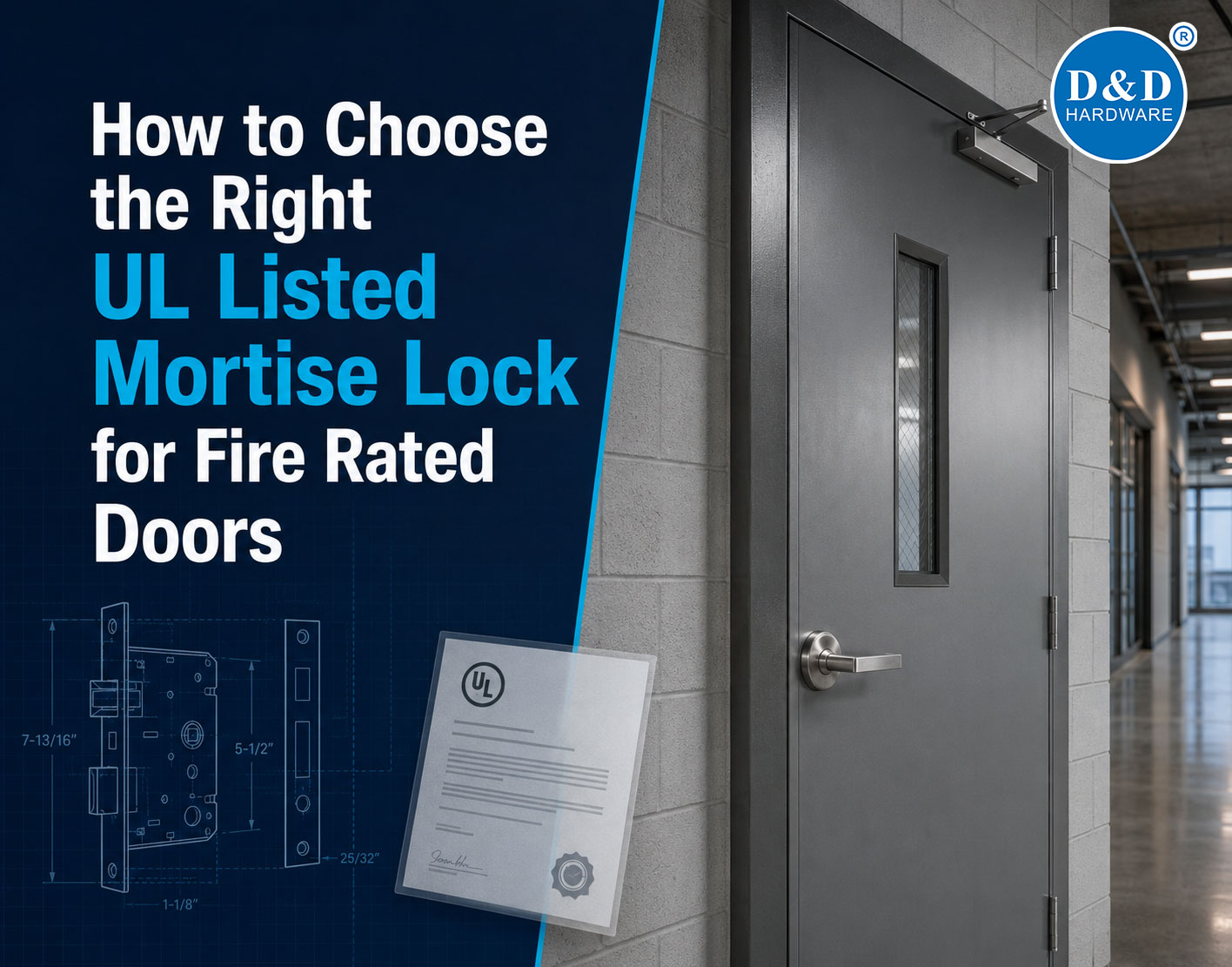
Do local building codes require UL listed mortise locks? Yes, official safety standards like NFPA 80 and the IBC state that you must use them. You need to pick the right fire rated mortise lock to keep people safe. First, make sure the lock passes the UL10C positive pressure fire test. Next, match the lock's fire rating, which ranges from 20 minutes to 3 hours, with your wood or steel door frame material. You should also choose an ANSI/BHMA Grade 1 lock to guarantee strong durability for the whole door setup. Buying a proper UL listed fire-rated mortise door lock ensures your door leaf, frame, and UL hinges stay fully compliant with safety laws. D&D Hardware offers UL certified hardware built for commercial doors. Learning how to select a UL listed mortise lock helps you get the correct certification for all fire rated doors.
Key Takeaways
Select UL 10C positive pressure tested locks to block flames and dangerous smoke.
Make sure the lock's fire safety score and material fit your steel or wood door.
Pick ANSI/BHMA Grade 1 locks to guarantee lasting physical toughness in heavy-traffic areas.
Check official UL logos and code numbers online to make sure you follow all the rules.

How to Choose a UL Listed Mortise Lock for Fire Safety
Selecting hardware for critical openings requires careful evaluation of safety ratings and physical performance. Learning how to choose a UL listed mortise lock ensures that your hardware stays strong when extreme heat hits a building.
Understand Positive Pressure UL 10C Fire Standards
Building safety rules require tough testing for hardware placed on commercial doors. Modern safety codes state that you must install a UL listed mortise lock tested under positive pressure conditions. Older testing methods used the legacy UL 10B standard. That old process tested hardware under neutral or negative pressure, which did not match real fire conditions. In contrast, modern UL10C fire rated testing applies active positive pressure during the burn test.
Testing Aspect | UL 10B Standard | UL 10C Standard |
Pressure Environment | Neutral or negative static conditions throughout | Positive pressure established after 5 minutes |
Fire Simulation | Early stage fire without forced gas airflow | Dynamic real-world fire pushing hot gases outward |
Stress on Hardware | Low pressure on latches, seals, and frames | High physical stress on latching mechanisms and seals |
The UL 10C method creates a neutral pressure area at 40 inches above the floor after five minutes of burning. Positive pressure builds above this point, pushing superheated gases and toxic smoke right against the top part of the door and frame. A UL certified mortise lock must handle these intense hot forces without letting flames break through the opening. Testing labs then hit the hot assembly with a harsh hose stream test to check physical strength.
Verify Latching Integrity and Intumescent Compatibility
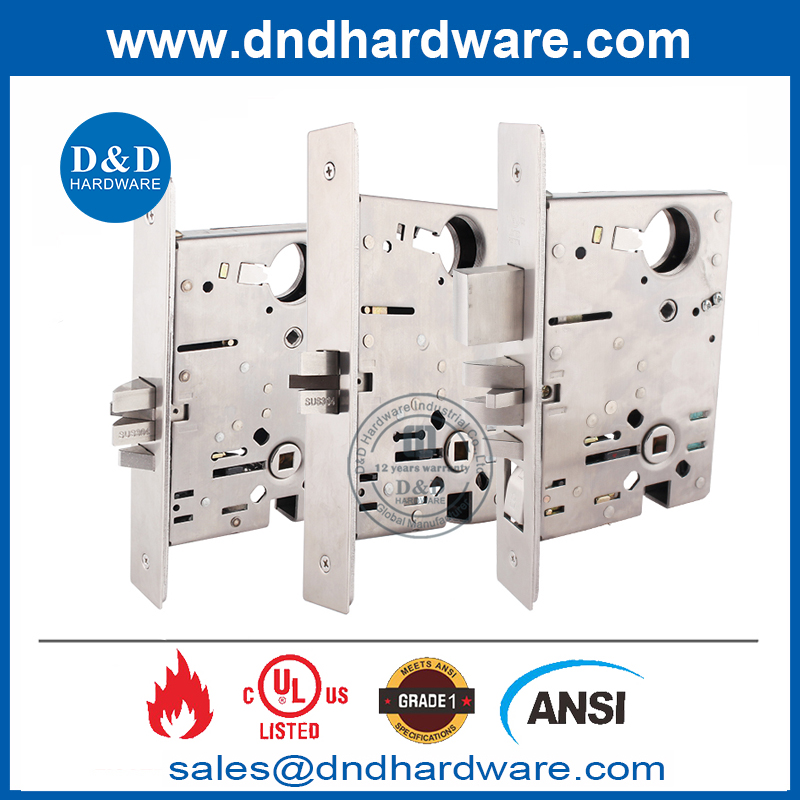
Keeping lock stability during an emergency keeps dangerous flames trapped inside set areas. A fire rated mortise lock must offer continuous positive latching under harsh heat stress. High temperatures make building materials swell quickly. If a latch fails, inside pressure pushes the door open, letting toxic smoke flow into exit hallways.
When you put a mortise lock on a fire door, the latch bolt must stay locked tightly inside the strike plate. Good latching systems keep a firm hold across regular temperature rise ratings of 250°F, 450°F, or 650°F during the first 30 minutes of heat exposure. Using a special mortise lock body for fire rated doors stops heat damage from ruining lock performance.
Omitting required intumescent seals around the lock body prevents effective sealing of cavities between the lock and door leaf during a fire, compromising fire door assembly integrity.
Intumescent pads swell on their own when hit with high heat. This growth seals the hollow inside space cut into wood or composite cores. Using a fire rated mortise lock body with proper intumescent kits stops dangerous gases from leaking past the lock pocket.
You need to pick tough materials to ensure long-term fire safety. D&D Hardware makes accurate hardware using high-grade SS304 and SS316 stainless steel parts. Buying a strong fire rated mortise lock from D&D Hardware ensures your UL fire-rated mortise lock keeps its solid shape. Their smart design process helps you match a safe mortise lock body for fire doors with wood or metal entries. Fitting every opening with a correct UL listed mortise lock for fire door uses gives you full code safety and protects human life.
Matching Fire Rated Mortice Lock Specs to Door Types
You need to check whole door setups using standard UL 10C safety tests. NFPA 80 requires listed parts on every fire rated door for full compliance. Testing labs evaluate how entire door assemblies hold up instead of checking single pieces. You must pair every component correctly to keep people safe.
Align Hardware Ratings from 20-Minute to 3-Hour Assemblies
Building codes set fire safety levels based on wall construction. You must match lock specifications directly with your needed fire protection time.
Fire Rating | Typical Applications | Frame Types | Hardware Requirements |
20 minutes | Openings with 1-hour fire-resistance rating | Drywall or masonry | Self-latching, matching UL labels |
45 minutes | Corridor openings needing 45-minute protection | Drywall or masonry | Self-latching, matching UL labels |
60 minutes | Stairwells in buildings up to 4 stories | Drywall or masonry | Self-latching, matching UL labels |
90 minutes | Stairwells in taller buildings | Drywall or masonry | Self-latching, matching safety labels |
180 minutes | High hazard occupancy separations | Masonry frames only | Self-latching, matching safety labels |
The weakest hardware item sets the safety limit for the whole entry. Putting a 60-minute fire rated mortise lock on a 90-minute door drops its rating to 60 minutes. Picking a correct ul fire-rated mortise lock maintains total heat defense when emergencies happen.
Ensure Substrate Compatibility for Steel and Wood Doors
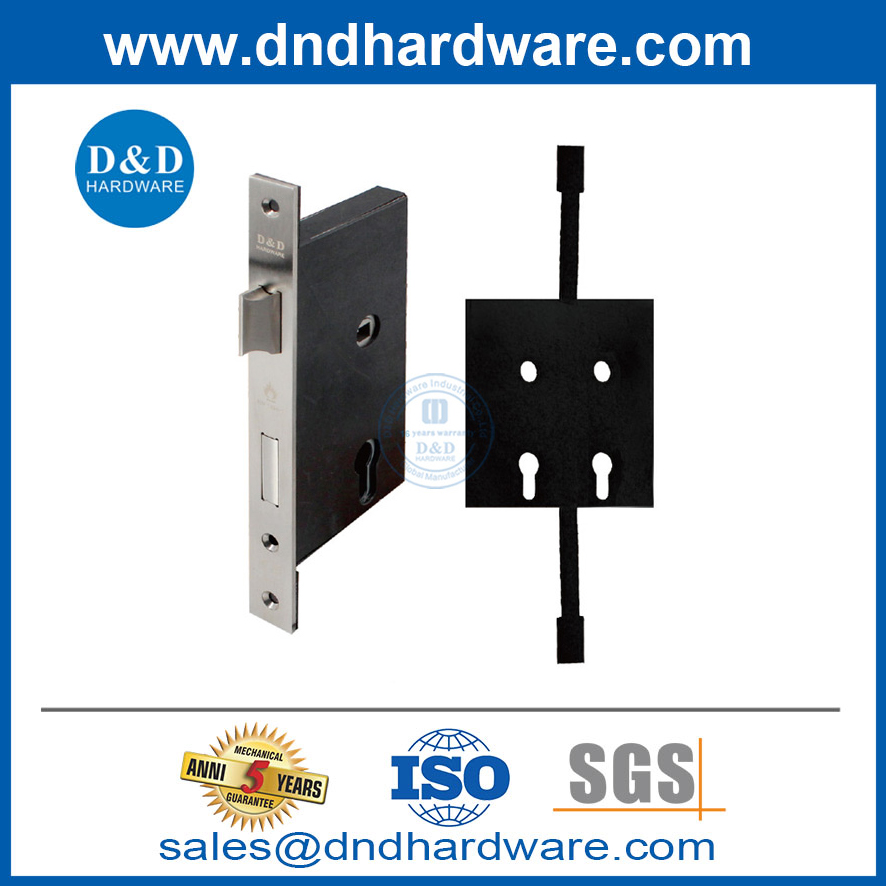
Different door materials behave in distinct ways under hot temperatures. You cannot put a basic mortise lock on a fire door without checking material approvals. Always confirm that UL certification clearly covers wood and metal door setups.
Swapping unlisted parts into door entries voids original factory UL tags right away.
Wrong hardware combinations create weak spots that fail during high heat exposure.
Non-compliant lock setups cause building inspectors to reject your doors during final reviews.
Using unapproved locks brings major legal risks while hurting door frame security. D&D Hardware produces tough SS304 lock bodies meant for steel entries. Putting a certified mortise lock body for fire doors in wood or metal frames ensures real strength. Choosing approved fire rated mortise locks safeguards overall building structure. A good fire rated mortise lock stays working well when exposed to high heat. Mounting a valid ul listed mortise lock prevents safety rule violations on commercial entryways.
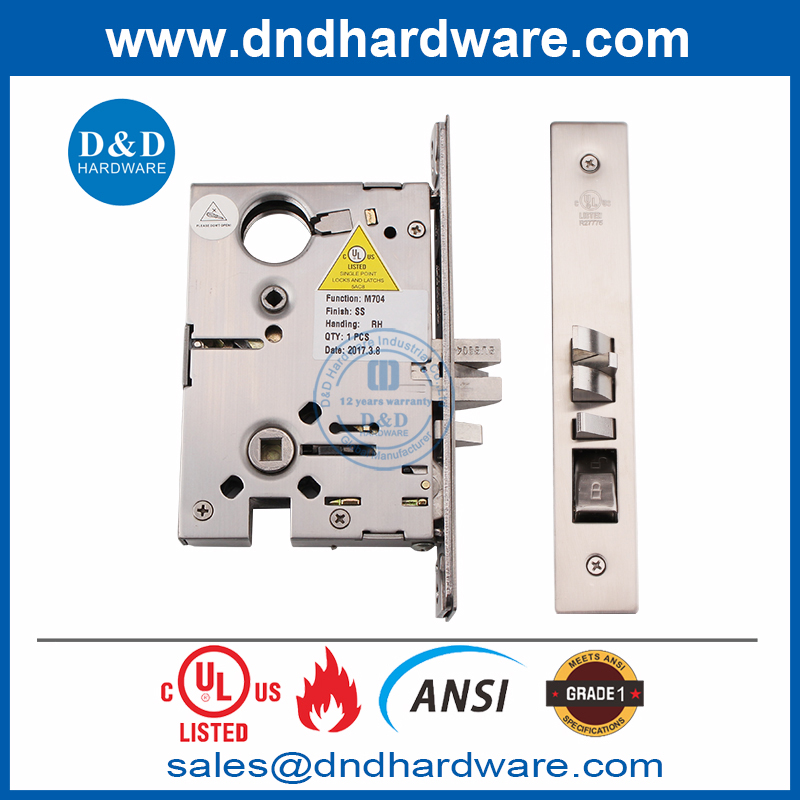
Mechanical Durability of a UL Listed Mortise Lock
Specify ANSI/BHMA Grade 1 for High-Traffic Fire Doors
You must pick strong locks that easily handle daily use in busy public spaces. Main doors in schools, hospitals, and offices face nonstop opening, closing, and hard slams. An ANSI/BHMA A156.13 Grade 1 rating proves that hardware survives tough lab tests. This official standard forces locks to work 1,000,000 times under a heavy 10-pound push. Choosing a sturdy ul listed commercial door lock protects busy entries against wear, tear, and physical abuse.
Strong metal parts do not guarantee that locks hold up inside hot fires. You still need a separate ul 10C test to check fire safety and meet building codes. Lock bodies made from thick stainless steel keep their original shape during severe heat exposure. Solid SUS304 stainless steel latchbolts offer crucial structural support when exposed to high temperatures.
Grade 1 provides more information about mechanical robustness than a fire-door listing alone. A Grade 1 lock can be an excellent mechanical product and still be unacceptable for a particular fire-rated opening.
Select Operational Lock Functions for Commercial Safety
Choosing smart lock settings ensures fast escape during sudden life-threatening emergencies. Anti-panic designs like ANSI F12 or F13 let people open doors instantly with one quick push. Classroom security locks allow teachers to lock outside handles from inside rooms during bad situations. Meanwhile, the inside handle stays unlocked so everyone escapes quickly. Mounting a valid ul certified mortise lock guarantees fast action when people rush through fire rated doors.
Safety codes ban dangerous lock types on main exit paths to keep people safe. NFPA 101 rules prohibit double-cylinder deadbolts on fire exits because missing keys trap people inside during fires. Instead, classroom deadbolts use simple inside thumbturns to pull back heavy bolts easily under safety rules. You can also pick a fire rated mortise lock body with safe electric features. These systems unlock outside handles during sudden power loss, helping emergency crews enter stairwells. Installing an approved ul listed mortise lock keeps building setups safe while using proper fire rated mortise locks everywhere.
Spatial Fitting and Smart Lock Integration Requirements
Accurate physical measurements guarantee that your lock fits correctly inside the door leaf. You must prepare the door pocket carefully before installing hardware on safe openings.
Measure Pocket Dimensions and Backset Requirements
You need to follow a structured measuring procedure to ensure exact alignment and maintain structural integrity. Commercial mortise locks typically require a standard 1-3/4-inch door thickness and a 2-3/4-inch backset distance.
Check the maker's guide to find the pocket size, backset distance, and hole locations.
Place the guide on the door edge at the right height, usually 38 to 40 inches up.
Mark the pocket ends, faceplate border, center line, key hole, and thumbturn spots.
Drill the main pocket, make key holes from both sides, and set the faceplate flat.
Installing a 2-3/4-inch backset lock on a 2-3/8-inch stile places the cylinder outside the reinforcement zone.
Modifying door material beyond approved templates alters construction and compromises the ul label. You must specify a factory-prepared door leaf for exact physical fitting. D&D Hardware supplies custom architectural hardware solutions tailored for specialized commercial doors.
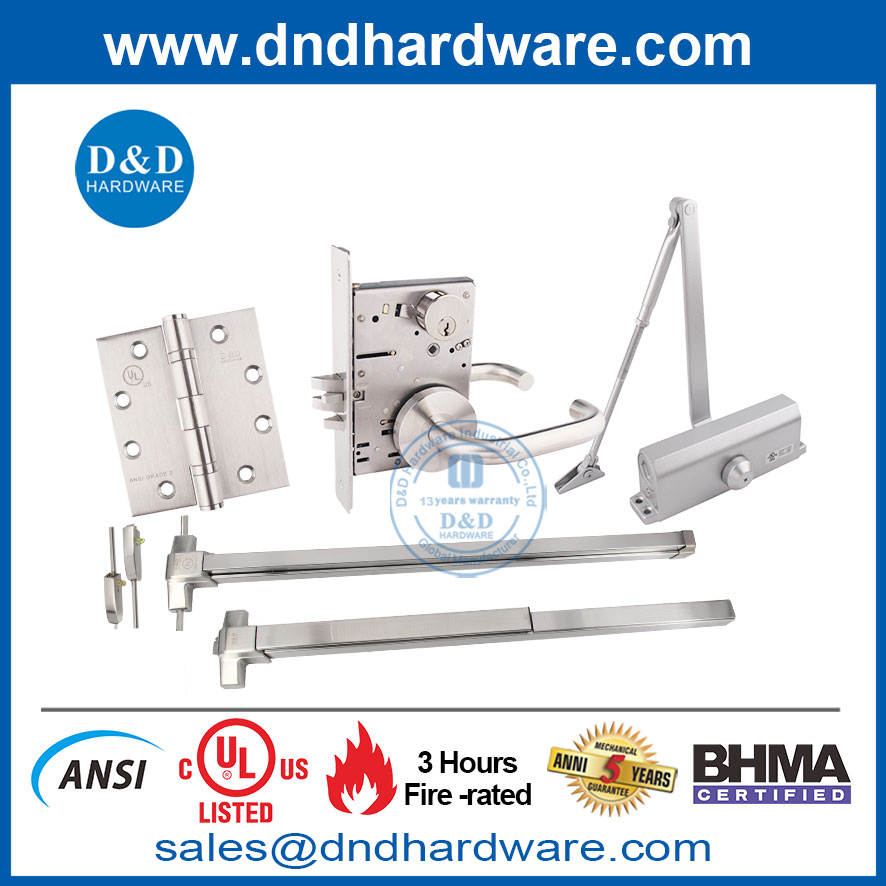
Electrified Functions for Smart Access Control Systems
Modern smart facilities connect door locks directly to central access control platforms. Selecting electrified options for a mortise lock on a fire door requires choosing between fail-safe and fail-secure operations.
Mechanism | Power State | Behavior | Fire-Rated Compatibility |
Fail-Secure | Locked when de-energized | Power loss keeps door locked; energizing permits access. | Latch remains extended, maintaining security on fire rated openings. |
Fail-Safe | Locked when energized | Power loss releases door; alarm grants free passage. | Latch remains extended, ensuring safety on fire rated openings. |
Fail-safe setups release exterior handles upon power loss, enabling quick evacuation during emergencies. Meanwhile, fail-secure configurations maintain high physical security for sensitive areas during utility outages. D&D Hardware manufactures an electrified fire rated mortise lock body that integrates seamlessly with building control systems. Every ul listed mortise lock maintains a latch extended under both power conditions, ensuring complete safety compliance under standard ul testing rules.
Ensuring Quality Compliance with D&D Hardware Solutions
Verify UL Certification and Factory Quality Audits
You must confirm official credentials before installing hardware on commercial fire openings. A genuine ul listed mortise lock carries distinct markings on its case and packaging. You can complete verification through six systematic steps:
Record the manufacturer name, model number, and function from product sheets.
Inspect the lock case and faceplate for the physical UL symbol and model identifier.
Locate the UL file number on product labels or certification documents.
Search the UL Product iQ database to confirm active listing coverage.
Match the certification holder name directly to your hardware supplier.
Re-check the delivered locks against approved submittal records upon arrival.
D&D Hardware maintains strict quality control and consistent manufacturing standards. Models like the DDAL13 demonstrate robust testing and certification across multiple global standards. This ul fire-rated mortise lock features a UL 10C 3-hour rating under UL File NO. R40901. It also achieves BS EN12209 performance for 200,000 cycles and EN1670 corrosion resistance for 240 hours. Selecting hardware with valid UL listings ensures reliable physical security, smooth operation, and long-term fire protection across high-traffic facilities.
Ensure Full Assembly Compatibility Across Hardware
Fire door hardware must work together as a tested system. A single ul certified mortise lock loses its safety value without proper component coordination. You must verify backset dimensions like 2-3/4 inches and standard door thickness of 1-3/4 inches during planning. You must also evaluate door lock body engineering, frame rebates, and cylinder positions to eliminate binding. Precise pocket preparations prevent door core damage and keep faceplates sitting completely flush.
A fire rated mortise lock requires full system testing under UL positive pressure rules. You cannot substitute unlisted strike plates, latches, or trim without ruining compliance. D&D Hardware supplies fully integrated assemblies for commercial doors, supporting proper intumescent seals and close tolerances under strict safety standards. Buying matching fire rated mortise locks and hardware components guarantees complete protection for modern fire door assemblies. Official fire certification depends entirely on full assembly compliance. This thorough engineering approach keeps critical openings fully operational during emergency evacuations.
Selecting hardware requires careful verification of building standards. Learning how to choose a ul listed mortise lock protects human lives and valuable property during emergencies. First, verify UL 10C positive pressure testing compliance. Next, match the needed fire duration rating with your specific door frame material. Then, check UL ANSI/BHMA Grade 1 mechanical durability for high-traffic door entryways.
Before placing final orders, review this specification checklist:
Confirm active UL certification records online.
Verify complete door latching compatibility on fire rated doors.
Select a UL certified fire rated mortise lock function.
Partnering with D&D Hardware ensures valid UL fire safety compliance, code adherence, and reliable long-term performance across all project openings.

FAQ
Are UL listed mortise locks required by building codes?
Yes, local building codes force you to use them. Passing safety checks means putting in a real UL listed mortise lock. Fire safety rules demand valid certificates for every lock set. This tough testing makes sure door panels stay closed during scary fires.
What makes a UL certified mortise lock safe for high temperatures?
These hardware items use strong stainless steel parts and auto-latching bolts. They survive intense flames in UL burn tests without bending or breaking down. Their heavy build keeps the entry shut tight, which stops toxic smoke from spreading.
Can you install a mortise lock on any fire rated door?
No, you must check the door material before putting in any lock. Read the maker notes to see if it works on steel or wood doors. Pairing the right lock case keeps the entrance strong and follows safety rules.
How do you confirm official UL approval for commercial doors?
Look at the lock case to find the stamped UL symbol and file number. Then, look up the active safety records using the online UL tool. Checking that your supplier matches the official paperwork ensures real safety.
Contact us Now:
Contact: David Jian
Mob:0086-139 2903 7292
Email: David@dndhardware.com, sales@dndhardware.com,
Contact: Jobby Zhang
Mob:0086-137 2599 9617
Email: jobby@dndhardware.com
D&D HARDWARE INDUSTRIAL CO.,LTD
ADD:12th Floor, Building 2, No.898, KeChuang Technical Zone, Jiangmen Avenue, Pengjiang District, Jiangmen City, Guangdong, China (Postcode:529000)
https://www.dndhardware.com
Tel: +86-750-3856396
Fax: +86-750-3856395
 English