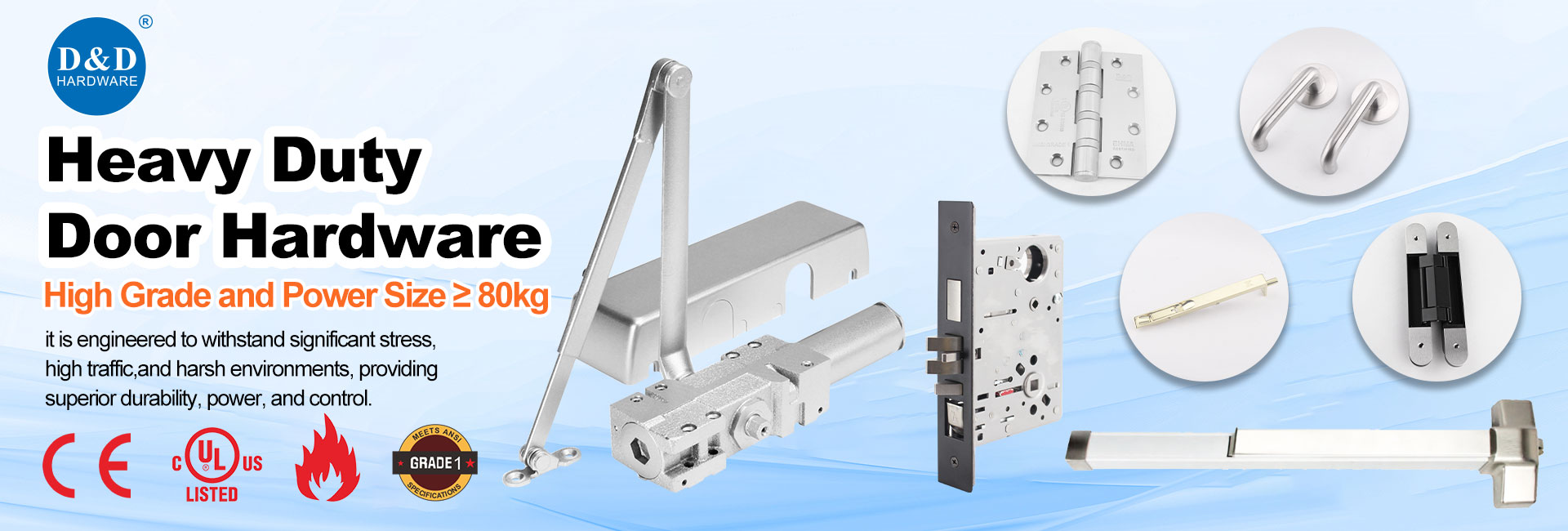
When you pick heavy duty door hardware, you want it to be safe and strong. The right door hardware protects your space from damage and keeps it safe. You should always choose hardware that fits your door and where it is used. Some doors need more security. Other doors get used a lot or face bad weather. D&D Hardware is special because it has many years of experience and top certifications that people trust around the world. Look at these important certifications:
Certification | Description |
BS EN | European Standard for product safety and performance |
CE | Conformité Européenne marking showing it meets EU rules |
UL | Underwriters Laboratories certification for safety standards |
ANSI | American National Standards Institute standards for quality and safety |
BHMA | Builders Hardware Manufacturers Association certification for hardware quality |
With heavy duty door hardware, you can feel calm. Your doors will help keep you safe every day.
Key Takeaways
Pick heavy duty door hardware for safety and strength. It keeps your space safe and lasts a long time.
Think about the door type and where it is. Outside doors need hardware that can handle weather. Inside doors can focus more on how they look.
Check what kind of security you need for each door. Doors used a lot need stronger locks and hardware for more safety.
Choose the right materials. Stainless steel is strong and does not rust. It is best for places near the ocean.
Look for certifications like UL and ANSI. These show your hardware is safe and good quality.
Take care of your hardware often. Clean and oil it to help it last longer and work well.
Buy good quality hardware. It might cost more at first but saves money later on repairs and new parts.
Ask experts for help. They can help you pick hardware that is safe and right for your needs.
Assessing Needs for Heavy Duty Door Hardware
Choosing the right heavy duty door hardware starts with knowing what your space needs. You want your doors to work well and keep everyone safe. Let’s break down what you should look at before you pick any hardware.
Door Type & Environment
Interior vs. Exterior
First, think about where your door is. Is it inside or outside? Exterior doors face rain, sun, and sometimes salty air if you live near the coast. These doors need hardware that can handle tough weather and big temperature swings. Stainless steel or other corrosion-resistant materials work best here. Interior doors do not face harsh weather, so you can focus more on style and function.
Tip: For outside doors, always pick hardware that resists rust and works in both hot and cold weather.
Metal, Wooden, Glass Doors
Next, look at what your door is made of. Metal doors need strong hinges and locks that can hold extra weight. Wooden doors often need hardware that matches the wood’s thickness and style. Glass doors need special hardware that grips the glass without breaking it. D&D Hardware offers solutions for all these types, so you can find the right fit for your project.
Security Requirements
Threat Levels
Not all doors need the same level of security. Some doors protect valuable items or keep people out of private areas. Others just need to close off a room. If you have a high-traffic entrance, like in a school or store, you need hardware that can handle lots of use and still keep the area secure. Hardware with higher grades, like Grade 1, gives you the best security and stands up to heavy use.
Privacy vs. High Security
Ask yourself what you want from your door. Do you need privacy, or do you need strong security? For bedrooms or bathrooms, privacy locks work well. For main entrances or storage rooms, you want locks that resist picking and drilling. D&D Hardware has options for both privacy and high security, so you can match the hardware to your needs.
Usage Frequency
High-Traffic vs. Low-Traffic
How often do people use the door? High-traffic doors, like those in schools or hospitals, need hardware built for lots of opening and closing. These doors should have Grade 1 closers and hinges that last a long time. Low-traffic doors, like a closet or storage room, can use lighter hardware.
Feature | High-Traffic Doors | Low-Traffic Doors |
Durability | Built for heavy use | Designed for light use |
Security | Higher security grades | Standard security |
Compliance | Must meet strict standards | Fewer requirements |
Cost | Higher | Lower |
Impact on Hardware Choice
When you know how often a door gets used, you can pick hardware that lasts longer and keeps your space secure. If you choose the wrong hardware, you might have to replace it sooner, which costs more in the long run. D&D Hardware helps you find the right match for every door, so you get the best value and security.
Remember: The right hardware keeps your doors working smoothly and your building safe.

Key Features of Quality Door Hardware
If you want your doors to last and keep you safe, you need to look at important features. These features help your doors work well and protect you every day. Let’s see what matters most.
Material & Build
Stainless Steel, Brass, Aluminum
The material you choose for your door hardware is important. It affects how safe, strong, and nice your doors look. You want hardware that can handle daily use and last for years.
Stainless steel is great for busy places. It does not wear out fast and stays strong.
Type 316 stainless steel with special plating is best for wet or coastal areas. It protects against rust very well.
Satin nickel looks good in offices, hospitals, and schools. It is stylish and easy to clean.
Brass gives some protection from rust and has a classic style.
Aluminum is light but not good for wet or rough places.
Tip: If you live near the sea or in a humid place, pick 316 stainless steel for your door hardware.
Corrosion & Fire Resistance
You want your hardware to handle tough places. Stainless steel is best for stopping rust, especially where it is damp. Steel hardware is also best for fire safety. Some products can protect for up to three hours in a fire. Brass is okay for rust but not as good as stainless steel. Aluminum is not good if you need strong fire or rust protection.
Basic protection: 24 hours (good for dry, indoor places)
Medium protection: 48–96 hours (works for most offices)
Advanced protection: 120+ hours (needed for coastal or industrial areas)
Locking Mechanisms & Security
Lock Types (Mortise, Cylindrical, Tubular)
The lock you pick changes how safe and easy your door is to use. Some locks are better for certain doors or places.
Lock Type | Best For | Key Benefits |
Mortise locks | Hospitals, hotels, large buildings | Very strong, hard to break, and lasts a long time. |
Deadbolts | Storefronts, exterior doors | Gives more safety from break-ins than regular locks. |
Keyless entry | Corporate offices, coworking spaces | Lets you get in without keys and control who enters. |
Heavy duty locks | Schools, medical centers, prisons | Hard to tamper with, made for high-security places, and often have emergency lock features. |
Mortise locks are good for doors that need extra strength. Deadbolts are best for main doors and stopping break-ins. Keyless entry is helpful in busy offices and lets you decide who can enter. Heavy duty locks are best for schools and hospitals where safety is very important.
Security Grades (ANSI/BHMA, UL, CE)
You want to be sure your locks and exit devices work when needed. Security grades and certifications help you trust your hardware.
Certification | Influence on Reliability and Safety |
ANSI/BHMA | Makes sure products meet tough rules for safety and strength. This is important for emergencies. |
UL | Shows how well a lock stops picking or forced entry. |
CE | Means the product meets European safety rules and is safe for many uses. |
ANSI standards show how well door hardware works and lasts.
UL 437 tests locks to make sure they are hard to pick.
BHMA standards check how hardware works, how safe it is, and if it is easy to use.
D&D Hardware’s products meet these world standards, so you get safety you can trust.
Tamper Resistance
Reinforced Hinges & Strike Plates
You want your doors to stay closed and keep out people who should not get in. Tamper-resistant features help keep your space safe.
Strong strike plates and hinges help stop forced entry.
Use heavy metal plates and long screws (at least 3 inches) for strike plates. This makes them stay in the frame.
Change exposed hinges to tamper-proof ones or add hinge guards.
Make sure hinge pins cannot be removed so no one can take off the door.
Note: Security hardware like strong strike plates and tamper-proof hinges can make weak spots much stronger.
Anti-Pick & Anti-Drill Features
Modern locks have smart features that stop thieves from picking or drilling them open. These features help keep your building safe and your doors working right.
Feature | Contribution to Security |
Mushroom and Spool Pins | Make picking the lock much harder |
Serrated Key Pins | Make it almost impossible to control tension |
Magnetic Element Barriers | Need special tools, not just regular picks |
Hardened Steel Inserts | Drill bits break before the lock does |
Free-Spinning Collars | Make drilling useless |
Bump-Resistant Springs | Stop fast-rapping attacks |
Anti-drill and anti-bump features are now common in high-security locks.
These features help locks last longer and keep your space safe.
New lock designs give you better protection and make sure your locks work well.
When you pick D&D Hardware, you get hardware with all these features. You can trust your locks, latches, and exit devices to keep you safe every day. The right material, strong locks, and tamper-resistant parts all work together to give you peace of mind and long-lasting doors.
Compliance in Commercial Door Hardware
When you pick commercial door hardware, it must follow safety rules. These rules help keep people safe and make sure your building passes inspections. You need to know about fire safety and accessibility before you choose hardware.
Fire Safety & Accessibility
Fire-Rated Hardware
Fire-rated doors and hardware help protect people in emergencies. The hardware must handle heat and keep the door closed during a fire. This stops smoke and fire from spreading to other rooms. Here are some things to look for in fire safety:
Component | Requirement |
Fire Door Hardware | Must meet UL, EN, and other international fire safety standards. |
Fire Door Labels | Required to have permanent labels showing manufacturer, rating, and test certification. |
Closing Devices | Must close doors automatically to stop smoke and fire. |
Positive Latching Devices | Keep doors shut during a fire for better protection. |
Fire Door Frames | Need an embossed label with fire resistance rating. |
Hinges | Should be steel-bearing and match the door’s fire rating. |
Hold-open Devices | Must have a heat fusible link so doors close in a fire. |
Regular Inspections | Fire doors need yearly checks to make sure they work right. |
You should pick locks, hinges, and closers that meet these fire safety rules. D&D Hardware has fire-rated doors and hardware that pass UL and CE tests. This means you get real protection for your building.
ADA Compliance
Accessibility is important for everyone. The Americans with Disabilities Act (ADA) makes sure people with disabilities can use doors easily. You need levers, handles, and locks that are easy to use. Door closers should not be too hard to push open. D&D Hardware makes products that help you follow these rules. This makes your building safer and more welcoming for all.
Industry Certifications
UL, CE, ANSI, BHMA
You want to trust your commercial door hardware. Look for products with top certifications. These show your locks and hardware meet strict safety and security rules.
Standard | Description |
UL | Tests locks and hardware for fire and security performance. |
CE | Shows products meet European safety and quality standards. |
ANSI/BHMA | Checks size, quality, and material to make sure hardware works well and lasts. |
BS EN 1935 | Rates hinges for strength, test cycles, and corrosion resistance. |
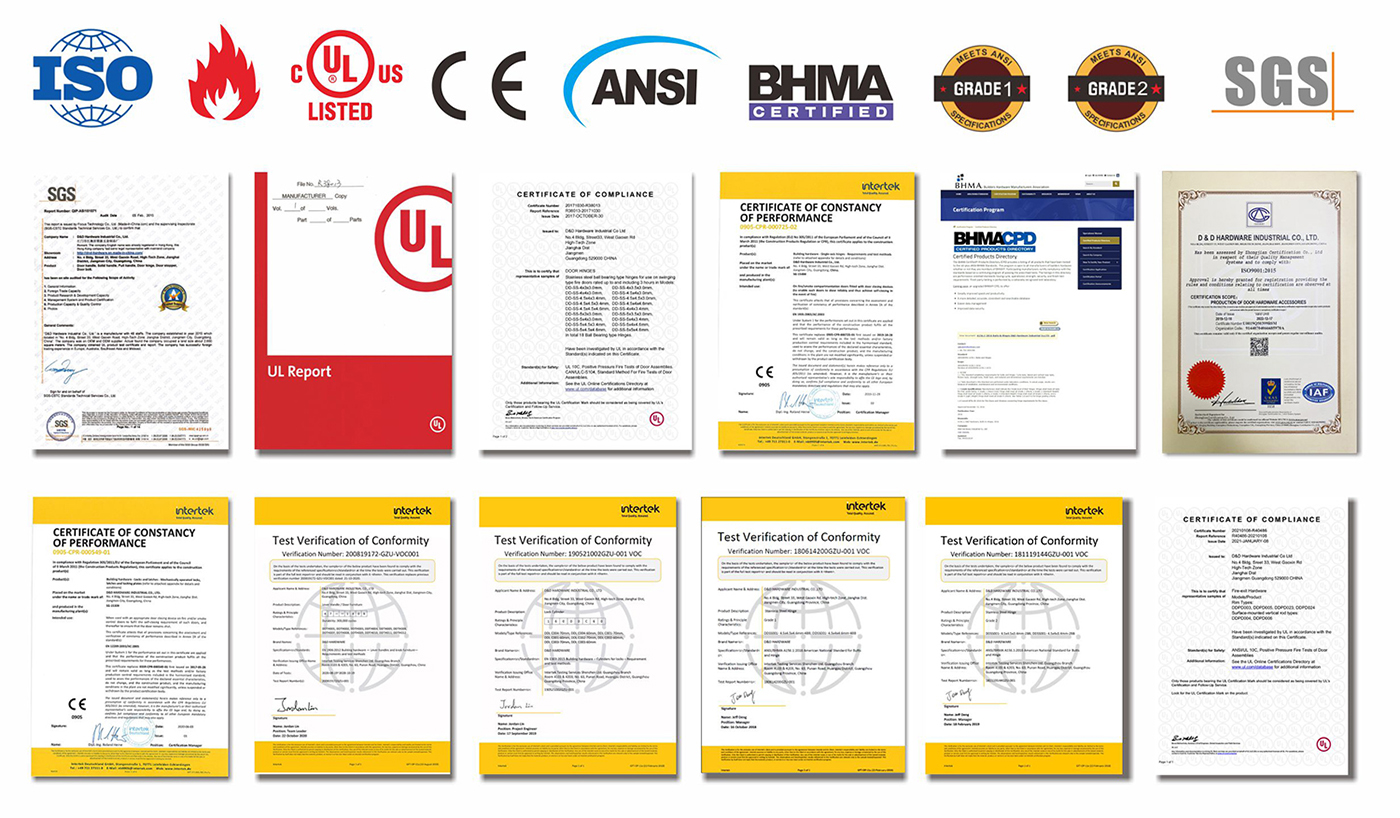
D&D Hardware’s products have these marks. This means you get hardware that is strong and keeps your building safe.
Local Building Codes
Every city or state can have its own building code rules. You need to check these before you put in new locks or doors. Codes tell you what fire safety and accessibility features you need. If you use hardware with UL, CE, ANSI, and BHMA certifications, you will likely pass inspections. D&D Hardware helps you meet these codes with certified products and expert advice.
Tip: Always check your local codes before you buy or install commercial door hardware. This keeps your building safe and helps you avoid mistakes.
When you follow these rules, your building is safer for everyone. You also protect your money and avoid trouble with inspectors. D&D Hardware gives you certified locks, hinges, and closers for top safety and security.

Installation & Maintenance of Door Hardware
Choosing hardware that’s easy to install and maintain makes your life much simpler. You want your door to work smoothly and last for years. Let’s look at how you can get the best results, whether you do it yourself or call in a pro.
Installation Methods
Professional vs. DIY
You might wonder if you should install your new door hardware yourself or hire a professional. Here’s what you need to know:
Professional installers know the building codes. They make sure your door meets all safety rules.
They help your door last longer and work better, which saves you money on repairs.
A pro can spot problems before they start, like gaps that let in drafts or make your door hard to close.
If you install hardware yourself, you might miss small details. This can lead to safety risks, especially in emergencies.
Professionals make sure your door is secure and energy efficient.
If you want peace of mind, a professional is a smart choice. But if you like DIY projects, follow each step carefully.
Compatibility with Existing Doors
Before you start, check if your new hardware fits your current door. Take accurate measurements of the thickness, width, and hinge spots. Not all hardware works with every door, so double-check the size and type. If you have door closers, make sure the new hardware lines up with them. This helps your door open and close without sticking.
Here’s a simple step-by-step for installing heavy duty hinges:
Gather your tools: screwdriver, screws, measuring tape, chisel, hammer, and the new hardware.
Remove old hinges and clean the area.
Mark where the new hinges go using measurements.
Cut recesses for the hinges in the door and frame.
Attach hinges to the door with screws.
Mount hinges on the frame, making sure everything lines up.
Test the door to see if it swings smoothly.
Adjust if needed.
Do a final check to make sure everything is tight and safe.
Maintenance & Longevity
Routine Care
Taking care of your door hardware keeps it working well. Here’s a table to help you remember what to do:
Maintenance Practice | What to Do | Why It Matters |
Regular Cleaning | Wipe with a soft cloth and mild soap | Stops dirt and rust from building up |
Lubrication | Oil moving parts like hinges and door closers | Keeps everything moving smoothly |
Inspect for Damage | Check for cracks, loose screws, or wear | Fixes small problems before they get bigger |
Re-Coating/Polishing | Polish brass or bronze hardware sometimes | Keeps hardware looking good and strong |
Seasonal Adjustments | Adjust hardware for hot or cold weather | Prevents sticking or misalignment |
Tip: Set a reminder to check your door hardware every few months. This small step can save you from big repairs later.
Warranty & Support
You want hardware that comes with good support. D&D Hardware offers a 5-year mechanical guarantee. If you find a problem, just send a picture and details. Their team helps you fix it fast. They also promise ongoing quality control and support, so you always have help when you need it.
If you ever have questions about door closers or other hardware, D&D Hardware’s technical support is ready to help. This means you get answers and solutions quickly, keeping your doors safe and working well.
Taking care of your door hardware is easy when you pick the right products and follow these simple steps. You get peace of mind, longer-lasting doors, and support when you need it.
Cost & Value in Door Hardware Selection
When you pick new door hardware, you want to make smart choices. You should think about the price now and how much it helps later. Good commercial door hardware gives you better safety and lasts longer. It also protects your building.
Budget Planning
Upfront vs. Long-Term Costs
You may look at the price first, but there is more to think about. Heavy-duty doors can cost from $8,000 to $25,000 each. Steel rolling doors usually cost between $12,000 and $18,000. High-speed fabric doors can cost $15,000 to $22,000. Insulated doors cost 20-30% more, but you save money on energy bills in a few years.
Long-term costs are important too. Cheap hardware may seem good, but it wears out fast. You will spend more fixing or replacing it. Quality hardware lasts longer, so you save money over time.
Balancing Quality & Price
You want the best value for your business. Here are some tips to help you balance quality and price:
Pick a supplier with good products and support.
Ask questions and learn before you buy.
Look for hardware that meets BHMA standards.
Choose strong materials like stainless steel to avoid replacements.
Use value engineering to find options that save money but stay strong.
Tip: Quality hardware needs less fixing and lasts longer. You get better safety and fewer problems.
Investment Value
Reduced Replacement Costs
When you buy premium door hardware, you get more than a strong lock. Iron doors can last for many years. Cheaper doors may need replacing every 10-15 years. Durable hardware helps you spend less later and keeps your business running well.
Enhanced Security & Peace of Mind
Safety is very important for every business. Advanced locks give you better protection and help you feel safe. Studies show most buyers want smart security features. Many people pay more for places with smart devices. Safety is the main reason for these choices.
Benefit | How It Helps Your Business |
Better security | Keeps your building and people safe |
Long-lasting hardware | Saves money on repairs and replacements |
Improved appearance | Adds value to your property |
Peace of mind | Lets you focus on your business |
D&D Hardware gives you good prices and strong commercial door hardware. You get great protection, long-lasting products, and support for your business. When you plan your budget, think about the total value, not just the price. The right hardware keeps your doors working, your building safe, and your business protected for years.
When you choose heavy duty door hardware, you want the best for security, safety, and long-lasting use. Check out this table for what matters most:
Factor | Description |
Compliance with standards | Make sure your door hardware meets building codes, fire safety, and accessibility rules. |
You need strong locks, reinforced frames, and smart access control to boost security. Always pick hardware that fits your door and keeps your space safe. Talk with certified experts. They help you find hardware that meets safety standards and protects your project.
Take time to assess your needs. The right door hardware gives you peace of mind and top security every day.
FAQ
What makes door hardware “heavy duty”?
Heavy duty hardware uses strong materials like stainless steel. It stands up to lots of use and tough conditions. You can trust it for busy places like schools or hospitals.
How do I know if hardware is fire-rated?
Look for labels or certifications like UL or CE. These marks show the hardware passed fire safety tests. You can always ask your supplier for proof.
Can I install heavy duty hardware myself?
You can install some hardware with basic tools. For best results, hire a professional. They make sure everything fits and works right.
What is the best material for coastal areas?
Stainless steel, especially type 316, works best near the sea. It resists rust and lasts longer in salty air.
How often should I check my door hardware?
Check your hardware every few months. Look for loose screws, rust, or damage. Regular checks help you catch problems early.
Does D&D Hardware offer support if I have questions?
Yes! You can contact D&D Hardware for technical help or advice. Their team answers questions and helps you choose the right products.
What certifications should I look for in commercial door hardware?
You should look for UL, CE, ANSI, and BHMA certifications. These show the hardware meets safety and quality standards.
More heavy duty door hardwares, click here.
Contact us Now: Contact: David Jian
Mob:0086-139 2903 7292
Email: David@dndhardware.com, sales@dndhardware.com,
Jobby Zhang
Mob:0086-137 2599 9617
Email: jobby@dndhardware.com
D&D HARDWARE INDUSTRIAL CO.,LTD
ADD:12th Floor, Building 2, No.898, KeChuang Technical Zone, Jiangmen Avenue, Pengjiang District, Jiangmen City, Guangdong, China (Postcode:529000)
https://www.dndhardware.com
Tel: +86-750-3856396
Fax: +86-750-3856395

 English