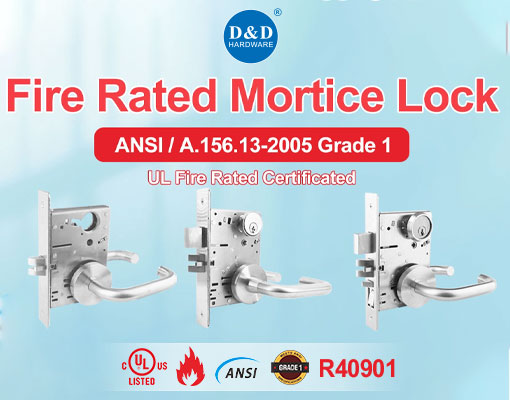
A mortise lock is one of the oldest, strongest, and most reliable locking mechanisms used in modern architecture. Its structure is embedded inside a rectangular pocket cut into the door edge—known as the mortise—which provides deeper installation, thicker materials, and stronger mechanical performance than surface-mounted or cylindrical locksets. In the United States, the highest standard for mortise locks—especially those used on fire-rated doors—is the American UL mortise lock, which follows strict fire, safety, and performance requirements recognized across North America, the Middle East, and many international building projects.
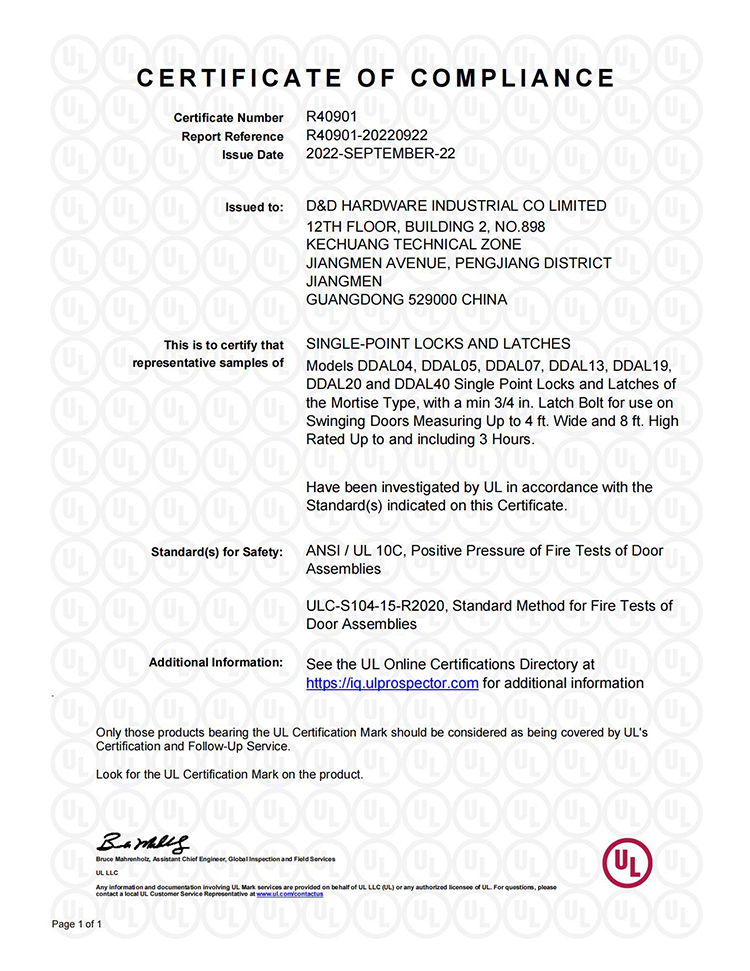
An American standard UL mortise lock is a mortise-type locking mechanism that has been tested and certified according to UL 10C, the primary standard for fire doors in the U.S. and Canada. UL, short for Underwriters Laboratories, performs rigorous fire-endurance testing to ensure the complete lockset continues to function during a fire. A UL mortise lock is typically rated for:
✔ UL 10C Fire Rating — 3-Hour Fire Endurance
This is the highest common rating for fire doors in commercial buildings. During the test, the lock is exposed to temperatures exceeding 927°C (1700°F) while being subjected to pressure, impact, and post-fire integrity testing. A lock that passes UL 10C guarantees that:
● The latch must remain engaged even under high heat.
● The lock body must not deform to the point of failure.
● The door must remain closed, preventing fire and smoke spread.
This is a crucial requirement for fire doors installed in public buildings, commercial facilities, and high-occupancy environments.
✔ UL Certified Components
A true UL mortise lock includes:
● UL-rated latch and deadbolt
● UL-rated mortise cylinder (when applicable)
● UL-rated lever handle trim
● UL-rated strike plate
This ensures that the entire lockset, not just parts of it, meets safety codes.
✔ ANSI/BHMA Grading for Performance
Most UL mortise locks also follow:
● ANSI/BHMA A156.13 Grade 1 – the highest mechanical grade for mortise locks
● Durability tests up to 1,000,000 cycles
● High impact resistance
● Heavy-duty materials - stainless steel 304/316
Together, UL + ANSI requirements ensure the lock works reliably under constant use, making it suitable for heavy-traffic buildings.

How Many Types of Mortise Door Locks Are There?
Mortise door locks exist in many structural and functional variations. They can be classified in multiple categories—by function, door type, security level, and application. Below are are some of the UL series standards and commercial models that are widely adopted globally.
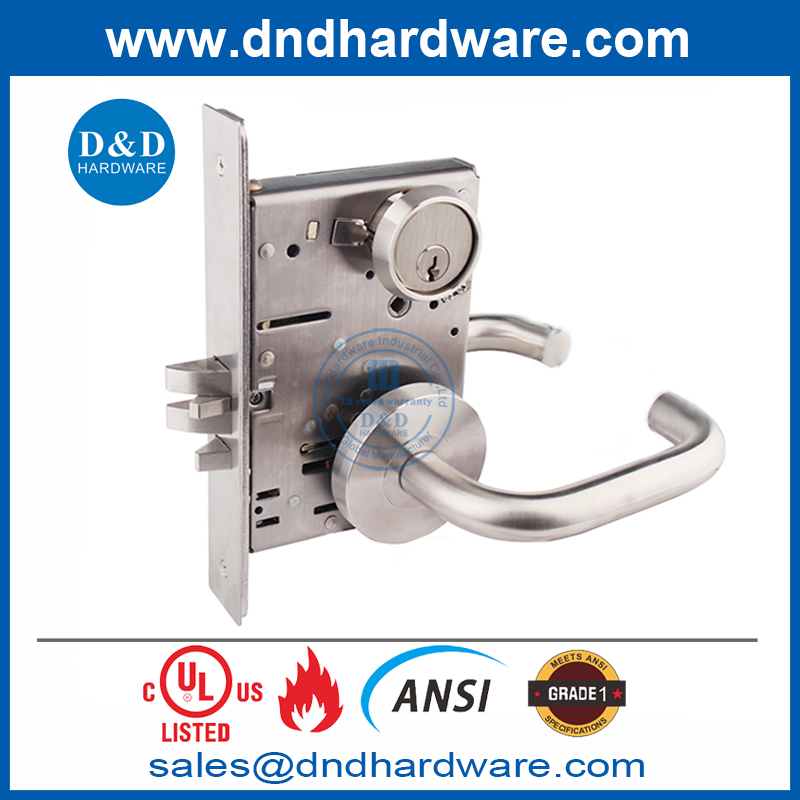
1. Mortise Locks Classified by Function
• Entry Mortise Lock
Includes latch + deadbolt. Typically used for residential entry doors or commercial offices.
• Passage Mortise Lock
Latch only, no locking function. Used in public rooms or corridors.
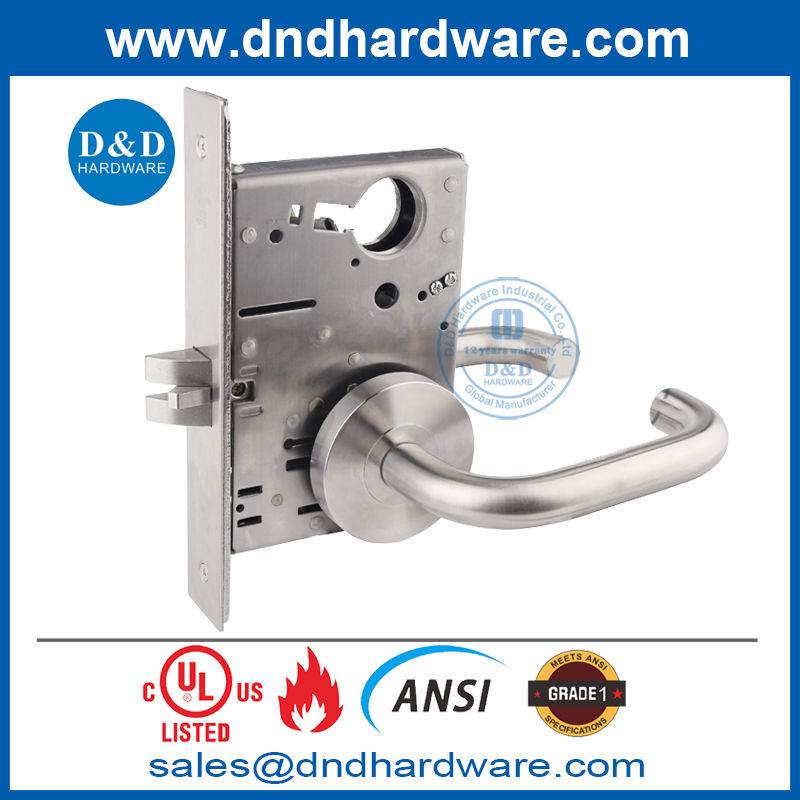
• Privacy Mortise Lock
Used in bathrooms or bedrooms; lockable from inside.
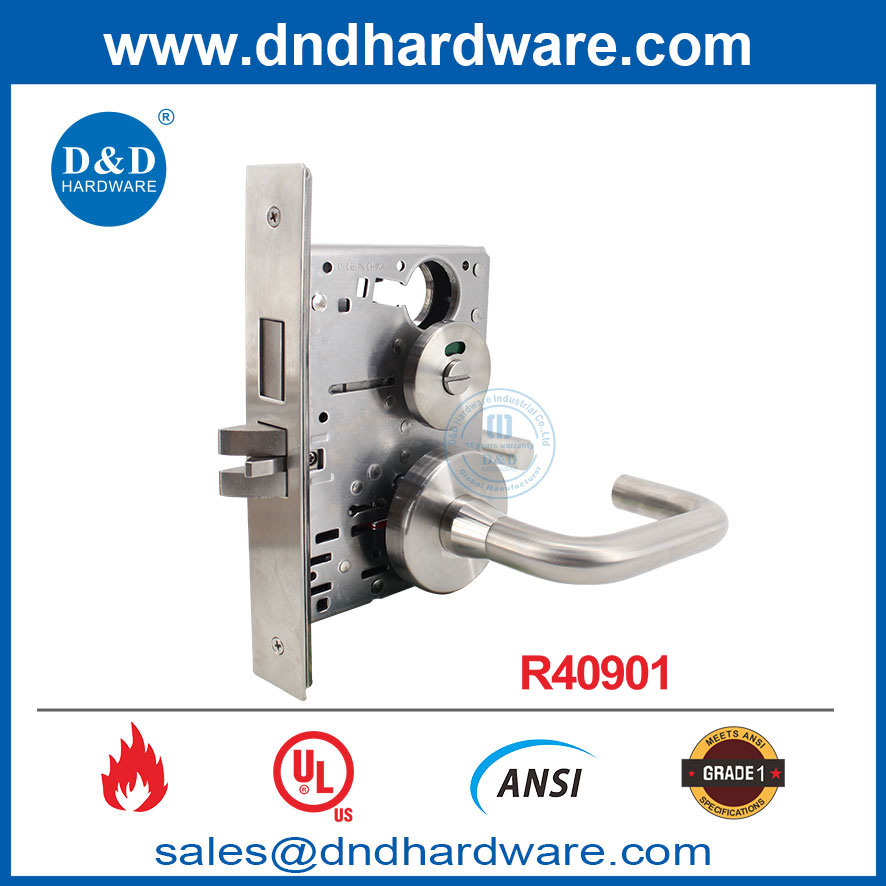
• Classroom Mortise Lock
Can be locked/unlocked from the outside; inside lever always free for emergency exit. Essential for educational facilities.
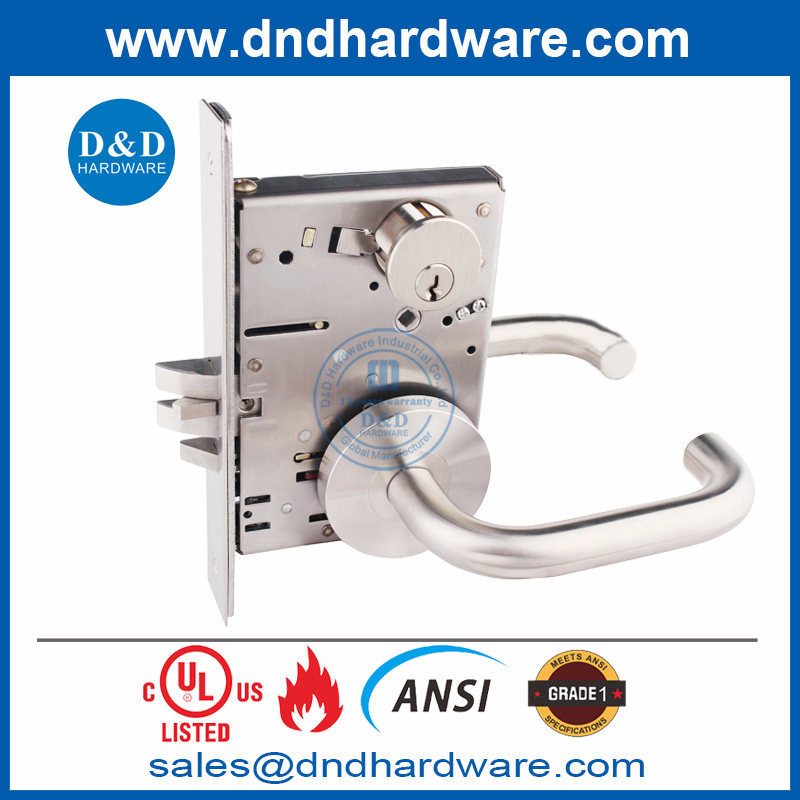
• Storeroom Mortise Lock
Always locked from outside; only accessible with a key. Higher security for equipment rooms.
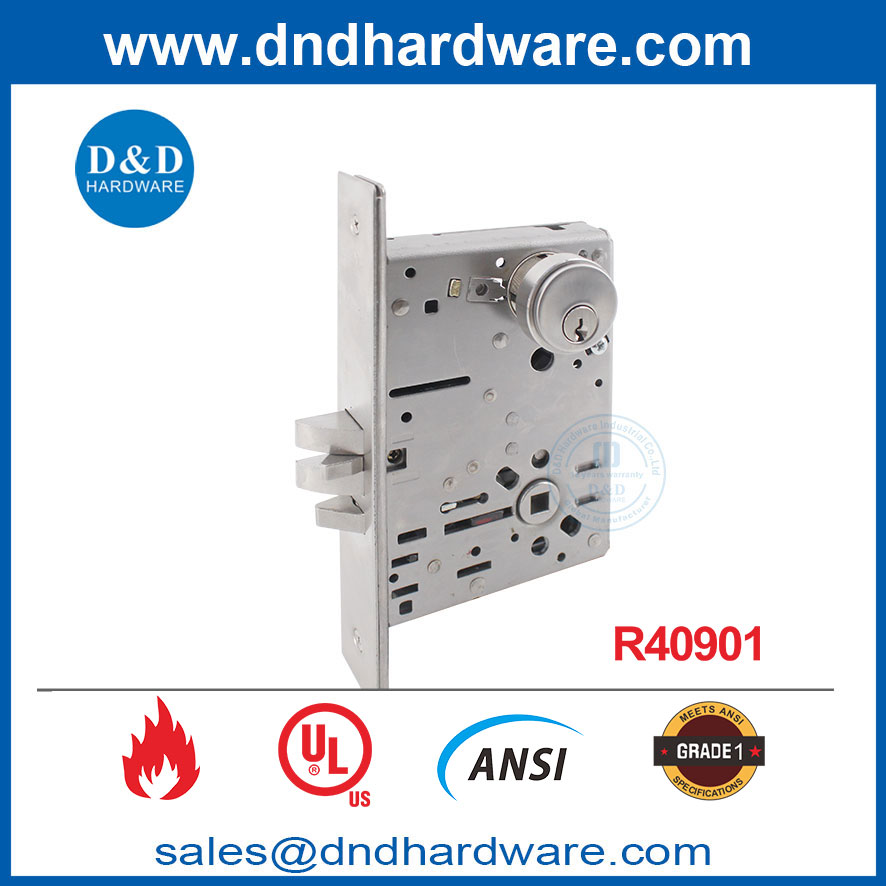
• Apartment or Dormitory Mortise Lock
Deadbolt throws automatically after closing the door. Ensures secure living environments.
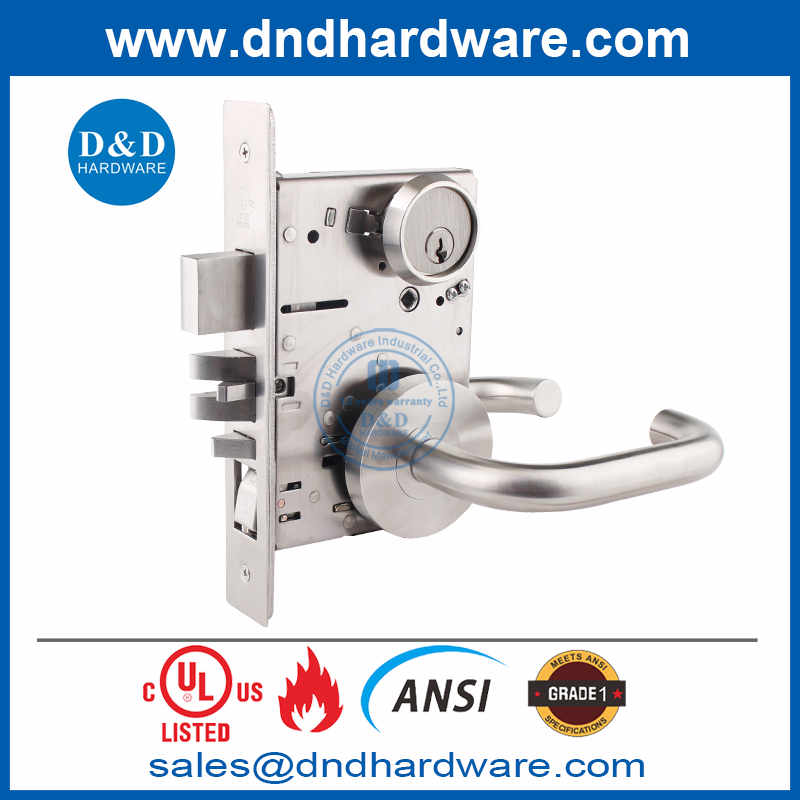
• Deadbolt Mortise Lock
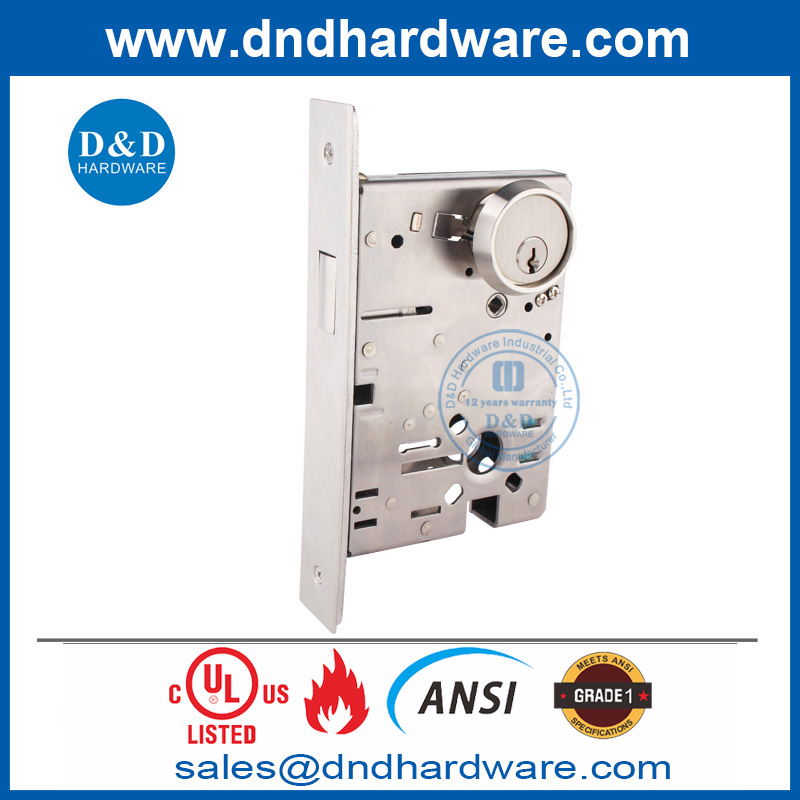
No latch; just a deadbolt. Used for secondary security on wooden or metal doors.
2. Mortise Locks Classified by Certification
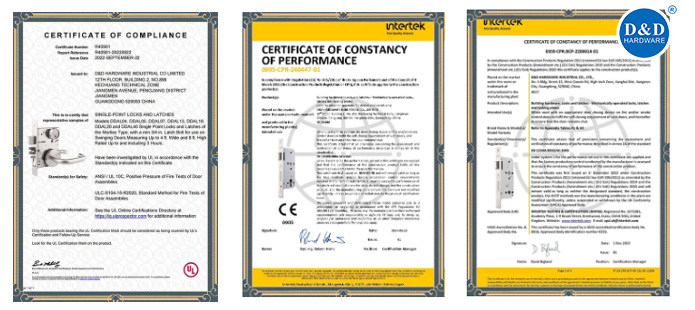
• UL Mortise Lock (American Standard)
Highest fire and safety certification. Used in North America and global high-profile buildings.
• CE/EN12209 Mortise Lock (European Standard)
Used in Europe, Middle East, and Asia. Tested for durability, fire resistance (EN1634), and mechanical safety.
• Non-Certified Mortise Locks
Used in basic interior doors or markets with lower regulatory requirements.
3. Mortise Locks Classified by Application and Security Requirement
• Heavy-Duty Commercial Mortise Locks
High cycle life (up to 1,000,000 cycles), thick stainless-steel construction, long-term durability.
• Residential Mortise Locks
Simpler structure, aesthetic designs, moderate security.
• Fire Door Mortise Locks
UL 10C fire rated 3 hours or EN1634 fire rated 260mins certified; mandatory in commercial buildings.
• Smart Mortise Locks
Combine the mortise body with electronic functions: fingerprint, PIN, Wi-Fi, Bluetooth, access control systems.
• Hotel Mortise Locks (RFID System)
Work with RFID or IC cards, integrated with PMS hotel management systems.

Detailed Application Scenarios of Mortise Door Locks
Below is an expanded application section with deep detail, as you requested. This section helps customers understand where and why mortise locks are used.
1. Office Buildings and Commercial Complexes
Commercial buildings require door hardware that can tolerate high traffic, frequent operation, and strict fire code compliance. UL and CE mortise locks are widely used because offices contain:
● meeting rooms
● executive offices
● emergency exits
● server rooms
● storage spaces
● main entrance doors
Each area may require different functions:
● Passage mortise lock for conference rooms
● Entry mortise lock for management offices
● Storeroom mortise lock for supply rooms
● UL-rated mortise lock for all fire doors
● Privacy mortise lock for restrooms
Large office buildings also need hardware compatible with access control, making mortise locks the preferred platform.
2. Hotels and Hospitality Projects
Hotels use mortise locks because they require:
Applications include:
● Hotel guest room mortise lock (RFID / IC / Bluetooth)
● Apartment lock for serviced suites
● Storeroom mortise lock for housekeeping
● Privacy mortise lock for spa, gym, and VIP rooms
● UL fire-rated mortise lock for corridor and stairwell fire doors
Hotels prioritize both function and aesthetics, which mortise locks deliver.
3. Healthcare Facilities — Hospitals & Clinics
Hospitals need extremely durable, easy-to-operate, and code-compliant locks. UL mortise locks are essential for fire-rated corridors and emergency exits. Applications include:
● Patient room door – privacy or passage function
● Medicine rooms – storeroom-function mortise lock for security
● Surgery rooms – hands-free or roller bolt mortise lock
● Fire-rated corridor doors – UL 3-hour mortise lock
● High-security areas – keyed entry or restricted-key mortise lock
Because hospitals operate 24/7, the durability and stability of mortise locks are crucial.
4. Government and Institutional Buildings
Courthouses, police stations, immigration offices, and municipal buildings require locks with:
● certified fire resistance
● strong anti-tamper design
● long lifespan
● higher security options
Applications include:
● Classroom mortise locks in public schools
● Heavy-duty UL mortise locks in detention-related areas
● Storeroom mortise locks for controlled document areas
● Entry mortise locks for administrative sections
These environments cannot risk lock failure, making UL/CE mortise locks mandatory.
5. Educational Facilities — Schools and Universities
Classrooms, laboratories, dormitories, and administrative offices all require different lock functions:
● Classroom function mortise lock for safe egress
● Dormitory mortise lock with inside locking capability
● Storeroom mortise lock for labs, chemicals, and servers
● UL-rated fire doors with mortise locks for corridors
Safety, durability, and child-proof operation are key concerns.
6. Residential Buildings and Luxury Homes
Mortise locks are often used in high-end residential environments due to:
Applications include:
● Main entrance – entry mortise lock
● Bedrooms and bathrooms – privacy mortise lock
● Balconies and terraces – sash mortise lock
● Smart mortise lock for modern homes
Luxury apartments and villas often combine mortise locks with EN1303 cylinders for advanced key control.
More UL mortice door locks, click here.
Contact us Now: Contact: David Jian
Mob:0086-139 2903 7292
Email: David@dndhardware.com, sales@dndhardware.com,
Jobby Zhang
Mob:0086-137 2599 9617
Email: jobby@dndhardware.com
D&D HARDWARE INDUSTRIAL CO.,LTD
ADD:12th Floor, Building 2, No.898, KeChuang Technical Zone, Jiangmen Avenue, Pengjiang District, Jiangmen City, Guangdong, China (Postcode:529000)
https://www.dndhardware.com
Tel: +86-750-3856396
Fax: +86-750-3856395
 English