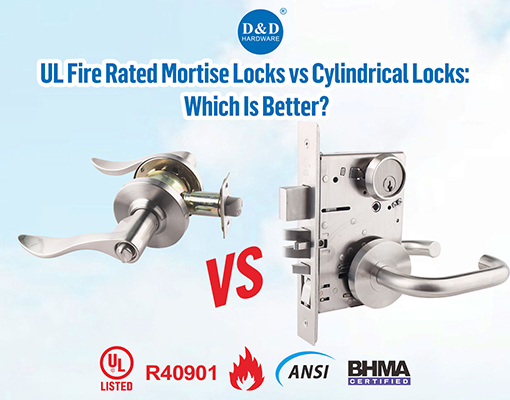
When a fire door assembly fails an inspection, it's rarely the door leaf itself. More often than not, it's a piece of hardware — a lock, a hinge, a closer — that wasn't rated for the assembly it was installed on. On commercial projects, the lock is one of the components most likely to get flagged, which is why architects and door hardware distributors spend so much time deciding between a mortise lock and a cylindrical lock before specification even begins.
Both lock types can secure a door. Only one of them, in most cases, is what code officials and fire marshals expect to see on a rated opening. This article breaks down the practical differences, and explains why a UL Listed Mortise Lock remains the default choice for commercial fire door hardware programs.

Mortise Locks: Built Into the Door, Not Onto It
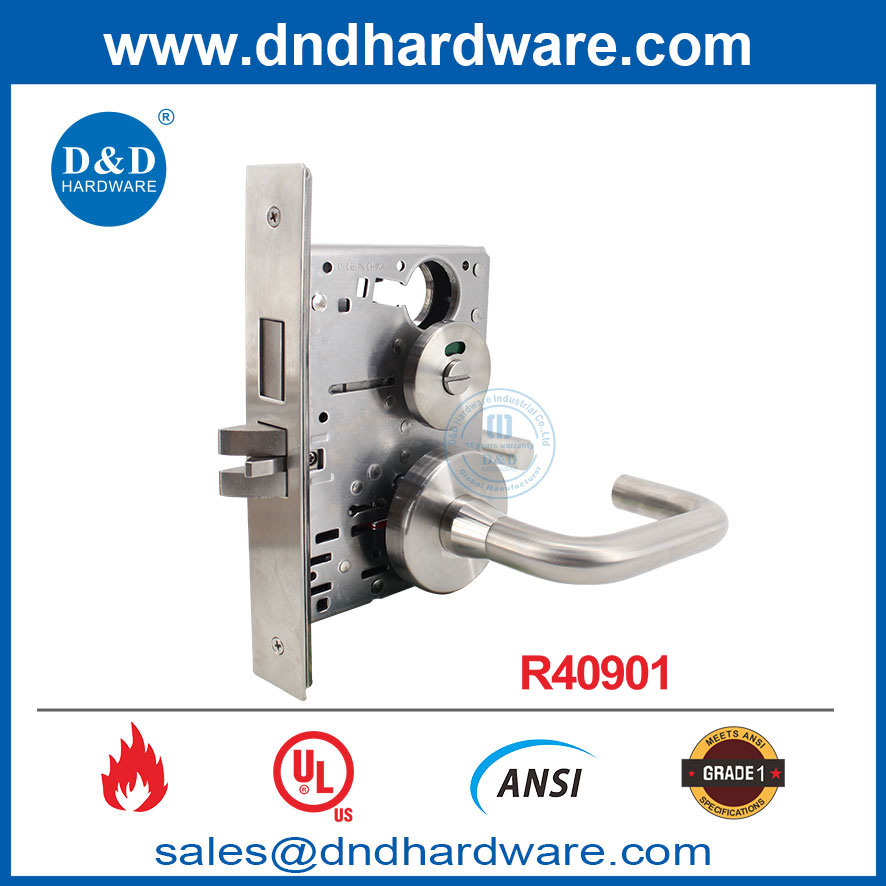
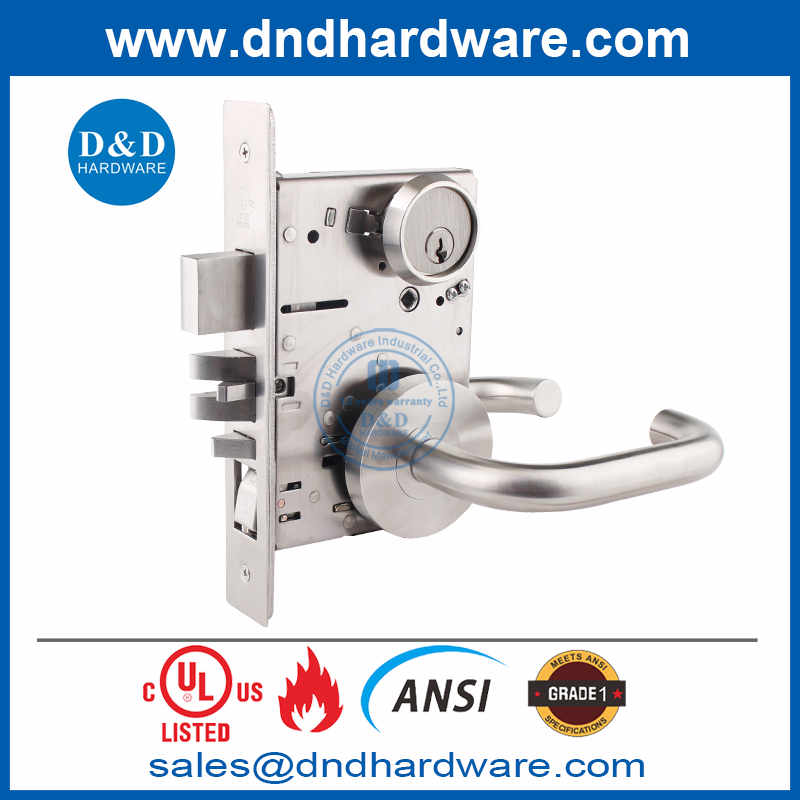
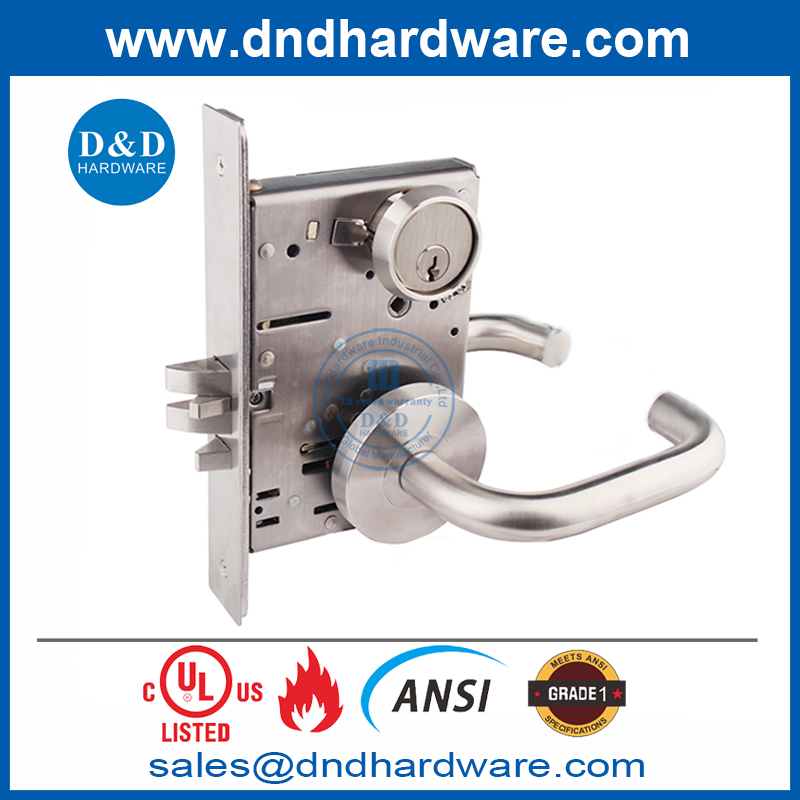
A mortise lock sits inside a pocket cut directly into the door edge — the "mortise" — rather than being bolted through two holes drilled across the face. The lock case, latch, deadbolt, and trim connection all live inside that pocket, which gives the whole assembly a much larger footprint of steel inside the door than a cylindrical lock ever has.
That construction is the reason mortise locks show up so consistently in hospitals, hotels, airports, government buildings, and high-rise office towers. These are doors that get used thousands of times a year, sometimes under abuse, and the lock body needs to hold up mechanically for the life of the building — not just pass a warranty period.
For fire-rated openings specifically, the lock isn't judged on its own. It's evaluated as part of the complete door assembly — leaf, frame, hinges, and hardware together. A UL Fire Rated Mortise Lock carries documentation showing it was tested as part of that system, not just built to a general commercial-grade spec.
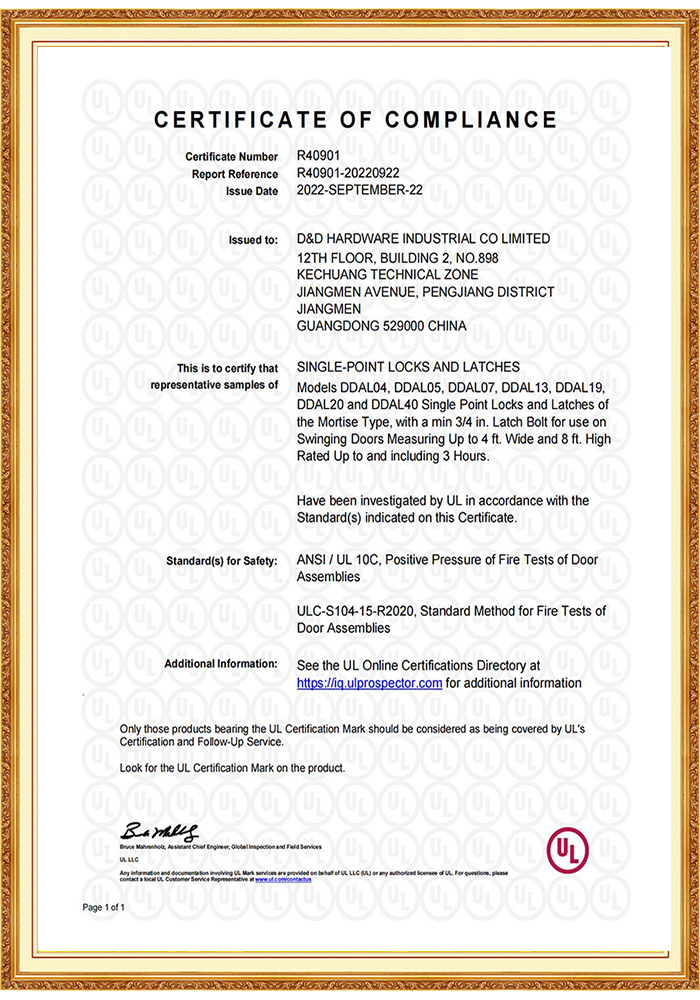
D&D Hardware's mortise lock line is tested under:
•UL 10C Positive Pressure Fire Test
•3-Hour Fire Rating
•UL File No. R40901
That file number is what a specifier or AHJ (authority having jurisdiction) will actually ask for during submittal review. Without it, "fire rated" is just a claim on a spec sheet.
Cylindrical Locks: The Everyday Commercial Option
A cylindrical lock works differently — the mechanism goes through two holes bored across the face of the door rather than into a pocket on the edge. It's a smaller, simpler chassis, and that's exactly why it's used so widely: faster to install, lower cost, and perfectly adequate for interior office doors, tenant spaces, and light-to-moderate traffic openings.
Commercial cylindrical locks are commonly rated under ANSI/BHMA performance standards — an ANSI Grade 1 Lock for heavier commercial use, or an ANSI Grade 2 Lock for lighter-duty applications. Some cylindrical lock lines are also available in fire-rated configurations, though the fire testing and listing documentation for cylindrical products tends to be more limited across the market compared to what's available for mortise hardware. On our own product line, cylindrical fire-rated options are in development but not yet UL certified — for that reason, when fire rating is the priority on a project, we currently point customers toward the certified mortise lock rather than the cylindrical option.
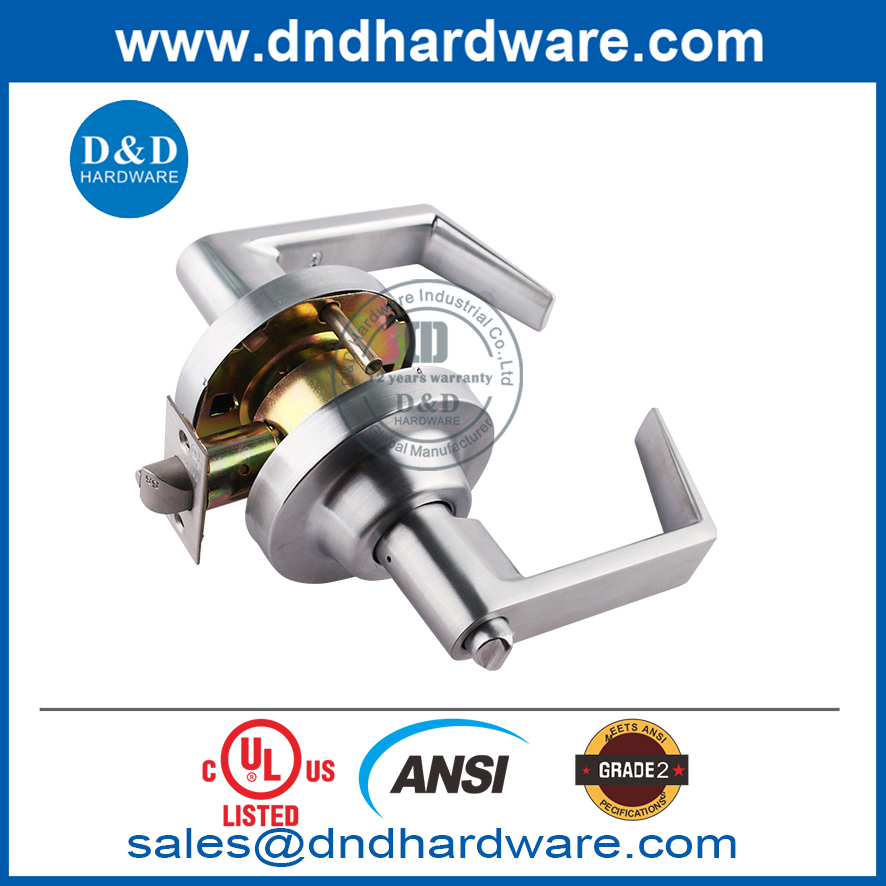
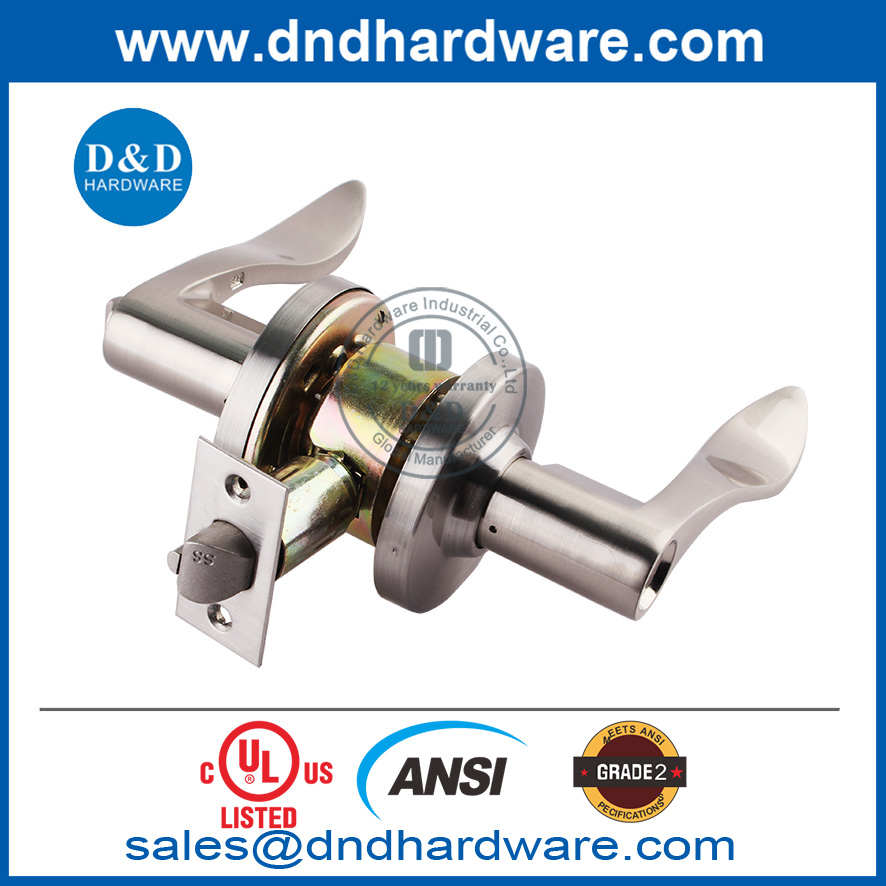
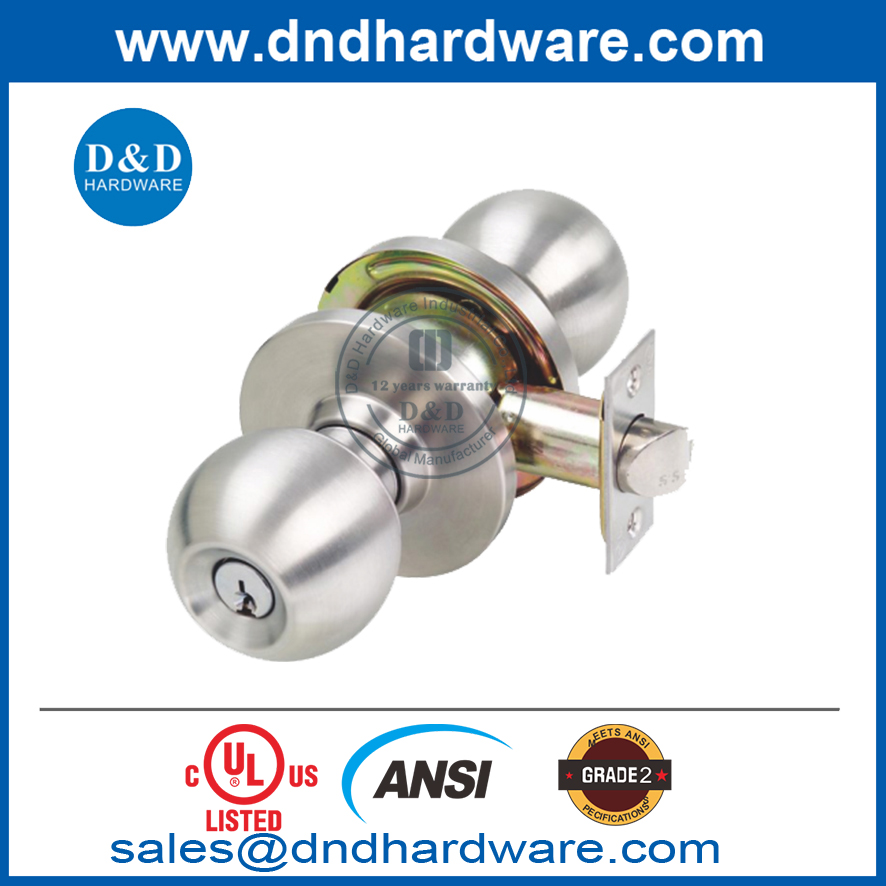
Mortise Lock vs Cylindrical Lock: Where the Real Differences Show Up
Construction. A mortise lock case is larger, heavier, and mechanically more rigid than a cylindrical chassis. That matters most on doors that see constant use — a mortise lock is built to take that cycling without the lever loosening or the latch wearing out early.
Function flexibility. Mortise locks can be configured for a wider range of functions — classroom, storeroom, entrance office, apartment — often within the same lock body just by changing the trim or cylinder. Cylindrical locks are more limited in how much a single chassis can be reconfigured.
Fire door compliance. This is where the gap is widest. A UL Listed Mortise Lock comes with a specific fire test file that a specifier can reference directly during code review. Fire-rated cylindrical options exist in the market, but documentation coverage varies a lot by manufacturer, and gaps here are one of the more common reasons a fire door assembly gets rejected at inspection.
Cost and installation. Cylindrical locks win here — lower unit cost, faster install, less door prep required. For standard interior doors without a fire rating requirement, that's often reason enough to specify them.
So the honest answer to "which one should I use" depends entirely on the opening. A tenant improvement office door with no fire rating requirement doesn't need a mortise lock. A corridor door on a 90-minute or 3-hour rated assembly in a hospital or hotel almost always does.
Why UL 10C Mortise Locks Keep Showing Up on Commercial Fire Door Specs
They're built for the traffic level fire doors actually see. Stairwell doors, corridor doors, and fire exits in commercial buildings don't get used occasionally — they get used constantly, often by people who aren't being careful with them. A mortise lock's heavier case is designed to absorb that.
They match heavier fire-rated door construction. Fire-rated doors carry fire-resistant cores and steel reinforcement, and they're simply heavier than a standard interior door. A mortise lock's edge-mounted installation integrates more solidly with that kind of door and frame than a through-bored cylindrical lock does.
The paperwork holds up under review. For architects and contractors, a UL 10C listing with a specific file number is something that can be handed directly to an inspector or included in a submittal package without follow-up questions. That's not a small thing on a commercial project timeline — a hardware rejection during inspection can delay occupancy.

A Fire Door Is Only as Good as Its Weakest Component
It's worth repeating something specifiers already know: a fire-rated door isn't one product, it's an assembly. The rated door leaf, the rated frame, UL listed hinges, a UL listed lock, the closer, and the exit hardware all have to work together and all have to be individually documented. Swap in one unlisted component and the whole assembly's rating is compromised on paper, even if nothing changed physically.
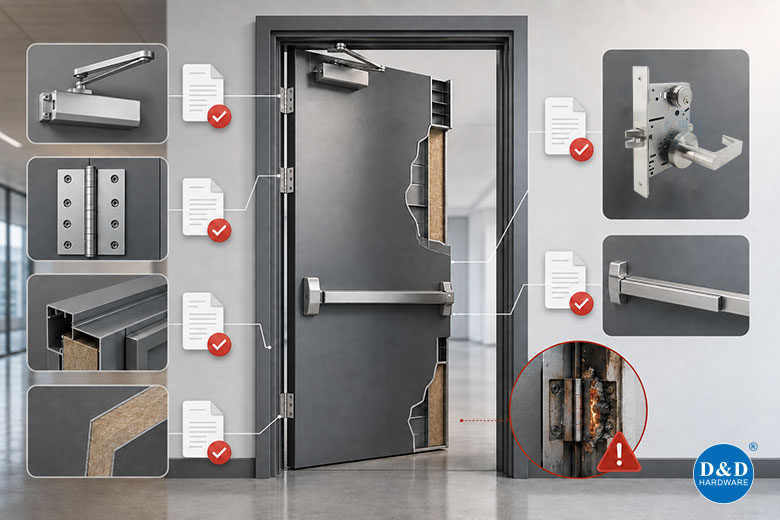
That's really the underlying reason a UL 10C Mortise Lock gets specified so often on commercial fire door hardware packages — it's one less component that needs explaining during plan review.
Common Questions on Mortise Locks and Fire Rated Doors
Is a mortise lock always required on a fire door?
Not strictly — what's required is that whatever lock is used carries fire-rated documentation matching the door assembly. In practice, mortise locks are specified more often on fire-rated commercial openings because certified options are more widely available and the construction suits heavy-traffic doors better.
What certification should I look for on a fire-rated commercial lock?
In North America, UL 10C (positive pressure fire test) is the standard most commonly referenced for fire door hardware, along with a specific UL file number that can be verified.
What does UL File No. R40901 actually mean?
It's the specific UL listing file for D&D Hardware's mortise lock, confirming the product was tested and rated for 3-hour fire door assemblies under UL 10C. It's the reference a specifier or inspector can look up directly.
Can a cylindrical lock be used on a fire door?
Only if it carries appropriate fire-rated approval matching that specific door assembly — a cylindrical lock without that documentation shouldn't go on a rated opening regardless of its ANSI grade.
Is an ANSI Grade 1 lock the same as a fire-rated lock?
No. ANSI Grade 1 and Grade 2 ratings measure mechanical durability and cycle performance, not fire resistance. A lock can carry a Grade 1 rating and still have no fire rating at all — the two certifications are independent of each other.
Cylindrical locks still have a place on plenty of commercial projects — they're economical, quick to install, and more than adequate for standard interior doors. But once fire rating enters the spec, the decision narrows considerably. A UL Listed Mortise Lock tested to UL 10C, rated for 3 hours, under UL File No. R40901 gives specifiers, contractors, and building owners documentation that holds up through plan review and inspection — which, on a fire-rated opening, is the part of the job that actually matters most.
Contact us Now:
Contact: David Jian
Mob:0086-139 2903 7292
Email: David@dndhardware.com, sales@dndhardware.com,
Contact: Jobby Zhang
Mob:0086-137 2599 9617
Email: jobby@dndhardware.com
D&D HARDWARE INDUSTRIAL CO.,LTD
ADD:12th Floor, Building 2, No.898, KeChuang Technical Zone, Jiangmen Avenue, Pengjiang District, Jiangmen City, Guangdong, China (Postcode:529000)
https://www.dndhardware.com
Tel: +86-750-3856396
Fax: +86-750-3856395
 English