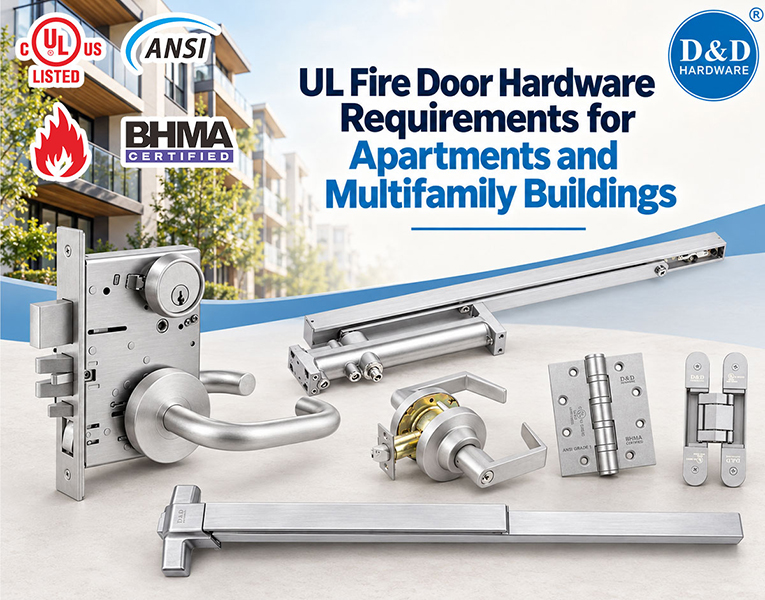
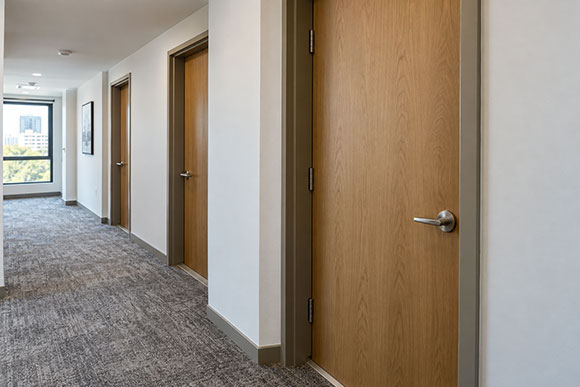
Apartment entrance doors, stair enclosures and service rooms can form part of a building’s fire compartmentation. For these openings, UL fire door hardware approval depends on documented certification and compatibility with the rated door assembly.
UL fire door hardware requirements for apartments and multifamily buildings are not uniform across every door. Actual requirements depend on the building type, opening function, locally adopted codes and approved assembly design. An internal apartment door should not automatically receive the same specification as a protected stairwell door.
This article in D&D’s UL Listed Fire Rated Commercial Door Hardwareseries explains how to review mechanical hardware certification, distinguish fire performance from operational performance, and retain evidence for approval and maintenance.

Establish the compliance basis for each opening
For multifamily fire door requirements, start with the approved door schedule and applicable building and fire codes. In US projects, these may include the International Building Code, NFPA 80 and NFPA 101, as adopted and amended locally. Do not apply a model code edition merely because it is the latest publication.
For each opening, record its location, required fire-protection rating, door and frame identification, closing and latching functions, and any smoke and draft control requirements. Confirm unclear conditions with the design professional and authority having jurisdiction before ordering hardware.
Apartment entrance doors opening onto common corridors, stairwell doors and mechanical-room doors can have different requirements. The wall’s fire-resistance rating does not by itself establish the door’s required fire-protection rating. Copying one hardware set throughout the building can therefore introduce errors.
Understand what UL 10C establishes
UL 10C addresses positive-pressure fire testing of door assemblies. It does not establish the required rating for an apartment building or grant universal approval to every product carrying a UL mark.
For procurement, connect the proposed hardware model to the required assembly: door material, preparation, permitted dimensions, fastening and installation conditions all matter. A component described as suitable for three-hour fire-door applications does not upgrade a lower-rated door and frame to three hours.
Use the UL Solutions application guide to understand certification categories and markings, then review the applicable product record. Fire performance and smoke leakage are separate assessments; UL 10C evidence alone does not establish smoke and draft control compliance.

Review hinges locks and closers as a coordinated set
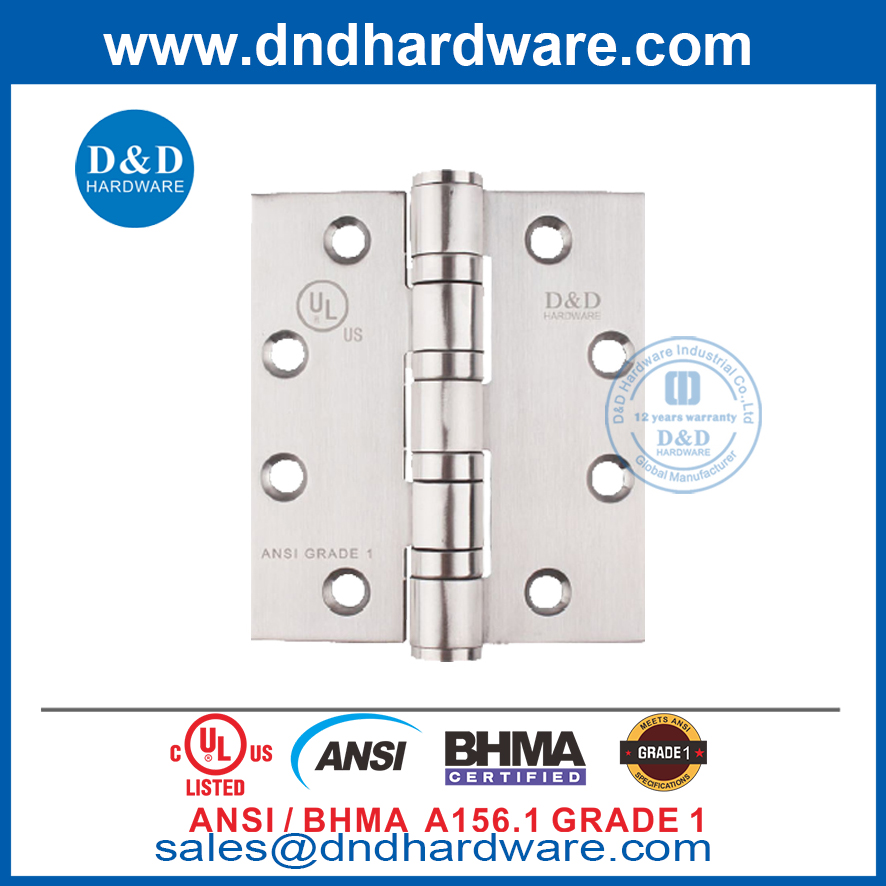
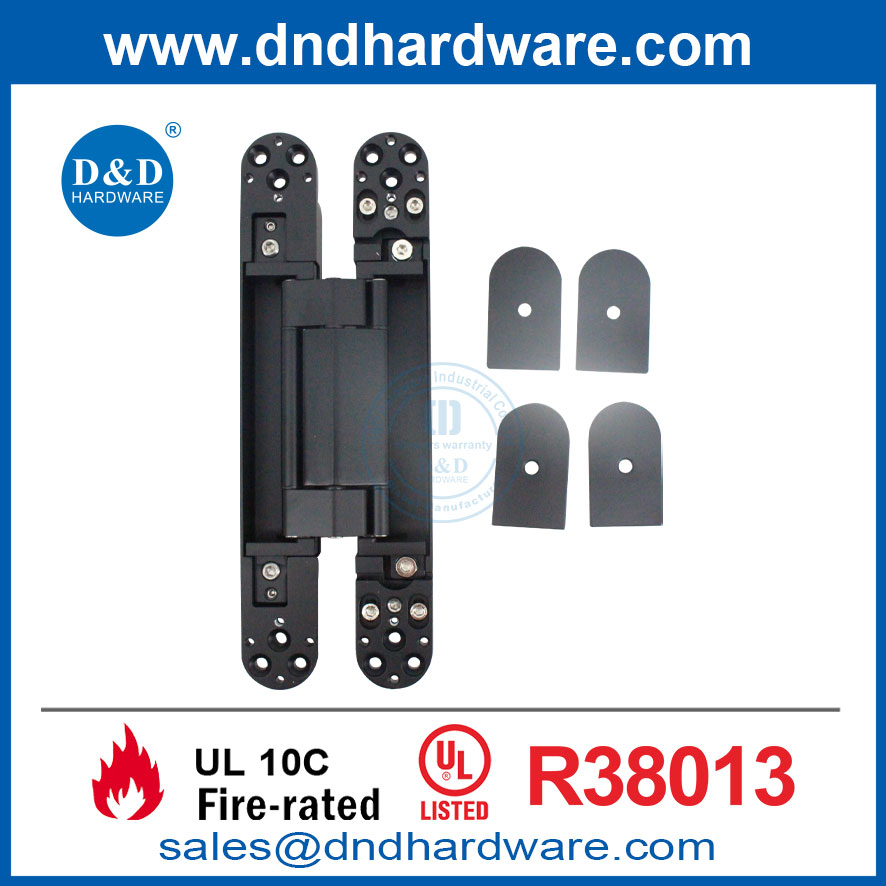
UL fire rated door hinges must support the door without compromising its approved preparation or operation. Verify the model, hinge arrangement, fasteners and any restrictions associated with the door construction. Concealed hinges require particular attention to mortising and permitted installation details.
ANSI/BHMA Grade 1 or Grade 2 describes operational performance under the applicable standard. It does not replace fire-test evidence. For apartment fire door hardware compliance, keep the grade specification and fire certification as separate entries in the submittal.
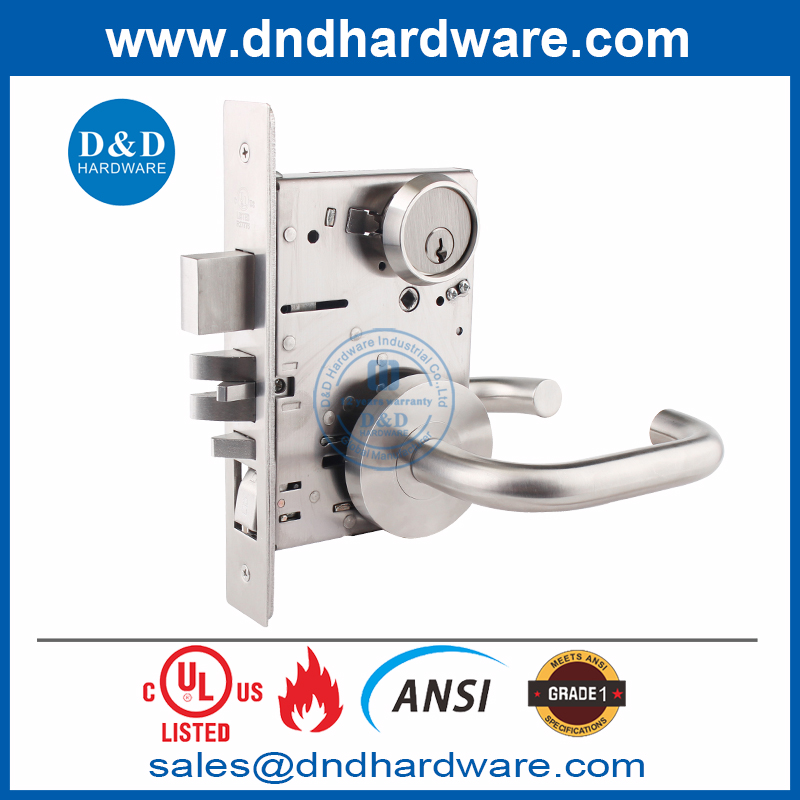
UL fire rated door locks must provide the approved mechanical latching and egress function. Confirm its compatibility with the door preparation and strike. Adding a supplementary lock during tenant turnover requires review if it changes egress operation or the approved assembly.
Where self-closing and positive latching are required, a UL 10C fire rated door closer must bring the leaf into engagement with the latch. Check operation with the specified seals and other hardware installed. Increasing closing force is not a substitute for correcting binding, misalignment or an unsuitable latch arrangement.

Distinguish panic hardware from fire exit hardware
UL 305 panic hardware is not automatically required on every apartment entrance or stairwell door. Its necessity depends on the adopted code, occupancy, occupant load and opening function, including any different occupancies within a mixed-use development.
UL 305 concerns panic hardware operation. For a rated opening fitted with an exit device, UL 305 certification alone does not establish suitability for fire-door use. UL 10C fire exit hardware evidence must also match the proposed device and installation. Verify the device’s fire exit hardware certification, applicable fire-test evidence and permitted configuration.
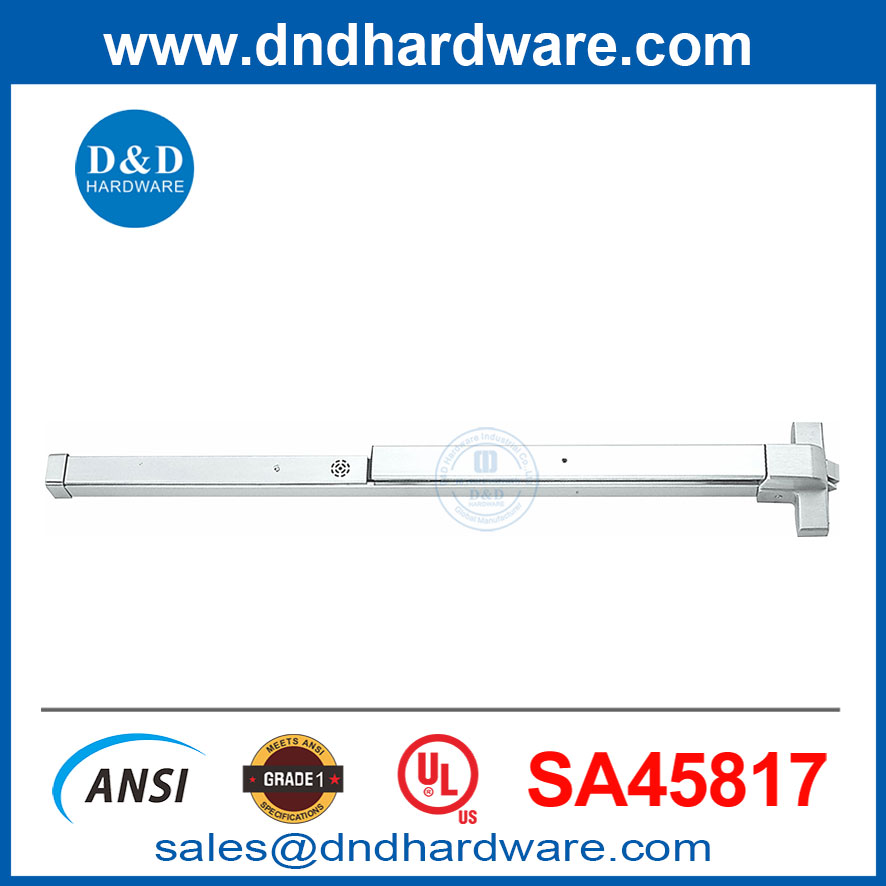

Do not infer that separate UL file numbers cover every possible device combination. Match the exact model and configuration to the relevant records. Mechanical dogging that holds the latch retracted must not be used on fire exit hardware protecting a rated opening.

D&D certification references for submittal review
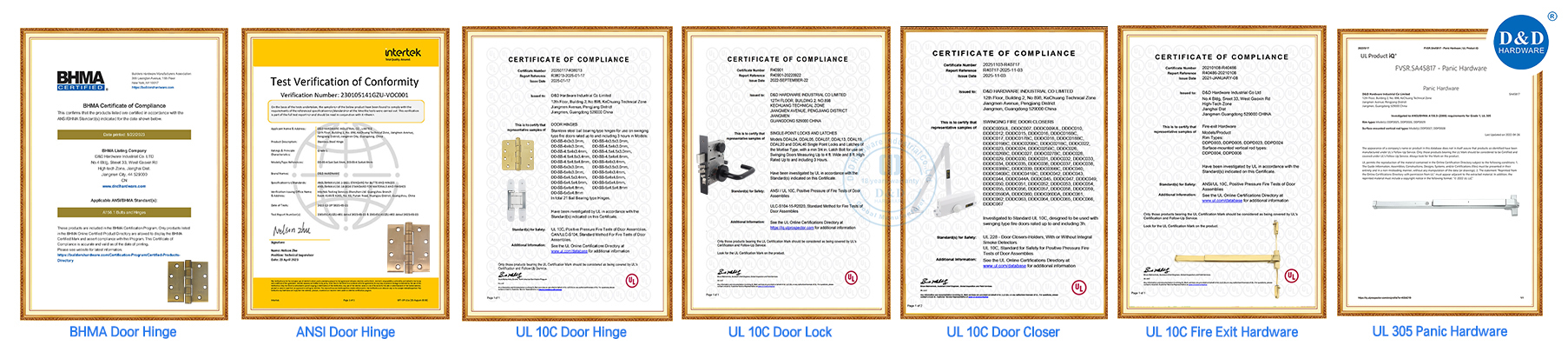
D&D’s mechanical hardware certification references are listed below. Use them to locate evidence for the proposed model, rather than treating the table as approval for every multifamily opening.
Hardware category | D&D certification reference |
Door hinge | UL/cUL UL 10C; 3 hours; R38013; ANSI/BHMA Grade 1 and Grade 2 |
Concealed hinge | UL 10C; R38013 |
Door lock | UL 10C; 3 hours; R40901 |
Door closer | UL 10C; 3 hours; R40717 |
Fire exit hardware | UL 10C; 3 hours; R40486 |
Panic hardware | UL 305; SA45817 |
The three-hour references do not establish the rating required at a particular opening. No fire-duration value is stated here for concealed hinges; confirm it from the applicable certification record. Likewise, verify the relevant UL 10C and UL 305 coverage for the proposed fire exit device.
Need certification documents for an apartment door schedule? Send D&D the opening references, required ratings and proposed hardware models for a model-specific documentation review.
Verify records before supply and substitution
Search UL Product iQ using the file number and compare the manufacturer, exact model, certification category, markings and conditions of use with the submittal. A file number is a reference for verification, not a standalone certificate covering unrelated products.
Retain the approved hardware schedule, certification records, product data and installation instructions together. Check substitutions against these documents before supply. Similar appearance, dimensions or finish does not demonstrate equivalent certification.
Maintain compliance after installation
NFPA 80 addresses fire-door installation and maintenance. Apply the inspection and testing provisions required by the adopted edition and local rules. Confirm closing, latching, secure fixings, identifiable labels and permitted clearances; investigate unauthorized drilling or hardware additions.
Keep inspection findings and replacement records linked to each opening. This is especially useful during apartment refurbishment, when locks, hinges or closers may be replaced individually. Correct deficiencies against the approved assembly requirements rather than accepting operation by appearance alone.

Frequently asked questions
Must every apartment door have UL listed hardware?
No. Establish whether the opening requires fire protection and what the applicable code and approved assembly require before specifying certified hardware.
Does a three hour closer make the opening three hour rated?
No. The opening’s rating depends on the approved door assembly and its permitted components and installation.
Can Grade 1 hinges replace fire certification?
No. Operational grading and fire performance address different requirements. Verify both where specified.
Is UL 305 enough for a rated exit door?
No. A panic device’s operational certification alone does not demonstrate fire exit hardware suitability. Verify the applicable fire certification and configuration.
Can replacement hardware use the original file number?
Only if the replacement model is actually covered for that application. Check the certification record and assembly compatibility before installation.
Contact us Now:
Contact: David Jian
Mob:0086-139 2903 7292
Email: David@dndhardware.com, sales@dndhardware.com,
Contact: Jobby Zhang
Mob:0086-137 2599 9617
Email: jobby@dndhardware.com
D&D HARDWARE INDUSTRIAL CO.,LTD
ADD:12th Floor, Building 2, No.898, KeChuang Technical Zone, Jiangmen Avenue, Pengjiang District, Jiangmen City, Guangdong, China (Postcode:529000)
https://www.dndhardware.com
Tel: +86-750-3856396
Fax: +86-750-3856395

 English