TECHNICAL REFERENCE — COMMERCIAL FIRE DOOR HARDWARE
A specification and procurement reference for architects, contractors, door manufacturers, and commercial hardware distributors.
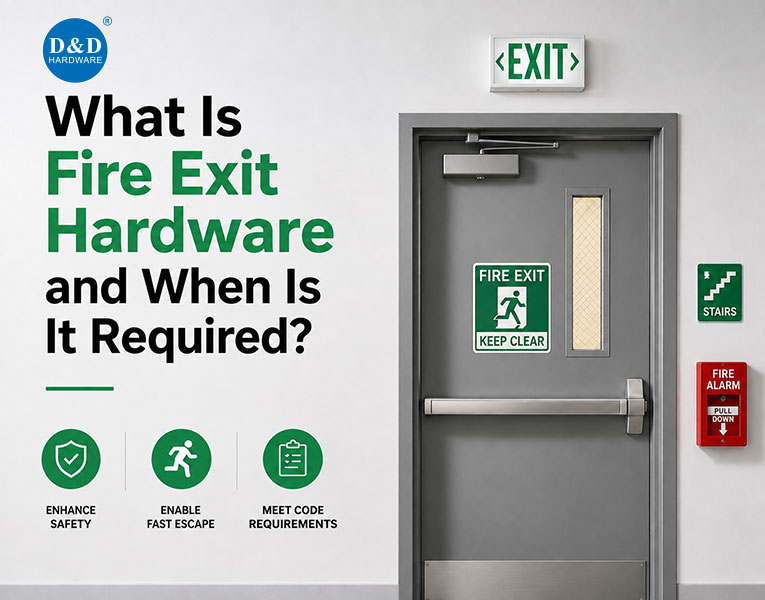
On a commercial project, an exit door is doing two jobs at once. It has to let occupants leave without hesitation during an emergency, and — on a rated opening — it has to hold the line against fire and smoke for the duration the assembly is rated for. Those two requirements don't automatically come packaged together, and the hardware that reconciles them is what the industry refers to as fire exit hardware.
For architects, contractors, door manufacturers, and hardware specifiers, getting this right is not a matter of picking a panic bar that looks the part. The device has to be matched to the door, the frame, the fire rating, the occupancy, and the code requirements governing the opening.
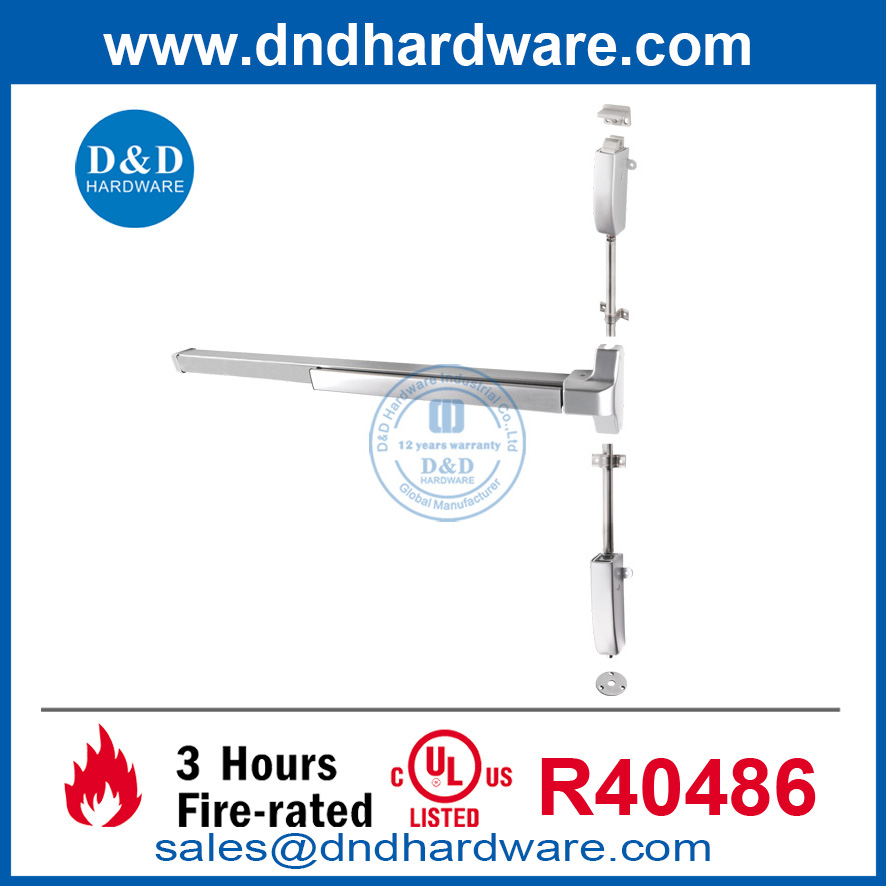
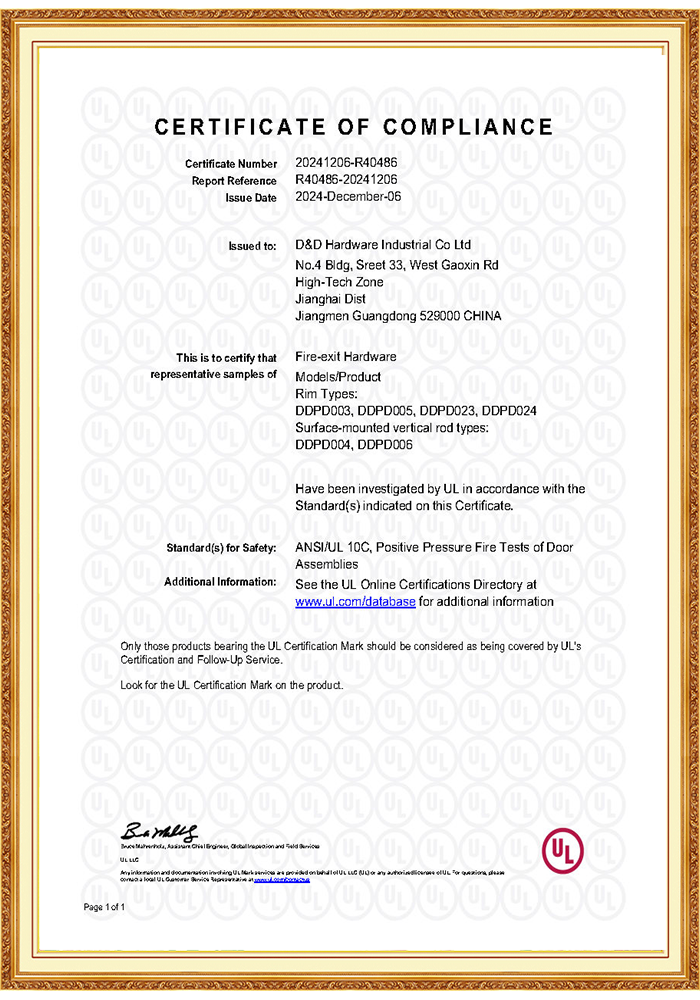
For projects built around North American fire-rated commercial door hardware, a UL Listed Fire Exit Hardware designation is one of the more reliable pieces of documentation a specifier can point to. D&D Hardware's Fire Exit Hardware carries a UL 10C Fire Rating of 3 Hours, UL File No. R40486, which puts it in range for commercial openings that call for that level of fire performance.
The sections below cover what fire exit hardware is, when it's actually required, how it differs from standard panic hardware, and how UL certification factors into a fire door specification.

What Is Fire Exit Hardware?
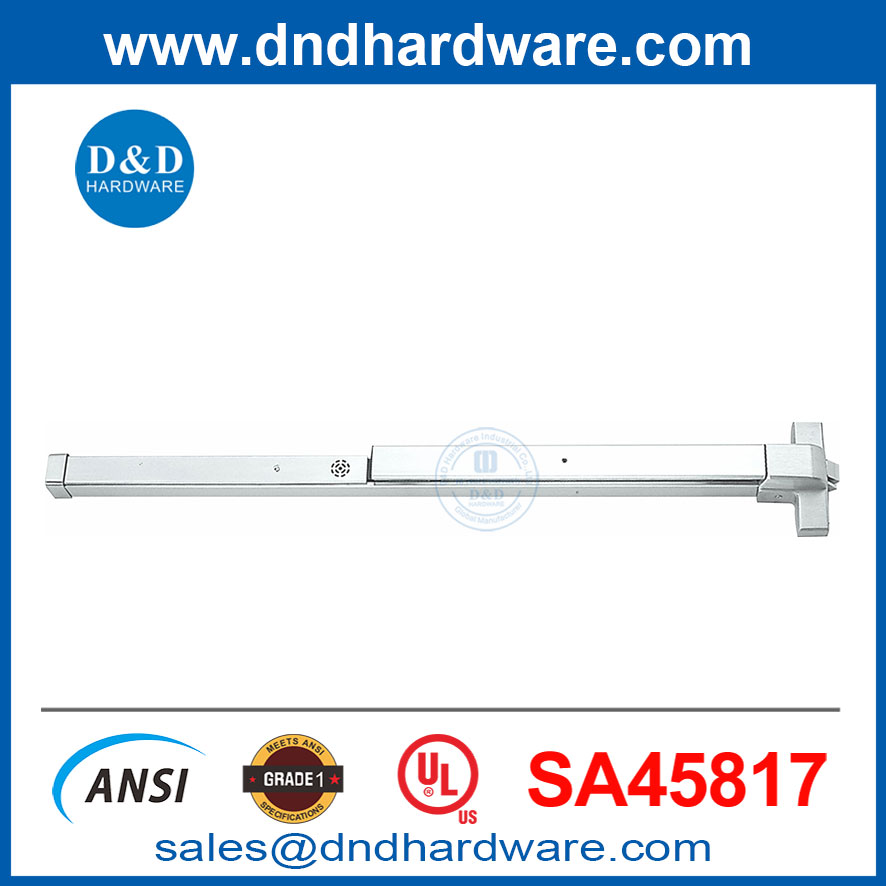
Fire exit hardware is exit hardware built for openings where egress and fire protection both apply. It has to let someone get out by pushing a bar or operating mechanism from the egress side, and it has to do that without compromising the fire-rated assembly it's installed on.
A fire exit hardware system, as installed, typically includes:
▪ Exit device or push bar
▪ Latch mechanism
▪ Mounting hardware
▪ Outside trim, where the application calls for it
▪ The fire-rated door and frame themselves
▪ Auxiliary hardware specified for that particular opening
The point worth underlining here is that fire exit hardware isn't just emergency equipment bolted to a door. On a fire-rated opening, it becomes a working part of the fire door assembly — which is exactly why certification and compatibility carry as much weight as they do in a specification.
Fire Exit Hardware vs. Panic Hardware — Are They the Same Thing?
Not quite, though the terms get used loosely on plenty of job sites.
Panic hardware and panic exit device are terms tied to occupancy and occupant load — code triggers panic hardware requirements based on how many people are expected to move through a space and how fast they need to get out. Fire exit hardware is a narrower category: it's built for fire-rated doors specifically, where the exit device also has to satisfy fire door requirements on top of the egress function.
A short way to keep the two straight:
Panic hardware = egress function only Fire exit hardware = egress function + fire-rated door application |
A fire-rated door can't simply take whatever exit device is on hand. The device itself has to be suitable for that rated assembly. Knowing this distinction up front heads off a common specification error — choosing an exit device on appearance or operating feel without first confirming it's rated for the opening it's going on.
When Is Fire Exit Hardware Actually Required?
There's no single answer that applies across every building. What's required on a given opening depends on the building type, occupancy classification, occupant load, exit configuration, door location, and the code the project is running under.
On North American commercial projects, three references come up constantly:
▪ International Building Code (IBC) — sets the broader building and means-of-egress requirements
▪ NFPA 101 Life Safety Code — addresses life safety and means of egress, including exit door and egress hardware requirements
▪ NFPA 80 Standard for Fire Doors and Other Opening Protectives — governs installation, inspection, testing, and maintenance of fire doors and other opening protectives
These three don't overlap as much as people assume — each one is doing a different job. Which means the question a specifier should be asking isn't "does this door need an exit device." It's closer to: what type of opening is this, what does the applicable code actually require here, and is the hardware under consideration compatible with the fire-rated door assembly it's going on? That framing holds up far better once a project moves from drawings to procurement.

Fire Exit Hardware for Fire-Rated Doors
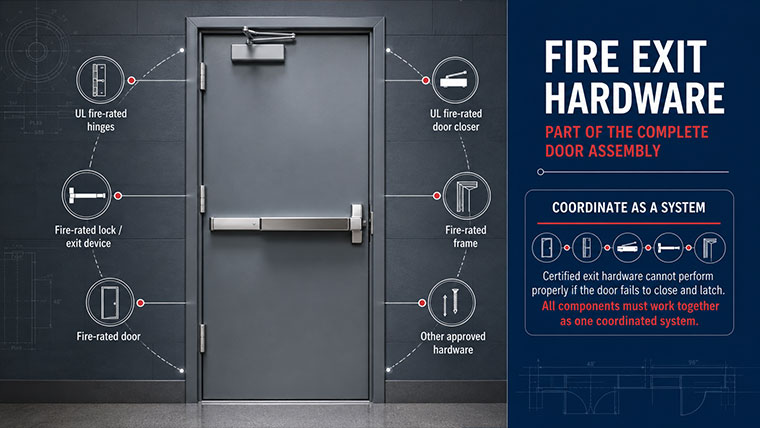
A fire-rated door is built to limit the passage of fire and heat for a defined period. To do that, the door, frame, hinges, lock or exit device, closer, and every other component on the opening have to function together as a rated assembly — not as a collection of parts that happen to share a doorway.
This is the reason UL Listed Fire Rated Commercial Door Hardware matters so much when a fire door is being specified. A three-hour-rated door on its own doesn't make the opening compliant. The hardware installed on it needs its own certification and has to be appropriate for that specific application.
D&D Hardware Fire Exit Hardware — Certification Summary
Product | Fire Exit Hardware |
Standard | UL 10C |
Fire Rating | 3 Hours |
UL File No. | R40486 |
This certification gives project teams a concrete reference point when evaluating UL fire-rated exit hardware for commercial applications, rather than relying on a supplier's general claim of being "fire rated" or "heavy duty." When reviewing any UL Listed product, it's worth reading the actual listing rather than the marketing language around it.
Why UL 10C Matters
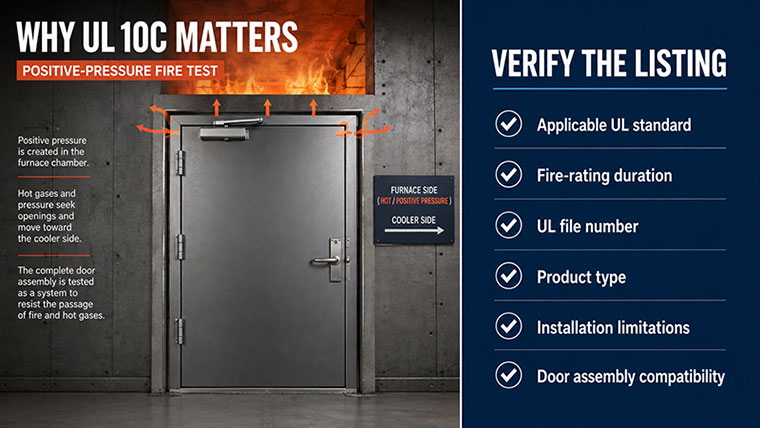
UL 10C is the fire test standard tied to positive-pressure fire testing of door assemblies. For commercial fire door hardware, what makes UL 10C significant is that the hardware is evaluated within the context of the fire performance the door assembly is actually expected to deliver — not in isolation.
A UL 10C listing tells a specifier considerably more than a general statement about fire resistance. For specification and procurement purposes, the items worth confirming are:
▪ Applicable UL standard
▪ Fire-rating duration
▪ UL file number
▪ Product type
▪ Installation limitations
▪ Compatibility with the specified door assembly
For D&D Hardware Fire Exit Hardware, that information is straightforward: UL 10C, 3-hour fire rating, UL File No. R40486. It's the kind of detail that belongs directly in technical submittals, product schedules, and hardware specifications wherever it applies.
Where Fire Exit Hardware Is Commonly Used
Fire exit hardware for commercial doors comes up wherever egress and fire protection both matter on the same opening. In practice, that covers a fairly wide range of building types.
Commercial Office Buildings
Office buildings often run multiple exit routes through fire-rated corridors. Exit doors along those routes need to let occupants leave without extra steps or delay.
Hotels
Hotel egress is complicated by the fact that occupants are often unfamiliar with the layout. Fire-rated corridor and stairwell doors in hotels typically require hardware that's been carefully coordinated with the rest of the opening.
Hospitals and Healthcare Facilities
Healthcare buildings put demanding requirements on door hardware because of high traffic volume, specialized occupant needs, and layered fire compartmentation throughout the facility.
Schools and Educational Buildings
Exit hardware shows up on doors serving classrooms, corridors, and assembly areas, with the specific requirement set by the applicable code and the door's configuration.
Industrial and Commercial Facilities
Warehouses, factories, and similar facilities frequently rely on fire-rated exit doors to separate areas of the building while keeping required egress paths open and functional.

In every case, the actual requirement comes from the project drawings, occupancy classification, door schedule, and applicable code — not from a general assumption about what a building "should" have.
Fire Exit Hardware vs. Standard Locking Hardware
A standard commercial lock and a fire exit device are solving two different problems. A conventional lock is built around controlled access. It's not built to deliver the rapid, single-motion egress function that an exit door needs.
Fire exit hardware is built specifically around controlled release from the egress side — which is why it matters on doors where occupants can't be expected to search for a key, work a conventional knob, or complete more than one operation to get out.
For a commercial project, the selection process really comes down to three questions:
1. Does the door need controlled access?
2. Is the door part of a required means of egress?
3. Is the door fire rated?
The answers to those three questions determine what type of hardware belongs on that opening.

How to Specify UL Fire Exit Hardware
A specification is only as useful as the information it actually contains. For architects, contractors, and purchasing teams, a fire exit hardware specification needs enough detail to identify the exact product required — with no room for a supplier to substitute something close enough.
At minimum, a commercial fire exit hardware specification should include:
Field | Detail |
Product Type | Fire Exit Hardware |
Application | Commercial Fire-Rated Door |
Fire Rating | 3 Hours |
Certification | UL 10C |
UL File | R40486 |
Beyond the certification fields, a complete specification typically also captures:
▪Door size
▪Door material
▪Single or pair door configuration
▪Handing
▪Trim type
▪Finish
▪Access control requirements
▪Dogging requirements, where permitted
▪Door closer coordination
▪Exit signage and other life-safety components
This level of detail is what keeps a project from receiving hardware that technically bolts onto the door but doesn't actually satisfy the certification or functional requirement behind it.
What to Check Before Ordering
For distributors, contractors, and project buyers, certification should be verified before price is even discussed. A practical order of operations looks like this:
1. Confirm the door rating
Establish whether the opening is fire rated, and identify the rating duration required.
2. Confirm the egress requirement
Check whether the opening falls within a required means of egress, and what category of exit hardware the project specifies for it.
3. Verify the certification
Pull the actual UL standard and file number rather than accepting a supplier's general fire-rated claim at face value.
4. Confirm hardware compatibility
Make sure the exit device is suitable for the door type, frame, configuration, and the rest of the hardware on that opening.
5. Review the complete opening
A compliant fire door functions as a system. The exit device needs to be coordinated with the door, frame, hinges, closer, lock or trim, and every other specified component — not evaluated as a standalone part.

Why Fire Exit Hardware Should Be Treated as Part of the Door Assembly
One principle carries more weight in commercial fire door specification than almost any other: individual hardware components don't get evaluated on their own. A fire door assembly has to perform as a coordinated system, full stop.
A fire-rated exit door can have a properly certified exit device installed and still fail to perform as intended if the door itself doesn't close correctly. The hardware doesn't operate in a vacuum — it depends on everything else in the assembly doing its job too.
This is why fire exit hardware is routinely coordinated with:
▪ UL fire-rated hinges
▪ UL fire-rated door closers
▪ Fire-rated locks
▪ Fire-rated frames
▪ Fire-rated doors
▪ Other approved door hardware
For project professionals working through a specification, this system-based approach holds up far better than selecting products purely on their individual data sheets.
Frequently Asked Questions
What is fire exit hardware?
Fire exit hardware is hardware built to provide reliable egress operation on doors — including applications where the door is part of a fire-rated opening.
Is fire exit hardware required on every commercial fire door?
No. The requirement depends on building occupancy, occupant load, door location, means-of-egress requirements, door configuration, and the applicable codes and standards governing the project.
What's the difference between panic hardware and fire exit hardware?
Panic hardware is primarily driven by panic-exit requirements tied to occupancy and occupant load. Fire exit hardware is built for fire-rated door applications, where the exit device also has to satisfy the fire door requirements on top of the egress function.
What UL standard applies to fire exit hardware?
UL 10C is the fire test standard most relevant to fire-rated door assemblies. The exact certification requirement still depends on the specific product and application.
Is UL Listed Fire Exit Hardware required for a fire-rated commercial door?
That depends on the project specification and the applicable code. Where UL-listed fire-rated hardware is called for, the product's UL listing and its compatibility with the rated assembly should be confirmed before installation — not after.
What is the fire rating of D&D Hardware Fire Exit Hardware?
D&D Hardware Fire Exit Hardware carries a UL 10C Fire Rating of 3 Hours, under UL File No. R40486.
Fire exit hardware sits at the intersection of life safety, egress, and fire door performance — and it earns that position on every rated opening it's installed on. Selecting it correctly is never just a matter of finding a push bar that fits the door. Architects, contractors, door manufacturers, distributors, and project buyers all need to weigh the door's fire rating, its egress function, the occupancy it serves, the hardware configuration, and the codes that govern the opening.

For commercial projects that call for certified fire-rated hardware, D&D Hardware Fire Exit Hardware offers a documented option — UL 10C Fire Rated, 3 Hours, UL File No. R40486.
The most dependable approach is still the simplest one: treat fire exit hardware as part of the complete fire door assembly, and verify the certification before procurement and installation begin — not after. In this category, the right hardware isn't just hardware that works. It's hardware that works within the requirements of the complete rated door assembly.
 English