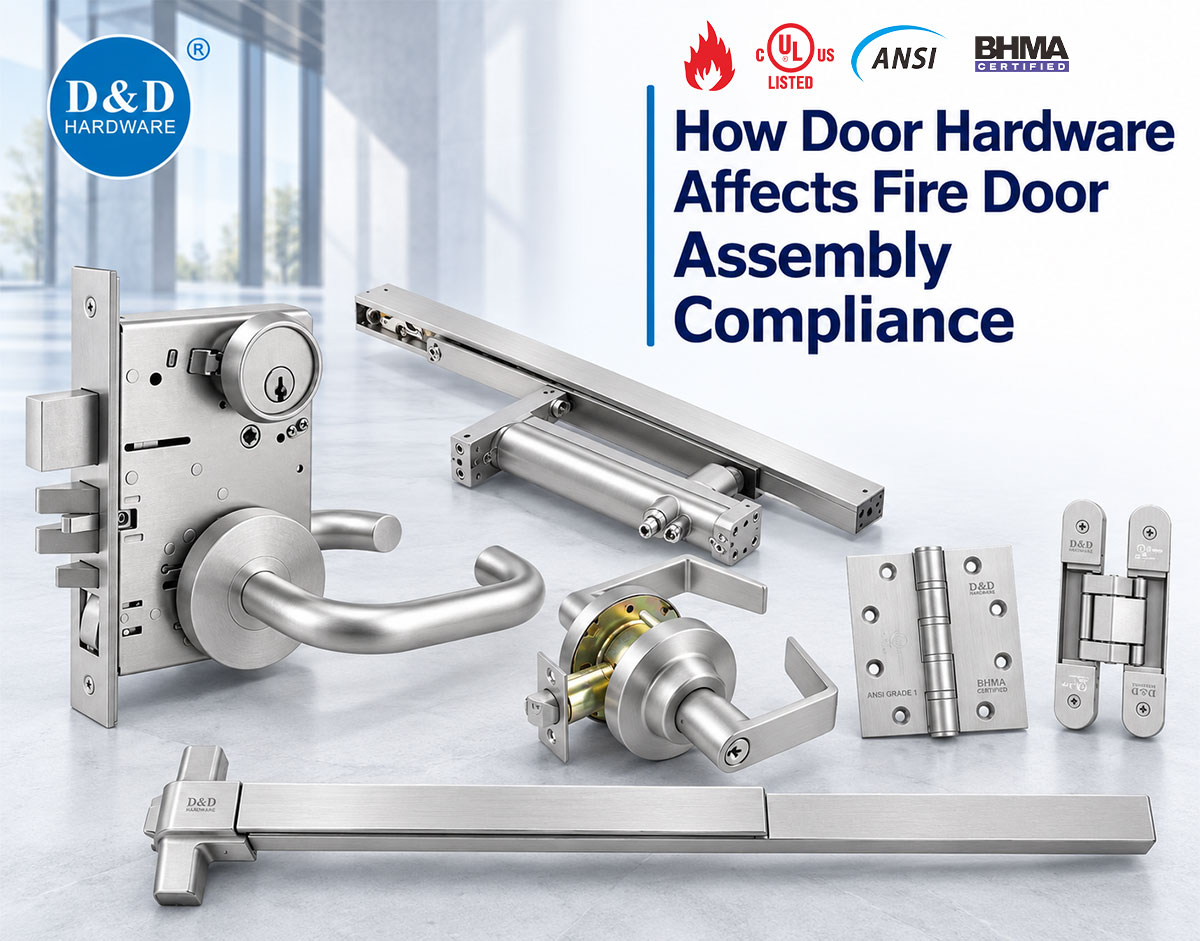
A labeled fire door can fail a compliance inspection because of its hardware. The door leaf may be undamaged, yet a misaligned latch, an unsuitable exit device or an unauthorized hinge preparation can affect the opening’s ability to perform as intended.
UL Listed Fire Rated Commercial Door Hardware supports compliance only when the specific products are suitable for the opening, installed within their certification conditions and maintained in working order. Individual certifications do not automatically establish compliance for the completed assembly.
For architects, door manufacturers and contractors, the review must therefore extend beyond collecting certificates. It must connect each hardware model to the door on which it will be installed.

1 Fire Door Compliance Applies to the Complete Opening
A fire door assembly includes the door, frame, hardware and other applicable components, such as glazing and seals. UL explains that these components may be supplied separately and assembled at the job site. Their combined arrangement must provide the protection required for the opening.
This distinction matters when reviewing a hardware schedule. A three-hour fire-rated lock does not upgrade a lower-rated door or authorize an unapproved preparation. Likewise, a certified hinge cannot resolve an incompatible frame or missing required seal.
Start with the approved opening requirements: its fire protection rating, door construction, dimensions, configuration and egress function. Then check the hardware against those conditions.
UL 10C evaluates door assemblies under positive-pressure fire test conditions. It is a fire performance standard, while the applicable building code determines where rated openings are required.
2 Hinges Affect Alignment and Hardware Preparations
Hinges influence whether the door remains correctly positioned for closing and latching. Incorrect hinge selection, loose fixings or unsuitable reinforcement can contribute to sagging and latch misalignment.
For a UL Listed door hinge, review more than its stated fire rating. Confirm the permitted door application, hinge size, quantity, fastening method and installation instructions.
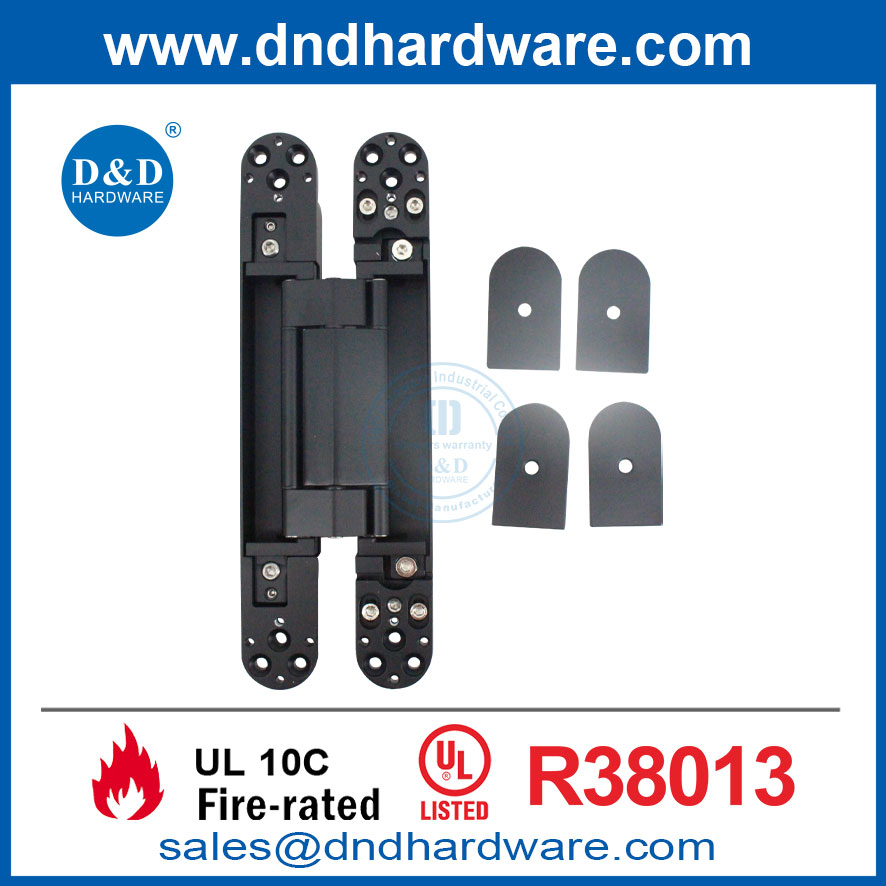
Concealed hinges require particular attention because their mortises remove material from the door and frame. A concealed hinge’s certification does not authorize every pocket depth or installation position.
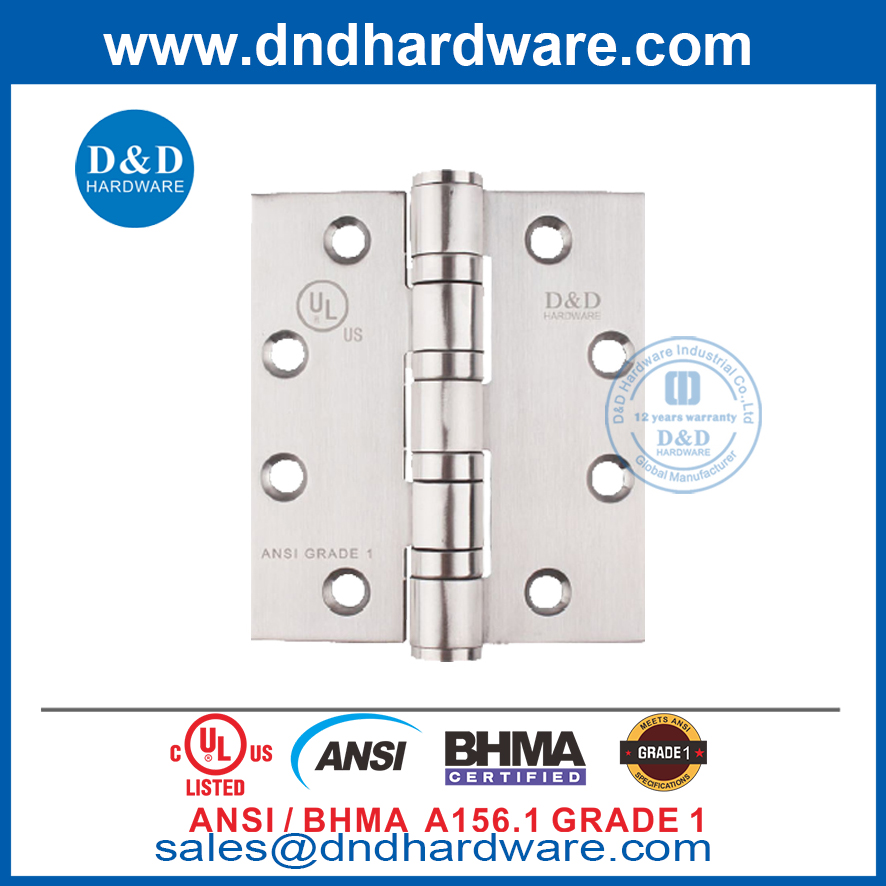
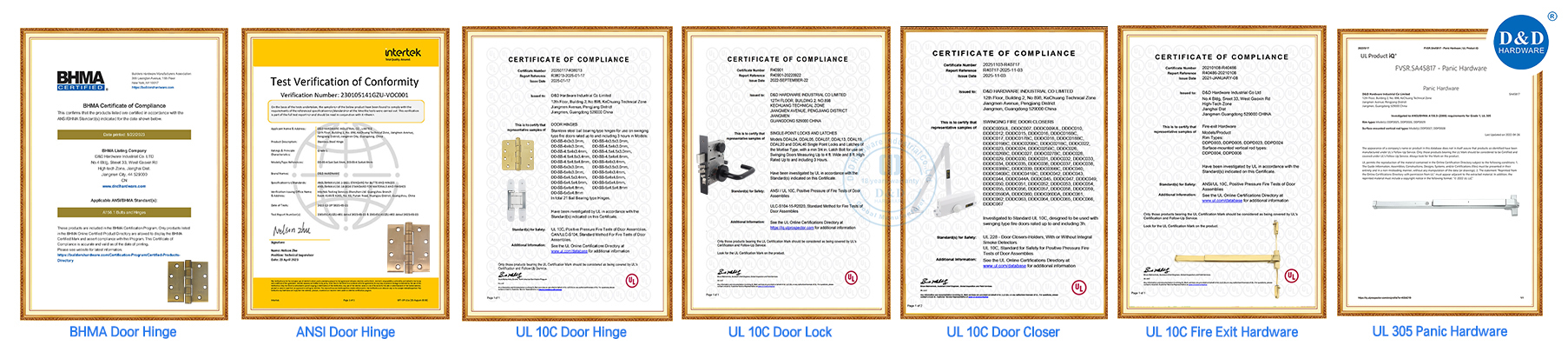
D&D Hardware’s stated UL series includes door hinges with UL/cUL UL 10C three-hour fire-rated coverage under File No. R38013, alongside ANSI/BHMA Grade 1 and Grade 2 options. Its concealed hinge range also includes UL 10C fire-rated coverage under R38013.
These designations address different performance considerations. ANSI/BHMA grades should not be presented as substitutes for fire certification, and the concealed hinge’s permitted rating must be confirmed for the selected model.
3 Locks Must Provide the Approved Latching Function
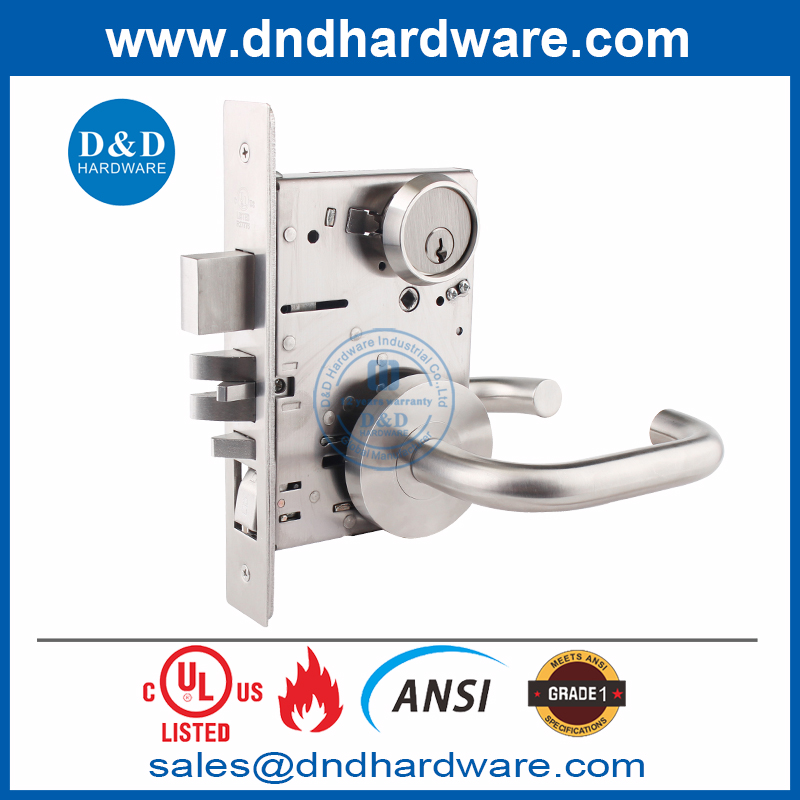
A fire-rated mortise lock must suit both the fire door application and the required operating function. Review the lock together with its strike, trim, fasteners and door preparation.
A common problem occurs when a replacement lock fits the existing cutout but does not match the approved configuration. Another occurs when an installer enlarges the strike opening to compensate for poor alignment.
Successful installation requires more than smooth handle operation. The latch must engage and secure the closed door. NFPA’s inspection checklist specifically checks this function.
D&D’s stated door lock certification includes UL 10C three-hour fire-rated coverage under File No. R40901. Project documentation should identify the exact supplied model and applicable installation conditions.
4 Closers Affect Whether the Door Reaches the Latched Position
A fire door closer supports compliance by bringing the door to its required closed position. A closer that stops the leaf short of latch engagement leaves an operational deficiency.
During commissioning, check the complete closing movement. Seal resistance, hinge friction, pressure differences and strike alignment can affect the result. Increasing closer force should not become a substitute for correcting installation defects.
D&D’s stated closer range includes UL 10C three-hour fire-rated coverage under File No. R40717. Verify that the selected closer, mounting arrangement and fixing details are suitable for the opening.
On paired doors, the approved closing sequence also matters. NFPA’s checklist checks that, where a coordinator is installed, the inactive leaf closes before the active leaf.

5 Panic Hardware and Fire Exit Hardware Are Different
Confusing panic hardware with fire exit hardware can lead to an unsuitable specification.
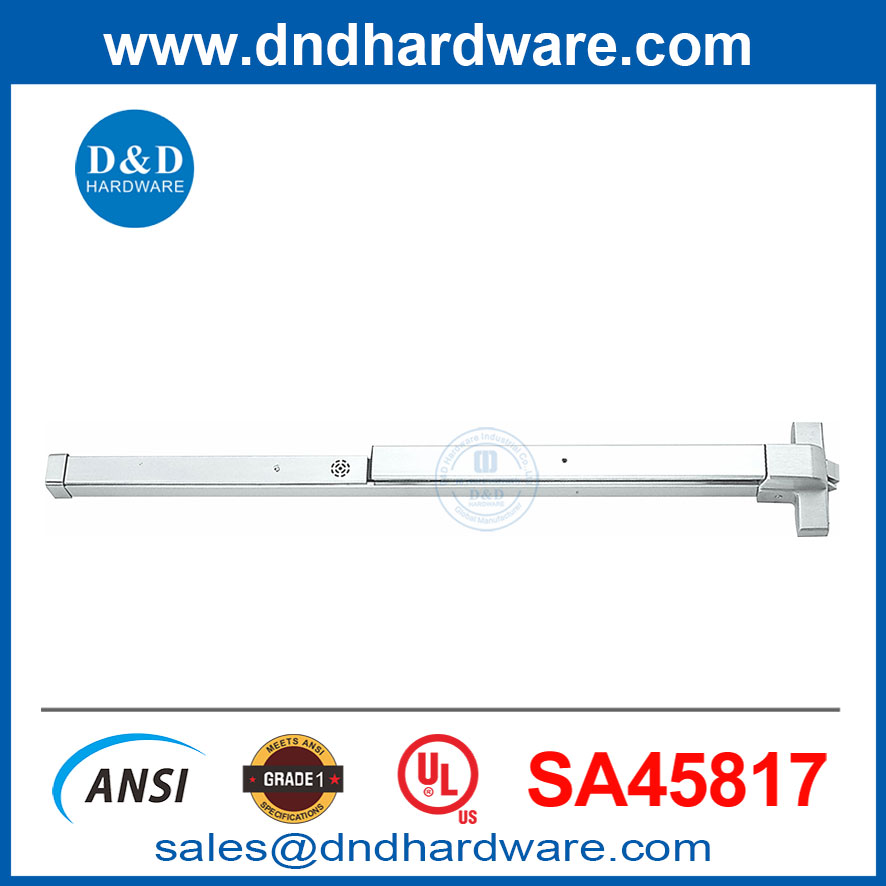
UL 305 addresses panic hardware. Fire exit hardware must be listed to both UL 305 and UL 10C. A UL 305-only certification does not establish suitability for fire door use. UL also identifies restrictions on mechanical dogging, which holds the latch retracted, for fire exit hardware.
D&D lists these categories separately:
D&D hardware category | Stated certification information |
Fire exit hardware | UL 10C, three-hour fire-rated coverage; File No. R40486 |
Panic hardware | UL 305; File No. SA45817 |
For a rated opening requiring an exit device, obtain documentation confirming the selected fire exit hardware model meets both applicable standards. Do not assume that separate certifications for different products establish dual certification for one device.
6 Verify the Supplied Configuration and Control Changes
The D&D certification information above provides starting references for model selection. Final review should use current certification records and installation instructions for the exact products supplied.
A useful compliance submission connects:
·Each door number to its required rating and hardware set.
·Each hardware model to its applicable certification record.
·Installation details to permitted preparations, fixings and accessories.
·Any proposed substitution to a documented compatibility review.
Hardware changes after installation also need attention. Replacing a surface hinge with a concealed hinge or changing the locking arrangement may alter the original certified construction.
UL distinguishes routine inspection from field evaluation and identifies field evaluation as a route for assessing changes outside the original certification. Not every repair requires this process; the proposed work must first be checked against permitted preparations and applicable instructions.

FAQ
Does UL Listed hardware automatically make a fire door assembly compliant?
No. The hardware must suit the opening, remain within its certification conditions and function correctly after installation.
Can three hour hardware increase the door’s fire rating?
No. A hardware rating does not upgrade the door, frame or completed assembly.
Are ANSI BHMA grades equivalent to UL fire certification?
No. They address different performance criteria. Check the applicable grade and fire certification separately.
Can D&D UL 305 panic hardware be specified on any fire door?
A UL 305-only listing is insufficient. Select fire exit hardware with documented UL 305 and UL 10C coverage for the proposed application.
What should be checked after hardware installation?
Check markings, attachment, alignment, closing, latch engagement and interference from accessories. Follow the adopted NFPA 80 edition and local requirements for inspection and testing.
Reviewing a fire door hardware schedule? Contact D&D Hardware with your opening ratings, door construction and proposed hardware sets to request model-specific certification and installation documentation.
Contact us Now:
Contact: David Jian
Mob:0086-139 2903 7292
Email: David@dndhardware.com, sales@dndhardware.com,
Contact: Jobby Zhang
Mob:0086-137 2599 9617
Email: jobby@dndhardware.com
D&D HARDWARE INDUSTRIAL CO.,LTD
ADD:12th Floor, Building 2, No.898, KeChuang Technical Zone, Jiangmen Avenue, Pengjiang District, Jiangmen City, Guangdong, China (Postcode:529000)
https://www.dndhardware.com
Tel: +86-750-3856396
Fax: +86-750-3856395
 English