UL Listed hardware meets ANSI/BHMA A156.13 mortise rules, while EN12209 controls European items. An american standard ul mortise lock uses exact sizing, fixed backsets, and screw-in cylinders. Instead, EN12209 items use teardrop Euro profile cylinders and metric numbers. Differing sizes mean you cannot swap these products with each other. Unique cylinder shapes and local fire test standards like UL 10C or EN 1634-1 keep them apart. Builders must match mortise hardware to exact door cuts and local safety codes. D&D Hardware provides approved options for all global building rules. This article offers a detailed spec comparison, size guide, fire safety breakdown, and RFQ list with a top UL Listed Mortise Lock and European mortise choices.
Key Takeaways
American UL locks and European EN12209 locks are different sizes, so you cannot trade them.
UL locks use round screw-in cylinders, while EN12209 locks use teardrop-shaped Euro profile cylinders.
UL 10C fire tests use strong water hose sprays, while European EN 1634-1 tests measure heat movement.
Builders must pick door locks that fit local safety rules and match the exact door shapes.
UL Mortise Lock vs EN12209 Comparison Matrix
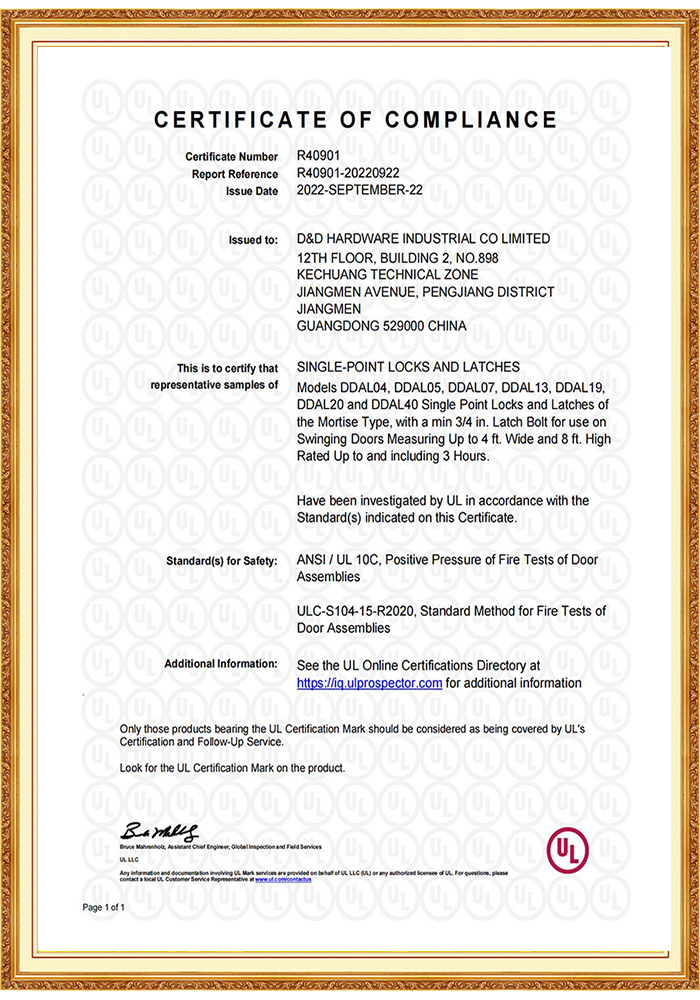
Building designers check hardware rules to make sure their door choices follow local laws on worldwide job sites. An American standard UL mortise lock passes tough performance tests based on ANSI/BHMA A156.13 Grade 1 rules. At the same time, European builders use the EN 12209 standard to rate how well a door lock works. Property managers everywhere need to learn these different product testing rules. D&D Hardware makes both BS EN/CE certified lock options and UL-listed architectural hardware to supply construction needs around the world.
Technical Specifications Breakdown
The European system sorts lock performance into an 11-number rating code. Each number highlights a specific build feature, lifespan limit, or weather protection level. Designers review this guide to choose the right lock body for their specific door installation needs.
Digit
Category
Brief Description
1
Category of Use
Grades 1 (low frequency, residential) to 3 (high frequency, public).
2
Durability
Grades A–X indicating test cycles (50k–200k) and load on latch bolt (0–120N).
3
Door Mass and Closing Force
Grades 0–9; defines max door weight (up to 200+ kg) and closing force (15–50N).
4
Fire Resistance
Grades 0 (none), A (smoke only), B (smoke & fire), N (non-contributing).
5
Safety
No requirement; can be used in exit devices compliant with EN 179/1125.
6
Corrosion Resistance
Grades 0 (none), A (low), C (high), D (very high), F (high with temp range), G (very high with temp range).
7
Security and Drill Resistance
Grades 1 (minimum) to 7 (very high with drill resistance).
8
Field of Door Application
Grades 0 (no security) to H (8 detaining elements, extended differs).
9
Type of Key Operation and Locking
Grades 0 (none) to H (automatic locking without key).
10
Type of Spindle Operation
Grades 0 (no follower) to 3 (heavy unsprung lever).
11
Key Identification
Grades 1 (basic) to 3 (advanced restricted key system).
Operational Standards Contrast
ANSI/BHMA A156.13 Grade 1 rules put a heavy-duty UL mortise lock casing through tough strength tests. Testers force the main latch part to open and close 800,000 times without breaking. The internal parts must also resist hard hitting blows to prove they stay strong under stress. Busy office buildings choose this tough physical strength for their doors.
The European system tests lock strength using its own separate list of rules. The EN12209 standard checks latch forces from 0N to 120N while testing locks up to 200,000 open cycles. It also rates rust protection up to Grade G for places with big temperature shifts. In addition, hotel builders pick a fire rated hotel lock to satisfy safety codes and keep rooms secure. D&D Hardware sells every approved lock type to handle these detailed project needs.
Understanding the UL Mortise Lock and ANSI Standards
ANSI A156.13 Durability and Cycle Testing
American building managers rely on strict strength tests for busy entry doors. The ANSI/BHMA A156.13 standard sets the rules for heavy-duty commercial mortise locks used in busy places. Independent labs test each UL mortise lock design using hard hits and endless latch movements. Testing workers force the main bolt back 800,000 times under heavy side pressure.
This hard cycle testing proves that an american standard ul mortise lock stays safe for years. The parts must work smoothly without breaking during every single step. Also, testing workers twist the lock handle using strong turning forces. These tough checks help managers pick good hardware for schools, hospitals, and office places.
EN 12209 European Performance Classification
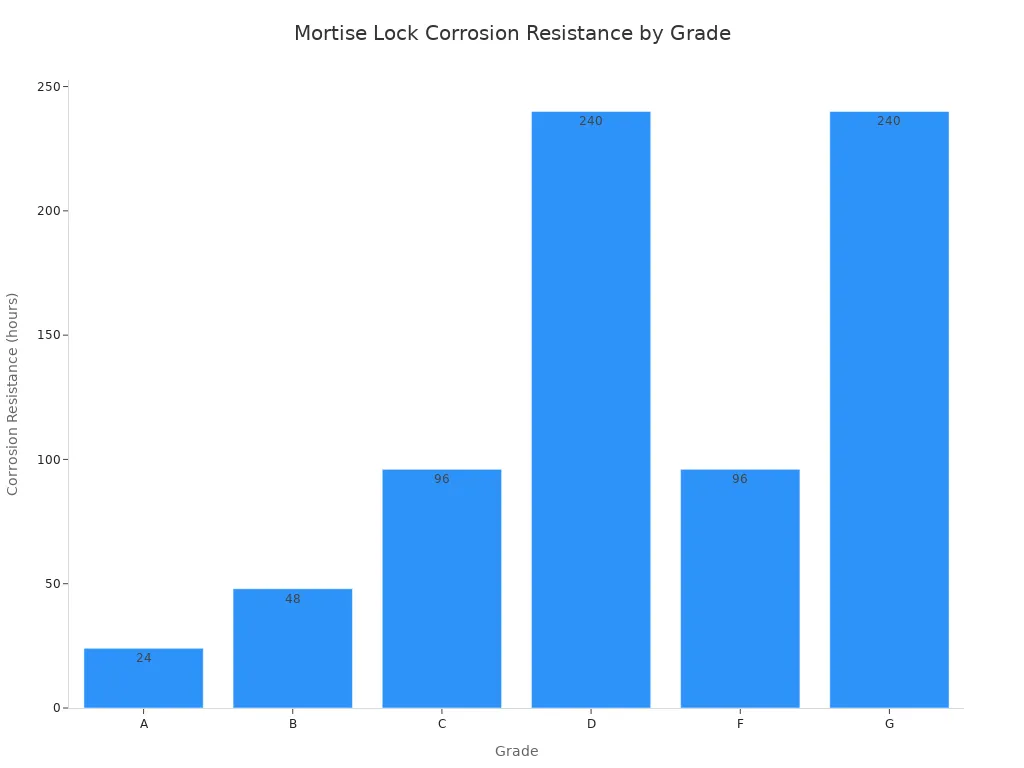
European builders use special testing rules to check lock strength and weather safety. An official EN12209 mark needs full testing under the EN 1670 rule to rate parts against rust. Testing labs put inside parts in salt spray inside heat boxes to track total life.
Grade
Corrosion Resistance (Salt Spray Hours)
Temperature Requirement
0
None defined
No requirement
A
24 h
No requirement
B
48 h
No requirement
C
96 h
No requirement
D
240 h
No requirement
F
96 h
–10 °C to +60 °C
G
240 h
–10 °C to +60 °C
Builders use these numbers to match lock strength with local outdoor weather. Grade G parts handle 240 hours of salt spray while working in cold or hot heat. Every tested UL item gets clear stamps to help buyers check safety rules. Good test proof promises long use for hard global build jobs.
Dimensional Differences and Door Prep Non-Interchangeability
Builders face big fitting problems when putting hardware on doors in different countries. Factories in North America cut specific pockets for an American standard ul mortise lock setup. Meanwhile, European makers prepare doors with metric measurements following local rules. Fitting workers cannot swap these systems because real sizes vary greatly between regional makers.
Backset and Center Distance Variations
The backset size shows the exact distance from the door edge to the middle of the cylinder hole. American hardware uses set real sizes across business item lines.
Standard commercial backsets are 2-3/4 inches on most mortise locks, but 2-3/8 inches is also common on narrower door edges.
Backset: 2-3/4" (70mm)
European makers build hardware using smaller metric depth shapes. Normal European mortise parts usually use backset sizes of 55 mm or 60 mm. The center space length also causes basic fit problems. European builders follow DIN 18251 rules, which set a normal center length of 72 mm between the handle bar and key cylinder. On the other hand, American mortise boxes place the handle closer to the key hole. Therefore, factory door cuts made for one region ruin the door frame if you try to use another system.
Lock Case Dimensions and Faceplate Layouts
Real lock box sizes create another structural problem when replacing old hardware. American builders put in thick steel boxes with a normal tall shape made for heavy business use. These big boxes hold strong inner parts that need a deep hole inside the door body. At the same time, European lock boxes use a thinner shape that needs a much smaller inner cut.
Feature
North American Mortise Standard
European EN 12209 Standard
Primary Case Design
Deep heavy-duty steel body
Slim compact steel body
Armor Front Faceplate
Wide faceplate with bevel options
Narrow flat faceplate
Typical Application
High-traffic entry mortise lock installations
Standard interior and exterior commercial doors
Faceplate sizes also stop workers from swapping hardware directly between door types. American doors need a wide faceplate that often uses angled edges to match specific door sides. European faceplates use thinner widths made only for flat wood or metal door edges. A worker who tries installing an entry mortise lock into a European door cut will fail without making major door changes. D&D Hardware makes exact door items that match both global door setup rules completely.
Cylinder Compatibility and Locks Mechanics
Cylinder mechanics determine physical compatibility between lock cases and keyways. North American systems rely on threaded cylinders or interchangeable cores. European designs use standardized teardrop shapes. D&D Hardware manufactures versatile lock casing options designed for commercial metal and wooden door openings. These bodies accommodate varied security needs across global markets.
North American Mortise and SFIC Cylinders
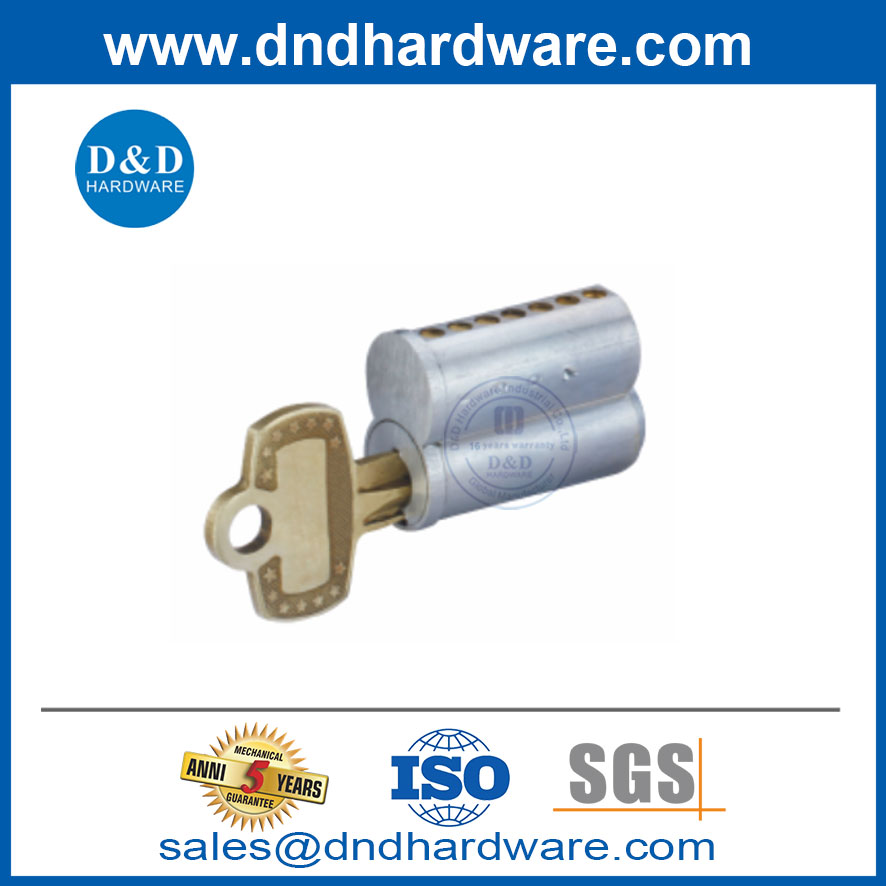
North American lock designs feature threaded round cylinders that screw directly into the lock casing. Mechanics secure these components using a heavy side set-screw through the front armor plate. Installers can also utilize Small Format Interchangeable Core systems for quick rekeying.
The Best 45H mortise lock ships with a 7-pin SFIC housing that accepts any BEST or compatible core.
A control key retracts a retainer pin, allowing workers to slide the core out and replace it in under 30 seconds without disassembly.
The UL fire rating remains intact when maintenance personnel insert Grade 1 SFIC cores, ensuring the lock body stays certified for fire-rated doors.
This mechanism simplifies building maintenance. Property managers rekey entry mortise lock hardware rapidly during tenant transitions. The robust mechanical design protects commercial properties effectively.
DIN Standard Euro Profile Cylinders
European building projects utilize teardrop profile cylinders. A single transverse bolt passes through the lock faceplate to secure the housing inside the door cut. Installers slide these uniform cylinders directly through the mortise body.
Manufactured in compliance with EN 1303 and DIN 18252 standards, profile cylinders ensure seamless integration with EN 12209 mortise locks and European-standard hardware.
This design simplifies installation across diverse facilities. Technicians replace key components without opening the main lock case. The standardized profile ensures precise alignment with internal cams.
D&D Hardware builds durable lock cases to support these global locking mechanisms. Each UL certified unit undergoes strict quality checks. Their products deliver long performance lives on metal and timber doors.
Fire Safety Compliance: UL 10C vs EN 1634-1
Safety tests set key limits for door hardware. Labs check how well a fire door mortise lock handles extreme heat and stress. America and Europe use different testing steps. These clear checks make sure every approved lock stops fire from breaking through in emergency events.
UL Positive Pressure Fire Door Requirements
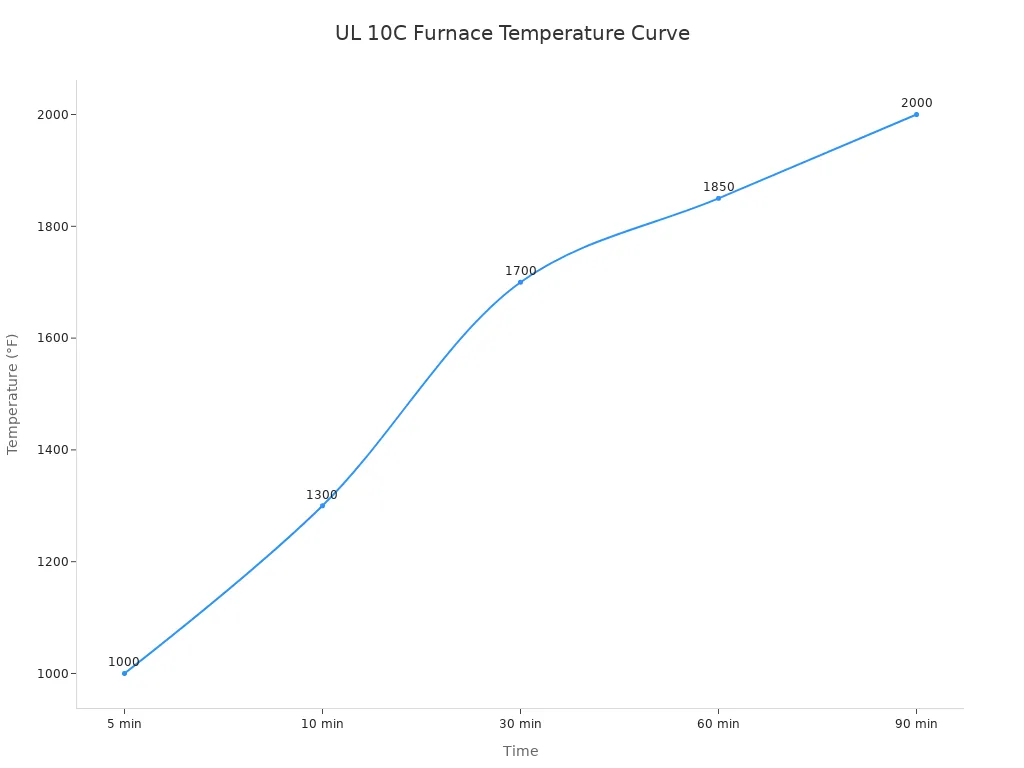
American rules require tough checks under the UL 10C standard. Test crews set the pressure line 40 inches high after 5 minutes. This design pushes hot air and smoke against the upper door frame.
Criteria
Requirement
Furnace exposure
Temperatures rise to over 1700°F (926°C) over three hours following the standard time-temperature curve.
Flame and gas integrity
No flames or hot gases pass through the lock body or around its edges; the lock must maintain its position without deforming open.
Hose stream test
Immediately after furnace, a fire hose delivers water at 30 psi with a 2.5-inch nozzle against the assembly; the lock cannot be blasted open.
Getting a ul 10c fire rating takes total strength. The lock body has to keep doors shut during the whole burn. Right after heating, crews blast the hot setup with high-water hose spray. A fire rated hotel lock must withstand this hit without breaking to earn approved status.
EN 1634-1 Resistance Testing Procedures
European makers confirm safety needs through the EN 1634-1 testing system. This approach uses unique air rules and heat speeds unlike American checks.
Aspect
EN 1634-1
UL 10C
Pressure
Neutral
Positive
Temperature curve
ISO 834
ASTM E84-based
The European system tests heat movement along with body strength. Experts check if warmth passes through internal latch parts. Safety teams confirm proper compliance before printing hotel pass papers. D&D Hardware builds approved items that meet every harsh standard for worldwide projects. Official testing ensures all commercial hotel installs give top protection to people inside.
Selecting a Top UL Listed Mortise Lock for Project RFQs
Project managers need to double-check key details before putting hardware into job plans. Buyers review fire ratings, door materials, and hole sizes for every entry mortise lock. Standard business doors must be 1-3/4 inches (44.5mm) thick so the main spindle fits right. Also, planning teams pick a top ul listed mortise lock to pass harsh UL 10C positive pressure tests for up to 3 hours. Stainless steel parts inside the mechanism survive heat reaching 1,400–1,450°C during extreme building fires. Buyers pick a verified fire rated hotel lock for inside doors to satisfy fire codes and safeguard the property.
Criterion
Key Procurement Requirement
Fire-Rating Duration
Must match assembly ratings from 30 minutes up to 3 hours.
Factory prepares mortise cuts to avoid unapproved field alterations.
Engineers pick a top ul listed mortise lock for busy hotel doors so the parts do not break down under daily wear. D&D Hardware has more than 18 years of experience making strong building hardware. The business sends certified lock products to hospitals, schools, and office buildings all around the world.
Aligning Door Hardware with Regional Building Codes
Building laws change a lot between different countries. Building crews across North and South America look for ANSI/BHMA Grade 1 ratings and UL fire marks on doors. Builders in European countries need CE stamps and EN 12209 ratings for every complete door system. At the same time, the Middle East accepts both systems depending on the job. Local hotels there often set up European mortise locks. Yet, crowded public sites like hospitals prefer an american standard ul mortise lock for heavy everyday use.
A top ul listed mortise lock meets strict strength rules inside crowded public facilities. D&D Hardware builds approved lock designs for jobs in Europe, the Middle East, and the Americas to guarantee official safety approval. Their expert design team builds a strong fire rated hotel lock made to last through years of continuous operation.
Specifiers must select every mortise hardware setup based on regional building codes, fire ratings, and exact pocket dimensions. Obtaining official certification guarantees structural safety compliance for high-traffic entryways. Meanwhile, an EN certification proves product performance across European door projects. Selecting a top ul listed mortise lock ensures maximum physical strength during emergency fire events.
Building managers often install a standard ul mortise lock to secure commercial properties. Furthermore, choosing a top ul listed mortise lock satisfies strict North American building codes completely. Specifiers should contact the technical experts at D&D Hardware to review mortise door preparation requirements and select certified opening solutions for global projects.
FAQ
Can specifiers substitute a European mortise lock with an American mortise lock?
Builders cannot swap these designs. Different backsets, lock case sizes, and cylinder shapes stop direct replacements. American locks need deep door cuts and screw-in cylinders. European choices use thin shapes with Euro profile cylinders. Workers must match hardware with original door cuts.
Which standards govern mortise performance in global commercial projects?
ANSI/BHMA A156.13 Grade 1 controls American mortise items using usage tests. EN 12209 sorts European mortise parts with an 11-digit rating system. Both standards check latch strength, build durability, and fire safety across busy business buildings.
How do fire testing standards differ between UL 10C and EN 1634-1?
UL 10C uses positive pressure and strong hose water to check building strength. EN 1634-1 uses neutral pressure to test heat spread and fire safety. Both methods help ensure safety rules for building entryways.
What mortise hardware suits high-traffic hospitality doors?
Business buildings use a fire rated hotel lock to meet tough safety rules. D&D Hardware makes approved door products for hotel builds. Their items offer long-lasting protection across busy hotel rooms and hallway doors.
 English