Get Famous Branded Quality at Factory Cost

Products Category

Products


 : +86-750-3652251 / 3856396

: +86-750-3856395 / 3856397

www.dndhardware.com

: sales@dndhardware.com


CE vs UL Fire Test: EN 1634-1 vs UL 10C – A Technical Comparison for Fire Door Hardware

Views: 0     Author: Site Editor     Publish Time: 2025-12-23      Origin: Site

Inquire

facebook sharing button
twitter sharing button
line sharing button
wechat sharing button
linkedin sharing button
pinterest sharing button
whatsapp sharing button
sharethis sharing button
CE vs UL Fire Test: EN 1634-1 vs UL 10C – A Technical Comparison for Fire Door Hardware


Introduction: Why Fire Test Standards Are Not Interchangeable

Fire-rated door assemblies are regulated by different fire test philosophies in Europe and North America.
While both aim to protect life and property, EN 1634-1 and UL 10C are not equivalent standards and cannot be used interchangeably.

For engineers, QC teams, and technical auditors, understanding the fundamental differences in test pressure, evaluation criteria, and system philosophy is essential to ensure correct specification and regulatory approval.

This article provides a deep technical comparison between EN 1634-1 (CE system) and UL 10C (UL system) from an engineering and compliance perspective.

fire rated


Regulatory Background


EN 1634-1 (CE System)

  • •Region: Europe / CE markets

  • •Legal Framework: Construction Products Regulation (EU) No. 305/2011

  • •Supporting Standard: EN 16034 (fire & smoke characteristics)

  • •Fire test scope: Door and shutter assemblies, including hardware

EN 1634-1 test results are used to support CE marking of fire door components.


UL 10C (UL System)

  • •Region: North America & UL-accepted markets

  • •Regulatory Drivers: IBC, NFPA, local AHJ requirements

  • •Fire test scope: Fire door assemblies under positive pressure

UL 10C listings are required by building codes and enforced by Authorities Having Jurisdiction (AHJs).


Core Difference: Pressure Condition Philosophy

EN 1634-1: Neutral Pressure Fire Test

  • •Furnace pressure approximately neutral at the door opening

  • •Fire exposure focused on temperature and integrity

  • •Flame spread driven mainly by heat, not pressure

Engineering Impact:

Less aggressive flame penetration forces compared to positive pressure tests.

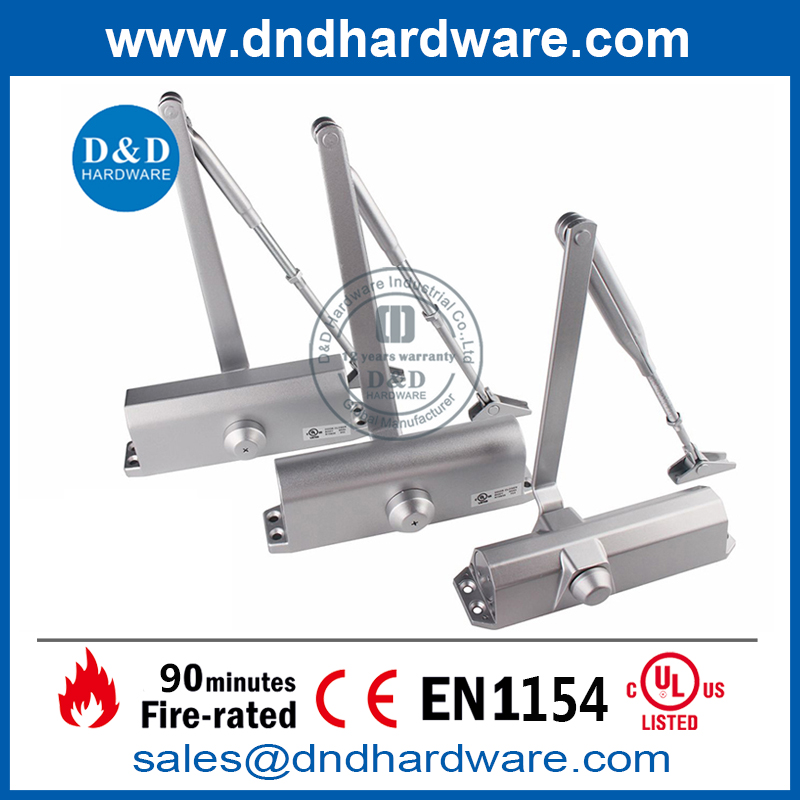
D&D CE Fire Rated Door Hardware:

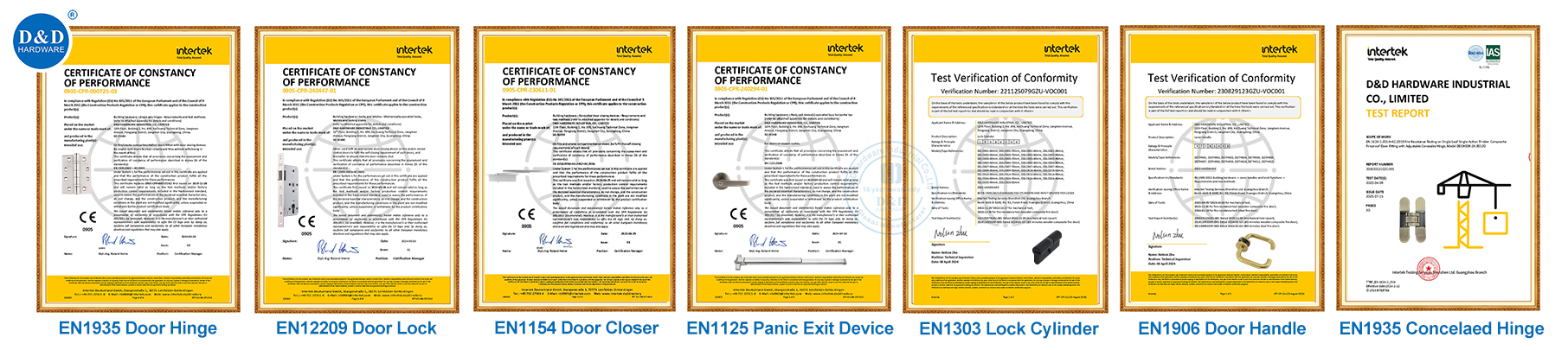
✔️ Door Hinge-BS EN1935 200,000 cycles test, EN1634 Fire Rated 192mins/260mins, EN1670 Corrosion Resistance 240 hours.
✔️ Concealed Hinge-BS EN1935 200,000 cycles test, EN1634 Fire Rated 132mins, EN1670 Corrosion Resistance 48 hours.
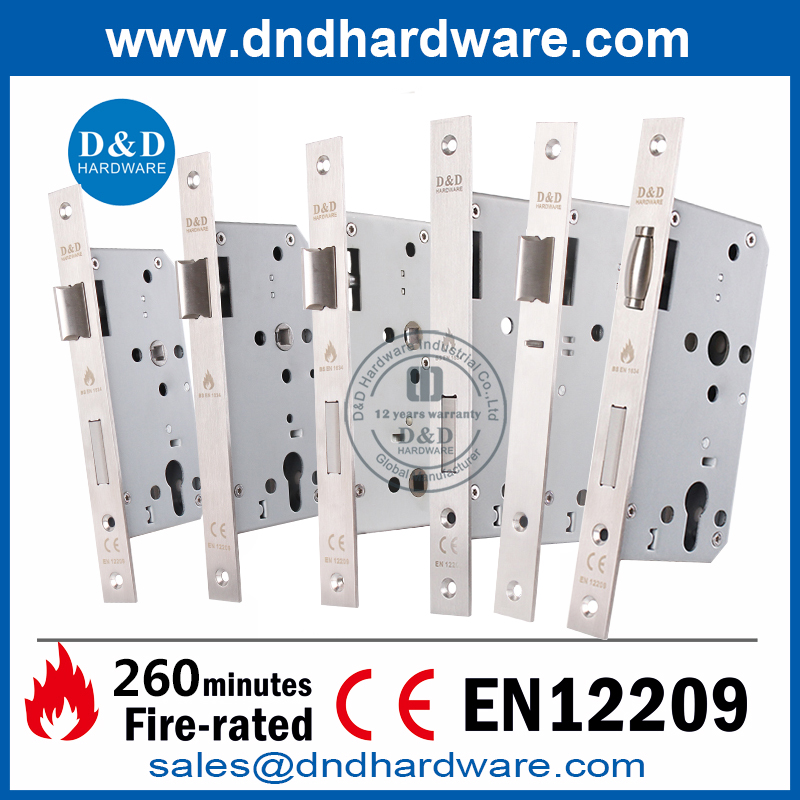
✔️ Door Lock-BS EN12209 200,000 cycles test, EN1634 Fire Rated 111mins/260mins, EN1670 Corrosion Resistance 240 hours.
✔️ Door Closer-BS EN1154 500,000 cycles test, EN1634 Fire Rated 120/180mins, EN1670 Corrosion Resistance 96 hours.
✔️ Door Handle-BS EN1906 300,000 cycles test, EN1634 Fire Rated 183/260mins, EN1670 Corrosion Resistance 240 hours.
✔️ Lock Cylinder-BS EN1303 100,000 cycles test, EN1634 Fire Rated 183mins, EN1670 Corrosion Resistance 96 hours.
✔️ Panic Exit Device-BS EN1125 200,000 cycles test, EN1634 Fire Rated 132/240mins, EN1670 Corrosion Resistance 240 hours.

CE fire rated door hardware


UL 10C: Positive Pressure Fire Test

  • •Simulates real fire conditions with positive pressure at the top of the door

  • •Hot gases actively force flames through gaps

  • •Most severe conditions occur at the latch and hinge areas

Engineering Impact:

More demanding on:

  • •Hinges

  • •Latching mechanisms

  • •Door/frame interfaces

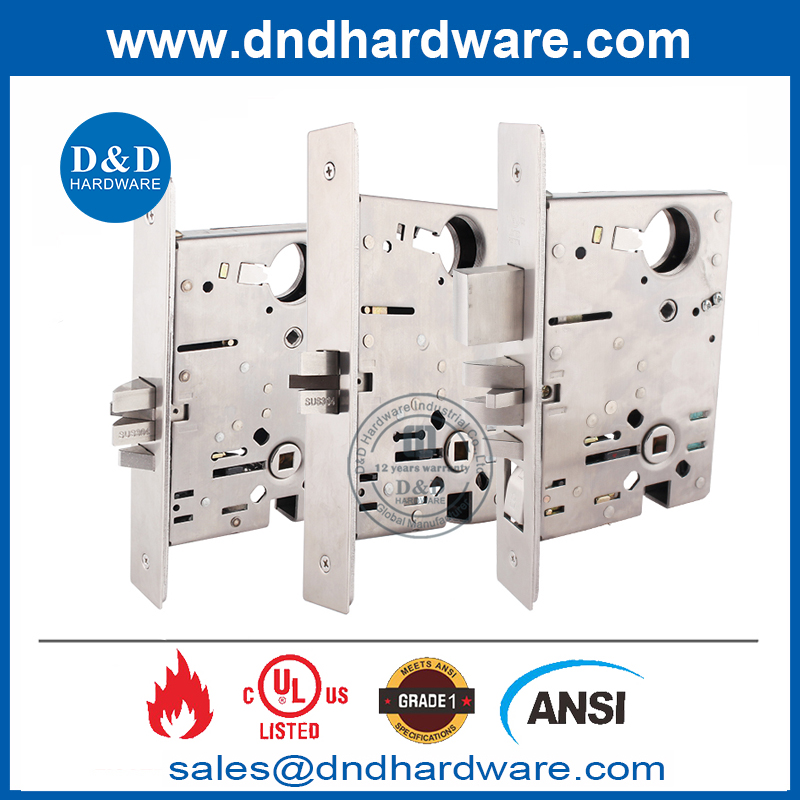
D&D UL Fire Rated Door Hardware:

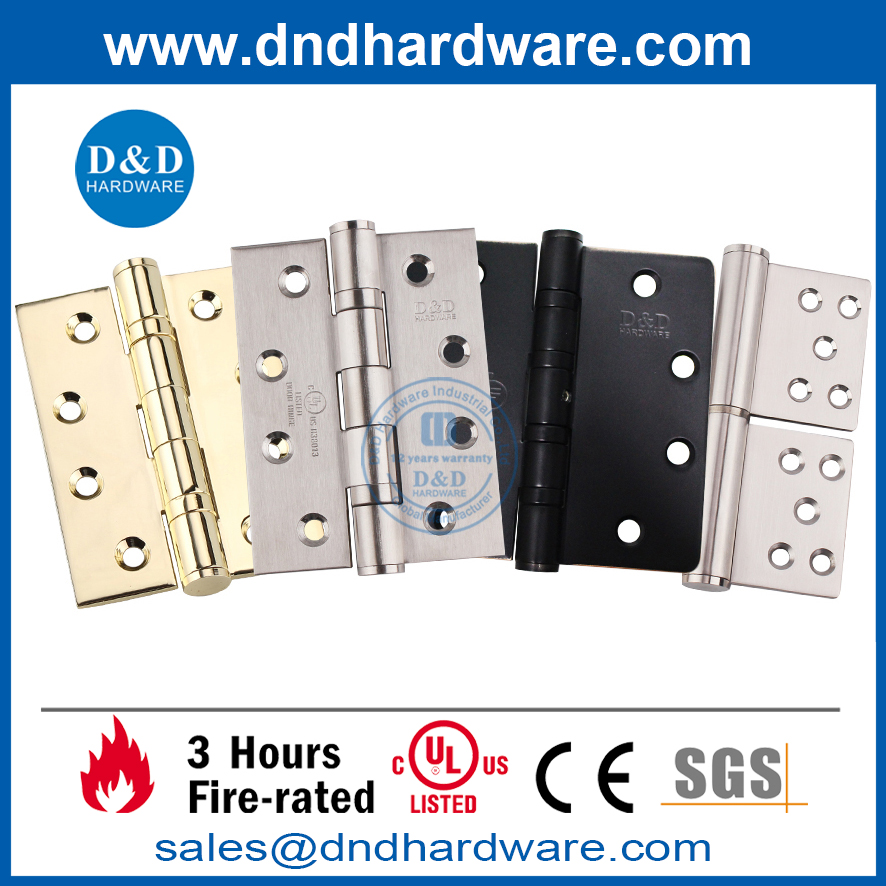
✔️ Door Hinge-UL/cUL UL 10C Fire Rated 3 Hours, File No.R38013 & ANSI/BHMA Grade1&Grade 2
✔️ Door Lock-UL 10C Fire Rated 3 Hours,File No.R40901
✔️ Door Closer-UL 10C Fire Rated 3 Hours, File No.R40717
✔️ Fire Exit Hardware- UL 10C Fire Rated 3 Hours, File No.R40486
✔️ Panic Hardware-UL305, File No.SA45817

UL fire rated door hardware


Fire Test Evaluation Criteria

Aspect

EN 1634-1

UL 10C

Pressure

Neutral

Positive

Temperature curve

ISO 834

ASTM E84-based

Flame passage

Limited

Strict

Hardware function

Indirect

Critical

Door gap behavior

Monitored

Highly critical


Fire Resistance Rating & Classification


EN 1634-1 Results

Fire performance expressed as:

  • •E –  Integrity

  • •EI –  Integrity + Insulation

Examples:

  • •EI30

  • •EI60

  • •EI120

Hardware suitability is validated within the tested assembly.


UL 10C Results

Fire ratings expressed in time duration:

  • •20 minutes

  • •45 minutes

  • •60 minutes

  • •90 minutes / 3 hours

Hardware must:

  • •Remain attached

  • •Maintain door closure

  • •Allow required egress function


Impact on Door Hardware Design

Hinges

  • •EN 1634-1:  Focus on structural stability

  • •UL 10C:  Severe thermal + pressure load at hinge knuckles

UL-tested hinges typically require:

  • •Thicker materials

  • •Higher melting point alloys

  • •Reinforced fasteners


Locks & Latching Hardware

  • •EN 1634-1: Latch integrity evaluated passively

  • •UL 10C: Latch is a primary fire barrier

UL 10C requires:

  • •Stable latch projection

  • •No latch retraction under heat

  • •No excessive deformation


Door Closers & Exit Devices

  • •EN 1634-1:  Focus on remaining in position

  • •UL 10C: Functional operation may be required after fire exposure

This makes UL listings particularly critical for:

  • •Hospitals

  • •High-rise buildings

  • •Egress-heavy environments


System vs Component Philosophy

Concept

EN    1634-1

UL    10C

Test unit

Complete assembly

Complete assembly

Hardware listing

Assembly-based

Hardware-specific listings

Substitution flexibility

Limited

Limited but documented

Field inspection

CE documentation

UL label verification


Can EN 1634-1 Replace UL 10C?

Short answer: No.

  • •EN 1634-1 results cannot be used to approve UL fire door assemblies

  • •UL 10C results do not replace CE marking in Europe

Dual-market projects require dual testing or dual-certified hardware.


Engineering Selection Guidance

Choose EN 1634-1 When:

  • •Project is located in the EU

  • •CE marking is legally required

  • •Fire classification EI is specified

Choose UL 10C When:

  • •Project follows IBC / NFPA codes

  • •AHJ requires UL listing

  • •Positive pressure performance is mandated

Choose Both When:

  • •Export or multinational projects

  • •Global specification consistency is required


Common Engineering Misconceptions

❌ “Fire rating time means the same thing”
❌ “Passing EN test guarantees UL compliance”
❌ “Hardware fire-rated in one system works everywhere”

Each test standard represents a different risk model.


Fire Testing Is Context-Driven, Not Universal

EN 1634-1 and UL 10C are built on different fire safety philosophies.

  • •EN 1634-1 emphasizes compartment integrity under controlled conditions

  • •UL 10C emphasizes real-fire pressure and forced flame penetration


For engineers and specifiers, understanding these differences is critical to:

  • •Correct certification planning

  • •Hardware selection

  • •Project approval success

In fire door engineering, compliance is not about equivalence — it is about appropriateness.


Contact us Now:

Contact: David Jian
Mob:0086-139 2903 7292
Email: David@dndhardware.com, sales@dndhardware.com,

Jobby Zhang
Mob:0086-137 2599 9617

Email: jobby@dndhardware.com


D&D HARDWARE INDUSTRIAL CO.,LTD  

ADD:12th Floor, Building 2, No.898, KeChuang Technical Zone, Jiangmen Avenue, Pengjiang District, Jiangmen City, Guangdong, China (Postcode:529000)


https://www.dndhardware.com  

Tel: +86-750-3856396

Fax: +86-750-3856395


Contact Info

:+86-139 2903 7292   David Jian

: +86-750- 3856396

 : sales@dndhardware.com
 
 timg: +86-139 2903 7292
 
 : +86-139 2903 7292

:  12th Floor, Building 2, No.898, KeChuang Technical Zone,
Jiangmen Avenue, Pengjiang District, Jiangmen City, Guangdong, China
   
Get Famous Branded Quality at Factory Cost
©Copyright D&D HARDWARE INDUSTRIAL Co., LIMITED. All Rights Reserved.