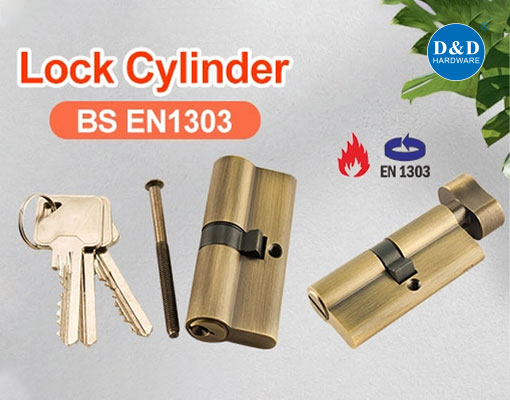
You want to feel safe at home or work, right? Choosing lock cylinders starts with checking your security needs. Look at your door type and legal rules too. Lock cylinders help keep you safe and calm. Burglars often use cylinder lock pulling. This happens in 16% of break-ins. So strong protection is important. D&D Hardware sells lock cylinders with top quality. They are tested for endurance and fire safety. They are certified to meet EN 1303, ANSI/BHMA Grade 1, UL, and CE standards. Think about security, compatibility, and installation when buying cylinder locks. Are you wondering where to buy cylinder locks that keep you safe? D&D Hardware makes buying easy.
Install door fittings with cylinder pull protection for better security.
Endurance testing shows D&D lock cylinders last through 200,000 cycles.
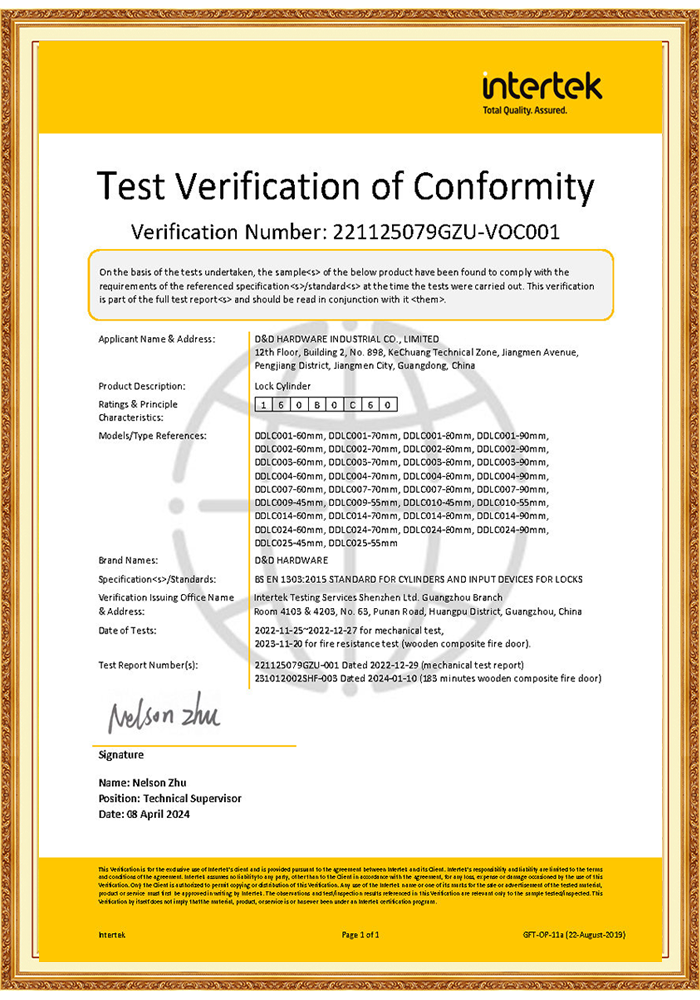
Certification Type | Details |
EN 1303 | Compliance for durability and security |
ANSI/BHMA Grade 1 | High durability for commercial use |
UL Fire Ratings | Fire resistance up to 260 minutes |
CE Certifications | European safety standards compliance |
Key Takeaways
Think about your security needs before picking a lock cylinder. Look at where you live and what risks you face.
Find lock cylinders with strong features like anti-pick and anti-drill. These features help make your lock safer.
Make sure the lock has certifications like UL and ANSI/BHMA. These show the lock is safe and strong.
Pick a lock cylinder that fits your door type and thickness. This helps the lock work well and keeps you safe.
Think about how you will use the lock. Single-cylinder locks are easier to use. Double-cylinder locks give more security.
Take care of your lock cylinders by cleaning and oiling them. This helps them work smoothly.
If you do not know how to install the lock, ask D&D Hardware experts for help. You can also hire a locksmith.
Always remember to control your keys. This stops others from copying your keys without permission.

Security Lock Cylinder Features
Assessing Security Needs
Residential vs. Commercial
Think about where you will use your lock cylinder. At home, you want to keep your family safe. You also want to feel calm. In a business, you need stronger protection. More people go in and out at work. Commercial places face bigger risks. Pick cylinder locks that are tough and can handle lots of use. They should protect against advanced threats.
Risk Factors
Every building has its own risks. Ask yourself these questions:
Is your home in a busy city or a quiet area?
Does your business have expensive equipment inside?
Do many people have access to your doors?
If you say yes to any, you need a strong lock cylinder. It should have advanced security features. Look for anti-pick, anti-drill, anti-bump, and anti-snap features. These make it harder for someone to break in. You also want anti-3d-printed-copy protection. This stops thieves from making fake keys with new technology.
Anti-Pick and Anti-Drill Technology
D&D Lock Cylinders Security
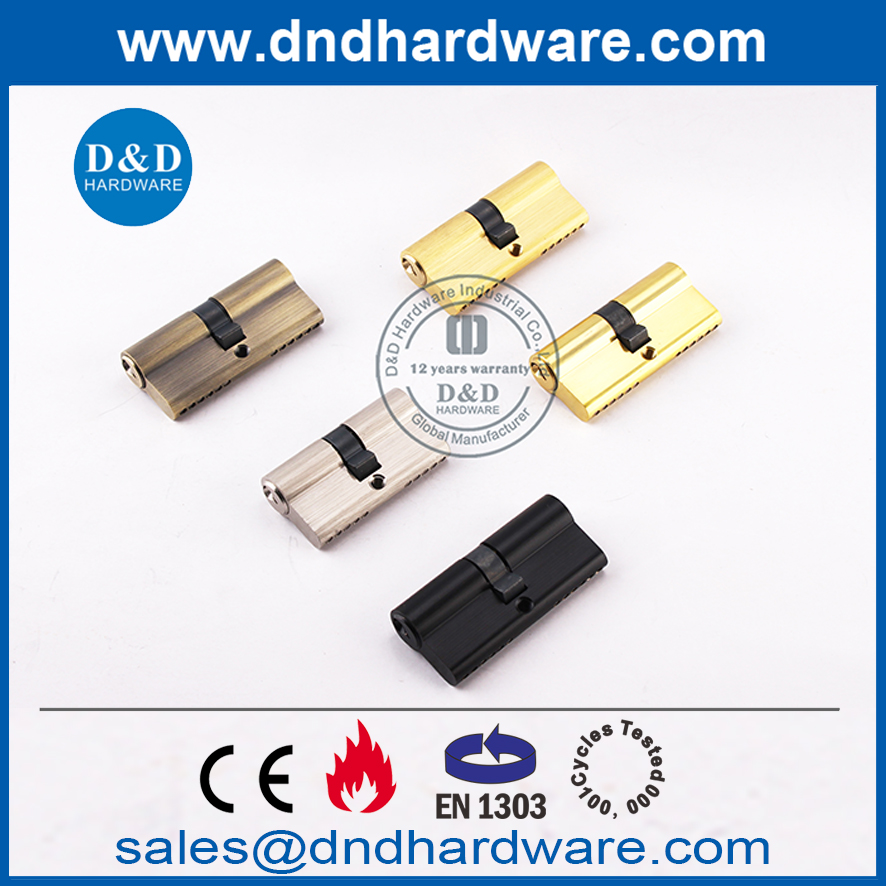
Your lock cylinder should stand up to real threats. D&D lock cylinders use special pins and barriers. These confuse people who try to pick the lock. They also have hardened steel inserts. Drilling becomes almost impossible. Here’s how these features help:
Feature | Description |
Mushroom and Spool Pins | Give false clues during picking attempts |
Serrated Key Pins | Make tension control very hard |
Magnetic Element Barriers | Need special tools to pick |
Hardened Steel Inserts | Drill bits break before the lock does |
Free-Spinning Collars | Make drilling useless |
Bump-Resistant Springs | Stop fast-rapping attacks |
These features lower the risk of break-ins. They also make your property less interesting to thieves.
Key Copy Protection
You want to control who copies your keys. Security lock cylinder systems with legal copy protection stop unwanted duplication. D&D lock cylinders use patented keyways and certificates. Only you or someone you trust can get extra keys made. This keeps your safety and property secure.
Certifications and Standards
UL, CE, ANSI, BHMA
When you pick a lock cylinder, check for certifications. These show the product passed tough tests for safety and reliability. D&D lock cylinders meet top standards like UL, CE, ANSI, and BHMA. Here’s what these certifications mean:
Certification | Benefits |
UL | High security, fire safety, tested for long life |
CE | Meets European safety and quality standards, durable in busy places |
ANSI/BHMA | Ranks locks by performance, ensures durability and security |
Locks with these certifications go through tough tests. They must survive attacks and years of use. You can trust a certified lock cylinder to protect your doors and keep you safe.
Tip: Always pick lock cylinders with well-known certifications. This helps you avoid weak products and keeps your property safe.
Key Factors When Choosing Lock Cylinders
When you pick a lock cylinder, you want it to fit your door and meet your needs. Let’s break down the key factors when choosing the right one for your space.
Compatibility with Door Types
Metal, Wooden, Fire-Rated Doors
Not all doors are the same. You might have a metal door at your office, a wooden door at home, or a fire-rated door in a hallway. Each type needs a cylinder lock that matches its design and safety needs. Here’s a quick look at what you should check:
Factor | Description |
Shape | Some doors need calabash or oval shapes to fit the lock hole. |
Length | The thickness of your door and any covers affect the cylinder length you need. |
Material | Brass works best for strength and corrosion resistance. More pins mean better security. |
Functional Requirements | Exterior doors need stronger cylinders. Interior doors can use simpler ones. |
You want your lock cylinder to match your door’s shape and size. This helps the lock work smoothly and keeps your property safe.
D&D Hardware Solutions
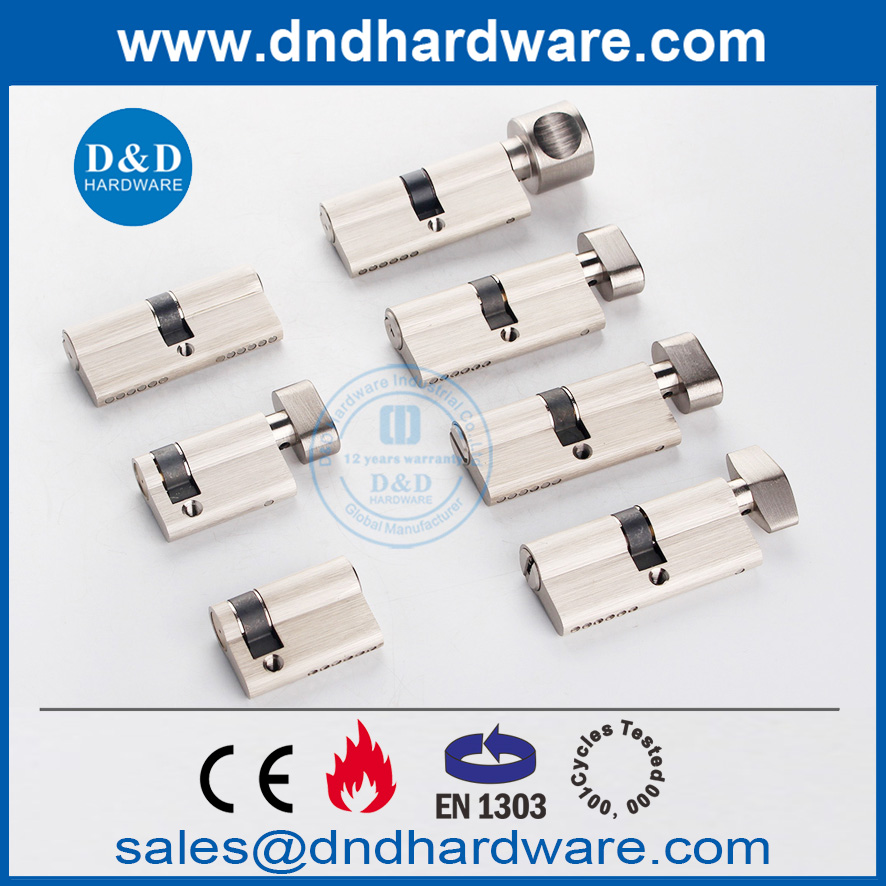
D&D Hardware offers lock cylinders for all types of doors. You can find options for metal, wooden, and fire-rated doors. If you need a special shape or size, D&D can customize the cylinder for you. This means you get a perfect fit and top quality every time. You don’t have to worry about mismatched parts or poor security.
Tip: Always check your door type before you buy a new lock cylinder. If you’re not sure, D&D Hardware’s team can help you choose the right one.

Measuring for Proper Fit
Cylinder Length and Diameter
Getting the right size is one of the most important key factors when choosing a lock cylinder. If the cylinder is too short or too long, it won’t protect your door. Here’s how you can measure for a perfect fit:
Find the center screw hole of your lock.
Use a tape measure to check the distance from the center screw hole to one end of the lock. Write down the number in millimeters.
Measure from the center screw hole to the other end. Write this number too.
If you want to double-check, remove the cylinder and lay it flat. Measure from one end to the other.
You should also measure the diameter if your door uses a special type of lock. For mortise locks, you may need a threaded cylinder in a certain length.
Door Thickness
The thickness of your door changes the cylinder length you need. Standard home doors are usually 1 ⅜ inches or 1 ¾ inches thick. If your door is thicker, you’ll need a longer cylinder. If it’s thinner, a shorter one or a spacer works best. Don’t forget to add the height of any covers or escutcheons, plus about 5mm, to your total length. This makes sure your lock sits flush and looks neat.
Thick doors: Custom doors may need longer cylinders.
Thin doors: Older or inside doors might use shorter cylinders.
Mortise locks: These need special threaded cylinders.
If you measure carefully, your lock will fit perfectly and work smoothly.
Lock Function Options
Single vs. Double Cylinder
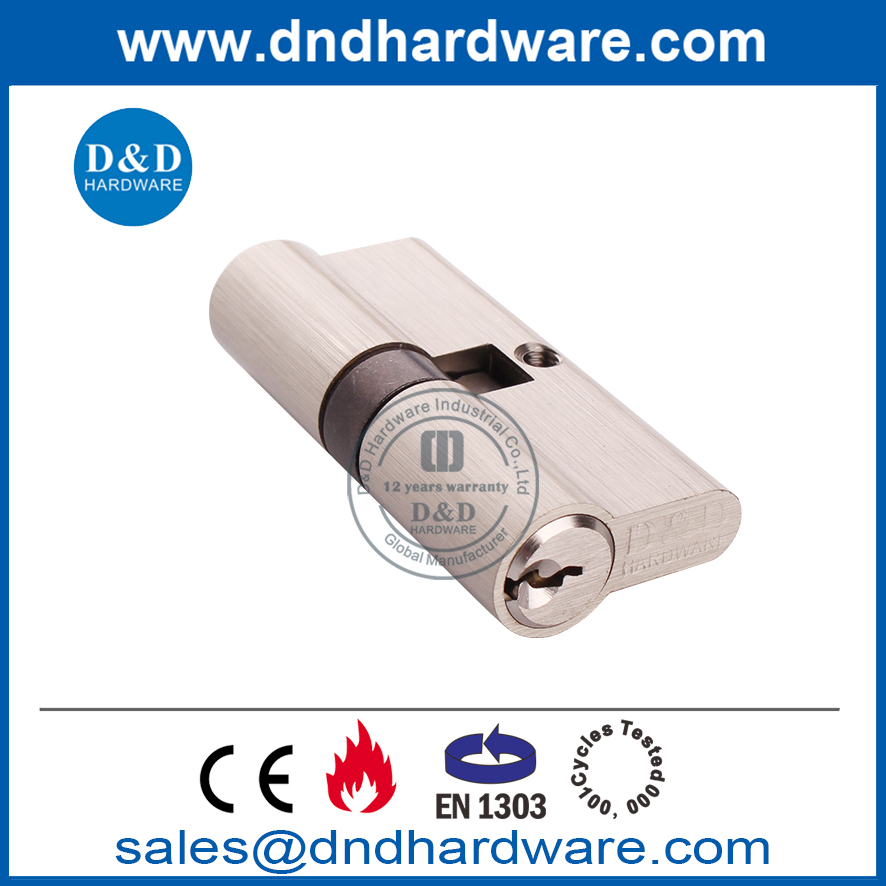
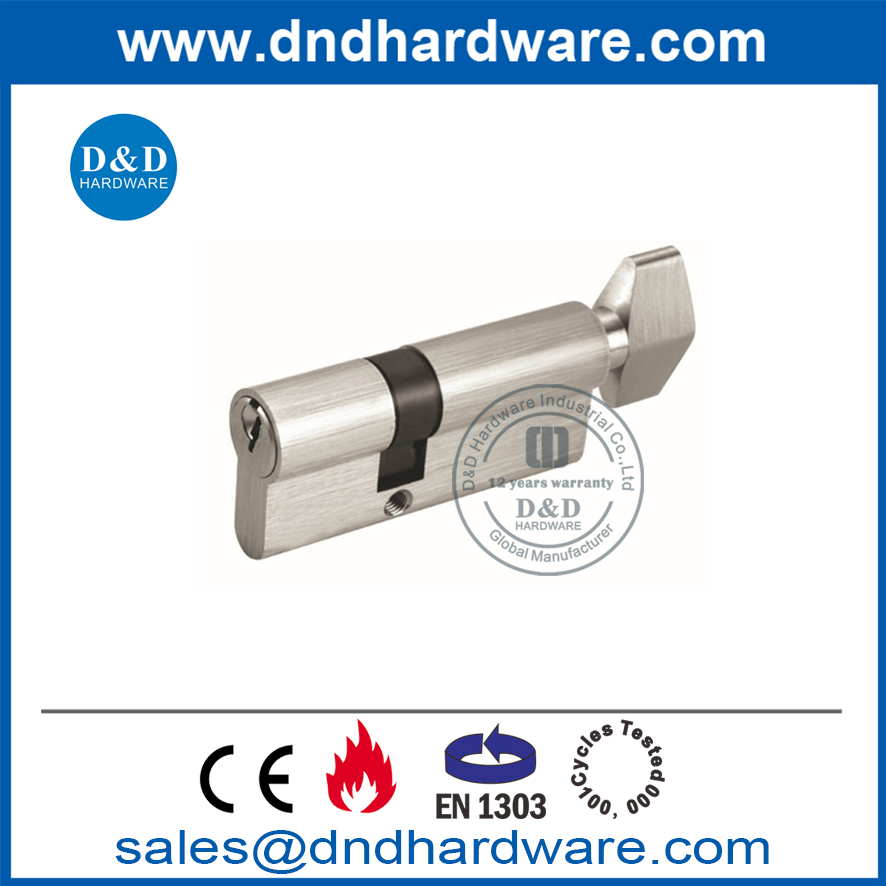
You have a choice between a single door cylinder lock and a double-cylinder lock. Each one works best in different situations. Here’s a table to help you decide:
Feature/Scenario | Single Door Cylinder Lock | Double Cylinder Lock |
Keyed Entry | One side only | Both sides |
Convenience | Easy to use, quick exit in emergencies | Needs key for exit, can slow escape |
Security | Less secure, easier to bypass | More secure, stops entry through glass |
Cost | Cheaper to buy and install | More expensive, dual locking mechanism |
Best Suited For | Homes, quick exits needed | High-security, windows near the door |
Emergency Risks | Easy escape | Can be risky if key is lost or hidden |
If you want a lock for your home, a single door cylinder lock is usually enough. It lets you get out fast in an emergency. If you need more security, like for a business or a door near a window, a double-cylinder lock works better.
Access Control Needs
Think about who needs to get in and out. In a business, you might want more control over who has keys. In a home, you want easy access for your family. Here are some factors to consider:
Factor | Description |
Security Level | How well the lock resists picking, drilling, or bumping. |
Key Control | Stops people from making extra keys without your OK. |
Durability and Weather Resistance | Handles tough weather and lots of use. |
Ease of Installation | Simple to put in or swap out. |
D&D Hardware offers lock cylinders that match all these needs. You can pick a single door cylinder lock for simple access or a double-cylinder lock for more control. You can also ask for special features, like patented keyways or weatherproof designs.
Note: If you’re not sure which lock function fits your needs, talk to D&D Hardware’s experts. They can help you find the best solution for your door and your security.
Choosing the right lock cylinder means looking at your door type, measuring for a perfect fit, and picking the right function. D&D Hardware gives you lots of choices and custom options, so you always get the best quality and security for your space.
Common Kinds of Door Cylinder Locks
When you shop for locks, you will see a few main types. Each kind has its own good points and best places to use it. Let’s look at the main choices so you can pick what you need.
Pin Tumbler Locks
Pin tumbler locks are the most common type for homes and businesses. You use a key to move pins inside the lock cylinder. If the pins line up right, the lock opens. These locks are everywhere because they work well and are simple.
Standard vs. High-Security
You can pick standard or high-security pin tumbler locks. Standard locks are good for inside doors or places with less risk. High-security locks have special parts like anti-pick pins and anti-drill plates. They also use patented keyways. These make it much harder for someone to break in. If you want more safety, choose high-security pin tumbler locks from D&D Hardware. They are great for front doors, offices, and places where you want extra protection.
Disc Detainer Locks
Disc detainer locks use spinning discs instead of pins. You turn the key, and the discs line up to open the lock. This design gives strong protection against picking and drilling. Certified disc detainer locks are very hard to open with the wrong key—sometimes only one in 50,000 tries works! They also stand up to attacks for a long time.
Security Features | Description |
Very low chance of wrong key | Only 1 in 50,000 tries will work |
Hard to pick | Can resist picking for at least 15 minutes |
Tough against attacks | Can handle attacks for 30 minutes or more |
Good price | Costs a bit more but is much safer |
You will see disc detainer locks on ATM cash boxes, safes, and vending machines. If you need a lock for high-security places, this is a smart choice.
Smart Cylinder Locks
Smart cylinder locks use electronics for more control and ease. You can unlock your door with a code, fingerprint, phone app, or voice. These locks can send alerts if someone tries to mess with them. You can check if your door is locked from anywhere.
Feature | Smart Cylinder Locks | Traditional Lock Cylinders |
How it works | Electronic (keypads, fingerprint, app) | Uses a regular key |
Security | Encrypted, tracks activity, sends alerts | Basic locking |
Price | Higher, has advanced features | Lower, simple design |
Setup | May need expert help | Usually easy to install |
Smart locks are great for modern homes, rentals, and offices. You can make temporary codes for guests or workers. You can also connect them to other smart devices like cameras or alarms.
Electronic and Keypad
Electronic and keypad locks let you get in without a key. You can use a PIN code, fingerprint, or your phone. These locks help you control who gets in and when. You can see who opened the door and at what time. Features like anti-bump, anti-snap, and anti-3D-printed key protection keep your space safe. Make sure to install them right and check them often so they work well.
Tip: If you want the newest security and easy use, smart cylinder locks from D&D Hardware are a good choice. They make life simpler and keep your property safe.
Now you know the main kinds of door cylinder locks. Each type works best for certain needs. Think about what matters most—easy use, strong security, or smart features—and you will find the right lock.
Master Key Systems
Have you ever wanted to use one key for many doors? Master key systems let you do this. These systems use special lock cylinders. You can decide who opens which doors. You see master key systems in schools, hotels, offices, and apartments. If you manage a building with lots of rooms, a master key system helps a lot.
Master key systems let you set up different access levels. For example, one key can open every door in the building. Staff might have keys for only certain rooms. Tenants or workers get keys for their own spaces. This keeps things neat and safe.
Let’s check the main benefits and limits of master key systems:
Benefits | Limitations |
Easy access control | Needs careful planning to stay strong |
Custom access levels | Can allow unwanted entry if not managed well |
Fewer keys to carry | Setup costs more at first |
Better security for special areas | Needs regular checks to stay safe |
Simple key control | Must be planned by experts |
Faster for maintenance | Needs updates to keep working |
Improved emergency response | Risk if keys are lost or copied |
Good for big buildings | Can get hard to manage |
Master key systems help you control who gets in. You don’t need a big ring of keys. Maintenance teams can get to rooms fast. In emergencies, you can open doors quickly. But you must plan your system well. If you lose a master key or someone copies it, you could have a problem. Regular checks and updates keep things safe.
Keyed Alike vs. Differently
When you set up a master key system, you have two main choices. You can pick keyed alike or keyed differently.
Keyed Alike: All chosen locks open with the same key. This is good for places where you want easy access, like storage rooms or offices on one floor. You only need one key for those doors.
Keyed Differently: Each lock has its own key. Only the master key opens all of them. This is best for apartments, hotel rooms, or offices where you want privacy for each person but still need a way for managers or security to get in.
Here’s a quick comparison:
Option | Best For | How It Works |
Keyed Alike | Storage rooms, shared offices | One key opens several locks |
Keyed Differently | Apartments, hotel rooms | Each lock has its own key; master key opens all |
D&D Hardware offers both kinds of master key systems. You can pick the setup that fits your building and your needs. Their cylinder lock choices make it easy to set up access for every situation.
Tip: If you don’t know which master key system is right for you, ask a D&D Hardware expert. They can help you design a system that keeps your property safe and simple to use.

Legal and Practical Considerations
When you choose a cylinder lock, you need to think about more than just how strong it is. Legal rules and practical steps matter, too. These help you stay safe and avoid trouble later.
Key Copy Protection
Legal Restrictions
You want to stop others from making copies of your keys without your say-so. High-security lock cylinders use special technology to prevent this. Here’s how key copy protection works:
Key Control Measure | Description |
Patented Key Systems | Only authorized people can get copies. Key blanks are not easy to find. |
Signature Verification | You must show ID or an authorization card to make a copy. |
Restricted Keyways | Unique key shapes make copying very hard or impossible. |
Key Control Programs | Each key has a serial number. Only trusted people can get new keys. |
These steps make sure only you or someone you trust can get extra keys. You lower the risk of someone sneaking a copy.
Certificates of Authorization
Some keys need a certificate or card before you can copy them. Locksmiths and hardware stores will not make a copy unless you show this proof. This is different from “Do Not Duplicate” keys, which many places ignore. With restricted keyways, you sign a legal agreement. If someone copies your key without permission, they break the law. This system gives you strong control over who gets access.
Tip: Always keep your authorization card or certificate in a safe place. You will need it if you want more keys.
Ownership and Access Control
Landlord-Tenant Agreements
If you rent or own property, you need to know the rules about changing locks. Most rental agreements say tenants cannot change lock cylinders without asking the landlord. Landlords need access for safety checks or emergencies. If you change a lock without permission, you could break your lease. This might even lead to eviction.
Managing Access
You should set up a plan for who gets keys. For big buildings, keep a list of who has each key. Smart locks can help you track who comes and goes. If you use traditional locks, think about giving emergency access to trusted people. Choose locks that last and work well in all weather. If you have tenants with special needs, pick locks that are easy to use.
Warranty and Support
D&D Hardware Customer Service
You want your lock cylinders to last. Good warranty coverage protects you if something goes wrong. D&D Hardware offers support that focuses on safety and standards. If you have a problem, their team helps you fix it fast. They make sure your cylinder lock stays reliable for years. You get peace of mind knowing you have help when you need it.
Note: Always ask about warranty and support before you buy. Good service means fewer headaches later.
By thinking about these legal and practical points, you make your security stronger and your life easier.

How to Pick a Cylinder Lock and Installation Tips
You want to know how to pick a cylinder lock and make sure it works right? Let’s walk through the steps together. You’ll see that picking a cylinder lock for your door and installing it can be simple. D&D lock cylinders are designed for easy installation and smooth maintenance, so you can handle most jobs yourself.
DIY vs. Professional Installation
You might wonder if you should install your lock cylinders yourself or call a pro. Here’s a quick look at the differences:
Aspect | Cylindrical Locks (DIY) | Mortise Locks (Professional) |
Installation Ease | Simple bore-hole requirements; fits universal door prep; suitable for DIY projects. | Requires precise door cuts; complex installation steps; no standard template; needs professional expertise. |
Cost Implication | Generally lower cost due to ease of installation. | Higher cost due to complexity and professional labor. |
Installation Steps | Straightforward, fewer steps. | Multiple steps including setting lock function and handling. |
If you have a standard cylinder lock, you can usually pick a cylinder lock and install it yourself. Mortise locks need special skills and tools, so you should call a locksmith for those.
Tools Needed
You don’t need fancy tools to pick a cylinder lock and install it. Grab these basics:
Screwdriver (flathead and Phillips)
Tape measure
Replacement lock cylinder
Lubricant (for maintenance of the door lock cylinder)
Clean cloth
Tip: Always check the instructions that come with your lock cylinders. D&D lock cylinders include clear guides to help you out.
When to Call a Locksmith
Sometimes, you need help. Call a locksmith if:
Your door has a mortise lock or a complex locking system.
The cylinder spins freely or won’t come out.
You broke a key inside the lock.
You want to set up a master key system.
Lock picking and installation can be tricky for some doors. If you feel stuck, a pro can save you time and trouble.
Step-by-Step Replacement Guide
Ready to pick a cylinder lock and swap it out? Follow these steps:
Remove the Door Handle or Knob: Unscrew the handle or knob to reach the cylinder. Use your screwdriver for this job.
Take Out the Old Lock Cylinder: Find the retaining screw on the edge of the door. Unscrew it. Gently pull the cylinder out.
Install the New Lock Cylinder: Slide the new cylinder into place. Make sure it lines up with the locking mechanism. Secure it with the retaining screw.
Reattach the Door Handle or Knob: Put the handle or knob back on. Tighten the screws.
Note: D&D lock cylinders fit most doors and make installation easy. You don’t need special skills to pick a cylinder lock and get it working.
Ensuring Flush Fit
You want your lock cylinder to sit flush with the door. Check these points:
The cylinder shouldn’t stick out or sink in.
The screws must be tight.
The lock should turn smoothly.
If you pick a cylinder lock that matches your door’s thickness, you’ll get a neat, secure fit.
Maintenance and Troubleshooting
Keeping your lock cylinders in good shape is important. Regular maintenance of the door lock cylinder helps it last longer and keeps your property safe.
Lubrication and Cleaning
Here’s how to keep your lock working well:
Lubricate the lock mechanism every few months. Use a graphite or silicone-based lubricant.
Wipe the cylinder with a clean cloth to remove dust.
Inspect the lock for signs of wear or corrosion.
Tip: Don’t use oil-based lubricants. They attract dirt and can cause sticking.
Common Issues
Sometimes, you run into problems with your lock cylinders. Here’s what you might see and how to fix it:
Wrong Key: Make sure you use the right key. Try a spare if needed.
Dirty or Binding Lock Cylinder: If the key is hard to insert, clean the cylinder or call a locksmith.
Worn or Damaged Cylinder: Replace the cylinder if it’s worn out.
Key Broke Off Inside Lock: Don’t try to pull it out yourself. Call a pro.
Key Won’t Insert at All: There may be debris or damage inside. Don’t force it.
Cylinder Spins Freely: This means the cylinder needs replacement.
Lock picking isn’t just about opening locks. It’s also about keeping them in good shape. If you pick a cylinder lock that’s easy to maintain, you’ll have fewer problems.
Note: D&D lock cylinders are built for durability and easy care. You can pick a cylinder lock that fits your needs and enjoy smooth operation for years.
Now you know how to pick a cylinder lock, install it, and keep it working. With D&D lock cylinders, you get reliable security and simple maintenance. If you ever need help, their support team is ready to assist.
You want to make the best choice for your doors. Here’s a quick recap to help you out:
Check your security needs and follow the rules for your space.
Pick lock cylinders that fit your door and match the type you need.
Learn about each cylinder lock and how it works.
Think about legal steps and keep up with maintenance.
D&D Hardware gives you certified products and expert help. Stay safe and choose what works best for you.
FAQ
How do I know which lock cylinder fits my door?
You should measure your door’s thickness and check the shape of the lock hole. If you feel unsure, ask D&D Hardware for help. They can guide you to the right size and type.
Can I install a D&D lock cylinder by myself?
Yes, you can! D&D lock cylinders come with clear instructions. You only need basic tools like a screwdriver. If you get stuck, you can call a locksmith for help.
What makes a lock cylinder “high security”?
High-security lock cylinders have features like anti-pick pins, anti-drill plates, and patented keyways. These make it much harder for someone to break in or copy your key.
How often should I maintain my lock cylinder?
You should clean and lubricate your lock cylinder every few months. Use a graphite or silicone-based spray. This keeps your lock working smoothly and helps it last longer.
Can I get extra keys for my D&D lock cylinder?
Yes, you can order extra keys. You may need to show an authorization card or certificate. This keeps your property safe and stops unwanted copies.
What certifications do D&D lock cylinders have?
D&D lock cylinders meet top standards like UL, CE, EN 1303, and ANSI/BHMA. These certifications mean your lock is tested for safety, durability, and fire resistance.
Who should I contact if I have a problem with my lock cylinder?
You can reach out to D&D Hardware’s customer service team. They will help you solve any issues and answer your questions. You can find contact details on their official website.
Looking for CE Certified Door Hardware?
If your project requires EN standards compliance, selecting a certified lock cylinder is just the beginning. A complete door hardware system—including locks, cylinders, hinges, and door closers—must work together to meet CE requirements.
We provide a full solution of CE door hardware designed for commercial and fire-rated applications.
▶ Contact us or explore our CE-certified product range to get the right combination for your project.
Contact us Now:
Contact: David Jian
Mob:0086-139 2903 7292
Email: David@dndhardware.com, sales@dndhardware.com,
Contact: Jobby Zhang
Mob:0086-137 2599 9617
Email: jobby@dndhardware.com
D&D HARDWARE INDUSTRIAL CO.,LTD
ADD:12th Floor, Building 2, No.898, KeChuang Technical Zone, Jiangmen Avenue, Pengjiang District, Jiangmen City, Guangdong, China (Postcode:529000)
https://www.dndhardware.com
Tel: +86-750-3856396
Fax: +86-750-3856395
 English