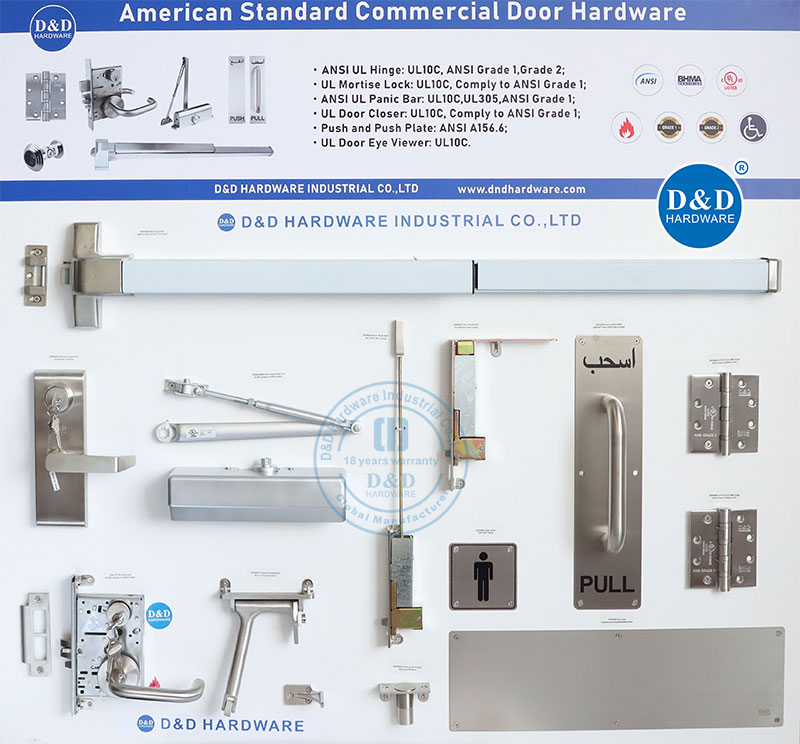
ANSI/BHMA A156.10 for door hardware is an American National Standard for power operated pedestrian doors.
This standard helps make sure automatic doors are safe and work well in public places.
Following ANSI and BHMA standards helps you pick door hardware that follows important safety and accessibility rules.
D&D Hardware uses these standards, so you get good products for any door project.
Key Takeaways
ANSI/BHMA A156.10 makes safety rules for automatic doors. These rules help doors work well in busy places.
Picking door hardware that follows these rules helps stop accidents. It also helps stop injuries.
Automatic doors need safety parts like sensors and control mats. These parts help keep people safe.
Checking and fixing automatic doors often keeps them safe. It also makes sure they follow the rules.
Check for certification labels on door hardware. This shows it follows ANSI/BHMA A156.10 rules.
Using certified installers means doors are set up right. It also means automatic doors are safe.
D&D Hardware has many products that follow the rules. These products fit different building needs.
Learning about ANSI/BHMA rules helps keep your building safe. It also helps your building stay reliable.

ANSI/BHMA A156.10 Overview
What Is ANSI/BHMA A156.10?
You might wonder what ansi/bhma a156.10 means for your doors. This american national standard gives rules for full-power operators on automatic doors. You see these doors in busy places like airports and supermarkets. The main goal is to make sure automatic doors open and close safely. The 2017 edition of a156.10 has new rules for sensors and control mats. These help stop accidents and keep people safe when they go in or out. If you pick door hardware that meets ansi/bhma a156, your doors will work well and keep everyone safe.
D&D Hardware uses ansi/bhma standards for their products. You get items that follow the newest safety and performance rules. This helps you make safe and easy-to-use spaces.
Scope for Automatic Doors
Ansi/bhma a156.10 covers automatic doors with full-power operators. These doors are found in places with many people. You see them at grocery stores, hospitals, and shopping centers. The standard does not set a limit for speed or force. It does require safety features to protect people. You will find sensors and control mats that stop the door if someone is there. This focus on safety makes automatic doors good for public places.
ansi/bhma a156.10 is for full-power operators on automatic doors.
These operators are best for busy places like store entrances.
The standard does not limit speed or force, but it does need safety features like sensors and control mats.
When you pick hardware for automatic doors, look for products that meet the 2017 a156.10 rules. This makes sure your doors follow the newest safety rules.
Who Sets ANSI/BHMA Standards?
You may ask who makes and updates these rules. The Builders Hardware Manufacturers Association, or bhma, creates and keeps ansi/bhma a156.10 up to date. This group works with experts to make sure the rules are good and helpful. The american national standard process makes sure the rules are fair for everyone.
You can trust that D&D Hardware products meet bhma and ansi rules. This helps you feel sure when you pick door hardware for your building.
Key Requirements of ANSI/BHMA A156.10 for Door Hardware
Safety and Entrapment Protection
It is important to know the safety rules in ansi/bhma a156.10 for door hardware. These rules help keep people from getting stuck or hurt by automatic doors. The standard explains how doors should open, close, and act when someone is close. Different types of doors have their own safety features. Sliding, swinging, and folding doors each use special ways to protect people.
Here is a table that shows the main safety requirements:
Safety Requirement | Description |
Entrapment Protection | The door must open to 80 degrees in no less than 1.5 seconds, with specific force ranges required. |
Knowing Act | Doors must stay open for at least five seconds after activation, with extra time for longer distances. |
Signage | Proper signage must show the door is automatic, with rules for font size and placement. |
Sliding doors use breakaway parts and must stay open for a set time before closing. Swinging doors need backchecks and must open and close within certain times and force limits. Folding doors have rules to stop pinching and control force. These rules make automatic doors safer for everyone.
Door Type | Entrapment Protection Mechanisms |
Sliding | Specific closing speed, breakaway device, time to remain fully open before closing, minimum distance from closed door |
Swinging | Backchecks, opening/closing times based on angles, distance, weight, hinge opening size, minimum force to stop/open |
Folding | Similar to swinging doors, with special rules for pinch points and force requirements |
You can trust ansi/bhma standards to help keep people safe when using automatic doors.
Performance and Testing Criteria
You need to check that automatic doors pass tough performance and testing rules. The a156.10 standard explains how to test door hardware to make sure it is safe and works well. You must follow these steps to check if the door meets the rules:
Automatic operators on fire door assemblies must comply with UL 10C or NFPA 252 standards.
Safety sensors must work and connect with the automatic door control system.
Presence sensors must be monitored before each closing cycle.
Testing must be done in a lab. You need to measure how the door works with normal air pressure. If UL 325 applies, you must follow those rules too.
Tests must be performed under laboratory conditions.
Measurements are taken under neutral air pressure conditions.
Compliance with UL 325 is required where applicable.
A trusted lab must watch tests on sample doors before the design is approved. These steps make sure your doors meet all safety and performance rules.
Signage and User Instructions
You must follow the rules for signs and instructions on automatic doors. The a156.10 standard tells you what signs to use and where to put them. Signs help people know how to use the door and what to do in an emergency.
Here is a table that shows signage requirements for different door types:
Door Type | Signage Requirement |
Swinging Doors | Must have an 'AUTOMATIC DOOR' sign, an arrow showing the approach side, and a 'DO NOT ENTER' sign if needed. |
Sliding Doors | Must have 'IN EMERGENCY PUSH TO OPEN' signs and instructions to stand clear of the sliding door's path. |
Folding Doors | Must have an arrow sign visible from the approach side, 'DO NOT ENTER' signs, and emergency push signs if needed. |
Signs must be easy to read and put where people can see them. You need to use the right size and place for the words. These rules help everyone use automatic doors safely and avoid mistakes.
Tip: Always check that your signs match the latest a156.10 rules. Clear signs and instructions help stop accidents and make automatic doors safer.
You can see that ansi/bhma a156.10 for door hardware has many rules for safety, performance, and signs. When you follow these rules, you help make places safer and better for everyone.
Why ANSI/BHMA A156.10 Matters
Safety and Compliance
You want every building to be safe for all people. Picking ansi/bhma a156.10 door hardware helps stop accidents and injuries. The standard gives clear rules for automatic doors. These rules help doors work safely. Sensors, control mats, and fault detection systems help keep doors from closing on someone. Safety checks and certified installation are also important for safe doors.
Here is a table that shows how a156.10 keeps people safe:
Safety Feature | Description |
Monitored Presence Sensors | Stops doors from moving if someone is in the way. This lowers the chance of injury or getting stuck. |
Safety Control Mats | Finds people near the door and stops it from closing. This makes doors safer. |
Fault Detection Mechanism | Shuts off the door if there is a problem with safety sensors. The door stays off until fixed. |
Regular Safety Checks | Makes sure automatic doors keep working and stay safe. |
Certified Installation | Ensures the door is set up right, which makes it safer. |
Using ansi/bhma certified door hardware helps your building follow safety rules. D&D Hardware sells products that meet ansi/bhma standards. You can trust these doors to keep everyone safe.
Reliability and Consumer Confidence
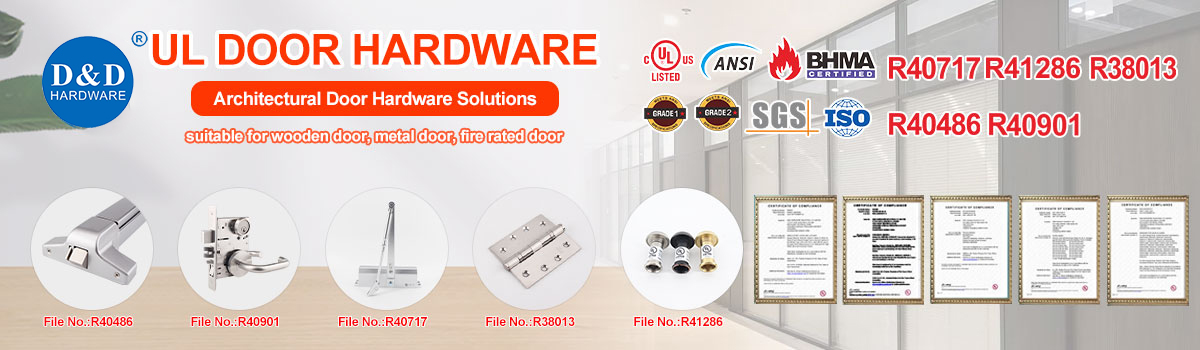
You want door hardware that works every time you use it. Choosing ansi/bhma certified products means they passed hard tests. The Builders Hardware Manufacturers Association checks products in labs and visits factories. These tests make sure the hardware is strong, safe, and follows building codes. You can trust your doors to last and work well.
Here is a table that shows how ansi/bhma certification builds trust:
Aspect | Description |
Certification Authority | Builders Hardware Manufacturers Association (BHMA) |
Testing Process | Products are tested in labs and checked in factories to make sure they meet rules. |
Performance Standards | Products must be tough, safe, and follow building codes. |
Consumer Trust | Certification helps people feel sure about the quality and safety of door hardware. |
When you see the ansi/bhma mark, you know the product meets high standards. D&D Hardware’s certified products help you feel safe and build trust with others.
ADA and Accessibility
You want everyone to get in and out of your building easily. The Americans with Disabilities Act (ADA) has rules for making buildings easy to use. The a156.10 standard helps these rules by making sure automatic doors work for people with disabilities. You need to check your doors often to stay compliant.
Here is a table that shows how a156.10 and ADA work together:
Standard | Description |
ANSI/BHMA A156.10 | Covers power-operated doors for people walking, making sure doors are safe and easy for people with disabilities. |
ADA Standards Section 404.3 | Gives some rules for putting in and using automatic doors, and points to ANSI/BHMA A156.10 for more details. |
Daily Check | Makers say you should check doors often to make sure they work right and are safe. This is important for ADA rules. |
If you do not follow these rules, you could get fined or sued. Fines can be $75,000 for the first time and $150,000 for more violations. You might also get sued or lose insurance if you break the rules for a long time. Using ansi/bhma certified door hardware and keeping doors in good shape protects your building and reputation.
Note: Following a156.10 and ADA rules helps you avoid legal problems and keeps your building safe and easy to use for everyone.
D&D Hardware follows ansi/bhma rules, so you get products that help with safety, reliability, and accessibility. This is a smart choice for your building, your users, and your peace of mind.
Selecting Compliant Door Hardware
Choosing ANSI/BHMA A156.10 Products
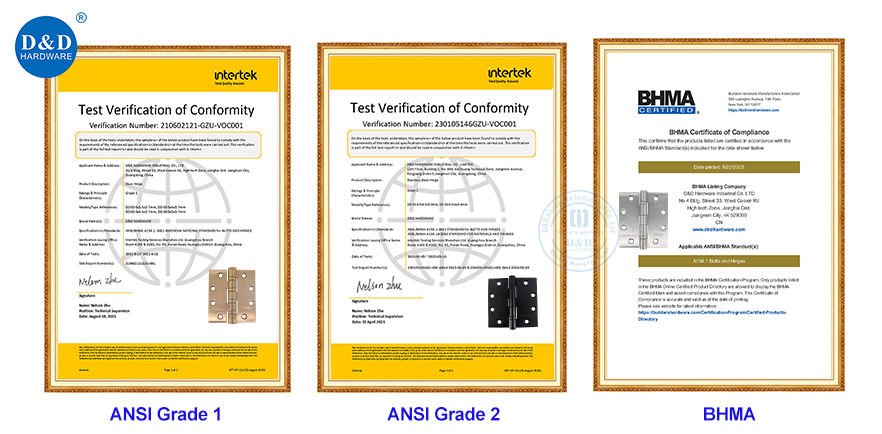
You need to pick the right door hardware for your building. First, check if the product follows ansi/bhma a156.10 rules. This standard is for power operated pedestrian doors. It includes automatic sliding and swinging doors. Look for labels or certificates that show ansi or bhma approval. These marks mean the hardware passed tough safety tests.
Think about where you will use the door hardware. Busy places need strong and reliable automatic doors. Sliding doors are good for entrances with lots of people. Swinging doors work well where you need wide openings. Always match the hardware to the door type and your building’s needs.
Tip: Ask your supplier for test reports or certificates. This helps you make sure the hardware meets ansi/bhma standards.
D&D Hardware Product Compliance
D&D Hardware sells many types of door hardware that meet ansi/bhma rules. You can get products for automatic doors, sliding doors, and swinging doors. Each item is tested to work well with power-operated pedestrian doors and automatic systems.
Here is a table to help you pick the right D&D Hardware product:
Product Type | Suitable For | Certification |
Automatic Sliding Door Kits | Storefronts, hospitals, airports | ANSI/BHMA A156.10 |
Automatic Swinging Door Kits | Offices, schools, public buildings | ANSI/BHMA A156.10 |
Power-Operated Door Controls | Commercial and institutional doors | ANSI/BHMA A156.10 |
You can trust D&D Hardware for safe and reliable door hardware. The company checks every product for a156 compliance. This helps you follow building codes and feel confident.
Installation and Maintenance Tips
Good installation and care keep your door hardware working well. Follow these steps for best results:
Read the instructions before you begin.
Use certified installers for power-operated pedestrian doors.
Test all automatic features after installation.
Check the door and hardware every month for problems.
Clean automatic door systems to remove dust and dirt.
Replace worn parts right away to keep doors safe.
Note: Regular checks help you find problems early. This keeps your automatic doors safe and working well.
When you follow these tips, you help keep everyone safe. Good care also makes your door hardware last longer.

ANSI/BHMA Standards and D&D Hardware Solutions
D&D Hardware’s Certified Products
You want door hardware that is safe to use. D&D Hardware sells many certified products for automatic doors. You can get locks, hinges, handles, and control systems that follow ansi/bhma standards. Every product is tested to meet a156 rules. The hardware works well with automatic doors in busy places. D&D Hardware checks each item for quality before you get it. You can trust these products to help doors open and close safely.
Tip: Check for certification labels on your door hardware. These labels show the products meet ansi rules and help you feel sure about safety.
Application in Commercial and Public Buildings
Automatic doors are used in many buildings. Hospitals, schools, airports, and shopping centers use them to help people get in and out easily. D&D Hardware makes products for these places. You get hardware that fits busy areas. Automatic doors make buildings safer and easier for everyone. D&D Hardware’s certified products help you follow building codes and keep people safe. You can use these products for new buildings or when you fix old doors.
Hospitals use automatic doors for quick entry.
Schools need safe doors for students and staff.
Airports use automatic doors for easy movement.
Shopping centers use automatic doors to welcome people.
Choosing certified door hardware makes your building safer and easier to use.
Custom Solutions for Project Needs
Sometimes you need special door hardware for your project. D&D Hardware offers custom solutions that still meet ansi/bhma standards. You can ask for special sizes, finishes, or features for your automatic doors. The company also has certified hinges for unique door designs. You get products that fit your building and follow a156 rules.
Here is a table that shows how D&D Hardware gives custom solutions and keeps compliance:
Custom Solutions Offered | Compliance with ANSI/BHMA A156.10 |
Custom sizes | Yes |
Custom finishes | Yes |
Special features | Yes |
Certified hinges | Yes |
You work with D&D Hardware to find the best automatic door solutions for your project. The team helps you pick products that match your needs and keep your building safe. You get help from start to finish, making sure your doors meet all safety and performance rules.
Note: Custom solutions help you fix special problems in your building. D&D Hardware makes sure every product meets compliance standards, so you do not have to worry about safety.
Ensuring Ongoing Compliance
Working with Certified Installers
You want your automatic doors to be safe every day. Certified installers know the rules for ansi a156 hardware. They get special training and have experience. These experts set up automatic doors to meet safety standards. Always check if a company or technician is qualified.
Here is a table that shows what to look for:
Qualification/Certification | Description |
AAADM Certification Training | Programs teach installers and service techs about safety and new technology. |
Work Experience Requirement | Installers need 6 months in the door industry, or 90 days with factory training. |
Definition of Primary Business | Companies should get most business from selling, installing, or fixing compliant automatic doors. |
Certified installers help keep your doors safe and following a156 rules. This protects everyone who comes into your building.
Documentation and Training
You need good records and training to keep doors safe. Always save papers that show certified people installed and checked your doors. These records prove your building meets safety rules. Make sure your staff knows how to use and check the doors.
Many programs teach installers and workers about automatic door safety. Some top programs are:
There are also courses for architects and engineers. These teach about ansi standards and keeping doors safe. Some programs last two days and end with a test. If you pass, you get a certificate. You can take audit training to learn more without getting certified.
Here is a table with training options:
Training Program | Description |
AAADM Inspector Certification | Two-day course with a test for installers and maintenance staff. |
AAADM Certified Training Courses | For people who are not inspectors, like architects and engineers. |
Audit Training | Learn about door industry standards without getting certified. |
Tip: Keep all your training and inspection papers in a safe place. Good records help you show your building follows safety rules.
Staying Updated on ANSI/BHMA Standards
You need to know about changes in ansi and a156 standards. Rules for automatic doors can change with new technology. Check for updates every year. Industry groups and training programs share news and updates. You can sign up for newsletters or join groups like AAADM for the latest info.
Here are ways to stay informed:
Go to training sessions often.
Read news from industry groups.
Check your door systems every year.
Ask your installer about new rules.
Note: Staying updated helps keep your automatic doors safe and following rules. You protect your building and everyone who uses it.
By working with certified installers, keeping good records, and learning new rules, you help your doors stay safe and reliable. This keeps your building ready for everyone, every day.
Picking hardware that meets ANSI/BHMA A156.10 helps keep people safe. This standard checks that doors work right and protect everyone. D&D Hardware has certified products for any door you need.
Using good products helps people trust you.
Following safety rules makes your building safer.
Choosing the right hardware helps everyone get in and out easily.
FAQ
What does ANSI/BHMA A156.10 mean for automatic doors?
This standard gives safety and performance rules for automatic doors. It helps you pick hardware that keeps people safe. It also makes sure doors work well in busy places.
How do I know if my door hardware is ANSI/BHMA A156.10 compliant?
Look for certification labels on your door hardware. You can also ask your supplier for test reports. D&D Hardware gives you clear papers that show compliance.
Why should I choose certified installers for automatic doors?
Certified installers know the safety rules for automatic doors. They set up doors the right way. This helps stop accidents and keeps your building safe.
Does ANSI/BHMA A156.10 help with ADA accessibility?
Yes. The standard helps doors work for everyone. It supports ADA rules so people with disabilities can use doors easily.
What types of buildings need ANSI/BHMA A156.10 compliant hardware?
Hospitals, schools, airports, and shopping centers need compliant hardware. Any public building with automatic doors should use it.
How often should I check my automatic doors for safety?
Check your automatic doors every month for safety. Regular checks help you find problems early. This keeps your doors safe for everyone.
Can D&D Hardware provide custom solutions that meet ANSI/BHMA A156.10?
Yes. You can ask for custom sizes, finishes, or features. D&D Hardware makes sure every custom product meets the standard.
More automatic door hardware, click here.
Contact us Now: Contact: David Jian
Mob:0086-139 2903 7292
Email: David@dndhardware.com, sales@dndhardware.com,
Jobby Zhang
Mob:0086-137 2599 9617
Email: jobby@dndhardware.com
D&D HARDWARE INDUSTRIAL CO.,LTD
ADD:12th Floor, Building 2, No.898, KeChuang Technical Zone, Jiangmen Avenue, Pengjiang District, Jiangmen City, Guangdong, China (Postcode:529000)
https://www.dndhardware.com
Tel: +86-750-3856396
Fax: +86-750-3856395
 English