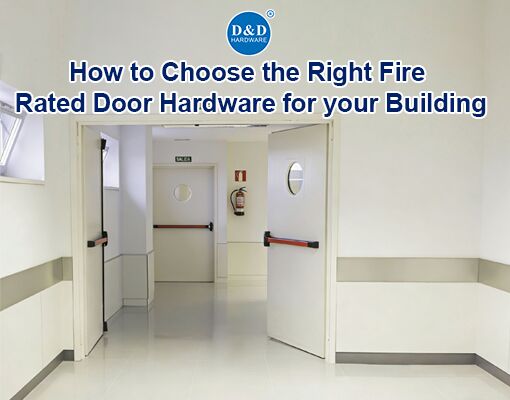
Imagine you run a busy office building. You know everyone's safety depends on the doors. Doors must work right during an emergency. Certified fire rated door hardware stops fire and smoke from spreading. It makes sure doors close and latch the right way. This hardware must fit your building's type and how many people use it. D&D Hardware gives you trusted products. These products meet international standards. You can count on quality and rules being followed every time.
Key Takeaways
Fire rated door hardware is very important for safety. It stops fire and smoke from moving during emergencies.
Always pick certified hardware. Look for labels like UL, CE, or BS EN. These labels show the hardware is safe and follows rules.
Make sure your hardware matches your door's fire rating. If your door is rated for 60 minutes, your hardware must be rated for 60 minutes too.
Check fire rated doors and hardware often. Look for proper closing, latching, and any damage at least once a year.
Choose strong materials like stainless steel. These materials do not rust and work well in high heat.
Think about what your building needs. Different places, like schools or hospitals, need special hardware.
Work with certified suppliers like D&D Hardware. They give you good products and help you follow safety rules.
Keep up with local building codes. Knowing the rules helps you pick the right hardware and keeps everyone safe.
Fire Rated Door Hardware Basics
What Is Fire Rated Door Hardware
You need to know what fire rated door hardware is before you choose the right products. Fire rated door hardware includes all the parts that help a fire door work during a fire. These parts keep the door closed and secure. They stop fire and smoke from moving from one area to another. You use fire rated door hardware on doors in schools, hospitals, offices, and homes.
Here are the most common types of fire rated door hardware and what they do:
Hinges: These hold the door to the frame. They can handle high heat and keep the door in place during a fire.
Locks and Latches: These make sure the door stays closed. They stop fire and smoke from getting through gaps.
Door Closers: These close the door automatically after someone opens it. This helps keep fire and smoke from spreading.
You need all these parts to make sure your fire door works the right way.
Why Fire Ratings Matter
Fire ratings tell you how long a door and its hardware can stand up to fire. You might see ratings like 30, 60, or 90 minutes. This means the door and hardware can block fire for that amount of time. If you use the wrong hardware, the door might fail during a fire. People could get hurt, and your building might not meet safety rules.
When you pick fire rated door hardware, you must match the hardware rating to the door's rating. If your door is rated for 60 minutes, your hardware must also be rated for 60 minutes. This keeps everyone safe and helps you follow the law.
Key Certifications and Standards
You should always look for certified fire rated door hardware. Certifications show that the hardware passed tough tests. These tests check if the hardware works during a fire. Some of the most trusted certifications and standards include:
Certification/Standard | Description |
UL Solutions | Checks fire door and window hardware for safety. |
NFPA 80 | Sets rules for fire doors and how to install them. |
NFPA 105 | Focuses on how doors stop smoke. |
UL 10B | Tests how well doors resist fire. |
UL 10C | Tests doors under pressure during a fire. |
You will also see CE and BS EN marks, which are important in Europe and other regions. D&D Hardware makes sure all fire rated door hardware meets these international standards. You can trust that D&D Hardware products are tested and certified for safety.
Tip: Always check for certification labels on your fire rated door hardware. This helps you know the products are safe and legal.
By understanding these basics, you can make smart choices for your building's safety.

Assessing Building Needs
Building Codes and Regulations
You need to know the building codes for your project. These rules help you pick the right fire rated door hardware. They also keep your building safe. Different places have different standards. But many rules are similar. Here is a table with some important standards you should know:
Standard | Description |
UL 10C | Certifies fire-rated door hardware through rigorous testing procedures. |
NFPA 80 | Governs installation and maintenance of fire doors and hardware, including latching and closing requirements. |
IBC | Provides comprehensive standards for fire separation and egress, dictating the use of fire-rated doors. |
You must follow these codes to pass inspections. They also protect everyone in your building. Always check your local rules before you buy or put in fire rated door hardware.
Occupancy and Door Types
The kind of building and how people use it matter. A hospital, school, or office needs different hardware than a house. The number of people and how they move is important too. You should also think about what the door is made of. Steel doors can have a 3-hour fire rating. This is good for high-risk places. Wood doors usually have a 90-minute rating at most. This difference matters for fire safety rules.
Look for things like a certification label, self-closing mechanism, and positive latching system. These help the door work in a fire. Fire-rated doors are often in stairwells, hallways, and between garages and homes. The right hardware keeps these doors working well.
D&D Hardware has many certified products for all door types. You can find solutions for metal, wood, and glass doors. All are tested to meet strict standards.
Fire Rating Levels
You must match the fire rating of your hardware to your building's needs. Fire doors have different ratings for different uses. Here is a table to help you see common fire door ratings and where to use them:
Fire Door Rating | Application |
20 minutes | Corridor applications |
45 minutes | Various applications depending on code |
60 minutes | Stairwell doors |
90 minutes | Between warehouse and office areas |
180 minutes | High-risk areas requiring maximum fire resistance |
Pick hardware that matches the door's rating. Always check with the door maker to be sure you have the right match. Fire-rated doors need hardware that is fire-listed. Door closers are important because they make sure the door shuts by itself during a fire.
By checking your building's codes, how people use it, and door types, you can choose the right fire rated door hardware. D&D Hardware has options for every need. This helps you stay safe and follow the rules.
Types of Fire Door Fittings
Hinges and Their Role
You need strong hinges to keep a fire door working during an emergency. A fire rated door hinge supports the heavy weight of a fire door and stays strong even when exposed to high heat. You usually see three or more hinges on each fire door. This setup helps the door stay in place and work as designed.
Most fire rated door hinges use stainless steel. This material resists rust and damage. Ball-bearing types make the door open and close smoothly. You must check that every hinge is listed and labeled for fire safety. The label shows the hinge passed strict tests. All parts of the door, including the hinges, must match the fire rating of the door assembly.
D&D Hardware offers fire rated door hinge options that meet UL, CE, and BS EN standards. These hinges work well for metal, wood, and glass doors. You can trust them in stairwells, fire barriers, and other high-risk areas. When you choose a fire rated door hinge from D&D Hardware, you get both safety and long-lasting quality.
Tip: Always check the hinge label before installation. This ensures your fire door meets local codes and keeps people safe.
Locks and Latches
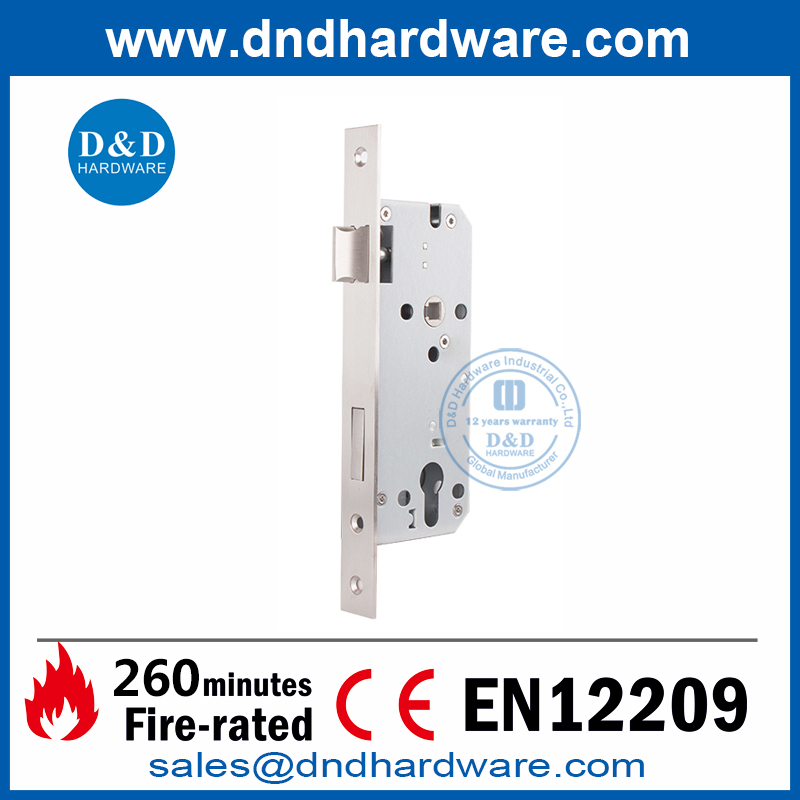
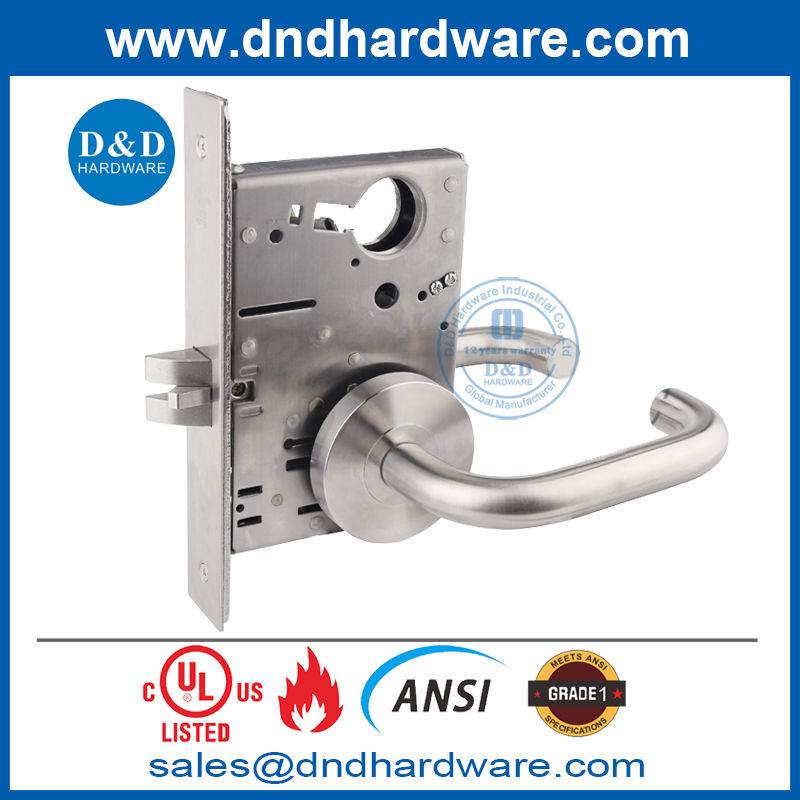
Locks and latches play a key role in fire safety. They keep the door closed and stop fire and smoke from spreading. You must use fire-rated locks and latches that are UL-listed or have other trusted certifications. This means the lock or latch will hold up under high temperatures and keep the door latched during a fire.
Fire-rated locks and latches are essential for ensuring that fire doors remain closed during a fire. These components are tested to withstand high temperatures and must meet specific standards to be deemed fire-rated.
When you pick a lock or latch, look for these features:
Listed self-latching device
Correct latch bolt length for your door type
Label showing it is for fire-rated assemblies
Here is a table to help you understand what to check:
Requirement | Description |
Compliance | Must comply with BS EN12209 Grade 3, EN1634 Fire Rated 260min UKCA Lock & UL 10C Fire Rated 3 Hours R40901 |
Labeling | Latching devices must be labeled for use on fire-rated assemblies |
Latch Bolts | Latch bolts cannot be mechanically held in the retracted position |
D&D Hardware provides fire rated locks and latches that meet these standards. You can use them in schools, hospitals, offices, and other busy places. These products help you pass inspections and keep everyone safe.
Door Closers
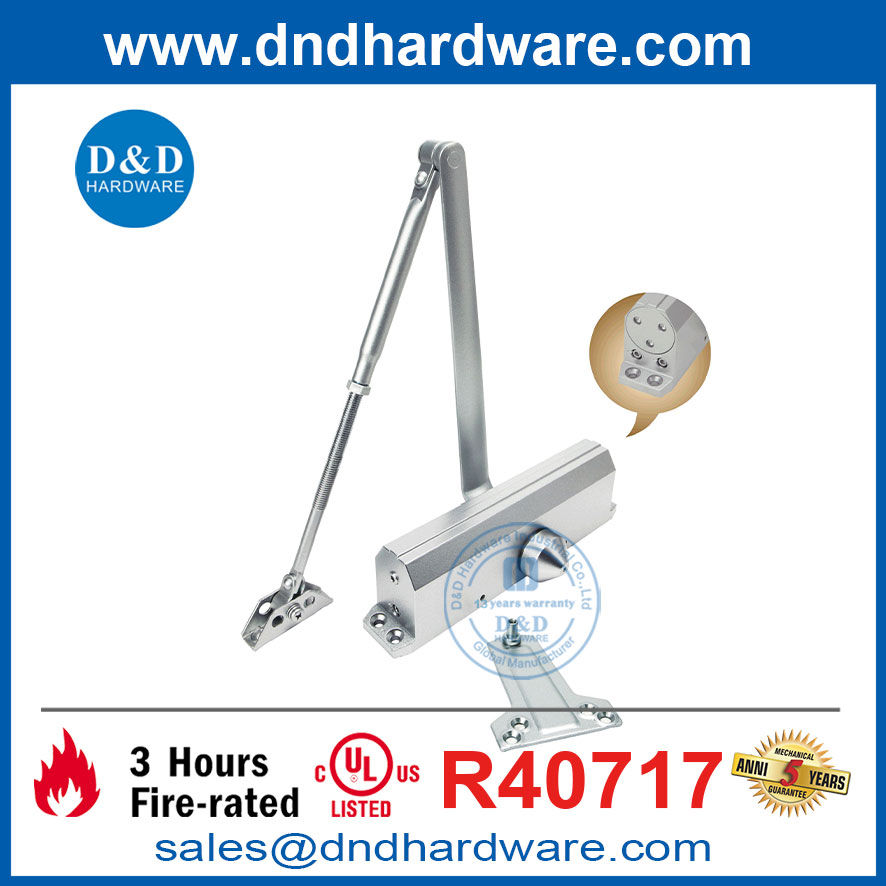
A fire rated door closer is a must-have for any fire door. This device makes sure the door closes by itself after someone opens it. If a fire starts, the closer shuts the door to block fire and smoke. You see fire rated door closers in stairwells, exit passageways, and between different building sections.
You need to pick a fire rated door closer that matches the door's weight and size. The closer must also have a label showing it passed fire safety tests. Some closers use hydraulic arms, while others use spring hinges. Both types help the door close automatically.
D&D Hardware offers a wide range of fire rated door closer options. These products meet UL, CE, and BS EN standards. You can use them in high-traffic areas, hazardous zones, and critical infrastructure rooms. Each fire rated door closer from D&D Hardware is built for durability and smooth operation.
Here are some reasons to choose a fire rated door closer from D&D Hardware:
Certified for up to 3 hours of fire resistance
Made from strong materials for long life
Easy to install and adjust for different door types
Tested for use in schools, hospitals, offices, and more
Note: Always check the label on your fire rated door closer. This proves it meets fire safety rules and will work when you need it most.
You need the right fire door fittings to keep your building safe. Hinges, locks, latches, and door closers all play a part. D&D Hardware gives you certified products for every need.
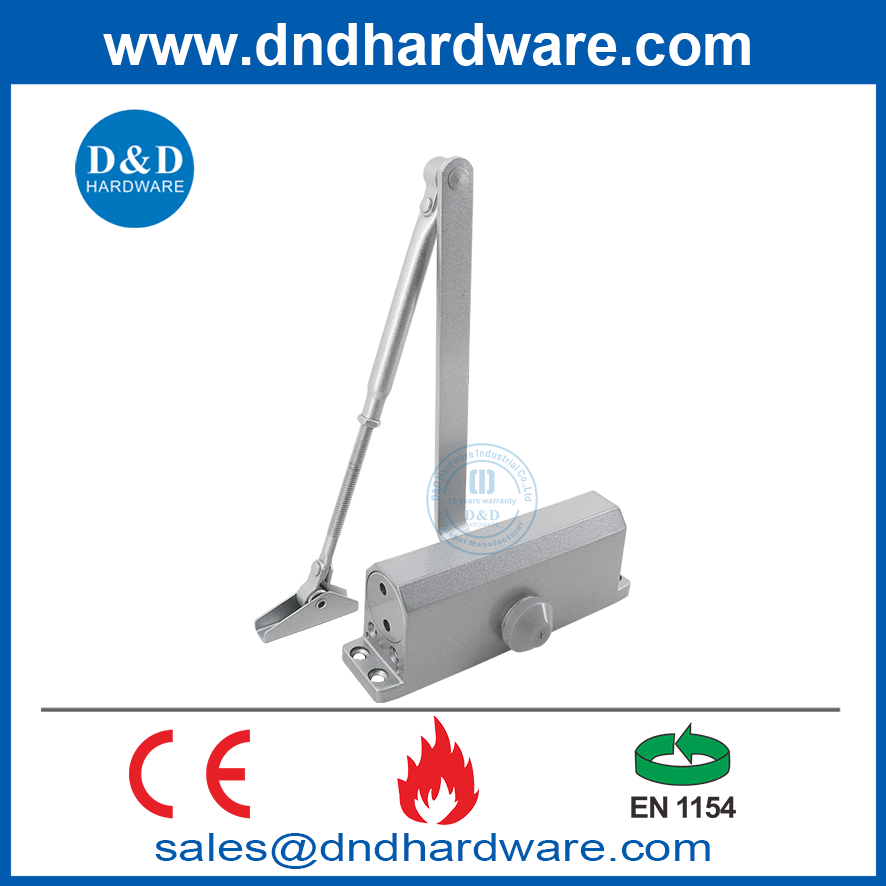
Exit Devices
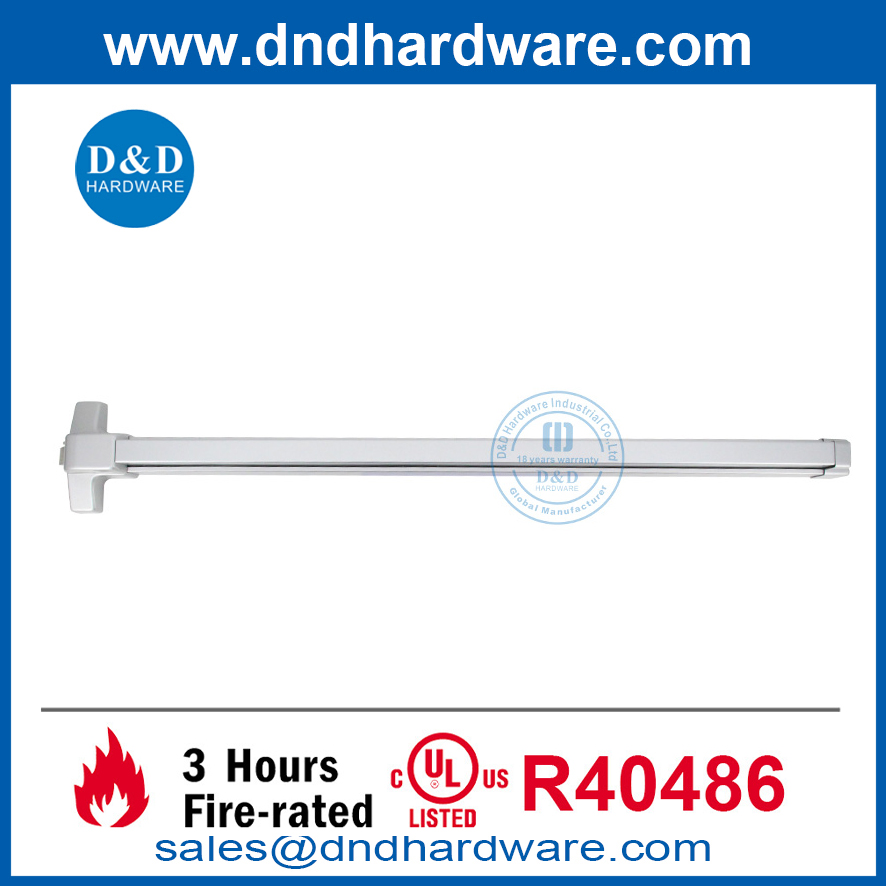
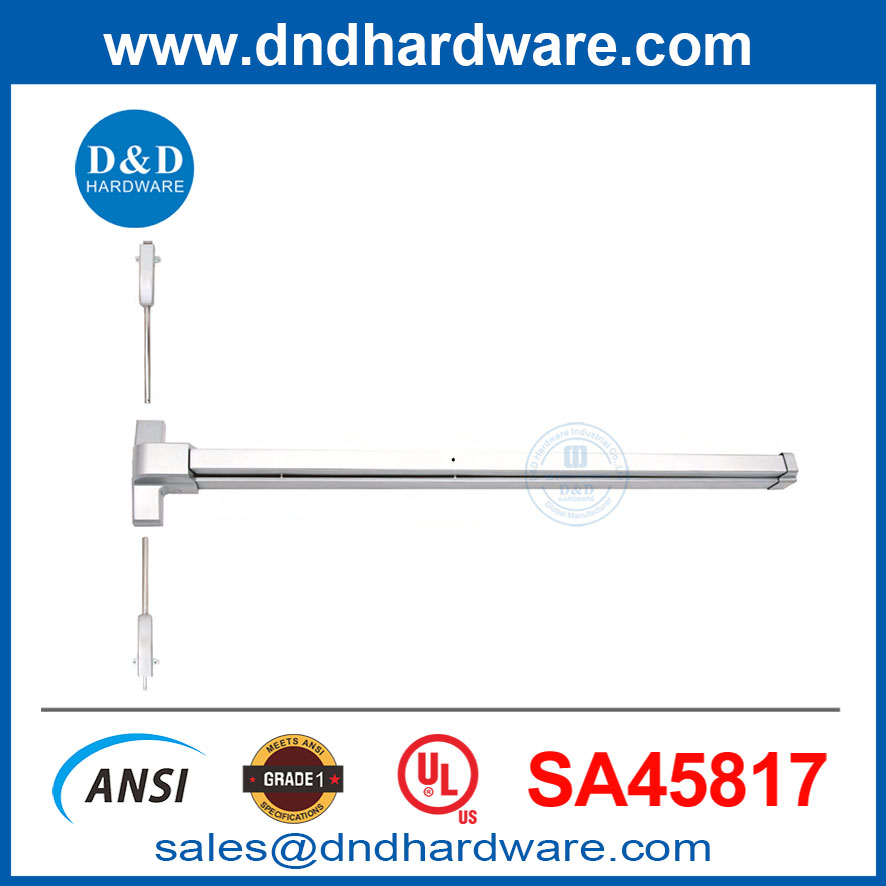
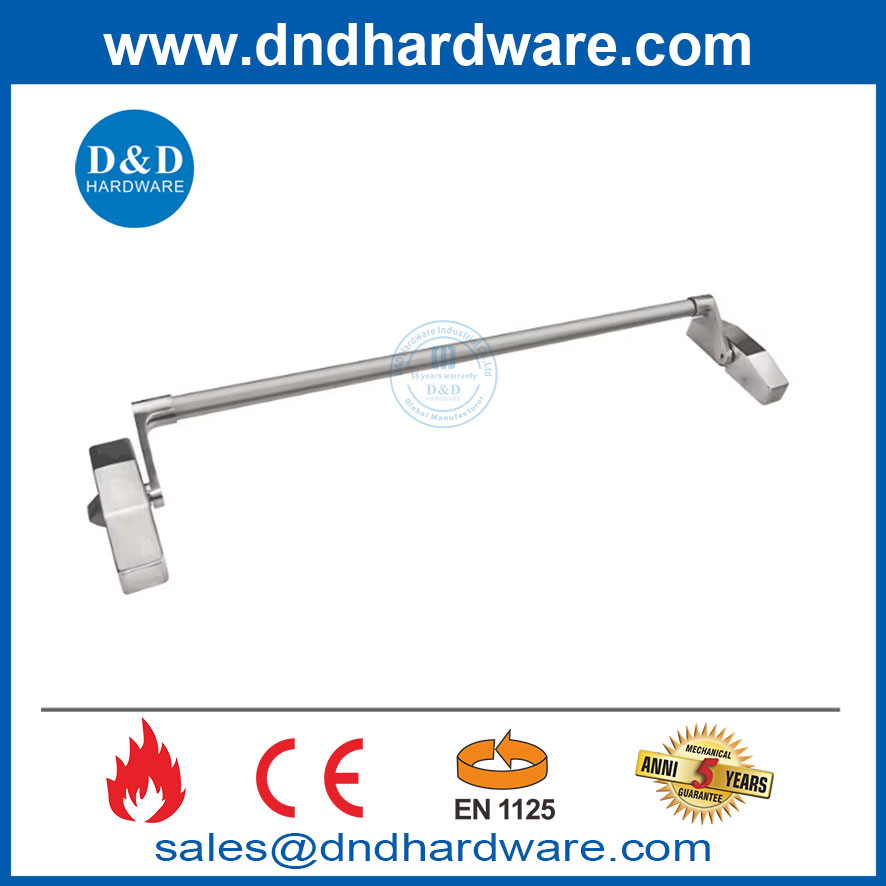
Exit devices help people get out fast in an emergency. People also call them panic bars or push bars. You see these on doors in schools and hospitals. They are also in shopping centers and other public places. When you push the bar, the door opens right away. This lets everyone leave quickly and safely.
Fire rated exit devices are needed on fire doors in public places. These devices keep the door closed during a fire. But they still let people exit without waiting. The device must pass hard tests to work in high heat and pressure.
When you pick an exit device, check for key certifications. These show the device is safe and will work when needed.
Certification | Description |
UL (Underwriters Laboratories) | Used in the US and worldwide. |
CE / BS EN | European safety and performance standards. |
ANSI/BHMA | American standards for strength and use. |
Always look for these certifications on your exit device:
UL certification is needed in the United States.
UL testing checks fire endurance and how it works with fire doors.
It also checks if it keeps working during a fire.
CE and BS EN marks are important in Europe and other places.
ANSI/BHMA standards mean the device is strong and works well.
D&D Hardware has exit devices that meet all these standards. The D&D UL Series hardware follows UL and ANSI/BHMA rules. This includes UL 10C for fire rating up to 3 hours. It also includes UL 305 for panic hardware. These certifications help you pass checks and keep your building safe.
When you choose a fire rated exit device, look for these things:
A label that shows fire rating and certification
Strong materials like stainless steel for long use
Smooth action so it is easy in emergencies
Simple to install and needs little care
You can trust D&D Hardware for exit devices in schools, offices, and hospitals. Each device is tested for safety, strength, and easy use. You help save lives and follow fire codes with certified exit devices.
Tip: Always check the label on your exit device before you put it in. This shows it is safe and ready for emergencies.
Ensuring Fire-Rated Compliance
Certification Labels and Documentation
You must look for the right labels and papers when you put in fire-rated hardware. Every fire-rated hardware piece needs a label you can see. This label means the hardware passed hard tests. Groups like UL or Intertek give out these labels. The label tells you how long the hardware can stop fire, what test was used, and who made it. Always check for these labels before you buy or use fire-rated hardware.
If you change a fire door, you might lose its fire rating. You then need to get the door checked again. A certified inspector can give you a new label. This makes sure your fire-rated hardware still follows all safety rules.
Always look for clear certification labels on fire-rated hardware.
Check that the label shows the fire rating and who tested it.
Keep all your papers and certificates for checks.
If you change a fire door, get it checked again.
Tip: Keep all your fire-rated hardware papers in one place. This helps you when you have building checks.
Working with Certified Suppliers
Picking the right supplier for fire-rated hardware is very important. Certified suppliers like D&D Hardware help you feel safe. Their fire-rated hardware meets all safety rules. If you buy from a supplier without certification, you could have big problems.
Risk Type | Description |
Financial Losses | Failed checks and delays can cost a lot. Fixing doors that do not meet rules can cost a lot of money. |
Legal Exposure | If a fire happens, you could get sued or fined for using the wrong hardware. |
Reputational Damage | Your company could look bad if you use unsafe or uncertified fire-rated hardware. |
Always ask your supplier for proof that their products are certified. D&D Hardware gives you all the papers and labels you need. This helps you pass checks and keeps your building safe.
Inspection and Maintenance
You need to check and take care of your fire-rated hardware to keep it working. Rules like NFPA 80 say you must check fire doors and hardware every year. Certified inspectors make sure doors close and lock right. They also check for missing or broken labels.
Source | Evidence |
NFPA 80 | Yearly checks for fire door assemblies by certified inspectors. |
Building Codes | Fire doors must be checked at least once a year by trained people. |
NFPA 80 | Yearly checks make sure doors close and lock right. |
You should plan regular checks and fix problems fast. If you find a missing label or broken part, replace it with certified fire-rated hardware. Good care helps you avoid big repairs and keeps everyone safe.
Note: Checking and taking care of your fire-rated hardware often is very important for safety.
By doing these things, you make sure your fire-rated hardware always follows safety rules. You keep your building, your people, and your good name safe.
Durability and Maintenance
Material Quality
You want your fire rated door hardware to last a long time. It should also work well in an emergency. The material you pick is very important. It affects how strong your hardware is and how well it fights fire. Stainless steel is a great choice. It does not rust and stays strong in high heat. Other materials like steel, magnesium oxide, and fiberglass are also good at stopping fire. Here is a table that shows how these materials do:
Material Type | Fire Resistance Rating |
Steel | 45 minutes to 3 hours |
Magnesium Oxide (Mgo) | A1 Fire Rating |
Fiberglass | 20 to 90 minutes |
Some fire doors use plywood, fire-rated glass, or solid core wood. Each material has its own good points. Steel is strong and handles heat well. Fire-rated glass lets light in but still blocks smoke and flames. When you choose a fire rated door handle, pick one made from strong materials like stainless steel. This helps your hardware last longer and work better if there is a fire.
Maintenance Best Practices
Taking care of your fire rated door hardware is important for safety. You should check your doors and hardware often. Here are some easy steps you can follow:
Make sure the door closes and latches every time.
Check that the latch bolt fits all the way into the strike plate.
Remove anything that blocks the door’s path.
Look for dents, holes, or loose parts.
Watch for new things added to the door or frame.
Check for big gaps around the door edges.
You can use a digital system to keep track of checks and repairs. Take pictures before and after you fix something. Keep a list of all your fire rated door handles and other hardware. This helps you stay ready for inspections. D&D Hardware can give you tips and help you keep your hardware working well.
Tip: Open the door all the way and let it close by itself. Watch to see if it latches every time. This simple test helps you find problems early.
Upgrading Fire-Rated Hardware
Sometimes you need to get new fire rated door hardware. New safety rules or building codes may ask for better hardware. Insurance companies may want you to upgrade to lower risk. If you change your building or how you use it, you might need new hardware to meet the rules. You should also upgrade if you want to make your building safer for everyone.
D&D Hardware has strong products that meet the newest safety standards. If you need a new fire rated door handle or other hardware, you can find certified choices that fit your needs. The D&D team can help you pick the right upgrades and answer your questions about the rules.
Note: Checking your hardware often and upgrading when needed keeps your building safe. It also helps you avoid big problems later.

Special Considerations
High Traffic and Harsh Environments
You need fire rated door hardware that can handle busy places. Doors in schools, hospitals, and malls get used a lot every day. The hardware must stay strong and work well even with heavy use. Some places, like factories or kitchens, have tough conditions. Things like water, heat, and chemicals can hurt normal hardware. You should pick products with high fire ratings and strong certifications.
Here is a table that shows which hardware works best in these places:
Hardware Type | Certifications | Fire Rating | Applications |
Door Hinge | CE (EN1935), UL, ANSI, BHMA | 3 hours (UL 10C) | High-traffic environments |
Door Lock | CE EN12209, UL 10C | 3 hours (UL 10C) | Homes, high-security commercial |
Door Closer | CE EN1154, UL 10C | 3 hours (UL 10C) | Public spaces, commercial buildings |
Panic Exit Device | CE EN1125, UL 10C | 3 hours (UL 10C) | Emergency exits in commercial settings |
D&D Hardware has products that meet these certifications. You can use them where doors must work every time. Stainless steel and other strong materials help the hardware last longer and fight damage.
Tip: Always check the certification label before you put hardware in busy or tough places.
Accessibility and Customization
You must make sure your fire rated door hardware is easy for everyone to use. People with disabilities need to open doors without trouble. ADA compliance means the hardware must be simple to use. Look for things like handles that are easy to grab and automatic closers that do not shut too fast.
Here is a table that shows what you need for accessibility:
Requirement | Description |
Operable Parts | Must be used with one hand and no tight grasping, pinching, or twisting of the wrist. |
Maximum Opening Force | 5 pounds (22.2 N) is the most force needed to push or pull open a door. |
Closing Speed | Automatic door closers must take at least 5 seconds to close from 90 degrees to 12 degrees. |
D&D Hardware has hardware made for accessibility. You can pick handles, locks, and closers that follow ADA rules. You can also choose custom options to fit your building’s needs.
Aesthetics and Design
You want your fire rated door hardware to look nice and match your building's style. D&D Hardware gives you many choices for design and color. You can pick modern or classic handles and locks. Hinges and closers can match your door’s color. Hardware can be made for accessibility and you can ask for special colors.
Choices for handles and locks in modern or classic styles
Hinges and closers that match the door color
Hardware made for accessibility
Special colors if you ask
You can keep your building safe and make it look good. D&D Hardware helps you find hardware that fits your style and safety needs.
Note: Custom hardware helps you follow safety rules and keep your building looking great.
Choosing D&D Hardware Solutions
Step-by-Step Selection Guide
You want to pick the right fire rated door hardware. Here is a simple checklist to help you:
Check Fire-Rating Compliance
Make sure your hardware matches your door's fire rating. Look for labels like UL, CE, or BS EN. These labels mean the hardware passed fire tests.
Pick Durable and Strong Hardware
Choose hardware made from strong materials like stainless steel. These last longer and work well in emergencies.
Match Hardware to Door Type and Function
Pick hardware that fits your door type. Think about if your door is metal, wood, or glass. Also, think about where you will use the door, like in a school or office.
Ensure Easy Operation
Choose handles, locks, and closers that are easy to use. People need to open doors quickly and safely in an emergency.
Consider Environmental Conditions
If your building is busy or has tough conditions, pick hardware that resists rust and heat. It should also stand up to chemicals.
Verify Certifications and Documentation
Always check for certification labels and keep all your papers. This helps you pass checks and shows your building is safe.
Plan for Maintenance
Pick hardware that is easy to check and fix. Regular checks keep your doors safe and working.
Tip: D&D Hardware has many certified fire rated door hardware choices. You can find the right product for any door or place.
Here is a quick table to compare D&D Hardware with other brands:
Feature/Certification | D&D Hardware | Other Leading Brands |
Product Range | Full range for all door types | May not cover all needs |
Certifications | UL, CE, BS EN | Varies by product |
Material Quality | High-quality stainless steel | Varies |
Focus | Complete door solutions | Often just components |
Compliance | Strong focus on safety and regulations | Varies |
Common Mistakes to Avoid
Many people make mistakes when picking fire rated door hardware. You can avoid these problems by following these tips:
Do not buy from suppliers who do not have certification or knowledge.
Never use low-quality or uncertified hardware. These can fail in a fire.
Do not skip regular checks. Broken seals or stuck hinges can make fire doors useless.
Avoid bad installation. Crooked doors or gaps let smoke and fire through.
Never block fire doors with doorstops or other things. This stops the door from closing.
Do not try to save money by using doors not made for fire safety. Always check for fire rating stickers.
Alert: Bad installation or wrong hardware can put lives in danger. Always use certified products and skilled workers.
When to Consult Experts
You should talk to fire safety experts at important times:
At the start of your project, ask for help with hardware choices. This helps you avoid costly changes later.
If you have design questions or special needs, talk to experts before you order hardware.
During building, keep fire engineers involved. They help solve problems and make sure you follow rules.
If you need custom solutions or have a big project, contact D&D Hardware's team for help.
D&D Hardware has over 18 years of experience. The team can help you pick the right products and answer your questions. They also give you all the papers you need. You can call D&D Hardware at +86-139 2903 7292 or email sales@dndhardware.com. You can also visit D&D Hardware's website for more information.
Note: You do not have to make these choices alone. D&D Hardware's experts are ready to help you find the best fire rated door hardware for your building.
If you want a safe and long-lasting solution, trust D&D Hardware. You get certified products, expert advice, and help every step of the way.
You can keep your building safe by following these steps for fire-rated doors:
Choose certified hardware for all fire-rated doors.
Pick strong materials like stainless steel for durability.
Make sure each part fits your fire rated door openings.
Inspect and maintain fire-rated doors often.
Regular checks and expert advice help you stay compliant and protect lives. Use the checklist, work with certified suppliers, and explore D&D Hardware's solutions for reliable fire-rated doors. Stay updated with safety rules to keep your fire-rated doors ready for any emergency.

FAQ
What is fire rated door hardware?
Fire rated door hardware includes hinges, locks, closers, and exit devices. You use these parts on fire doors. They help stop fire and smoke from spreading in a building.
How do I know if hardware is fire rated?
You should look for a certification label. Labels like UL, CE, or BS EN show the hardware passed fire tests. Always check the label before you buy or install.
Why do I need certified fire rated hardware?
Certified hardware keeps people safe. It helps your building pass safety checks. You must use certified products to follow fire codes and avoid legal problems.
How often should I inspect fire rated door hardware?
You should inspect fire rated door hardware at least once a year. Regular checks help you find problems early. Fix any issues right away to keep everyone safe.
Can I replace fire rated hardware myself?
You should ask a trained professional to replace fire rated hardware. This makes sure the new parts meet safety rules. You also keep your fire door's certification.
Does D&D Hardware offer custom solutions?
Yes! D&D Hardware can customize fire rated door hardware for your needs. You can choose styles, finishes, and features that fit your building.
Where can I get help choosing the right hardware?
You can contact D&D Hardware's experts for advice. Call, email, or visit their website. The team will help you pick the best fire rated door hardware.
Contact us Now:
Contact: David Jian
Mob:0086-139 2903 7292
Email: David@dndhardware.com, sales@dndhardware.com,
Contact: Jobby Zhang
Mob:0086-137 2599 9617
Email: jobby@dndhardware.com
D&D HARDWARE INDUSTRIAL CO.,LTD
ADD:12th Floor, Building 2, No.898, KeChuang Technical Zone, Jiangmen Avenue, Pengjiang District, Jiangmen City, Guangdong, China (Postcode:529000)
https://www.dndhardware.com
Tel: +86-750-3856396
Fax: +86-750-3856395

 English