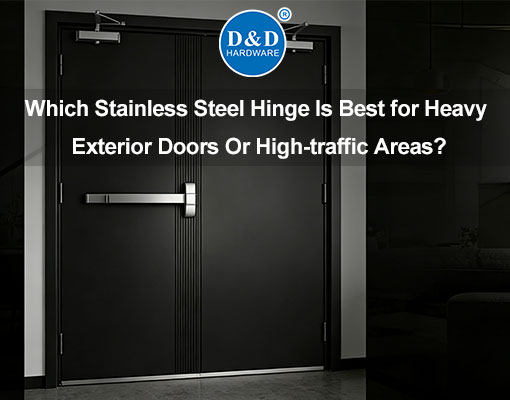
You need a stainless steel hinge for heavy outside doors or doors in busy spots. Stainless steel hinge gives strong support and helps the door move smoothly. Ball-bearing hinges make doors open and close without trouble. Pick 304 or 316 grade for better rust protection. D&D Hardware sells stainless steel hinge that meets high standards. You get hardware that is certified for safety and lasts a long time. Look at the certifications for stainless steel hinge below:
Standard/Certification | Description |
ANSI/BHMA A156.1 | Tests for strength, wear, rust, and fire safety |
EN 1935 | European rules for hinge strength and lasting power |
UL 10C | Fire safety test for door hinges |
You can trust D&D Hardware for good quality and strong stainless steel hinge.
Key Takeaways
Pick stainless steel hinges for heavy doors. They are strong and last a long time. These hinges do not rust or corrode. This makes them great for outside use.
Choose 304 or 316 stainless steel for your needs. Use 304 in most places. Use 316 near the ocean or where there are chemicals.
Get ball-bearing hinges for smoother door movement. They lower friction. This makes doors easy to open and close. This is helpful in busy areas.
Take care of your hinges often. Clean and oil them every few months. This helps them last longer. It also keeps doors working well.
Always look for certifications when you buy hinges. Certified hinges are safe and dependable. This is very important in business places.

Why choose stainless steel hinge for heavy doors
If you need hinges for heavy doors, you want them to be strong and last a long time. Stainless steel is the best material for heavy-duty hinges. It does not rust or corrode easily because it has chromium in it. This helps protect your hinges from water and bad weather. Stainless steel is also strong but not too heavy. You can use thinner and lighter hinges, and they still hold up heavy doors. Stainless steel door hinges are great for places like schools, hospitals, and big buildings where you need strong and safe doors.
Stainless steel heavy-duty hinges work well for commercial doors. They are good for places with lots of people, changing weather, and where temperature matters.
Here is a table that compares stainless steel hinges to other materials:
Feature | Stainless Steel Hinges | Other Materials |
Corrosion Resistance | High | Varies |
Load-Bearing Capability | Excellent | Moderate to Low |
Durability | Long-lasting | Shorter lifespan |
Security Features | Enhanced | Basic |
Temperature Resistance | High | Varies |
Ball bearing design benefits
Ball-bearing hinges help doors move more smoothly. The ball bearings inside these hinges cut down on friction when you open or close heavy doors. This makes the hinges quiet and easy to use, even in busy places. You will hear less noise and need less effort to move the doors. Ball-bearing hinges last longer than regular hinges because the metal parts do not rub together.
Ball bearings make doors move smoothly.
These hinges do not need much care and work well in busy places.
Ball-bearing hinges help your heavy-duty hinges last longer and keep doors straight.
Feature | Benefit |
Reduced friction | Allows for smoother door movement |
Enhanced durability | Extends the life of the hinge |
Quieter operation | Reduces noise during door use |
Ideal for heavy doors | Supports the weight and frequent use |
Ball-bearing hinges have small balls between the hinge parts. This means the parts do not touch each other directly. Because of this, heavy-duty hinges can last two or three times longer than normal hinges. You get strong support for heavy doors in busy places.
Durability and load capacity
Heavy doors need strong hinges that can handle a lot of use. Stainless steel door hinges are very strong. They do not bend or change shape, even with very heavy doors. In busy places, these hinges keep doors working well for many years.
Stainless steel does not rust or corrode, so it is good for outside doors and wet places.
Brass hinges can wear out fast and may get loose after a lot of use. Stainless steel heavy-duty hinges stay in shape and work well for a long time.
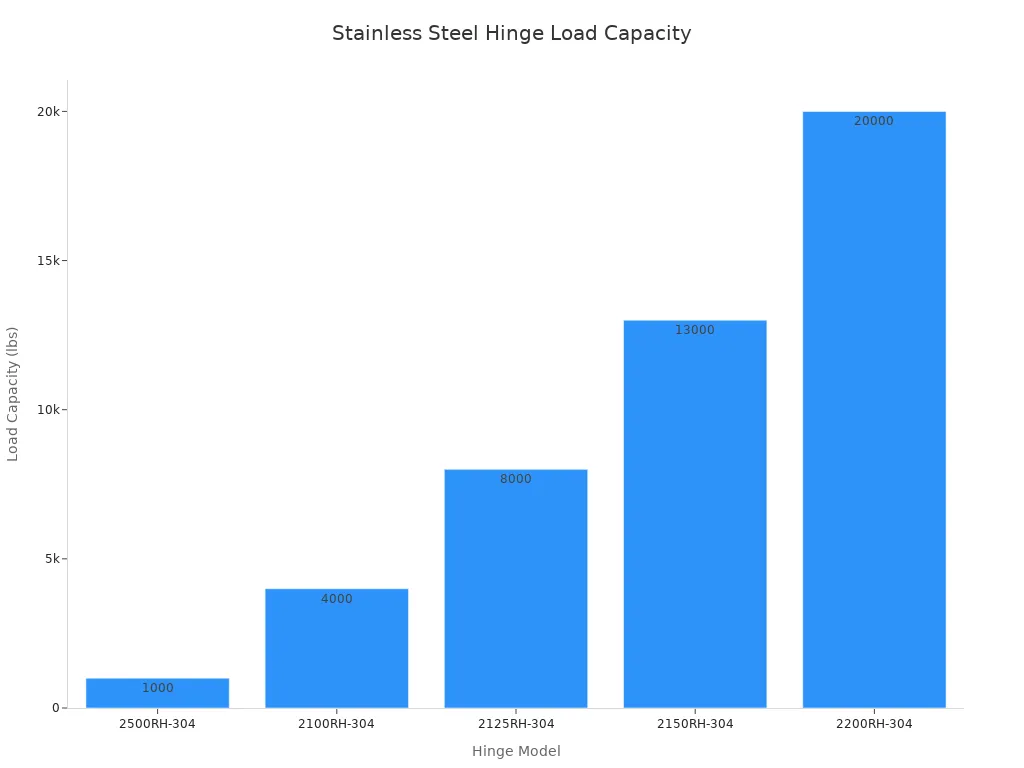
Stainless steel heavy-duty hinges can hold very heavy doors. Here are some examples of how much weight different stainless steel hinge models can hold:
Hinge Model | Load Capacity |
2500RH-304 | 1,000 lbs |
2100RH-304 | 4,000 lbs |
2125RH-304 | 8,000 lbs |
2150RH-304 | 13,000 lbs |
2200RH-304 | 20,000 lbs |
You can count on stainless steel heavy-duty hinges to hold up heavy doors anywhere. Both 304 and 316 stainless steel stay strong in hot and cold weather. If you need extra protection from salt or chemicals, 316 stainless steel is the best.
When you pick stainless steel heavy-duty hinges for your heavy doors, you get hinges that last, hold a lot of weight, and keep your doors working well in any place.
Heavy-duty hinges for high-traffic areas
When you pick hardware for busy places, you need strong door hinges. Heavy-duty hinges are best for heavy doors in places like schools and hospitals. These hinges hold up the weight of big doors. They keep doors working well, even when people use them all day.
You can find different heavy-duty hinges in many buildings:
Butt hinges are good for regular doors in offices and public places.
Continuous piano hinges support the whole door. They are great for busy spots like schools and hospitals.
Pivot hinges help with big and heavy doors. You see them in hotels and shopping centers.
Spring hinges close doors by themselves. People use them in kitchens and fire exits.
Heavy-duty hinges go through hard tests. Makers test them millions of times to make sure they last. You can count on these hinges to work for years, even with heavy doors that get used a lot. These hinges use strong stuff and smart designs to handle stress that breaks normal hinges.
D&D Hardware certifications and standards
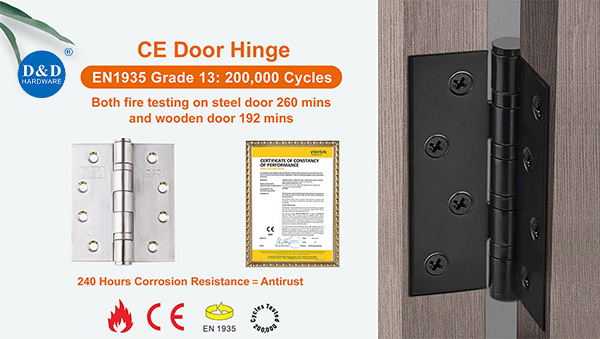
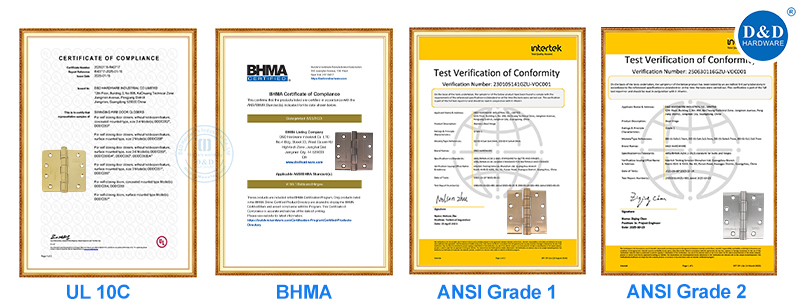
You want to know your heavy-duty hinges are safe. D&D Hardware makes sure their hinges pass big safety tests. These tests show the hinges are strong and safe for heavy doors in busy places.
Standard | Description |
ANSI/BHMA A156.1 | A rule for how well commercial door hinges work. |
EN 1935 | European rule for hinge quality and safety in buildings. |
UL 10C | Fire safety rule for door hardware in emergencies. |
CE | Health, safety, and environment rule in the EU. |
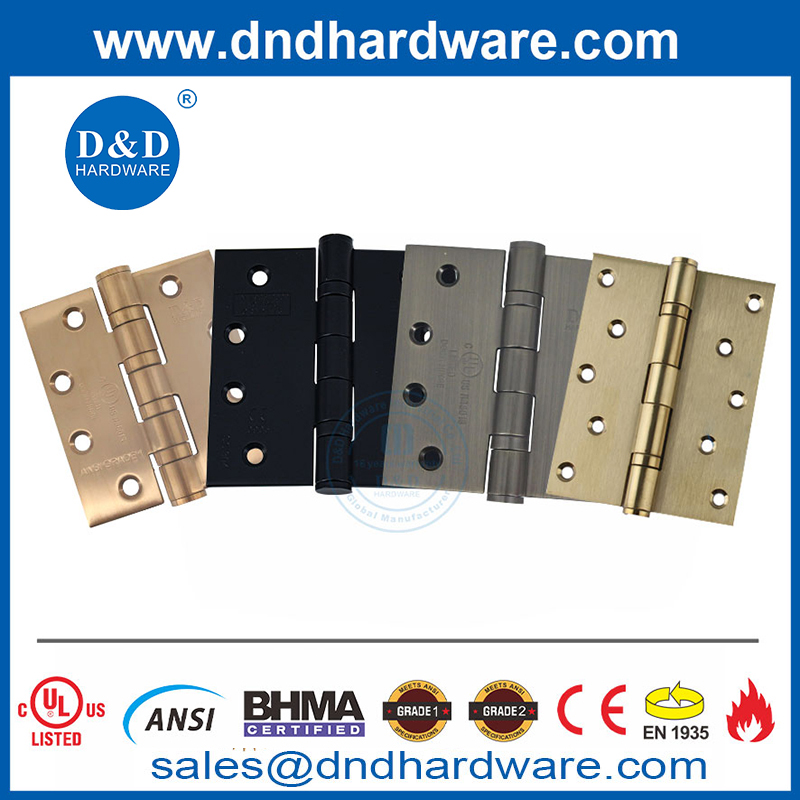
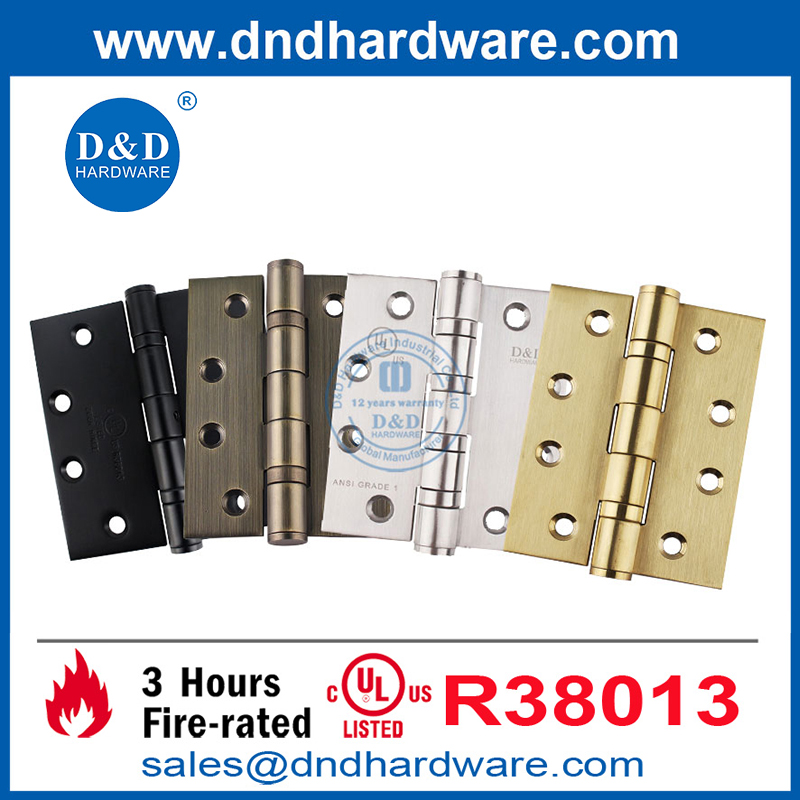
D&D Hardware sells heavy-duty hinges with CE EN, UL (3-hour fire rated), ANSI Grade 1, and BHMA. You can feel safe knowing your hinges meet top rules.
Corrosion resistance and weather suitability
You need heavy-duty hinges that can handle bad weather. Stainless steel door hinges do not rust or corrode, so they are good for outside doors. Wet air and salt can hurt normal hinges, but stainless steel stays strong.
304 stainless steel is good for places with some wet air. It has 18% chromium and 8% nickel, which helps protect your doors. If you live near the ocean or where there is lots of salt, 316 stainless steel is better. It has more molybdenum, so it fights off salt and strong chemicals.
Type of Stainless Steel | Composition | Performance in Coastal Environments |
304 | 18% Chromium, 8% Nickel | Good for some wet air, not as good with salt. |
316 | 16% Chromium, 10% Nickel, 2-3% Molybdenum | Best for places near the sea, fights salt damage. |
You can trust heavy-duty hinges made from 304 or 316 stainless steel. They keep your heavy doors safe and working, even in tough weather.
Best hinges for heavy doors: 304 vs 316 stainless steel
When you look for the best hinges for heavy doors, you will see two main types of stainless steel: 304 and 316. Both types work well for heavy doors, but each has its own strengths. You want to choose the right hinge for your project, so you need to know how these materials compare.
Comparing corrosion resistance
Corrosion resistance matters a lot when you pick the best hinges for heavy doors. You want your hinges to last, even in tough weather or wet places. Both 304 and 316 stainless steel offer strong protection, but they do not perform the same in every environment.
Here is a table that shows the main differences:
Type | Composition | Performance Description | Pros | Cons |
304 | ~18% Chromium, ~8% Nickel | Excellent for most outdoor environments (inland cities) | Good balance of cost and performance | Will develop rust spots in coastal areas |
316 | ~16% Chromium, ~10% Nickel, 2-3% Molybdenum | Drastically improves resistance to chlorides (salt) | Long-term reliability in harsh conditions | Higher cost (approx. 15-25% more than 304) |
You can use 304 stainless steel for most outdoor projects. It gives you great corrosion resistance for heavy doors in cities or places away from the sea. If you need the best hinges for heavy doors in coastal areas, you should pick 316 stainless steel. The extra molybdenum in 316 stainless steel makes it much stronger against salt and chemicals. This means your ball-bearing hinges will last longer and stay smooth, even near the ocean or in factories.
Molybdenum in 316 stainless steel boosts corrosion resistance, especially against salt.
You get better performance and longer life for your heavy doors in harsh places.
Many people call 316 stainless steel "marine-grade" because it works so well near water and in tough weather.
If you want the best hinges for heavy doors in a school, hospital, or office, 304 stainless steel will do the job. If you need ball-bearing hinges for a door near the sea or in a chemical plant, 316 stainless steel is the better choice.
Cost and application scenarios
You want the best hinges for heavy doors, but you also need to think about your budget. The price of 304 and 316 stainless steel hinges is not the same. The extra molybdenum in 316 stainless steel makes it more expensive.
304 stainless steel costs less than 316 stainless steel.
The price difference comes from the molybdenum in 316, which is a costly material.
On average, 316 stainless steel hinges cost 10-20% more than 304 stainless steel hinges.
You can save money by choosing 304 stainless steel for heavy doors in places with normal weather. This type is easy to find and works well for most projects. You get the best hinges for heavy doors without spending too much. 304 stainless steel is also simple to shape and install, so you finish your project faster.
Use 304 stainless steel for heavy doors in schools, offices, and homes away from the coast.
Pick 316 stainless steel for heavy doors in marine areas, chemical plants, or places with lots of salt in the air.
Ball-bearing hinges in both types give you smooth movement and long life.
You should always match the hinge to the environment. If you want the best hinges for heavy doors that face rain, salt, or chemicals, 316 stainless steel is worth the extra cost. For most other places, 304 stainless steel gives you strong corrosion resistance and saves you money.
When you choose the best hinges for heavy doors, think about where you will use them, how much you want to spend, and how much corrosion resistance you need. Ball-bearing hinges in both 304 and 316 stainless steel will keep your heavy doors working smoothly for years.

Key features of stainless steel hinges
When you choose hardware for heavy doors, you need to look at several important features. Stainless steel hinges offer strength, smooth movement, and security. Let’s break down what matters most.
Hinge size and thickness
The size and thickness of a hinge play a big role in how well it supports heavy doors. Larger and thicker hinges give more support and last longer. You should match the hinge type to the weight of your door. Here is a table to help you pick the right hinge:
Hinge Type | Load Capacity | Best For… |
Ball-Bearing Butt door hinge | 80–120 kg per hinge | High-traffic doors up to ~200 kg |
Continuous (Piano) door hinge | >200 kg (distributed) | Oversized/overswing doors, zero-sag need |
Pivot Hinges | 200–500 kg+ | Ultra-heavy doors, 360° swing designs |
Thicker hinges give more material support. They can handle more stress from heavy doors. Wider hinges spread the weight out, so the door and frame do not get damaged. You get better performance and longer life when you choose the right size and thickness.
Number of bearings
The number of bearings in stainless steel hinges affects how smoothly heavy doors move. More bearings mean less friction. You will notice that doors open and close with little effort. Here are some benefits of having more bearings:
Longer life for your hinges. Less wear means they can last as long as the building.
Less maintenance. You do not need to fix or replace them often.
Smoother swing. Ball bearings help heavy doors move quietly and easily.
If you want your heavy doors to work well for years, pick hinges with more ball bearings.
Security features
Security matters a lot for exterior heavy doors. Stainless steel hinges come with special features to keep your building safe:
Non-removable pins stop people from taking the hinge apart from outside.
Ball bearings keep the door strong and prevent sagging.
Anti-shim hinges block thieves from sliding tools into the latch.
Hidden or concealed hinges stay out of sight when the door is closed.
Hinge pin locks make sure only someone with a key can remove the pin.
You can trust stainless steel hinges to protect your heavy doors and keep your property secure.
Installation and maintenance tips
Proper installation for strength
You want your heavy exterior doors to stay strong and work smoothly. Correct installation makes a big difference. Follow these steps to get the best results:
Check alignment. Make sure the hinges line up perfectly. If you install them crooked, the door may sag or stick.
Use all screws. Every screw matters. Using all the provided screws spreads the weight and keeps the door stable.
Choose the right screws. Pick screws that are long enough and made from the right material. Short or mismatched screws can cause problems like corrosion or weak support.
Pre-drill holes. Drill holes before you put in the screws. This prevents the door material from cracking and helps the hinge hold more weight.
Add spacers if needed. Spacers help keep the door from rubbing and make sure the gap stays even.
Count the hinges. Heavy doors need more hinges. Make sure you use enough to support the weight.
Consider a professional installer. For very heavy doors, a professional can help you get a secure fit.
Tip: Misaligned hinges or missing screws can cause the door to twist or bind. Always double-check your work before finishing.
Maintenance for longevity
You can keep your stainless steel hinges working for years with regular care. Maintenance helps prevent rust and keeps the door moving smoothly.
Clean the hinges often. Remove dirt and debris to stop rust from forming.
Lubricate the hinges with silicone spray or light oil. This keeps the movement smooth and quiet.
Inspect the hinges twice a year. Look for loose screws, rust, or misalignment.
Tighten screws if you find any that are loose.
Check for signs of wear or damage. Replace parts if needed.
Here is a simple table to help you remember how often to check and lubricate your hinges:
Door Usage | Recommended Inspection |
Light-use interior | Every 6 months |
Heavy-use commercial | Every 3 months |
High-humidity or outdoor | Every 2–3 months |
Lubrication | Once or twice a year |
Regular cleaning and inspection keep your hinges strong and your doors safe. A little care goes a long way!
D&D Hardware stainless steel hinge recommendations
If you need strong support for heavy outside doors or busy places, you should check out high-grade stainless steel hinges from D&D Hardware. These hinges follow strict rules from around the world. They last a long time, even in tough weather. D&D Hardware has many types of high-grade stainless steel hinges. Each one is made to be strong, safe, and easy to use.
Top product picks
You can pick from many top high-grade stainless steel hinges. These hinges have certifications like UL Listed, ANSI Grade 1, and CE EN1935. They are good for fire-rated doors, big buildings, and outdoor doors. Here is a table with some of the best choices:
Product Name | Specifications | Certification |
SS316 Fire Heavy Duty Stainless Steel Metal Door Hinges | 5x4x4.6 | UL Listed, 10c Fire Rated 3 Hours |
Stainless Steel NRP Heavy Duty ANSI Grade 1 BHMA Door Hinges | 4.5x4x4.6 | ANSI Grade 1 |
EN1634 Fire Rated Stainless Steel CE EN1935 Black Door Hinge | 4x4x3 | CE EN1935 |
SS304 Bearing Commercial Door Hinges | 4x4x3.4 | UL Listed |
SUS304 UL Listed Fire Ball Bearing Hinge for Commercial Exterior Door | 4.5x4x3.0 | UL Listed |
You can count on these high-grade stainless steel hinges for doors that need to be strong and safe from fire. Each hinge can hold heavy doors and does not rust. You get doors that open and close smoothly and last a long time.
Application use cases
You can use high-grade stainless steel hinges in lots of places. These hinges work for many jobs. Here is a table that shows where you can use them:
Application Area | Description |
Education | Suitable for schools and educational institutions due to durability and corrosion resistance. |
Healthcare | Ideal for hospitals and clinics where hygiene and durability are critical. |
Hospitality | Used in hotels and restaurants, providing reliable performance in high-traffic areas. |
Residential | Commonly used in homes for doors that require strength and longevity. |
Commercial | Suitable for office buildings and commercial spaces needing robust hardware. |
You can put high-grade stainless steel hinges in schools, hospitals, hotels, houses, and offices. These hinges can take lots of use and bad weather. You will feel safe knowing your doors stay strong and easy to open.
Tip: Always pick high-grade stainless steel hinges with the right certification for your project. This keeps your doors safe and makes them last longer.
You can trust D&D Hardware to give you high-grade stainless steel hinges that fit your needs. You get certified quality, strong support, and good performance for every door.
You need to use stainless steel, heavy-duty, ball bearing hinges for big outside doors or doors in busy places. Pick 304 or 316 grade from a brand you trust, like D&D Hardware. Clean and oil your hinges often so they stay strong. Good, certified hinges last a long time and work well. Check out these benefits:
Benefit | Description |
Corrosion Resistance | Stops rust in wet or salty air places. |
Strength and Durability | Holds up heavy doors and does not bend. |
Low Maintenance | Needs little care, great for busy areas. |
Aesthetic Versatility | Looks good with many building styles. |
Pick certified hinges to keep your doors safe and make them last longer.

FAQ
What makes stainless steel hinges better for heavy exterior doors?
Stainless steel hinges resist rust and corrosion. You get strong support for heavy doors. These hinges last longer in harsh weather and busy areas.
How often should you check and maintain stainless steel hinges?
You should inspect and clean your hinges every three months. Lubricate them once or twice a year. Regular care keeps your doors working smoothly.
Can you use stainless steel hinges for fire-rated doors?
Yes. Stainless steel hinges from D&D Hardware meet fire safety standards like UL 10C. You can use them for fire-rated doors in schools, hospitals, and offices.
What is the difference between 304 and 316 stainless steel hinges?
304 stainless steel works well in most places. 316 stainless steel gives extra protection against salt and chemicals. You should use 316 for coastal or industrial environments.
Contact us Now:
Contact: David Jian
Mob:0086-139 2903 7292
Email: David@dndhardware.com, sales@dndhardware.com,
Contact: Jobby Zhang
Mob:0086-137 2599 9617
Email: jobby@dndhardware.com
D&D HARDWARE INDUSTRIAL CO.,LTD
ADD:12th Floor, Building 2, No.898, KeChuang Technical Zone, Jiangmen Avenue, Pengjiang District, Jiangmen City, Guangdong, China (Postcode:529000)
https://www.dndhardware.com
Tel: +86-750-3856396
Fax: +86-750-3856395
 English