You want the best hinge for heavy doors, but your choice depends on the door’s weight, what it’s made of, and how often people use it. Picking the right hinge means your doors stay safe, last longer, and meet building standards. If you use the wrong hinge, you could face costly repairs and endless maintenance, especially in busy places like schools. Hinges carry the weight and control the movement of your door, so strong, well-designed ones keep doors working smoothly. Wondering what features should I look for in a quality door hinge for heavy doors? D&D Hardware has years of experience and always delivers reliable solutions.
Key Takeaways
Check your door’s weight and size before picking hinges. Heavy doors need strong hinges so they do not sag.
Make sure the hinge can hold more than your door’s weight. This keeps the door safe and helps it last longer.
Think about how often you will open the door. Doors used a lot need hinges with a high cycle rating.
Pick hinge materials that fit where the door is. Stainless steel is good for outside. Carbon steel works well inside.
Find hinges with safety certifications like UL, CE, or ANSI. Certified hinges are reliable and meet safety rules.
Pick the right hinge type for your door. Ball bearing, continuous, and pivot hinges all help heavy doors in different ways.
Put the hinges in the right spots. Follow the rules to spread the weight and stop the door from getting crooked.
Check and care for your hinges often. Oil them every six months so they work well.
Hinge Features for Heavy Doors
When you look for a hinge, you might wonder what features are important for heavy doors. You want your door to open and close easily. It should also be safe and last a long time. Let’s talk about the main things you should check before picking a hinge.
What Features Should I Look for in a Quality Door Hinge for Heavy Doors?
Load Capacity
Load capacity is the first thing to check. If your door is heavy, the hinge must hold the weight. It should not bend or break. You need to know how much your door weighs. Then, pick a hinge that matches that weight. Some doors are over 220 lbs. Heavy duty hinges are needed for these doors. The best hinges show their load capacity clearly. This helps you know they are strong enough.
Here’s a quick look at the most important features for doors over 220 lbs:
Feature | Description |
Load Capacity | Radial, axial, and combined load capacity for heavy-duty applications. |
Cycle Life | Rated for 2.5 million cycles, ensuring durability under frequent use. |
Corrosion Resistance | Compliance with ASTM B117 and ISO 9227 for durability in harsh environments. |
Temperature Range | Functional from -76°F to 662°F, appropriate for various climates. |
Sealing | Ingress Protection/NEMA/explosion-proof ratings for safety in specific applications. |
Fire Rating | Underwriters Laboratories 10C and European Norm 1634-1 certifications for fire safety compliance. |
Always match the hinge’s load capacity to your door’s weight. If your door is used more than 25 times a day, you need a hinge for lots of use. Even if your door is not used often, a strong hinge will help it last longer.
Material Strength
Material strength is very important for heavy doors. Stainless steel hinges are best for outside or wet places. They do not rust and stay strong. Carbon steel is good for heavy doors inside. Brass or bronze look nice but do not hold as much weight. Aluminum is okay for lighter doors but not for the heaviest ones.
Here’s a table to help you compare:
Material | Strength | Corrosion Resistance | Best Use |
Stainless Steel | Excellent | Excellent | Outdoor or humid environments |
Carbon Steel | High | Moderate | Interior heavy doors |
Brass/Bronze | Moderate | Good | Decorative or heritage doors |
Aluminum | Medium | High | Light to medium interior doors |
When you ask about features for heavy door hinges, always check the material. Stainless steel with the right certifications, like EN1935 Grade 11–13, gives you strength and reliability.
Durability
Durability means the hinge will last a long time. You want a hinge that can open and close many times. Ball bearing hinges are a good choice. They make the hinge last longer by reducing friction. If your door is used a lot, pick a hinge with a high cycle rating and strong material.
Tip: Always choose hinges with a high cycle life and strong corrosion resistance. This helps your doors work well, even in tough places.

D&D Hardware Quality Standards
You want to be sure your hinges are safe and high quality. D&D Hardware tests every hinge for safety and performance.
Certifications (UL, CE, ANSI)
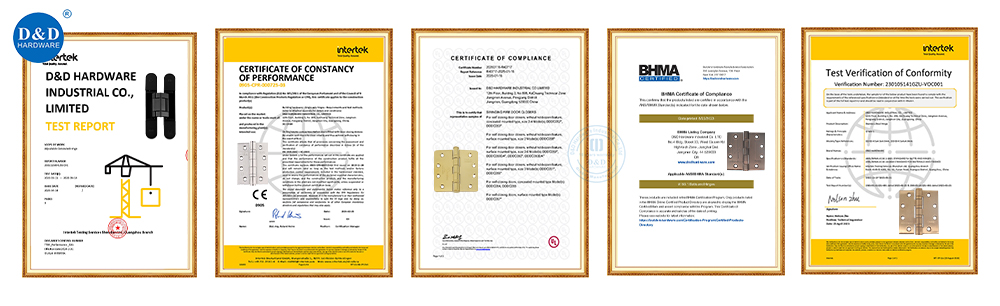
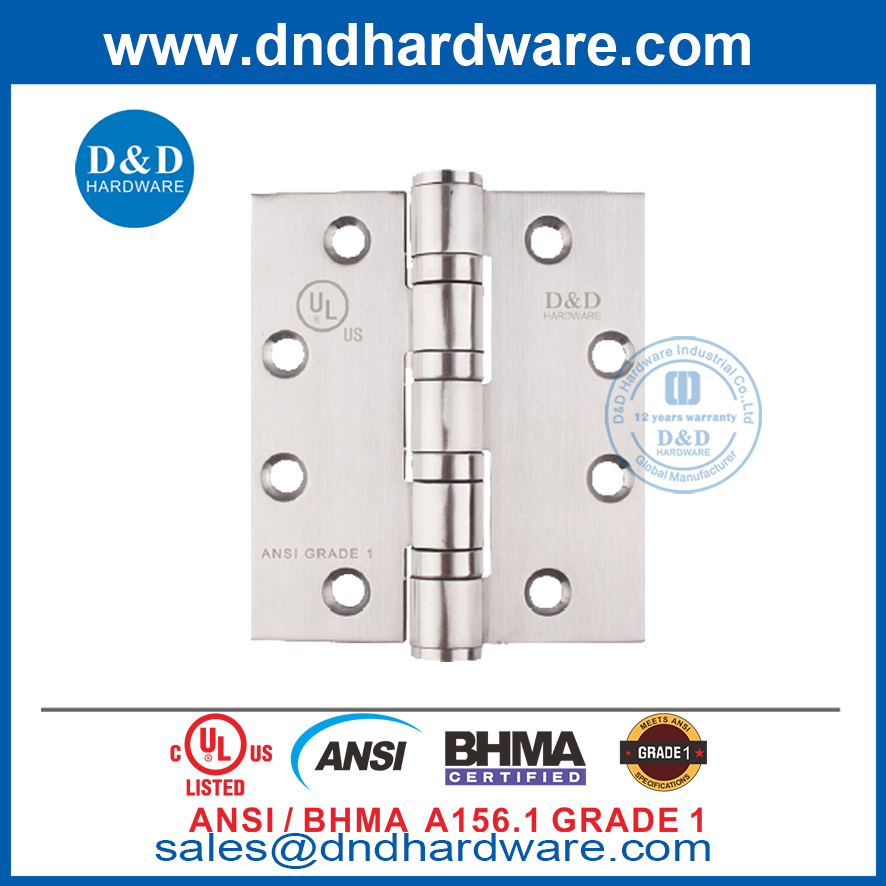
Certifications show your hinge meets strict safety rules. D&D Hardware’s hinges have top certifications like UL, CE, and ANSI/BHMA. These prove the hinges can handle heavy loads and tough use. Here are some of the standards:
Standard | Description |
ANSI/BHMA A156.1:2016 | American National Standard for Butts and Hinges |
UL Certification | Underwriters Laboratories certification |
Model | DDSS001-ANSI-1-4.5x4.5x4.6mm-4BB |
Grade | 1 |
Hinge Height | 4.5 Inches |
Door Weight | 150 lbs |
When you ask about features for heavy door hinges, always check for these certifications. They show your hinge is safe and reliable.
Product Testing
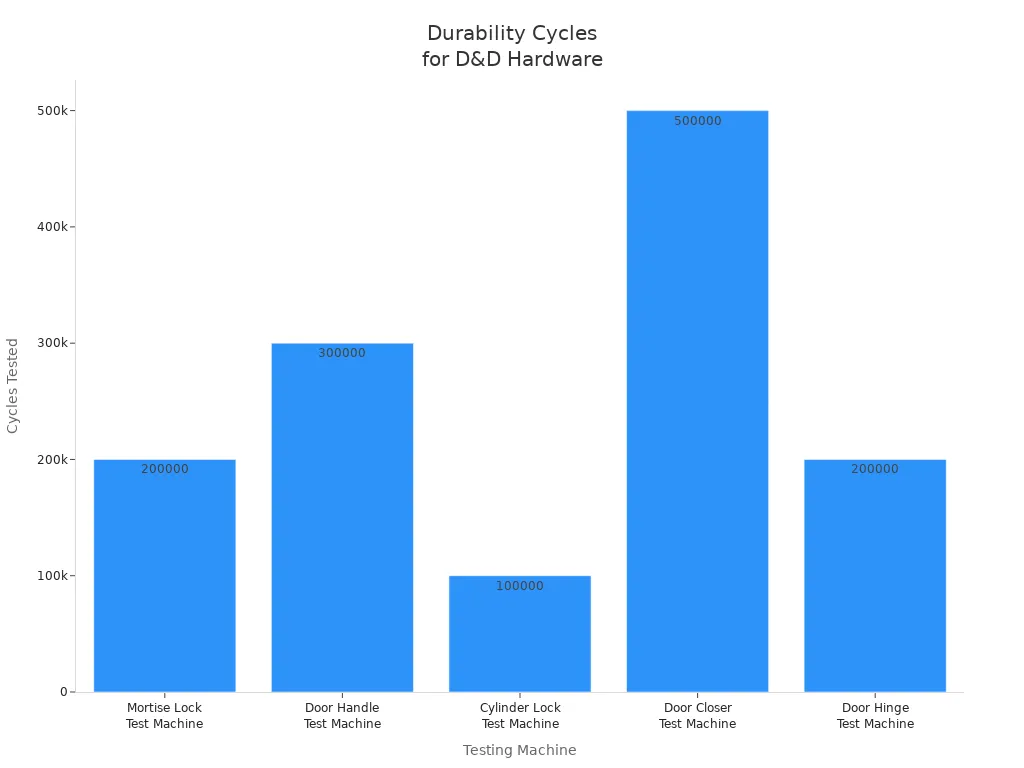
D&D Hardware tests every hinge to make sure it lasts. The company uses machines to open and close the hinges many times. This proves the hinges can handle real use.
Testing Machine | Standard Tested | Cycles Tested |
Mortise Lock Durability Test Machine | European Norm 12209 Grade 3 | Over 200,000 cycles |
Door Handle Strength and Cycle Test Machine | British Standard EN 1906 Grade 4 | Over 300,000 cycles |
Cylinder Lock Durability Test Machine | European Norm 1303 | Over 100,000 cycles |
Door Closer Durability Test Machine | European Norm 1154 | Over 500,000 cycles |
Door Hinge Durability Test Machine | European Norm 1935 | Over 200,000 cycles |
When you wonder about features for heavy door hinges, remember D&D Hardware tests their hinges well. This means you get a hinge that works every day and keeps your door safe.
If you want your heavy doors to work well and last, focus on load capacity, material strength, and durability. Always check for certifications and make sure your hinges pass tough tests. D&D Hardware gives you peace of mind with every hinge.
Types of Heavy Duty Hinge
Ball Bearing Hinges
Benefits for Heavy Doors
Big doors need to open easily and last a long time. Ball bearing hinges help with this. These hinges have tiny ball bearings inside. The ball bearings lower friction and make the door move quietly. Your door will not squeak or grind, even after many uses.
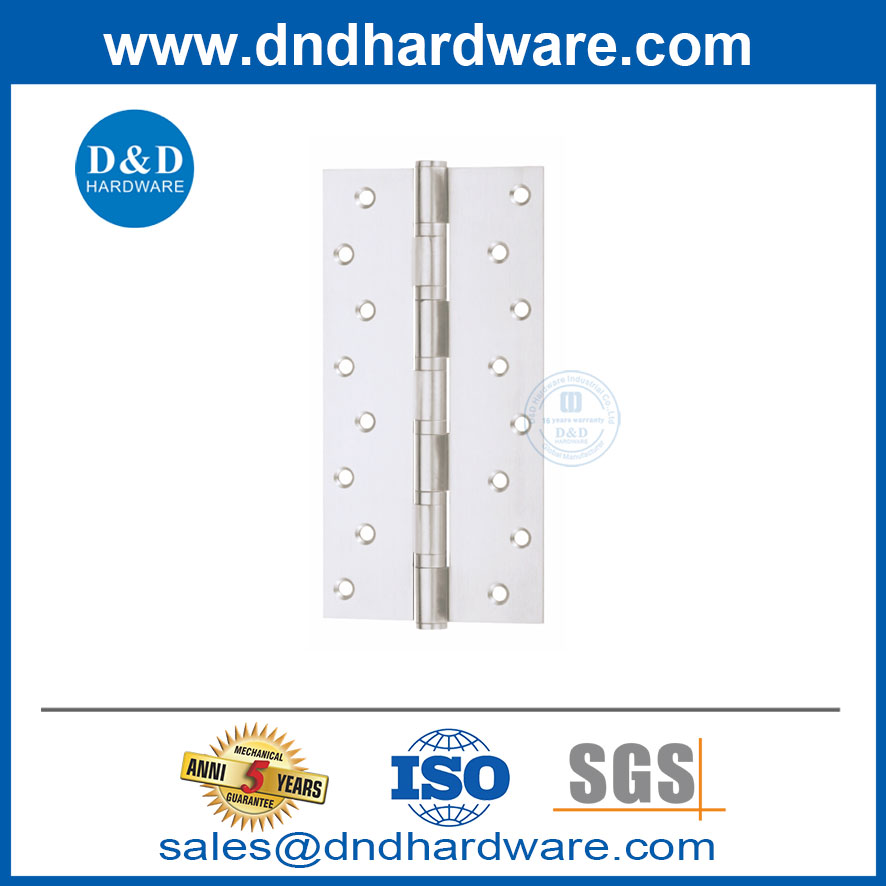
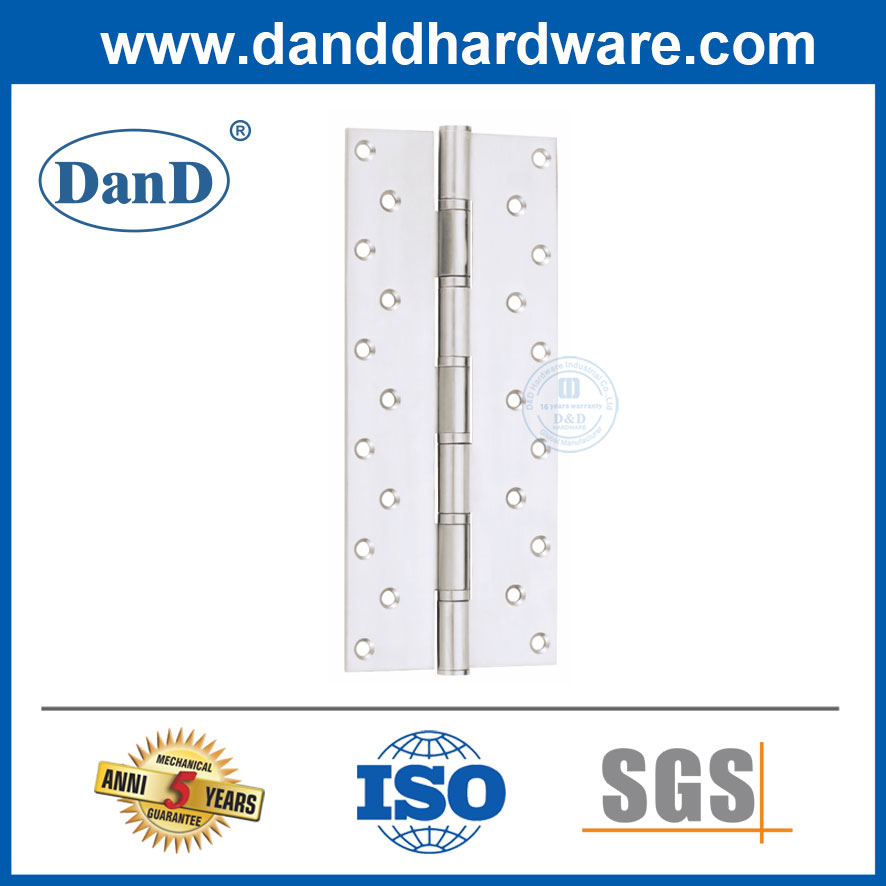
Ball bearing hinges are stronger than regular hinges. Here is a table that shows the differences:
Feature | Ball Bearing Hinges | Regular Hinges |
Wear Resistance | Bearings slow down wear and protect moving parts | Metal parts wear out faster |
Load Handling | Supports heavier doors without extra stress | Heavy doors sag and misalign |
Cycle Life | Works for hundreds of thousands of cycles | Wears out quickly with heavy use |
Noise Control | Quiet operation, even with heavy doors | Gets noisy over time |
Maintenance | Needs little lubrication | Needs frequent adjustments |
User Perception | Feels premium and secure | Feels average, less reliable |
Heavy duty hinges work well for big doors in schools and offices. These hinges can hold different weights:
Commercial heavy-duty hinges: Up to 1000 lb for doors used less
Heavy-duty hinges for busy doors: Up to 200 lb
Medium-use doors: Up to 400 lb
Doors used less often: Up to 600 lb
Industrial hinges: Up to 300 kg
Ball bearing hinges are a smart pick for large doors. They keep doors safe and easy to open.
Continuous (Piano) Hinges
Applications
Continuous hinges are also called piano hinges. They go along the whole edge of the door. You see them on big doors and gates. These hinges spread the door’s weight so it does not sag. You can use them for many heavy doors and gates.
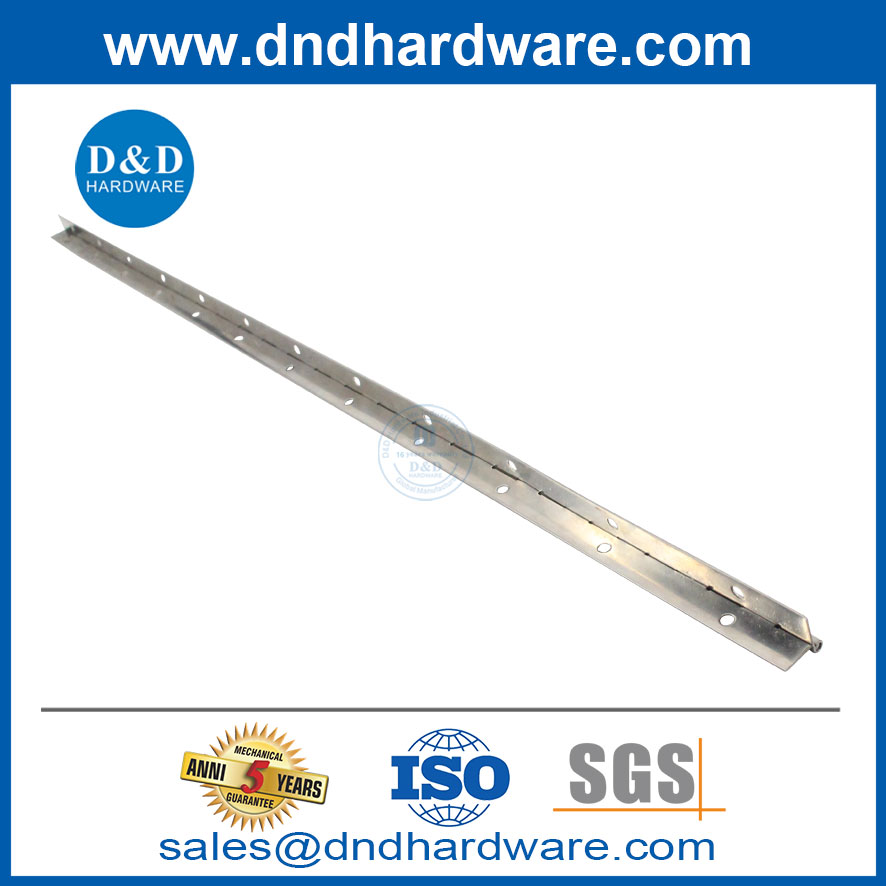
Some places where you use these hinges are:
Big doors, sheds, and cabinets
Furniture like fold-down desks
Storage boxes and lockers
Cooling units and machines
Gates and fences
Hospitals and medical buildings
Commercial and industrial places
Retrofit jobs and fire doors
If you need strong hinges for heavy gates, continuous hinges are a good choice. They give strong support and last a long time.
Pivot Hinges
When to Use
Pivot hinges work in a special way. You put them at the top and bottom of the door. This lets the door’s weight rest on the floor and frame. The weight is spread out, which helps with heavy doors.
Use pivot hinges for big, heavy doors that need extra help. They are good for entryways, glass doors, and busy places. If you want hinges for big doors that do not sag, pivot hinges are a great pick.
Tip: Always choose the hinge type that matches your door’s size and weight. This helps your doors last longer and work better.
Now you know the main hinge types for heavy gates and big doors. Each hinge has its own good points. Pick the one that works best for you.
Weld-On Hinges
Weld-on hinges give you a strong way to hang heavy doors. You weld these hinges right onto the door and frame. This makes them perfect for places where you need extra strength, like warehouses, factories, or big gates. You might see weld-on hinges on metal doors that need to handle a lot of weight and movement.
If you want a hinge that stays put and does not loosen over time, weld-on hinges are a smart choice. You do not need screws or bolts. The hinge becomes part of the door and frame. This means less chance of the hinge failing, even if the door gets used a lot.
Material Options
You can pick from different materials for weld-on hinges. Each material has its own benefits. Let’s look at the main options:
Material | Properties |
Steel | Strong and durable, suited for high-stress applications. |
Stainless Steel | High degree of corrosion resistance, ideal for harsh environments. |
Aluminum | Lightweight, excellent corrosion resistance without sacrificing strength. |
Steel weld-on hinges work well for heavy doors in busy places. They hold up under stress and last a long time. Stainless steel is your best bet if you need hinges for outdoor doors or places with lots of moisture. These hinges do not rust and keep working, even in tough weather. Aluminum weld-on hinges are lighter. You might use them for doors that need to be easy to open but still strong.
Tip: Always match the hinge material to your door’s environment. If your door faces rain or chemicals, stainless steel is the way to go. For indoor doors that need to be strong, steel works great. If you want a lighter door, try aluminum.
You can find weld-on hinges in different sizes and shapes. Some have ball bearings for smoother movement. Others come with grease fittings so you can keep them working well. When you choose a weld-on hinge, think about how heavy your door is and where you will use it.
D&D Hardware Heavy Duty Hinge Options
D&D Hardware gives you a wide range of heavy duty hinges for doors that weigh more than 150 kg. If you need a hinge for a big steel or wooden door, you can find a model that fits your needs. One popular option is the 2D Adjustable Hidden Hinge. This hinge works for wooden doors, steel doors, profile doors, and folding doors. You get a strong hinge that stays hidden, so your door looks clean and modern.
Here’s a quick look at this model:
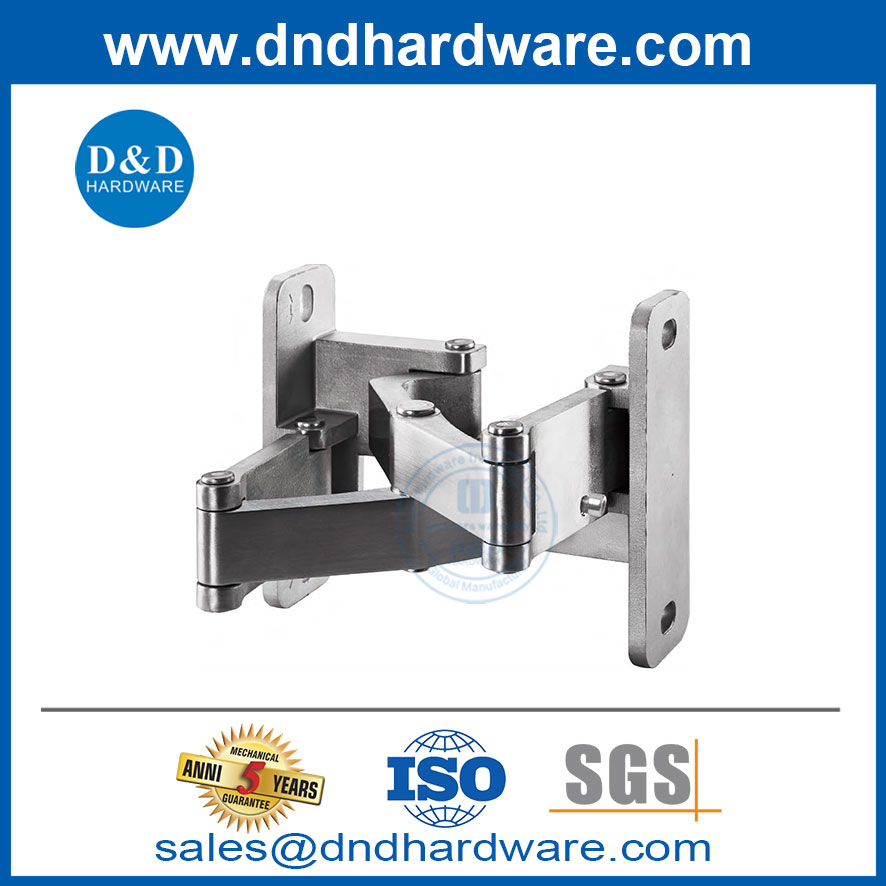
Product Name | 2D Adjustable Hidden Hinge 150KG SS Heavy Duty Door Concealed Hinge-DDCH019 |
Product Model | DDCH019 |
Material | sus304 + sus201 |
Finish | SSS |
Suitable for | Wooden door, Steel door, profile door, folding door |
You can use this hinge for doors in schools, hospitals, offices, or homes. The stainless steel material gives you strength and corrosion resistance. The adjustable design helps you fit the hinge perfectly to your door. If you want a hinge that lasts and looks good, D&D Hardware has you covered.
Note: D&D Hardware tests every hinge to make sure it meets international standards. You get peace of mind knowing your heavy doors will stay safe and work smoothly.
If you need help picking the right hinge, you can reach out to D&D Hardware’s team. They will help you choose the best option for your project.
Key Selection Factors
Door Weight and Size
When you pick hinges for a heavy door, think about how much the door weighs and how big it is. Tall, wide, or thick doors need stronger hinges. Check the height, width, thickness, and weight of your door before you choose. If your door is tall, add more hinges to help hold it up. For every 30 inches of height, use another hinge. If your door is thicker than 2 inches or wider than 3 feet 4 inches, ball bearing hinges are best.
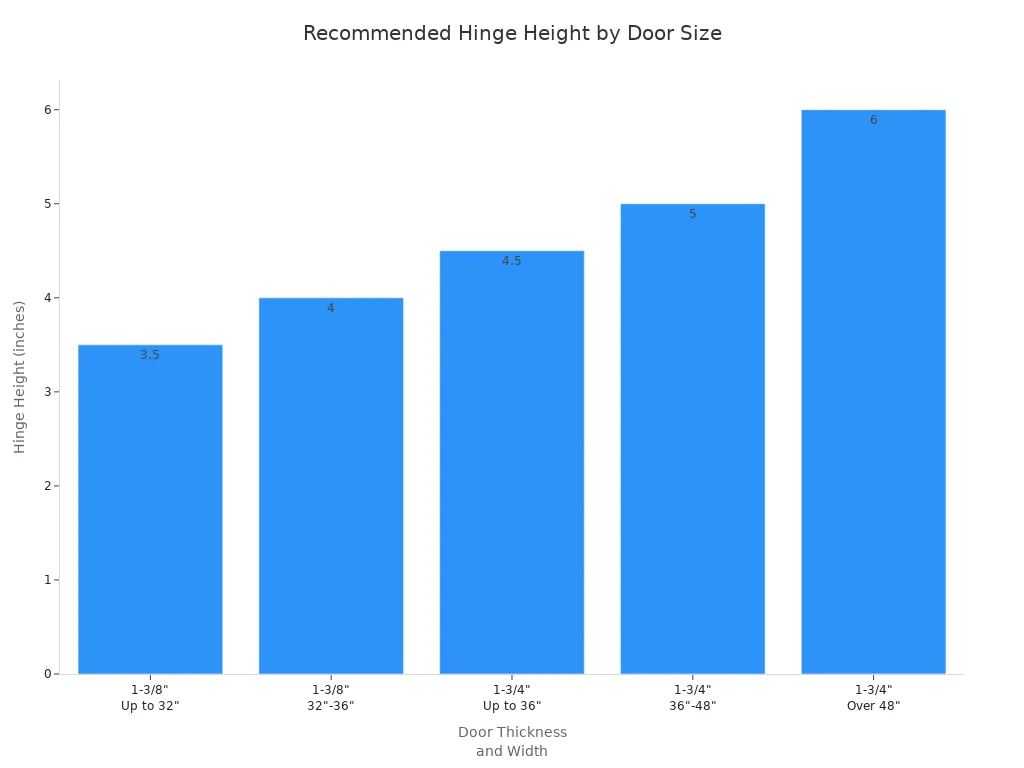
Here’s a simple guide to match hinge size with your door:
Door thickness | Door width | Approximate hinge height |
1-3/8" | Up to 32" | 3-1/2" |
1-3/8" | 32"-36" | 4" |
1-3/4" | Up to 36" | 4-1/2" |
1-3/4" | 36"-48" | 5" |
1-3/4" | Over 48" | 6" |
To figure out hinge width, use this formula: (door thickness minus backset) times two plus the clearance you need. Picking the right hinge size helps your door work well and stay safe.
Frequency of Use
How many times do people open your door each day? Doors in busy places get used a lot. You need hinges that can handle lots of opening and closing. Heavy-duty hinges last longer and stop your door from sagging. Fire-rated hinges are needed for guest rooms or emergency exits.
Here’s a table to help you pick:
Recommended Type | Application Description |
Heavy-Duty Hinges | Good for busy areas like lobbies and service doors. They last longer. |
Fire-Rated Hinges | Needed for guest rooms or exits. They meet fire safety rules. |
If your door gets used all day, choose hinges with a high cycle rating. These hinges can open and close thousands of times without breaking.
Environmental Conditions
Indoor vs. Outdoor
Where you put your door matters. Indoor doors do not face much weather. Outdoor doors need extra protection. If your door is outside, pick hinges made from stainless steel or other materials that do not rust. These hinges can handle rain, humidity, and changes in temperature.
Corrosion Resistance
Rain, humidity, and temperature changes can hurt door hinges. Rust makes hinges hard to move. Heat or cold can make hinges change shape and not fit right. Here’s a table that shows how different conditions affect hinges:
Environmental Condition | Effect on Hinges |
High Humidity | Can cause rust and make hinges stiff. |
Temperature Extremes | Can make hinges change shape and not work right. |
Rain and Humidity | Can cause rust and make hinges hard to use. |
Extreme Temperatures | Can make hinges expand or shrink, causing problems. |
If you want your door to last, pick hinges that resist rust. Stainless steel hinges are good for wet or humid places. Always match the hinge material to where your door is and check the thickness for extra strength.
Tip: The right hinge helps your door stay safe and easy to use, no matter where you put it.
Security and Safety Needs
When picking hinges for heavy doors, safety is very important. Heavy doors often protect special rooms like storage or offices. Sometimes, they are used for emergency exits. If someone messes with the hinges, your security plan can fail. You need hinges that keep your building safe and help you worry less.
Look for special security features when choosing hinges. Here are some you should check:
Security pins: These make it hard to pull out the hinge pin.
Tamper-resistant screws: These need special tools, not normal screwdrivers.
Concealed fasteners: These hide the screws so people cannot reach them.
Non-removable pins: These pins stay in place, even if hit.
Interlocking tabs: These tabs lock the hinge when the door is closed.
Reinforcement plates: These plates make the hinge area stronger.
Make sure your hinges have these features for high-risk doors. For example, storage rooms with expensive things need extra protection. Back doors to buildings also need strong hinges. If you use regular hinges, someone could pull out the pins and get inside. Security hinges make it much harder for someone to break in.
Here is a table to help you know what to look for:
Feature | Description |
Tamper-Proof Design | Non-removable pins and special bearings stop break-ins. |
Maintenance-Free Bearings | Hinges work smoothly, even in busy places. |
Durable Construction | Strong materials like carbon or stainless steel last longer. |
Smooth Operation | Doors open and close easily, even if heavy. |
Tip: Always match your hinge’s security features to where your door is. If your door is in a busy or public place, pick the highest security.
For risky places, use hinges with non-removable pins. These stop people from taking the door off. Interlocking tabs add more safety. Even if someone removes the pins, the door stays on. Reinforcement plates help keep the frame strong if someone tries to force the door.
You also want hinges that last a long time. Heavy doors put a lot of pressure on hinges. If the hinge wears out, the door could sag or fall. Pick hinges made from strong materials like stainless steel or carbon steel. These materials can handle force and last for years.
If you are not sure what security features you need, think about where your door is and what it protects. Most commercial buildings need tamper-proof hinges and strong plates. If you need help, D&D Hardware can help you pick the best hinge.
Security and safety start with the right hinge. Make a smart choice to keep your doors and everything behind them safe.

Installation Tips for Heavy Doors
Surface-Mount vs. Mortise Hinges
When you install heavy doors, you need to pick the right hinge type. Surface-mount and mortise hinges work differently, and each has its own strengths.
Mortise hinges fit inside a pocket cut into the door and frame. You see these on fire-rated doors because they meet strict safety standards. If your door needs a fire rating, mortise hinges are usually required. They handle heavy loads and last longer, but you need more skill and time to install them.
Surface-mount hinges attach directly to the surface of the door and frame. You can install these faster and with less effort. They work well for lighter doors, but may not support very heavy doors as well as mortise hinges. For fire-rated doors, surface-mount hinges need special listings and may not meet higher fire rating requirements.
Tip: If your door is heavy or needs a fire rating, mortise hinges are the safer choice. For quick jobs or lighter doors, surface-mount hinges save time.
Proper Hinge Placement
Getting hinge placement right makes your heavy door work smoothly and last longer. You want the hinges to carry the weight evenly so the door does not sag or stick.
Always use hinges that match your door’s weight and size. If your door is tall or extra heavy, add a third hinge in the middle for extra support.
Place the top hinge about 5 inches from the top of the door. Put the bottom hinge about 10 inches from the bottom. If you use a third hinge, center it between the other two.
Follow the manufacturer’s instructions closely. This helps you spread the weight and keep the door moving smoothly.
Check the alignment as you install each hinge. A small mistake can make the door hard to open or close.
Note: Good hinge placement means less wear and tear. Your door will last longer and need fewer repairs.
Tools and Hardware Needed
You need the right tools and hardware to install heavy-duty hinges, especially on steel doors. Here’s a table to help you get ready:
Tool/Hardware | Description |
Metal Door Shims | Thin, flat pieces that help you fix alignment between the hinge and the door or frame. |
Stainless Steel Door Stopper | Stops the door from swinging too far. Protects walls and furniture. Adds safety to your setup. |
Hinge Helper | A tool that helps you install and align hinges. Keeps your door from sagging or getting misaligned. |
You might also need a drill, screwdriver, measuring tape, and level. These help you mark, drill, and check your work as you go.
Tip: Gather all your tools before you start. This saves time and helps you avoid mistakes.
When you use the right hinges, place them correctly, and have the right tools, your heavy door will work safely and smoothly for years.
D&D Hardware Support Services
When you work with heavy doors, you want everything to go smoothly. D&D Hardware makes sure you get the help you need, from picking the right hinge to installing it the right way. You do not have to figure things out alone. The team at D&D Hardware stands ready to guide you through every step.
You might wonder what kind of support you can expect. D&D Hardware offers more than just products. You get expert advice, technical help, and solutions that fit your project. If you have a metal, wooden, or fire-rated door, you can ask for installation tips or troubleshooting help. The team knows how to handle tough jobs and can answer your questions quickly.
Here’s a look at the support services you get:
Service Type | Description |
Door Hardware Solutions | Includes Stainless Steel Door Hinges, Door Locks, Lever Handles, Door Closers, Exit Devices, and more. |
Installation Support | Expertise in providing solutions for Metal Doors, Fire Rated Doors, and Wooden Doors. |
Compliance with Standards | Products tested to international standards (BS EN, CE, UL, ANSI, BHMA) for various applications. |
You do not have to worry about meeting building codes or safety rules. D&D Hardware tests every product to make sure it meets international standards. If you need hinges for a fire-rated door, you can trust that they are certified and safe. The team can help you choose hardware that fits your needs and keeps your building secure.
If you run into problems during installation, you can reach out for help. D&D Hardware provides guides, tips, and even one-on-one support. You might get advice on hinge placement, tools, or how to fix alignment issues. The team wants your doors to work perfectly and last a long time.
Tip: If you are not sure which hinge to use, ask D&D Hardware for a recommendation. You can send them your door specs, and they will suggest the best option for your project.
D&D Hardware also offers resources for contractors, builders, and property managers. You can get training materials, product catalogs, and updates on new hardware solutions. The company keeps you informed about changes in standards and best practices.
You get more than just a product when you choose D&D Hardware. You get a partner who cares about your project’s success. The support team helps you avoid mistakes, save time, and make sure your heavy doors stay safe and easy to use.
If you want peace of mind, D&D Hardware’s support services make your job easier. You can focus on your project, knowing you have experts backing you up every step of the way.
Maintenance and Longevity
Taking care of your heavy door hinges helps your doors work smoothly for years. You do not need fancy tools or special skills. You just need to check your hinges, keep them clean, and know when it is time for a replacement. Let’s break down what you should do.
Regular Inspection
You want your doors to open and close without trouble. Regular inspection keeps problems away. Try to check your heavy door hinges every few months. Look for signs that something is wrong. Here are some things you might notice:
The hinge pin or bearings feel loose.
You hear squeaking or feel friction when you move the door.
The door starts to sag or looks crooked.
The door does not close all the way or closes unevenly.
If you spot any of these issues, do not wait. Fixing small problems early stops bigger ones from happening. You can tighten screws, adjust the hinge, or add a little lubricant. If you see rust or damage, you might need to clean or replace the hinge.
Tip: Make a habit of checking your hinges when you clean your doors. It only takes a few minutes and saves you trouble later.
Lubrication and Care
Lubrication keeps your hinges moving smoothly. You do not want squeaky doors in your home or office. You have a few good options for lubricating heavy door hinges:
White lithium grease works best for long-term use.
Silicone spray is easy to apply and keeps hinges quiet.
Petroleum jelly can help, but it does not last as long.
Hairspray stops squeaks for a short time, but it is not a real fix.
Olive oil is handy, but it can get sticky and attract dirt.
Start by cleaning the hinge with a dry cloth. Spray or apply your chosen lubricant to the moving parts. Wipe away any extra so it does not drip. If your door still squeaks, try a different lubricant or check for damage.
Note: Do not use too much oil or grease. Too much can attract dust and make the hinge sticky.
When to Replace Hinges
Sometimes, a hinge is too worn out to fix. You need to know when it is time for a new one. If you see cracks, deep rust, or the hinge will not tighten, replacement is the best choice. Doors that sag even after you adjust the hinges need new hardware. If the hinge pin keeps slipping out or the door will not close right, do not wait.
Here is a quick checklist to help you decide:
Sign to Replace | What It Means |
Cracked hinge | The hinge cannot hold weight |
Deep rust | The hinge will not move well |
Loose pin | The door may fall off |
Door sagging | The hinge lost its strength |
You want your doors to stay safe and easy to use. Replacing old hinges keeps your building secure and your doors working like new.
Keeping up with maintenance means fewer problems and longer-lasting doors. Your hinges will thank you!
Recommendations and Checklist
Step-by-Step Selection Guide
Choosing the right hinge for your heavy door does not have to be confusing. You can follow these simple steps to make sure your door works safely and lasts a long time:
Assess Door Weight & Size
Measure your door’s weight and size. Big doors need stronger hinges. If you have a large gate, you need heavy duty gate hinges that can handle the load.
Check Load Capacity
Look for hinges with a load rating higher than your door’s weight. This helps prevent sagging and keeps your door secure.
Consider Frequency of Use
Think about how often people will open the door. If your gate gets used all day, pick heavy duty gate hinges designed for frequent operation.
Match Material to Environment
Choose hinge materials that fit your location. Stainless steel works well outdoors or in wet places. Carbon steel is good for dry, indoor spots.
Pick the Right Type
Decide if you need ball bearing, continuous, pivot, or weld-on hinges. For gates, weld-on or ball bearing gate hinges often work best.
Check Certifications
Make sure your hinges have safety certifications like UL, CE, or ANSI. Certified heavy duty gate hinges give you peace of mind.
Plan for Installation
Align the pivot pins of all hinges. Even a small mistake can cause wear and problems later.
Tip: Always double-check your measurements before you buy. The right hinge makes your gate or door safer and easier to use.
Quick Reference Checklist
You want a fast way to check if you picked the right hinge. Use this checklist before you buy:
Application: What kind of door or gate do you have?
Hinge Size: Does the hinge match your door’s thickness, width, and weight?
Hinge Type: Is it strong enough for your gate or heavy door?
Metal and Finish: Will it resist rust and match your style?
Fasteners: Do you need special screws or bolts?
Hand of Hinge: Is it for a right or left-handed door?
Hinge Edge: Is your door edge square or beveled?
Tip Options: Do you want standard or decorative tips?
Special Types: Do you need electric hinges or security studs?
Quality Level and Budget: Does it fit your project needs?
Material | Best For… |
Carbon Steel | Dry, indoor environments (must be coated) |
304 Stainless Steel | Indoor, general outdoor, food processing |
316 Stainless Steel | Marine, coastal, chemical processing |
Aluminum | Light-load applications |
Note: Correct installation is key. Align all hinge pins for smooth movement and longer life.
Why Choose D&D Hardware
You want hinges that last and keep your doors safe. D&D Hardware stands out because you get certified products, expert support, and custom solutions for any project. If you need gate hinges or heavy duty gate hinges for a school, hospital, or factory, D&D Hardware has you covered.
Certification/Standard | Description |
UL | Safety certification for North America |
CE | Compliance certification for Europe |
ANSI/BHMA A156.4 Grade 1 | High strength and reliability |
Custom Solutions | Tailored hinges for complex projects |
Technical Support | Help with fire-rated doors and tough installs |
You get more than just hardware. You get a team ready to help with installation, troubleshooting, and advice. D&D Hardware tests every hinge to meet strict standards. You can trust your gate hinges to work smoothly and last for years.
Ready to upgrade your doors or gates? D&D Hardware makes it easy to find the perfect heavy duty gate hinges for any job.
You can pick the best hinge for your heavy door by following a few simple steps. Focus on door weight, hinge type, and certified quality. Always check your checklist before you buy. Remember, you get better results when you:
Install hinges the right way for smooth, secure doors.
Align doors correctly to avoid problems.
Keep up with maintenance to stop wear and tear.
If you want reliable, certified hardware, D&D Hardware is ready to help. Reach out for expert advice and make your next project a success!
FAQ
What is the best hinge material for outdoor heavy doors?
You want stainless steel for outdoor heavy doors. It resists rust and stands up to rain or humidity. Stainless steel hinges last longer outside than other materials.
How many hinges do I need for a heavy door?
Most heavy doors need at least three hinges. If your door is extra tall or wide, you might need four. More hinges help spread the weight and prevent sagging.
Can I use regular hinges on a heavy door?
No, regular hinges cannot handle the weight. You need heavy-duty hinges with a high load rating. Using the wrong hinge can cause the door to sag or even fall.
How do I know if my hinge is fire-rated?
Look for UL or CE markings on the hinge. Fire-rated hinges always have certification labels. You can also ask your supplier for documentation.
How often should I lubricate heavy door hinges?
Lubricate your heavy door hinges every six months. If you hear squeaks or feel stiffness, add lubricant sooner. Regular care keeps your door moving smoothly.
What should I do if my heavy door starts to sag?
Check the hinges for loose screws or wear. Tighten any loose parts. If the problem continues, you may need to replace the hinges with stronger ones.
Are D&D Hardware hinges appropriate for commercial buildings?
Yes! D&D Hardware designs hinges for schools, hospitals, offices, and more. You get certified, durable products that meet strict safety standards.
Can I install heavy-duty hinges myself?
You can install them if you have basic tools and follow instructions. For very heavy or fire-rated doors, you may want professional help to ensure safety.
Contact us Now: Contact: David Jian
Mob:0086-139 2903 7292
Email: David@dndhardware.com, sales@dndhardware.com,
Jobby Zhang
Mob:0086-137 2599 9617
Email: jobby@dndhardware.com
D&D HARDWARE INDUSTRIAL CO.,LTD
ADD:12th Floor, Building 2, No.898, KeChuang Technical Zone, Jiangmen Avenue, Pengjiang District, Jiangmen City, Guangdong, China (Postcode:529000)
https://www.dndhardware.com
Tel: +86-750-3856396
Fax: +86-750-3856395

 English