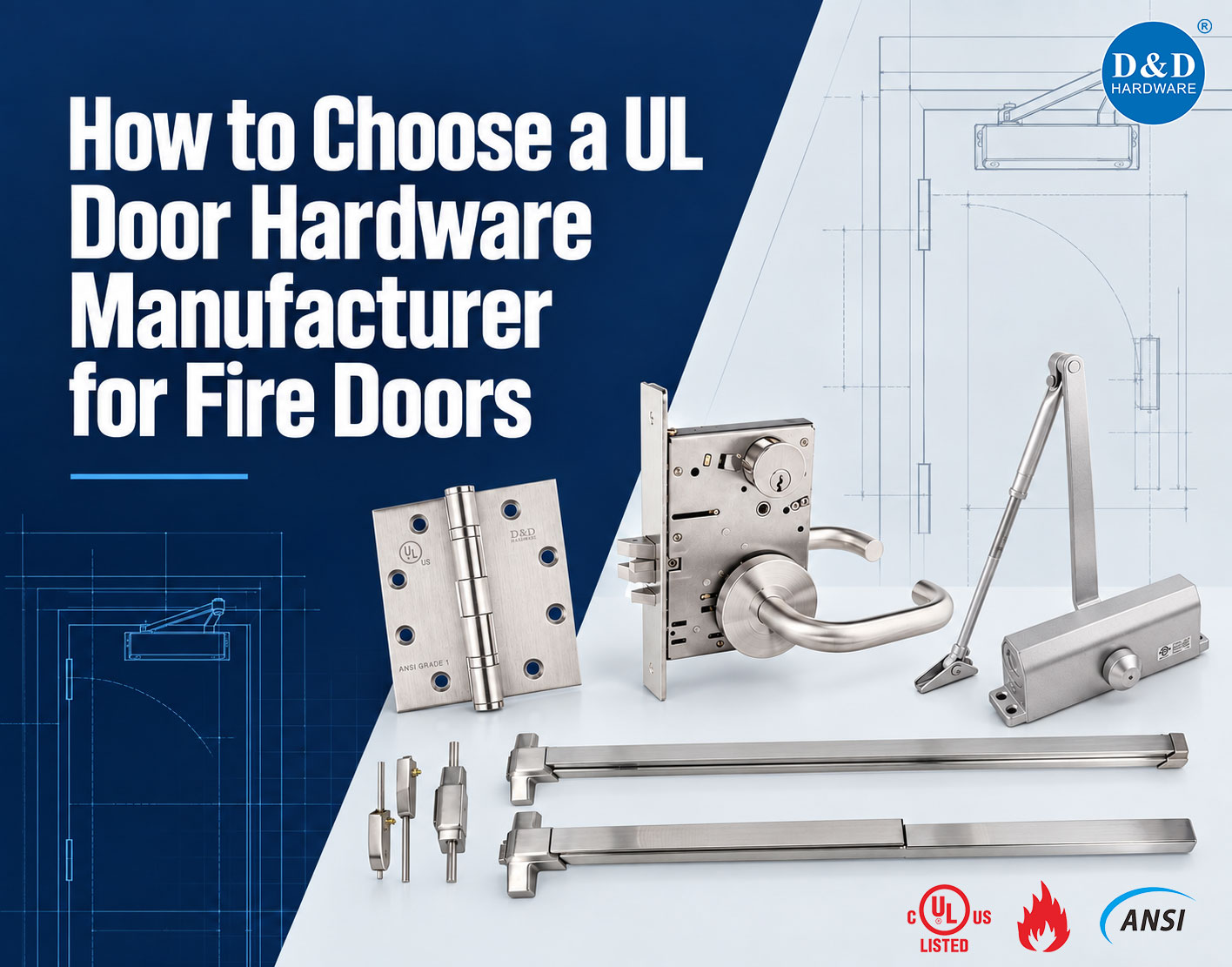
When you choose hardware for fire door assemblies, safety and following the rules guide every choice. The most important thing in picking a ul door hardware manufacturer is proof of ul certification that you can check, plus ongoing compliance. Marketing promises cannot replace real, documented evidence.
This guide helps you see past sales talk. You will learn how to look at technical proof that shows which supplier is dependable and which is not. We will cover how to check certification, judge product quality, and see why a strong partnership matters. Each part gives you clear steps to use when checking a supplier.
Your choice of door hardware directly affects life safety. A careful review process helps you pick a partner who puts protection first above everything else.

Key Takeaways
Check UL certifications yourself using the UL Online Certifications Directory to make sure the listings are current and correct.
Pick an original manufacturer instead of a trading company. This gives you steady quality, better control, and full traceability.
Choose Grade 1 stainless steel hardware (SS304 or SS316) for long-lasting strength and dependable fire protection.
Choose hardware parts that fit your specific fire door setup to keep the fire rating and stay safe.
Look at the full cost of owning the door hardware, not just the starting price. This includes upkeep, meeting safety rules, and lower insurance costs.
Why UL Certification is Non-Negotiable for Fire Doors
You might view UL certification as another paperwork hurdle. It is far more than that. For fire door assemblies, UL certification is a legal requirement and a life safety measure. Building codes across the United States reference UL standards directly. Authorities having jurisdiction (AHJs) and fire marshals enforce these codes during inspections. When they find non-UL hardware on fire-rated assemblies, they reject the installation. This rejection triggers costly remediation and project delays. You cannot simply swap one component for another. A non-listed part can void the entire fire door assembly listing, forcing full replacement instead of a simple hardware change.
The financial risks extend beyond inspections. If a fire-related loss occurs and investigators discover non-certified hardware on rated assemblies, insurers may deny or reduce claims. Building owners and specifying architects can face negligence lawsuits if non-certified hardware contributed to injury or property loss during an emergency. These consequences make choosing a qualified ul door hardware manufacturer a matter of legal protection, not just product preference.
The Role of a UL Door Hardware Manufacturer in Life Safety
Real-world tragedies show why certified hardware matters. In the Bronx, New York, a 2017 fire killed 13 people and injured 14 others. This incident led to Local Law 111, which requires self-closing doors. The Grenfell Tower fire in the United Kingdom claimed 72 lives. The inquiry revealed that most self-closing doors were not functioning, allowing smoke and flames to spread unchecked. In Minneapolis, Minnesota, a 2019 fire caused 5 deaths. The State Fire Marshal concluded that a properly closing corridor door would have contained the fire and reduced loss of life.
These incidents demonstrate that ul fire rated door hardware directly prevents smoke and fire spread. Standards like NFPA 101 and NFPA 80 mandate that all hardware components be listed for fire door use. A responsible ul door hardware manufacturer tests products under UL 10C, which evaluates full door assemblies under positive pressure fire conditions. This testing ensures hinges, locks, and seals maintain the door's integrity during a fire. Components like door closers with fail-safe mechanisms integrate with smoke detectors, ensuring doors close automatically during fire events, even during power outages. Intumescent and smoke seals, required by NFPA 80 and tested under UL 10C, prevent smoke inhalation, a leading cause of fire-related deaths.
Decoding UL Fire Ratings and Labels for Hardware
Understanding ul ratings helps you specify the right products. UL offers two distinct categories: Listed and Recognized. UL Listed products undergo complete testing as finished items for specific applications. UL Recognized components receive evaluation as parts of a larger system, not as standalone products. This distinction matters for your application. For fire rated doors, you need UL Listed hardware. A Listed hinge or lock carries its own certification for use on rated assemblies. A Recognized component may require additional evaluation within your specific door assembly.
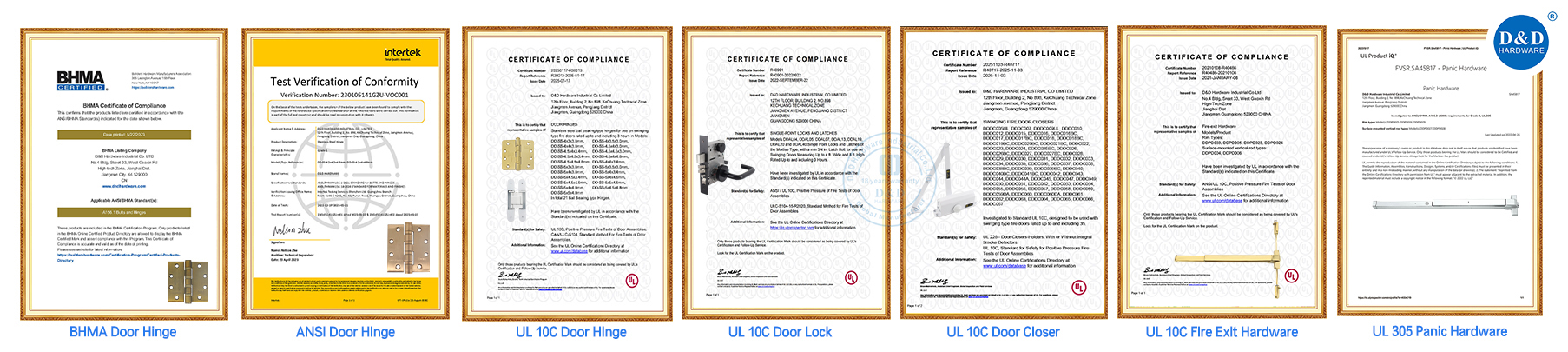
You should verify ul ratings through the UL Online Certifications Directory. This database lets you search by manufacturer name and product listing. A reputable supplier will provide documentation without hesitation. Look for the UL mark on product packaging and labels. This mark indicates the product meets specific fire resistance criteria. For example, a door closer certified under UL 10C with a 3-hour fire rating supports doors up to 150 kilograms. Locks and latches tested under UL 10C maintain latch bolt integrity at high temperatures, preventing door failure during emergencies. When you specify ul fire rated door hardware, you ensure each component contributes to the assembly's overall fire resistance. This attention to compliance protects building occupants and your legal standing.
How to Vet a Fire Rated Door Hardware Supplier
You cannot trust a supplier's website or sales brochure to prove their qualifications. Marketing materials do not show compliance. You need solid proof that a fire rated door hardware supplier has current, active certifications for the exact products you plan to buy. A careful vetting process takes time, but it keeps your project safe from costly failures and legal trouble.
Verifying UL Listings and Current Certifications
The UL Online Certifications Directory is your main tool for checking. This database holds every active UL listing for all manufacturers. You can find it at iq.ul.com. Start by searching the supplier's name or their UL File Number. This number appears on their product labels and certification papers.
Once you find the company, look for the right product category. For fire door hardware, you will search for categories like GKWX, which covers hinges used in fire-rated assemblies. Look at the listing entry closely. Confirm the fire rating durations, allowed door types and sizes, maximum door weight, and any special installation rules. These details tell you if the product fits your specific needs.
Check that the listing status says currently active. A listing can lapse or get withdrawn. If that happens, the product no longer meets certification requirements, even if old stock still shows the UL mark. You should also verify that the product's listing matches the exact model number you plan to use. A manufacturer may hold certifications for some products but not others.
A good ul door hardware manufacturer will share documentation without delay. Ask for their current UL certificates and check them against the online directory. Request inspection reports and test data. If a supplier hesitates or makes excuses, treat that as a warning sign. Real manufacturers keep organized records and share them freely with qualified buyers.
Manufacturer vs. Trading Company: Why It Matters
The difference between a true manufacturer and a trading company greatly affects your project's success. A trading company gets products from various factories, often switching suppliers based on price. This approach creates inconsistency between shipments. You might receive hardware from different production lines with varying quality levels. Production standards shift from batch to batch, making it hard to predict performance.
An original manufacturer like D&D Hardware controls every stage of production. They maintain stable, repeatable quality because their reputation depends on it. Their production control systems ensure each unit meets the same specifications. When problems arise, you deal directly with the people who made the product. Communication moves faster, and problem-solving becomes more efficient.
Aspect | Trading Company | Original Manufacturer |
Quality consistency | Inconsistent between shipments | Stable, repeatable quality |
Production standards | Vary from batch to batch | Better production control |
Lead time | Longer due to subcontracting | Faster communication and problem-solving |
Customization | Limited options | In-house engineering support |
Quality control & accountability | Difficult to enforce | Multi-stage QC with full traceability |
Long-term cost | Higher procurement costs | Lower long-term procurement costs |
Quality control is the most critical difference. A genuine ul listed fire door hardware manufacturer runs multi-stage inspection processes. They check incoming raw materials before production begins. They monitor production during manufacturing. They inspect every finished product before dispatch. They perform functional testing to verify performance. They conduct packaging inspections for final readiness. Full traceability extends from raw material to finished product, with inspection reports available on request.
Your experience with a supplier reveals their true nature. A manufacturer employs engineers who understand fire door assemblies and ul ratings. They can answer technical questions about installation, compatibility, and code requirements. A trading company often lacks this depth of knowledge. They may struggle to explain why certain products carry specific certifications or how to address compliance issues.
The long-term cost of working with a trading company exceeds any upfront savings. You may pay less per unit initially, but you absorb costs through rejected shipments, project delays, and compliance failures. A factory-direct manufacturer offers competitive pricing while maintaining quality standards. Their accountability and traceability protect your investment over the life of the building.
When you evaluate a fire rated door hardware supplier, ask for their factory audit reports. Request details about their quality control procedures. Ask about their engineering team and their experience with fire-rated applications. A legitimate manufacturer welcomes these questions. Their answers demonstrate why they deserve your trust and your business.

Evaluating Product Quality and Testing Standards
Certifications show that a product passed certain tests. But they do not tell you how well that product works after years of daily use. You need to look at materials, how the product is built, and whether the maker uses outside testing. These things decide if your ul fire rated door hardware will work during an emergency, not just on install day.
Materials and Construction: The Backbone of Durability
The material you pick affects how long your hardware lasts and how it acts in a fire. Stainless steel grades SS304 and SS316 are the standard for fire-rated uses. Both resist rust, but they act very differently in tough settings.
Stainless Steel Type | Corrosion Rate (µm/year) | Susceptibility to Pitting Corrosion |
304 | <0.03 | High |
316 | 0.0076 | Lower |
The big difference is molybdenum. Type 316 has 2.0–2.5% molybdenum, while type 304 has none. This element guards against chloride attack from salt spray. Coastal buildings, chemical plants, and places near road salt gain a lot from 316 hardware. The rust rate drops about four times compared to 304, making hinges, locks, and closers last longer on busy fire doors.
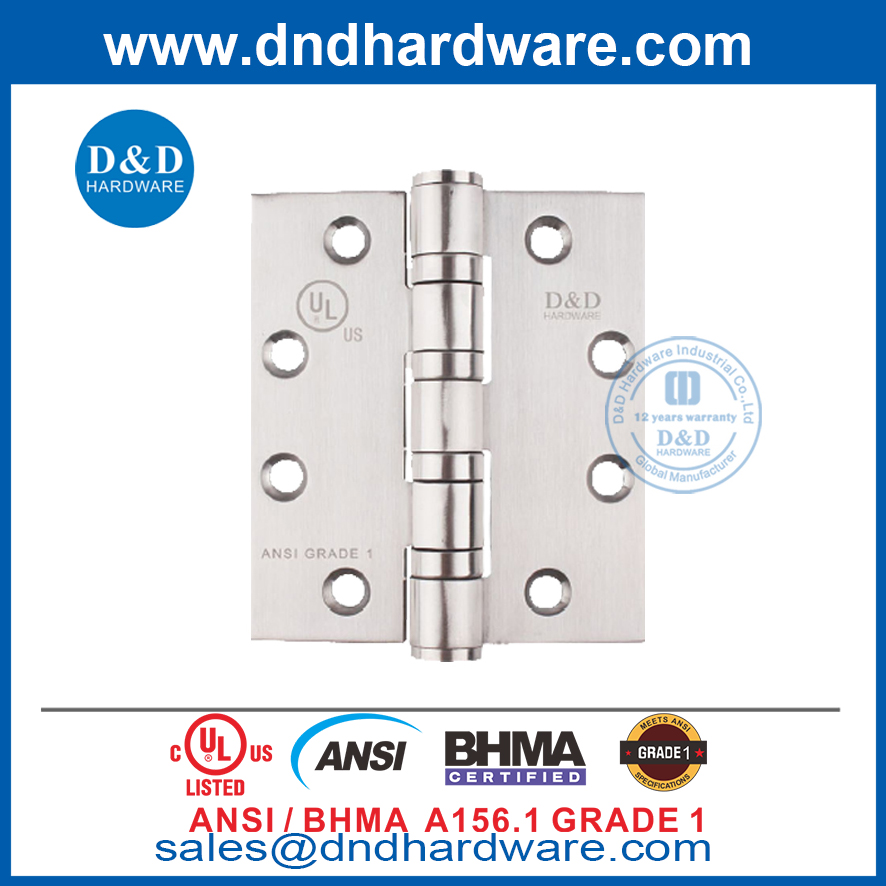
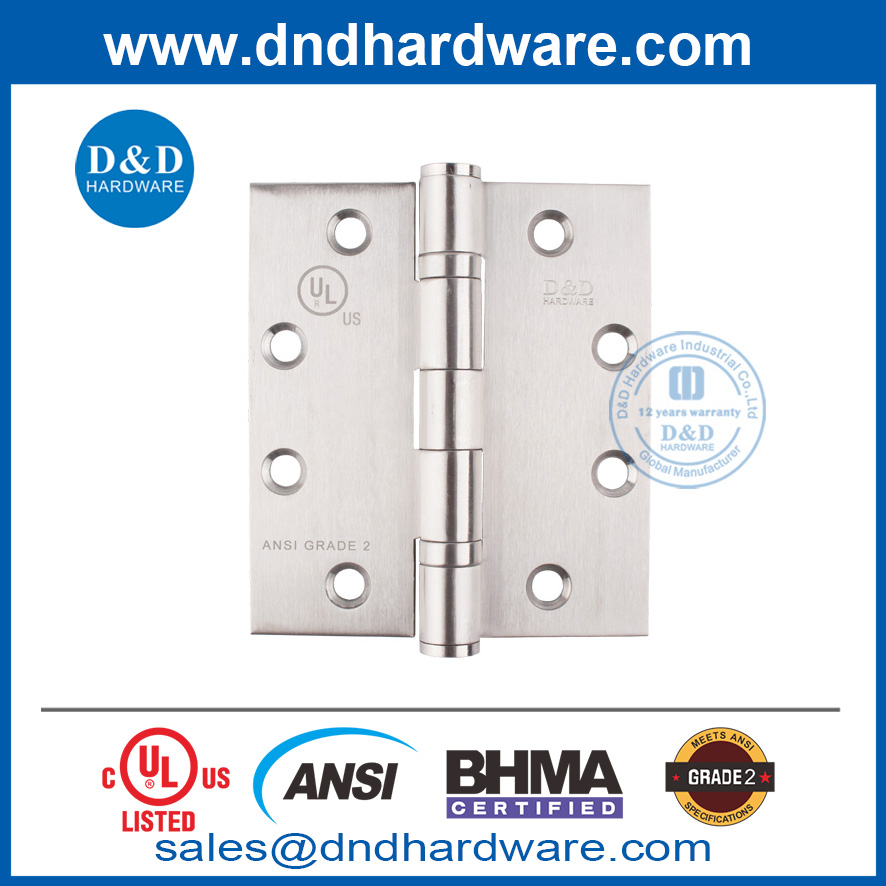
Durability also depends on the grade rating of the hardware. ANSI/BHMA A156.1 sets cycle testing rules for hinges.
Grade | Typical Application | Cycle Life (Hinges, A156.1) | Best For |
Grade 1 | Heavy-duty commercial | 2,500,000+ cycles | Hospitals, schools, high-rise buildings |
Grade 2 | Standard commercial | 1,500,000 cycles | Offices, hotels, retail |
Grade 3 | Residential / light duty | 350,000 cycles | Residential apartments |
Grade 1 hardware is tested past 1,000,000 cycles under ANSI/BHMA A156.17. This rating means it works in high-use, high-stress places. A hospital corridor door opens thousands of times each month. Grade 1 hinges with stainless steel stay strong during long flame exposure. Lower grades save money at first, but they break sooner and hurt fire resistance when you need it most.
The Importance of Third-Party Testing and Quality Control
You cannot trust a maker's own claims. Outside testing gives real proof that products meet known standards. A good ul door hardware manufacturer sends products to outside labs for checks.
When picking fire door hardware, the trustworthiness of your supplier matters as much as the product specs. Look for makers who hold outside third-party certifications—UL listings, CE markings, and ANSI/BHMA compliance should all be checkable through official groups.
Other certification systems exist beyond UL. CE certification covers European rules like EN 1935 for hinges, EN 12209 for locks, EN 1154 for door closers, and EN 1125 for panic exit devices. UL certification tests against North American rules such as UL 10C for fire door assemblies and UL 305 for panic hardware. ANSI/BHMA compliance checks specific performance grades for durability and function. A maker with certifications across these systems shows broad skill and strict quality control.
When you check a supplier, ask about their quality control steps. A real maker runs many inspection stages. They check raw materials before making products. They watch production as it happens. They test finished products before shipping. They keep full records from raw material to final unit. Ask for their factory audit reports and inspection papers. A sure supplier shares these records without issue.
The link between quality control and fire safety is clear. Hardware that breaks during a fire cannot do its life-safety job. A latch that sticks, a hinge that binds, or a closer that loses pressure harms the whole door assembly. Outside testing makes sure the product you get matches the one that passed certification. This check protects building users and keeps you safe from blame. Pick a supplier with proven testing standards and clear quality systems. Your ul ratings check should go beyond papers to include looking at the product when it arrives. Make sure the UL mark is on each unit and matches the certified model number.
Matching Hardware to Your Specific Fire Door Assembly
Fire door assemblies come in many shapes and sizes. Steel doors, wooden doors, and oversized openings each need specific hardware. You cannot assume one hinge or lock works for every assembly type. The UL listing for each component states exactly which door materials and sizes it supports. Choosing hardware outside that listing voids the assembly's fire rating.
Ensuring Compatibility with Door Type and Frame
The door material determines your hinge needs. Wooden fire doors and steel commercial doors both need Grade 13 stainless steel hinges. This material provides the heat resistance and load-bearing capacity both door types require. The table below shows the minimum hinge counts for different door configurations.
Door Type | Minimum Hinges Required | Hinge Material Specification |
Wooden fire doors (including 90-min rated) | 3 (mandatory) | Grade 13 stainless steel |
Steel commercial doors | 3 (mandatory); 4 may be used | Grade 13 stainless steel |
Oversized wooden fire doors | 3 (mandatory); 4 may be used | Grade 13 stainless steel |
The same Grade 13 hinge works for both wood and steel fire-rated doors. This compatibility makes your specification process easier. You still must verify that each hinge carries the correct UL listing for your specific assembly. Check the door frame type as well. Hollow metal frames and wood frames accept different screw types and mounting methods. A hinge listed for wood frames may not anchor properly in steel frames.
Door closers also require careful matching. A closer rated for a 150-kilogram door will not control a heavier door. Exit devices must match the door width and panic hardware requirements. Locks and latches need proper backset measurements for your door thickness. Each component works together as a system. Mismatched parts compromise the entire assembly's fire resistance.
The Value of a Comprehensive Product Range
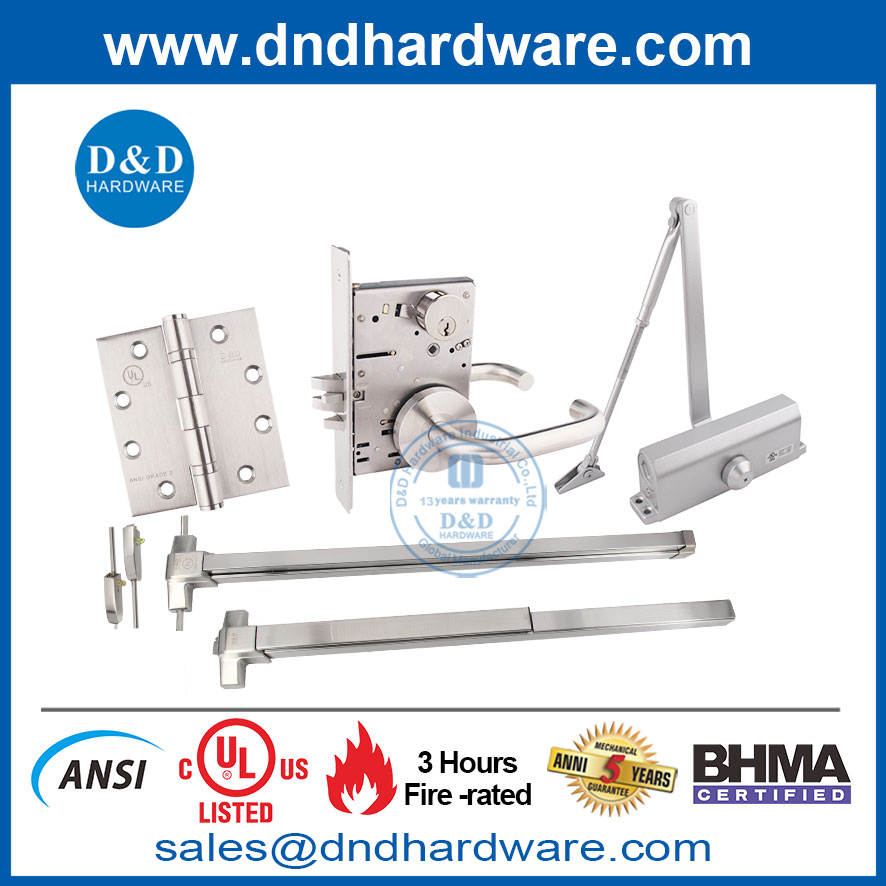
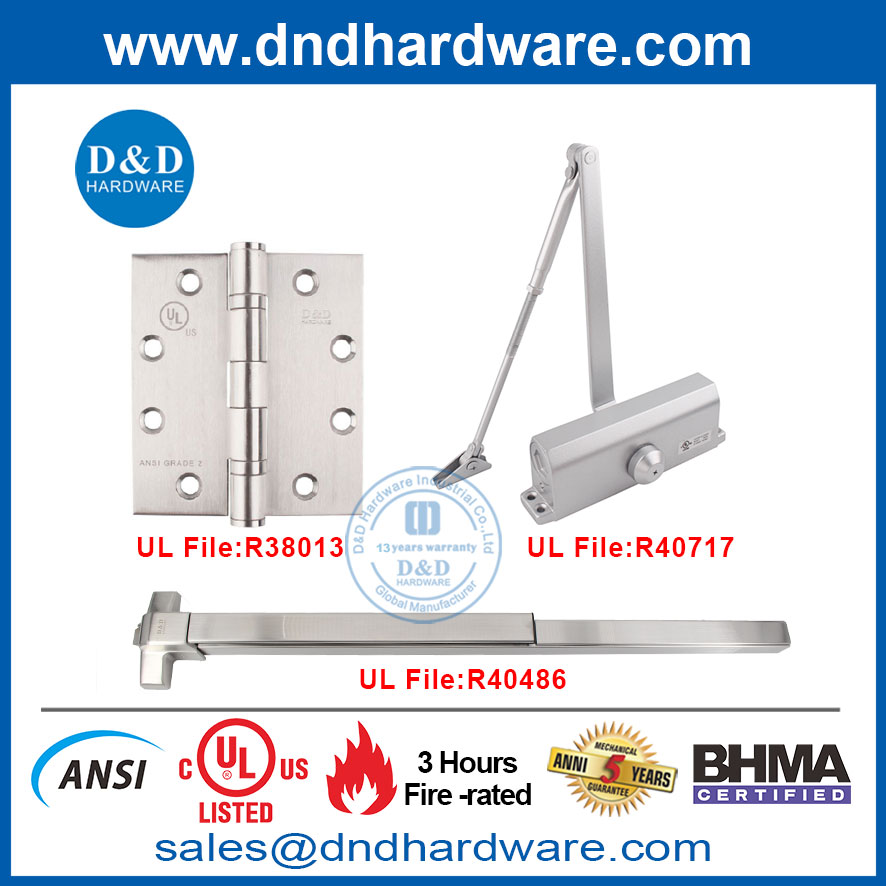
Working with a single ul fire rated door hardware manufacturer simplifies your entire project. A supplier like D&D Hardware offers hinges, locks, closers, and exit devices under one roof. This approach eliminates compatibility issues between components from different makers.
Benefit | Description |
Faster document review | Relevant CE and UL documentation supplied with hardware categories reduces gaps during preparation. |
Fewer supplier interfaces | Multiple hardware categories coordinated in one package simplifies order control. |
Lower risk of disconnected components | Hardware reviewed by category and opening requirement ensures compatibility. |
Clearer technical basis | Datasheets, certificates, and documentation organized for project submission. |
Simplified tracking | Consolidated export and shipping coordination aligns with production planning. |
Reduced sourcing complexity | Single coordination channel for product, documentation, and shipping. |
A single supplier also provides customization options for unique project requirements. D&D Hardware offers in-house engineering support to modify products for special door configurations. This capability proves valuable for historic renovations or custom architectural designs. You gain one point of accountability for quality, delivery, and certification. Your ul ratings verification becomes simpler when all documentation comes from one source. The door hardware you select works as an integrated system rather than a collection of parts. This approach reduces procurement complexity and lowers logistics costs through consolidated purchasing. Your project management becomes more efficient when you coordinate with one supplier instead of several.
Assessing Supplier Reliability and Support
Your project timeline depends on one big thing: your supplier's ability to send the right products when you need them. If hardware is late, your whole installation stops. You need a fire rated door hardware supplier who keeps track of stock well and tells you the truth about delivery times.
Evaluating Lead Times and Inventory Management
Top suppliers use specific stock practices to stop costly project delays. You should ask possible partners how they handle these areas.
Best Practice | How It Prevents Project Delays |
Invest in Contingency Planning | Finds backup suppliers and sets triggers to start plans, turning material shortages into things you can handle |
Conduct Regular Cycle Counts | Uses ABC analysis to focus counts on high-value items, spotting problems before they cause delays |
Limit Last-Minute Purchases | Sets reorder points based on supplier lead times and keeps extra stock for key items, cutting down on rush orders |
Standardize Inventory Practices | Uses the same naming and item codes so tracking and forecasting are accurate across all project sites |
Improve Cross-Functional Communication | Sets up single points of contact and regular review meetings so everyone knows material status and changes |
When you check a possible supplier, look at their stock systems directly. Ask about their main raw material suppliers and how much extra stock they keep. Ask about backup supplier plans and how they manage lead times. A maker who keeps extra stock for key items can handle sudden demand without slowing your shipment.
You should also require pre-shipment checks that make sure all hardware is packed safely. Ask for photo or video proof of the packing process. Put contract rules that say exactly how packing must be done and make the supplier pay for damage during shipping. This method pushes them to use good packing materials. Check their packing facilities from time to time and ask them to keep improving based on past shipment feedback.
Gauging Technical Expertise and After-Sales Service
A reliable supplier brings more than just products to your project. They bring fire door hardware knowledge that helps you avoid costly mistakes. You need a partner who answers questions about setup, fit, and code rules with confidence.
Ask possible suppliers about their engineering team's experience with fire-rated jobs. A maker who hires engineers knows how their door hardware works with different door types. They can guide you through tricky specs and fix setup problems quickly.
Good after-sales service matters long after delivery. You want a supplier who answers warranty claims fast and sends replacement parts without trouble. Ask for references or past project examples, especially in schools or hospitals. These places need strict rules and reliable performance. A supplier with proven experience in these settings shows they can handle tough needs.
Your supplier relationship should go beyond one sale. Look for a partner who helps you succeed through ongoing technical support and quick replies. This commitment sets a real maker apart from a simple distributor. When you check suppliers, pick those who truly care about your project results, not just how many orders you place.
Balancing Cost and Value in Your Supplier Choice
Price often decides which hardware you pick. But the cheapest option can end up costing you the most. If you put non-compliant hardware on fire doors, you face risks that go way beyond the first price tag. You have to think about those risks compared to any money you save upfront.
Weighing the True Cost of Non-Compliance
The money problems from non-compliant hardware can wreck a project budget. Inspectors in Buffalo and Amherst now check fire doors more strictly each year. Insurance companies look closely at claims when doors were propped open or did not latch right. Claims have been delayed or paid less because stair doors were blocked. A documented upgrade with a labeled assembly makes your file stronger and lowers your long-term risk.
Think about a landlord who swapped a solid wood door for a 90-minute steel assembly, smoke seals, and a listed closer. The insurer gave him a credit on renewal because the stair enclosure and boiler room matched the building plan. That credit shows you can save money right away through lower insurance premiums. Fire door compliance protects your finances, not just the people in the building.
Legal trouble adds more cost. If a fire hurts someone or damages property, investigators will look at your hardware choices. Non-certified parts can lead to lawsuits for negligence and void your insurance coverage. These costs are much bigger than any money you saved on cheaper parts. The real cost of non-compliance includes legal fees, settlement payments, and damage to your reputation that follows you to future projects.
Getting Quotes and Comparing Total Value
Value means more than just the number on the bill. You have to compare the whole package each supplier offers. That package includes certification paperwork, product quality, technical help, and warranty terms. A low price is not so great when the supplier cannot give you proper UL documents or answer basic questions about installation.
UL Listed hardware lasts longer and needs fewer repairs, which saves money on maintenance over time. It keeps doors closed and safe during fires, lowering your risk of being sued. Smooth operation prevents problems like loose handles or broken locks, so you get fewer service calls. Reliable hardware in busy places works well every time, cutting down on replacement costs. Using UL-certified products can earn you insurance credits and fewer claims, which directly affects your liability costs.
Your experience with a supplier during the quoting process shows how they will treat you after the sale. A supplier who responds quickly, shares documents freely, and answers technical questions shows real knowledge. A factory-direct manufacturer like D&D Hardware offers good prices without giving up quality or compliance. They control production, keep certifications, and provide engineering support. When you compare quotes, look past the unit price. Figure out the total cost of ownership over the life of the building. That includes maintenance, how often you replace parts, insurance premiums, and legal protection. A slightly higher upfront cost for certified hardware from a reliable supplier gives you better value over time.
Making the Final Decision with Confidence
You now know how to check any fire rated door hardware supplier with confidence. The choice comes down to asking the right questions and checking the answers. A clear plan removes doubt and keeps your project safe from expensive errors.
Creating a Supplier Evaluation Checklist
Begin by checking certifications. Look up the supplier's name in the UL Online Certifications Directory. Make sure the model numbers match what your project needs. Ask for current certificates and compare them with the online records. A real supplier shares these papers without delay.
Next, look at product quality. Ask what materials they use in their hardware. Check that stainless steel parts meet SS304 or SS316 standards. Ask about outside testing and their quality control steps. A maker who controls their own production gives you better tracking than a trading company.
Test their technical knowledge with direct questions. Ask how their engineers solve installation problems. Ask about their work with fire-rated doors in schools or hospitals. Their answers show if they truly understand building codes or just sell products.
Last, look at business factors. Check their delivery times and how they manage stock. Ask about warranties and support after the sale. Request references from similar past projects. A full checklist covers certification, quality, knowledge, and dependability.
Building a Long-Term Partnership for Safety
Your connection with a supplier goes beyond one order. Fire-rated doors need yearly checks under NFPA 80 rules. Your supplier should give clear paperwork and upkeep advice to help with these needs. They also make sure every door has proper self-closing and latching hardware.
A dependable supplier offers strong warranties and steady support. This help matters most for trade professionals handling many projects. You need a partner who answers fast when problems come up and offers real fixes. Their dedication to your success lowers your long-term risk.
DIROCK promises to keep its certification system working well, respond quickly to new standards and market shifts, and give global customers reliable, compliant fire door hardware. For fire door hardware, CE certification is not just a rule for entering the market. It is also a safety guard throughout the product's whole life.
Pick a supplier who treats your relationship as a safety partnership. They should watch for standard changes and tell you about updates that affect your work. Their active communication helps you stay compliant on all your projects. This steady support gives you peace of mind knowing building occupants stay safe.
A careful review process helps you choose a partner who puts safety first. Your smart evaluation today stops costly failures tomorrow. The right supplier becomes part of your team, focused on protecting lives and property in every project you finish.
Choosing a UL fire-rated hardware manufacturer is a critical decision for safety and legal compliance. You are not just buying a product; you are vetting a partner who protects lives and property. Your action steps are clear. Verify UL listings in the official directory. Scrutinize product quality through materials and third-party testing. Assess each supplier's support capabilities and lead times. Finally, weigh cost against long-term value, not just the upfront price. A thorough review process gives you peace of mind. Use the checklist from this guide to evaluate every potential partner. Your careful selection today ensures your fire door assemblies perform correctly during an emergency. Trust your experience and the evidence you gather to make a confident choice.

FAQ
How can I verify a product is truly UL listed?
Go to the UL Online Certifications Directory at iq.ul.com. Type in the maker's name or their UL File Number. Make sure the model number matches what you have. Check that the listing says it is active. A good supplier will share these papers without any delay.
Can I use non-UL hardware on a fire door temporarily?
No. Non-UL parts cancel the whole fire door assembly's listing. You could fail inspections, lose insurance coverage, or face legal trouble. Always pick UL Listed parts for fire-rated openings.
What happens if I install unlisted hardware on a fire door?
Inspectors will reject the setup. Your insurance may refuse to pay claims after a fire. Building owners could get sued for negligence. Fixing these issues costs much more than any money saved upfront.
How often should I inspect fire door hardware?
NFPA 80 says every fire door assembly needs a check once a year. Make sure all parts work the right way. Confirm doors close and latch on their own. Write down each inspection to keep proper records for your building.
Contact us Now:
Contact: David Jian
Mob:0086-139 2903 7292
Email: David@dndhardware.com, sales@dndhardware.com,
Contact: Jobby Zhang
Mob:0086-137 2599 9617
Email: jobby@dndhardware.com
D&D HARDWARE INDUSTRIAL CO.,LTD
ADD:12th Floor, Building 2, No.898, KeChuang Technical Zone, Jiangmen Avenue, Pengjiang District, Jiangmen City, Guangdong, China (Postcode:529000)
https://www.dndhardware.com
Tel: +86-750-3856396
Fax: +86-750-3856395
 English