The door hardware grading system shows how strong and good locks, hinges, and other hardware are. BHMA and ANSI make strict rules that most U.S. companies use, especially in business buildings. You can see what the grades mean in the table below:
Grade | Description | Security Features |
Grade 1 | Highest Grade Security | Must take 8 hits with different force, so it is very strong. |
Grade 2 | Higher Residential Security | Must take 6 hits, so it protects homes well. |
Grade 3 | Basic Residential Security | Must take 4 hits, so it works best in safe places. |
Knowing about grades answers the question, How is door hardware graded? It helps you choose the right products for safety and long use. D&D Hardware gives certified choices that follow these rules.
Key Takeaways
Learn about the door hardware grading system. This helps you pick locks and hinges that are safe and strong.
Grade 1 hardware gives the most security. It works well in busy places like hospitals and banks.
Grade 2 hardware protects homes and small businesses. It is a good mix of price and safety.
Grade 3 hardware is for places with less risk. It fits bedrooms where security is not a big worry.
Always look for ANSI and BHMA certifications. These show the hardware is safe and good quality.
Think about how often the door will be used. Higher grades are better for doors people use a lot.
Ask experts for help when picking hardware. They can help you follow safety rules and meet your building’s needs.
Take care of your door hardware often. This makes it last longer and keeps it safe. Check for damage and test it regularly.

Understanding Door Hardware Grades
What Are Door Hardware Grades?
You may wonder what door hardware grades are. These grades tell you how strong and safe a lock, hinge, or handle is. The grades come from hard tests made by groups like ANSI and BHMA. If you see a grade on a product, you know how well it will protect your door and how long it will last. Grades help you compare lock security grades and pick the right hardware for your needs.
Tip: Always look at the grade before buying door hardware. This helps you choose the best one for your home or business.
Grade 1, Grade 2, Grade 3
There are three main ansi lock grades: Grade 1, Grade 2, and Grade 3. Each grade has its own level of safety, strength, and best use. The table below shows how they are different:
Grade | Security Level | Testing Standards | Applications |
Grade 1 | Most Secure | Cycle Test: 800,000 cycles
Vertical Load Test: 360 pounds
Torque Test (Knob): 300 lbs/ft
Torque Test (Lever): 700 lbs/ft
Impact: 2 blows at 60, 90, or 120 pounds
Latch Bolt Strength: 1,200 pounds | Heavy-duty for commercial and residential applications |
Grade 2 | More Secure | Cycle Test: 400,000 cycles
Vertical Load Test: 250 pounds
Torque Test (Knob): 150 lbs/ft
Torque Test (Lever): 450 lbs/ft
Impact: 2 blows at 60 or 90 pounds
Latch Bolt Strength: 600 pounds | Heavy-duty for residential and light-duty for commercial applications |
Grade 3 | Least Secure | Cycle Test: 200,000 cycles
Vertical Load Test: 150 pounds
Torque Test (Knob): 120 lbs/ft
Torque Test (Lever): 225 lbs/ft
Impact: 2 blows with 60 pounds
Latch Bolt Strength: 600 pounds | Suitable for residential doors |
Grade 1 Features
Grade 1 hardware gives you the most protection. These products pass the hardest tests. They last through 800,000 cycles and can take heavy force. You find Grade 1 in places like hospitals, banks, factories, and government buildings. The ansi/bhma grade 1 security standard means you can trust these locks and hinges in busy and risky places.
Handles strong hits and heavy weight
Works for both business and home doors
Lasts longer because of tough testing
Used where safety is very important
Grade 2 Features
Grade 2 hardware gives good safety for homes and small businesses. These products go through 400,000 cycles and can take medium force. You see Grade 2 in offices, stores, and apartments. This grade is good if you want more safety than basic hardware but do not need the highest level.
Handles medium hits and weight
Fits home and small business doors
Balances cost and safety
Used in places with normal use
Grade 3 Features
Grade 3 hardware works best for inside doors and safe places. These products pass 200,000 cycles and take light force. You find Grade 3 on bedroom or closet doors. This grade is good when you do not need strong safety.
Handles light hits and weight
Fits inside doors in homes
Costs less than higher grades
Used where safety is not a big worry
Note: Grade 3 hardware is not for outside doors or busy places.
Here is a simple list to help you remember where each grade works best:
Grade 1: Hospitals, banks, factories, government buildings
Grade 2: Homes, offices, stores, apartments
Grade 3: Bedrooms, closets, inside doors
When you pick door hardware, think about how much safety you need and how often people use the door. The right grade helps keep your property safe and your doors working well.
How Is Door Hardware Graded?
When you ask how is door hardware graded?, you look at the tests and standards that measure the quality and safety of locks, hinges, and handles. The grading process uses strict rules from ansi and BHMA. You see these grades on products that pass tough checks for strength, durability, and finish.
Testing and Evaluation Methods
You find that the grading process starts with a series of tests. These tests check how well the hardware works over time and under stress. Experts use machines to open and close locks and hinges thousands of times. They also hit and pull the hardware to see if it breaks or bends. The goal is to make sure each product meets the requirements set by ansi and BHMA.
Here are some steps you see in the testing process:
Cycle tests to see how many times the hardware works before wearing out.
Strength tests to measure how much force the hardware can take.
Security tests to check if the hardware keeps doors safe from forced entry.
Material and finish tests to make sure the hardware looks good and lasts long.
You should always check if the hardware you buy has passed these tests. This helps you know how is door hardware graded? and if the product will last.
Cycle, Strength, and Security Tests
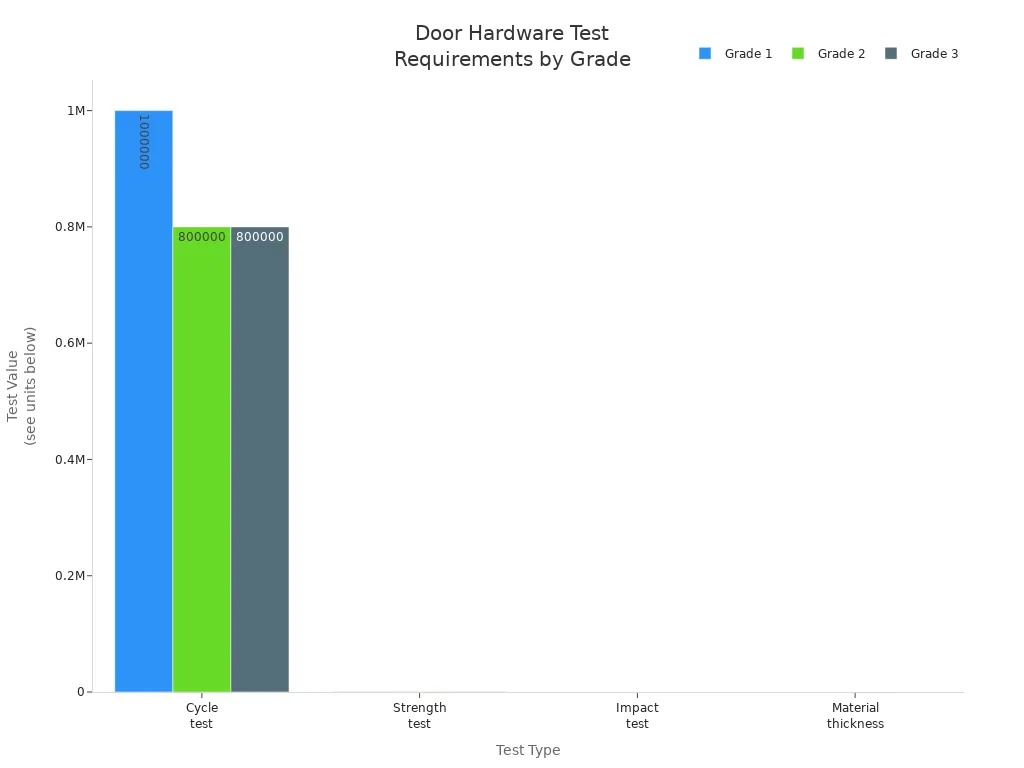
You learn that cycle tests show how many times a lock or hinge can open and close before it fails. The more cycles a product passes, the higher its grade. The table below shows the minimum cycle test requirements for each grade according to ansi and BHMA standards:
Grade | Minimum Cycles |
One | 1,000,000 |
Two | 800,000 |
Three | 800,000 |
Strength and security tests measure how much force the hardware can handle and how well it protects against attacks. You see tests for latch retraction, lever strength, and impact resistance. The table below shows some of the main tests for each grade:
Test Type | Grade 1 | Grade 2 | Grade 3 |
Force to retract latch | 28 in-lbs or less | 28 in-lbs or less | 28 in-lbs or less |
Cycle test (cycles) | 1,000,000 | 800,000 | 800,000 |
Strength test (force on lever) | 360 pounds | 360 pounds | 360 pounds |
Impact test (ram blows) | 10 Blows | 5 Blows | 2 Blows |
Material thickness (trim) | 0.075 in. | 0.100 in. | 0.100 in. |
Finish tests | All grades meet same requirements | All grades meet same requirements | All grades meet same requirements |
You can see how is door hardware graded? by looking at these numbers. Grade 1 hardware passes the most cycles and the hardest impact tests. Grade 2 and Grade 3 have lower numbers, so they work best in places with less use or lower risk.
If you want the strongest and safest hardware, you should choose products that pass the highest cycle and impact tests. This is how is door hardware graded? for safety and durability.
Material and Finish Standards
You also need to know how is door hardware graded? for its material and finish. ansi and BHMA set rules for how hardware should look and last. The standards check for corrosion, wear, and damage from sunlight. The table below shows some of the main standards:
Standard Type | Description |
Corrosion | Evaluated through a salt spray test, focusing on corrosion, staining, and blistering. |
Wear & Chemical | Tests include pencil hardness, abrasion, and perspiration resistance to ensure durability. |
Ultraviolet | Finishes must resist degradation from light exposure, with visual failure modes defined. |
Nomenclature | BHMA Code Numbers assigned for various architectural finishes and substrates. |
Finish Terminology | Definitions for finishing terms like 'Relieved' and 'Satin' are provided in the standard. |
Sustainability | Emphasizes durability and material characteristics that contribute to building sustainability. |
You see that hardware must pass tests for corrosion and wear. The finish must stay strong even after exposure to sunlight and chemicals. ansi and BHMA also give each finish a code number and clear definitions. These rules help you pick hardware that looks good and lasts for years.
When you choose door hardware, look for products that meet these material and finish standards. This is another way how is door hardware graded? to make sure you get quality and value.
BHMA and ANSI Standards
Role of BHMA in Grading
bhma is an important group for door hardware. bhma means Builders Hardware Manufacturers Association. This group makes the rules for grading locks and hinges. bhma is the only group that ansi lets set hardware standards. You can trust bhma because it has more than 40 rules for hardware. These rules help you know which products are safe and strong.
Here is a table that shows what bhma does for grading:
Aspect | Description |
Accreditation | bhma is the only organization accredited by ansi to develop performance standards for hardware. |
Standards Established | bhma has over 40 ansi/bhma standards that define performance criteria for various hardware types. |
Grading System | bhma categorizes hardware into grades (1, 2, 3) based on rigorous testing, with grade 1 being the highest. |
Residential Standards | bhma has developed separate standards for residential products, recognizing different requirements. |
bhma uses grades 1, 2, and 3 for hardware. Grade 1 is the strongest and safest.
ANSI Certification Process
ansi stands for American National Standards Institute. ansi works with bhma to make sure hardware follows strict rules. ansi certification means the product passed hard tests for safety and strength. If you buy ansi certified hardware, you know it will last and protect your doors.
Here is how ansi certification helps you:
ansi/bhma certification checks if hardware meets tough rules for safety and strength.
You know the hardware will work well and keep doors safe.
ansi and bhma test products before you buy them.
Always look for ansi certification when picking door hardware. This helps you choose the best products.
D&D Hardware Product Compliance
You want hardware that follows bhma and ansi rules. D&D Hardware makes products that meet these standards. The company tests its hardware to make sure it passes all bhma and ansi rules. D&D Hardware has certifications for many products like automatic sliding door kits, swinging door kits, and power-operated controls.
Here is a table showing D&D Hardware’s compliance:
Product Type | Suitable For | Certification |
Automatic Sliding Door Kits | Storefronts, hospitals, airports | ansi/bhma A156.10 |
Automatic Swinging Door Kits | Offices, schools, public buildings | ansi/bhma A156.10 |
Power-Operated Door Controls | Commercial and institutional doors | ansi/bhma A156.10 |
D&D Hardware works hard to give you safe and certified products. You get hardware that meets ansi, bhma, and other world standards. The company wants you to have strong and reliable hardware for every project.
Tip: If you pick D&D Hardware, you get safe and strong hardware that meets top standards.
Choosing the Right Grade
Residential vs. Commercial Use
It is important to know the difference between home and business hardware. Hardware for homes is made for light use. It often looks nice and matches your house. Business hardware is much stronger. It must handle lots of use and follow strict safety rules. The table below shows how they are different:
Aspect | Residential Hardware | Commercial Hardware |
Durability | Made for light use, focuses on looks. | Built to last, handles heavy use. |
Materials | Lighter materials, not as strong. | Solid metals like stainless steel or brass. |
Security Standards | Usually Grade 3 locks. | Rated Grade 1 or Grade 2 for strength. |
Usage Frequency | Tested for less use. | Tested for high use, up to a million cycles. |
Code Compliance | Fewer rules to follow. | Must meet strict building codes. |
Design & Aesthetics | Matches home style. | More about function, but modern styles too. |
If you pick hardware for your house, you may want it to look good. For a business, you need hardware that is strong and safe. It should last a long time and have a high security grade.
Security and Durability Needs
Think about how much safety you need and how often the door is used. A higher grade lock gives better protection and lasts longer. Grade 1 is best for busy places like schools or hospitals. Grade 2 works well for offices and small stores. Grade 3 is good for bedrooms or closets at home.
Grade 1 hardware must work for 1,000,000 cycles. It costs more but is the best for quality and strength.
Grade 2 hardware is tested for 500,000 cycles. It is good for office doors and light use.
Grade 3 hardware is tested for 250,000 cycles. It fits light use in homes.
If you choose a lower grade, you might pay more for repairs later. A strong lock helps stop problems and keeps your things safe.
Tip: Always pick the right grade for your needs. Busy places need stronger hardware.
D&D Hardware Solutions
D&D Hardware has many choices for every kind of door. They sell locks, hinges, handles, and control systems for metal, wood, and fire-rated doors. You can pick from different finishes, sizes, and uses. The table below shows some ways you can change your hardware:
Customization Option | Example Use Case | Benefit |
Finish | Hotel lobby doors | Matches the inside style |
Size | School entrance doors | Fits special door frames |
Function | Hospital emergency exits | Meets safety rules |
Material | Office main doors | Makes it last longer |
Special Features | Government buildings | Makes it safer |
D&D Hardware lets you pick the best lock for your project. You can get fire-rated locks, smart locks, or locks with card access. They also use strong materials like stainless steel to make products last longer.
When you buy certified products from D&D Hardware, you get many good things:
CE certification lets you use products in Europe and builds trust.
UL-certified hardware makes your building safer.
Certified locks and hinges meet tough rules, so they last longer.
Smart features and eco-friendly materials add value and help you stay modern.
Note: Picking certified hardware from D&D Hardware lowers risks and helps you feel safe.
If you want hardware that fits your needs and lasts, D&D Hardware has many options. You can get help choosing the right lock and enjoy strong, safe, and stylish products.

Certification and Labeling
Identifying Certified Hardware
You need to check if your door hardware is certified. Certified products have special labels or marks. These marks show the hardware passed safety tests. You can find these labels in different spots on the hardware. Here are ways to spot certified door hardware:
Look at the hinge side of the door for the Underwriters Laboratories (UL) fire label. You will see a circled "UL" mark.
Check the mortise lock surface. The label or number is printed on the panel.
Look at the door closer. The label is on the side or push rod.
Inspect the panic bar. The label or number is printed on the cover.
Look at the door viewer. The label or number is printed on the viewer body.
You should know about labeling rules for certified hardware. The table below shows some important rules:
Requirement Type | Description |
Fire Door Labeling | Fire doors must have special labels to show they follow safety standards. |
BHMA Certification | Door hardware must meet BHMA standards to get certification. |
When you see these labels, you know the hardware is safe. You can trust it will work well in your home or business.
Tip: If you do not know what a label means, ask an expert or check the product papers. Certified hardware always has clear labels and paperwork.
Importance for Consumers
Certification is important when you buy door hardware. You want products that keep your property safe and last long. Certified hardware gives you peace of mind because it follows strict rules and passes hard tests. Here are reasons why certification matters:
Certifications prove the door hardware is safe and good quality.
They help you trust the manufacturer and supplier.
Certifications like ANSI/BHMA, UL, and CE marking show products pass tough tests.
Certified products go through checks and tests, so you know they are reliable.
Third-party certification gives you confidence in how the product works.
Building codes also affect certification and labeling. For example, ANSI/BHMA A156.14-2024 sets rules for sliding and folding door hardware. Products with this certification must pass cycle tests, durability checks, and appearance checks. Certified hardware works well in homes and businesses.
Note: When you pick certified door hardware, you protect your property and follow safety rules. You also make sure your doors work well for many years.
If you want to make a smart choice, always look for certified labels and papers. Certified hardware helps you stay safe, follow building codes, and enjoy strong performance.
Common Misconceptions
Grade vs. Price
You might think that a higher price always means better door hardware. This idea can lead you to buy products that do not match your needs. The grade of door hardware tells you how strong and durable it is, but price does not always show this. Some brands charge more for style or extra features, but the hardware may not last longer or work better.
When you look at door hardware, you should focus on the grade and expected life cycles. The grade shows how many times the hardware can open and close before wearing out. Price can change because of the brand, material, or design, but grade gives you a clear idea of performance.
Here is a table that helps you see how usage affects expected life cycles:
Usage Category | Expected Life Cycles |
Low usage | Less than 25,000 cycles |
Medium usage | 25,000 to 100,000 cycles |
High usage | 100,000 to 250,000 cycles |
Extreme usage | More than 250,000 cycles |
If you need hardware for a busy place, you should choose a higher grade, not just a higher price. Grade 1 hardware is made for extreme usage and lasts longer. Grade 3 hardware works for low usage, like bedroom doors. You save money and get better results when you match the grade to your needs.
Tip: Always check the grade and expected life cycles before looking at the price tag. This helps you pick hardware that fits your budget and lasts longer.
Grade vs. Brand
You may believe that a famous brand always means top quality. This is not true for door hardware. Brands use different materials and designs, but the grade tells you how strong and safe the hardware is. Some brands offer stylish looks or special features, but you should check the grade first.
Many people think all hardware works the same, but commercial and residential hardware have big differences. Commercial hardware is made for heavy use and strong security. Residential hardware is lighter and fits home doors. You should not choose hardware based only on brand reputation.
Here are some common misconceptions about grade and brand:
Not all door hardware is created equal. You need to check if it fits your environment.
Grade 1 hardware is for heavy use and security. Grade 2 is more affordable and works for lighter use. Brand reputation does not always match the hardware’s real strength.
You see brands like Kwikset, Emtek, and Baldwin in stores. Kwikset uses zinc die cast, which is affordable but less durable. Emtek offers a solid feel and custom options, made of solid brass but still hollow inside. Baldwin is known for high quality and solid brass construction, giving you a weighty and durable option.
Note: Do not let brand names fool you. Always look for the grade and material before you decide. Grade and certification matter more than the logo on the box.
If you want hardware that lasts and keeps you safe, focus on grade and certification. Brands can help with style, but grade shows you the real value.
Practical Tips for Selection
Assessing Your Needs
You should start by thinking about what your building or space requires. Every door has a different purpose. Some doors protect people, while others keep property safe. You need to match the hardware grade to the job. Use the table below to help you decide what matters most for your project:
Factor | Description |
Life Safety | Makes sure you follow safety codes and emergency exit rules. |
Emergency Egress | Lets people leave safely during emergencies. |
Loss Prevention | Stops people from getting in without permission and protects your things. |
Protection of Occupants | Keeps everyone inside safe. |
Liability | Lowers the risk of legal problems and insurance costs if something goes wrong. |
Cost of Insurance | Can change how much you pay for insurance, depending on the hardware you choose. |
You should look at each factor and decide which ones are most important for your building. For example, a school or hospital needs strong locks for life safety and emergency exits. A store may focus more on loss prevention.
Tip: Write down your top needs before you shop for hardware. This helps you pick the right grade and features.
Consulting Experts
You do not have to make these choices alone. Door hardware can get complicated. You can talk to experts who know about locks, hinges, and safety rules. Here is how experts can help you:
They make sure you pick hardware that matches your building’s design and needs.
They help you understand different door types and which hardware works best.
They guide you through safety codes and standards.
They help your project run smoothly and avoid mistakes.
You can ask D&D Hardware’s team for advice. They have experience with many types of buildings and can help you find the best solution.
Note: Expert advice saves you time and money. You get the right hardware the first time.
Maintenance Advice
You want your door hardware to last a long time. Good maintenance keeps locks, hinges, and handles working well. Follow these steps to keep your hardware in top shape:
Check your hardware every month for damage or rust.
Test doors and locks during emergency drills.
Clean and oil moving parts to stop them from sticking.
Adjust parts if doors do not close or lock right.
Make sure your hardware still meets safety rules.
Test the locking and opening mechanisms often.
Replace any parts that look worn out.
Teach everyone how to use the doors and locks the right way.
Keep a record of all checks and repairs.
Practice emergency exits with everyone in the building.
Regular care helps your hardware last longer and keeps everyone safe. If you need help, D&D Hardware offers support and advice for maintenance.
You make better choices when you know about the door hardware grading system. Certified products from D&D Hardware help keep buildings safe and follow the law.
CE and UL certifications mean the hardware passes hard safety tests.
Certified hardware helps with fire safety and emergency exits.
You can avoid legal trouble and insurance problems with products that follow the rules.
To get good solutions, do these steps:
Write down your door details.
Call or email D&D Hardware.
Tell them what your project needs.
Ask about how to install and about certifications.
Look at expert advice and pick your hardware.
Confirm your order and get help if you need it.
FAQ
What does "door hardware grade" mean?
You see "door hardware grade" on locks, hinges, and handles. This grade shows how strong and safe the hardware is. Higher grades mean better security and longer life.
How do you check if hardware is certified?
You look for labels like UL, CE, or ANSI/BHMA on the product. These marks show the hardware passed safety tests. You can also ask for certificates from the supplier.
Which grade should you choose for your home?
You pick Grade 2 or Grade 3 for most home doors. Grade 2 gives more security for entry doors. Grade 3 works well for bedrooms and closets.
Why do grades matter for commercial buildings?
You need strong hardware in busy places. Grade 1 hardware lasts longer and keeps people safe. It meets strict rules for security and durability.
Does higher price always mean better grade?
No, price does not always match grade. You should check the grade and certification before you buy. Grade shows how well the hardware performs.
What products does D&D Hardware offer?
You find locks, hinges, handles, door closers, and more. D&D Hardware offers certified products for metal, wood, and fire-rated doors. You can choose from many finishes and sizes.
Can you get help choosing the right hardware?
Yes, you can contact D&D Hardware for expert advice. The team helps you pick the best grade and product for your project.
Contact us Now:
Contact: David Jian
Mob:0086-139 2903 7292
Email: David@dndhardware.com, sales@dndhardware.com,
Jobby Zhang
Mob:0086-137 2599 9617
Email: jobby@dndhardware.com
D&D HARDWARE INDUSTRIAL CO.,LTD
ADD:12th Floor, Building 2, No.898, KeChuang Technical Zone, Jiangmen Avenue, Pengjiang District, Jiangmen City, Guangdong, China (Postcode:529000)
https://www.dndhardware.com
Tel: +86-750-3856396
Fax: +86-750-3856395

 English