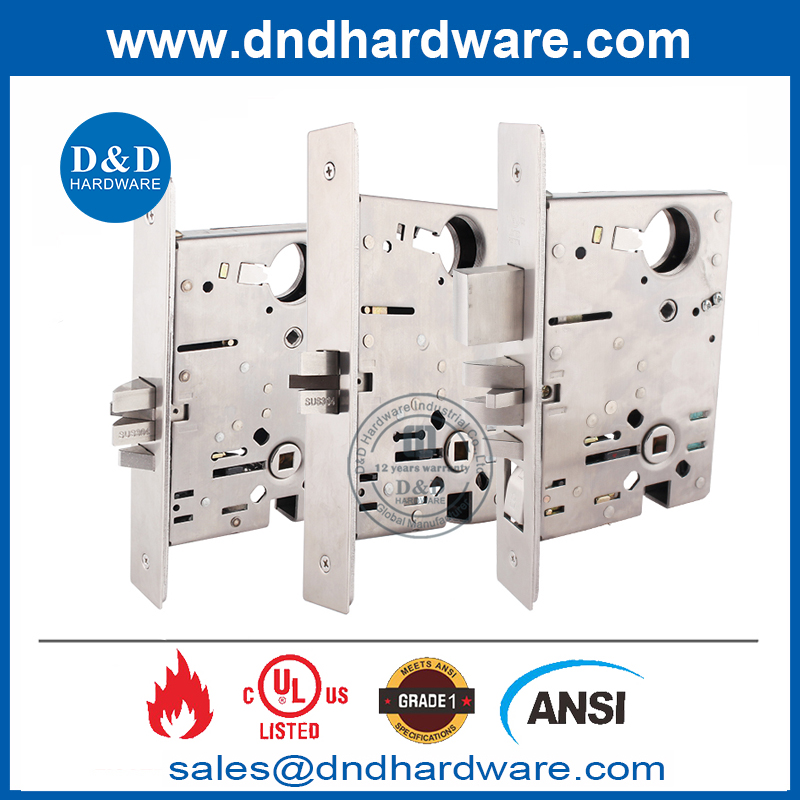
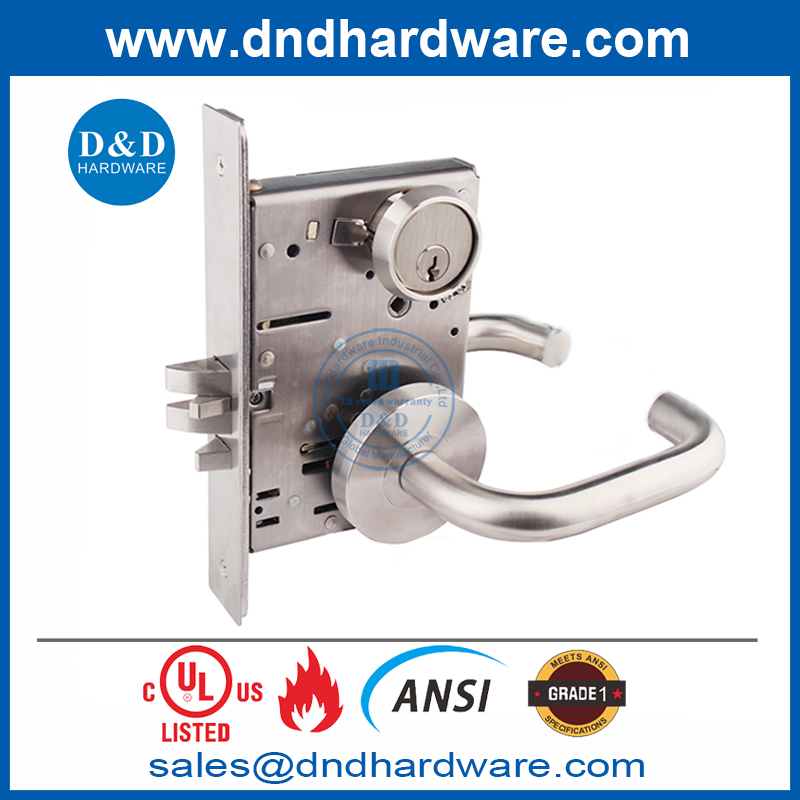
A UL Listed mortise lock offers tested fire protection for up to three hours. It meets strict safety rules to keep people safe. In contrast, a standard mortise lock provides basic security for normal doors without any official fire-rating safety approval.
Architects, building managers, and builders must look at key project needs. You need strong hardware that works well along busy exit paths. High door usage requires heavy-duty commercial hardware. Different door materials also need a special door frame fitting.
Independent testing proves that these locks stay strong inside business buildings. Every commercial mortise lock must meet official security standards. You keep everyone inside safe when you choose a certified mortise design for all of your door assemblies.
Key Takeaways
UL Listed mortise locks keep business doors safe from heavy fires for as long as three hours.
Standard mortise locks work well for regular doors, but they do not have official fire protection ratings or added strength.
Strong stainless steel pieces allow business mortise locks to manage millions of door opens each day.
Picking tested business locks keeps your property safe and cuts future fixing prices.
UL Listed Mortise Lock vs Standard Mortise Lock
Property managers evaluate various mortise locks when setting up new door hardware. Choosing the correct mortise lock body for each door pocket is essential. A standard mortise lock handles simple wood or metal entryways effectively. Still, tough security needs demand stronger hardware options. High-traffic areas benefit greatly from a commercial mortise lock. These sturdy devices fit into a mortise pocket cut right into the door edge.
Direct Feature Comparison
A heavy-duty commercial mortise lock includes a thick steel chassis, strong mechanical springs, and precise internal components. The internal lock box design secures every moving part tightly inside. Under constant heavy use, a standard latch mechanism breaks down quickly. Heavy commercial hardware uses tough stainless steel latch bolts alongside solid deadbolts. You get improved edge-of-door stop buttons to handle outer knob locking functions easily.
Feature
Differentiation
Material Selection
Heavy-gauge stainless steel used for latch bolts, deadbolts, and strike plates, offering superior resistance to thermal deformation compared to standard brass or zinc alloys.
Precision Engineering
Tight tolerances in lock cases prevent component shift during fire-induced expansion; anti-friction latch bolt design reduces wear and ensures deep engagement with the strike.
Correct lock installation guarantees smooth key movement within each commercial door frame. Certified commercial mortise locks pass strict ansi performance testing rules. These ansi guidelines evaluate door latch strength alongside total mechanical life. Strict ansi standards prove heavy commercial models survive millions of opening cycles without failing. Standard mortise locks do not have this heavy mortise lock construction. Because of this, basic mortise locks break faster inside busy commercial spaces. Facility leaders pick heavy mortise lock bodies to guarantee complete reliability.
Fire Rating and Durability Differences
Containing fires successfully demands certified commercial hardware. A ul listed mortise lock completes tough UL 10C positive pressure fire tests. This fire testing confirms fire resistance reaching 3 hours on heavy steel fire doors. The fire rating promises vital safety during sudden emergency events. Internal lock components remain solid under intense heat. Fire spread stays blocked right along the door edge.
Uncertified standard locks do not offer certified fire containment properties. High heat warps cheap metals fast inside an unrated mortise pocket. Soft zinc or thin brass latches melt under extreme heat. A damaged latch allows the door to pop open during a severe fire. This mechanical failure destroys fire safety across commercial buildings. Installing uncertified hardware on fire-rated commercial entryways risks human safety.
Commercial mortise locks supply great durability and strong resistance against severe physical damage. Solid steel builds offer better security against forced entry attempts. Picking mortise locks secures long-term safety for your commercial property. Certified mortise locks keep delivering top operational results every single day. Setting up mortise locks offers high durability through all heavy uses. These mortise locks keep people safe inside active facilities constantly. Upgrading your hardware brings long durability and complete peace of mind. Buying a commercial mortise lock provides total high security for your facility. You guard your entryways while easily obeying current code rules.
Understanding the UL Listed Mortise Lock
Testing facilities check every commercial mortise lock using strict rules to ensure long life and strong protection. Independent third-party checks confirm that each device handles heavy physical force and intense heat. You must pick hardware that meets tough security standards to keep people safe.
Testing Standards for UL Listed Mortise Locks
To earn a real high security rating, every mortise lock must pass complete UL 10C testing. This standard tests positive pressure fire endurance on commercial door setups. The UL authority lists mechanical mortise locks under ansi/bhma grade rules. Independent labs use these steps during the UL 10C fire test:
The full door assembly gets installed into a test wall, usually made of bricks or drywall studs.
Workers attach the whole setup to a test furnace, heating it to set temperatures for a specific time.
Testers apply positive pressure by placing the neutral pressure line 40 inches above the specimen's bottom edge. Below this level, negative pressure pulls cool air inside, while positive pressure pushes hot gas through small cracks above.
The main fire test exposes the full door setup to flame for the designated fire-rating period.
Right after the fire test, workers spray the hot side with a high-pressure hose to test cooling impact.
To pass, the door cannot show open flames on the cool side, major bending, or open holes.
Passing this test grants an official fire protection rating from 20 minutes up to 240 minutes overall.
Beyond fire tests, physical lock standard UL 437 measures physical security against severe forced entry. A standard mortise lock lacking this certification fails to deliver enhanced security against tough attacks. The UL 437 test measures mortise locks against four common physical entry methods:
Bypass
Lock-picking
Impressioning
Destructive entry
This tough physical test proves total durability during violent forced entry attempts. Picking a ul listed mortise lock guarantees verified hardware performance. Choosing a commercial mortise lock gives ultimate facility safety.
Commercial Code and Life Safety Compliance
National building codes require certified mortise locks along main exit paths inside commercial facilities. Official rules like NFPA 80 require full compliance for hardware placed on fire-rated commercial entryways. Under NFPA 80 rules, swinging fire doors must close and latch automatically to maintain complete fire protection. Using a high security commercial mortise lock guarantees fast automatic latching whenever the door swings shut. Proper certification ensures strong operational durability across busy commercial uses.
Building inspectors demand official commercial certification for heavy-use door openings across many different industries. Modern commercial buildings need heavy-duty hardware that meets strict security standards.
Facility Type
Mandatory Requirement
Government and institutional buildings (e.g., courthouses, police stations, schools)
UL Listed mortise locks required for fire resistance and security
Commercial buildings (specifically for fire doors)
UL Listed mortise locks required for fire-rated doors
You keep your building legal when you pick an ansi tested commercial mortise lock for reliable performance. Regular ansi mechanical testing checks smooth latch action during heavy daily use. Facility managers count on ansi certified mortise locks to protect critical fire walls. Installing certified mortise locks stops major structural damage while providing high durability and solid commercial security.
Key Features of a Commercial Mortise Lock
D&D Hardware Solutions for Fire Doors
D&D Hardware builds tested door hardware and mortise locks for large projects. You receive reliable hardware that meets standard safety requirements. D&D Hardware makes strong mortise locks for steel frame entries and wood doors. Every lock case uses thick stainless steel parts to keep busy buildings safe.
D&D Hardware mortise locks earn these top official safety ratings:
CE marking (EN 12209, EN 1634, EN 1670)
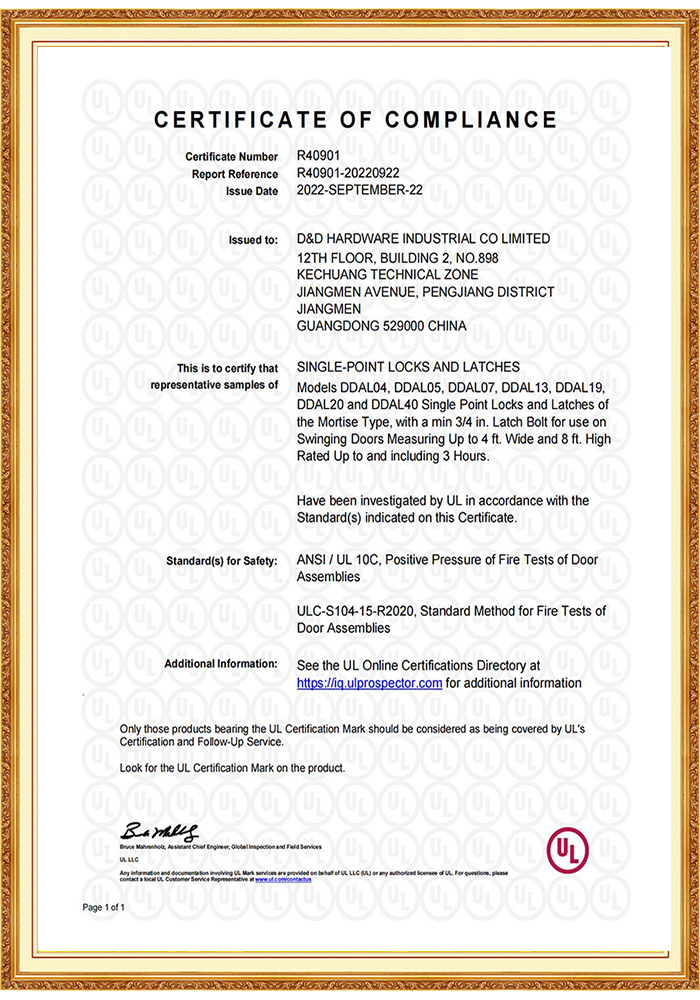
UL Listing (UL 10C, File No. R40901)
ANSI/BHMA Grade 1 certification
You pick an ansi certified commercial mortise lock for tough fire exit doors. D&D Hardware designs every commercial mortise lock to follow strict ansi rules. Modern mortise locks provide constant security across active business spaces while stopping unapproved entry.
Heavy-Duty Applications and Longevity
Stainless steel mortise locks give strong durability inside tough business settings. Selecting a commercial mortise lock offers clear physical benefits:
Protection against rusting
Defense against bending
Long-lasting wear strength
Keeps operation smooth under heavy use, making it ideal for fire doors
Heavy mortise locks absorb constant use without showing sudden wear. You reduce ongoing repair expenses by putting trustworthy hardware on every commercial door frame. Correct setup guards your property investment for a very long time.
On average, with normal care and basic repairs, UL Commercial Mortise Locks can easily last from 10 to 20 years. In active business settings with constant foot traffic, heavy use puts stress on internal lock parts, causing quicker wear and shorter life.
You protect every door inside busy commercial facilities by installing dependable mortise locks. Complete ansi testing promises strong durability and high security during hard everyday business use. These heavy mortise locks keep working right while meeting strict ansi/bhma grade rules. Selecting an ansi tested commercial mortise lock provides great long-term service life for all entryways. Properties depend on certified mortise locks every single day to protect people.
Choosing the Right Mortise Locks for Your Building
Assessing Door Ratings and Regulations
Selecting suitable mortise locks requires clear evaluation steps for your building project. You must check local fire codes before buying hardware for any door. You need to inspect the structural materials of every metal frame or wood door. Insurance policies also mandate specific lock ratings to reduce liability risks. You must verify existing fire ratings through clear physical checks.
Look for a clearly visible certification label from UL, WH, or another recognized testing organization.
Check for a physical metal fire label riveted to the door and frame.
If the label is missing, painted over, or damaged, the assembly fails code compliance. Installing an unrated standard mortise lock on fire assemblies creates serious building hazards. You maintain safety when choosing a ul listed mortise lock for certified entryways.
Broken panic bars on emergency exits are a common hardware violation. Malfunctioning panic bars can result in code violations and endanger lives during fire or evacuation.
Violation Type
Description
Commercial door code violations
Includes improper hardware, inadequate door dimensions, lack of signage, and fire safety failures.
ADA door violations
Involves inaccessible hardware like missing lever handles, excessive opening force, insufficient width.
Budgeting and Long-Term Maintenance
Choosing certified commercial mortise locks saves money over the lifespan of your property. Low-cost standard hardware breaks quickly under heavy daily traffic inside commercial buildings. Frequent repairs increase maintenance costs rapidly. Investing in a commercial mortise lock ensures strong operational performance. High quality hardware delivers long durability without unexpected failures.
Installing a commercial mortise lock from D&D Hardware guarantees superior protection and high security for active commercial facilities.
Proper commercial lock installation reduces wear on internal springs and latches. Heavy commercial mortise locks feature solid mechanical design. You gain maximum door durability, excellent ansi performance, and reliable commercial security. Trusted manufacturers like D&D Hardware manufacture mortise locks to pass strict ansi grade tests. These mortise locks provide enhanced security, simple maintenance, and lasting protection.
A ul listed mortise lock guarantees verified fire protection and high security performance for any commercial door. In contrast, a standard mortise lock serves non-rated door openings. Standard mortise locks lack certified fire containment for commercial applications. Therefore, commercial facilities require heavy mortise locks to maintain code compliance.
You protect occupants by purchasing certified commercial hardware and mortise locks from trusted manufacturers like D&D Hardware. Installing a reliable mortise lock on door frames prevents structural damage. Selecting durable mortise locks lowers maintenance costs while sturdy mortise locks handle heavy traffic. These quality mortise locks ensure safety while approved mortise locks maintain strength. Contact D&D Hardware for ideal mortise locks on your commercial door schedule.
FAQ
What makes a commercial mortise lock necessary for fire doors?
Building codes require tested safety gear on fire doors. A commercial mortise lock gets an official fire rating after passing UL 10C positive pressure checks. Picking tested mortise locks keeps doors shut in intense heat. Basic latches bend in high heat, allowing fire to spread easily.
How do heavy mortise locks differ from cylindrical hardware?
You place heavy mortise locks in a pocket carved into the door edge. These mortise locks offer strong security and lasting strength. You pick mortise locks for busy doors because a commercial mortise lock deals with heavy use much better over time while guarding the door.
Which security standards apply to certified mortise locks?
Outside labs check commercial hardware against strict security rules like UL 437. Testing checks real physical safety against picking and forced entry. Also, performance tests judge mechanical wear across millions of uses to ensure a long life and great quality.
Where should facility managers install mortise locks?
You must place mortise locks on rated commercial doors along primary exit paths. Places like schools need mortise locks on main entryways. Setting up these mortise locks keeps your building legal. Using a commercial mortise lock on busy doors protects people all over your property.
 English