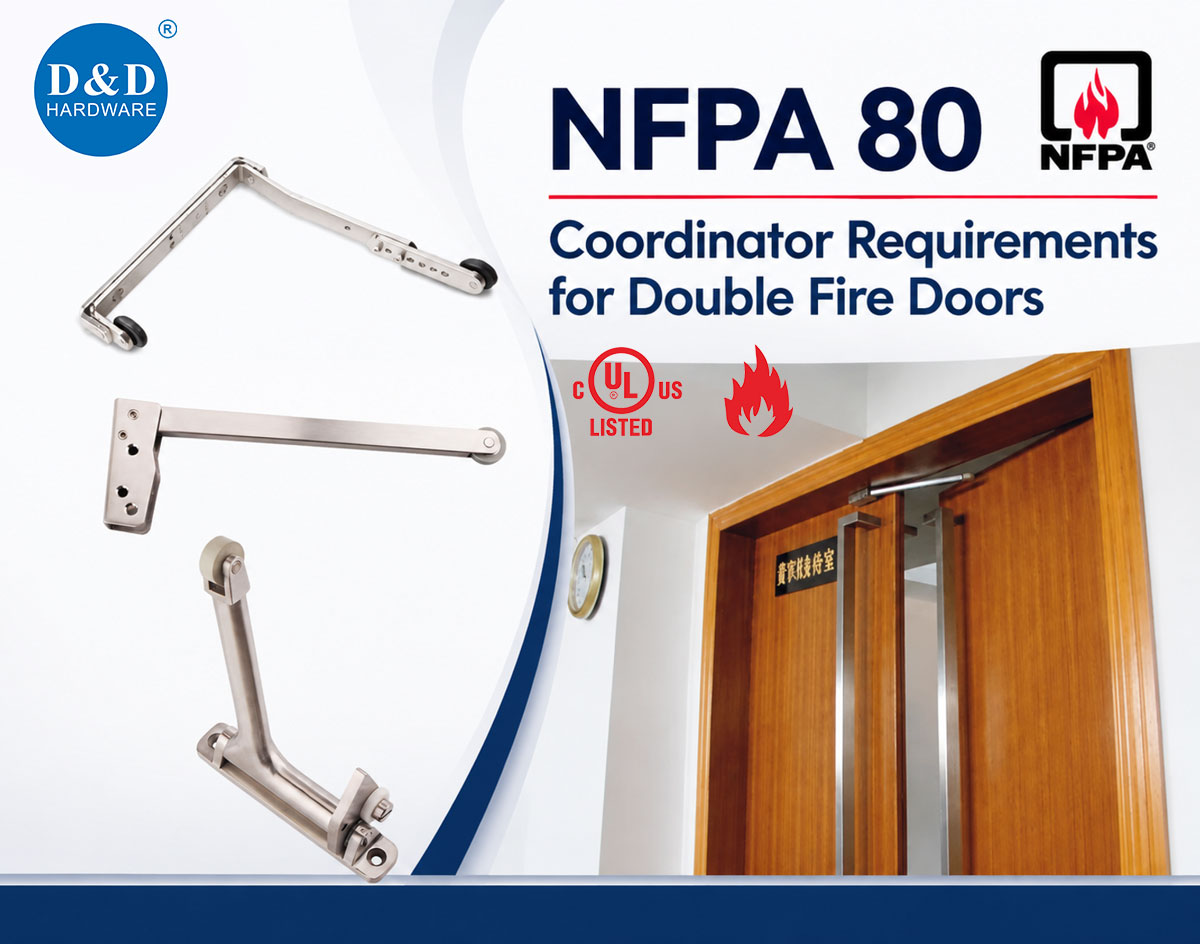
Two fire door leaves can each have a working closer and still fail to close as a pair. If the active leaf reaches the center first, its astragal or projecting latch may block the inactive leaf. The pair may look nearly closed while one leaf cannot latch. A door coordinator controls that interaction: it delays the active leaf long enough for the inactive leaf to reach the position the listed assembly requires.
NFPA 80 does not make a coordinator universal hardware for every double fire door. The question is whether the approved door and latching arrangement requires the inactive leaf to close first. This guide explains how to decide, what equipment has to work with the coordinator and how to test the pair. In code and product documentation these openings are often called “pairs of swinging fire doors”; “double fire doors” is used here for readability.

When Does a Pair Need a Coordinator?
A coordinating device is needed where an astragal or projecting latch bolt would prevent the inactive leaf from closing and latching unless it arrives before the active leaf. In that sequence, the coordinator holds the active leaf temporarily while the inactive leaf moves to its stop and engages its permitted latching or retaining hardware. Once that happens, the coordinator releases the active leaf so its latch can engage the intended strike.
If both leaves of the listed pair close and latch independently, a coordinator may not be necessary. The Steel Door Institute notes that some labeled pairs use an open-back strike and no overlapping astragal in a configuration that avoids a coordinator. That is an approved design choice only where the exact door and hardware listing permits it; removing an existing astragal or coordinator from a different pair does not create the same condition.
The decision should come from the door schedule, labels, listed construction and hardware set—not from the fact that the leaves happen to be the same width. Identify which leaf is active, which is inactive, the meeting-edge construction, the latch and strike locations, and whether both leaves serve an egress function. Then ask whether either leaf physically obstructs the other if it closes first.
What the Coordinator Does and Does Not Do
A coordinator changes closing order. It does not close a door by itself, provide positive latching, replace a door closer or compensate for a warped leaf. The usual sequence depends on a properly selected closer on each leaf, a secure coordinator mounted in the intended position, compatible latches and strikes, and adequate door/frame alignment. Where the pair includes an overlapping astragal, its overlap direction is part of the sequence.
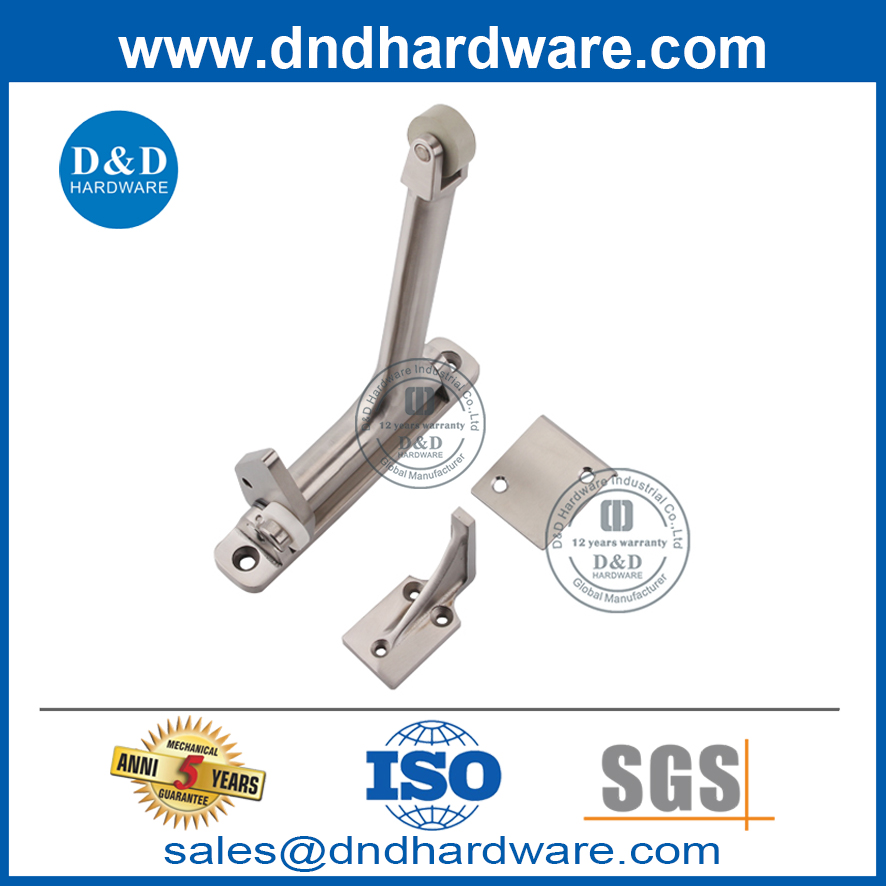
D&D offers door coordinators and selectors for paired openings, including gravity and overhead styles. Select a model against the pair’s door width, leaf swing, installation space and hardware layout. A product page description is not evidence that every coordinator model is independently fire listed or accepted on every labeled pair; check the actual assembly and installation conditions.
A carry-open bar can matter when a user opens only the inactive leaf. Depending on the design, it brings the active leaf far enough open to engage the coordinator before the inactive leaf returns, so the closing order is preserved. A filler bar on an overhead coordinator may extend the unit across the opening or support the specified mounting layout. These accessories should be chosen as part of the pair, not added automatically to every installation.

The Other Hardware That Determines the Sequence
Closers on both leaves
The closers supply the motion; the coordinator temporarily manages one leaf. Set each closer within its listed mounting arrangement so that the inactive leaf can close promptly and the active leaf completes the cycle after release. If the inactive closer is too weak to overcome seals, or the active closer drives the leaf against the coordinator with excessive force, sequence and latching can fail. Check the operating result with the final gasket and floor conditions in place.
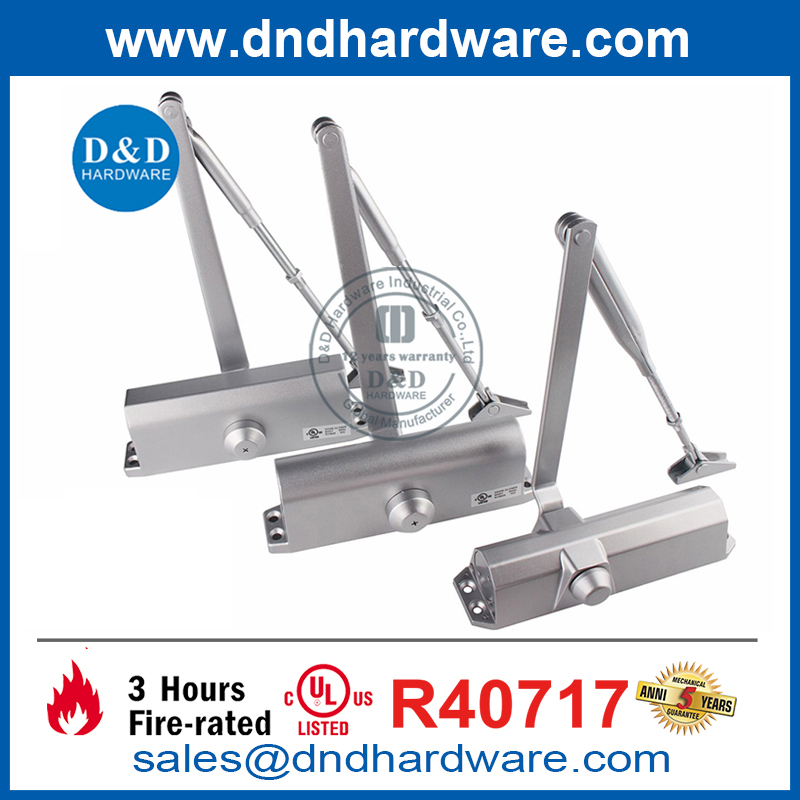
D&D’s UL 10C door closers associated with UL File R40717 offer options for compatible rated openings. Select each closer by door size, weight, mounting geometry and approved hardware schedule. Their listing does not make an incorrectly installed coordinator or pair compliant.
Inactive-leaf retention and active-leaf latching
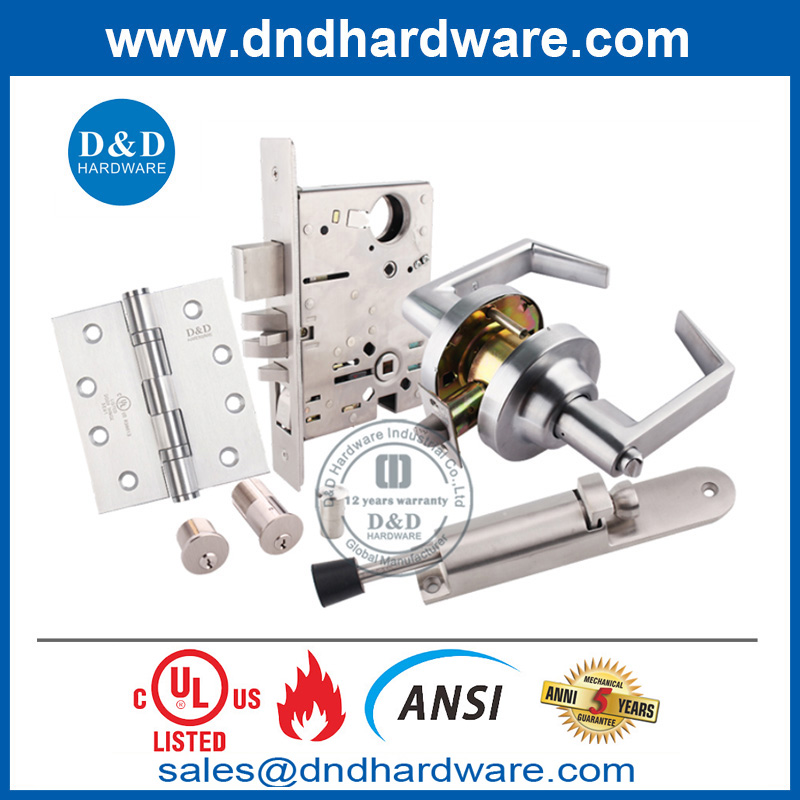
The inactive leaf may use an approved automatic flush-bolt arrangement, an exit-device configuration or another listed method. The active leaf may latch into a strike on the inactive leaf or use its own listed device. These details establish which leaf has to be in place first. Manual flush bolts have restricted applications, especially where the inactive leaf is needed for egress; follow the adopted egress code and the approved pair configuration before specifying them.
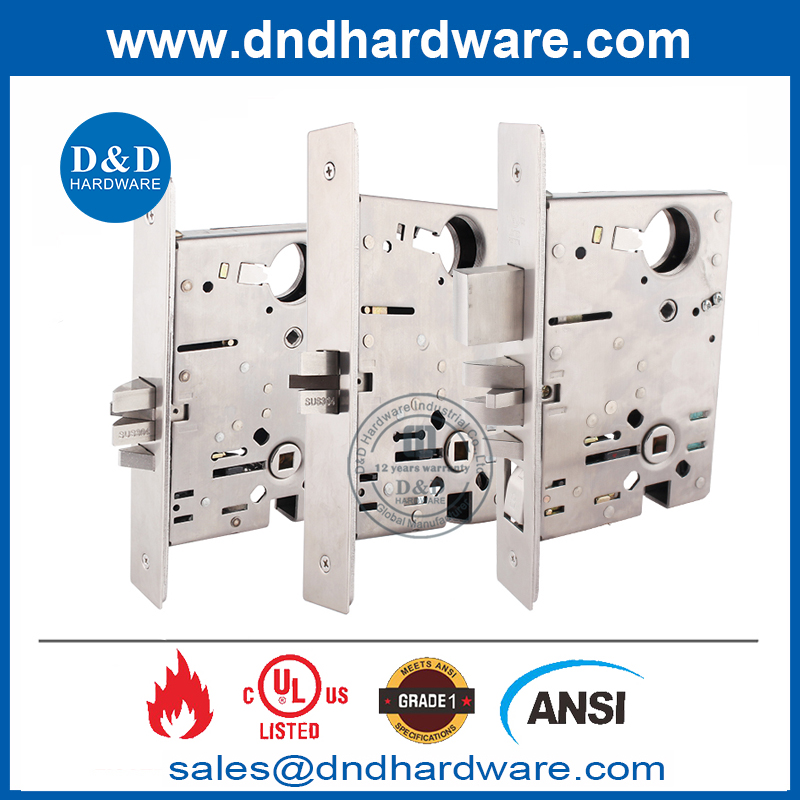
For a mechanical lockset on a suitable pair, D&D’s UL 10C mortise locks associated with File R40901 provide model-specific options. Verify latch throw, strike location and the listed door construction. The lock should engage after the coordinator releases the active leaf; an extra push by the installer should not be required.
Fire exit hardware on egress pairs
Where a rated egress pair requires exit devices, verify the fire exit hardware category and permitted latching configuration for the exact opening. Surface or concealed vertical rods, strikes and any required auxiliary parts can change how each leaf closes. A UL 305-only panic device for a non-rated exit is not a substitute for fire exit hardware on a rated door.
D&D’s UL 10C fire exit hardware is associated with File R40486; its UL 305 panic hardware is identified separately under File SA45817. Confirm the ordered model’s applicable certifications and required accessories. A coordinator must not block the egress operation of either leaf that occupants are required to use.
How to Specify the Coordinator and Accessories
Write the sequence into the hardware schedule instead of simply adding a line that says “coordinator.” State the pair ID, rating, active and inactive leaf, handed swing, width of each leaf, meeting-edge profile, astragal or open-back strike design, latching and inactive-leaf retention, closer locations, exit-device arrangement and intended opening angles. Attach the door manufacturer’s approved preparation and the coordinator maker’s mounting template.
For a D&D gravity coordinator or overhead coordinator, check the available clearance above the opening, frame head construction, mounting reinforcement and whether a carry bar or filler bar is necessary for the specified operation. Gravity designs can be visible at the frame head; an overhead design may suit a different architectural and installation condition. Neither style should be chosen from appearance alone.
A retrofit requires particular care. If a new coordinator or carry bar requires extra drilling into a labeled frame or leaf, compare the proposed preparation with the product listings, adopted NFPA 80 edition and manufacturer instructions before work begins. Replacing a worn coordinator with a different footprint can also leave fastener holes that need an approved repair. Do not use a stronger closer setting as a workaround for a failed or missing coordinator.
A Realistic Pair Example
Consider a labeled pair at a service corridor. The inactive leaf has an overlapping astragal and approved retention hardware; the active leaf has the operating latch. When both are released, the active closer moves its leaf faster, so the astragal covers the inactive leaf’s path. If someone pushes both leaves home in order, the pair latches, but it fails the unattended closing test. The repair is to restore the required sequencing arrangement, check closer adjustment and verify that both latches engage—not merely to make the active closer slower until the doors happen to meet correctly once.
Now consider a different listed pair whose meeting edges, open-back strike and latches allow each leaf to close independently. A coordinator might add complexity without solving any actual sequencing need. The two pairs may have the same dimensions and rating, yet their approved hardware sets differ. This is why specifications should identify the exact pair construction before assigning a standard “double-door kit.”

Commissioning Test for a Paired Fire Door
· Confirm labels, leaf designation, coordinator type, accessories, closers, astragal and strikes against the approved schedule.
· Open both leaves enough to engage the coordinator, release them without pushing, and watch whether the inactive leaf closes first where required.
· Confirm inactive-leaf retention and active-leaf positive latching; look for a leaf resting against, rather than engaged with, its strike.
· Operate each leaf in the way building users normally will. Where the inactive leaf can be opened alone, check whether a specified carry-open bar activates the sequence.
· Repeat under normal site conditions with installed seals and floor finishes; investigate air pressure, misalignment and closer settings if the result is inconsistent.
· Verify required egress operation, document defects by opening ID, correct them and inspect and test the assembly after repair.
The NFPA fire door inspection checklist expressly checks the closing sequence on pairs when a coordinator is installed. A one-time demonstration in which an installer guides the leaves into position does not show that the assembly will close and latch on its own.
Common Coordinator Problems and Their Causes
If the inactive leaf stops short, inspect its closer, hinges, floor contact, seals and inactive-leaf latch before replacing the coordinator. If the active leaf is released too soon, check the coordinator’s position, arm travel, adjustment and any carry bar. If both leaves close in the intended order but one does not latch, inspect the strike, door alignment and latch engagement. If the sequence works only when both leaves are opened widely, test the normal use case in which one leaf moves alone and verify the accessory arrangement.
Frequent procurement errors include ordering the coordinator without its required bar, choosing a model that cannot fit the frame head, assuming an astragal is optional on a labeled pair, and describing a non-certified coordinator as UL listed without model-level evidence. Treat the complete opening as the unit of review. For a broader discussion of latches and closers, see D&D’s NFPA 80 fire door hardware guide; the pair’s sequencing remains the focus here.
Frequently Asked Questions
Does NFPA 80 require a coordinator on every double fire door?
No. It is needed when the pair’s approved meeting-edge or latching arrangement makes closing order necessary. A listed configuration in which each leaf closes and latches independently may operate without one.
Will two door closers create the required sequence?
Not reliably where the leaves mechanically interfere. Closer speed adjustment cannot replace a coordinator required for the pair. Both closers and the coordinator must work together.
What is the difference between a coordinator and a carry-open bar?
The coordinator delays the active leaf during closing. A carry-open bar, where specified, moves the active leaf when the inactive leaf is opened so the coordinator can engage for the return cycle.
Can the coordinator be removed if the doors seem to latch?
Do not remove it on that observation alone. Review the labeled pair and approved hardware schedule and test both leaves in normal use. Manual guidance during a trial can hide a sequencing failure.
Does D&D’s coordinator make the whole pair NFPA 80 compliant?
No single component does. The exact door, frame, coordinator, closers, latches, astragal and installation must form a compatible, functioning assembly under the adopted requirements.

Applicable Edition and Authority
Requirements vary by jurisdiction and adopted edition. Confirm the applicable NFPA 80 edition, adopted building and egress codes, local amendments, door and hardware listings, manufacturer instructions and approved schedule with the authority having jurisdiction (AHJ). NFPA publishes a 2025 edition, but a project may use an earlier adopted edition. A special pair configuration or exception needs project-specific verification.

Contact us Now:
Contact: David Jian
Mob:0086-139 2903 7292
Email: David@dndhardware.com, sales@dndhardware.com,
Contact: Jobby Zhang
Mob:0086-137 2599 9617
Email: jobby@dndhardware.com
D&D HARDWARE INDUSTRIAL CO.,LTD
ADD:12th Floor, Building 2, No.898, KeChuang Technical Zone, Jiangmen Avenue, Pengjiang District, Jiangmen City, Guangdong, China (Postcode:529000)
https://www.dndhardware.com
Tel: +86-750-3856396
Fax: +86-750-3856395


 English