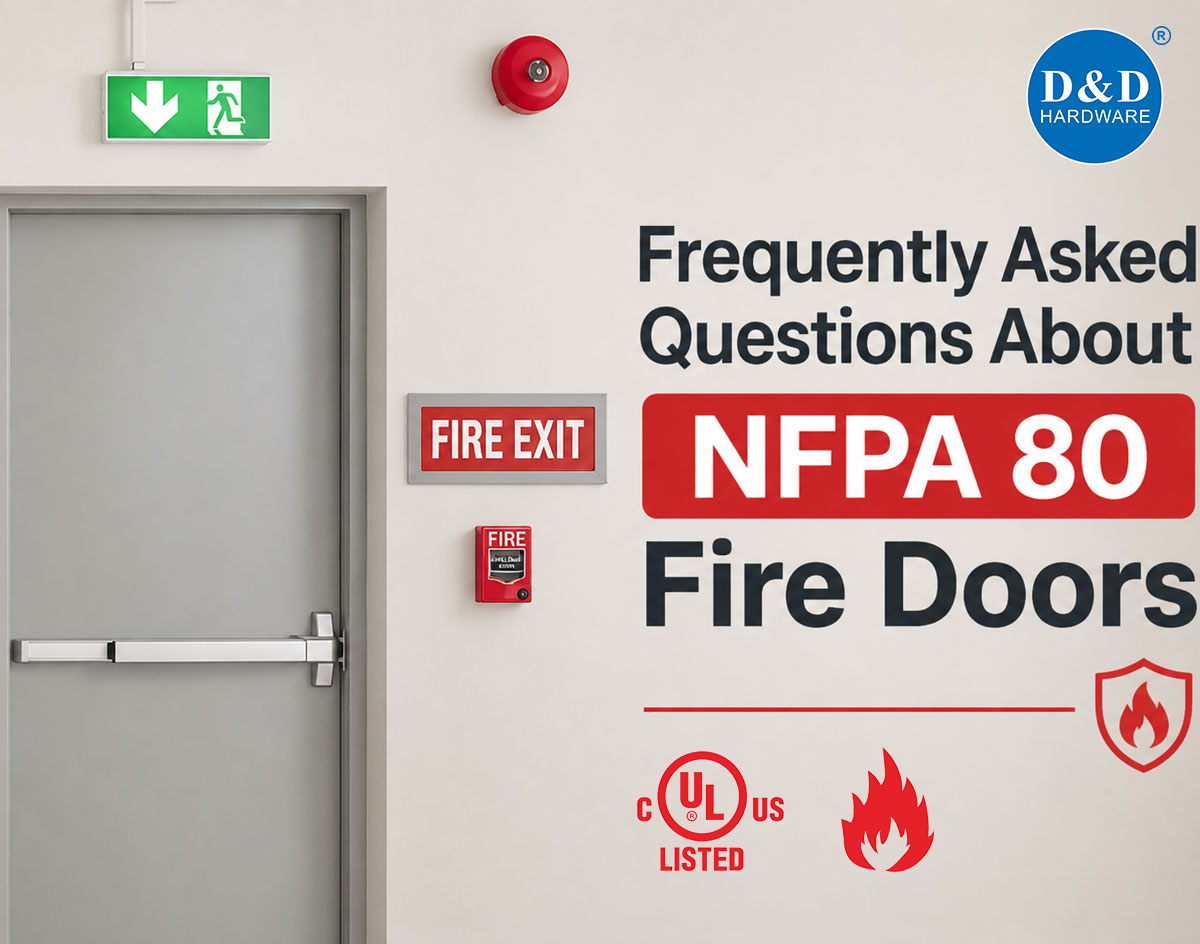
Fire door questions often arise after a building is occupied: a label is painted over, a closer is changed, or a facilities team discovers a door that almost latches. The answers below address practical decisions about swinging fire doors with builders hardware. They are deliberately short; the governing NFPA 80 edition, adopted code, assembly listing and authority having jurisdiction (AHJ) determine the final answer for each opening.

Scope and Ratings
1 What does NFPA 80 cover?
NFPA 80 is the standard for fire doors and other opening protectives. It addresses installation, inspection, testing and maintenance of assemblies, including swinging doors, sliding doors and other protective types. The adopted building and fire codes determine where a rated opening is required; NFPA 80 then governs how its protective assembly is installed and maintained. This FAQ focuses on commercial swinging fire doors.
2 Does a labeled door mean the entire opening complies?
No. The door leaf, frame, glazing, hardware, seals where specified and installation must form a compatible assembly. A label identifies an investigated product; it does not establish that a substituted closer or lock was installed correctly or that the door still closes and latches. Inspect the opening as a whole.
3 Can a three-hour hinge or closer increase the rating of a 90-minute door?
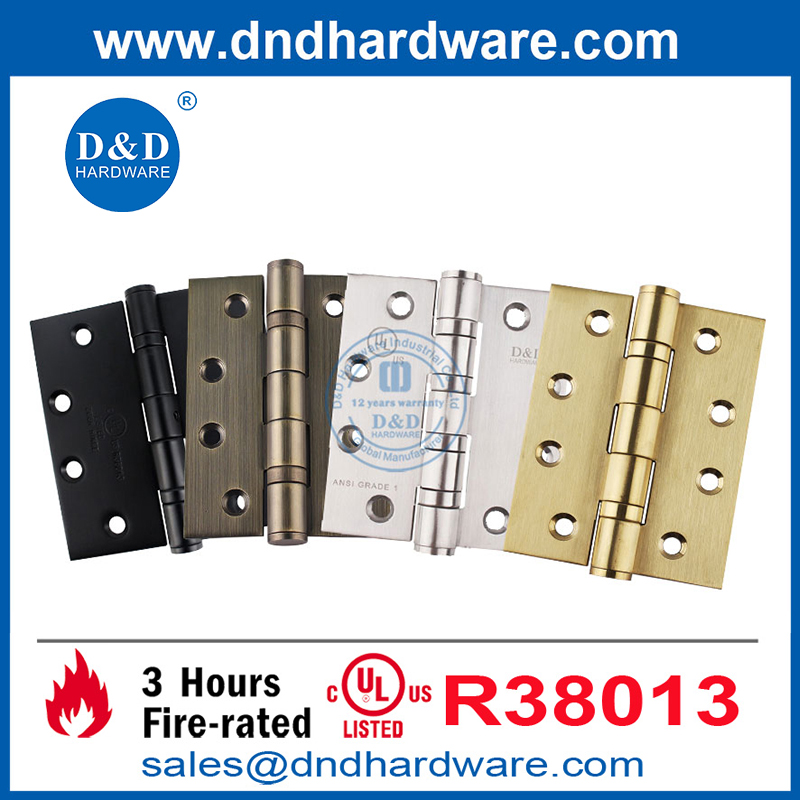
No. A component’s permitted rating does not upgrade the labeled leaf, frame or wall opening. D&D’s UL-listed fire door hinges under File R38013 can be considered where the exact model is compatible, but the assembly rating and installation conditions still govern.
4 Which NFPA 80 edition applies to my project?
Use the edition adopted by the jurisdiction and referenced by the governing codes or project approvals, including local amendments. NFPA publishes a 2025 edition, but an existing building may be subject to an earlier adopted edition. Ask the AHJ and review the approved plans before treating a newer provision as automatically applicable.
Labels and Visible Changes
5 Where should I look for the fire door rating?
Find the door and frame identification labels or approved markings, usually on locations accessible for inspection, and compare them with the opening schedule. A frame mark may not state an hourly rating in the same way as the door label. When the marking is missing or unreadable, obtain manufacturer and certification records or an authorized evaluation rather than assuming the rating from a nearby opening.
6 Can a fire door or frame be repainted?
The door surface may be refinished when the manufacturer’s instructions and listing allow it, but identification must remain legible and functional parts must not be coated so they bind. Protect applied labels and avoid painting over latch openings, hinges, seals or other operating parts. An obscured applied label may require an authorized resolution; painting over it and later scraping it can damage the marking.
7 May a sign be fixed to a fire door?
Only within the applicable NFPA 80 edition and listing rules for size, attachment and placement. A sign must not cover the label, glazing, latch or operating hardware, or interfere with the door. Do not assume drilling through a labeled leaf is harmless. The permitted sign area and attachment method should be checked against the project’s adopted edition before installation.
8 Can a vision panel or glazing bead be changed on site?
Use glazing, light kits, beads and installation details approved for the labeled door and its rating. A damaged pane is not repaired by fitting ordinary glass of the same dimensions. Enlarging an opening or adding a new vision panel is a separate field-modification question and may need the manufacturer and listing agency’s review.
Closing Latching and Egress
9 Does a fire door have to close every time it is opened?
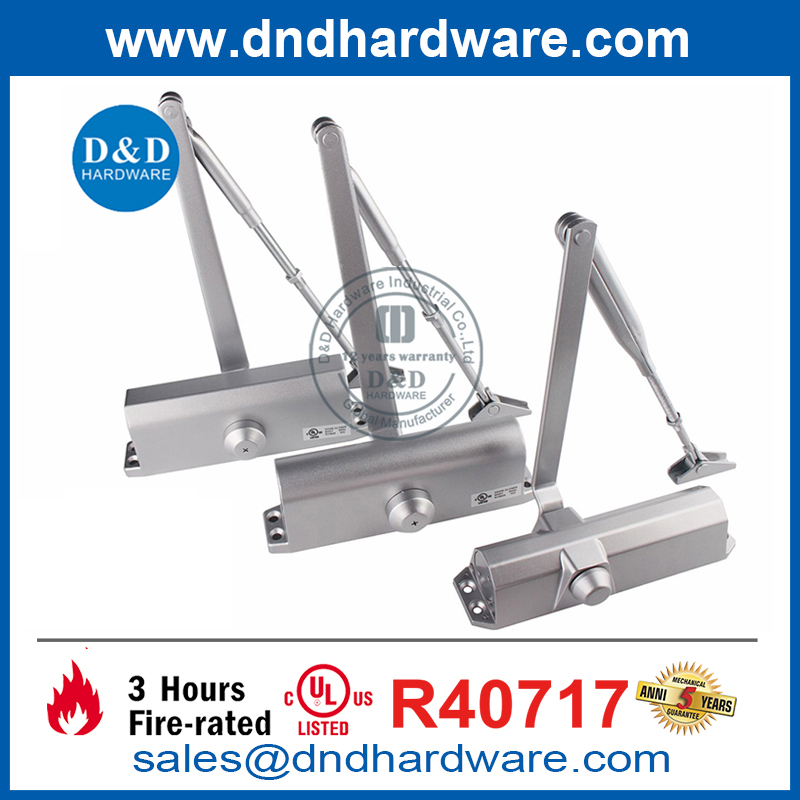
A normally closed self-closing door should close and latch when released. A permitted automatic-closing assembly may be held open under normal conditions and close after the specified release or power-loss event. A wedge or ordinary mechanical hold-open stop does not create an approved automatic-closing arrangement. D&D’s UL 10C door closers under File R40717 can provide the closing function for compatible openings; the exact model and any separate release arrangement must be verified.
10 Is a door compliant if it looks closed but the latch misses the strike?
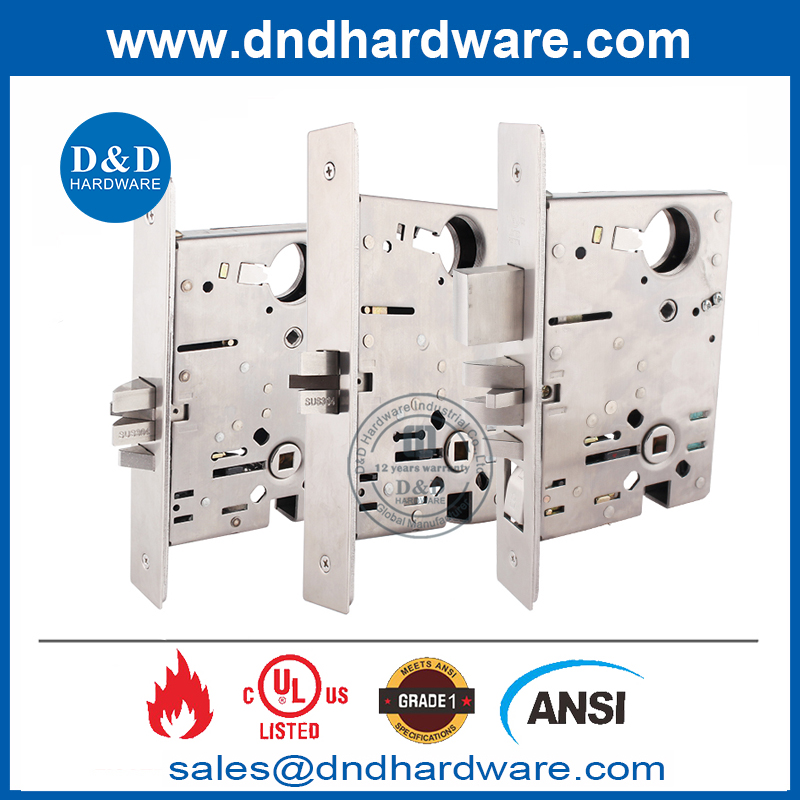
No. A typical self-latching fire door must positively latch without a final push. Inspect bolt projection, strike alignment, hinge sag, seal resistance and closer adjustment together. D&D’s UL 10C mortise locks under File R40901 are options for compatible openings, subject to the exact lock and strike listing. A listed lock cannot compensate for an out-of-square door.
11 Does every pair of fire doors need a coordinator?
No. The coordinator is needed where the astragal or projecting latch makes one leaf’s closing order necessary. A listed pair in which each leaf closes and latches independently can operate without one. Where sequence is required, test the inactive leaf first and active leaf second under normal release. D&D door coordinators can be evaluated for the approved pair configuration.
12 Is UL 305 panic hardware enough for a rated exit door?
A UL 305-only panic device intended for a non-rated door is not proof of fire-door suitability. Where an exit device is required on a labeled fire door, verify fire exit hardware certification and egress performance for the exact model. D&D identifies its UL 10C fire exit hardware under File R40486 separately from UL 305 panic hardware under File SA45817.

13 Does NFPA 80 set one clearance value for every door edge?
No. The allowable gap depends on the edge location, door construction, testing and listing, and adopted NFPA 80 edition. Measure the actual head, jamb, meeting-edge and bottom conditions using the relevant method. A sweep, threshold or surface-applied strip should not be used as a blanket cure for an excessive structural clearance without checking its approved application.
Inspection Maintenance and Repairs
14 How often should a fire door be inspected?
NFPA 80 generally requires at least annual inspection and testing of fire door assemblies, with written records, under the applicable edition. New installations and work after maintenance or repair have their own inspection or testing triggers. The annual date does not permit a known failure to remain unresolved until the next cycle. More frequent checks may be appropriate for high-use openings or project rules.
15 Who should perform the inspection?
The inspector should be qualified to understand the applicable standard, door construction and test methods, and should document deficiencies by opening. The facility owner or responsible party must ensure the assemblies are maintained and problems corrected. The precise qualification or credential expectations may be set by the AHJ, adopted code or facility policy.
16 Can fire door hardware be replaced with a different listed product?
Often yes, if the exact replacement fits the rated application, preserves its required function and can be installed within permitted preparations. Compare mounting templates, strikes, accessories and listings before ordering. New drilling or mortising and abandoned holes can require a separate review. After installation, inspect and test the whole opening; the new component’s UL mark does not independently certify the assembly.
17 What should be done with holes left by old hardware?
Identify whether they are abandoned fastener holes, larger penetrations or a former cutout. NFPA 80 allows specified repair methods for certain fastener holes, subject to the adopted edition and product listing; other openings may be field modifications requiring manufacturer and listing-agency involvement. Ordinary filler or paint that conceals a hole is not automatically an approved repair.
18 Does an inspection report approve a modified or unlabeled door?
No. An inspection records observed conditions; it does not create a product certification or authorize a cutout. UL distinguishes its inspection service from field evaluation of an assembly changed from its original certified construction. For uncertain markings or modifications, collect manufacturer records and seek the appropriate certification-body and AHJ process.
19 What should happen after an inspector finds a failed closer or latch?
Record the opening ID and observed failure, arrange prompt repair or compatible replacement, and follow the facility’s impairment process as needed. Once repaired, inspect and function-test the assembly and retain the outcome with the original finding. A work order closed because parts were ordered does not mean the fire door has returned to service.
20 Can an occupant leave a fire door propped open for deliveries?
A wedge, tied-back closer or kick-down stop that prevents a required self-closing door from closing defeats its protective function. Remove the obstruction. If routine operations need the opening held open, have the design team assess a permitted automatic-closing arrangement with approved release and latching performance under the governing code.

How to Use These Answers
The short answer to most NFPA 80 questions is an opening-specific check: identify the door and frame, confirm the governing edition and approved hardware set, verify product listing conditions, then observe the complete closing and latching operation. Keep the resulting records tied to an opening ID. For detailed steps rather than short answers, see D&D’s NFPA 80 fire door hardware guide and fire door inspection guide.
Code requirements vary by jurisdiction and adopted edition. Confirm the applicable NFPA 80 edition, referenced building and life safety codes, local amendments, product listings and manufacturer instructions with the AHJ. These answers address common swinging fire doors and do not replace the special provisions for other opening protective types.

Contact us Now:
Contact: David Jian
Mob:0086-139 2903 7292
Email: David@dndhardware.com, sales@dndhardware.com,
Contact: Jobby Zhang
Mob:0086-137 2599 9617
Email: jobby@dndhardware.com
D&D HARDWARE INDUSTRIAL CO.,LTD
ADD:12th Floor, Building 2, No.898, KeChuang Technical Zone, Jiangmen Avenue, Pengjiang District, Jiangmen City, Guangdong, China (Postcode:529000)
https://www.dndhardware.com
Tel: +86-750-3856396
Fax: +86-750-3856395


 English