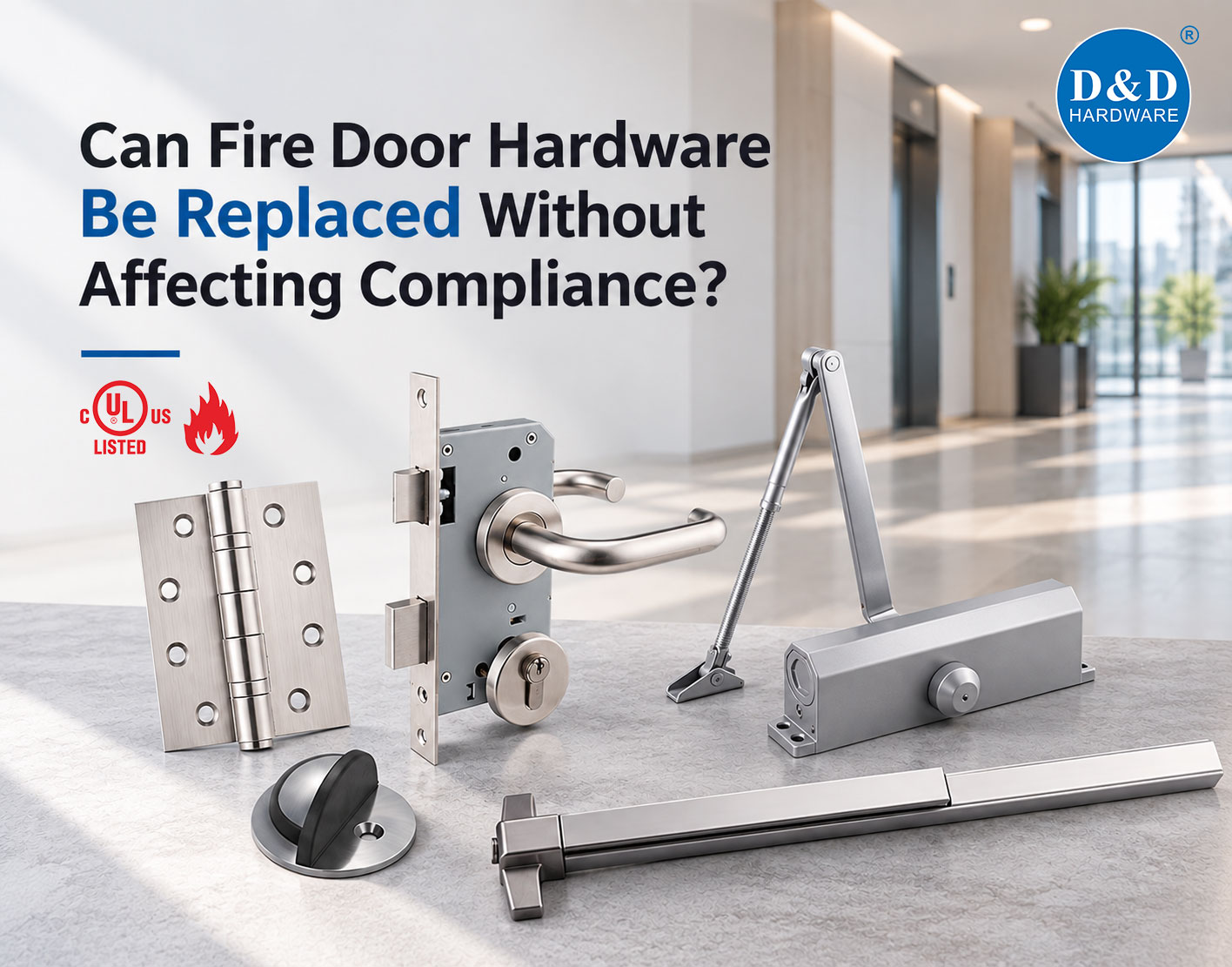
Yes, fire door hardware can often be replaced while preserving the opening’s compliant condition. The new part must be suitable for that rated door assembly, provide the required mechanical function, install within permitted preparations and leave the complete door operating correctly. A matching finish, a familiar brand or a UL mark by itself does not establish that result.
Replacement is common in buildings where hinges wear, closers fail or latches no longer engage. This guide concentrates on the decision before a part is ordered, the comparison of old and new configurations, and the verification after installation. For background on the functions of each hardware category, see D&D’s NFPA 80 fire door hardware guide.

The Four Conditions a Replacement Must Satisfy
It preserves the opening’s required functions
Start with the approved opening schedule and local code requirements. Determine the fire-protection rating, door construction, self-closing or automatic-closing arrangement, positive-latching method, egress requirements and any smoke-control condition. The replacement must perform the function the removed part served. Swapping a functioning self-closing device for a decorative door stop changes the door’s behavior even if the new product attaches to the same surface.
Its certification covers the actual use
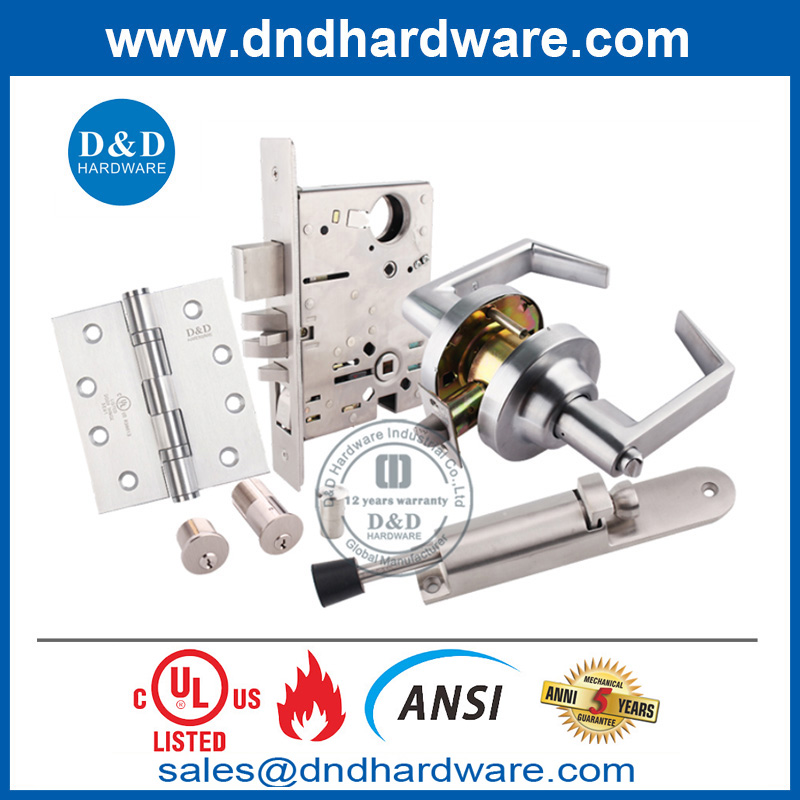
Verify the exact replacement model, relevant certification category, permitted door rating and construction, mounting arrangement and accessories against the product listing and manufacturer instructions. Fire-door components are evaluated for particular applications. A device identified only as panic hardware for an unrated opening cannot be assumed to serve as fire exit hardware on a rated door. Conversely, do not assume that every generic hinge needs an individual fire-door listing when the applicable standard and listing allow a prescribed hinge type.
It fits permitted preparations
Compare full mounting templates, not just the visible outline or center-to-center fastener spacing. Check door and frame reinforcement, hole diameter, depth, faceplate and strike position, mounting plate, spindle arrangement and any through-bolts. Additional drilling, mortising or boring may trigger a separate field-modification process even where the proposed hardware has the correct certification. Abandoned fastener holes must be addressed using a method allowed for the actual door or frame and adopted NFPA 80 edition.
The complete assembly still passes an operational check
After installation, inspect the door, frame, seals and hardware together; release the door from representative open positions and observe full closing and positive latching without a final push. Check exit-device release, pair closing sequence and required smoke seals where applicable. NFPA 80 calls for inspection and testing after maintenance or repair. The next annual inspection is not a substitute for this immediate check.

Before Ordering Capture the Existing Condition
Record the opening ID, door and frame labels, rating, handing, dimensions, leaf material, hardware set and original model if legible. Photograph both faces of the device, all mounting locations and the door edge or frame strike. Measure the existing template and identify every accessory that will be retained or replaced. Determine why the old part failed: a closer may appear defective when hinge sag or seal friction prevents latching. Replacing it blindly can preserve the underlying problem.
If the original model is discontinued, request the successor model’s listing and template rather than relying on a statement that it is “equivalent.” Ask the door manufacturer or listing agency when the labeled construction is unclear. This evidence also helps purchasing avoid ordering a suitable device with the wrong arm, latch function, strike or mounting kit.
Replacement Scenarios That Need Different Checks
Hinges and concealed hinges
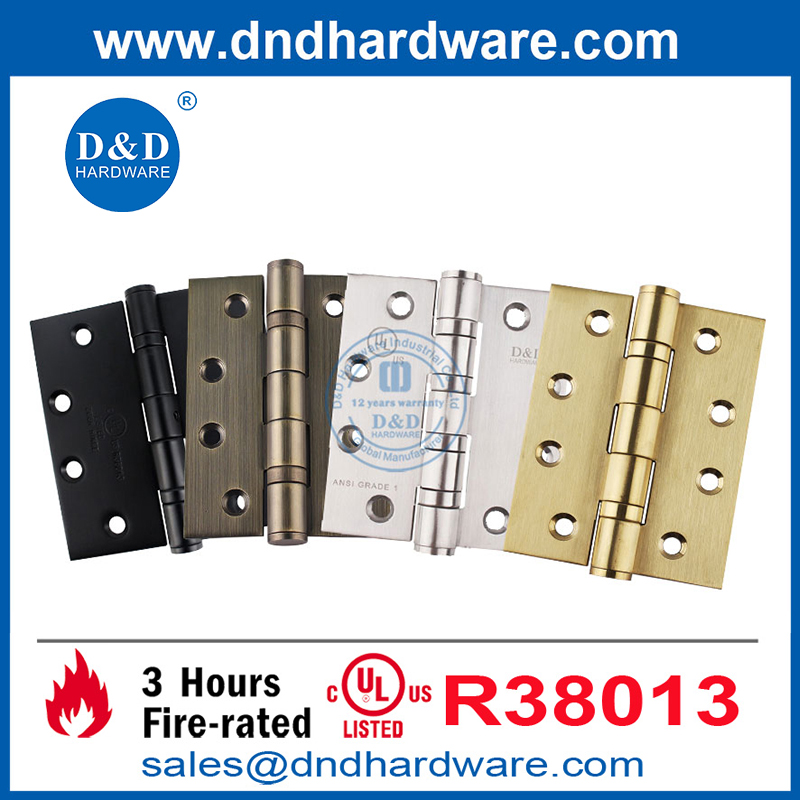
Confirm size, type, bearing design, load capacity, handing where relevant, hinge count and locations, pin arrangement and fasteners. Compare the original and proposed leaves against the door and frame preparations. A loose hinge or sagging leaf may require approved screw or reinforcement work; simply installing a stiffer hinge will not square a damaged frame. Concealed hinges are particularly sensitive to pocket geometry and cannot be substituted merely because they are labeled for the same fire duration.
D&D’s UL 10C fire-rated hinge range includes models associated with File R38013. When considering one for replacement, verify its exact listing and dimensions with the door construction and existing hinge pattern. Where a different mortise is required, seek permission before machining the labeled leaf or frame.
Overhead door closers
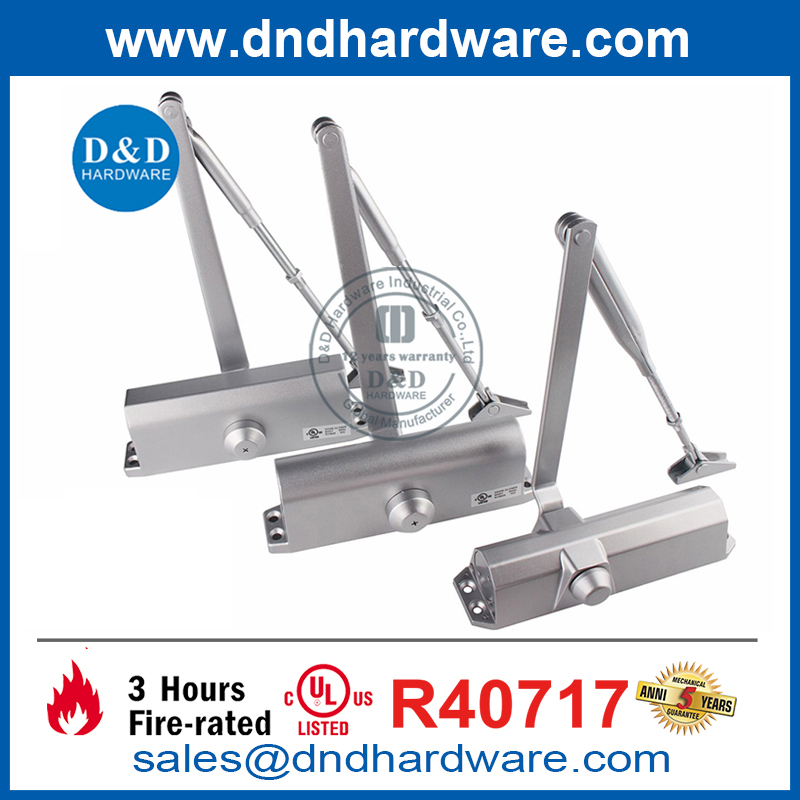
Match the closer and arm to door size, weight, mounting side, opening angle and approved reinforcement. A replacement body may share screw centers with the old unit yet use a different arm or mounting plate. Check sweep and latch adjustment ranges and the required operation of the entire opening. Do not introduce a mechanical hold-open feature that prevents a required self-closing door from closing.
For compatible installations, D&D offers UL 10C listed door closers associated with File R40717. Specify the actual model and mounting accessories; adjust the installed door so its latch engages with seals in place and ordinary building pressure present. Where an approved automatic-closing arrangement exists, preserve its required operation when changing components.
Mortise locks and strikes
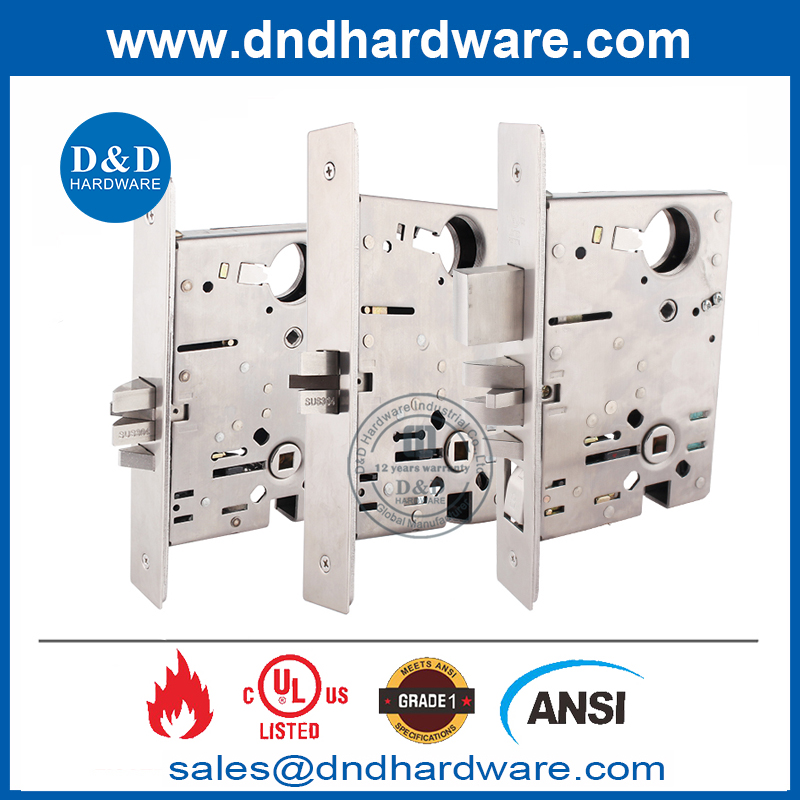
A replacement mortise lock needs the specified latch and egress functions, not merely the same trim appearance. Compare case dimensions, backset, faceplate, strike, bolt projection, handed function and required mounting. Inspect the door and frame alignment before changing the strike. Filing the strike opening or extending the lock pocket to make a new case fit may alter the labeled construction and must be assessed before work begins.
D&D’s UL 10C mortise locks associated with File R40901 provide options for a compatible opening. Confirm the listed model and appropriate strike, then test the installed door by releasing it normally; a visible gap or latch bolt resting on the strike lip signals incomplete latching even if the lock itself is certified.
Fire exit devices and panic hardware
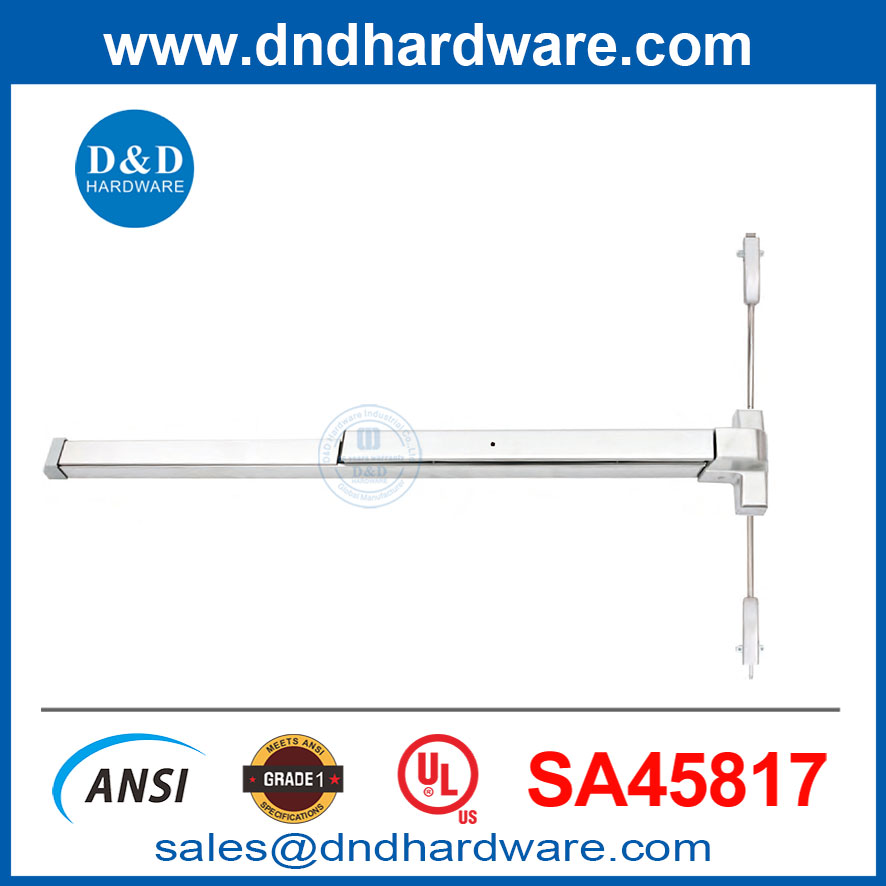
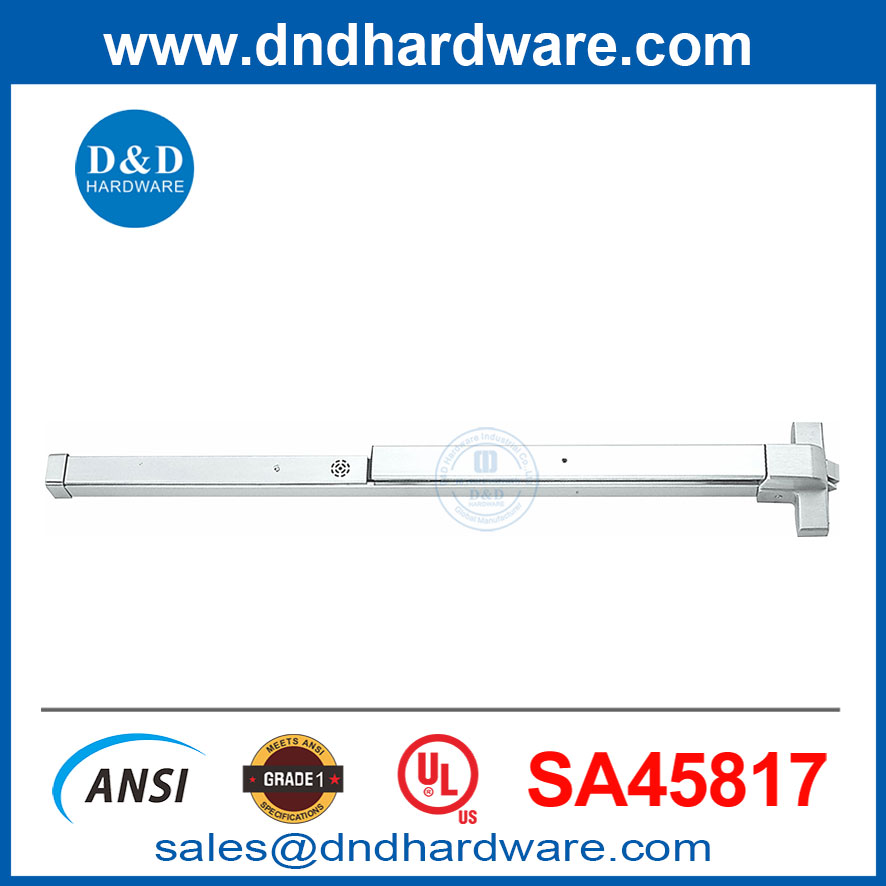
For an opening requiring an exit device, verify both the fire-door application and the adopted egress provisions. UL describes fire exit hardware as intended for swinging fire doors; a UL 305-only panic device for an unrated door is not interchangeable. Check whether the existing device uses surface or concealed vertical rods, what strikes and auxiliary components its listing requires, and whether removing it exposes holes or cutouts. Do not rely on a catalog photo to identify an internal latch mechanism.
D&D identifies fire exit hardware within its UL range under File R40486 and separately identifies UL 305 panic hardware under File SA45817. Confirm the certification and marking of the exact model to be installed. A file number for the latter alone does not prove suitability on a rated fire door.
Coordinators and hardware on a pair
On a pair, assess the active and inactive leaf together. Replacing a coordinator, closer or latching device may alter which leaf closes first or whether both leaves latch. Match the mounting positions and operation of the coordinator, astragal, flush bolts where used, and both closers. D&D door coordinators are potential options for an appropriate pair, subject to the complete assembly design and installation requirements. Test by releasing both leaves from positions that engage the sequencing arrangement, not just by swinging the active leaf alone.
A Practical Equivalence Review
A substitute can be approved only after the project team compares specific facts. Prepare one line per opening or hardware set with the old and new manufacturer and model; listed category and conditions; fire rating application; required mechanical function; door construction; mounting template; strikes and accessories; changed holes; and commissioning checks. Mark any item “unverified” until documentation resolves it. Price and finish belong in the purchasing comparison, but do not answer whether the fire door assembly stays within its listing.
A common example is changing a failed surface closer on a labeled corridor door. If the new model is suitable for the rated construction, uses permitted mounting conditions, closes the installed leaf and latches it, a compliant replacement may be possible. If the new bracket requires through-bolting through a door not prepared for it, or the old installation leaves holes that cannot be handled by an allowed method, stop before drilling and obtain the relevant manufacturer or listing-agency guidance.
A second example is an exit bar replacement on a labeled stair door. Even a near-identical shape may use a different strike, latch action or certification category. Determine whether the approved design requires fire exit hardware and confirm the new model’s exact listed configuration before installation. The same rule applies to a pair whose inactive leaf depends on vertical rods or a specified closing order.
When a Replacement Becomes a Field Modification
New cuts or holes beyond permitted job-site preparation, extensive changes to reinforcement, a relocated strike or a substantially different device configuration can require field-modification review. The door or frame manufacturer should coordinate a written description with the product’s listing agency, which may authorize a defined change, require further evaluation, or call for replacement of the affected labeled component. An AHJ may also need to accept the proposed approach for the project.
Do not confuse an inspection with authorization. A field inspector can record that a modified door has a condition requiring attention; the report alone does not extend a listing or grant permission for a new cutout. UL Solutions describes field evaluation as a separate path for an assembly changed from its original certified construction. Damage to the leaf or frame calls for a broader repair assessment beyond the hardware comparison in this article.

The Installer and Buyer Handover Record
Before placing an order, the buyer should obtain the exact model, current certification evidence, installation instructions and mounting template; identify the opening IDs and document any proposed substitution. The installer should confirm the existing construction and permissions, perform the work according to approved instructions, close abandoned holes as permitted and never conceal an unresolved modification under trim or paint.
After installation, record the new model and its location, accessories used, alterations or authorized repair method, installer, work date and inspection result. Function-test the complete opening with the leaf released from a normal position. Keep the submittal, any written listing-agency decision and the observed test result together. This record establishes what was actually changed when the next maintenance team encounters the door.
Frequently Asked Questions
Does replacing a hinge automatically void a fire door label?
No. A suitable replacement installed within permitted preparations can preserve the assembly, provided the complete door still functions as required. Verify the exact hinge and the affected door and frame conditions.
Is matching the original screw pattern enough?
No. The model must also have the correct certified application, size, function, accessories and installation conditions. Old holes and any additional cuts need their own review.
Can a three-hour listed closer be installed on any fire door?
Its rating does not authorize every door construction or mounting arrangement. Check the closer’s listed scope, door/frame instructions and full operating result for the specific opening.
What if the old hardware manufacturer no longer sells that model?
Identify the original function and preparations, then assess a documented candidate model against the required rating, listing, accessories and installation constraints. Seek manufacturer or listing-agency input before changes outside permitted job-site work.
Must the door be checked right after replacement?
Yes. Inspect and test the affected assembly after maintenance or repair, document the result and resolve any failure before treating the opening as returned to service.

Code and Edition Note
Requirements vary by jurisdiction and adopted edition. Confirm the NFPA 80 edition in force, adopted building and life safety codes, approved opening schedule, door and hardware listings, manufacturer instructions and local amendments with the authority having jurisdiction (AHJ). The particular assembly and proposed replacement determine whether work stays within permitted installation or needs authorization.

Contact us Now:
Contact: David Jian
Mob:0086-139 2903 7292
Email: David@dndhardware.com, sales@dndhardware.com,
Contact: Jobby Zhang
Mob:0086-137 2599 9617
Email: jobby@dndhardware.com
D&D HARDWARE INDUSTRIAL CO.,LTD
ADD:12th Floor, Building 2, No.898, KeChuang Technical Zone, Jiangmen Avenue, Pengjiang District, Jiangmen City, Guangdong, China (Postcode:529000)
https://www.dndhardware.com
Tel: +86-750-3856396
Fax: +86-750-3856395


 English