Door hardware is very important for building safety. Picking a supplier that doesn't follow the rules can cause project delays and legal trouble. How can you be sure your supplier's CE mark is real?
Use this 5-step check: Verify, Assess, Evaluate, Consider, Compare. This process looks beyond just papers. It helps make sure things are safe, last long, and the project goes well.
A good CE door hardware manufacturer must show real CE certification. This certification proves they meet European standards. But certification alone doesn't mean the product is great. You need a partner who cares about safety and following rules.
Your supplier should offer commercial door hardware tested to strict CE standards. The right manufacturer gives clear CE certification for each CE product. Look for CE certification that covers fire-rated hardware. Strong CE certification shows real quality. Ask for full CE certification documents. Check each CE mark against official records.

Key Takeaways
Check the CE certificate is real by looking at the Notified Body number and the Declaration of Conformity.
Match each hardware item to its own EN standard, like EN 1935 for hinges.
Ask for proof of quality, such as ISO 9001 certification and performance test reports.
Pick a manufacturer that gives good help after you buy and a clear warranty.
Look at the full cost of owning the product, including taxes and possible costs if it breaks, not just the starting price.
Step 1: Verify CE Certification Authenticity
When picking a CE door hardware maker, checking the CE certification is a must. This mark shows the product meets global safety rules for commercial door hardware. A real CE certificate proves the hardware works with fire doors and is made well. A good supplier shares clear papers from the very start.
Check for Valid Notified Body Involvement
A real CE certificate for fire-rated hardware needs a known Notified Body. This EU-approved group checks test reports and visits the factory every year. For UL fire rated door hardware, the process is similar but uses different rules. A UL mark can also show quality and safety. Look up the Notified Body number on the NANDO database. If that number is missing, the CE certificate might not be real.
Watch for these red flags:
Red Flag Category | Specific Indicators | Field Verification Method |
Visual anomalies | Blurry print, wrong font, misspellings | Compare with a known authentic sample |
Physical application | Flimsy label, incorrect placement, easily peeled off | Perform a peel test – genuine labels resist scratching |
Missing data | No serial number, missing fire rating, generic manufacturer name | Cross-check against project documentation |
A fake CE certificate can cause safety risks and legal problems. Always check the supplier first.
Scrutinize the Declaration of Conformity
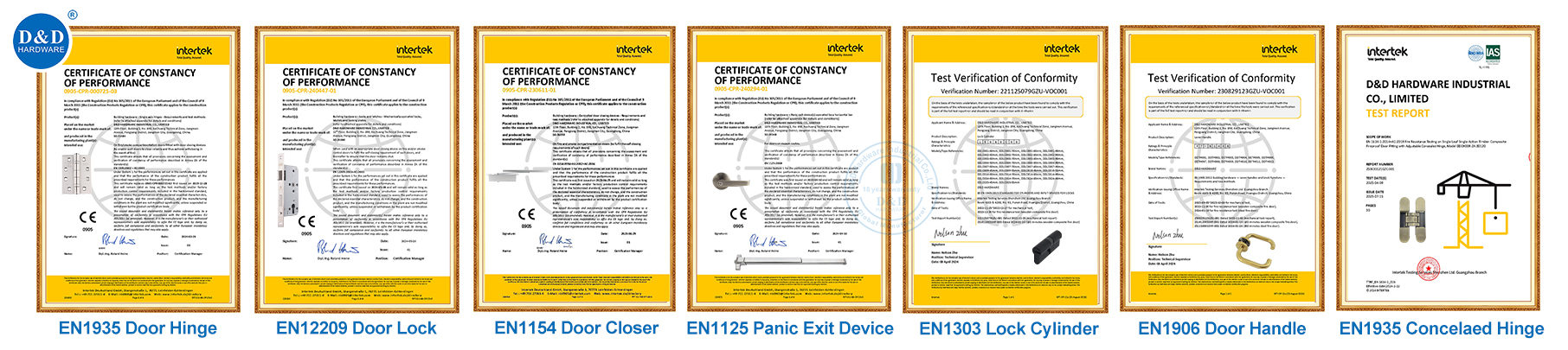
The Declaration of Conformity (DoC) is the maker's official promise of responsibility. A trusted door hardware maker lists exact EN standards on the DoC. For hinges, that is EN 1935. For locks, it is EN 12209. For cylinders, use EN 1303. For lever handles, EN 1906 applies. For exit devices, EN 1125 and EN 179 are the rules. These standards back up the CE certificate.
The maker must issue the DoC, not another company. A fire door hardware maker keeps the DoC for at least 10 years. D&D Hardware gives full DoCs for every CE certified item. These certified products offer complete tracking and rule-following. Pick a fire rated door hardware supplier who shares clear papers.
This step guards your project and keeps things safe. Use the DoC to trust your CE certified door hardware supplier.
Step 2: Assess Product Range and Compliance Standards
CE certification is not one label for all products. Each type of hardware must meet its own European standard. A hinge has different rules than a lock or an exit device. Do not assume one certificate covers your whole project.
The BS EN 1935 standard gives detailed guidance on how to test and classify single-axis hinges. Every single-axis hinge made to this standard must show the standard’s number.
For locks, the standard is EN 12209. Cylinders use EN 1303. Lever handles follow EN 1906. Panic exit devices must meet EN 1125, and emergency exit devices use EN 179. A good CE door hardware maker will tell you which standard goes with each product you need.
Match Hardware to Specific EN Standards
Ask for the exact EN standard for each part in your project. A fire rated door hardware supplier will give you this info right away. This openness shows real skill and rule-following.
Consider the difference between CE and ANSI requirements. Each certification serves a distinct purpose:
Certification | Main Focus | Where Used |
ANSI | Strength, security | North America |
CE | Safety, health, environment | Europe |
This table shows that ANSI standards make sure hardware is strong and safe for daily use in North America. CE certification shows the hardware follows European safety, health, and environment rules. For global projects, having both certificates means the hardware is already tested for both places, so you do not need extra tests.
Confirm Coverage for Project-Specific Needs
Your project may need UL fire rated door hardware for certain door sets. UL certification and EN standards do different jobs. UL checks fire-door assembly acceptance. EN standards sort hinge performance by durability, load, rust resistance, and fire ability. CE certification says the product meets European rules for market access.
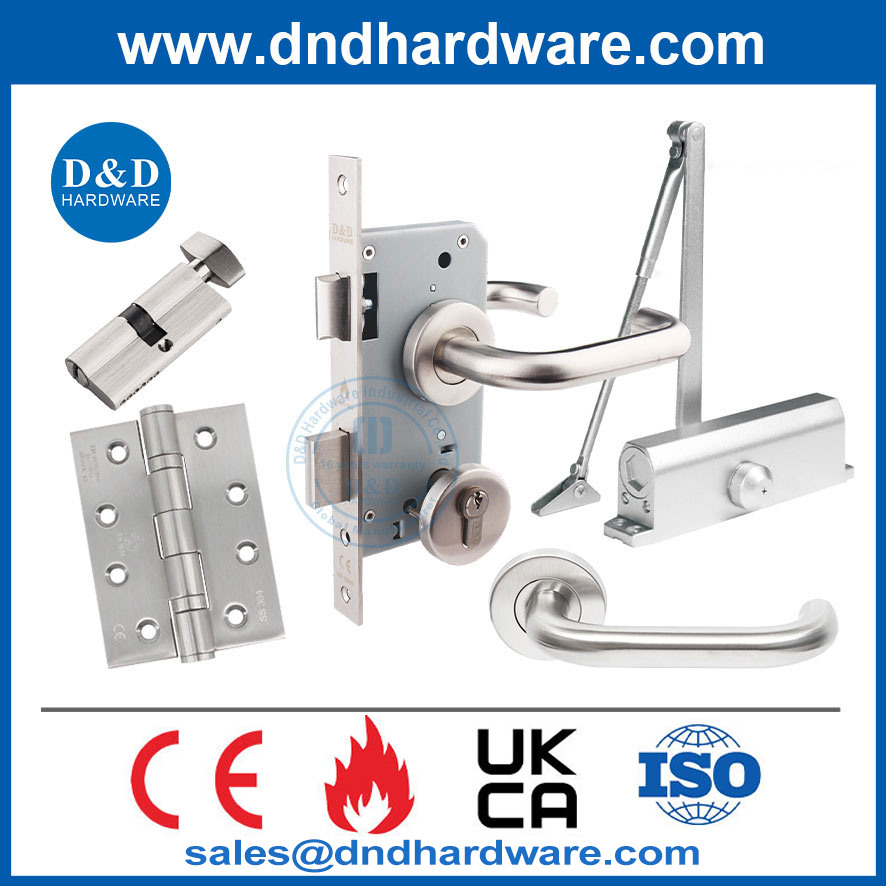
A door hardware maker with many products makes your buying process easier. D&D Hardware provides stainless steel hinges, mortise locks, and panic exits tested to BS EN, CE, UL, and ANSI standards. This wide range means you can find CE-certified door hardware for every kind of opening. Their commercial door hardware works for metal doors, fire-rated doors, and wooden doors.
Check that your supplier can show proof of certification for each product type. Ask for test reports and statements that match your project needs. This careful work protects your timeline and your name. Quality and safety come from picking hardware that meets the right standards for each use.

Step 3: Evaluate Manufacturing Quality and Testing
A CE mark shows a product meets European rules. But that mark alone does not mean the hardware will last for years. The right CE mark comes from a maker who proves quality through audits and performance data. A trusted CE door hardware maker shows proof of real CE certification. This CE mark must be backed by actual testing. Without proper CE certification, you may face project delays and safety risks. Meeting European standards takes more than just a paper certificate.
Review Factory Audits and Quality Management Systems
A reliable door hardware maker runs a certified quality management system. ISO 9001:2015 gives the structure. It focuses on steady processes, customer happiness, and ongoing improvement. When a maker holds ISO 9001 certification, you know they have passed strict audits. Quality control covers customer service, warehouse work, factory floor steps, and shipping methods. The certification lowers flaws and differences in every product batch. This quality control makes sure each product meets CE certification needs.
Ask your supplier for their ISO 9001 certificate. A fire rated door hardware supplier with this certification shows they care about quality control at every stage. They use a system that catches issues before products leave the factory. This organized way of quality control protects your CE certification.
Demand Proof of Performance and Material Testing
Beyond the factory system, you need to see test reports. Ask for cycle life testing data for hinges and locks. For busy commercial door hardware, parts must handle millions of openings. EN 1906 is the European standard for lever handles. It checks durability under heavy use, rust resistance, and reliable operation. These tests matter for safety and performance of stainless steel hardware. Products with ul fire rated door hardware ratings also need ul certification.
D&D Hardware uses SS304 and SS316 stainless steel. They run in-house tests to make sure their products handle busy areas. The company also tests PVD coatings for wear, scratch, and chemical resistance. The CE certification for these products covers all performance tests. You can trust this ce-certified door hardware for your projects.
For outdoor use, you need specific rust resistance ratings. Stainless steel finish US32D/630 works for most outside jobs. For tough spots near saltwater, marine-grade 316 stainless steel is needed. Ask for these test reports from your supplier. A quality maker shares them without delay. This full testing backs up the CE certification you get. Every supplier must provide this paperwork.
Step 4: Consider After-Sales Support and Warranty
Your work does not end when the hardware arrives. You still need help with setup, care, and later fixes. That support comes from your CE door hardware maker. Good support protects your money and keeps your building safe. Without it, even the best CE-certified door hardware may break early or cause rule problems later.
Gauge Technical Support and Documentation Availability
A good supplier gives clear technical papers for every product. You need templates and setup guides for each type of hardware. Look for printable template lists for hinges, pivots, pulls, latches, and other parts. Technical manuals for whole systems help your workers install things right the first time.
Learning guides also help. Good makers offer modules that explain setup, fixing, and care. These guides group products by job, like "Hang the Door" for hinges and pivots, "Operate the Door" for pulls and latches, and "Protect the Door" for plates and guards. A searchable document library lets you find CAD drawings and instructions fast. A knowledge center answers common questions quickly.
Ask your supplier how fast they answer technical questions. Quick answers stop work delays, especially during busy times. A door hardware maker that invests in papers shows they care about quality and safety. This support helps you install things right and make products last longer.
Analyze Warranty Coverage and Replacement Parts
Clear warranty rules protect your money. Check what the warranty covers and how long it lasts. Know how to file claims and get replacement parts. A clear policy shows trust in the product's quality.
Think about all the after-sale services:
Service | What It Means For You |
Installation Assistance | Proper setup meets safety and work standards, making products last longer |
Maintenance Offerings | Plans to prevent costly repairs and downtime, plus follow NFPA 80 fire-rated assembly checks |
Response Times | Fast answers cut work delays during busy periods |
Warranty Policies | Clear terms protect your money and show product reliability |
Client Feedback | What other customers say shows true reliability and happiness |
For UL fire rated door hardware, care is very important. Regular checks keep fire-rated assemblies safe and following rules. Ask about wait times for replacement parts. Long waits can shut doors and create safety gaps. A maker with UL certification for their products usually keeps better stock.
D&D Hardware gives dedicated technical help and full warranties. Their team helps with setup questions and care planning. This promise means long-term project success and peace of mind for specifiers and facility managers. Pick a partner who backs their CE certification with real service, not just papers. The right support keeps your doors working safely for years.

Step 5: Compare Pricing Against Lead Times and Value
Balance Upfront Cost with Total Cost of Ownership
The lowest price rarely shows the whole picture. When you check a CE door hardware manufacturer, look past the first quote. Shipping costs, import duties, and delays from waiting all add to the final price. A cheaper product that breaks early ends up costing more over time.
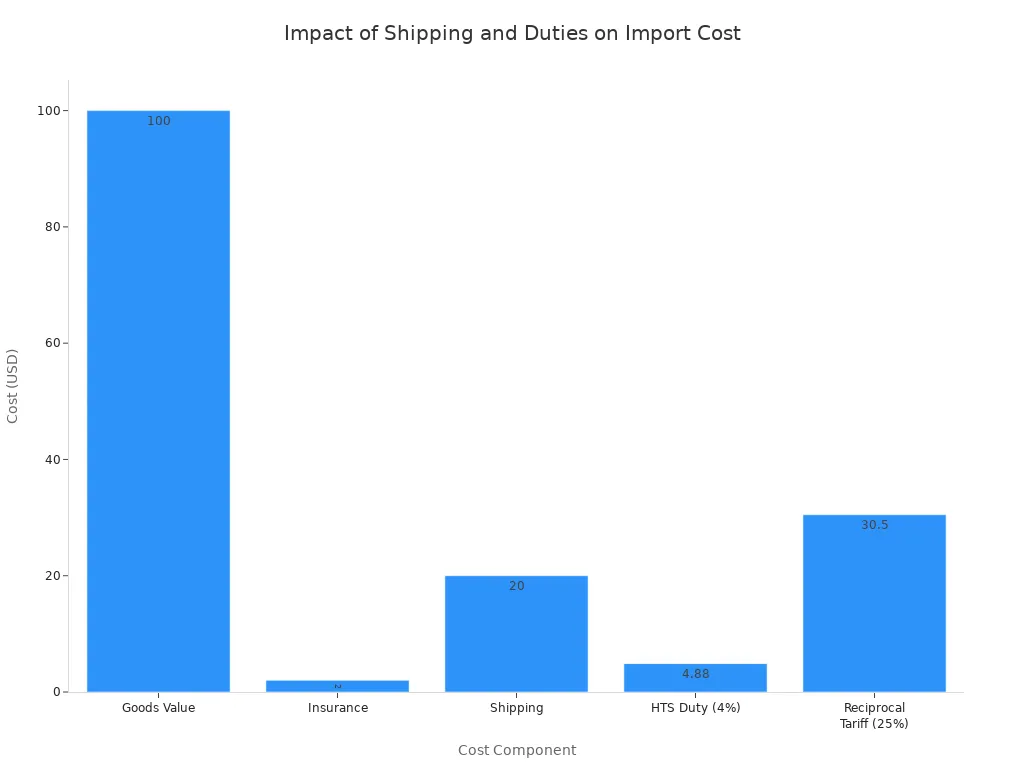
Here is a real cost breakdown for a small door hardware order:
Cost Component | Value |
Goods Value (10 units x USD 10) | USD 100 |
Insurance | USD 2 |
Freight / Shipping Cost | USD 20 |
Total CIF Value | USD 122 |
Duty Type | Calculation |
--- | --- |
HTS Duty (4%) | 4% x USD 122 |
Reciprocal Tariff (25%) | 25% x USD 122 |
Total Estimated Duties | HTS + Reciprocal |
The shipping cost and insurance join the product price to form the CIF value. This CIF value becomes the base for calculating import duties. Higher shipping costs directly increase your duty amount and total cost.
Using cheap, non-compliant hardware creates even larger financial risks:
Warranty denial forces out-of-pocket replacement costs for hardware and labor.
Re-inspection fees from the Authority Having Jurisdiction cost $500 to $1,500 per visit.
Forensic analysis for failure disputes runs $5,000 to $15,000 per incident.
Indirect costs include higher insurance premiums, legal liabilities, and operational disruptions.
These added costs wipe out any early savings. You need a CE certification that proves real quality. A trusted CE certification backed by thorough testing keeps your project safe. Always check that CE certification covers fire-rated assemblies. The right CE certification protects your budget. Check each CE mark against official records. A trusted supplier gives you complete documentation.
D&D Hardware offers factory-direct pricing, which provides cost savings without compromising quality or compliance. Their certification documents are complete and transparent. This approach makes them a competitive choice for global projects.
Assess Delivery Reliability and Logistics
A reliable door hardware manufacturer must offer steady lead times and clear communication. When delays happen, they should tell you right away. Ask about their stock levels and warehouse locations. Having several distribution centers lowers the chance of project delays.
Check these logistics factors:
Packaging quality: Strong packaging stops damage during shipping for large or fragile items.
Customs support: An experienced supplier handles shipping paperwork to cut delays.
CE standards verification: Confirm each product matches your certification documents.
Certification verification: Confirm each product matches your documents.
National coverage: More facilities mean faster delivery within your expected window.
Damage rates: Low damage rates with millwork reduce costly escalations.
Real-time tracking: Good tracking systems let you watch your shipments.
A supplier with strong quality control systems protects your CE certification investment. Their quality control processes ensure every shipment meets your specifications. Look for a CE mark on each product. The right UL certification for fire-rated hardware adds another layer of safety. A UL fire rated door hardware product must pass strict testing. Product certification gives you peace of mind. Meet all CE requirements for your project. Choose a partner who values your timeline.
Choosing the right CE door hardware manufacturer is a process that protects your project. These five steps guard against costly errors.
The cheapest option often leads to higher long-term costs.
Use this framework as a checklist. This due diligence is an investment in the safety and integrity of your building. Look for a partner, not just a supplier. A reliable supplier provides CE certification and long-term support. A supplier like D&D Hardware meets these criteria. They offer CE certification for UL fire rated door hardware. Their CE certification is genuine. This CE certification ensures safety. Always verify CE certification. The CE mark must be real. The CE process is important. CE standards are high. CE compliance is key.

FAQ
What does CE certification mean for door hardware?
CE certification means your door hardware meets European safety rules. A door hardware maker with CE certification follows those standards. CE marks show that CE-rated products are compliant.
Is UL fire rated door hardware also CE certified?
UL fire rated door hardware can also have CE certification. CE compliance adds extra safety assurance. CE standards for fire hardware require CE testing, and that testing confirms safety. Choose a CE supplier with both certifications.
How does CE documentation protect your project?
CE documentation from a manufacturer gives you CE traceability. CE compliance and supplier transparency help ensure safety. Always verify each CE mark.
What role does a manufacturer play in CE compliance?
CE compliance comes from CE testing and proper documentation. The CE manufacturer issues CE certificates, and their process guarantees safety. A reliable supplier gives ongoing CE support.
Contact us Now:
Contact: David Jian
Mob:0086-139 2903 7292
Email: David@dndhardware.com, sales@dndhardware.com,
Contact: Jobby Zhang
Mob:0086-137 2599 9617
Email: jobby@dndhardware.com
D&D HARDWARE INDUSTRIAL CO.,LTD
ADD:12th Floor, Building 2, No.898, KeChuang Technical Zone, Jiangmen Avenue, Pengjiang District, Jiangmen City, Guangdong, China (Postcode:529000)
https://www.dndhardware.com
Tel: +86-750-3856396
Fax: +86-750-3856395

 English