Panic exit devices and fire-rated exit devices are both designed to support safe emergency egress, but they are not the same product. A panic exit device allows occupants to exit quickly by pushing a bar, touchpad, or crossbar. A fire-rated exit device, also known as fire exit hardware, provides the same emergency egress function while also helping a fire-rated door assembly maintain its fire-resistance performance.
Choosing the wrong exit device can lead to code non-compliance, failed fire door inspections, reduced life safety performance, and unnecessary project delays. This guide explains the key differences between panic exit devices and fire-rated exit devices, including fire rating, positive latching, mechanical dogging, testing standards, common applications, and how to choose the right hardware for your project.
Item | Panic Exit Device | Fire-Rated Exit Device |
Primary Function | Fast emergency egress | Emergency egress + fire door protection |
Typical Door Application | Non-fire-rated exit doors | Fire-rated door assemblies |
Fire Rating | Not intended for fire-rated openings unless specifically listed | Listed for use on fire-rated doors |
Latching Requirement | May allow latch retraction or dogging in non-fire-rated applications | Must provide positive latching |
Mechanical Dogging | May be available | Not permitted |
Common Standards | UL 305, ANSI/BHMA requirements depending on market | UL 305 plus fire door assembly testing such as UL 10C, depending on project requirements |
Common Applications | Schools, offices, retail stores, public exits, commercial buildings | Fire-rated stairwells, fire-rated corridors, horizontal exits, compartment doors |
Product Label | Often marked as panic hardware or exit device | Marked as fire exit hardware or listed for fire-rated openings |
Panic Exit Device Overview
Definition & Purpose
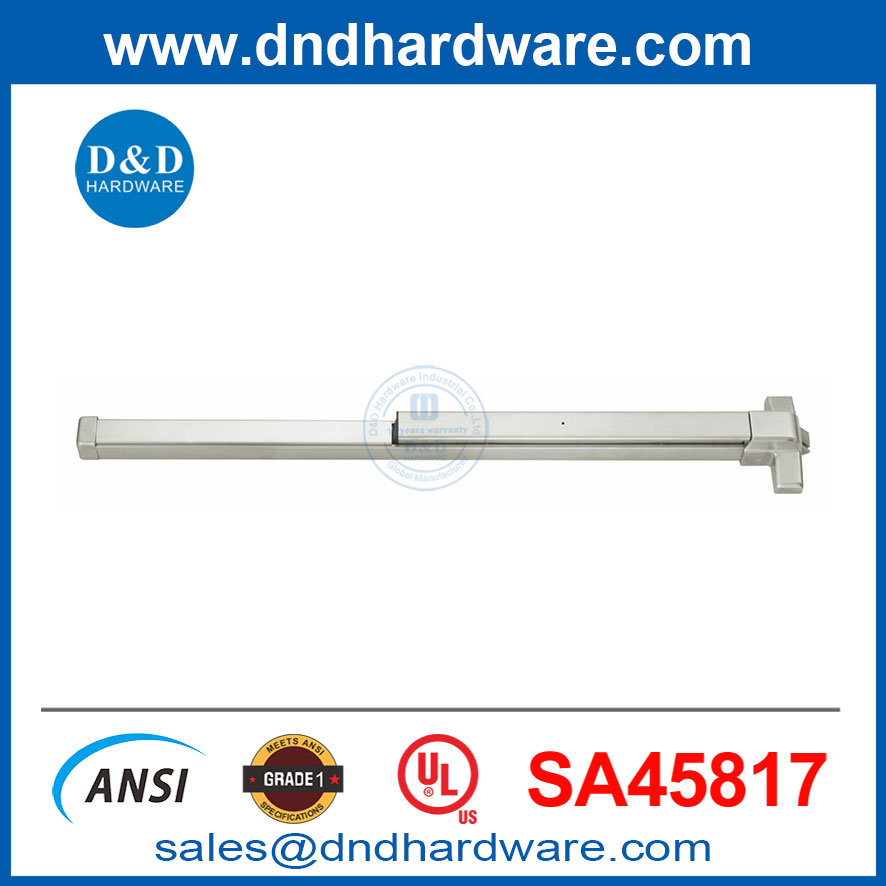
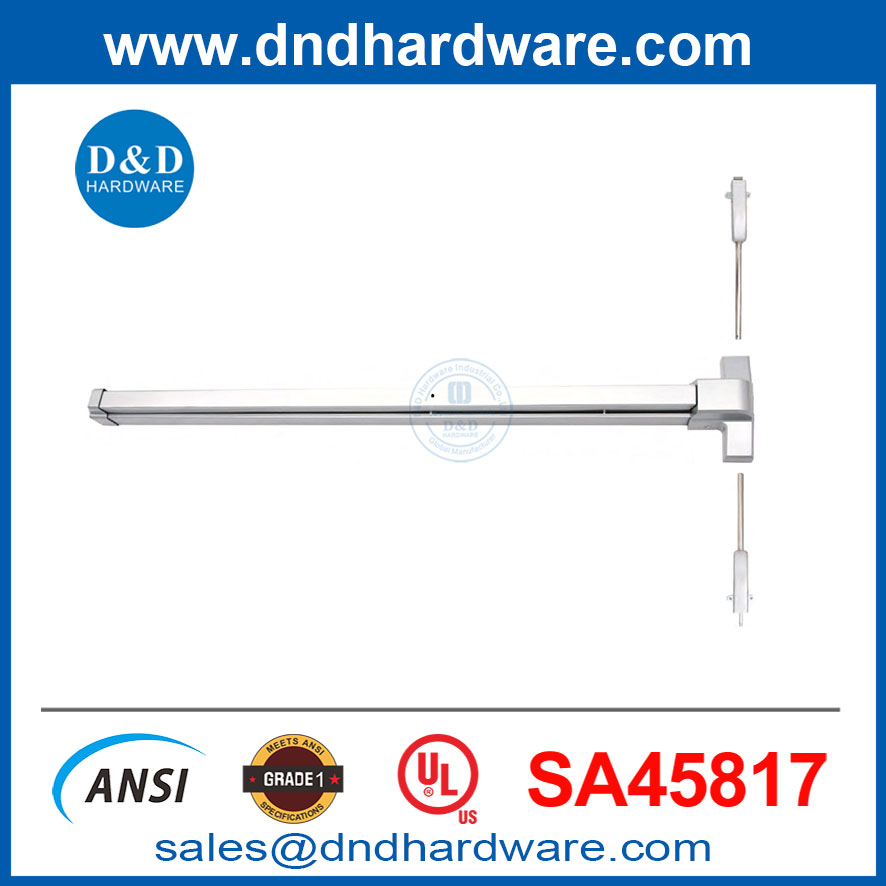
You can see panic exit devices in lots of public places. These devices help people get out fast if there is an emergency. The International Building Code says panic hardware must be in places like schools or theaters with over 50 people. The main job of a panic exit device is to let you leave right away by pushing a bar. You do not need to know anything special to use panic hardware. The device opens the latch when you push it, so anyone can use it easily.
Key Features
Panic hardware has many important features. You can get out fast by just pushing the bar. These devices are strong and last a long time. Panic bars are simple to use, even if you feel scared. They follow safety rules and are easy to put in. Panic exit devices fit many kinds of doors and do not cost too much. You also get help with repairs and keeping the hardware working well.
Feature | Description | Importance |
Durability | Strong against damage and lasts for years. | High |
Ease of Use | Simple to use for quick exits in emergencies. | Critical |
Compliance Standards | Follows local safety rules and standards. | Essential |
Quick Installation | Easy to set up fast so there is little trouble. | Important |
Versatility | Works on many door types and in different places. | High |
Cost-effectiveness | Good price without losing quality. | Moderate |
Maintenance Support | Help is available for fixing and checking the hardware. | Important |
Common Uses
You find panic exit devices in many buildings. Schools use panic hardware to keep students and staff safe. Hospitals need panic bars for fast exits. Offices have panic exit devices because many people work there. Hotels use panic hardware to protect guests. Churches have panic bars so people can leave quickly. Retail stores use panic exit devices for safe exits. Warehouses use panic hardware for good evacuation routes.
Type of Building | Description |
Schools | Public places where safety is very important for students and staff. |
Hospitals | Places that need fast exits in emergencies. |
Offices | Workplaces with lots of people needing quick ways out. |
Hotels | Places to stay that must keep guests safe in emergencies. |
Churches | Worship places that need to help people leave fast. |
Retail Stores | Stores with many customers who need safe exits. |
Warehouses | Storage places that need good ways to get out fast. |
Tip: Always check your building's safety codes before picking panic hardware. This helps you follow the law and keeps everyone safe.
Fire-Rated Exit Device Overview
Definition & Purpose
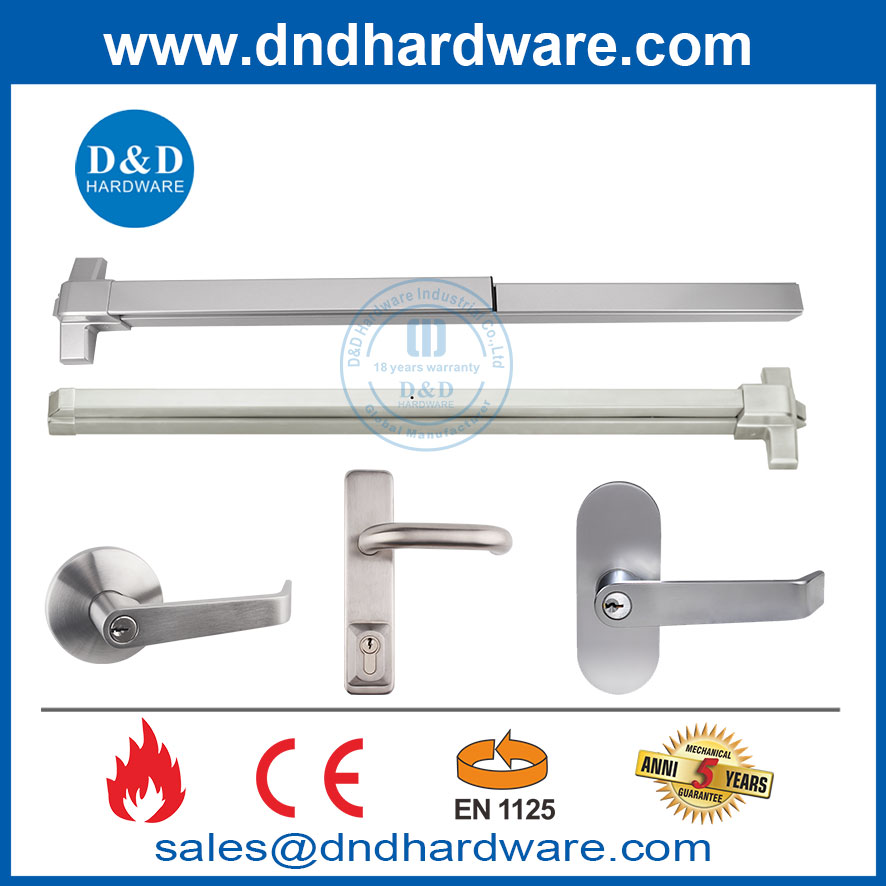
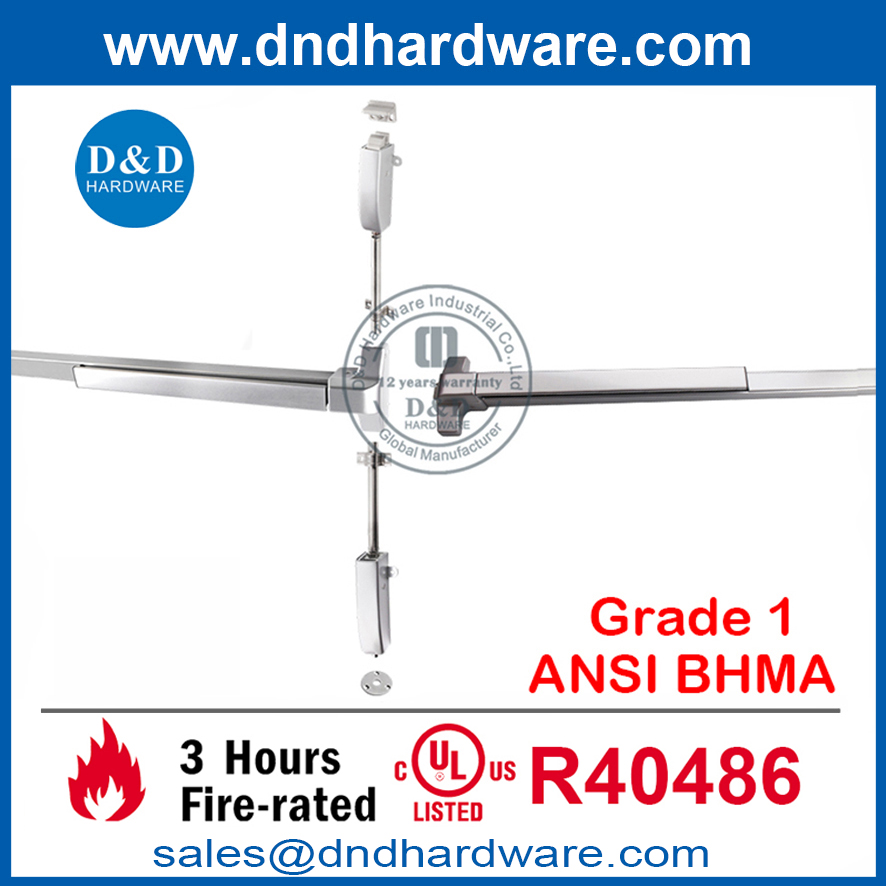
A fire-rated exit device is made for special doors. These doors are part of a fire-rated assembly. The device keeps the fire barrier strong. Its main job is to let people leave fast and safe in emergencies. It also stops fire and smoke from spreading. Using a fire-rated exit device helps keep everyone safe in the building. The device always keeps the door latched. This is important for stopping flames and smoke from moving to other places.
Key Features
Fire-rated exit devices have features that make them different from regular panic hardware:
Fire-rated exit devices let people leave quickly and keep the fire door strong.
You can get out by pushing once. You do not need special skills or strength.
The hardware can handle high heat and will not break during a fire.
Fire-rated devices cannot have mechanical dogging. This means the latch always catches when the door closes.
These devices are tested to make sure they work in extreme heat.
Standard exit devices may allow mechanical dogging, but fire-rated devices do not. This keeps the fire barrier strong.
Note: Fire-rated exit devices must always latch when the door closes. This is needed to keep the fire barrier strong and protect everyone inside.
Common Uses
Fire-rated exit devices are used in many buildings where fire safety is important. Here are some common places:
Doors in Fire-Rated Exit Stairwells: These doors need fire-rated hardware to keep stairwells safe for people escaping a fire.
Doors in Fire-Rated Corridors or Hallways: These doors help make safe exit paths by stopping fire and smoke.
Horizontal Exits: Fire-rated devices protect doors that lead to safe areas on the same floor.
Doors Separating Different Occupancies: In mixed-use buildings, these devices keep fire from spreading between different sections.
Choosing the right fire-rated exit device helps protect lives and property in your building.
Key Differences Between Panic Exit Devices and Fire-Rated Exit Devices
Mechanical Dogging vs Positive Latching
It is important to know how mechanical dogging and positive latching work. Mechanical dogging lets you keep the latch open. This means the door can swing without stopping. You find this feature in panic hardware. It is used in busy places like schools and stores. People can go in and out easily all day. They do not need to push the bar every time.
Fire-rated exit devices are not the same. These devices must always latch when the door shuts. Positive latching means the latch catches by itself. This keeps the door closed tight. Fire doors need this to stop fire and smoke. If you use mechanical dogging on fire-rated exit devices, the door might not stay closed in a fire. This can let smoke and flames move to other rooms. The international building code and nfpa do not allow mechanical dogging on fire-rated exit devices. You must use positive latching to keep the fire barrier strong.
Feature | Mechanical Dogging | Positive Latching |
Functionality | Allows latch to be held in a retracted position | Ensures latch engages automatically when door closes |
Fire Safety Compliance | Not permitted in fire-rated devices | Required in fire-rated devices to maintain door integrity |
Usage | Common in panic hardware | Essential for fire-rated exit devices |
Note: Fire-rated exit devices must always latch again when the door closes. This keeps fire doors locked and helps protect people inside.
Testing & Certification (UL 305 and Fire Standards)
You need to check the testing and certification for each device. Panic hardware must meet UL 305 standards. This standard checks if you can get out fast and safe. UL 305 is the main rule for panic hardware safety in North America. It covers both panic exit hardware and fire exit hardware with extra rules.
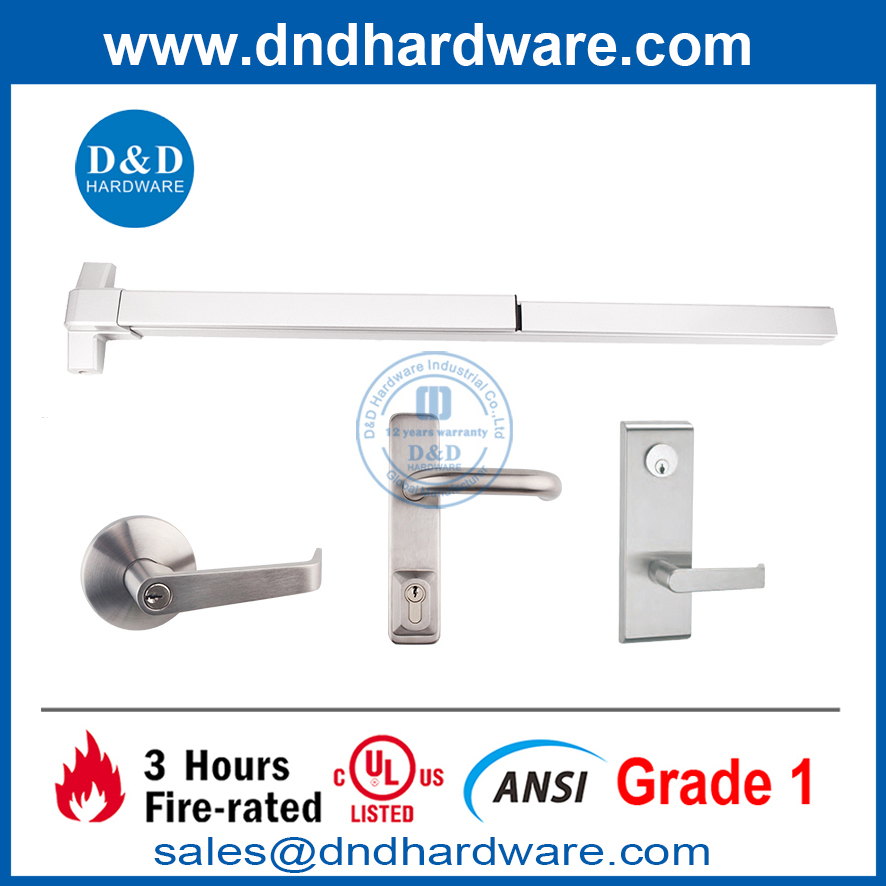
Fire-rated exit devices need more tests. They must meet UL 10C and UL 305 standards. UL 10C checks if the device can handle high heat and keep the door closed. You should look for a fire rating label on fire-rated exit devices. This label shows the device passed fire tests. The label may say the device protects for 20 minutes, 90 minutes, or up to 3 hours.
Standard | Description |
UL 305 | Listed for use on UL 10C fire-rated assemblies, evaluates latching integrity and attachment stability. |
ANSI/UL 305 | Sets safety requirements for exit devices on emergency egress doors, ensuring reliable egress during emergencies. |
Fire-rated exit devices must latch again by themselves when the door closes.
They must pass hard tests to show they can keep the door shut in a fire.
Fire-rated devices must have a label that shows the fire rating.
Panic hardware does not need fire resistance testing.
Tip: Always look for certification labels on your exit devices. This helps you follow the rules and keeps your building safe.
Code Requirements & Compliance
You must follow code rules to keep your building safe and legal. The international building code and nfpa make rules for panic hardware and fire-rated exit devices. Panic hardware is needed in places with lots of people, like schools or theaters with over 50 people. The bar you push must cover at least half the door. You must put it between 34 and 48 inches above the floor. You cannot use more than 15 pounds of force to open it. You cannot add extra locks like chains or padlocks during business hours.
Requirement | Details |
Occupancy Type | Panic hardware is required for assembly or educational spaces with 50+ occupants or high-hazard spaces. |
Actuating Part Dimensions | Must extend at least half the width of the door. |
Mounting Height | Must be installed between 34 and 48 inches above the floor. |
Additional Locking Devices | No additional locks (e.g., chains, padlocks) can be used on the door. |
Operational Force | Latch must be operable with no more than 15 pounds of pressure. |
Panic vs. Fire Exit Hardware | Not all panic hardware qualifies as fire exit hardware; fire exit hardware must meet stricter standards. |
Fire-rated exit devices have stricter code rules. Fire doors must have a fire protection rating, often 90 minutes for doors in a 2-hour fire wall. The door must swing in the way people leave. You must use self-closing or automatic-closing doors, often linked to the fire alarm. Fire-rated exit devices must latch by themselves. You must use fire exit hardware if panic hardware is needed. Each door leaf must have at least 32 inches of clear width for people to get out. You must have EXIT signs as the rules say.
Requirement | Details |
Fire Protection Rating | Minimum of 90 minutes for doors in a 2-hour fire barrier. |
Swing Direction | Must swing in the direction of egress travel. |
Self-Closing | Must be self-closing or automatic-closing, connected to the fire alarm system. |
Latching | Must be self-latching; fire exit hardware is required if panic hardware is needed. |
Clear Width | Minimum of 32 inches clear width per leaf based on occupant load. |
Signage | Must have EXIT signs as per Section 7.10. |
Callout: You must follow all code rules for panic hardware and fire-rated exit devices. This keeps your building safe and helps you avoid trouble.
Panic hardware and fire-rated exit devices do different jobs. Panic hardware lets you get out fast. Fire-rated exit devices keep fire doors strong and closed. You must follow the rules from nfpa and the international building code to keep everyone safe in your building.

Where Should Each Exit Device Be Used?
The correct product depends on the door rating, building use, traffic level, and project requirements.
Project Condition | Recommended Hardware |
Non-fire-rated emergency exit door | Panic exit device |
Fire-rated stairwell door | Fire exit hardware |
Fire-rated corridor door | Fire-rated exit device |
High-traffic retail door, non-fire-rated | Panic exit device with dogging function if allowed |
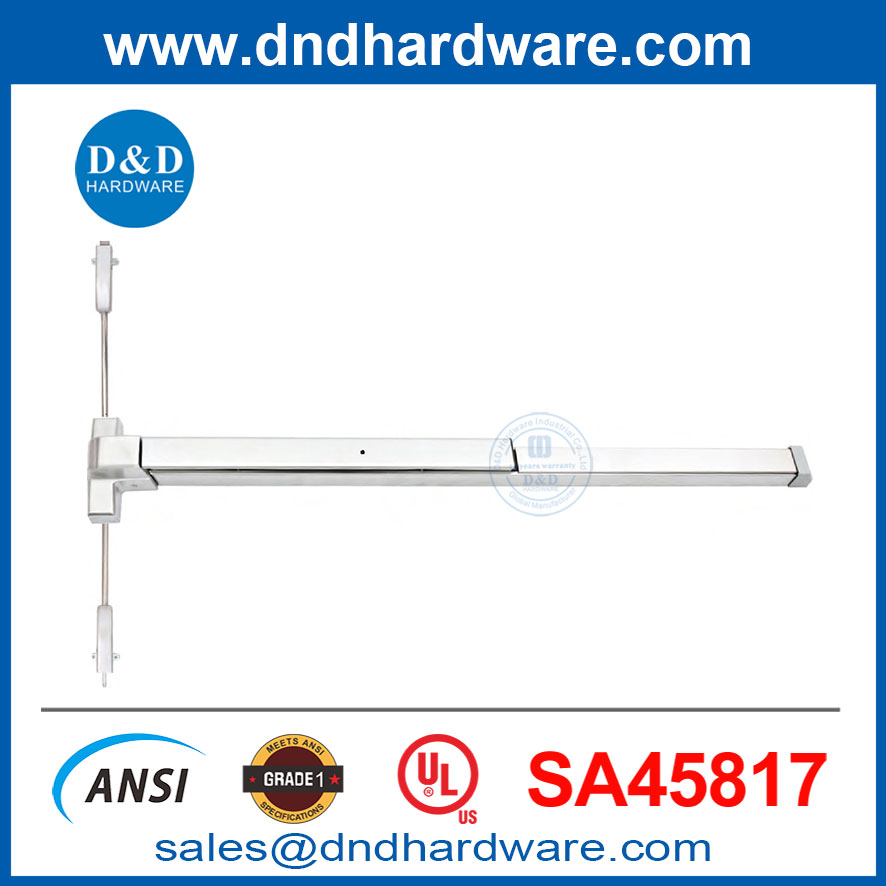
Double fire-rated door | Approved fire-rated vertical rod exit device or other listed fire exit hardware solution |
Door requiring access control | Exit device with compatible electric trim, electric latch retraction, or access control function |
Hotel, hospital, school, or commercial project | Select according to door rating, occupancy, traffic level, code, and certification requirements |
Choosing the Right Exit Device
Assessing Building Needs
Before you pick an exit device, look at your building. Check if your doors are wood, steel, or glass. See if you have single or double doors. Make sure the exit device fits your door type. You need to follow the right safety rules for your building. Think about extra things like alarms or weather resistance. Some devices have tamper-proof parts. Pick devices that are easy to take care of. This helps you save money later. If your door is in a fire-rated wall, use a fire-rated exit device. This keeps your building safe and follows the life safety code.
Check what your doors are made of and how they are set up.
Follow all safety rules.
Look for extra features you might need.
Choose devices that are simple to maintain.
Tip: Where your door is can mean you need fire-rated hardware. Always check if your door is part of a fire barrier.
Understanding Code Requirements
You need to know the rules for exit devices in your building. The rules can change based on how your building is used. For example, rooms with 50 or more people need panic hardware. Schools and hospitals often have stricter rules than other places. High-risk areas need exit devices no matter how many people are there. Main escape routes must have exit devices to meet the rules.
Occupancy Type | Requirement for Exit Devices |
Assembly Occupancies | Needed on all exit doors if more than 50 people use them. |
Educational Facilities | Needed on doors for areas with more than 50 people. |
Healthcare Facilities | May need exit devices even for smaller groups. |
High Hazard Occupancies | Needed no matter how many people are there. |
Main Egress Doors | Usually needed on main escape doors in most buildings. |
Note: Always check your local rules and the national electric code. This is extra important if you use electronic access controls.
Selection Tips
Here are some tips to help you pick the best exit device:
Make sure your device meets all safety rules.
Pick strong materials like steel or stainless steel.
Check if your device works with your key system.
Make sure it works with electronic access control for more security.
Use fire-rated exit devices on fire doors and make sure they latch by themselves.
Choose ANSI/BHMA Grade 1 devices for tough jobs.
Install devices at the right height and check the push bar works well.
Check and take care of your devices often.
Requirement | Description |
Fire-rated exit devices | Must be listed for fire doors and latch by themselves. |
Trim functions | Pick the right trim for your needs. |
ANSI/BHMA Grade 1 | Best for tough and reliable use. |
Installation checks | Make sure it is mounted right and the latch works. |
Callout: Always have trained professionals install your exit devices. Teach your staff how to use them safely.
Common Mistakes When Selecting Exit Devices
Mistake 1: Using Standard Panic Hardware on a Fire-Rated Door
Not all panic hardware is fire exit hardware. If the door is fire-rated, the exit device must be listed for use on fire-rated door assemblies.
Mistake 2: Choosing Mechanical Dogging for a Fire-Rated Opening
Mechanical dogging holds the latch retracted. This is not allowed on fire-rated exit devices because fire doors must positively latch when closed.
Mistake 3: Ignoring Door Type and Door Preparation
Exit devices are not universal. A device suitable for a single hollow metal door may not be suitable for a double fire-rated door, a narrow stile aluminum door, or a wooden fire door.
Mistake 4: Not Checking Certification Documents
For international projects, buyers should verify the required certification before ordering. Missing or incorrect certification can cause inspection failure and project delays.
Mistake 5: Adding Extra Locks to Emergency Exit Doors
Additional chains, padlocks, or unauthorized locking devices may prevent safe egress and violate code requirements. Emergency exit doors must allow occupants to exit quickly and safely.
D&D Hardware Exit Device Solutions
D&D Hardware supplies panic exit devices and fire-rated exit hardware for commercial, institutional, and fire-rated door applications. Our exit hardware solutions are designed for projects such as hotels, hospitals, schools, office buildings, public facilities, commercial buildings, and fire-rated door systems.
We provide exit devices that can be matched with other architectural door hardware, including:
For project buyers, door manufacturers, contractors, and distributors, D&D Hardware can support complete door opening hardware solutions according to door type, certification requirements, finish, quantity, and project schedule.
If you are selecting panic exit devices or fire-rated exit devices for a commercial project, you can contact our team to request product specifications, certification information, technical drawings, or a complete hardware recommendation.

Conclusion
Panic exit devices and fire-rated exit devices are both essential for life safety, but they are designed for different applications. Panic exit devices provide fast emergency egress for non-fire-rated openings. Fire-rated exit devices, or fire exit hardware, provide emergency egress while also ensuring positive latching for fire-rated door assemblies.
For any commercial, institutional, hotel, hospital, school, or fire-rated door project, the correct exit device should be selected according to door rating, occupancy, code requirements, certification, traffic level, and access control needs.
If you need panic exit devices, fire-rated exit hardware, or a complete commercial door hardware solution, D&D Hardware can help you select suitable products for your project.
Contact us to request a catalog, certification documents, technical drawings, or a project quotation.
FAQ
What are exit devices and why do you need them?
Exit devices help you leave a building quickly during emergencies. You find them on doors in schools, offices, and stores. These devices make exits safer and faster. You need exit devices to meet safety codes and protect everyone inside.
Can you use any exit device on a fire-rated door?
You cannot use just any exit device on a fire-rated door. Fire-rated doors need special exit devices that keep the door closed during a fire. These devices help stop fire and smoke from spreading. Always check the label before you choose.
How do different types of exit devices work?
Different types of exit devices work in unique ways. Some use a push bar, while others use a lever or touchpad. You pick the type based on your door and building needs. Each type helps people exit safely and quickly.
What is the main difference between panic and fire-rated exit devices?
Panic exit devices let you exit fast in emergencies. Fire-rated exit devices keep the door closed during a fire. You use panic devices for quick exits. You use fire-rated devices on fire doors to stop fire and smoke.
How do you choose the best emergency exit solutions for your building?
You look at your building's layout, door types, and safety codes. Pick exit devices that match your doors and meet fire safety rules. Ask experts for advice if you feel unsure. Good emergency exit solutions keep everyone safe.
Tip: Always test your exit devices often. This helps you know they work when you need them most.
Contact us Now:
Contact: David Jian
Mob:0086-139 2903 7292
Email: David@dndhardware.com, sales@dndhardware.com,
Contact: Jobby Zhang
Mob:0086-137 2599 9617
Email: jobby@dndhardware.com
D&D HARDWARE INDUSTRIAL CO.,LTD
ADD:12th Floor, Building 2, No.898, KeChuang Technical Zone, Jiangmen Avenue, Pengjiang District, Jiangmen City, Guangdong, China (Postcode:529000)
https://www.dndhardware.com
Tel: +86-750-3856396
Fax: +86-750-3856395


 English