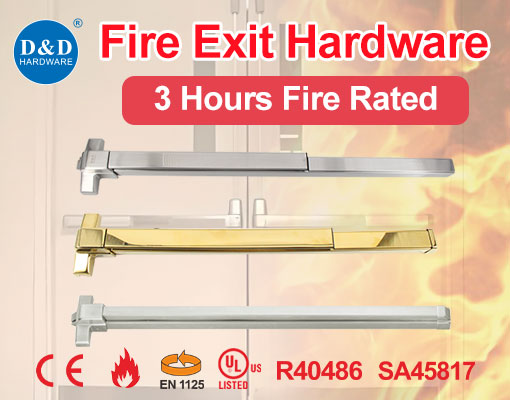
A fire door panic bar lets people get out fast and safely in emergencies. It helps keep everyone in the building safe. Fire door hardware is very important for keeping doors locked and stopping fire and smoke. This can make the area cooler and safer. Good emergency exit devices and clear instructions help you follow local rules. They also stop problems from bad installation or care. D&D Hardware gives trusted choices to help you pick the right items and stay safe.
Key Takeaways
Fire door panic bars help people leave fast in emergencies. You can open them by pushing, which keeps everyone safe.
It is important to check panic bars often. Look at them every six months to make sure they work right and follow safety rules.
Pick the best panic bar for your door and how you use it. Strong bars are good for busy places. Simple bars are good for emergency exits.
Always pick panic bars that are certified. Certified bars follow safety rules and make buildings safer.
It is best to have a professional put in panic bars. Experts set them up right and help stop problems during emergencies.

What Is a Fire Door Panic Bar?
Definition and Function
You may see a fire door panic bar on many doors in schools, malls, or hospitals. This device sits across the inside of a door. When you push on it, the door unlocks and opens. Industry standards define panic hardware as a door-latching assembly that releases the latch when you apply force in the direction of travel. This means you do not need to turn a knob or use a key. You only need to push the bar to open the door. This simple action helps you leave quickly during emergencies.
A fire door panic bar is important for fire safety exits. It works even if you feel scared or rushed. You can trust that the door will open with one push. This design helps everyone, including children and older adults, escape safely.
Tip: Always check that panic bars for fire safety exits are easy to reach and not blocked by furniture or boxes.
Role in Emergency Egress
During a fire or other emergency, you need to get out fast. Panic bars for fire safety exits help you do this. They let you open the door with a single push, even if many people try to leave at once. This feature is vital for rapid evacuation. You do not have to search for a key or twist a handle. You just push and go.
Fire door panic bars make exits safer. They lower the risk of crowding or confusion. In a crisis, every second counts. These bars help you and others move out of danger quickly. You can find them on fire safety exits in many public places. They play a key role in keeping everyone safe.
Key Features of Fire Door Panic Bars
Safety Mechanisms
You need to know that a fire door panic bar will keep you safe. These bars have special safety features to help in emergencies. Some panic bars have alarms that make noise when someone pushes the bar. This tells security right away if someone uses the door. Some panic bars use delayed egress, which means the door stays locked for a short time before it opens. This gives staff time to check what is happening. Other important parts are strong latching systems, astragals, and latch guards. These parts stop people from breaking in or messing with the door. The table below shows some common safety features you might see:
Safety Mechanism | Description |
Alarm Systems | Sounds an alarm when activated to alert security. |
Delayed Egress Devices | Keeps door locked for 15-30 seconds after activation. |
Latching Mechanisms | Provides extra strength and security. |
Astragals | Covers gaps to prevent tampering. |
Latch Guards | Protects latch area from prying. |
Hex Key Feature | Lets you lock the push pad during business hours. |
Fire-rated Panic Hardware | Ensures the door always latches when closed. |
Durability and Materials
You want your fire door panic bar to last a long time. Most panic bars are made from strong materials like stainless steel or steel. These materials do not rust or turn yellow easily. They stay strong and look good for years. Some panic bars, like the X9 Stainless Steel Exit Device Series, use stainless steel for extra strength. These bars can handle lots of people using them every day. The smooth surfaces are easy to clean and take care of. D&D Hardware uses the best materials for their fire door panic bars.
Stainless steel and steel make them strong
Surfaces do not wear out or rust
Made for doors that get used a lot
Compliance with International Code Standards
You must pick panic bars that follow safety rules. These rules make sure the bars work well in emergencies. The table below shows some rules you should know:
Requirement Type | Description |
Fire-rated Doors | Must use panic hardware that meets UL 305 standards. |
Location | Install on the egress side, 34-48 inches above the floor. |
Operation | Must open with one hand and less than 15 pounds of force. |
Locking | No key or special knowledge needed to open. Locking must not block exit. |
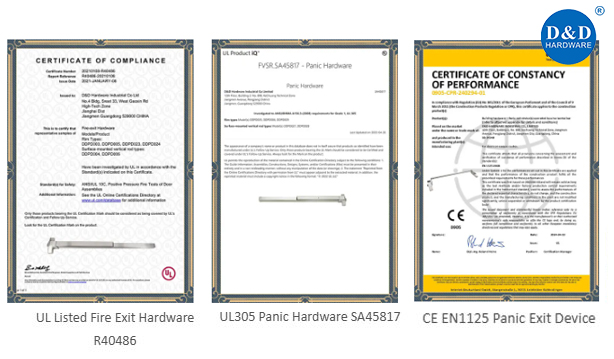
D&D Hardware’s fire door panic bars meet important certifications like CE, UL, BS EN, and ANSI. These marks show the hardware is safe and works well. Many places require certified hardware by law. Using D&D Hardware’s certified fire door panic bars helps you follow the rules and keeps everyone safe.
Types of Fire Door Hardware for Emergency Exits
When you make escape plans, you need to know about different panic hardware. Each kind of fire exit hardware helps keep people and things safe in emergencies. You can find these devices on fire safety exits in places like schools, offices, and hospitals. They work with fire door locks and fire door handles so everyone can get out fast and safely.
Rim Panic Bars
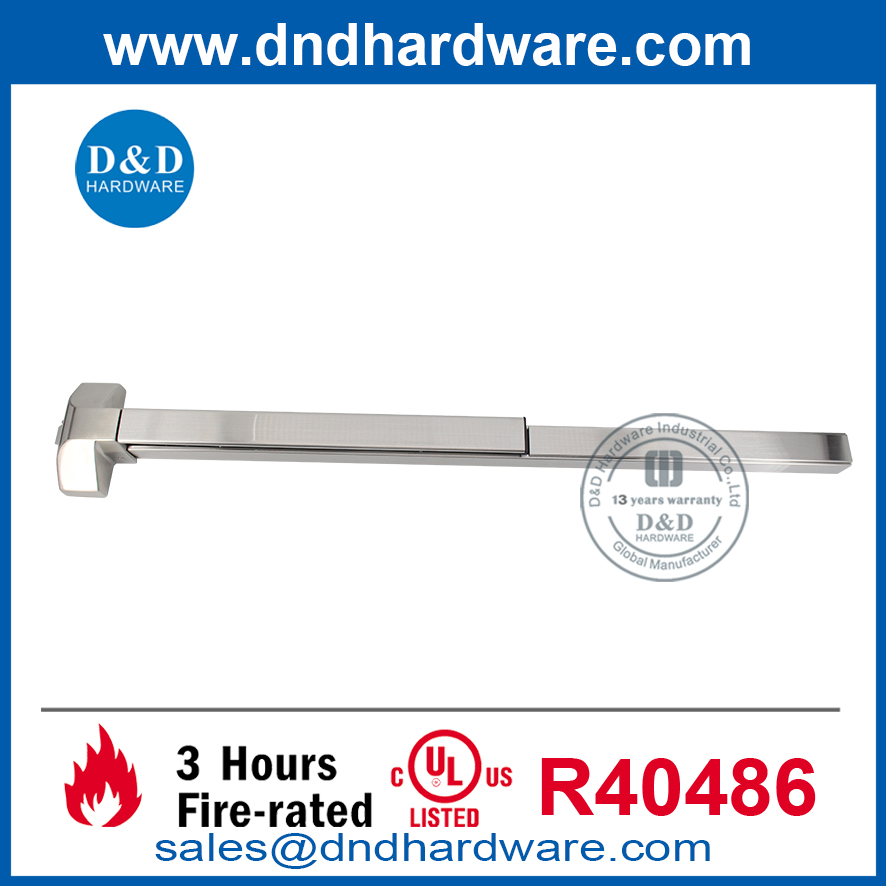
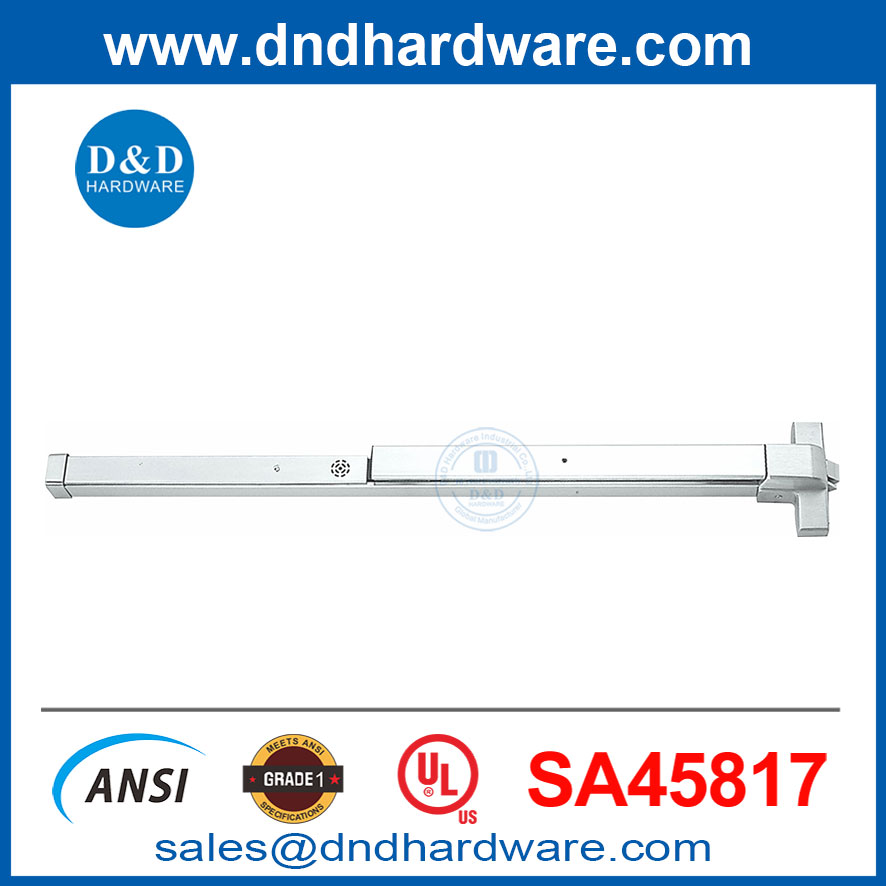
Rim panic bars are used on single doors or simple exits. These panic bars for fire safety exits have a latch on the outside of the door. You do not have to cut the door to put them in. This makes rim panic bars easy to add or change. You can use them with fire door locks and fire door handles to keep escape routes safe. Rim panic bars cost less and are good for most doors.
Mortise Panic Bars
Mortise panic bars have a lock that goes inside the door. The lock is hidden, so the door looks smooth. These panic bars for fire safety exits give more security. They are harder to mess with than rim panic bars. Mortise panic bars are best for busy places or where you need extra safety. You will see them with fire door locks and fire door handles on main escape routes.
Tip: Pick mortise panic bars if you want strong safety and a neat look for your fire safety exits.
Here is a table to help you see the differences between rim and mortise panic bars:
Feature | Rim Panic Device | Mortise Panic Bar |
Latching Mechanism | Surface-mounted latch and strike | Mortise lock body installed inside door |
Installation | Simple, surface-mounted | Complex, needs pocket cut in door |
Security | Good | Excellent, more tamper-resistant |
Aesthetics | Visible latch and strike | Concealed lock body, cleaner look |
Cost | Less expensive | More expensive |
Best For | Retrofits, single doors, general use | High-security, high-traffic doors |
Vertical Rod Panic Bars
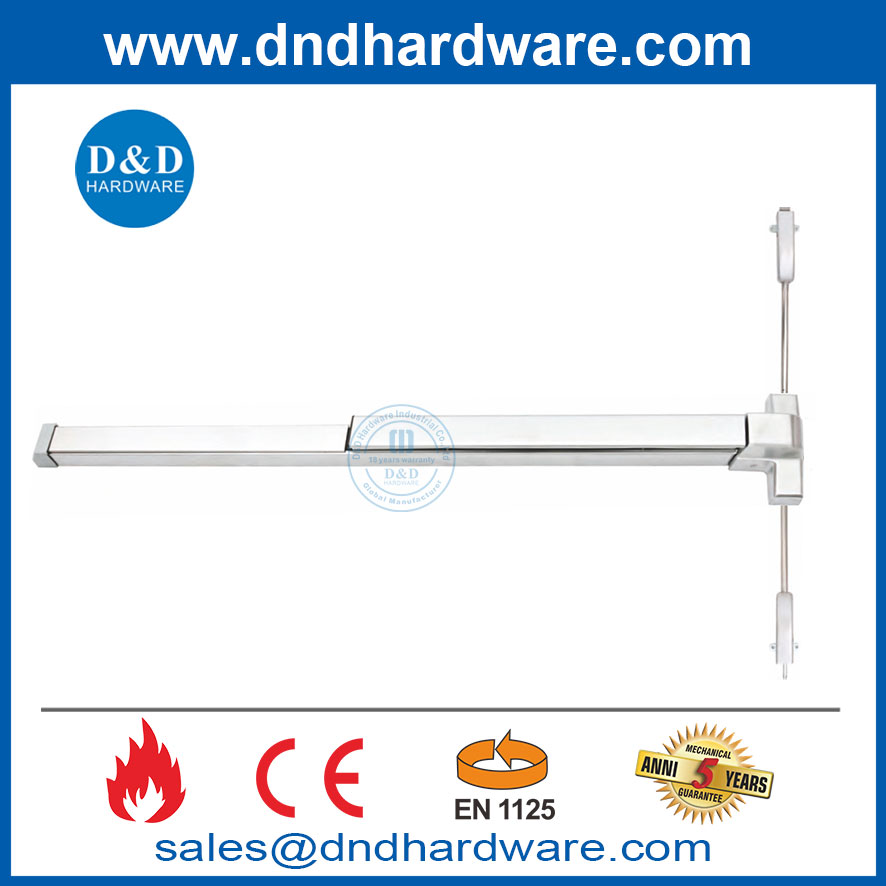
Vertical rod panic bars have rods that go up and down the door. These rods connect to fire door locks at the top and bottom. You see this fire exit hardware on double doors or doors without a post in the middle. Vertical rod panic bars help keep wide exits safe. They work with fire door handles so both sides of the door open easily. You can count on this panic hardware to keep fire safety exits ready for emergencies.
Specialty Exit Devices
Some exits need special panic hardware. Specialty exit devices are things like alarmed exit bars, touch bars, and electrified panic bars. These devices have extra features like alarms or remote control. You can use them with fire door locks and fire door handles for special needs. Specialty fire exit hardware helps protect important areas or follow strict safety rules. Pick the right device for each exit to keep your building safe.
Remember, the right fire door panic bar and fire door hardware make escape routes safer and easier for everyone.
Code Requirements for Fire Door Panic Bars
NFPA, UL 305, UL 10C Standards
You have to follow rules when picking panic hardware for fire-rated doors. These rules help keep people safe if there is an emergency. NFPA, UL 305, and UL 10C are the main standards for panic bars on fire safety exits. The table below shows the most important points:
Requirement Type | Description |
Operational Cycle Testing | Checks how long panic hardware lasts with lots of use. |
Force Testing | Makes sure you can open fire exit hardware easily, even if you are scared. |
Impact and Security | Tests if panic hardware can stop people from breaking it. |
Fire and Heat Resistance | Makes sure fire-rated door hardware works on UL 10C fire-rated doors in a fire. |
You should always make sure your panic hardware meets these rules. This helps you trust your fire door hardware when there is a real emergency.
Building Code Compliance
You need to know that building codes tell you how to put in panic bars for fire safety exits. The International Building Code and National Fire Protection Association both say you must use fire exit hardware on fire-rated doors. Here are some things to remember:
Most public buildings must have panic hardware on fire-rated doors.
Codes say what kind of doors, how hard you push to open them, and that exits must have clear signs.
Always check local rules for any special needs.
You should also think about how your building is used, its shape, and how many people will use the exits. If you do not follow the code, you could get fined or have legal trouble. Not following the rules can cause injuries or lawsuits if there is an emergency. You must keep all fire exit hardware clear and working to keep everyone safe.
D&D Hardware's Certified Solutions
You can trust D&D Hardware to install code-approved products. D&D Hardware’s fire-rated door hardware has top certifications. These include UL 305, UL 10C, CE EN1125, and EN1634. The table below shows how these certifications help you follow the rules:
Certification | Description | Compliance |
UL 305 | Panic Hardware | Safe for emergency exits |
UL 10C | Fire Exit Hardware | Protects for 3 hours in a fire |
CE EN1125 | Panic Exit Device | Tested for 200,000 uses, fire-rated up to 240 minutes |
EN1634 | Fire Rated | Up to 240 minutes fire resistance |
Many codes say you must use UL-certified fire-rated door hardware in commercial buildings. D&D Hardware gives you peace of mind with products that pass tough tests. You can count on their panic hardware to be safe and follow the rules.
Tip: Always pick certified fire-rated door hardware to avoid breaking the rules and to keep your building safe.
Choosing the Right Panic Bars for Your Doors
Assessing Door Specifications
Before you pick a panic bar, look at your door. The kind of door is important. Some doors are wood. Some are steel. Each one needs different fire door hardware. You should also check what your building needs. Local codes tell you what is safe. These rules help keep people safe and stop fines. The place you put the panic bar should help people leave fast. You need to know about touch bars, cross bars, and integral devices. Pick the one that fits your door, security, and code rules.
Here are some things you should check:
What kind of door you have (wood, steel, fire-rated)
What your building and local codes need
The best spot for easy exits
The panic bar type that fits your door and safety
Tip: Always check local rules before you put in panic bars. This helps you avoid mistakes and keeps everyone safe.
Matching Usage and Application
Think about how people use the door. If lots of people use it every day, pick a strong panic bar. High-cycle panic bars last longer. They work well in busy places like schools or hospitals. For emergency exits, simple panic bars are best. They need less care and help people get out fast. Panic bars help everyone leave quickly in emergencies. This is very important for safety.
Pick strong panic bars for busy doors
Use simple panic bars for emergency exits to lower care
Make sure panic bars help people leave fast in emergencies
Note: If you pick the wrong panic bar, it may not work when you need it most.
Customization Options from D&D Hardware
D&D Hardware gives you many choices for panic bars. You can pick the material, finish, and door type. This helps you match your building’s style and safety. The table below shows some options you can pick:
Feature | Details |
Material | SUS304, SS Grade 304, Aluminium, Painted Steel |
Finish | Satin stainless steel, Polished stainless steel, Antique Brass, Antique Copper, Silver, PVD, Matt Black Powder coating, Steel painted, Gold |
Suitable for | Wooden door, Metal door, Fire rated door, Exit door |
You can find the right panic bar for any door. D&D Hardware lets you choose what fits your building best.
Selecting Features for Safety and Design
You want panic bars that are safe and look nice. Some features are more important than others. The table below shows what to look for:
Feature | Description | Importance | Compliance Standards |
Durability | Made from heavy-duty materials for busy doors | Lasts long and works in emergencies | ANSI/BHMA A156.3 |
Easy Operation | Opens fast and easy in emergencies | Helps people leave quickly | NFPA 101 |
Alarm Integration | Works with alarms for extra safety | Alerts people if someone uses the exit | UL 294 |
Finish Options | Many finishes like brass, chrome, and aluminum | Matches your building’s design | ASTM B117 |
Size Variability | Fits different door sizes | Works for all kinds of doors | ADA Compliance |
Pick panic bars that meet safety rules and match your building’s look. Always check for strong materials and easy use. Alarm features make things safer. Different finishes help you keep your style.
Tip: Do not forget to check the door material. Steel doors are stronger than wood and help keep exits safe.

Installation and Maintenance of Fire Door Panic Bars
Professional vs. DIY Installation
When you think about installing panic bars, you need to decide between professional help and doing it yourself. Professional installation gives you peace of mind. Experts know installation best practices and make sure the fire door hardware works as it should. You avoid damaging the fire door hinges or fire door locks. Here are some points to consider:
Professional installation ensures proper alignment and reduces the risk of damaging the mechanism.
DIY installation may seem easy, but you could harm the fire door hinges or fire door locks. This can lead to malfunction and higher repair costs later.
If you want the best results, follow installation tips from trusted sources and choose professional installers who understand installation best practices.
Routine Inspection and Testing
You must check your fire door hardware often to keep exits safe. Routine inspection and testing help you spot problems early. Follow these steps for installation best practices:
Look at the fire door hinges, fire door locks, and panic bar for damage.
Open and close the door several times to check for smooth movement.
Push the panic bar to see if the door opens right away.
Make sure you can open the door from both sides.
Set a schedule for regular inspections and tests.
Write down all inspections, tests, and repair work for compliance.
The table below shows how often you should inspect fire door hinges and fire door locks:
Inspection Frequency | Recommendation |
Minimum | Every 6 months |
High-traffic areas | Quarterly inspections recommended |
Maintenance Tips for Longevity
You want your fire door hardware to last. Use these installation best practices to keep fire door hinges, fire door locks, and panic bars working well:
Lubricate fire door hinges with quality oil to stop rust.
Keep screws and bolts tight so the door stays aligned.
Check fire door hinges for wear and repair or replace them if needed.
Make sure the locking points release when you press the panic bar.
Use a force gauge to check that opening the device takes less than 15 pounds.
Clean moving parts and strike plates to prevent jamming.
Wash exposed areas with mild detergent and water, then dry them.
If you notice problems, repair a panic bar quickly. You keep exits safe and avoid trouble with locking a panic bar door. Regular care and repair help your fire door hardware last longer and work when you need it most.
Tip: Always follow installation tips and installation best practices to keep your fire door hinges and fire door locks in top shape.
You help keep people safe when you pick certified fire door hardware for exits. Certified emergency exit devices let you manage quick escapes and keep crowds safe. The table below explains why certified panic bars are important:
Benefit Type | Description |
Rapid Evacuation | Panic bars help people leave fast in emergencies. |
Crowd Management | You can guide crowds and stop people from getting hurt. |
Legal Compliance | You follow safety rules and avoid getting in trouble. |
D&D Hardware is known for being strong, safe, and having top certifications. Here is how some brands match up:
Brand | Certifications and Standards | Durability Features |
D&D Hardware | UL 305, UL 10C, CE EN1125, EN1634 | Very strong, does not rust for 240 hours |
Von Duprin | ANSI/BHMA, UL, ADA | Well-known, makes new and strong products |
Detex | Various safety standards | Works well and follows safety codes |
Experts say you should check and fix emergency exit devices often. This helps you keep everyone safe and follow the law. Here are some tips:
Aspect | Recommendation |
Compliance | Check and fix devices often to make sure they work. |
Legal Repercussions | Fix problems fast so you do not get in trouble. |
You keep your building safe when you use D&D Hardware and take care of your emergency exit devices.
FAQ
What is the main purpose of a panic bar on a fire door?
You use a panic bar to open a fire door quickly during emergencies. This device helps you exit safely without searching for keys or turning knobs.
How often should you inspect fire door panic bars?
You should check panic bars at least every six months. In busy areas, inspect them every three months. Regular checks help you find problems early.
Can you install fire door hardware yourself?
You can try, but experts recommend professional installation. Trained installers make sure the hardware works right and meets safety codes.
Do all buildings need panic bars on fire doors?
Most public buildings need panic bars on fire doors. Local codes and building use decide the exact requirements. Always check your area’s rules.
How do you maintain panic bars for long life?
You keep panic bars working by cleaning, tightening screws, and testing them often. Lubricate moving parts and fix any issues right away.
Contact us Now:
Contact: David Jian
Mob:0086-139 2903 7292
Email: David@dndhardware.com, sales@dndhardware.com,
Contact: Jobby Zhang
Mob:0086-137 2599 9617
Email: jobby@dndhardware.com
D&D HARDWARE INDUSTRIAL CO.,LTD
ADD:12th Floor, Building 2, No.898, KeChuang Technical Zone, Jiangmen Avenue, Pengjiang District, Jiangmen City, Guangdong, China (Postcode:529000)
https://www.dndhardware.com
Tel: +86-750-3856396
Fax: +86-750-3856395


 English