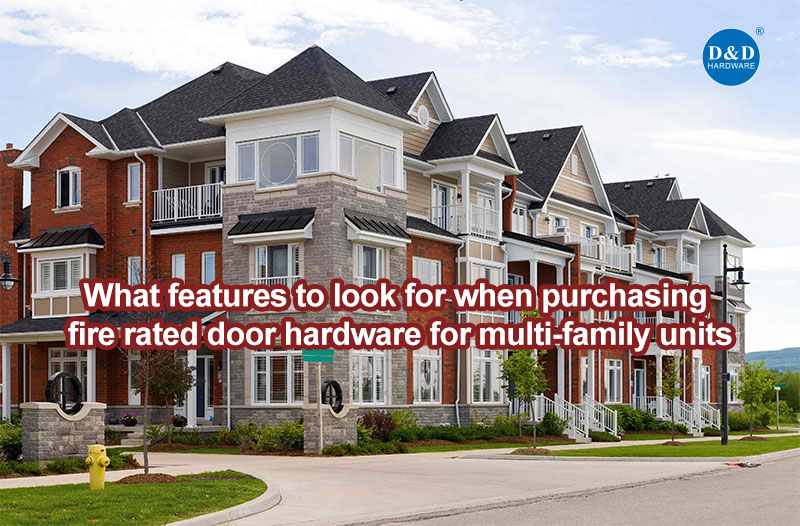
When you pick fire rated door hardware for multi-family units, choose products that are certified. Look for safety features like self-closing and positive latching. These features help keep doors safe in emergencies. Pick strong materials that do not rust or wear out fast. Make sure the hardware fits your doors and frames. It should be easy for people to use. D&D Hardware gives trusted choices that meet world standards and work well.
Key Takeaways
Always pick fire rated door hardware with certifications like UL or CE. These certifications show the hardware is safe and follows fire safety rules.
Choose strong materials like stainless steel or magnesium oxide. These materials do not rust and protect against fire for a long time.
Make sure the hardware fits your doors and frames well. Good installation is important to keep people safe during a fire.
Find features like positive latching mechanisms and self-closing doors. These features help keep doors closed in emergencies.
Check and clean your fire rated door hardware often. Simple care can make it last longer and keep everyone safe.
Certification & Standards
Fire Rated Door Hardware Certification
Before you buy fire rated door hardware, check for certifications. These show the hardware follows important safety rules. UL certification is very important in North America. It is not just a good idea. It is needed for fire safety.
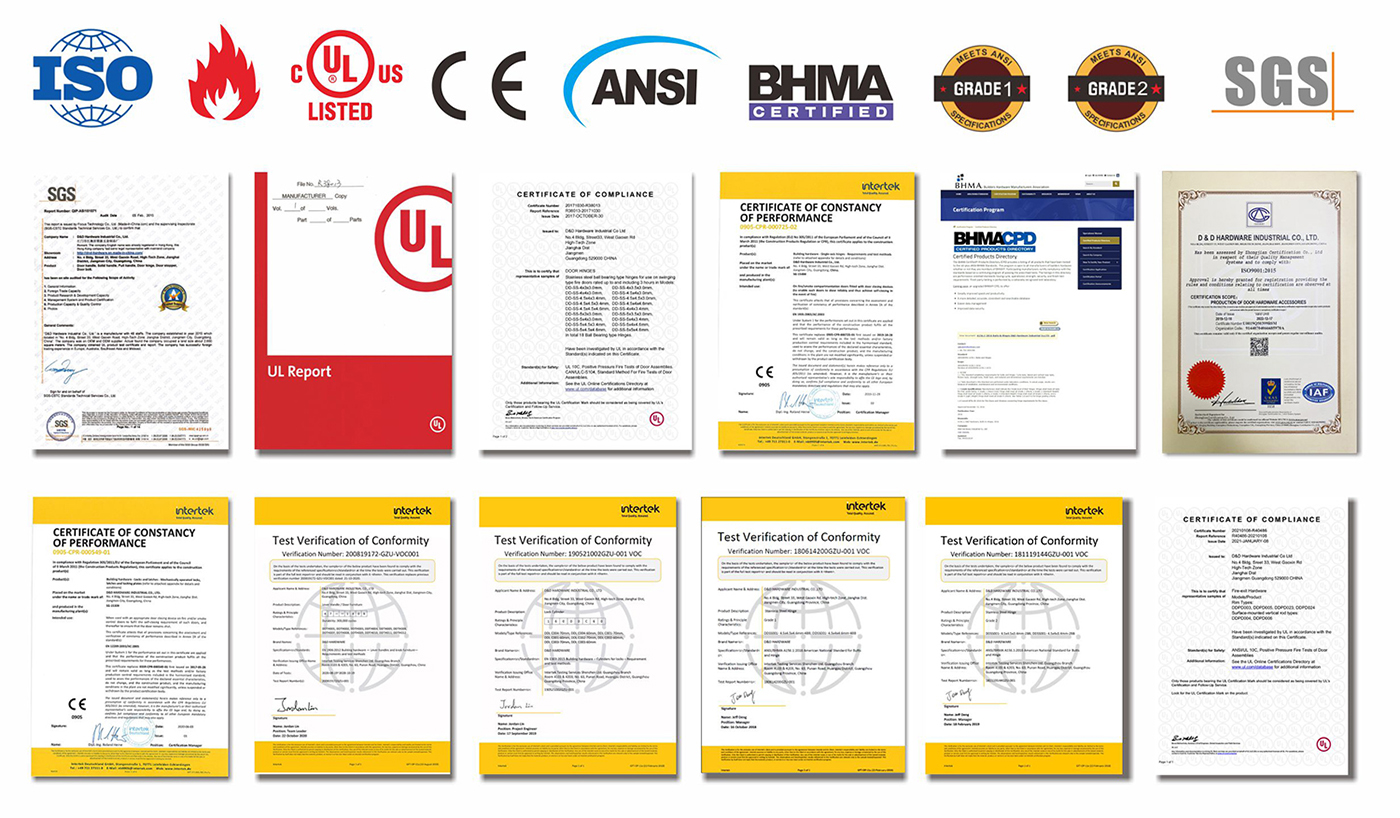
UL (Underwriters Laboratories) certification is not just a suggestion. It is a strict rule for fire safety in North America and is known around the world.
You might see other certifications like CE, BS EN, ANSI, and BHMA. Each one checks different things. CE is needed in Europe. UL is key in North America. ANSI and BHMA check if the hardware is strong and lasts long. The table below shows how these certifications are different:
Aspect | CE | UL | ANSI/BHMA |
Legal requirement | Yes (EU) | No (code-driven) | No |
Fire testing | EN 16034 | UL 10C | Not primary |
Mechanical durability | Limited | Limited | Core focus |
Market access | Europe | North America | North America |
System vs component | System-based | System-based | Component-based |
UL checks if the hardware works in a fire and keeps people safe. ANSI/BHMA tests if the hardware works well for a long time. You want fire rated door hardware that passes these tests. D&D Hardware makes sure every product passes these standards. The company uses outside labs to test and label products for fire ratings. You can trust D&D Hardware to give you safe and strong hardware.
CE-certified products go through EN 1634 testing. This test acts like a real fire for different times. UL-listed products are tested for fire resistance, heat, and emergencies. These certifications help you follow the law and insurance rules. If you do not follow these rules, you can have big problems:
You might have to pay a lot of money if you break fire safety rules.
You may need to close parts of your building until you fix things.
People can sue you if a fire causes damage and your hardware is not certified.
You could lose your building’s approval.
Insurance might not pay for damage if you do not use certified hardware.
Compliance Labels & Markings
You must look for clear labels and markings on fire rated door hardware. These labels show the hardware is safe and certified. The table below lists the main labels you should see:
Compliance Label/Marking | Description |
Fire Protection Rating | Shows how long the door stops fire. |
Test Standards | Lists the rules the door follows. |
Third-Party Certification Mark | Shows someone else tested it. |
Manufacturer/Distributor Name or Logo | Tells who made or sold the door. |
Minimum Latch Throw | Shows the latch throw needed for safety. |
Temperature Rise Rating | Tells if the door controls heat in a fire. |
'S' Mark for Smoke and Draft Applications | Shows the door blocks smoke and drafts. |
Fire Exit Hardware Statement | Says if the door has fire exit hardware. |
D&D Hardware puts easy-to-see tags on locks, hinges, door closers, and exit devices. These tags show fire ratings, test rules, and who certified them. You will see ratings like 20, 45, 60, 90, or 180 minutes. The products follow codes like NFPA 80, NFPA 101, IBC, and IFC. You can find CE/EN certifications from groups like CERTIFIRE or BRE.
CE-certified hardware passes EN 1634 fire tests.
UL-listed hardware passes fire resistance and emergency tests.
All certifications help you follow the law and keep people safe.
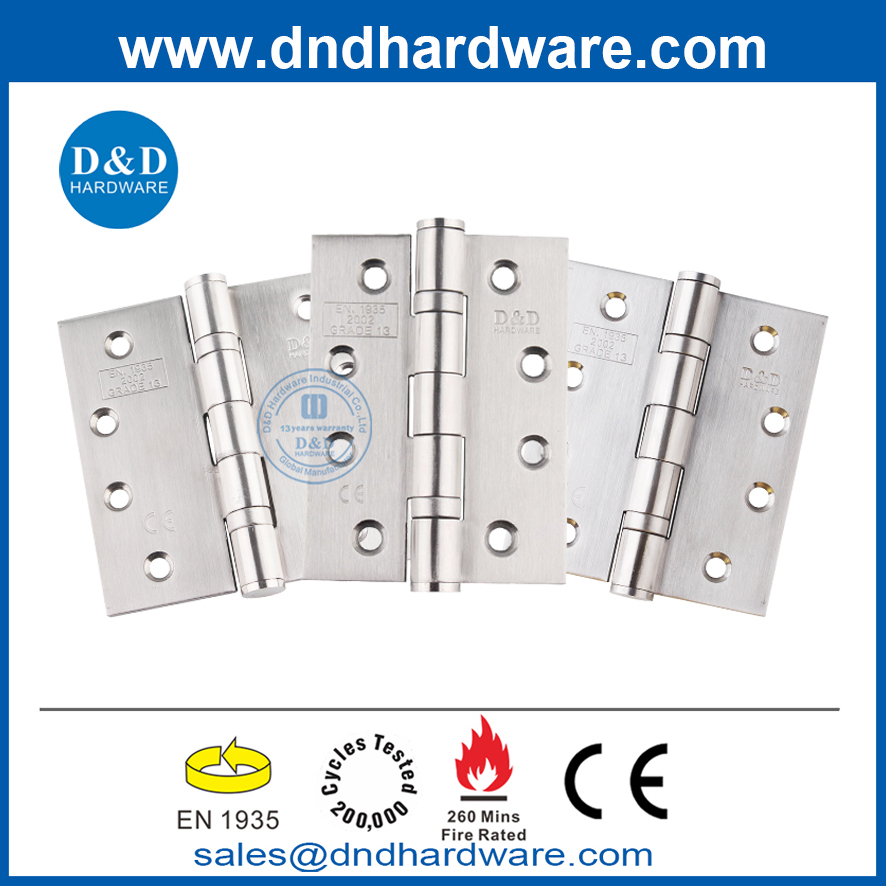
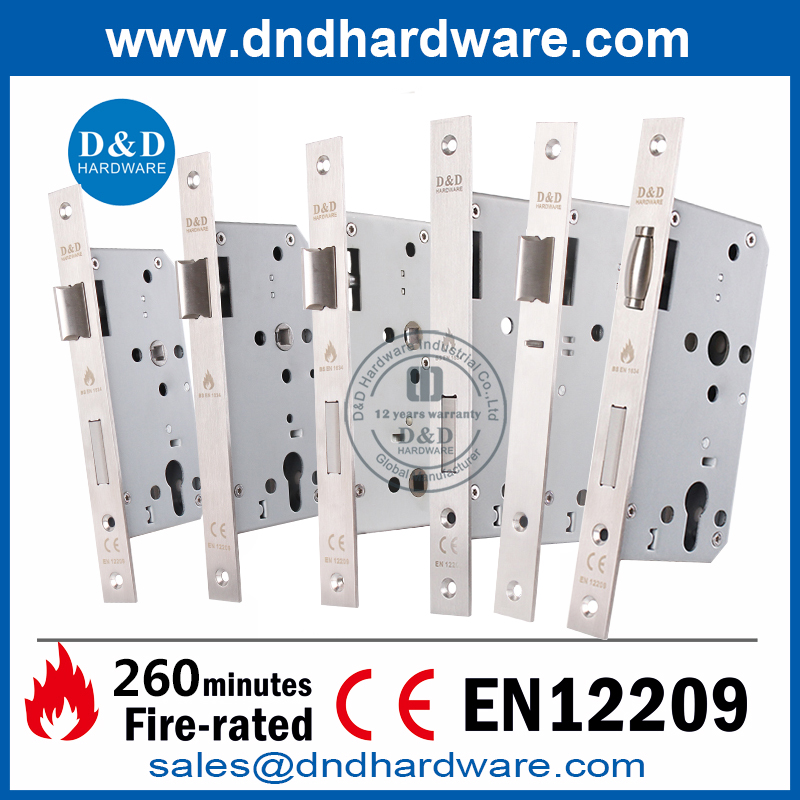
Building codes may need different fire door ratings for different places. For example, you may need a 20-minute door between a garage and living space. Corridor doors often need a 45-minute rating. Stairwell doors may need a 60-minute rating. High-risk areas may need a 90-minute rating.
Fire Door Rating | Application in Multi-Family Units |
20-minute | Between attached garages and living spaces |
45-minute | Corridor doors in multi-family projects |
60-minute | Stairwell doors in multi-family projects |
90-minute | High-risk areas needing maximum fire resistance |
When you pick fire rated door hardware, always check for these labels and ratings. This helps protect your building and saves you from big problems.

Material & Durability
Quality Materials
Fire rated door hardware needs to be tough. Good materials help doors protect people and things. Steel is a great choice because it can handle fire for up to three hours. Magnesium oxide (Mgo) has an A1 fire rating, so it works very well in fires. Fiberglass can protect for 20 to 90 minutes. The table below shows how each material works:
Material Type | Fire Resistance Rating |
Steel | 45 minutes to 3 hours |
Magnesium Oxide (Mgo) | A1 Fire Rating |
Fiberglass | 20 to 90 minutes |
Look for hardware that does not rust or corrode. This helps doors last longer, even in wet places. D&D Hardware uses strong materials and smart ways to make their products. Their hardware is tough and works well when you need it.
Maintenance & Longevity
Taking care of fire rated door hardware helps it last longer. Simple checks and cleaning stop many problems. Here are some easy tips to keep your hardware working:
Clean the hardware often to get rid of dust.
Check if anything blocks the door.
Make sure nothing is broken.
Lubricate hinges so the door moves easily.
Look at the fire-rated seals to see if they are good.
Tighten and adjust parts when needed. Replace broken pieces right away. If you see gaps or the door does not close, fix it fast. Getting new hardware can make things safer and better.
Tip: Doing regular checks helps your hardware last longer and keeps your building safe.
D&D Hardware makes products that are easy to care for and last a long time. You can count on their hardware to stay strong year after year.
Compatibility & Installation
Door & Frame Fit
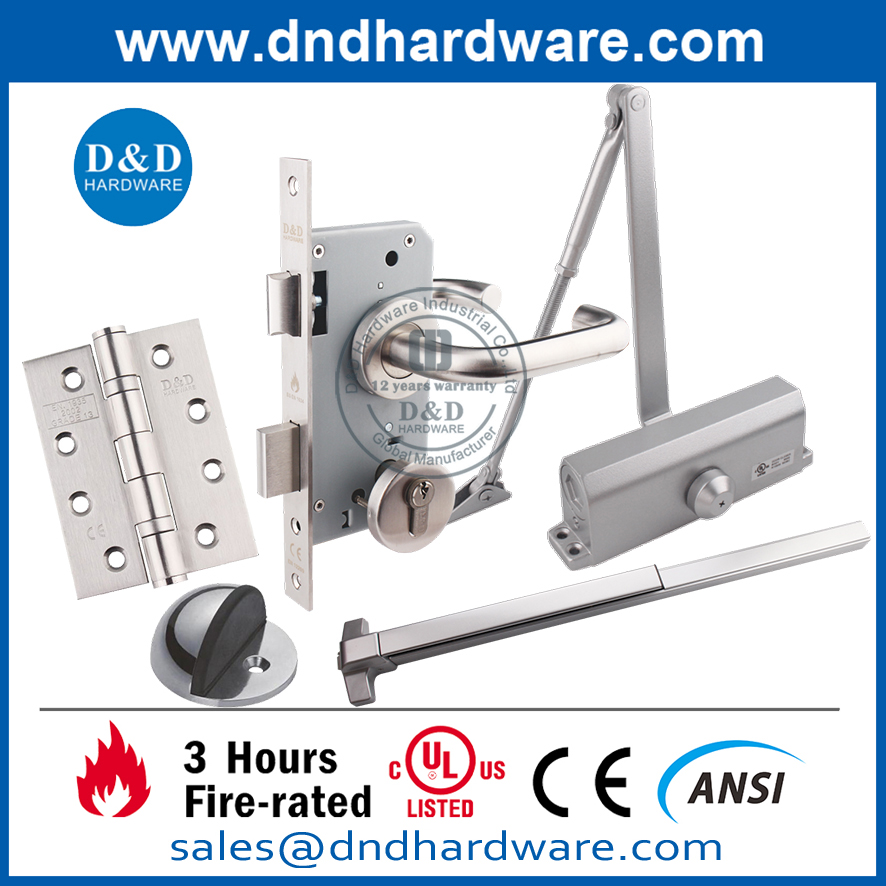
You have to check if your fire rated door hardware fits your doors and frames. If it does not fit, the door might not keep people safe in a fire. Each kind of hardware has its own rules. For example, hinges must be steel ball-bearing or listed hinges. Latching devices need a certain latch bolt length. Fire exit hardware must pass panic and cycling tests. Closing devices must keep the door closed so it blocks fire. Hold open devices need fusible links. You cannot use mechanical hold-open devices. The table below shows what you should check:
Hardware Type | Requirements |
Hinges | Steel ball-bearing type or listed hinges; minimum thickness and size required. |
Latching Devices | Listed self-latching device; specific latch bolt lengths for each door type. |
Fire Exit Hardware | Labeled for fire exit use; must pass panic and cycling tests. |
Closing Devices | Must keep the door closed and latched during a fire. |
Hold Open Devices | Listed and equipped with fusible links; mechanical hold-open devices not permitted. |
Look at the rules for each door and frame before buying hardware. This helps you avoid mistakes and keeps everyone safe.
Professional Installation
You should let trained people put in fire rated door hardware. Good installation makes sure the hardware works right. Insurance companies want to see certified installation when they decide your costs. If you follow fire codes and use certified installers, you might pay less for insurance. The table below shows how installation can change your insurance price:
Aspect | Impact on Insurance Premiums |
Compliance with Fire Codes | Mandatory installation of fire doors can lower costs |
Risk Perception | Buildings with fire doors are seen as lower risk |
Discounts from Insurers | Proactive safety measures lead to premium reductions |
Liability Insurance Impact | Shows commitment to safety, possibly lowering costs |
Professional installers often take special classes. Some classes teach how to put in sliding fire doors in multi-family buildings. You can also find training videos and lessons from hardware brands. These help installers follow the rules and keep people safe.
Tip: If you pick certified installers, you help protect your building and might save money on insurance.
Functionality & Safety
Positive Latching Mechanism
Doors must stay closed during a fire. A positive latching mechanism helps with this. When you use fire rated door hardware with positive latching, the door will not open if smoke or heat pushes on it.
Positive-latching hardware keeps the door shut, even if there is fire or smoke.
Building codes say you need certain safety features in multi-family units. You should check for these features when you pick hardware:
Door closers that shut and latch doors by themselves to keep fire barriers strong.
Locksets that are tested for fire resistance and security.
Hinges made from materials that can handle high heat.
Panic hardware that lets people get out fast in emergencies.
Smoke seals and intumescent seals that stop smoke from spreading and help block fire.
A positive latching mechanism works with these features to keep your building safe. You protect people and property when you pick hardware that meets these rules.
Accessibility & Ease of Use
Everyone should be able to use fire rated doors easily. Accessibility rules are important for fire doors, just like other doors. The Americans with Disabilities Act (ADA) gives rules for how doors should work. You need to follow these rules to meet the law.
The Department of Justice says design and building must follow the ADA if state and local codes are not better. This means fire rated door hardware must meet special accessibility rules, like how fast the door closes and how hard it is to open.
Check these important things:
Fire doors must follow accessibility rules, like closing speed and how easy they are to use.
The ADA does not approve single parts but wants the whole door to meet the rules.
Here is a table that shows what to look for:
Requirement | Description |
Operable Parts | Must be used with one hand and no tight grasping, pinching, or twisting of the wrist. |
Maximum Opening Force | 5 pounds (22.2 N) is the most force needed to push or pull open a door. |
Closing Speed | Automatic door closers must take at least 5 seconds to close from 90 degrees to 12 degrees. |
You help everyone in your building when you pick hardware that is easy to use. Fire rated door hardware from trusted brands meets these rules and keeps your building safe and easy to use.

Additional Features
Aesthetics & Design
You want your building to look nice and feel friendly. Fire rated door hardware keeps people safe, but it can also make your building look better. Many builders pick doors and hardware that match the style of the building. For example, a builder in Houston used oak-patterned fire doors for many units. These doors looked like furniture, not just safety tools. When new renters visit, the first thing they see is important.
You can talk to architects and hardware sellers early in your project. They help you choose finishes and styles that fit your building. This way, you get hardware that is safe and looks good. Safety features can blend in with the design, so you do not lose style when you add protection.
Tip: Pick hardware that fits your building’s style and follows all safety rules. This helps you make a space that is both safe and nice to look at.
Here are some things you might want:
Handles and locks with modern or old-fashioned looks
Hinges and closers that match the color of the door
Hardware that works for people with disabilities
Choices for temperature rise doors and different fire ratings
Cost & Value
You should think about how much money you want to spend on fire rated door hardware. Certified hardware for multi-family buildings usually costs between $250 and $900 for each set. The price changes based on the material, finish, and fire rating. Stainless steel hardware lasts longer and does not rust, so you can save money over time.
D&D Hardware gives you good value. You get UL-certified products that follow strict safety rules. D&D Hardware makes their own products, so prices are fair and you get what you need on time. Their hardware uses SS201 stainless steel and careful machine work. This means you will not have to fix or replace things as often.
Feature | Benefit for You |
UL Certification | Meets safety codes |
Stainless Steel | Resists rust and lasts longer |
Competitive Pricing | Saves money on large projects |
Reliable Supply | No delays in construction |
Precision Engineering | Fewer maintenance issues |
You make a smart choice when you pick hardware that is safe, looks good, and lasts a long time.
When you pick fire rated door hardware, look for three things. Make sure it is certified, strong, and fits your doors. Certified hardware helps you follow safety rules and lowers fire danger. Strong hardware, like stainless steel hinges, lasts a long time and passes tough tests. The table below shows why these things are important:
Feature | Benefit |
Certification | Meets safety standards |
Durability | Lasts through heavy use |
Compatibility | Works with your doors and frames |
Do not use parts that do not meet the rules. Do not forget to take care of your hardware. You can count on D&D Hardware for safe and trusted products that keep your building and people safe.
FAQ
What does "fire rated" mean for door hardware?
"Fire rated" means the hardware can handle high heat and fire for a set time. You can trust it to help keep doors closed and safe during a fire.
How do you check if hardware is certified?
You should look for labels like UL, CE, or BS EN on the hardware. These marks show the product passed strict fire and safety tests.
Why should you use stainless steel hardware?
Stainless steel resists rust and lasts longer. You get strong, reliable hardware that works well in wet or busy areas.
Can you install fire rated hardware yourself?
You should let a trained professional install fire rated hardware. This helps you meet safety codes and keeps your building safe.
Contact us Now:
Contact: David Jian
Mob:0086-139 2903 7292
Email: David@dndhardware.com, sales@dndhardware.com,
Jobby Zhang
Mob:0086-137 2599 9617
Email: jobby@dndhardware.com
D&D HARDWARE INDUSTRIAL CO.,LTD
ADD:12th Floor, Building 2, No.898, KeChuang Technical Zone, Jiangmen Avenue, Pengjiang District, Jiangmen City, Guangdong, China (Postcode:529000)
https://www.dndhardware.com
Tel: +86-750-3856396
Fax: +86-750-385639
 English