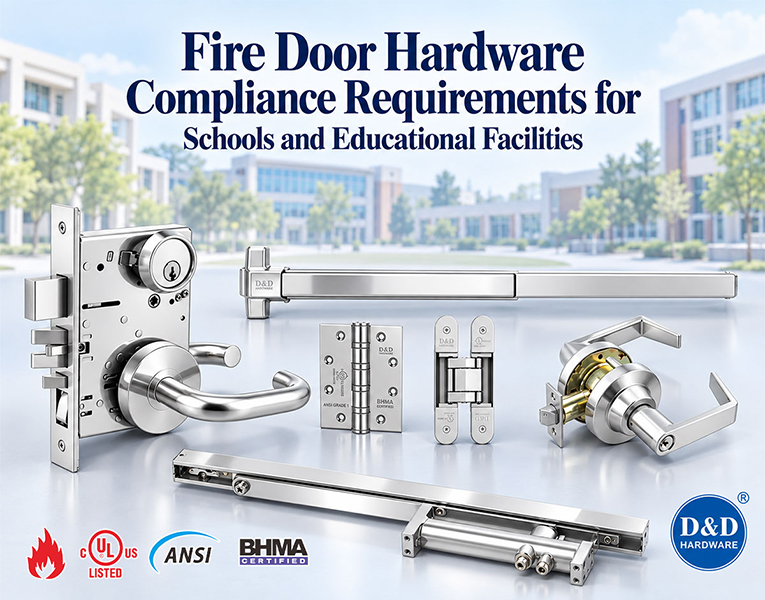
Fire door hardware compliance requirements for schools begin with the approved opening: its required rating, egress function and permitted hardware configuration. A UL mark alone cannot establish compliance. The installed components must fall within their certification scope and preserve the performance of the complete school fire door assembly.
This article in D&D’s UL Listed Fire Rated Commercial Door Hardware series explains certification checks for mechanical hinges, locks, closers and exit devices in US school projects.

Establish the applicable school code requirements
School fire door hardware requirements depend on the locally adopted building and fire codes, amendments and approved construction documents. Confirm IBC educational occupancy requirements before reviewing hardware. Schools may contain Group E classrooms, assembly spaces and other occupancies; higher education facilities are not automatically Group E.
Identify which openings require fire protection and record each required fire-protection rating. A wall’s fire-resistance rating is not automatically the door’s required rating. Check corridor, stair enclosure and fire barrier openings individually, including any applicable smoke requirements.
The reviewer should establish the occupancy, occupant load served, door swing and required egress operation. These details determine which fire-rated door hardware standards and listing conditions apply.
Understand what UL 10C establishes
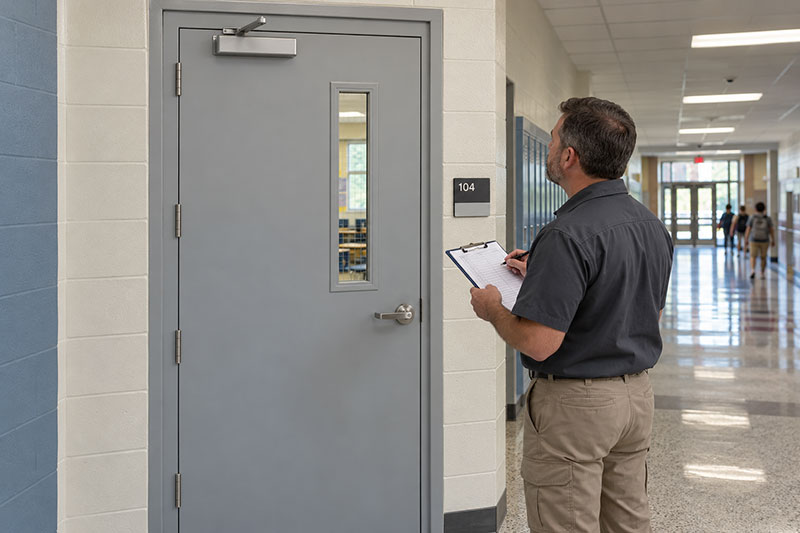
UL 10C addresses positive-pressure fire testing of door assemblies. For UL 10C fire door hardware, the relevant evidence is the product’s certification category and permitted use within the rated assembly. Separate certified components do not create an unrestricted assembly approval.
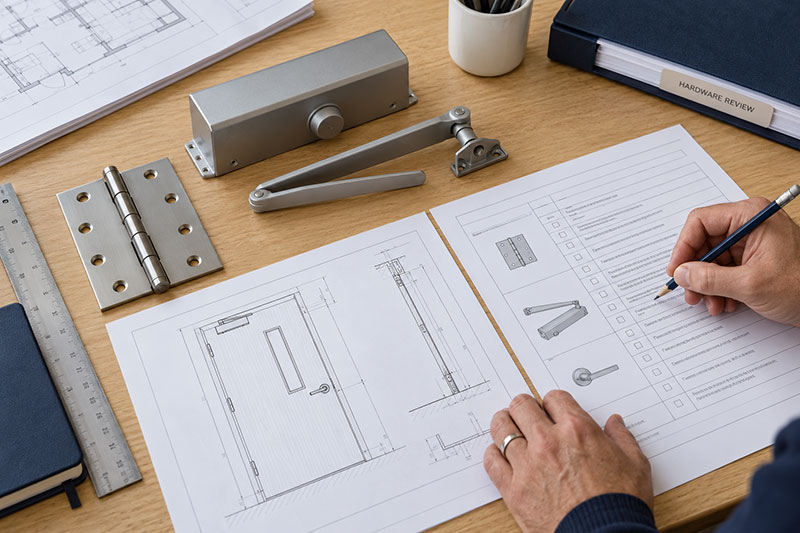
Compare the specified door and frame with the hardware listing and installation instructions. Check permitted door construction, dimensions, hinge preparation, fastening and any required accessories. A three-hour hardware rating does not upgrade a lower-rated door or authorize installation in every three-hour assembly.
UL fire rated door hardware should therefore be accepted by exact model and documented application, rather than by a catalogue statement alone. UL Solutions’ application guide explains how certification categories and installation conditions govern these evaluations.
Distinguish panic hardware from fire exit hardware
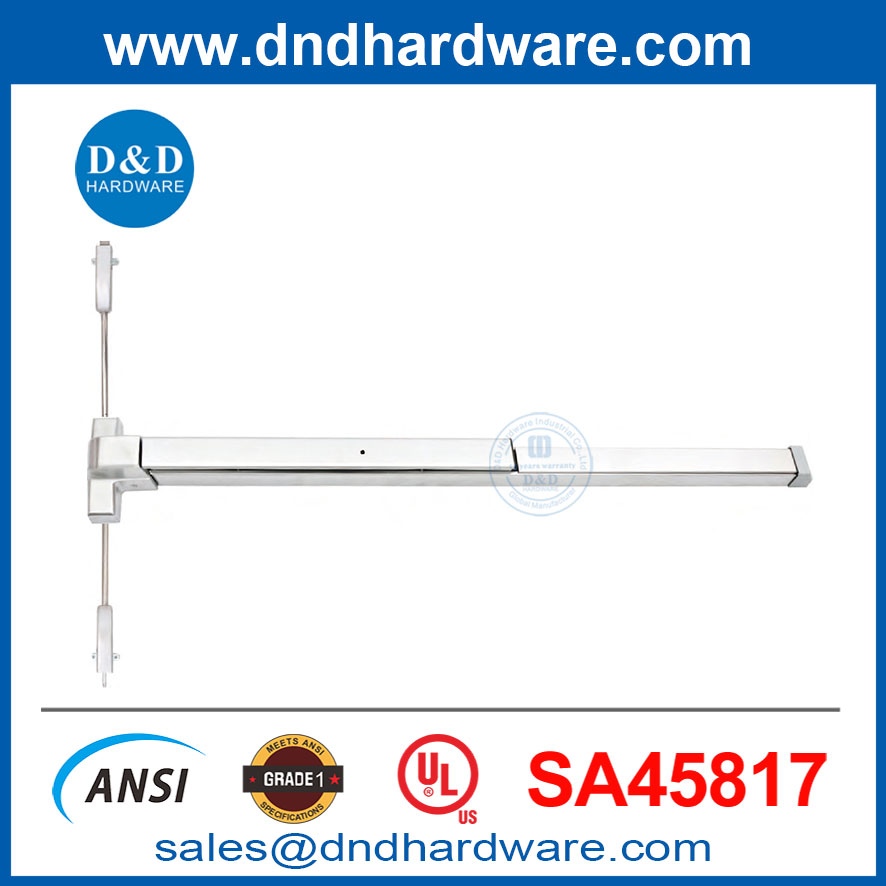
UL 305 panic hardware is evaluated for emergency release performance. UL 305 alone does not establish a fire rating. Where an exit device is required on a rated opening, fire exit hardware certification must cover the fire application as well as panic operation. UL’s guide identifies UL 10C and UL 305 as the applicable listing standards for fire exit hardware.
Under the 2024 IBC, the panic and fire exit hardware provisions generally require panic or fire exit hardware on swinging doors serving Group A or E rooms or spaces with an occupant load of 50 or more, subject to its exceptions. Confirm the adopted edition and amendments; this is not a rule that every classroom door needs an exit device.
Do not substitute a panic-only device on a rated opening. Mechanical dogging that holds the latch retracted is not permitted on fire exit hardware; the door must retain its required latching function.

Review classroom door locking requirements
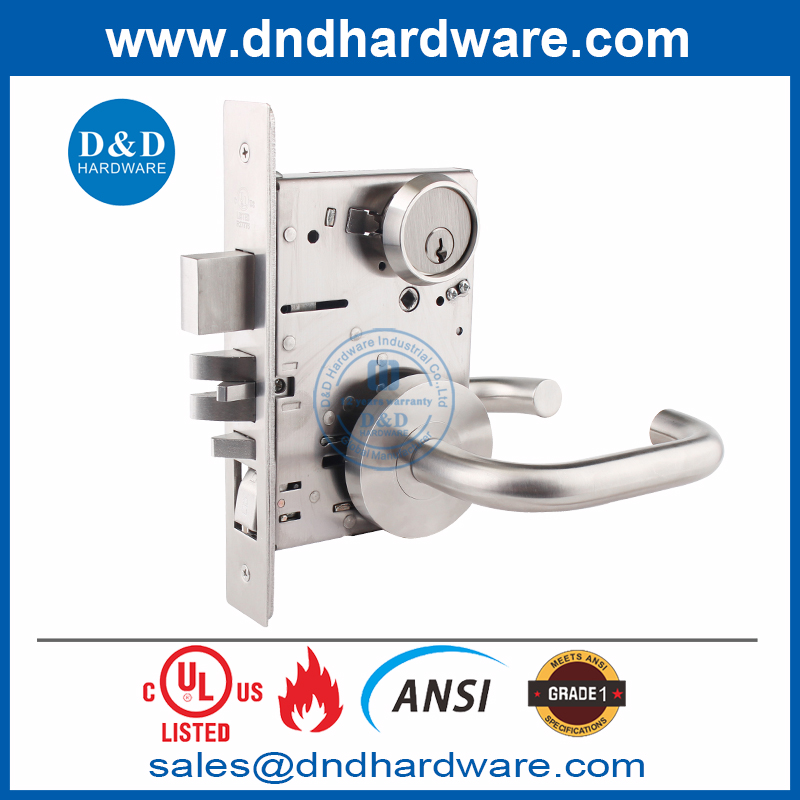
Classroom door locking requirements must preserve egress while allowing the security functions permitted by the adopted code. Evaluate mechanical lock functions against the applicable inside-release and outside-unlocking provisions, rather than assuming that any classroom-labelled lock is acceptable.
Supplementary bolts or barricades can create compliance defects by obstructing release or altering the rated assembly. The 2024 IBC provisions for educational locking arrangements prohibit modifications to listed panic hardware, fire door hardware and door closers; fire door assembly modifications must comply with NFPA 80.
A lock replacement also requires a preparation check. Additional holes, changed strikes or altered latches may need approval beyond ordinary hardware replacement. Refer unresolved changes to the authority having jurisdiction and the relevant listing or approval process.
Verify D&D certification references by product
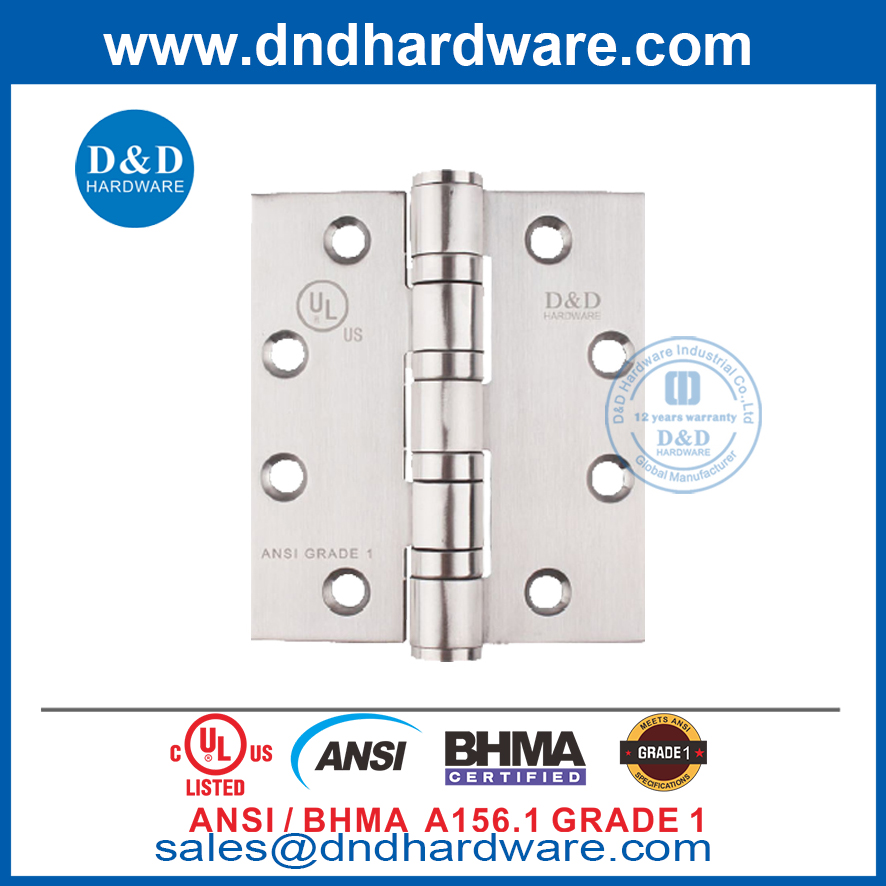
D&D manufactures mechanical door hardware. The following references provide a starting point for UL certification verification; the exact supplied model and its current certification record remain controlling.
ANSI/BHMA Grade 1 and Grade 2 describe hinge performance classifications and do not replace fire certification. Likewise, a cUL marking must be checked against the relevant Canadian certification scope. Do not infer a concealed hinge fire duration from another hinge listed under the same file.
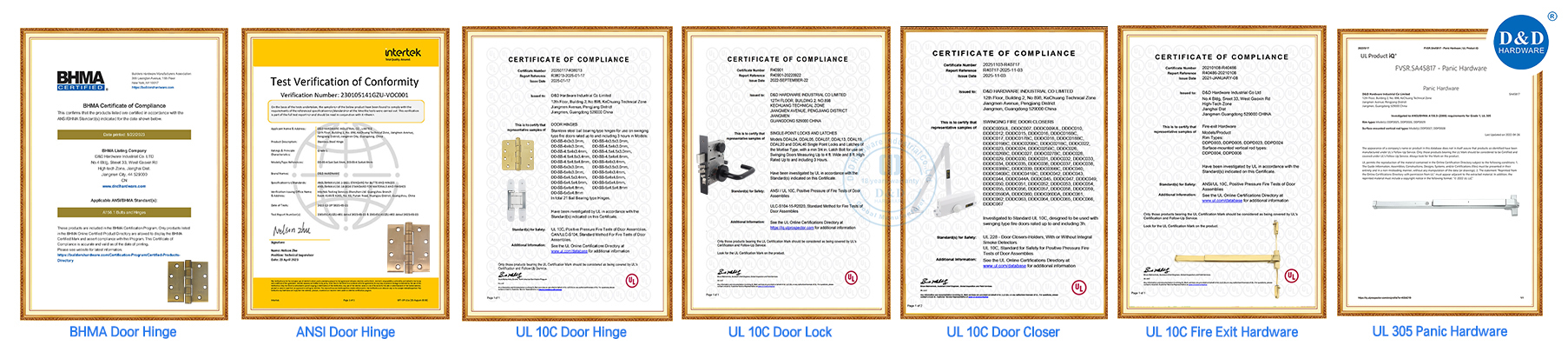
For each proposed item, use UL Product iQ to match the manufacturer’s legal identity, model designation, certification category, standards and rating. Check any limitations against the opening schedule. Retain the relevant record and instructions with the submittal. A file number or certificate image without model identification leaves a gap in the approval evidence.
Preserve compliance during installation and inspection
Educational facility fire door compliance continues after delivery. Install hinges, mechanical locks, closers and exit devices in accordance with the approved documents and listing instructions. Verify that closers overcome latch resistance and that paired doors close in the required sequence where applicable.
NFPA 80 fire door inspection addresses the condition and operation of the assembly. Where adopted, its periodic inspection and testing provisions generally require inspection and testing at least annually. Confirm the applicable edition and any permitted inspection programme provisions.
Inspection should address fire door labels and markings, damaged or missing components, clearances, secure fasteners, unobstructed closing and positive latching. Check for unapproved holes, substitutions and auxiliary hardware that interfere with operation. Record deficiencies and corrective work; a certification document cannot compensate for a door that fails to close or latch.
Keep approved schedules, model-specific certification records, installation instructions and inspection reports together. For replacements, document both the replacement model and its suitability for the existing opening. This traceability supports school building fire safety codes throughout maintenance and renovation.

Frequently asked questions
Does every school door require UL-listed fire hardware?
No. Determine whether the opening is rated and what egress provisions apply. The approved assembly and adopted code establish the required hardware evidence.
Can UL 305 panic hardware be used on a fire door?
Only when the exact device also has the required fire exit hardware listing for that application. Panic certification alone is insufficient.
Does a three-hour closer make the opening three-hour rated?
No. The door, frame, hardware and installation must satisfy the required assembly conditions. A closer’s certification cannot raise the assembly rating.
What should a school request before approving D&D hardware?
Request the exact model, applicable UL certification record, rating and installation instructions. Match these to the approved opening before accepting the hardware submittal.
Contact us Now:
Contact: David Jian
Mob:0086-139 2903 7292
Email: David@dndhardware.com, sales@dndhardware.com,
Contact: Jobby Zhang
Mob:0086-137 2599 9617
Email: jobby@dndhardware.com
D&D HARDWARE INDUSTRIAL CO.,LTD
ADD:12th Floor, Building 2, No.898, KeChuang Technical Zone, Jiangmen Avenue, Pengjiang District, Jiangmen City, Guangdong, China (Postcode:529000)
https://www.dndhardware.com
Tel: +86-750-3856396
Fax: +86-750-3856395
 English