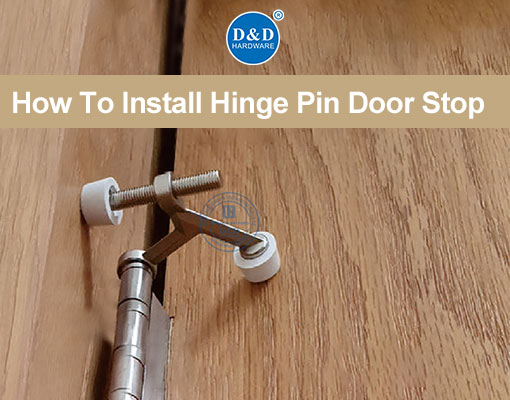
Looking to protect your walls and interior spaces without complex tools or costly repairs? A hinge pin door stop is one of the easiest and most efficient solutions.
Want to know how to install a hinge pin door stop? As a global architectural hardware manufacturer, D&D Hardware supplies high-quality door stop solutions for commercial, hospitality, and residential projects — available in bulk quantities and tested to UL, CE, and EN international standards. In this article, we'll walk you through the proper installation process while highlighting what to look for if you're managing a commercial project or sourcing hardware for your projects.

Key Takeaways
Get simple tools like a hammer and screwdriver before you start. This helps you have all you need for an easy job.
Make sure your door works with a hinge pin door stop. Check if the hinge pin comes out and the door is strong. This gives you the best outcome.
Do the easy steps to put in the door stop. Take out the hinge pin, put on the stop, and change it so it works right. This keeps your walls and floors safe.
Tools and Preparation
Tools for Install
Before beginning the installation, ensure you have the basic tools ready. These are typically available on any commercial site:
| Tool | Purpose |
| Hammer | For removing and reinserting the hinge pin |
| Flat Head Screwdriver | To assist with pin removal |
| Nail Punch (optional) | Helpful if the hinge pin is stuck |
| Lubricant (optional) | Use silicone spray or graphite if hinges are stiff |
Tips: Our hinge pin door stops are available in finishes such as antique brass, satin stainless steel, or matte black — perfect for design consistency in architectural projects. Click to learn more details.
Check Door Compatibility
Not every hinge works with hinge pin stops. Perform a quick compatibility check:
Ensure your door has removable hinge pins — this is typical for interior wood or hollow-core doors.
Check for a strong upper hinge — the top hinge often bears the most weight and is ideal for mounting the door stop.
For heavy-duty commercial applications, ensure minimum door resistance and metal quality compliance.
D&D Hardware manufactures certified door hinges and door stops designed to meet EN and ANSI requirements for frequent-use environments.
Prepare the Door
Keep your door closed before you remove the hinge pin. This step makes the job safer and easier. You will avoid the door shifting or falling. Check that you have the appropriate hardware for your door and hinge. Now you are ready to install your hinge pin door stop and protect your walls.
How to Install Hinge Pin Door Stop
Remove Hinge Pin
You want to start by removing the hinge pin from your door. This step is simple, but you need to do it carefully to avoid damaging your door or hurting yourself. Here's a quick tutorial to guide you:
Gather your hammer, a nail punch, and a flat head screwdriver.
Support the door with a stack of books or ask someone to hold it steady.
Place the nail punch at the bottom of the hinge pin and gently tap it upward with your hammer. If the pin feels stuck, use a bit more force, but don't rush.
Once the pin moves up a little, switch to your screwdriver. Pry the pin up further until you can pull it out by hand.
Tip: Always keep the door closed during this step. This keeps the door from shifting and makes the installation safer.
Attach Hinge Pin Door Stop
Now you're ready to attach the hinge pin door stop. This part of the installation is quick and doesn't require drilling, which makes it perfect for most homes. Some door stops need drilling, but most hinge pin models just slip right onto the hinge.
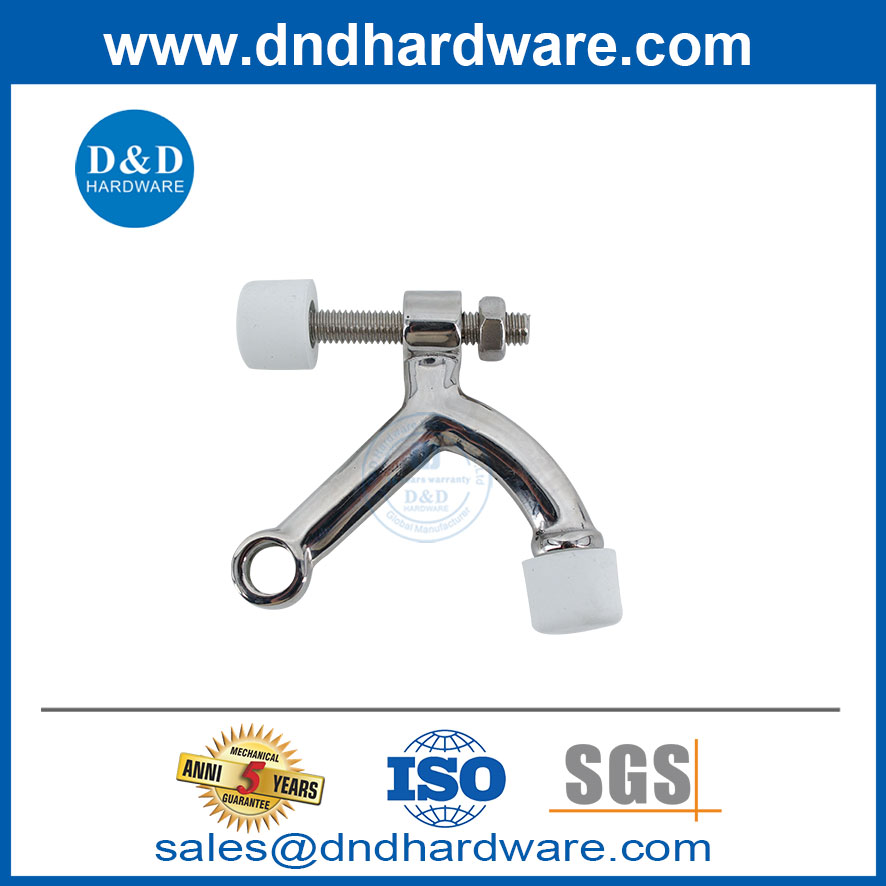
Slide the ring of the hinge pin door stop over the top of the hinge where you just removed the pin.
Make sure the adjustable rubber pad faces the wall. The fixed pad should rest against the door.
If your door stop comes with extra washers or spacers, add them now for a snug fit.
Note: If you want a hidden design, always install the hinge pin door stop on the top hinge. This keeps it out of sight and gives the best protection for your wall and floor.
Reinstall Hinge Pin
After attaching the door stop, you need to put the hinge pin back in place. This step is important for securing the stop and making sure your installation lasts.
Line up the hinge leaves and the ring of the door stop.
Insert the hinge pin through the ring and back into the hinge.
Use your hammer or mallet to tap the pin down until it sits flush with the top of the hinge.
Check that the door stop is firmly in place and doesn't wobble.
Tip: If the pin feels tight, use a screwdriver to help guide it through the ring. This makes securing the stop much easier.
Adjust and Test
You're almost done! The last step in installing a hinge pin door stop is to adjust and test it. This ensures your installation works as it should and protects your wall.
Use a screwdriver to turn the adjustable rubber pad. Move it closer or farther from the wall until the door stops at the right spot.
If your door stop has a locking nut, tighten it to hold the setting.
Open and close the door several times. Make sure the door stop provides steady resistance and doesn't let the door hit the wall.
If you see any gaps or the stop feels loose, tap the hinge pin again with your hammer for extra security.
Pro Tip: After installation, always check for gaps and make sure the door stop sits flush with the wall or baseboard. This helps with securing the stop and keeps your installation strong.
Installing a hinge pin door stop is a simple way to protect your home. You don't need special skills or expensive tools. Just follow these steps, and your installation will look neat and work perfectly. If you ever need to remove or adjust the stop, just repeat these steps in reverse. That's how to install a hinge pin door stop and keep your walls safe!

Troubleshooting
Common Install Issues
Sometimes, you might run into a few bumps when installing a hinge pin door stop. Here's a quick table to help you spot and fix the most common problems:
Installation Issue | Description | How to Fix It |
Misalignment | The door does not fit tightly against the door stop. | Adjust the door jambs. Tap the door into position with a block of wood. |
Uneven gaps | You see gaps across the top of the door. | Use a level. Bend the hinge pin or wrap tape around it for resistance. |
Hinge binding | The door pops open before closing. | Make sure the jamb sits at a 90-degree angle. Remove extra shims if needed. |
If you notice any of these issues while testing the installation, take a moment to check your work and make small adjustments.
Adjust for Different Doors
Not all doors are the same. You need to match your door stop to your door type. Here's how you can do it:
Remove the top hinge pin.
Slide the door stop over the pin, right under the cap.
Reinsert the pin.
Adjust the rubber pads to set how far the door opens.
When you finish, try testing the installation by opening and closing the door a few times. Make sure the stop works for your door's weight and material.
Safety Tips
You want your project to be safe and last a long time. Keep these tips in mind:
Always keep your fingers away from the hinge area.
Use the right tools for the job.
Clean the hinge and door stop with a damp cloth every few months.
Check for loose screws or worn parts during regular cleaning.
If you use lubricant, pick silicone spray or graphite powder and wipe away any extra.
Stay safe and keep your door stop working smoothly by following these simple steps.
Bulk Orders and OEM Service
Need 100+ hinge pin door stops for a building project? Or want your own branded accessory?
D&D Hardware offers:
Get a free quote: sales@dndhardware.com
Conclusion
You can install a hinge pin door stop in just a few steps. This diy project protects your walls and works for most doors. Here's why you'll love it:
Easy to slip onto the hinge pin
No drilling needed
Discreet and limits door swing
Prevents damage to furniture
The durable design means less waste and some parts can be recycled. In busy spaces, these stops shine:
Feature | Benefit for Offices |
Hinge Pin Design | Prevents floor or wall damage |
Rubber Bumper Tips | Reduces noise and absorbs impact |
Durable Build | Minimal maintenance required |
Give it a try—you'll see how simple and effective this upgrade can be! As a trusted wholesale manufacturer and global supplier, D&D Hardware ensures every product you order meets both functionality and compliance needs.
Choose commercial-quality door stops designed for professionals — with factory pricing and international certifications.
FAQ
How do I remove a stuck hinge pin?
Try tapping the pin gently with a hammer and a nail punch. If it still sticks, use a little lubricant and wait a few minutes.
Can I use a hinge pin door stop on any door?
You can use it on most interior doors. Avoid using it on heavy exterior doors or doors with non-removable pins.
Will the door stop scratch my door or wall?
Most hinge pin door stops have rubber tips. These protect your door and wall from scratches. Always check the pads before installing.

Contact us Now:
Contact: David Jian
Mob:0086-139 2903 7292
Email: David@dndhardware.com, sales@dndhardware.com,
Contact: Jobby Zhang
Mob:0086-137 2599 9617
Email: jobby@dndhardware.com
D&D HARDWARE INDUSTRIAL CO.,LTD
ADD:12th Floor, Building 2, No.898, KeChuang Technical Zone, Jiangmen Avenue, Pengjiang District, Jiangmen City, Guangdong, China (Postcode:529000)
https://www.dndhardware.com
Tel: +86-750-3856396
Fax: +86-750-3856395


 English