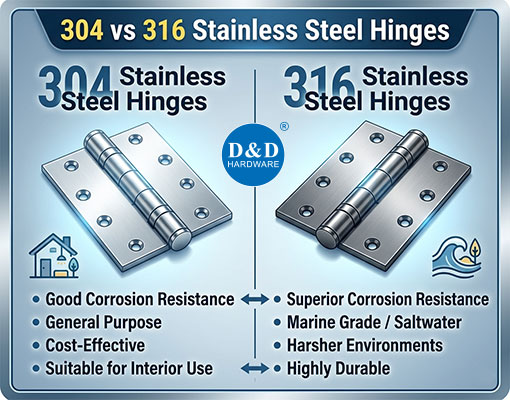
When considering your Stainless Steel Hinge Selection: 304 vs. 316, it's important to note that 316 stainless steel excels in resisting rust. This superior performance is due to the presence of molybdenum in 316 stainless steel, which effectively combats rust in salty or harsh environments.
For the best hinge option, weigh the benefits of 304 and 316 stainless steel. You can trust D&D Hardware’s certified products to deliver excellent results.
Key Takeaways
Pick 316 stainless steel hinges if you want the best rust protection near the ocean or where there are lots of chemicals.
Use 304 stainless steel hinges inside or in places far from salt and chemicals.
Clean and oil your hinges often to stop rust and keep them working well.
Look for rust spots or squeaks so you can fix problems early.
Buy 316 hinges if you live by the sea or have a pool to save money over time.
Always choose the right hinge grade for your area to make them last longer and work better.
D&D Hardware has many certified hinges for what you need.
Putting in your hinges the right way and taking care of them helps them last much longer.

Stainless Steel Grades
304 Stainless Steel Overview
304 stainless steel is a very common choice for door hinges. It has 18% chromium and 8% nickel. These parts help stop rust and keep the steel strong. People use this grade for inside doors, cabinets, and gates. You can also find it in kitchen cabinets, bathroom doors, and outdoor furniture. In most homes, 304 stainless steel hinges last more than 15 years. This makes them a good pick for many uses.
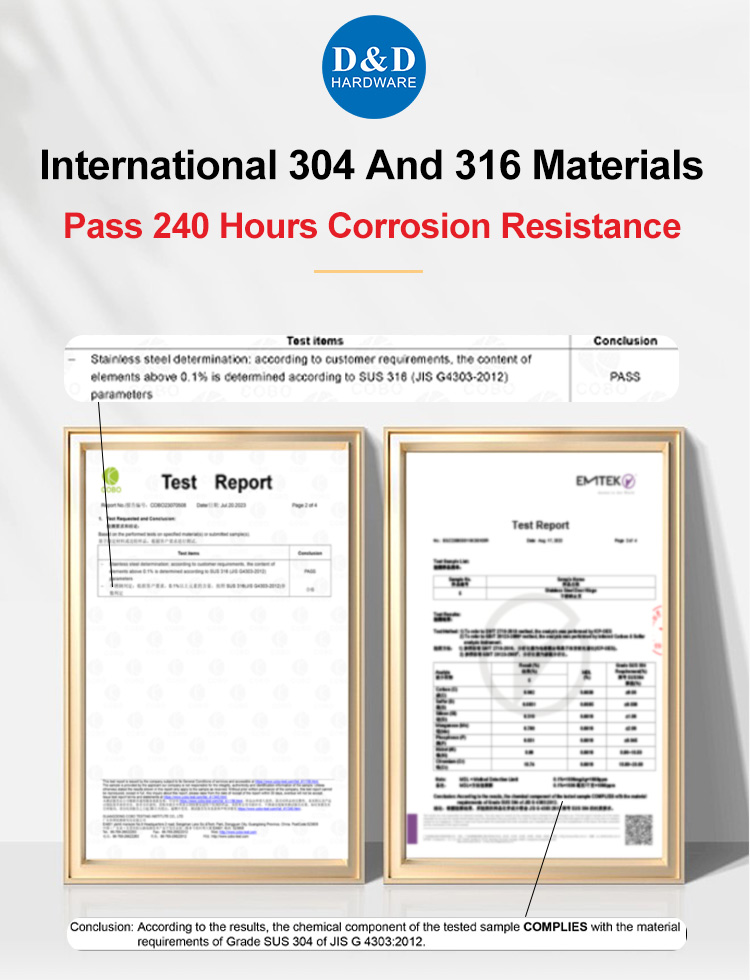
D&D Hardware sells strong stainless steel hinges made from this grade. These hinges meet tough international rules. You can count on them to work well every day.
316 Stainless Steel Overview
If you need hinges for tough places, think about 316 stainless steel. This grade has 16% chromium, 10% nickel, and 2% molybdenum. The molybdenum helps stop rust from saltwater and chemicals. You often see this grade in marine and coastal buildings, chemical plants, and food prep areas. It is also used in labs and water treatment plants.
D&D Hardware has strong stainless steel hinges in this grade for hard jobs. These hinges work well where there is water, salt, or chemicals.
Key Differences
You can compare these two grades by looking at what they are made of and how they perform.
Element | 304 stainless steel % | 316 stainless steel % |
Carbon | 0.07 | 0.07 |
Chromium | 18.0 – 19.5 | 16.5 – 18.5 |
Nickel | 8.0 – 10.5 | 10.0 – 13.0 |
Molybdenum | - | 2.0 – 2.5 |
The biggest difference is that 316 stainless steel has molybdenum. This helps it fight rust from salt and chemicals.
You can also check their strength and hardness:
Property | 304 Stainless Steel | 316 Stainless Steel |
Tensile Strength (MPa) | 515–750 | 485–745 |
Yield Strength (MPa) | ~205 | ~170–290 |
Brinell Hardness (HB) | ~201 | ~217 |
Rockwell Hardness (B Scale) | ~85–90 | ~79–95 |
Both grades are strong, but 316 stainless steel protects better in harsh places. Pick the grade that fits your needs. D&D Hardware has both types, so you can get the right hinge for your project.
Tip: Always check the grade before you buy hinges. The right grade will last longer and keep things safe.
Corrosion Resistance
Why 316 Is Superior
You want your door hinges to last, especially if you live near the ocean or in a place with lots of moisture. 316 stainless steel gives you the best corrosion resistance. This means your hinges will not rust easily, even when exposed to harsh weather or chemicals. You can trust 316 hinges to stay strong and look good for years.
Molybdenum’s Impact
Molybdenum is a special ingredient in 316 stainless steel. It acts like a shield. When salt or chemicals touch the hinge, molybdenum helps stop rust from forming. This is the main corrosion resistance principle behind 316 stainless steel. You get extra protection because molybdenum blocks the tiny holes that salt and water can make. These holes can lead to rust if you use the wrong hinge.
Saltwater and Chemical Exposure
Salt is everywhere near the coast. Salt spray from the ocean can reach your doors, windows, and gates. Even if you do not see it, salt can stick to metal and start the rust process. 316 stainless steel stands up to salt spray much better than 304. You can use 316 hinges in coastal homes, boats, and docks. You can also use them in places where chemicals are common, like swimming pools or factories. Salt and chemicals will not break down 316 hinges as fast as they do with 304. This is why you see 316 hinges in coastal hotels, seaside apartments, and marine buildings.
Tip: If you see white spots or orange stains on your hinges, salt spray and rust have started to attack. Switch to 316 stainless steel to stop this problem.
D&D Hardware offers fire-rated and heavy-duty hinge options made from 316 stainless steel. These hinges work well in demanding places where salt and chemicals are a big problem.
304 Performance in Typical Conditions
304 stainless steel works well in most homes and offices. You can use it for indoor doors, cabinets, and gates. If you do not live in a coastal area or near a pool, 304 hinges will last a long time. They resist rust from rain and humidity. However, if salt or salt spray touches 304 hinges often, you may see rust spots after a few years. You should clean your hinges often if you live near the coast. This helps slow down the rust process.
You can trust D&D Hardware’s 304 stainless steel hinges for regular use. They meet high standards and work well in places without too much salt or chemical exposure.
Real-World Corrosion Examples
Let’s look at some real-life situations:
Coastal Home: You install 304 hinges on your beach house. After one year, you notice small rust spots. Salt spray from the ocean has started to attack the hinges. If you switch to 316 hinges, you will see no rust, even after many years.
Swimming Pool Gate: You use 304 hinges on a pool gate. Chlorine and salt from the water cause rust to appear in less than two years. 316 hinges stay clean and strong, even with daily salt and chemical exposure.
Urban Apartment: You use 304 hinges inside your city apartment. There is no salt spray or heavy pollution. The hinges stay shiny and rust-free for over ten years.
You can see that salt, salt spray, and chemicals are the main reasons for rust. The corrosion resistance principle of 316 stainless steel protects your hinges in these tough places. D&D Hardware’s fire-rated and heavy-duty hinges give you peace of mind, even in the harshest coastal or chemical environments.
Note: Always match your hinge grade to your environment. If you live near the coast or use chemicals, choose 316 stainless steel for the best corrosion resistance.
Environmental Factors
Coastal and Marine Settings
Living near the ocean can be hard on metal. The air has a lot of salt and is very wet. These things make door hinges rust faster. Salt in the air lands on metal and starts to damage it. Wet air keeps the metal damp, so rust forms quickly. It is important to pick the right hinge for these places.
Let’s see how 304 and 316 stainless steel hinges do near the sea:
Stainless Steel Type | Corrosion Rate (µm/year) | Susceptibility to Pitting Corrosion |
304 | <0.03 | High |
316 | 0.0076 | Lower |
316 stainless steel rusts much slower than 304. It also stops deep rust holes from forming in salty air. If you want your hinges to last by the sea, pick 316 stainless steel. You will find these hinges on beach houses, docks, and boats. They handle salt and wet air better than 304 hinges. In tough places like marinas or seaside factories, 316 hinges keep working for many years.
Tip: If you see rust on your hinges near the sea, switch to 316 stainless steel for better safety.
Urban and Industrial Areas
Cities and factories have their own problems. Dirty air can make metal parts rust faster. Factories and cars put chemicals in the air. These chemicals land on your door hinges and start to harm them.
Some common things that cause rust are:
If you live in a busy city or near factories, you need strong hinges. 316 stainless steel gives extra safety from chemical damage. You will see less rust and fewer marks on your door hinges.
Indoor vs Outdoor Use
Where you put your hinges is important. Inside, there is less water and fewer chemicals. Outside, there is rain, wind, and hot or cold weather. The best hinge depends on where you use it.
Here is a simple chart:
Material Grade | Corrosion Resistance | Typical Outdoor Application |
304 (A2) | Excellent (General) | Garden gates, toolboxes, inland structures |
316 (A4) | Superior (Marine) | Coastal homes, pools, chemical plants |
You can use 304 stainless steel for most inside doors and outdoor projects away from the sea. For outside use near the ocean or where there are chemicals, 316 stainless steel is better. It lasts longer and keeps your doors working well.
Note: Always pick the right hinge for your area. The right choice saves you time and money later.
Humidity, Salt, Pollution Effects
You might not notice it at first, but humidity, salt, and pollution can quietly damage your stainless steel hinges over time. These environmental factors work together to speed up corrosion, especially if you live near the coast or in a city with lots of air pollution.
High humidity means there is more moisture in the air. When water vapor settles on metal surfaces, it creates the perfect setting for rust to start. If you live in a place where it rains often or the air feels damp, your door hinges face a higher risk of corrosion. Moisture can sneak into small cracks and crevices, making it hard for you to spot the early signs of rust.
Salt in the air is another big problem, especially near the ocean. Salty air sticks to metal and draws in more moisture. This combination makes rust form much faster. Even if you do not see the ocean, salt can travel far inland on the wind. If you notice white powder or orange stains on your hinges, salt is likely the cause.
Pollution adds another layer of risk. Factories, cars, and even fireplaces release chemicals into the air. These chemicals can settle on your hinges and react with moisture, creating acids that eat away at the metal. Acid rain, which forms when pollution mixes with rainwater, can also speed up the corrosion process.
Tip: If you see dull spots, pitting, or discoloration on your hinges, these are early warning signs. Take action before the damage gets worse.
You can protect your hinges by choosing the right material. 316 stainless steel stands up much better to humidity, salt, and pollution than 304 stainless steel. The added molybdenum in 316 stainless steel acts like a shield, blocking the tiny holes that let rust start. Advanced surface finishes, such as PVD (Physical Vapor Deposition) or high-grade plating, give even more protection. These finishes help your hinges keep their shine and strength, even in tough environments.
Here’s a quick checklist to help you spot trouble:
Look for white powder, orange stains, or dull spots on your hinges.
Check for rough or pitted surfaces.
Notice if your hinges feel sticky or hard to move.
If you live in a humid, salty, or polluted area, you should clean your hinges regularly. Wipe them down with a damp cloth and dry them well. This simple habit can slow down corrosion and keep your doors working smoothly.
Choosing 316 stainless steel hinges with advanced finishes gives you peace of mind. You get longer-lasting hardware that keeps your doors safe and looking good, no matter what the environment throws at you.

Stainless Steel Hinge Selection: 304 vs. 316
Residential Applications
When you choose hinges for your home, you want them to last and look good. The stainless steel hinge selection: 304 vs. 316 depends on where you live and how much moisture your doors face. For most indoor doors, cabinets, and closets, 304 stainless steel works well. It resists rust and keeps its shine for many years. You can use 304 hinges for garden gates or outdoor doors if your house is far from the sea or heavy pollution.
If you live near the coast or have a pool, you should pick 316 stainless steel. This grade has molybdenum, which gives extra protection against salt and chemicals. Your hinges will stay strong and free from rust, even in harsh weather. D&D Hardware offers both 304 and 316 hinges, so you can match your needs to the right product.
Use 304 for most indoor and standard outdoor doors.
Choose 316 for doors near saltwater, pools, or chemical cleaners.
Commercial and Institutional Use
In schools, hospitals, hotels, and offices, doors get a lot of use. You need hinges that can handle heavy doors and frequent opening and closing. The stainless steel hinge selection: 304 vs. 316 becomes important in these busy places. 304 stainless steel works well for most urban buildings and indoor spaces. It gives good strength and resists daily wear.
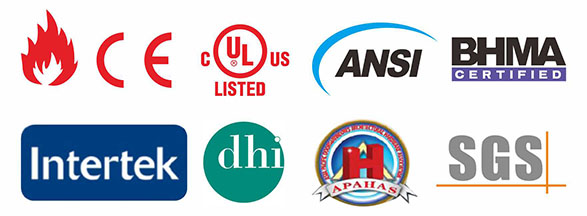
For buildings near the sea, factories, or places with chemicals, 316 stainless steel is the better choice. It stands up to tough conditions and keeps working for years. Always check the weight of your doors and the environment before you decide. D&D Hardware provides certified hinges for fire-rated doors, metal doors, and wooden doors, making it easy to find the right fit.
Pick 304 for heavy doors in city areas.
Select 316 for doors in coastal, industrial, or chemical-rich locations.
Outdoor Installations
Outdoor doors face rain, wind, sun, and sometimes salt or chemicals. The stainless steel hinge selection: 304 vs. 316 matters most here. 304 stainless steel gives good outdoor durability for inland homes, sheds, and toolboxes. It handles normal weather but may show rust if exposed to salt or harsh chemicals.
316 stainless steel is best for outdoor use in harsh places. Its molybdenum content protects against rust, even in salty air or near pools. You will see 316 hinges on beach houses, docks, and chemical plants. D&D Hardware’s outdoor hinges meet strict standards, so you get long-lasting performance.
Here is a quick table to help you decide:
Application Area | Recommended Grade | Reason |
Indoor/Urban Home | 304 | Good corrosion resistance, cost-effective |
Coastal/Poolside Home | 316 | Superior rust protection |
Commercial City Building | 304 | Handles heavy use, resists daily wear |
Coastal/Industrial Site | 316 | Best for salt, chemicals, and tough weather |
Tip: Always match your hinge grade to your environment for the best results. D&D Hardware can help you choose and customize the right hinge for any door.
Budget and Longevity
When you choose between 304 and 316 stainless steel hinges, you need to think about both your budget and how long you want your hinges to last. Price often plays a big role in your decision. 304 stainless steel hinges usually cost less than 316 stainless steel hinges. If you have a tight budget or need to buy many hinges for a large project, 304 may seem like the best choice.
However, you should also think about how long you want your hinges to last. 304 stainless steel gives you good corrosion resistance in most indoor and dry outdoor areas. You can use these hinges for cabinets, doors inside your home, or outdoor gates away from the sea. They will last for many years if you keep them clean and dry.
If you live near the coast, have a pool, or work in a place with chemicals, 316 stainless steel hinges are a better investment. These hinges cost more at first, but they last much longer in tough conditions. The molybdenum in 316 stainless steel helps stop rust from salt and chemicals. You will not need to replace your hinges as often, which saves you money over time.
Here is a simple table to help you compare:
Grade | Best For | Main Advantage | Main Cost Impact |
304 Stainless Steel | General industrial, outdoor, and cabinets | Good corrosion resistance, easy to find | Lower than 316 |
316 Stainless Steel | Marine, coastal, chemical, washdown areas | Better resistance to salt and pitting | Higher than 304 |
Tip: If you want to save money now and your doors are not near salt or chemicals, choose 304. If you want your hinges to last longer in harsh places, invest in 316.
D&D Hardware offers both 304 and 316 stainless steel hinges. You can pick the grade that fits your budget and your needs. You can also ask for custom solutions if you have special doors or unique environments.
Quick Comparison Table
You can use this quick table to help you decide which hinge is right for your project:
Feature | 304 Stainless Steel | 316 Stainless Steel |
Corrosion Resistance | Good (general use) | Excellent (harsh settings) |
Cost | Lower | Higher |
Best Use | Indoor, inland, dry areas | Coastal, pool, chemical |
Longevity | 10–15 years (typical) | 20+ years (harsh areas) |
Availability | Very common | Common |
Note: Always match your hinge to your environment. Spending a little more now can save you from costly repairs later.
Installation & Maintenance
Proper Installation
You want your stainless steel hinges to last as long as possible. Start by installing them the right way. Make sure you use the correct screws for your door and frame. Tighten each screw firmly, but do not over-tighten. Over-tightening can strip the screw holes or damage the hinge. Align the hinges so the door opens and closes smoothly. If the hinges are not level, the door may sag or stick.
Check that the hinge pins fit snugly. Loose pins can cause the door to wobble or make noise. For heavy doors, use extra hinges to spread the weight. Always follow the manufacturer’s instructions for the best results. If you install fire-rated or heavy-duty hinges from D&D Hardware, you get added safety and durability.
Tip: After installation, open and close the door several times. Listen for squeaks or grinding. If you hear any, adjust the hinges or add a drop of lubricant.
Routine Maintenance
Regular care keeps your hinges working well and looking good. You should:
Clean hinges to remove dust and debris.
Lubricate hinge pins and joints every few months. This prevents wear and keeps the door moving smoothly.
Inspect hinges for rust, loose screws, or signs of wear. Early action stops small problems from becoming big ones.
Remove rust with steel wool or a wire brush if you spot any. For tough rust, use a rust remover and follow the product instructions.
Apply a protective coating to help prevent future corrosion.
If you live near the coast or in a place with chemicals, choose marine-grade stainless steel like 316. This grade resists rust from salt and harsh weather. For areas with acids or alkalis, duplex stainless steel offers even higher resistance.
Note: Routine maintenance extends the life of your hinges and keeps your doors safe.
Cleaning & Protection
Clean your hinges often to stop corrosion before it starts. Use a soft microfiber cloth and a mild, neutral cleaner. Avoid steel brushes or scouring pads. These tools can scratch the stainless steel finish.
Here is a helpful table for cleaning methods:
Cleaning Method | Description |
Regular Cleaning | Wipe with a soft cloth and mild cleaner. |
Avoid Abrasive Tools | Do not use steel brushes or scouring pads. |
Preventing Buildup | Remove dirt and grime, especially in busy areas. |
Rust Prevention Measures | Apply anti-rust oil or protective sprays, especially in humid or coastal areas. |
Polishing Minor Rust Spots | Use a non-abrasive stainless steel cleaning paste to restore shine. |
Keep hinges dry to prevent watermarks. Wipe off stains with a soft cloth, then apply rust-proof machine oil. Use polishing wax to protect against corrosion from other substances. Lubricate hinges to reduce noise and wear.
Tip: Clean and protect your hinges regularly. This simple habit keeps them strong and looking new for years.
Signs of Corrosion
You need to know the early signs of corrosion on your stainless steel hinges. Spotting these signs helps you take action before the problem gets worse. Corrosion can weaken your hinges and make your doors unsafe. If you check your hinges often, you can keep your doors working well and avoid costly repairs.
Here are some common signs that show your hinges may have corrosion or need maintenance:
Squeaking or creaking sounds when you open or close the door. These noises often mean your hinges need lubrication or have dirt and debris stuck inside.
Loose screws that do not stay tight. This can make your door wobble or sag. You should tighten these screws to keep the hinge secure.
Rust spots or orange stains on the hinge surface. Rust is a clear sign that moisture has started to attack the metal. You may see this more in humid or outdoor places.
Misalignment of the door. If your door does not close properly or starts to sag, the hinges may be worn out or damaged.
Visible cracks or bends in the hinge. Cracks or bends show that the hinge has suffered physical damage and may not be safe to use.
Tip: If you see any of these signs, do not wait. Early action can prevent bigger problems and keep your doors safe.
Sometimes, you may notice more serious problems. These signs mean you should replace the hinge right away:
Visible cracks or breaks in the hinge. A broken hinge cannot hold the door safely.
Extreme corrosion that covers a large part of the hinge. This weakens the metal and can cause the hinge to fail.
Repeated problems like loose screws or misalignment, even after you fix them. This means the hinge may be faulty and needs to be replaced.
You should check your hinges every few months, especially if you live near the coast or in a humid area. Use a flashlight to look for rust, cracks, or other damage. Run your hand over the hinge to feel for rough spots or loose parts.
If you find any of these signs, clean the hinge and add lubricant. If the problem does not go away, consider replacing the hinge with a high-quality option from D&D Hardware. Regular checks and quick fixes help your doors last longer and work better.
Note: Keeping an eye on your hinges protects your home and gives you peace of mind.
Cost & Availability
Price Comparison
You may wonder how much you need to spend on stainless steel hinges. The price depends on the grade you choose. 304 stainless steel hinges usually cost less. If you compare them to 316 stainless steel hinges, you will see a difference. Here is what you can expect:
316 stainless steel hinges often cost 10–20% more than 304.
In some markets, the price difference can reach 20–40%.
You pay more for 316 because it has extra molybdenum. This makes it stronger against rust and chemicals. If you need heavy-duty stainless steel hinges for tough jobs, you may see a higher price, but you get better protection and longer life.
D&D Hardware offers competitive pricing for both grades. You can find options that fit your budget and your project needs.
Market Availability
You can find both 304 and 316 stainless steel hinges in many stores and online shops. 304 stainless steel hinges are very common. You will see them in hardware stores, building supply shops, and online catalogs. They are easy to buy for most projects.
316 stainless steel hinges are also available, but you may need to look for them in specialty stores or order them from suppliers. These hinges are popular for coastal homes, pools, and chemical plants. If you need heavy-duty stainless steel hinges for outdoor or industrial use, you can find them through trusted brands like D&D Hardware.
D&D Hardware has a global supply network. You can order hinges for apartments, hotels, schools, or factories. The company ships products to many countries, so you get what you need, wherever you are.
Tip: If you need special sizes or finishes, ask about custom orders. D&D Hardware can help you find the right hinge for your door.
Value Analysis
You want to get the best value for your money. Think about where you will use your hinges and how long you want them to last. Here is a table to help you compare:
Property | 304 Stainless Steel | 316 Stainless Steel |
Corrosion Resistance | Less resistant, may rust in tough places | Superior, great for marine settings |
Cost Effectiveness | Good for most homes and offices | Costs more, but lasts longer in harsh areas |
Application Suitability | Great for kitchens, cabinets, and indoor doors | Best for coastal, pool, and chemical areas |
You get better oxidation resistance with 316 stainless steel. This makes it the best choice for extreme environments. If you need heavy duty exterior door hinges for a seaside home or a factory, 316 gives you peace of mind. For most indoor or dry places, 304 stainless steel is more cost-effective.
D&D Hardware helps you balance cost and quality. You get certified products, fair prices, and worldwide delivery. You can trust their heavy-duty stainless steel hinges to protect your doors and last for years.
Note: Choose the hinge that matches your environment and budget. Spending a little more now can save you from repairs later.

Common Myths
Stainless Steel Is Always Rust-Proof
You might think stainless steel hinges never show rust. This is a common myth. Stainless steel resists rust better than regular steel, but it is not immune. If you see brown spots or stains on your hinges, you may believe the material is not stainless steel. In reality, these marks often come from contamination. For example, if iron particles from tools or other metals touch your hinge, they can start the rust process. Even fingerprints or organic substances can cause rust to appear over time.
You should clean your hinges regularly. This simple step helps prevent rust from forming on the surface.
304 Is Enough Everywhere
Some people believe 304 stainless steel works in every situation. This is not true. 304 stainless steel gives good protection against rust in most homes and offices. However, if you live near the ocean or use chemicals nearby, you may see rust appear faster. Salt in the air or water can attack 304 hinges and cause rust spots. Pollution in cities can also speed up rust on your hinges.
The corrosion resistance of stainless steel hinges depends on the alloy and the environment.
Rust can form on 304 hinges if you use them in harsh places.
Foreign metal particles or dirt on the hinge can also start the rust process.
You should always match the hinge grade to your environment. If you see rust on your 304 hinges, it may be time to switch to a higher grade.
316 Is Always Best
You may hear that 316 stainless steel is the best choice for every door. While 316 gives excellent rust protection, it is not always the right answer. 316 hinges cost more and may not be needed for indoor doors or dry areas. Even 316 hinges can show rust if you do not clean and maintain them. In very harsh places, you still need to check your hinges for rust and clean them often.
Even higher-grade stainless steel, like 316, needs proper care to prevent rust.
Rust can appear if you ignore cleaning or let dirt build up.
The best hinge for you depends on where you use it and how you care for it.
Tip: Always check your hinges for rust, no matter the grade. Regular cleaning keeps your doors safe and looking good.
You want your hinges to stay strong and free from rust. Choose 316 stainless steel hinges for the best protection against rust, especially in harsh places. Use 304 hinges for indoor or dry areas where rust is less likely. Always install your hinges properly and check them often to stop rust before it spreads. D&D Hardware gives you certified products and expert help. You can trust their hinges to keep rust away and your doors safe.
FAQ
What is the main difference between 304 and 316 stainless steel hinges?
You will find that 316 stainless steel contains molybdenum. This element gives 316 hinges better resistance to rust, especially in salty or chemical-rich environments. 304 hinges work well indoors or away from the coast.
Can I use 304 stainless steel hinges outside?
You can use 304 hinges outdoors in dry, inland areas. If you live near the ocean or a pool, choose 316 hinges. Salt and chemicals can cause 304 hinges to rust faster in these places.
How do I know if my hinge is rusting?
Look for orange spots, white powder, or rough patches on your hinge. You may also hear squeaks or see the door sag. These signs mean rust has started.
Are 316 stainless steel hinges worth the extra cost?
If you live near the sea, have a pool, or work with chemicals, 316 hinges last longer and save you money over time. For most indoor uses, 304 hinges are a good value.
How often should I clean my stainless steel hinges?
You should clean your hinges every few months. Use a soft cloth and mild cleaner. In salty or humid places, clean them more often to prevent rust.
Do stainless steel hinges need oil or lubricant?
Yes! You should add a drop of oil to the hinge pins and joints every few months. This keeps your door moving smoothly and helps prevent wear.
Can I replace 304 hinges with 316 hinges easily?
You can swap 304 hinges for 316 hinges if they are the same size and shape. Always check the screw holes and hinge thickness before you buy new ones.
Where can I buy certified stainless steel hinges?
You can find certified 304 and 316 stainless steel hinges at D&D Hardware. Visit D&D Hardware’s website for a wide selection and expert advice.
Contact us Now:
Contact: David Jian
Mob:0086-139 2903 7292
Email: David@dndhardware.com, sales@dndhardware.com,
Contact: Jobby Zhang
Mob:0086-137 2599 9617
Email: jobby@dndhardware.com
D&D HARDWARE INDUSTRIAL CO.,LTD
ADD:12th Floor, Building 2, No.898, KeChuang Technical Zone, Jiangmen Avenue, Pengjiang District, Jiangmen City, Guangdong, China (Postcode:529000)
https://www.dndhardware.com
Tel: +86-750-3856396
Fax: +86-750-3856395
 English