Introduction: Fire-Rated Hardware Is Applied Engineering, Not Just Compliance
In a fire-rated door assembly, door hardware is part of the fire protection system, not a secondary accessory. Hinges, locks, closers, panic devices, and handles must perform under extreme heat, structural deformation, pressure, and time — often when human safety depends on them.
Behind every certified fire-rated component lies a combination of material science, mechanical engineering, and standardized fire testing.
This article explains the scientific principles that define fire-rated door hardware performance, and how these principles are validated through CE (EN standards) and UL fire test systems, using real-world certified hardware examples.
1. Material Science: How Metals Behave in Fire Conditions
Thermal Resistance and Structural Integrity
Fire-rated door hardware relies primarily on metal performance under high temperatures.
Key material properties include:
•Melting point
•Yield strength retention at elevated temperatures
•Thermal expansion coefficient
Steel and stainless steel are preferred because:
•They retain structural integrity well above 800°C
•They deform predictably rather than failing suddenly
Why Material Grade Matters
For critical components:
•Hinge knuckles
•Lock cases
•Latch bolts
•Exit device mechanisms
material thickness and alloy composition determine whether the component:
•Remains attached
•Maintains alignment
•Continues to restrain flame passage
This is why fire-rated hardware design focuses on mass, geometry, and metallurgy, not surface finish.
2. Heat Transfer & Thermal Expansion: Controlled Deformation, Not Zero Deformation
Differential Expansion
During fire exposure:
•Door leaf
•Frame
•Hardware
expand at different rates.
Fire-rated hardware is engineered to:
•Accommodate expansion without detachment
•Maintain engagement at hinge and latch points
Poorly designed components fail due to:
•Fastener pull-out
•Latch disengagement
•Hinge axis distortion
3. Mechanical Load Distribution Under Fire
Hinges: Load-Bearing Under Heat
Hinges carry:
•Full door weight
•Dynamic loads from door warping
EN 1935 and UL hinge testing ensure hinges:
•Remain attached
•Maintain door position
•Prevent leaf drop during fire exposure
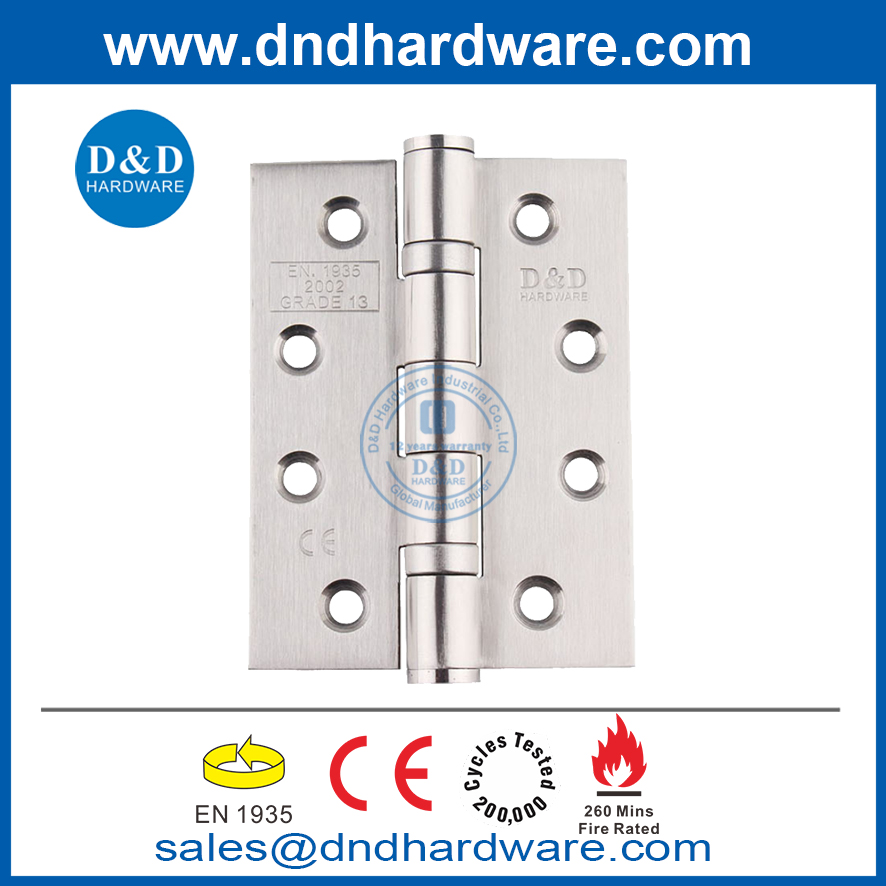
D&D CE Hinges
•BS EN 1935
•200,000 cycles
•EN 1634 fire rated up to 192 / 260 minutes
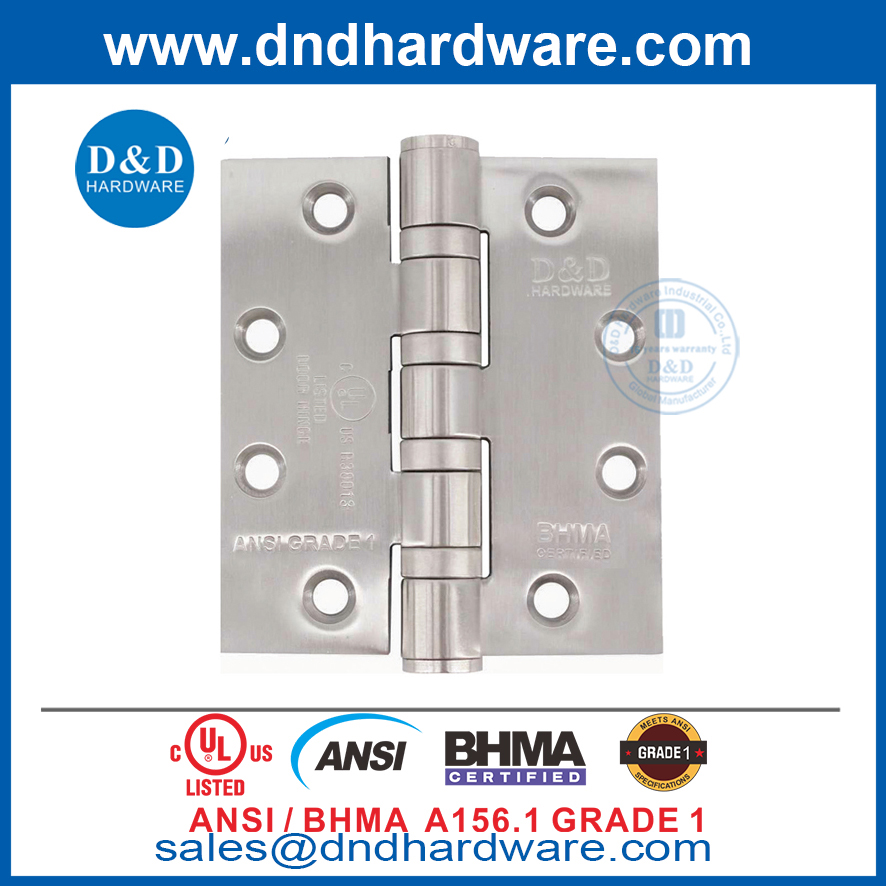
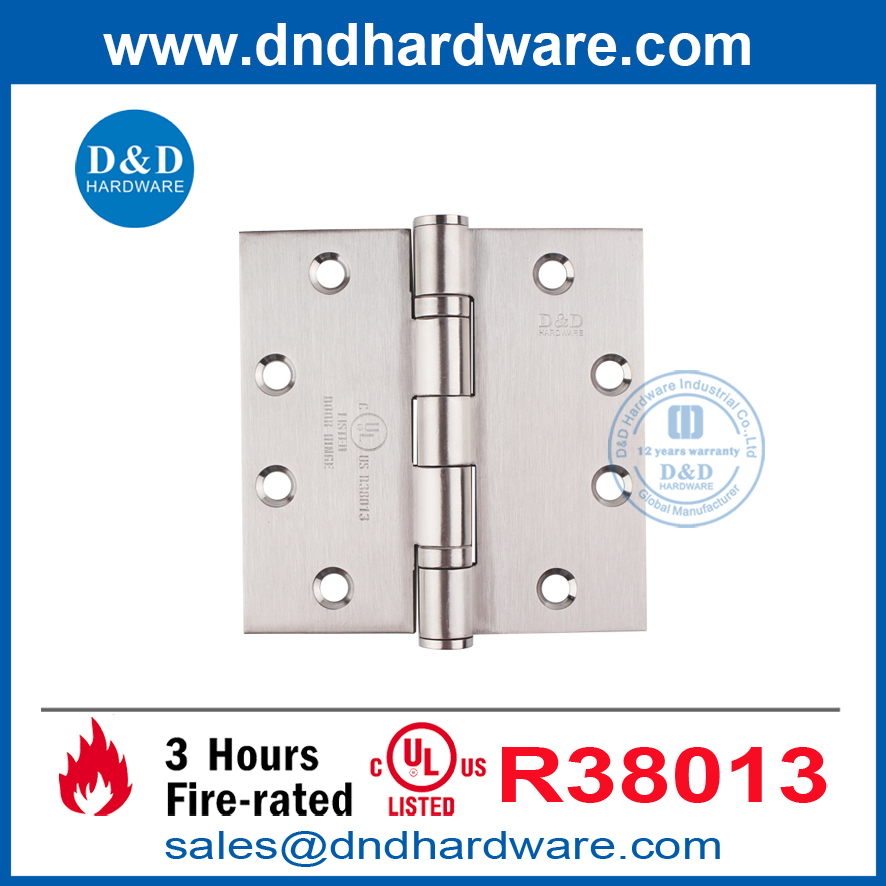
D&D UL Hinges
•UL 10C fire rated 3 hours
•ANSI/BHMA Grade 1 & 2
Locks: The Primary Fire Barrier at the Latch Edge
Locks and latches resist:
•Flame penetration
•Door separation forces
Fire-rated locks are designed with:
•Stable latch projection
•Reinforced lock cases
•High-temperature spring systems
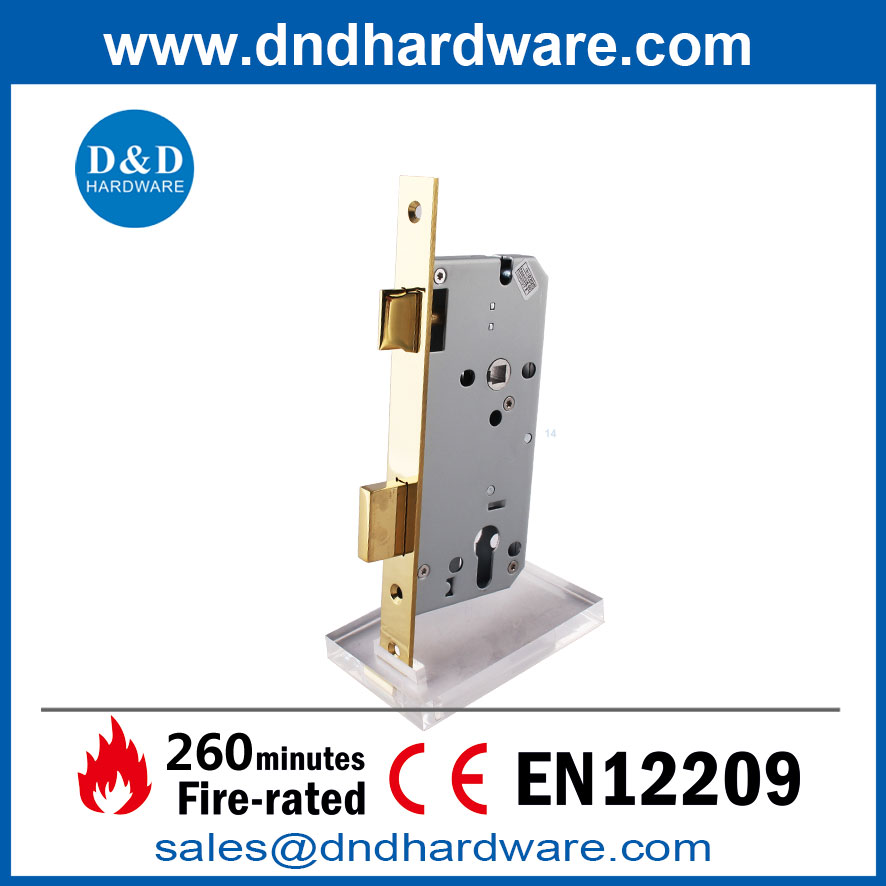
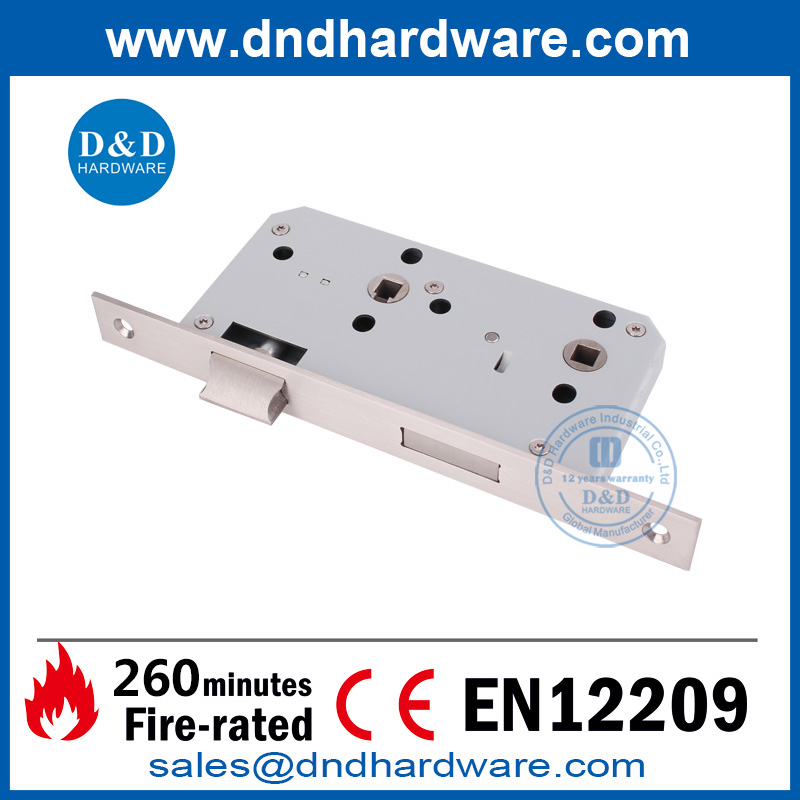
D&D CE Door Locks
•BS EN 12209
•200,000 cycles
•EN 1634 fire rated up to 111 / 260 minutes
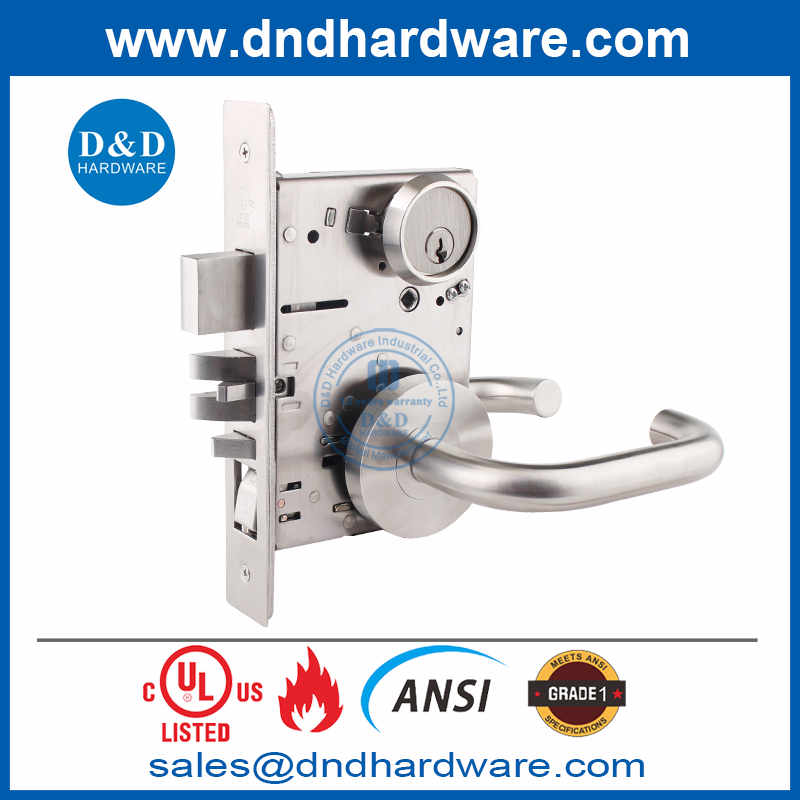
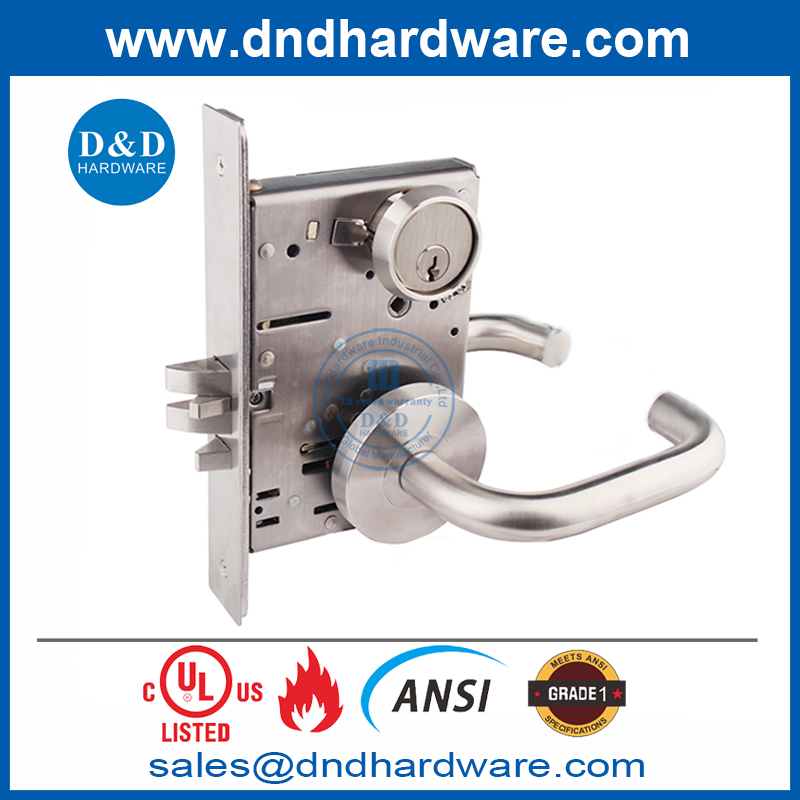
D&D UL Door Locks
•UL 10C fire rated 3 hours
4. Self-Closing Science: Door Closers in Fire Conditions
Fire-rated doors must self-close and remain closed.
Door closers are tested to:
•Maintain closing force
•Resist hydraulic failure under heat
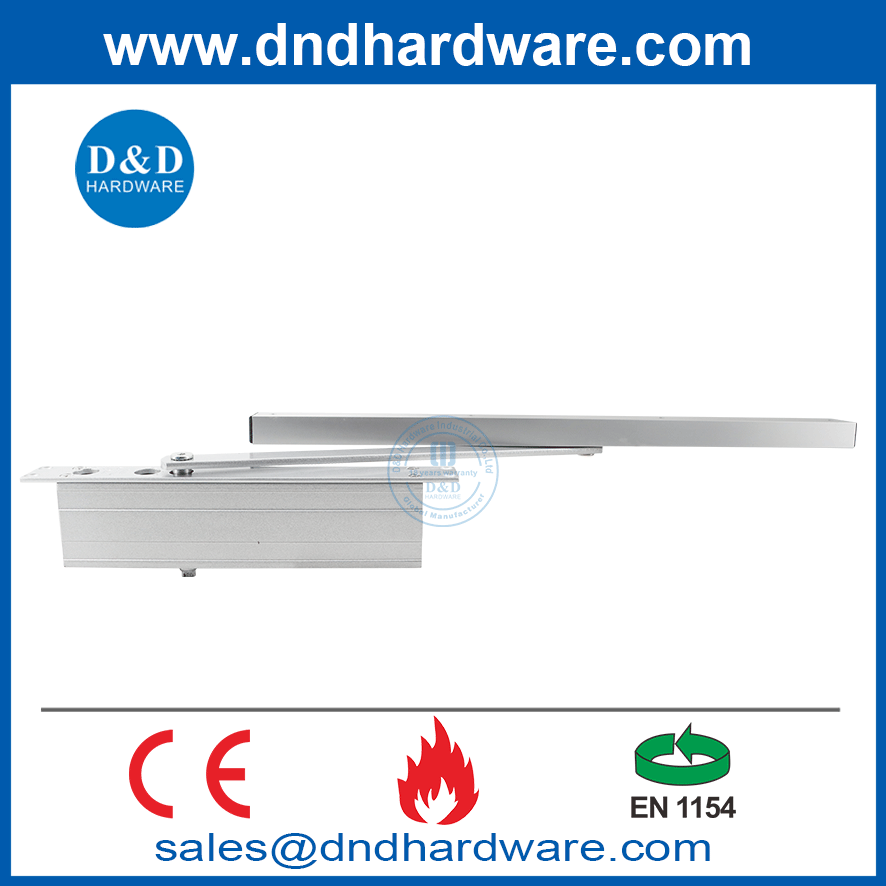
D&D CE Door Closers
•BS EN 1154
•500,000 cycles
•EN 1634 fire rated 120 / 180 minutes
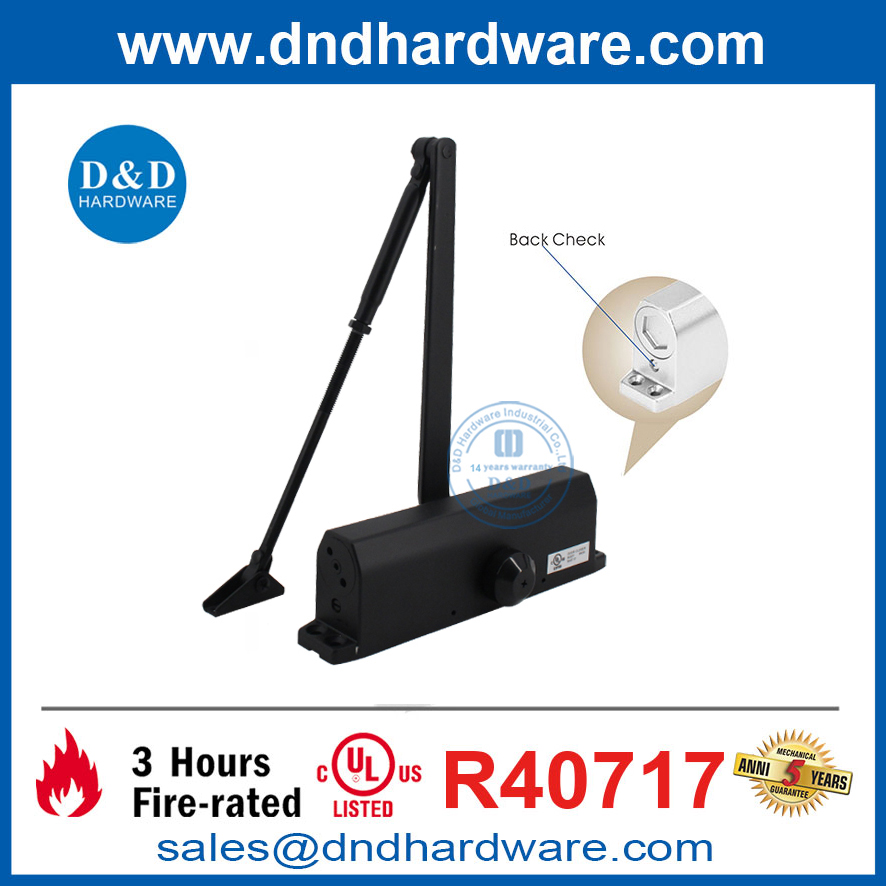
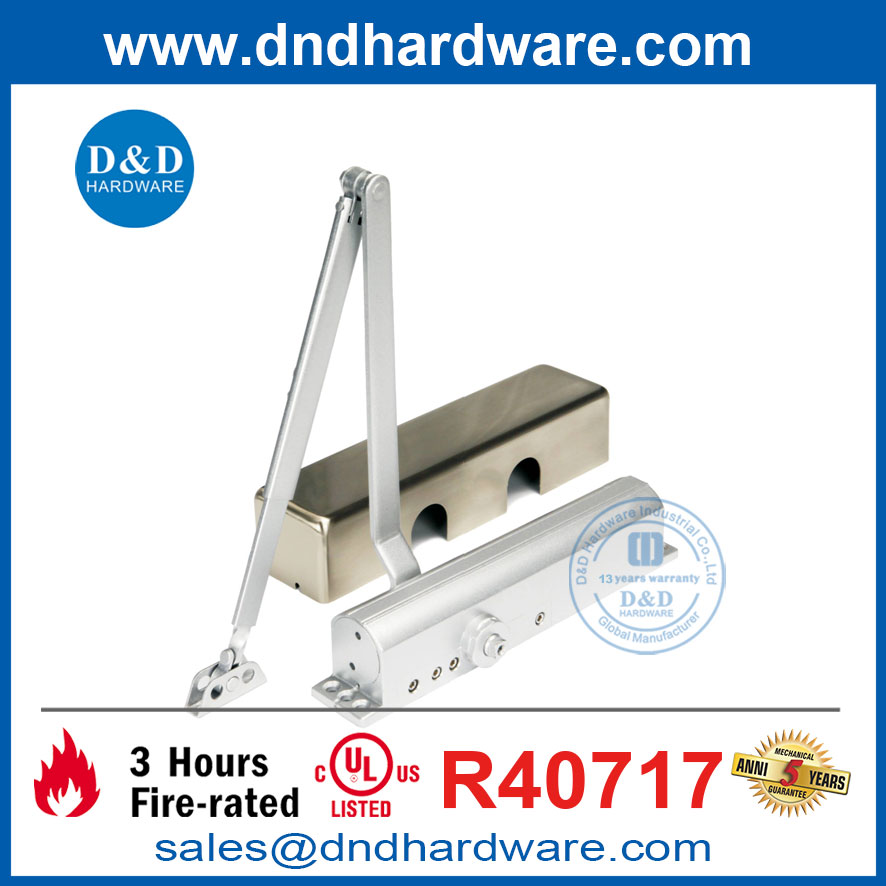
D&D UL Door Closers
•UL 10C fire rated 3 hours
5. Egress Reliability: Panic and Exit Devices Under Stress
Human Behavior in Fire Scenarios
Fire standards assume:
•Panic conditions
•No prior training
•High occupant pressure
Panic hardware is engineered to:
•Operate with minimal force
•Function after prolonged exposure
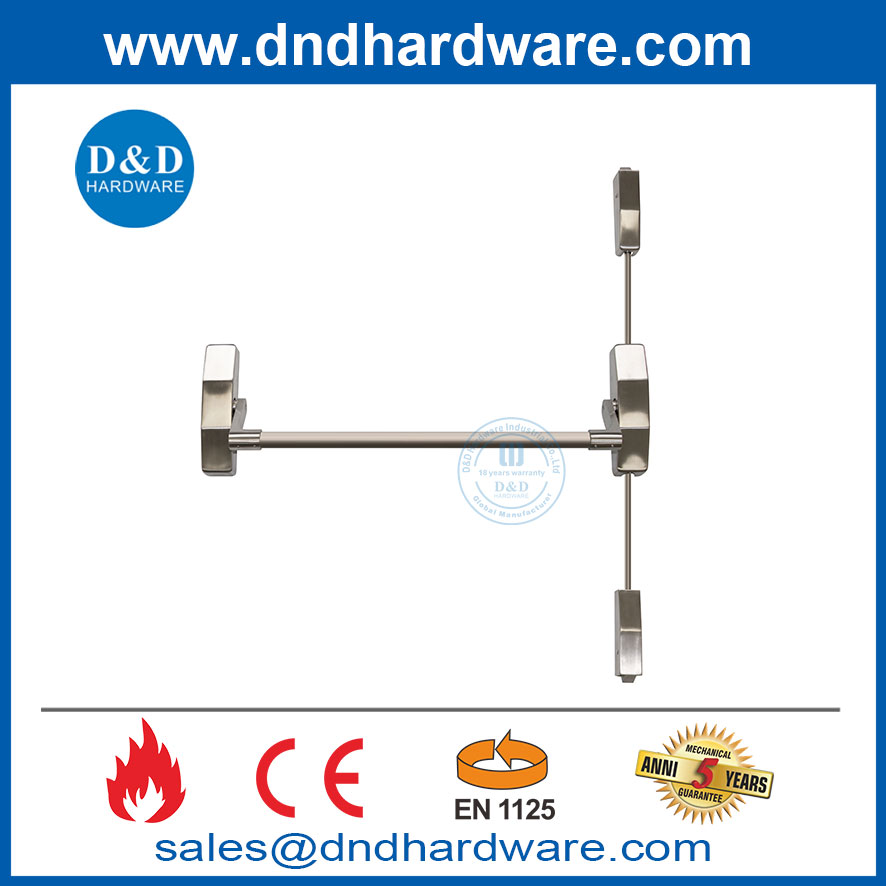
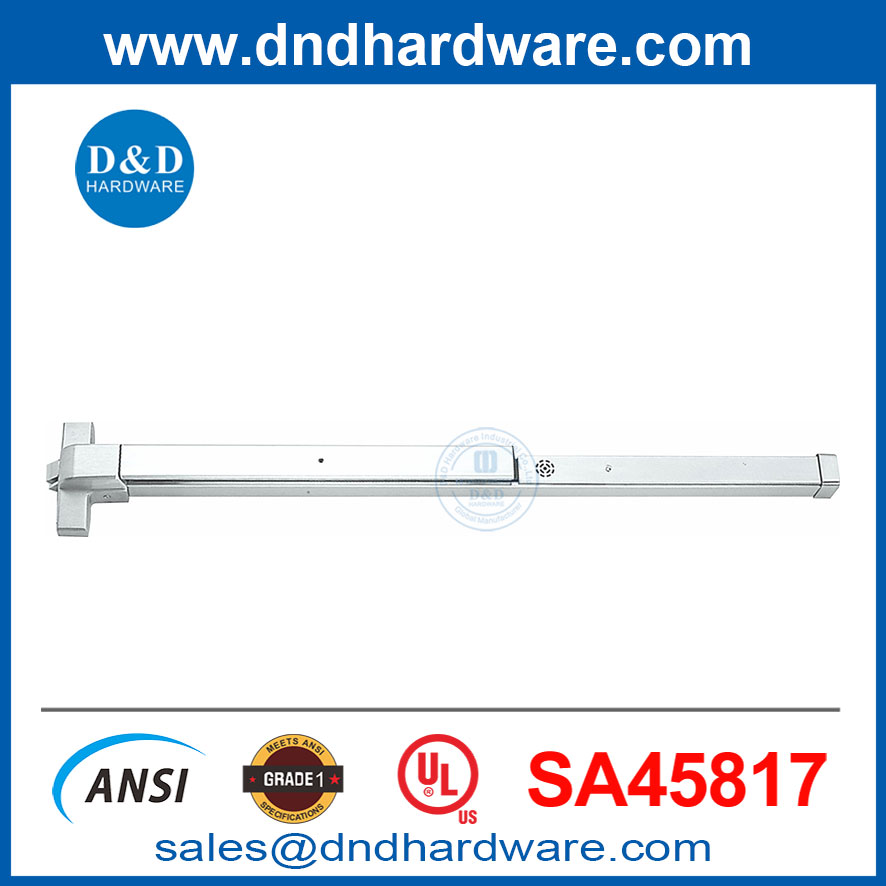
D&D CE Panic Exit Devices
•BS EN 1125
•200,000 cycles
•EN 1634 fire rated 132 / 240 minutes
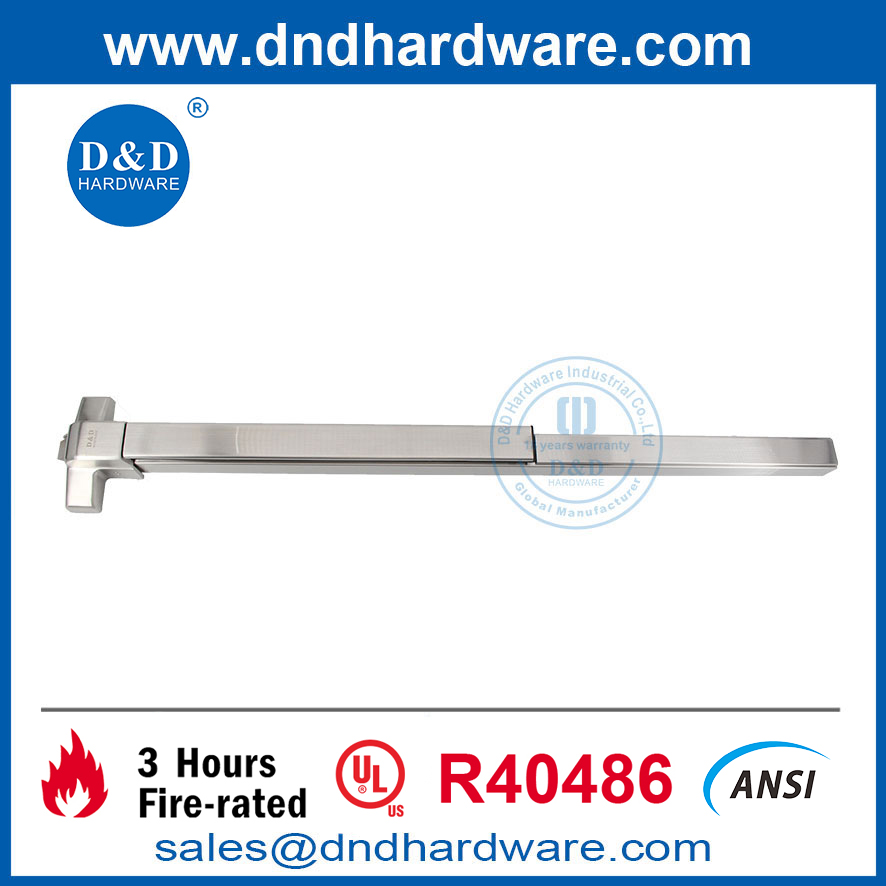
D&D UL Panic Hardware
•UL 305 listed
•Compatible with UL 10C fire doors
6. Fire Testing: How Science Is Verified by Standards
EN Fire Testing (CE System)
•EN 1634-1: Fire resistance testing
•Measures integrity (E) and insulation (EI)
•Neutral pressure fire environment
UL Fire Testing (UL System)
•UL 10C: Positive pressure fire test
•More aggressive flame penetration forces
•Focus on hardware behavior under real-fire pressure
7. Why Fire-Rated Hardware Must Be System-Validated
A key engineering principle:
Fire-rated performance exists only within the tested assembly.
Changing:
•Hardware model
•Fixing method
•Material grade
can invalidate fire performance evidence.
This is why certified fire hardware must be:
•Tested
•Documented
•Installed exactly as specified
8. Corrosion Resistance & Long-Term Fire Reliability
Corrosion weakens:
•Fasteners
•Moving parts
•Structural sections
EN 1670 corrosion testing ensures fire-rated hardware maintains integrity over time.
D&D CE hardware achieves:
•Up to 240 hours salt spray resistance, ensuring long-term fire performance stability.
Conclusion: Fire-Rated Door Hardware Is Engineered Safety
Fire-rated door hardware performance is defined by:
•Material science
•Mechanical engineering
•Human behavior modeling
•Verified fire testing
Certifications such as CE (EN standards) and UL listings are not labels — they are scientific validation systems.
With its CE-certified EN hardware range and UL-listed fire-rated hardware, D&D delivers door hardware components engineered to perform when conditions are at their most extreme.

 English