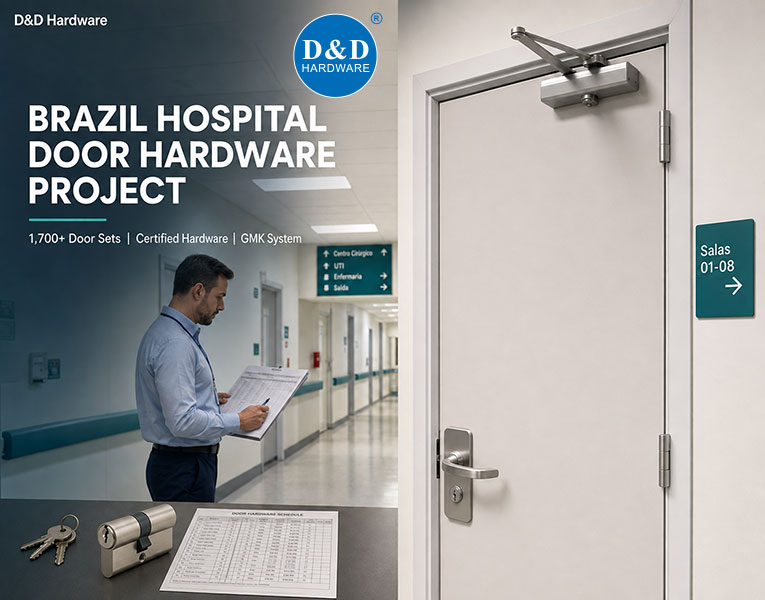
A coordinated hospital door hardware package designed to support fire-door compliance, controlled access, installation efficiency, and long-term facility management.
PROJECT | SCOPE | KEY REQUIREMENT |
Public hospital, Brazil | 1,700+ door sets | Grand Master Key system |
58,000 m² | 20 floors | Complete hardware package | EN/CE documentation and fire-rated applications |
Executive Summary
A public hospital project in Brazil required a coordinated architectural door hardware package for more than 1,700 door sets across patient rooms, ICUs, operating theatres, laboratories, pharmacies, administrative areas, fire compartments, stairways, and emergency exits. The project team needed to reduce procurement cost without creating new risks in certification, product compatibility, access control, documentation, or delivery.
D&D Hardware reviewed the door schedule and project specifications, then supplied a single-source package of certified commercial door hardware together with a customized Grand Master Key (GMK) system. Engineering coordination, cylinder coding, staged inspections, area-based packaging, and phased delivery helped the contractor move from consultant approval to installation with fewer coordination points. The result was an approved, on-schedule package with no critical installation issues reported in the project records.

Project at a Glance
Item | Project Detail |
Location | Brazil |
Building type | Public healthcare facility |
Scale | 58,000 m², 20 floors, 1,700+ door sets |
Door applications | Patient rooms, ICUs, operating rooms, laboratories, pharmacies, administration, fire exits, stairways, and service rooms |
Supply scope | Complete architectural door hardware package and Grand Master Key system |
Referenced standards | EN 1935, EN 12209, EN 1303, EN 1906, EN 1154, EN 1125, EN 1634, and CE documentation, according to the selected product |

The Customer's Procurement Challenge
The contractor had previously specified internationally recognized premium hardware brands for healthcare work. During value engineering, however, the team needed a more cost-effective hospital door hardware solution that could still satisfy the consultant's technical expectations and the operational demands of a high-traffic medical facility.
1. Protecting Fire-Door Compliance
More than half of the openings formed part of the hospital's passive fire-protection strategy. Fire compartments, emergency escape routes, staircases, ICU doors, pharmacy storage rooms, and mechanical/electrical rooms all required hardware selected for the relevant fire-door application. Product data, fire-test evidence, certificates, and installation instructions had to align with the items offered for consultant review.
2. Building a Practical Grand Master Key System
Hospital access is not a simple “open or locked” decision. Clinical, pharmacy, laboratory, administration, maintenance, and emergency teams require different permissions. The keying plan therefore had to reduce the number of keys carried by authorized staff while preventing unnecessary access to sensitive areas and allowing future expansion.
3. Selecting Hardware for Continuous Use
Hospital doors are used by staff, patients, visitors, wheelchairs, stretchers, carts, and medical equipment throughout the day. The specification needed heavy-duty commercial door hardware with reliable operation, corrosion-resistant materials where specified, predictable closing behavior, and manageable maintenance requirements.
4. Reducing Cost Without Transferring Risk to the Job Site
A lower unit price would not create value if the package caused approval delays, incompatible door preparations, missing documents, keying errors, or unplanned replacements. The contractor needed value engineering that considered the full procurement outcome: compliance evidence, manufacturing consistency, schedule coordination, technical response, packaging, and after-sales support.
The D&D Hardware Solution
D&D Hardware approached the project as an integrated opening solution rather than a collection of independent products. With more than 18 years of commercial door hardware manufacturing experience, D&D combined product selection, certification support, keying design, production control, and logistics planning in one coordinated workflow.
A Coordinated Hospital Door Hardware Package
| Product | Hardware | Selected Performance / Project Role |
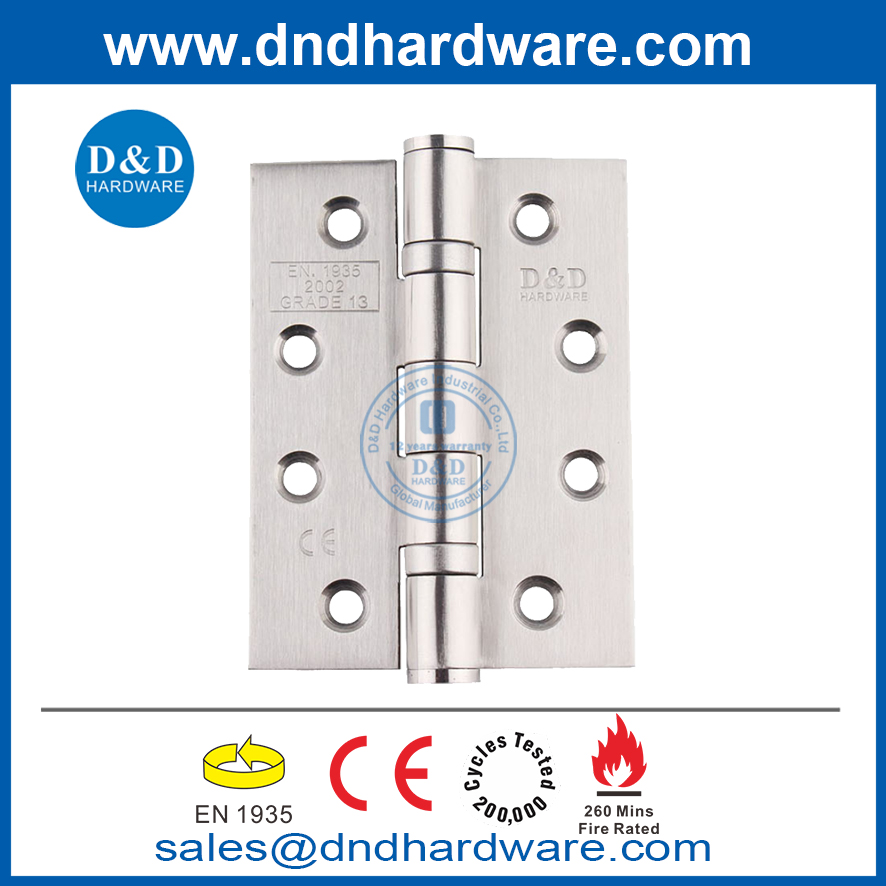 | Ball bearing hinges | SUS304; EN 1935 Grade 13; 200,000-cycle durability; fire-test evidence referenced for selected items |
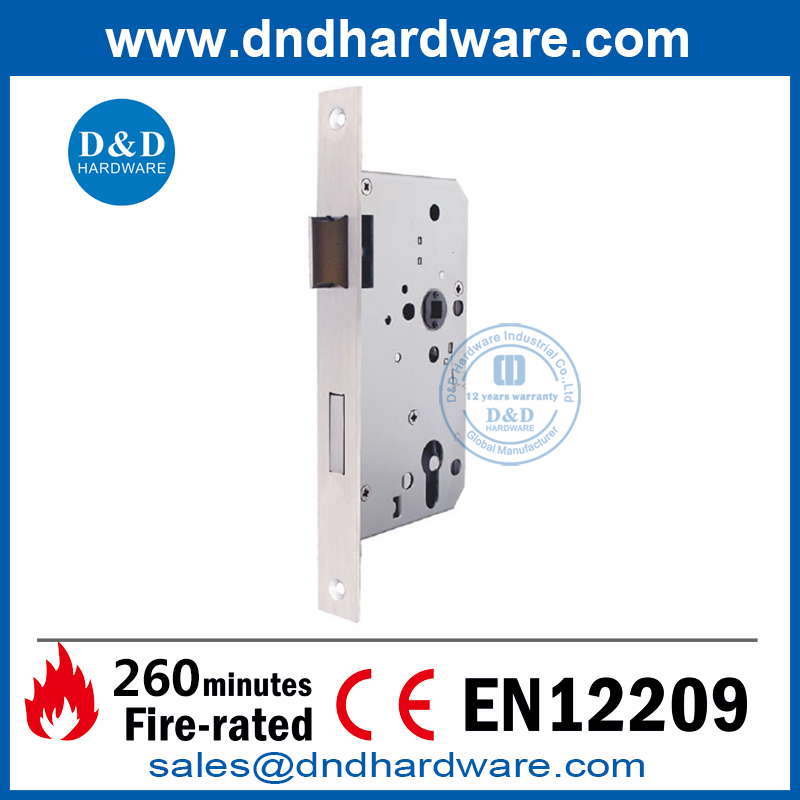 | Mortise locks | EN 12209; 200,000-cycle durability; coordinated with lever handles and cylinders |
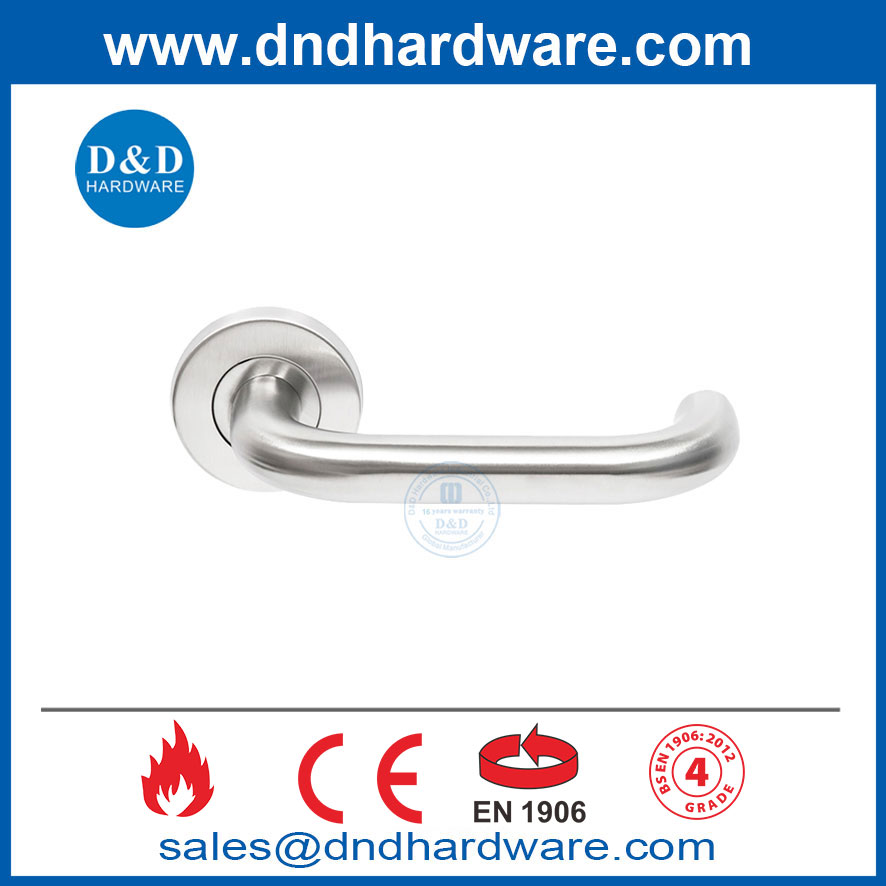 | Lever handles | SUS304; EN 1906; 300,000-cycle durability for selected items |
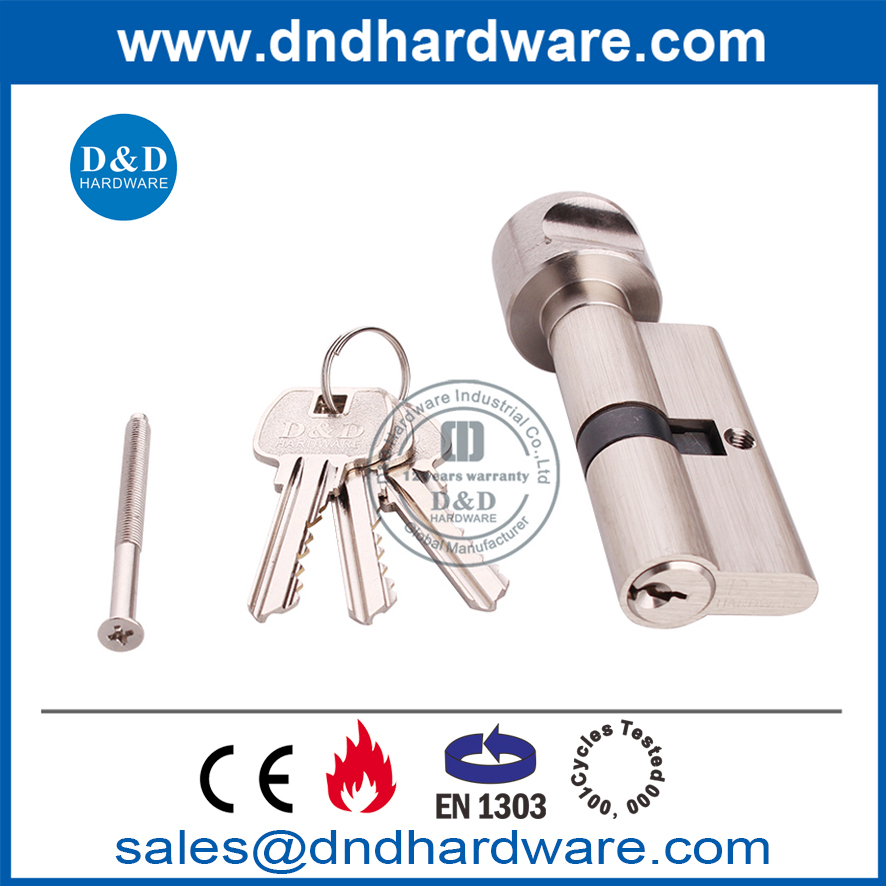 | Mechanical cylinders | EN 1303; 100,000-cycle durability; individually coded for the GMK system |
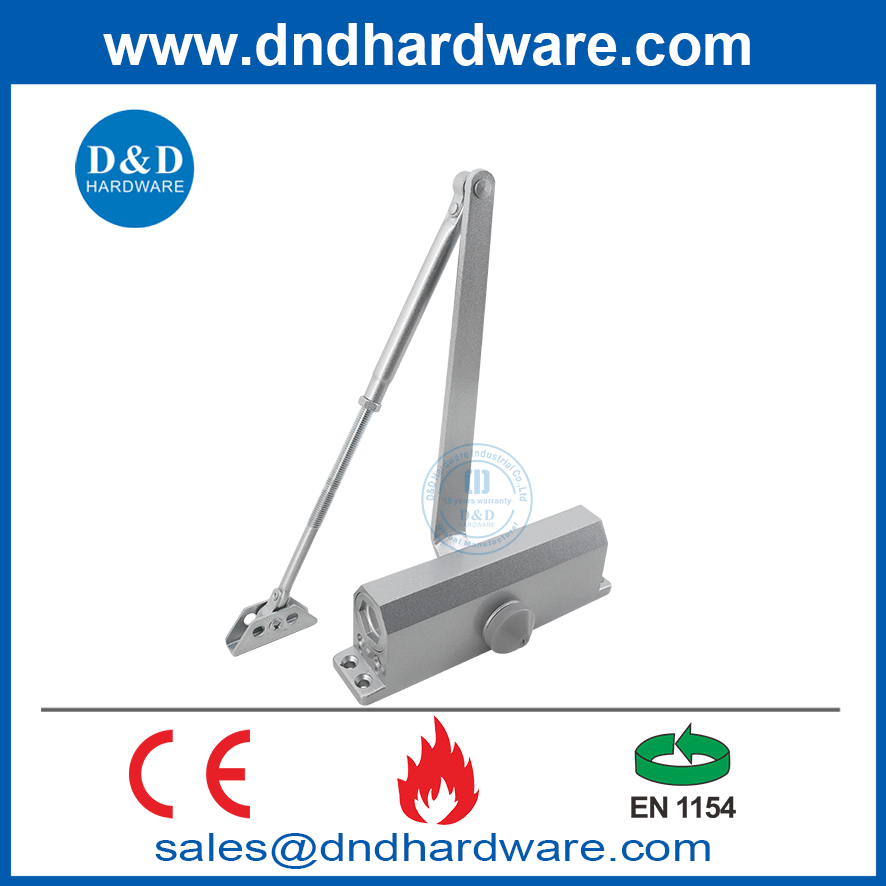 | Door closers | EN 1154; 500,000-cycle durability; adjustable closing force; suitable selected models for fire-door use |
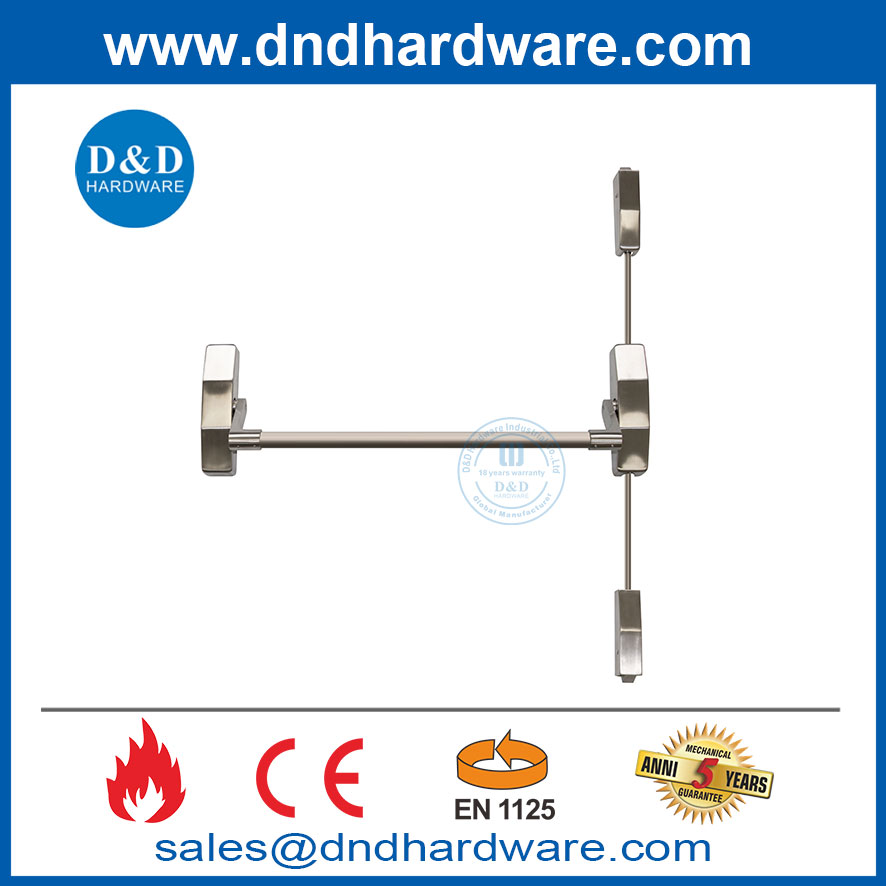 | Panic exit hardware | EN 1125; 200,000-cycle durability; selected for designated emergency exit applications |
| Accessories | Accessories | Flush bolts, dust-proof sockets, door stops, and door coordinators selected by opening requirement |
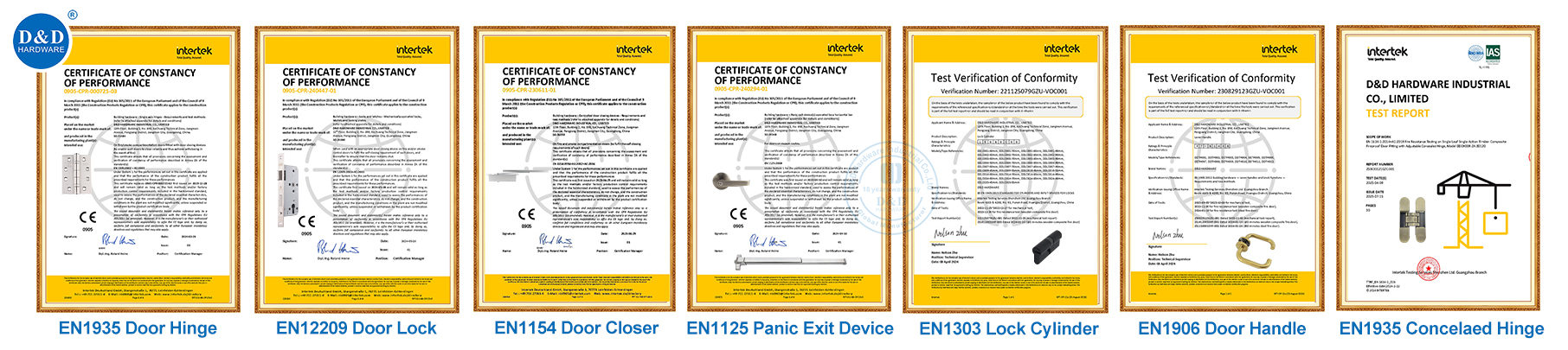
Important specification note: certification and fire-test coverage are product- and configuration-specific. Buyers should verify that the model, size, function, installation method, and supporting documents match the actual door schedule before approval or ordering.
Grand Master Key System Design
D&D developed a hierarchical mechanical master key system around the hospital’s operational structure. The cylinder coding schedule linked each opening to its required access level so production, verification, installation, and future maintenance could be traced accurately.
Key Level | Typical Access Authority |
Grand Master Key | Authorized access across the hospital |
Building Master Key | A designated building or zone |
Department Master Key | ICU, laboratory, pharmacy, administration, or another defined department |
Floor Master Key | A designated floor |
Individual Key | One specific door or approved small group |
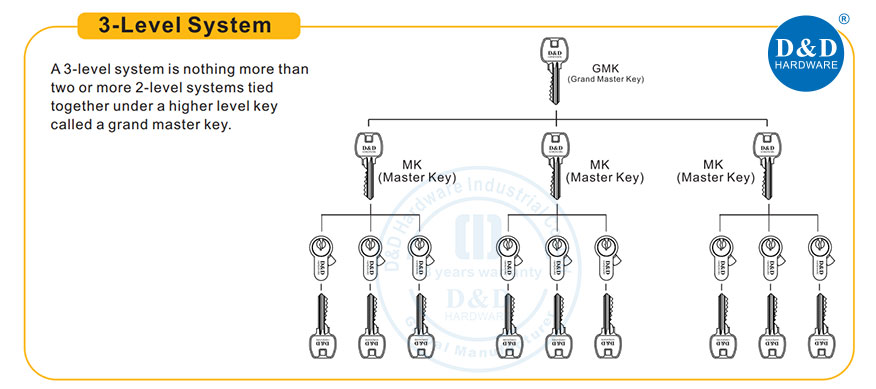
For the facility team, the practical value was not only tighter access control. The hierarchy also reduced unnecessary key duplication, simplified staff key allocation, and created a clearer basis for cylinder replacement or future expansion.
Engineering and Approval Support
D&D worked with the contractor, consultant, and door manufacturer throughout specification and approval. Support included:
·Door hardware schedule review and hardware coordination by opening type.
·Grand Master Key planning and preparation of the cylinder coding schedule.
·Technical drawings, product data, certification documents, and installation guidance.
·Recommendations for resolving product, door-preparation, and application questions before installation.
·Responses to technical inquiries within 24 hours during the project coordination stage.
This early coordination reduced the risk of discovering compatibility or documentation gaps after doors had already been prepared or installed.
Production Quality and Keying Verification
Every production batch passed defined checks before shipment. For the master key system, each cylinder was coded, function-tested, verified against the approved schedule, and documented before packing.
Inspection Point | Buyer Risk Addressed |
Material verification | Confirms specified stainless steel and component requirements |
Dimensional inspection | Reduces fit and door-preparation errors |
Functional testing | Checks mechanical operation before delivery |
Cylinder keying verification | Prevents access hierarchy and key-matching errors |
Surface finish inspection | Supports visual consistency across large door quantities |
Packaging inspection | Protects products and preserves opening identification during export |
Phased Delivery and Installation-Friendly Packaging
Deliveries were divided into phases according to construction progress. Cartons and hardware sets were identified by building, floor, and installation area. This made it easier for the site team to route products to the correct work zone, reduced unnecessary sorting, and supported a more orderly installation sequence.

Project Outcomes
Outcome | Recorded Result |
Door sets supplied | 1,700+ |
Grand Master Key system | Implemented across the defined hierarchy |
Fire-rated door hardware | Certified products supplied for designated applications |
Consultant review | Approved |
Delivery | Completed according to the agreed project schedule |
Critical installation issues | None reported in the project record |
The project demonstrates that hospital door hardware value engineering can succeed when the supplier addresses the full opening—not simply the purchase price of individual items. By combining certified products, one coordinated package, a purpose-built GMK system, documented verification, and phased logistics, D&D helped the contractor control procurement cost while protecting approval, installation, and facility-management priorities.
Why the Contractor Selected D&D Hardware
·A complete commercial door hardware package from a single manufacturer and coordination point.
·Internationally referenced product standards and supporting technical documentation.
·A customized Grand Master Key system developed around real hospital access levels.
·Factory-direct value engineering without removing critical performance requirements.
·Responsive engineering support during approval and installation planning.
·Stable production, individual cylinder verification, and phased export delivery.

What Buyers Can Learn from This Hospital Project
For contractors, consultants, door manufacturers, and procurement teams planning a healthcare facility, this case provides five practical lessons:
·Start with the door schedule, fire-rating requirements, traffic level, and access hierarchy—not with a product catalog.
·Treat master key planning as an operational design task; define permissions before cylinders enter production.
·Check that certification documents apply to the exact model, function, size, and door application being ordered.
·Ask how the supplier verifies coded cylinders and identifies each hardware set for installation.
·Compare total procurement risk, including approvals, coordination, documentation, delivery, and maintenance—not unit price alone.

Frequently Asked Questions
What door hardware is commonly required in a hospital?
A typical hospital package may include hinges, mortise locks, lever handles, mechanical or electronic cylinders, door closers, panic exit hardware, flush bolts, coordinators, stops, protection plates, seals, and other application-specific accessories. The final selection must follow the door schedule, local code, fire-door listing, security plan, hygiene requirements, and traffic level.
Why is a Grand Master Key system useful in healthcare facilities?
A GMK system creates controlled access tiers for the whole facility, buildings, departments, floors, and individual openings. When correctly planned, it reduces the number of keys carried by authorized staff while limiting access to sensitive areas such as pharmacies, laboratories, and clinical support rooms.
Can value engineering be used for fire-rated hospital doors?
Yes, but it should preserve the performance and documentation required for the complete opening. A substitution should be checked for its exact certification scope, fire-door compatibility, dimensions, function, finish, durability, installation method, and effect on the approved door assembly.
How should buyers evaluate a hospital door hardware supplier?
Review manufacturing experience, applicable certifications, technical-document quality, schedule-review capability, keying expertise, inspection records, batch traceability, production capacity, packaging controls, delivery planning, and after-sales response. For large projects, request a coordinated submittal and sample keying schedule before mass production.
Contact us Now:
Contact: David Jian
Mob:0086-139 2903 7292
Email: David@dndhardware.com, sales@dndhardware.com,
Contact: Jobby Zhang
Mob:0086-137 2599 9617
Email: jobby@dndhardware.com
D&D HARDWARE INDUSTRIAL CO.,LTD
ADD:12th Floor, Building 2, No.898, KeChuang Technical Zone, Jiangmen Avenue, Pengjiang District, Jiangmen City, Guangdong, China (Postcode:529000)
https://www.dndhardware.com
Tel: +86-750-3856396
Fax: +86-750-3856395
 English