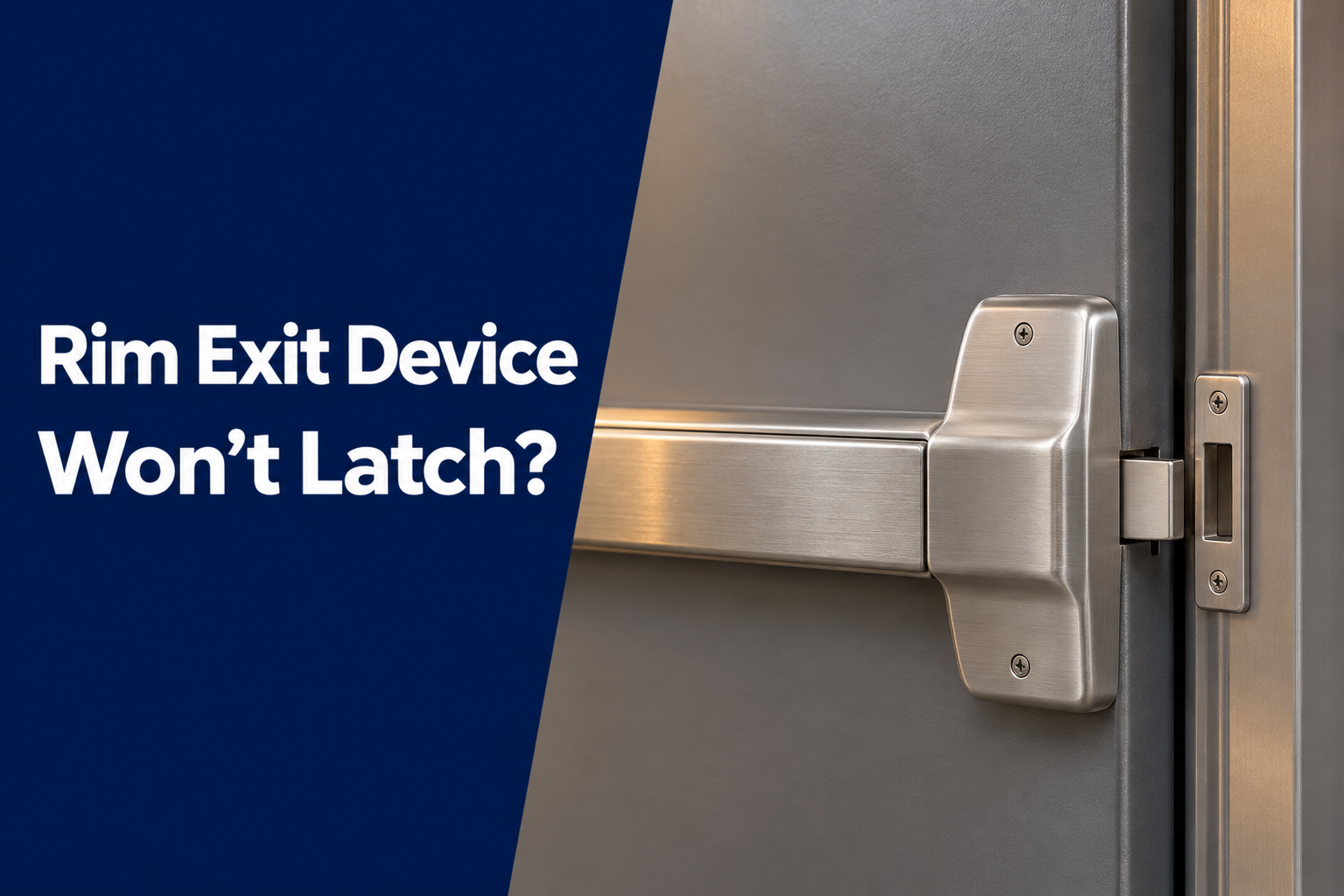
A rim exit device that won't latch can make a commercial door look closed while leaving it unsecured. The push bar may release the latch normally with the door open. Once the door swings shut, the same latch may hit the strike, fail to reach it, or stop short of full engagement.
For a single commercial door with a surface-mounted rim device, compare what happens with the door open and what happens at the frame. These two observations help maintenance teams and installers decide whether to inspect the device, the door fit, or the strike. If the opening fails to release for egress, or a fire door fails to latch, notify the facility team promptly and arrange qualified service.

Quick Answer
With the door open, press and release the bar. Compare the latch response with the model's normal reset sequence.
If the latch operates normally, watch where it meets the strike during the last part of closing.
If the latch hits the strike or misses it, check how the door sits in the frame before moving the strike.
After service, verify that the door latches on its own and releases from the egress side.
Why a Rim Exit Device Won't Latch
A rim device mounts on the face of the door and latches at the frame jamb on a single opening. For a typical spring-latch design, pressing the bar retracts the latch. Releasing the bar lets it extend again. As the door closes, the latch passes over the strike's lead-in and engages behind its retaining surface. The door can reach the frame stop without completing that last step.
D&D Hardware's rim exit devices serve commercial openings. Use the template for the exact device and strike to check their relationship at the jamb. Strike profiles and installation dimensions vary by model. If the door has latches at the top or bottom, identify the device type before applying these checks.
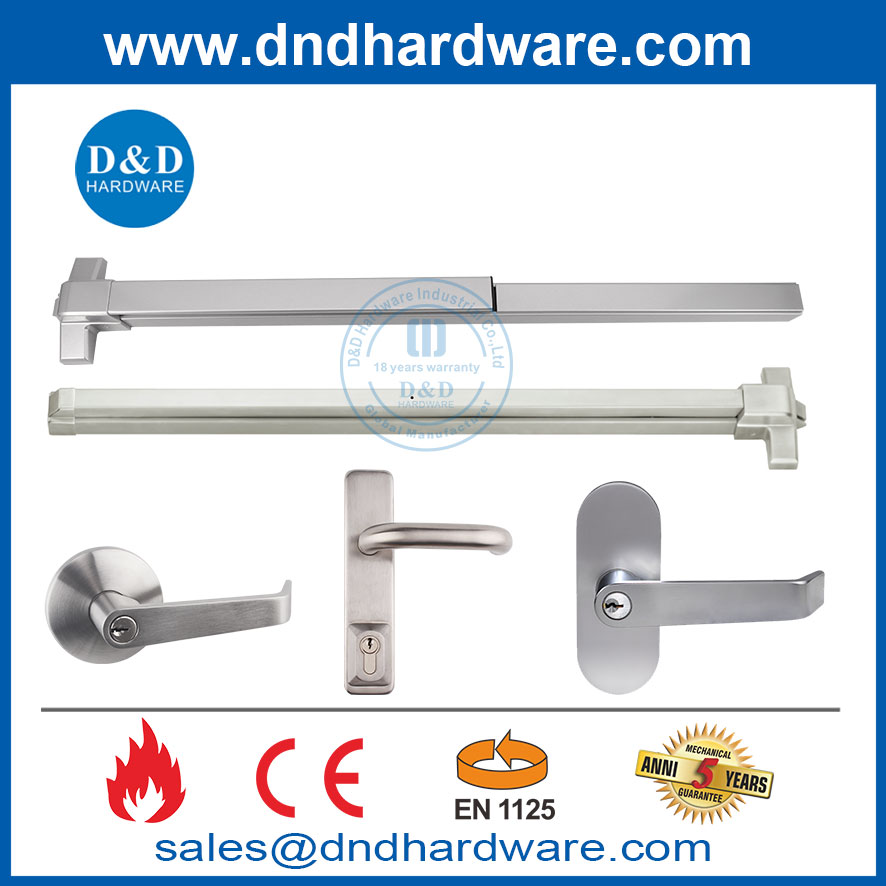
Check the Device With the Door Open
Under the site's maintenance procedure, hold the door open under supervision. Operate the push bar and observe the latch from a safe position, with your hands clear of the door edge. On a spring-latch model, note whether the latch retracts cleanly, then returns to its normal position when you release the bar. Repeat the operation to see whether the response is consistent.
If the latch stays retracted, identify the device configuration. On a non-rated opening with mechanical dogging, the device may be set to keep the latch retracted during permitted access hours. On a model with electric latch retraction, have the access-control team confirm whether a command is holding it back. If the latch should reset but sticks or returns only partway, record what you observed and have a qualified technician inspect the device and any connected trim. Moving the strike cannot restore latch travel.
Watch How the Latch Meets the Strike
Check Whether the Door Reaches Its Closed Position
Observe where the door first meets resistance. If it slows or stops before the latch reaches the strike, check for rubbing at the frame, contact at the threshold, or a seal that prevents the leaf from seating. Compare the gaps at the head and jambs. A changed gap pattern or movement at a hinge gives the installer a reason to check the door fit before adjusting the hardware.
Check the Point of Contact
Look for fresh rub marks on the strike and latch. A mark on the top or bottom edge calls for a check of the latch height relative to the strike. If the heights line up but the latch bears against the face of the strike, compare the strike profile and mounting position with the template. Steel Door Institute guidance on steel door and frame troubleshooting covers door sag, frame alignment, and checks for secure engagement at an adjustable rim strike.
| What you observe | Where to look next |
| The latch returns with the door open but hits the lower edge of the strike. | Check the head and jamb gaps and look for hinge movement. If the leaf has dropped, address the door fit before setting the strike. |
| The latch reaches the strike but appears to catch only at its edge. | Verify the strike part and its position. Check how far the latch engages when the door is seated. |
| The door latches when gently guided shut but misses when released to close by itself. | Check the last part of the closing travel for drag, seal resistance, or latch contact. Have the installer evaluate closer operation once the door fit and strike are verified. |
For example, a site may report that a door worked until the frame was repainted. If the gaps look consistent and the latch returns freely, look for fresh contact marks or paint buildup at the strike and stop. If the door also rubs low at the jamb and the gap has changed, the installer should investigate the door position before attributing the failure to the paint.
Confirm the Strike Before Ordering Parts
If the fault started after a device or strike was replaced, record both part identifiers and the mounting arrangement. For an existing D&D DDPD003 rim exit device, request the model-specific template and compatible strike information. Include a photo of the latch facing the strike as the door approaches its closed position, plus a full view of the jamb. If the strike was replaced, include a photo or part number for the old one if available.
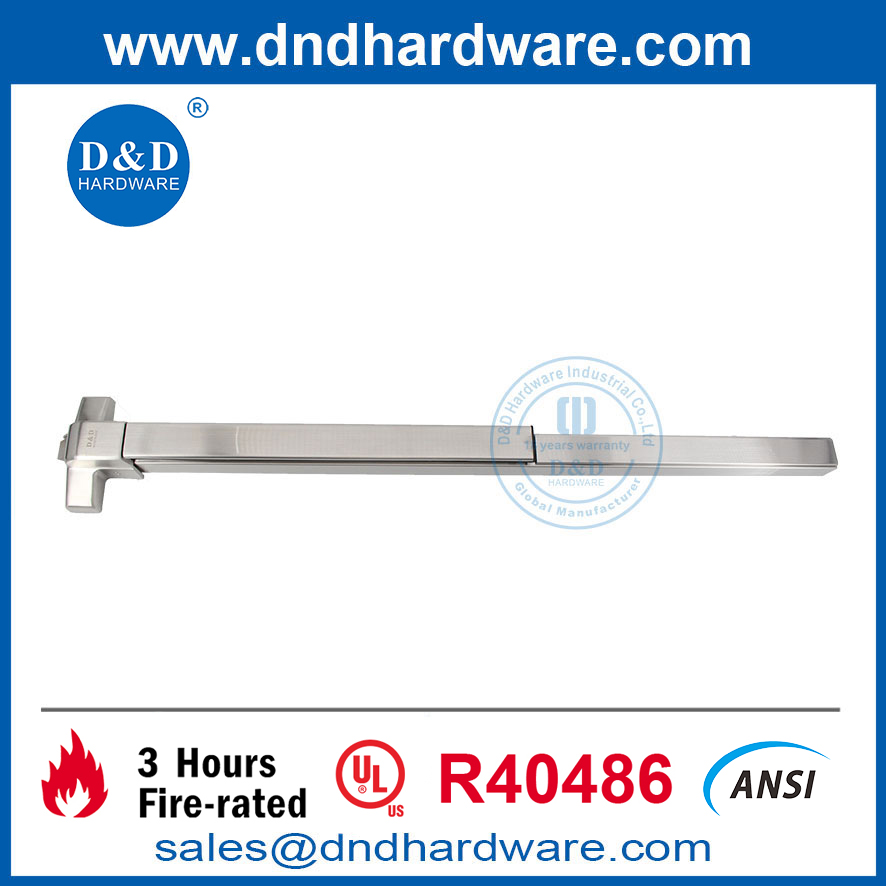
On a U.S. fire-rated opening that requires an exit device, check the installed hardware label and the opening documentation. UL Solutions' application guide distinguishes listed fire exit hardware from panic hardware for non-rated doors and explains the limits on latch retraction. Confirm that any replacement and proposed work are permitted for the assembly. Route changes to a rated door or frame through the applicable approval process before altering the opening.
Retest Closing and Egress Release
After service, let the door close under normal conditions without pushing it into place. Verify that the latch engages the strike and holds the door closed. Then press the bar from the egress side and confirm that the door releases smoothly. Repeat the cycle and record the result against the opening ID. Where access control or a fire alarm interface is involved, have the responsible technician verify operation in the required modes.
Conclusion
A rim exit device that won't latch is easier to diagnose when you check latch travel and strike engagement separately. Use the model template and the door's actual closing position to decide whether the device, the door fit, or the strike needs attention.
Need to match a rim device or strike?
Send D&D Hardware the model number and photos of the latch, strike, and jamb. Ask about rim exit device and strike compatibility.

FAQ
Why Does My Rim Exit Device Click but Fail to Hold the Door?
The sound may come from the latch contacting the strike. Confirm that the latch passes the retaining surface and holds the door after it closes.
Can I Reuse the Existing Strike With a New Rim Exit Device?
Reuse it only if the manufacturer confirms it is compatible with the replacement device and opening. A matching screw pattern alone cannot confirm that the latch will engage correctly.
Does a Rim Exit Device Need a New Strike if the Door Sags?
Have the installer check the door position first. Once the leaf is correctly aligned, the existing strike may work if it is compatible, secure, and undamaged.
What if the Rim Exit Device Latches but the Exterior Lever Won't Open It?
Check the specified trim function and its locked or unlocked state. If the inside bar releases normally and the trim should allow entry, have the technician check the trim and its connection to the device.

Contact us Now:
Contact: David Jian
Mob:0086-139 2903 7292
Email: David@dndhardware.com, sales@dndhardware.com,
Contact: Jobby Zhang
Mob:0086-137 2599 9617
Email: jobby@dndhardware.com
D&D HARDWARE INDUSTRIAL CO.,LTD
ADD:12th Floor, Building 2, No.898, KeChuang Technical Zone, Jiangmen Avenue, Pengjiang District, Jiangmen City, Guangdong, China (Postcode:529000)
https://www.dndhardware.com
Tel: +86-750-3856396
Fax: +86-750-3856395


 English