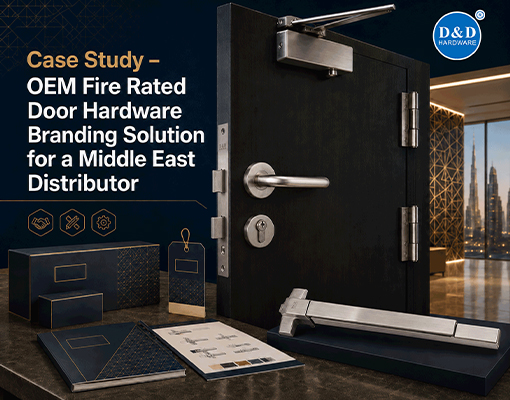
From a limited product range to a specification-ready architectural hardware portfolio with D&D Hardware

D&D Hardware — Global Standards, Factory Direct
Executive answer: D&D helped the distributor consolidate certified product sourcing, private-label branding, technical documentation, packaging and hardware scheduling into one coordinated OEM program. The result was a more credible, complete offer for commercial project bidding—without the cost and complexity of developing each category independently.
Project | Scope |
Customer | Growing architectural door hardware distributor |
Market | Middle East |
Objective | Launch and expand a private-label door hardware brand |
Applications | Hotels, hospitals, schools, residential towers and commercial buildings |
D&D role | OEM manufacturing, certification support, branding, documentation and scheduling |
Why the Customer Needed More Than an OEM Factory
The distributor already understood its local contractor and project market. The missing piece was not simply a logo on a product—it was a credible system that consultants, contractors and buyers could evaluate. A private-label brand had to demonstrate product consistency, documentation readiness, fire-door suitability and the ability to supply a coordinated package.
The customer also wanted to retain more long-term value. Continuing to resell unrelated third-party brands limited control over pricing, portfolio consistency and brand loyalty. Building an own-brand range could improve differentiation and margin potential, but only if the products and supporting evidence were suitable for real project requirements.
Customer decision question: How can a regional distributor launch a credible private-label fire-rated door hardware range quickly, while reducing compliance, quality and multi-supplier coordination risk?

Four Barriers to Private-Label Market Expansion
1. Trust and specification acceptance
A new label has no automatic track record. Consultants and project teams need clear technical data, relevant certifications, product identification and dependable support before considering an unfamiliar brand for a hardware schedule.
2. Fire-rated compliance under the customer's brand
Commercial and government projects may call for UL, ANSI/BHMA, CE or BS EN evidence, alongside local authority and Civil Defense requirements. The customer therefore needed a compliant path for presenting qualified products under its own brand. Certification applicability and any private-label or co-listing arrangement had to be confirmed for the exact model and intended use—not assumed from a generic product family.
3. Fragmented product sourcing
A typical fire-door opening can involve hinges, a lock or exit device, a closer, cylinders and accessories. Buying these categories from different factories can increase coordination time, inconsistent finishes, documentation gaps, shipment risk and installation questions.
4. Insufficient sales and submittal materials
A catalog alone is not enough. The customer needed aligned product codes, technical data, drawings, test or listing references, installation information, packaging and traceability so its sales team could support both distributor sales and project submittals.
Private-label product presentation and coordinated brand application
The D&D Hardware Solution: One Coordinated Brand-Building Program
D&D structured the engagement around the customer’s route to market rather than treating each item as a separate purchase order. With more than 18 years of manufacturing experience, an SGS-audited factory and a broad architectural hardware portfolio, D&D could combine factory-direct supply with international-standard product options and flexible OEM support.
Step 1: Define a commercially useful product architecture
The first priority was to turn a list of components into a coherent brand portfolio. The range covered fire-rated and non-fire-rated hardware, including hinges, mortise lock bodies, lever handles, cylinders, door closers, panic exit devices, pull handles, door stops and flush bolts. Products were organized by category, application and specification so the customer could sell individual items or complete opening packages.
Step 2: Apply a consistent private-label identity
The customer’s logo and product identity were coordinated across eligible hardware, product labels, color boxes and shipping cartons. Packaging included product information, codes, relevant fire-rated markings where applicable, installation information and traceability labels. This consistency helped the range look like one managed brand rather than unrelated factory products.
OEM packaging and product identity developed for consistent market presentation
Step 3: Build consultant- and contractor-ready documentation
D&D supported a branded catalog covering hinges, locks, cylinders, closers, exit devices, pull handles and accessories. Product pages aligned specifications, materials, finishes, technical drawings and certification information. The documentation gave the distributor a more practical tool for contractor meetings, quotations, submittals and product comparisons.
Step 4: Map certification evidence to the correct products
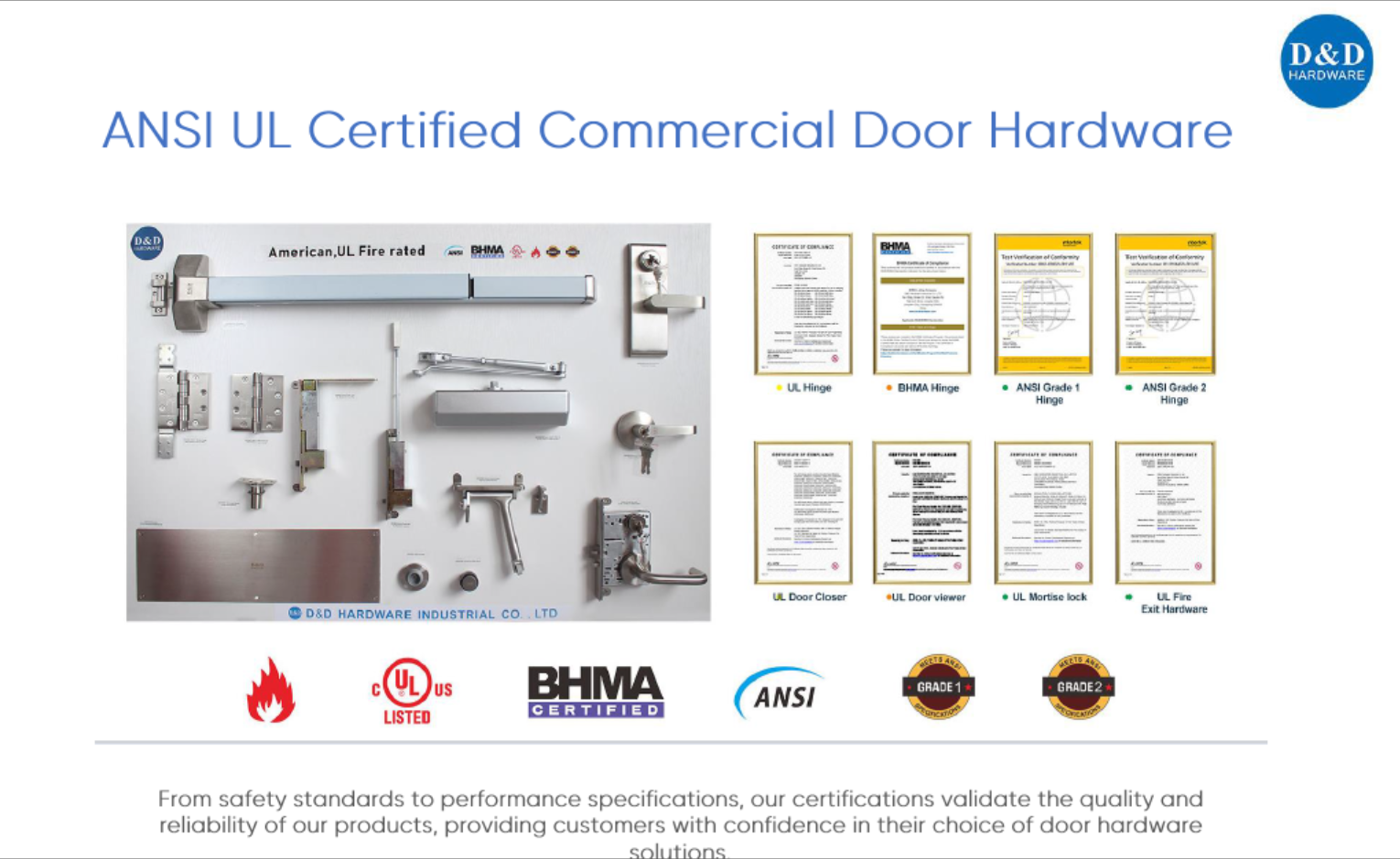
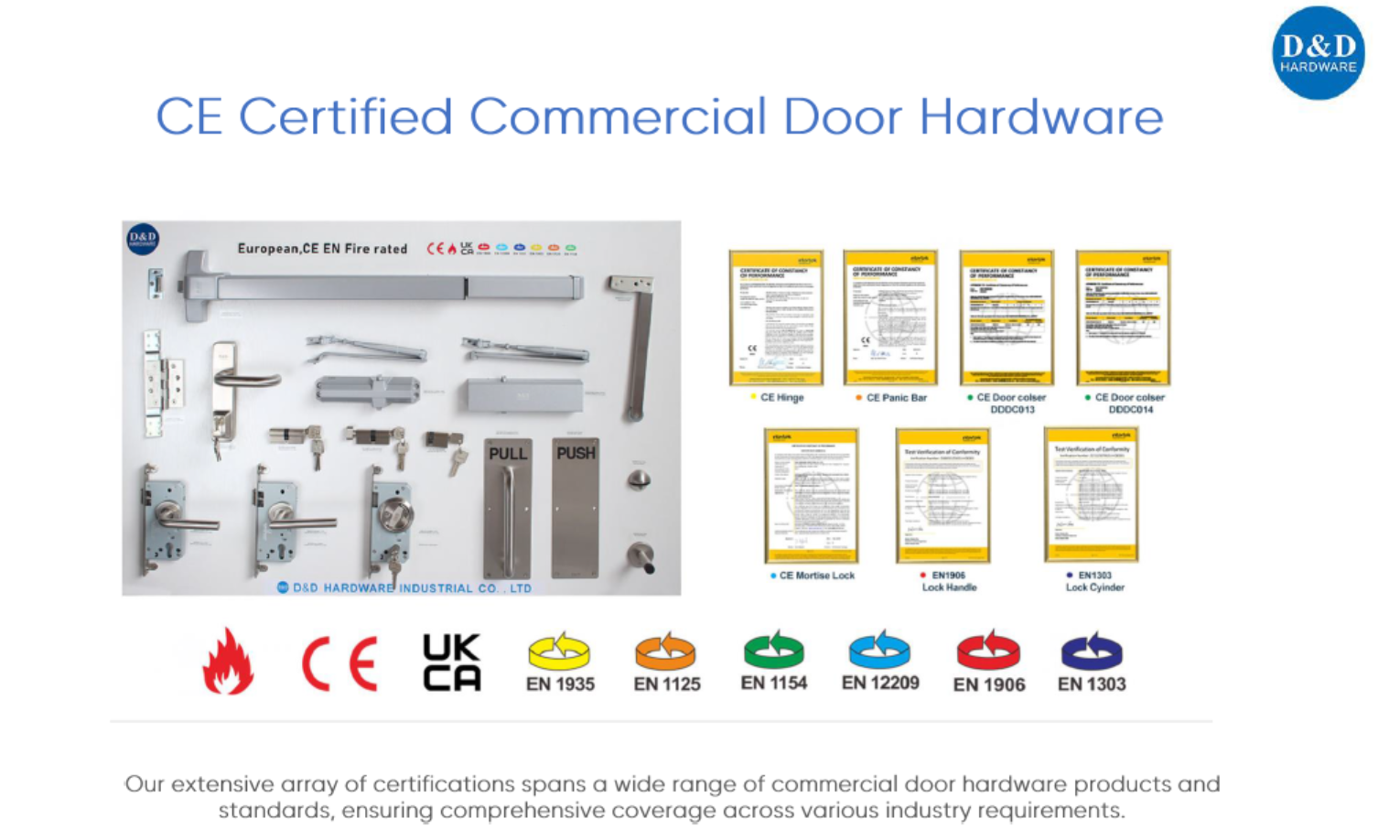
The program drew from D&D product options tested or listed to relevant standards, including UL 10C, ANSI/BHMA, CE EN 1634 and other BS EN requirements. For buyers, the critical value is not the number of logos shown; it is whether the exact product, configuration, door application and label arrangement are covered by valid evidence.
Important compliance note: Fire-door approval depends on the complete opening and applicable local code. Buyers should verify the exact model, listing scope, door type, installation details and authority requirements before specification or installation. “UL listed,”“CE marked” and “fire rated” are not interchangeable claims.
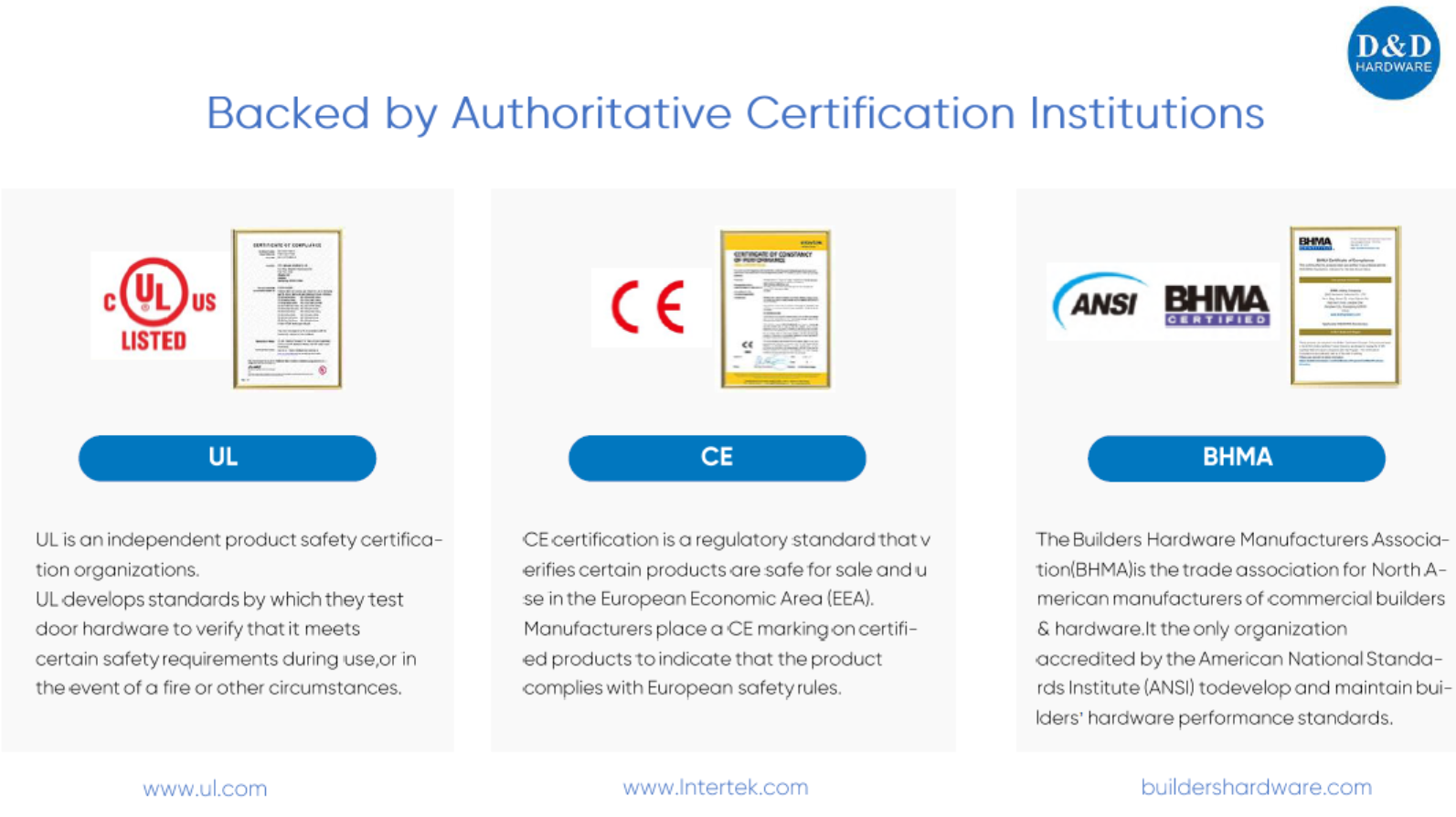
Certification documentation organized to support product review and project submittals
Private-Label Co-Listing and Identification Support
Where the applicable certification program and product scope permitted, D&D supported a co-listing or private-label identification pathway. This enabled the distributor to strengthen its own brand presentation while retaining traceability to the relevant compliance route. The arrangement was handled as a controlled certification process—not as a simple logo change.
·Clearer brand ownership in customer-facing materials
·Improved confidence during consultant and contractor review
·Better alignment between the product label, technical file and sales documentation
·More credible participation in government and commercial project opportunities
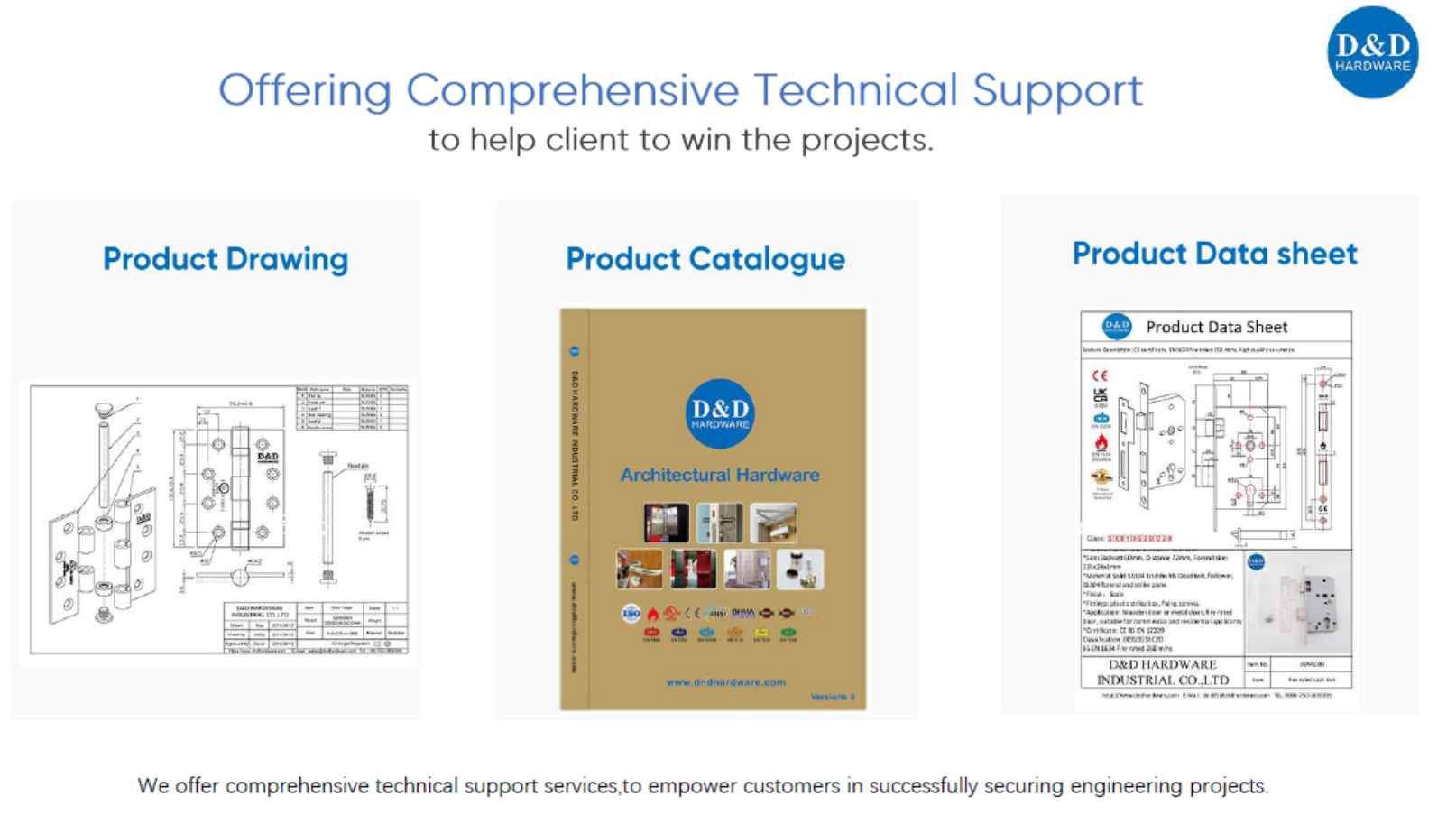
Brand identification and supporting documents aligned for project-facing use
Quality and Performance Evidence Used in the Portfolio
The following performance examples were used to position the range. They should always be linked to the specific model and current test or listing documentation supplied for a project.
Product category | Illustrative performance evidence | Buyer value |
Heavy-duty ball-bearing hinges | ANSI Grade 1; up to 2,500,000 cycles; fire-rated options up to 3 hours | Supports high-traffic and fire-door applications |
Door closers | Up to 500,000 cycles; adjustable closing and latching speeds; fire-rated options up to 3 hours | Controlled closing and repeatable door operation |
ANSI mortise lock bodies | ANSI Grade 1; stainless-steel latch bolt; up to 1,000,000 cycles; fire-rated options up to 3 hours | Durability and specification alignment |
CE mortise lock bodies | CE/EN options; stainless-steel latch bolt; up to 200,000 cycles; fire-rated options up to 260 minutes | Supports EN-oriented project requirements |
Panic exit devices | UL-listed and ANSI/BHMA-certified options for high-traffic buildings | Life-safety egress options for applicable openings |
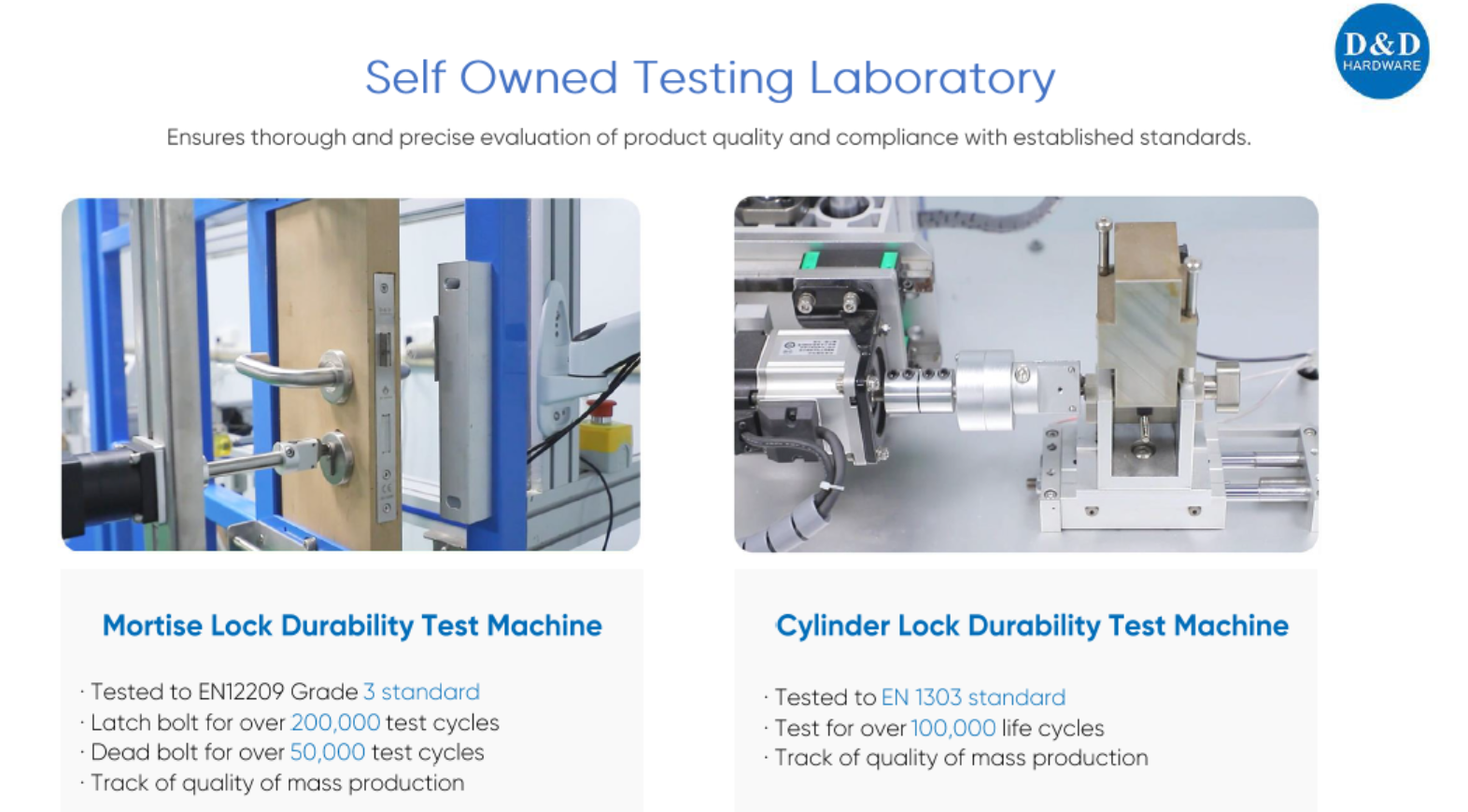
Representative certified and heavy-duty architectural hardware categories
From Individual Products to Complete Hardware Schedules
One of the most valuable changes was the ability to discuss complete door openings. Hardware scheduling support helped the distributor match components to the door function, traffic level, fire requirement and project standard. This reduced the burden on contractors who otherwise had to reconcile products from multiple sources.
Opening component | Example FD-01 specification | Selection check |
Hinge | UL-listed heavy-duty ball-bearing hinge | Door size, weight, material and listing scope |
Lock | Fire-rated mortise lock body | Function, handing, cylinder and door preparation |
Closer | UL-listed door closer | Door weight, mounting, power size and fire-door use |
Exit device | UL-listed fire exit rim device | Door type, egress function, trim and fire-exit application |
Buyer takeaway: A “complete solution” is valuable only when the components are selected as a compatible opening. Request a door-by-door hardware schedule and verify each opening against the project specification and fire-door assembly requirements.
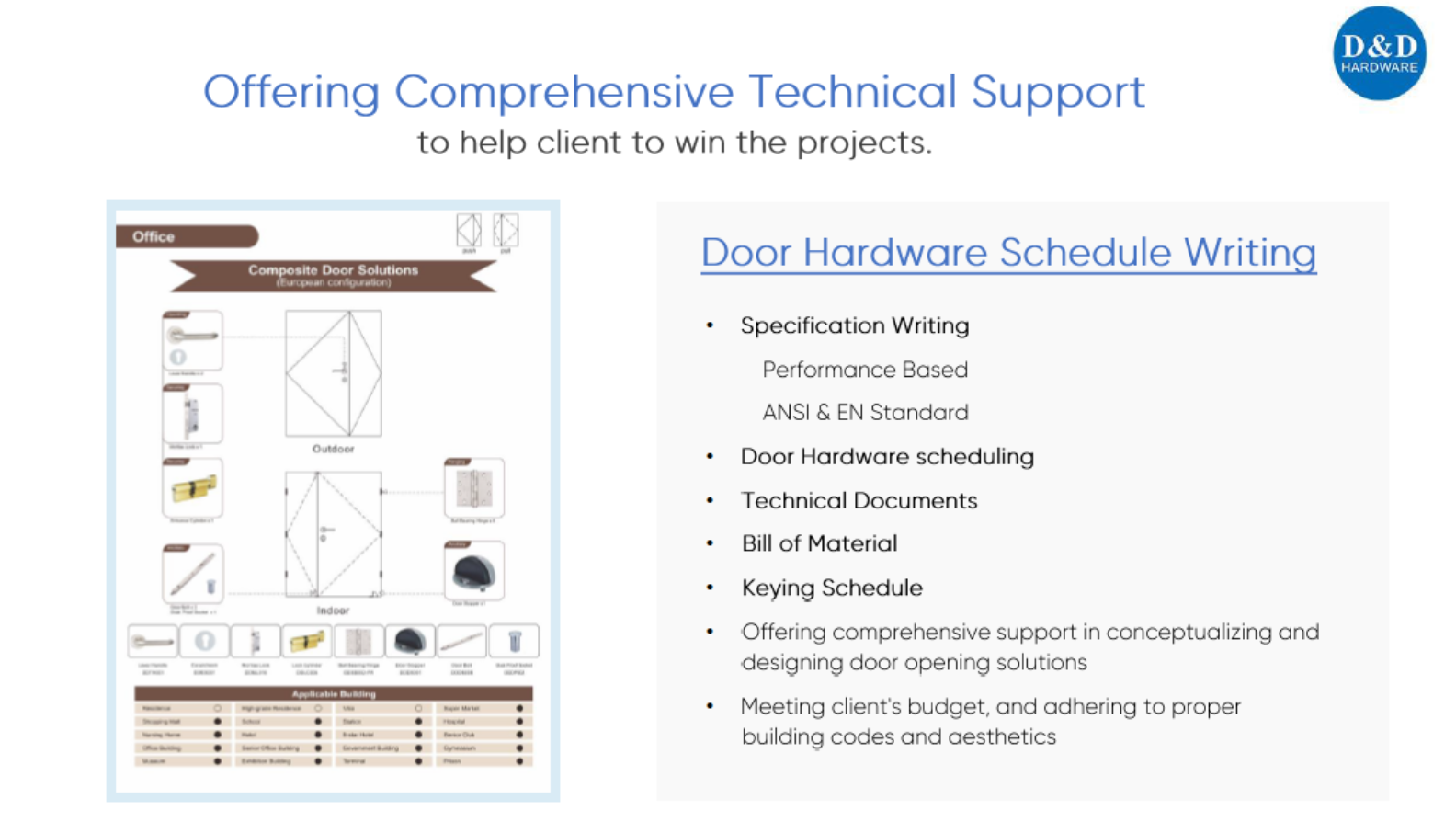
Example of coordinated hardware scheduling for a fire-door opening
Business Results: A Stronger Platform for Project Sales
After implementation, the customer moved from a limited, fragmented offer toward a complete architectural door hardware platform under its own brand. The combination of broader product coverage, professional presentation and accessible compliance documentation helped the company participate more credibly in discussions for hotels, hospitals, educational facilities, commercial buildings and residential developments.
Before the OEM program | After the OEM program |
Limited range from multiple sources | Coordinated architectural hardware portfolio |
Inconsistent product and packaging identity | Unified private-label brand presentation |
Documentation assembled product by product | Structured catalog, technical data and compliance files |
Primarily a product distributor | Positioned as a door hardware and project-solution provider |
More friction during project review | Clearer evidence and scheduling support for buyer evaluation |
The program also created longer-term commercial assets: a recognizable private label, a reusable documentation system, more control over portfolio development and stronger customer retention potential. Because the case did not include audited financial figures, this study does not claim a specific percentage increase in revenue, margin or conversion rate.
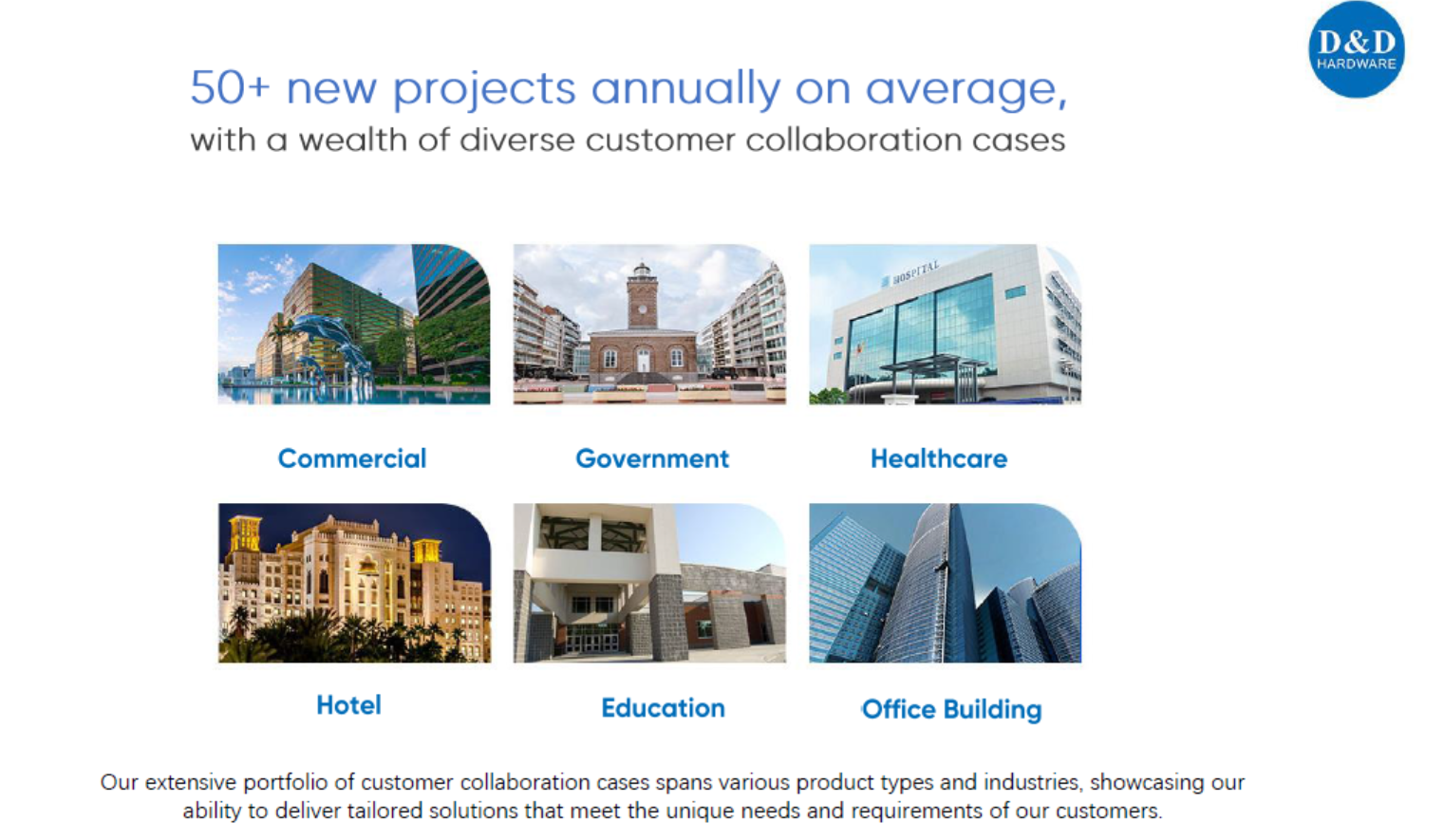
Expanded project-market positioning supported by a coordinated private-label portfolio
Why D&D Hardware Was a Practical Fit
· Global standards with factory-direct efficiency: internationally certified product options supported by a direct manufacturing model.
· Broad one-stop portfolio: core hardware categories can be coordinated for metal, wooden and fire-door applications.
· OEM flexibility: support for logo application, packaging, finishes, documentation and portfolio development.
· Specification support: technical consultation and hardware scheduling help buyers move from product selection to a door-opening solution.
· Commercial partnership mindset: the program was designed to help a distributor build a durable market asset, not only purchase products.
· Manufacturing foundation: more than 18 years of experience and an SGS-audited factory support quality control and responsive development.

What Buyers Should Ask Before Choosing an OEM Door Hardware Partner
Buyer question | Why it matters |
Can you show current certificates or listings for the exact model? | Prevents generic or out-of-scope compliance claims. |
Does private labeling require co-listing or other approval? | Protects traceability and avoids unauthorized use of certification marks. |
Can you provide a door-by-door hardware schedule? | Reduces compatibility gaps across hinges, locks, closers and exit devices. |
How are finishes, product codes and packaging controlled? | Keeps a multi-category brand consistent and easier to manage. |
What testing, inspection and warranty documents are available? | Creates an evidence trail for procurement and after-sales support. |
Can the supplier support future categories and project-specific needs? | Avoids rebuilding the supply chain as the brand grows. |
Frequently Asked Questions
What is an OEM fire-rated door hardware solution?
It is a coordinated program in which eligible door hardware is manufactured and presented under a customer’s brand, supported by the appropriate technical and compliance documentation for its intended applications.
Can UL-listed door hardware carry a distributor's private label?
Potentially, but only through the applicable authorization, private-label or co-listing process and within the certification scope. A logo change by itself does not transfer a listing.
Which products can be included in a private-label door hardware portfolio?
Common categories include hinges, mortise locks, lever handles, cylinders, door closers, panic exit devices, pull handles, door stops and flush bolts. The final mix should reflect the target projects and standards.
How does one-stop sourcing reduce project risk?
It can simplify finish coordination, documentation, shipment planning, quality control and compatibility review. The supplier should still validate the complete opening rather than merely bundle products.
What documents should a project buyer request?
Request current certificates or listing records, technical data sheets, drawings, installation instructions, product identification details and a door-by-door schedule where relevant.
Does a certified component make the whole door assembly compliant?
No. Compliance depends on the complete door assembly, compatible components, correct installation and approval under the applicable code and authority requirements.
Next Phase of Cooperation
Following the initial program, the parties planned to extend the range into concealed door closers, 316 stainless-steel hardware for coastal environments and premium architectural pull handles. This phased approach allows the brand to expand in response to customer demand while maintaining a coherent technical and commercial system.
Planning an own-brand range?
D&D Hardware can review your target market, project standards, product categories, branding needs and documentation requirements, then propose a phased OEM roadmap and sample plan. Final certification suitability is confirmed against the selected models and project application.
Contact us Now:
Contact: David Jian
Mob:0086-139 2903 7292
Email: David@dndhardware.com, sales@dndhardware.com,
Contact: Jobby Zhang
Mob:0086-137 2599 9617
Email: jobby@dndhardware.com
D&D HARDWARE INDUSTRIAL CO.,LTD
ADD:12th Floor, Building 2, No.898, KeChuang Technical Zone, Jiangmen Avenue, Pengjiang District, Jiangmen City, Guangdong, China (Postcode:529000)
https://www.dndhardware.com
Tel: +86-750-3856396
Fax: +86-750-3856395
 English