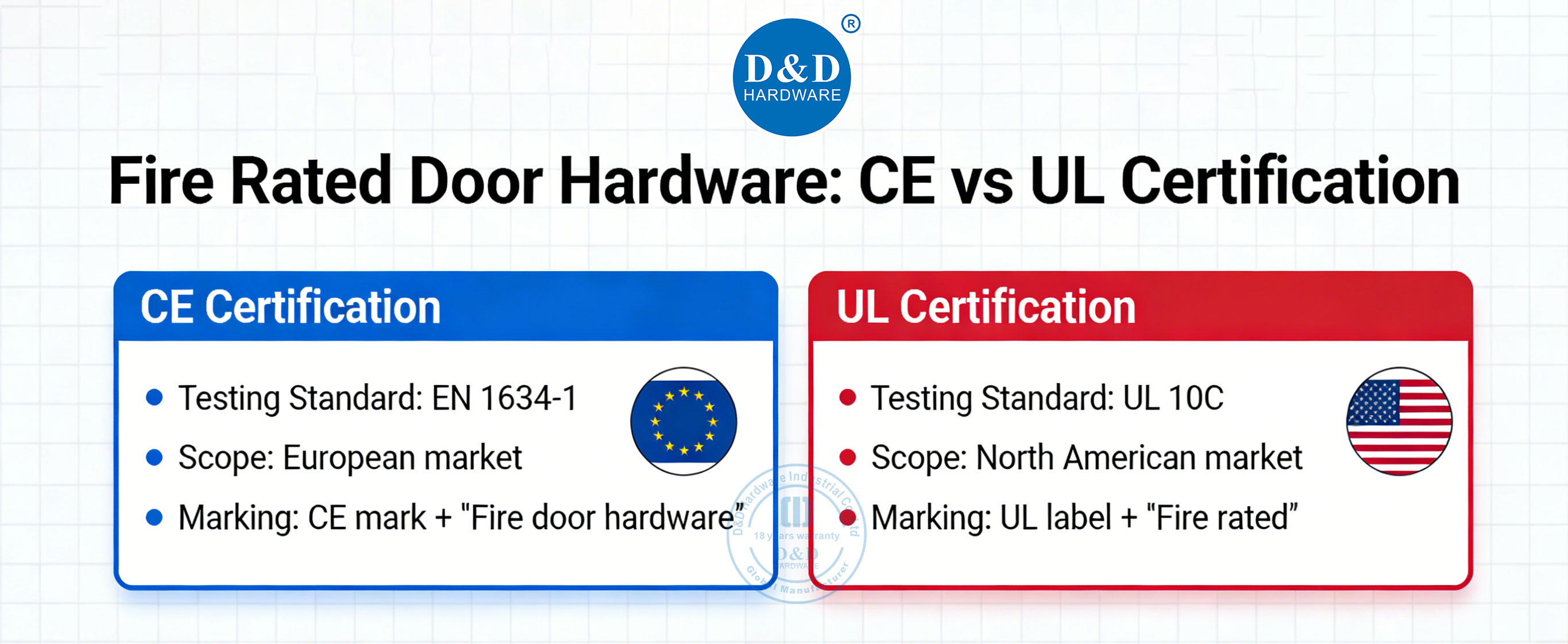
In fire-rated door assemblies, door hardware compliance is not optional—it is a legal, safety, and liability requirement. Using non-certified hardware on a fire-rated door can invalidate the entire fire rating, exposing projects to inspection failure, insurance risks, and serious safety hazards. This article explains why compliant door hardware is mandatory and compares CE and UL certifications, the two most recognized systems globally.
Why Fire-Rated Doors Require Certified Hardware
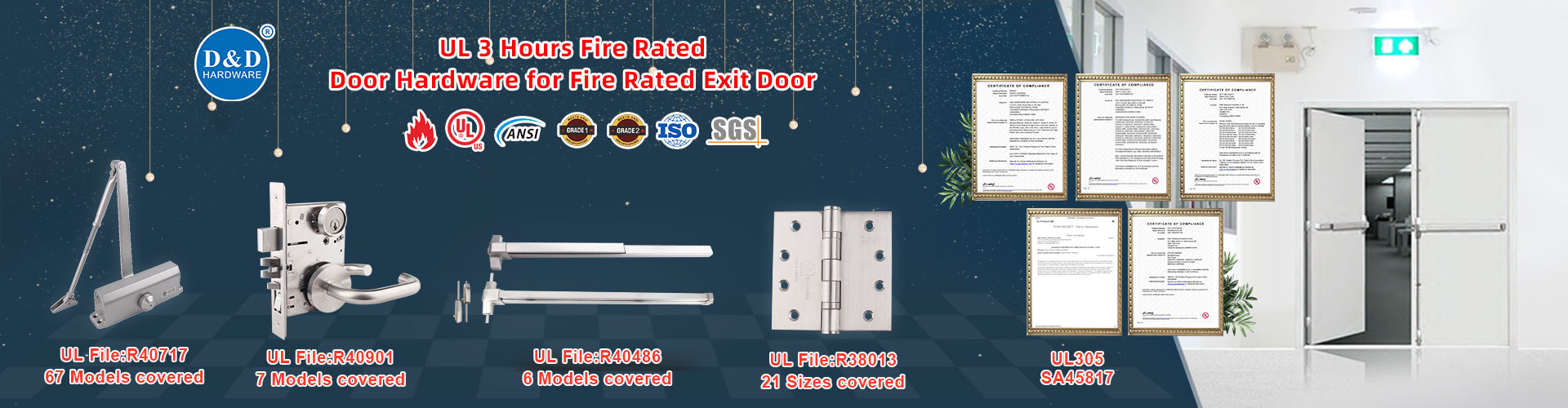
A fire-rated door is tested and certified as a complete assembly, including the door leaf, frame, hinges, locks, closers, panic devices, and accessories. Each hardware component must meet specific fire-resistance and performance criteria.
Using uncertified hardware may result in:
*Failure to maintain fire integrity during a fire
*Loss of smoke control and compartmentation
*Non-compliance with building codes and fire regulations
*Rejection during fire inspection or occupancy approval
*Legal and insurance liability in case of fire incidents
Therefore, certified door hardware is essential to preserve the fire rating of the door system.
*Commonly required by AHJ (Authority Having Jurisdiction)
UL focuses heavily on real-world fire scenarios, durability, and ongoing compliance through follow-up inspections.
CE vs UL: Key Differences at a Glance
Aspect
CE Certification
UL Certification
Primary Market
European Union
United States / North America
Governing System
EN Standards + CPR
UL + NFPA Codes
Legal Requirement
Mandatory in EU
Required by local AHJ
Documentation
DoP + CE Mark
UL Listing
Inspection Focus
Performance classification
Fire endurance & compliance
Why Projects Must Specify “Compliant” Door Hardware
From a project perspective, using certified door hardware ensures:
*Compliance with local and international building codes
*Smooth approval from fire inspectors and authorities
*Reduced legal and operational risk
*Long-term safety performance in emergency situations
For international projects, dual-certified (CE + UL) fire-rated hardware is increasingly preferred to meet cross-market requirements.
Conclusion
Fire-rated door hardware is a critical life-safety component. Whether under CE or UL certification, compliance ensures that door systems perform as intended during a fire. Specifying certified hardware is not just a regulatory formality—it is a fundamental requirement for safety, liability protection, and project success.
 English