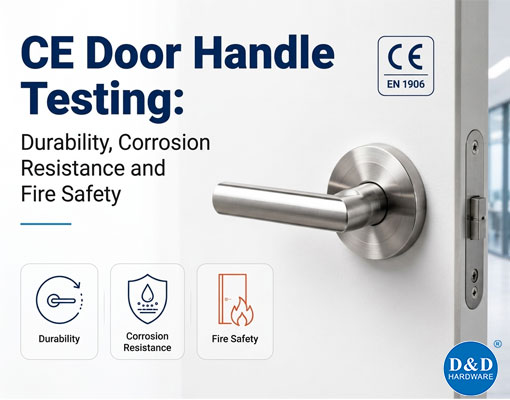
A CE door handle usually refers to a door handle or lever handle supplied for European or international projects where CE compliance, EN testing or related technical documentation may be required. Buyers often use the term "CE certified door handle," but in many cases the more accurate term is "CE marked door handle" or "EN-tested door handle," depending on the applicable product standard, regulation and intended use.
For commercial door hardware projects, CE door handles are often evaluated together with European standards such as EN 1906 for lever handles and knob furniture, EN 1670 for corrosion resistance, and EN 1634-1 for fire door assemblies where fire door suitability is required.
However, CE marking should not be treated as a general quality label. It does not automatically mean that every door handle has been tested for durability, corrosion resistance and fire safety under the same standards. To make the right purchasing decision, buyers should verify the relevant test reports, classification codes, material specifications, fire door evidence and compliance documents before ordering.
This guide explains what CE door handles mean, how door handles are tested for durability and corrosion resistance, how fire safety should be evaluated, and what documents buyers should request for commercial and architectural door hardware projects.

What Is a CE Door Handle?
A CE door handle is commonly understood as a door handle supplied for projects that require European compliance documents or EN standard testing. In practice, the term may refer to several different situations:
A CE marked door handle where CE marking is applicable
An EN 1906 tested lever handle
A door handle supplied with European technical documents
A fire door handle with supporting fire/smoke door evidence
A commercial door handle used in European or international projects
Because the term is used differently by buyers, suppliers and project teams, it is important to check the actual documents behind the product description.
A reliable CE door handle supplier should be able to explain:
Which standard applies to the handle
Whether CE marking is applicable to the product
What EN 1906 classification the handle has achieved
What corrosion resistance testing is available
Whether the handle is suitable for fire or smoke door assemblies
What materials and finishes are supplied
Which lock, latch or door hardware components are compatible
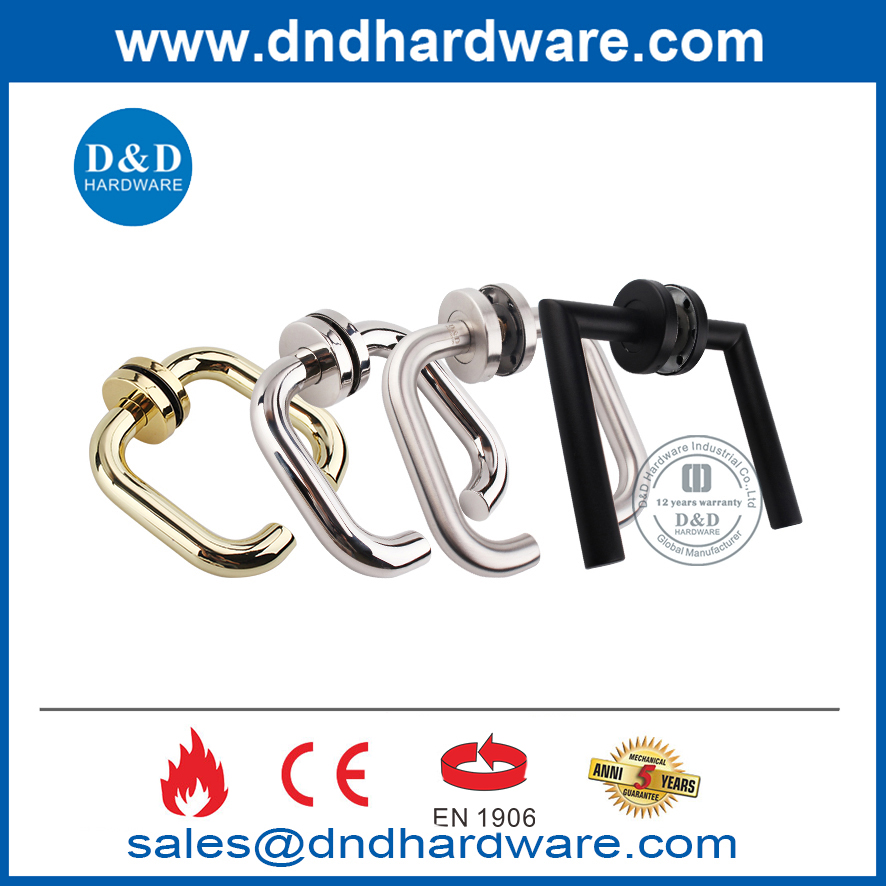
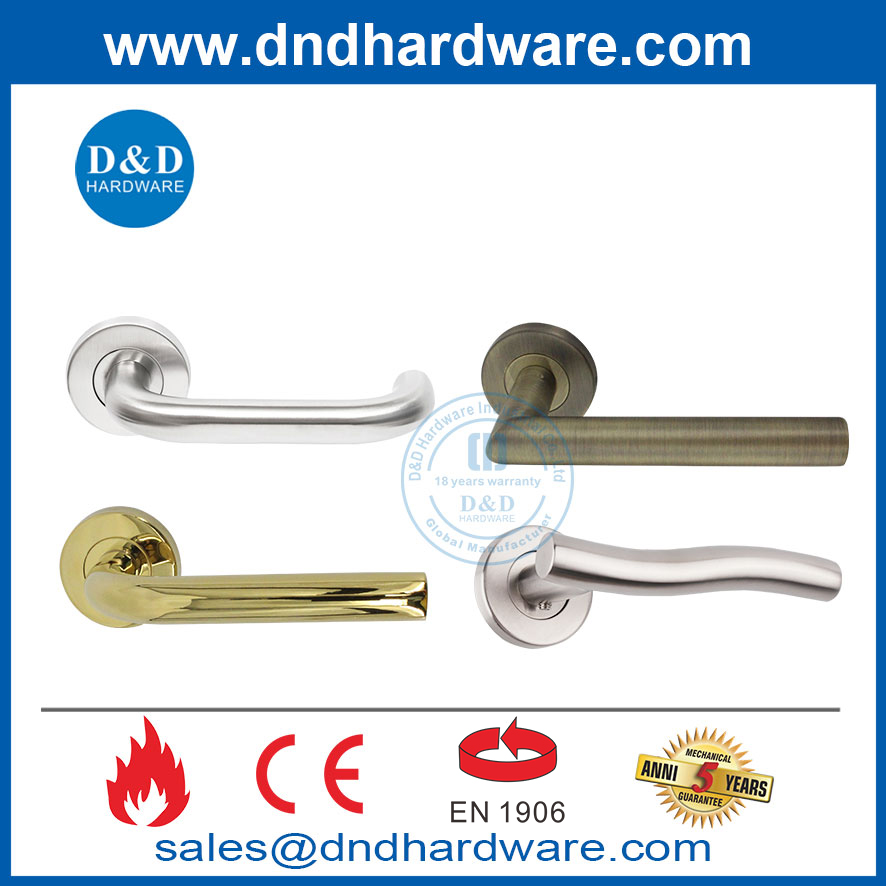
What Does CE Marking Mean for Door Handles?
CE marking indicates that a product is declared to conform with applicable EU requirements. It should not be understood as a universal quality mark or a general test certificate.
For door handles, buyers should check whether CE marking is applicable to the specific product type, intended use and destination market. A handle may be tested according to EN 1906, but that does not automatically mean it is CE marked or that CE marking is required for that handle.
In other words, a CE door handle should be evaluated through documentation, not only through a product name.
Important documents may include:
Product datasheet
EN 1906 classification code
Test report or certificate
Material and finish specification
Corrosion resistance information
Fire/smoke door suitability evidence if required
CE marking or Declaration of Performance where applicable
Installation instructions
Warranty and maintenance guidance
For B2B buyers, the safest approach is to ask the supplier for the relevant technical documents and confirm whether they match the project specification.
Key Standards Related to CE Door Handles
CE door handles and EN-tested door handles may involve different standards depending on the project requirement. The most common related standards include EN 1906, EN 1670 and EN 1634-1.
Standard | Main Purpose | Relevance to Door Handles |
EN 1906 | Lever handles and knob furniture | Evaluates durability, strength, safety, corrosion resistance and classification |
EN 1670 | Corrosion resistance for building hardware | Provides corrosion resistance classification based on testing |
EN 1634-1 | Fire resistance testing for door and shutter assemblies | Used to evaluate fire door assemblies where fire safety is required |
These standards should not be confused with CE marking itself. They are technical references used to evaluate performance, while CE marking depends on applicable EU requirements and product scope.
EN 1906: Durability and Strength Testing for Door Handles
EN 1906 is the key performance standard for lever handles and knob furniture. It covers requirements and test methods for handles used with locks and latches.
For CE door handles or EN-tested door handles, EN 1906 helps buyers evaluate important performance factors such as:
The EN 1906 classification code is one of the most useful pieces of information for buyers. It shows the tested performance level of the handle, instead of relying only on product appearance or material description.
For commercial projects, buyers should ask for the full EN 1906 classification code and confirm whether the grade is suitable for the intended door application.
How CE Door Handles Are Tested for Durability
Durability testing simulates repeated operation of the handle over time. The handle is operated through a defined number of cycles to check whether it remains functional, returns correctly, and does not suffer excessive wear, looseness or deformation.
This is especially important for commercial door handles because doors in offices, schools, hospitals, hotels, shopping malls and public buildings may be used hundreds or thousands of times every week.
Test Item | What It Checks | Why It Matters |
Cycle Testing | Repeated handle operation | Confirms long-term service life |
Static Strength | Resistance to fixed load | Helps prevent bending or breakage |
Torque Resistance | Resistance to twisting force | Maintains reliable handle operation |
Lever Return | Whether the lever returns correctly | Prevents sagging or failed operation |
Free Play Check | Looseness after repeated use | Reduces maintenance problems |
Fixing Strength | Strength of screws, spindle and fixing points | Helps maintain stable installation |
A door handle that passes durability testing is more suitable for demanding commercial environments. For high-traffic applications, buyers should not only ask whether the product has been tested, but also what classification or performance level it achieved.
How CE Door Handles Are Tested for Corrosion Resistance
Corrosion resistance is important for door handles used in humid, coastal, industrial, exterior or high-cleaning environments. A handle that performs well indoors may not be suitable for a coastal hotel, hospital, laboratory or industrial facility.
Corrosion resistance is commonly evaluated through neutral salt spray testing according to EN 1670 or corrosion-related requirements within EN 1906. In this test, the handle or hardware sample is exposed to a controlled salt spray environment to evaluate material resistance, coating performance and surface corrosion.
Environment | Recommended Consideration |
Interior dry area | Standard corrosion resistance may be sufficient |
Bathrooms or service areas | Higher corrosion resistance recommended |
Coastal buildings | SS316 or high-grade corrosion resistance preferred |
Hospitals and laboratories | Corrosion resistance and cleaning resistance are important |
Industrial areas | Finish and material must resist pollution and chemicals |
Outdoor or semi-exterior doors | High corrosion grade and suitable coating required |
Common material and finish options include stainless steel 304, stainless steel 316, PVD finish, powder coating, brass and other project-specific finishes. The best choice depends on the environment, traffic level, design requirement and corrosion resistance documentation.
For coastal, humid or harsh environments, stainless steel 316 or other high-corrosion-resistance solutions may be more suitable than standard interior-grade materials.
Fire Safety Evaluation for CE Door Handles
Fire safety should be evaluated carefully, especially when a door handle is intended for a fire-rated door.
A door handle should not be evaluated in isolation for fire safety. Fire performance normally depends on the complete fire door assembly, including:
For European projects, EN 1634-1 is commonly referenced for fire resistance testing of door and shutter assemblies. If a CE door handle is intended for use on a fire-rated door, buyers should ask for fire/smoke door suitability evidence and confirm that the handle is compatible with the complete tested assembly.
A fire-rated door depends on the performance of the entire door opening. A handle alone does not make a door fire-rated.
For fire door projects, buyers should confirm:
Whether the handle has fire/smoke door suitability evidence
Whether the lock or latch is compatible with the fire-rated door assembly
Whether the door, frame, hinges, closer and seals meet the required rating
Whether EN 1634-1 or other fire test evidence is required
Whether the project requires CE, UKCA, DoP or other local compliance documents

What Should Buyers Check Before Ordering CE Door Handles?
Before ordering CE door handles or EN-tested door handles, buyers should review the project requirement and request supporting documents from the supplier.
A practical buyer checklist includes:
Item to Check | Why It Matters |
Product Datasheet | Confirms size, material, finish and application |
EN 1906 Classification Code | Shows tested performance level |
Corrosion Resistance Grade | Helps match the handle to the environment |
Fire/Smoke Door Evidence | Required for fire-rated door applications |
CE or DoP Documents Where Applicable | Supports compliance review |
Material Specification | Confirms SS304, SS316, brass or other materials |
Compatible Lock or Latch | Ensures correct operation and installation |
Installation Instructions | Helps avoid installation failure |
Warranty and Maintenance Guidance | Supports long-term project service |
Test Report or Certificate | Provides proof beyond product description |
This checklist is especially useful for importers, distributors, contractors, door manufacturers and project buyers who need to submit technical documents for approval.
Common Misunderstandings About CE Door Handles
Misunderstanding 1: CE Marking Is the Same as a Quality Certificate
CE marking is a conformity mark, not a general quality label. Product quality should be checked through EN 1906 classification, material, finish, corrosion resistance and test reports.
Misunderstanding 2: Every EN 1906 Door Handle Is CE Marked
EN 1906 is a performance standard for lever handles and knob furniture. CE marking depends on whether the product is covered by applicable EU requirements that require CE marking.
Misunderstanding 3: CE Door Handles Automatically Pass Fire Safety Tests
Fire safety must be verified separately when the handle is used on a fire-rated door. Buyers should check fire/smoke door suitability and complete assembly compatibility.
Misunderstanding 4: A Fire-Rated Handle Alone Makes a Door Fire-Rated
A handle alone cannot make a door fire-rated. Fire performance depends on the complete tested door assembly.
Misunderstanding 5: Corrosion Resistance Is Only About Material
Material is important, but surface finish, coating quality, environmental exposure and test grade also affect corrosion resistance.
Misunderstanding 6: One CE Door Handle Fits Every Market
Different projects may require different standards, documentation and compliance requirements. Always confirm the destination market and project specification.
How to Choose CE Door Handles for Commercial Projects
To choose the right CE door handle or EN-tested door handle, buyers should consider the complete door application, not only the handle design.
Project Requirement | Recommended Consideration |
Office or light commercial door | EN 1906 classification suitable for regular use |
School or hospital door | Higher durability and stronger fixing recommended |
Hotel project | Finish quality, durability and corrosion resistance are important |
Coastal building | SS316 or high corrosion resistance preferred |
Fire-rated door | Fire/smoke door suitability and assembly compatibility required |
Public building | High durability and safety in use required |
Industrial facility | Strong material and corrosion resistance recommended |
Door with mortise lock | Confirm spindle, backset, fixing and lock compatibility |
International project | Confirm EN standards, CE/DoP where applicable and local requirements |
Step 1: Confirm the Door Application
Identify whether the handle will be used on an internal door, commercial door, fire-rated door, exterior door, high-traffic door or security-sensitive door.
Step 2: Check the Required Standard
Review the project specification to confirm whether EN 1906, EN 1670, EN 1634-1, CE marking, UKCA, DoP or other documents are required.
Step 3: Review the EN 1906 Classification
The classification code helps buyers understand the handle’s category of use, durability, corrosion resistance, fire/smoke door suitability and other performance characteristics.
Step 4: Match Material and Finish to the Environment
SS304 may be suitable for many commercial interiors. SS316 is often preferred for coastal, humid or harsh environments. Decorative finishes should also be checked against performance requirements.
Step 5: Confirm Lock and Door Compatibility
The handle must match the lock or latch, spindle size, door thickness, backset, fixing holes and door preparation.
Step 6: Request Supporting Documents
Before placing an order, request datasheets, classification codes, certificates, test reports and installation instructions.
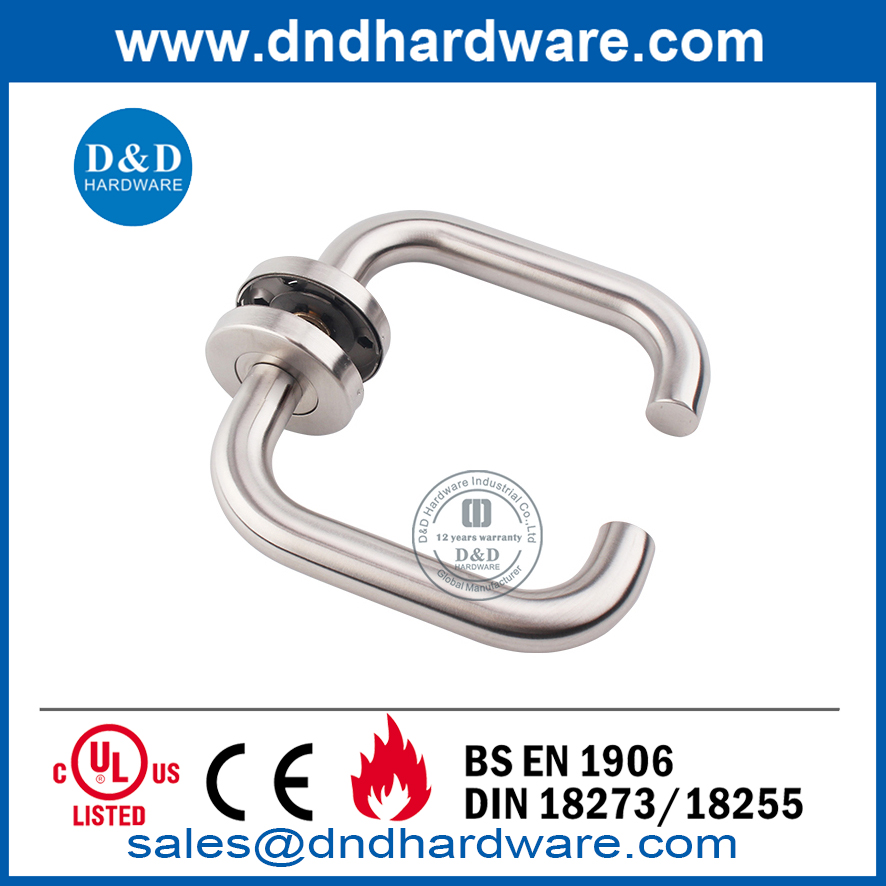
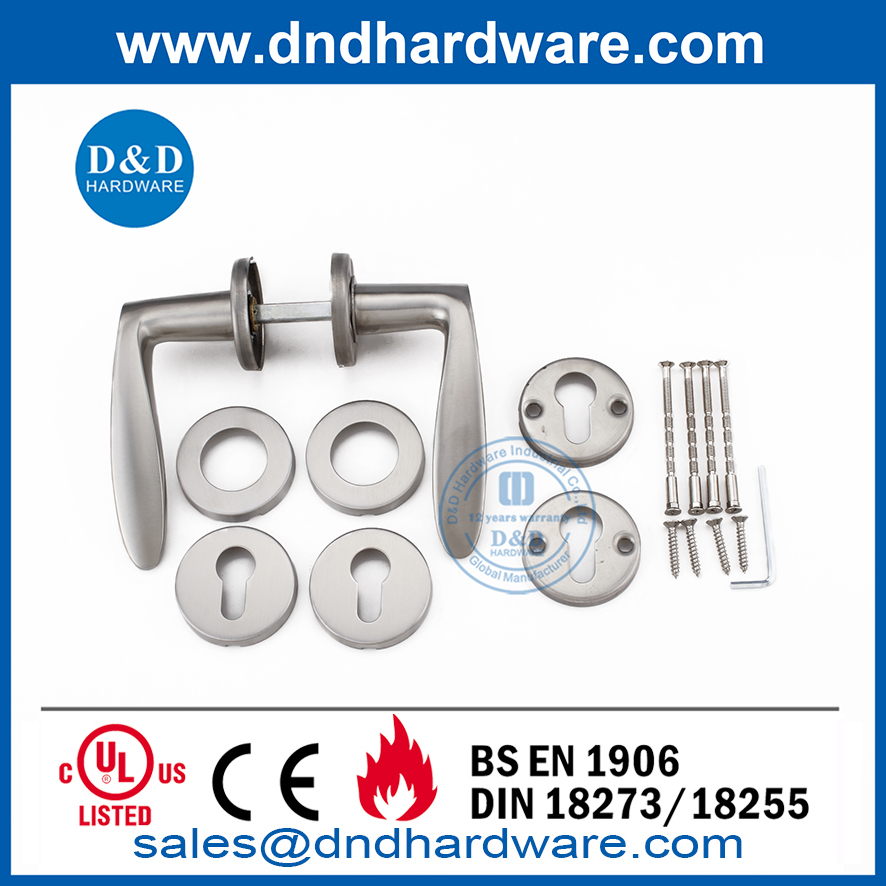
D&D Hardware CE Door Handle Solutions
D&D Hardware supplies CE door handles, EN-tested lever handles and complete architectural door hardware solutions for European and international projects.
Our commercial door handle solutions can be selected according to:
EN 1906 classification
Material and finish
Corrosion resistance requirement
Fire/smoke door suitability
Lock and latch compatibility
Door type and project application
Quantity and delivery schedule
Project documentation requirements
We can also provide matched architectural door hardware solutions, including:
For distributors, contractors, door manufacturers and project buyers, our team can help review the door schedule, required standards, finish, quantity and certification documents before recommending suitable products.
Contact D&D Hardware to request a CE door handle catalog, EN 1906 classification information, corrosion resistance data, fire door suitability documents or a complete commercial door hardware quotation.

FAQ
What is a CE door handle?
A CE door handle usually refers to a door handle supplied for projects where CE compliance, European standards or related technical documentation may be required. Buyers should verify the applicable standard, test report and intended use.
Does CE marking mean a door handle is high quality?
Not necessarily. CE marking is a conformity mark, not a general quality label. Product quality should be checked through EN 1906 classification, material, finish, corrosion resistance and test reports.
Are all EN 1906 door handles CE marked?
No. EN 1906 is a performance standard for lever handles and knob furniture. CE marking depends on whether the product is covered by applicable EU requirements that require CE marking.
How are CE door handles tested for durability?
Durability is commonly evaluated through EN 1906 cycle testing, static strength, torque resistance, lever return and free play checks. These tests help confirm whether the handle is suitable for residential, commercial or high-traffic use.
How is corrosion resistance tested for door handles?
Corrosion resistance may be evaluated through EN 1670 or corrosion-related testing within EN 1906, commonly using neutral salt spray test methods to check material and finish performance.
Can CE door handles be used on fire doors?
Only if they have suitable fire/smoke door evidence and are compatible with the complete fire-rated door assembly. A handle alone does not make a door fire-rated.
What documents should I request before buying CE door handles?
Request the product datasheet, EN 1906 classification code, corrosion resistance information, fire/smoke door evidence if required, CE or DoP documents where applicable, material specification and installation instructions.
What material is best for CE door handles?
Stainless steel 304 is suitable for many commercial interior projects, while stainless steel 316 is recommended for coastal, humid or harsh environments. The final choice should depend on project environment, finish requirement and test documentation.
Conclusion
CE door handles are widely requested in European and international door hardware projects, but buyers should understand what the term really means. CE marking is not a universal quality certificate, and EN testing should be verified through actual documents such as EN 1906 classification codes, corrosion resistance reports, fire/smoke door suitability evidence and product datasheets.
For commercial projects, durability, corrosion resistance and fire safety should be evaluated according to the door application, project standard and destination market. EN 1906 helps assess lever handle performance, EN 1670 supports corrosion resistance evaluation, and EN 1634-1 is relevant when fire door assembly performance is required.
If you need CE door handles, EN-tested lever handles or complete architectural door hardware solutions, D&D Hardware can help you select suitable products for offices, hotels, hospitals, schools, public buildings, fire-rated doors and international commercial projects.
Contact our team to request product specifications, test documents, classification information or a project quotation.
Contact us Now:
Contact: David Jian
Mob:0086-139 2903 7292
Email: David@dndhardware.com, sales@dndhardware.com,
Contact: Jobby Zhang
Mob:0086-137 2599 9617
Email: jobby@dndhardware.com
D&D HARDWARE INDUSTRIAL CO.,LTD
ADD:12th Floor, Building 2, No.898, KeChuang Technical Zone, Jiangmen Avenue, Pengjiang District, Jiangmen City, Guangdong, China (Postcode:529000)
https://www.dndhardware.com
Tel: +86-750-3856396
Fax: +86-750-3856395


 English