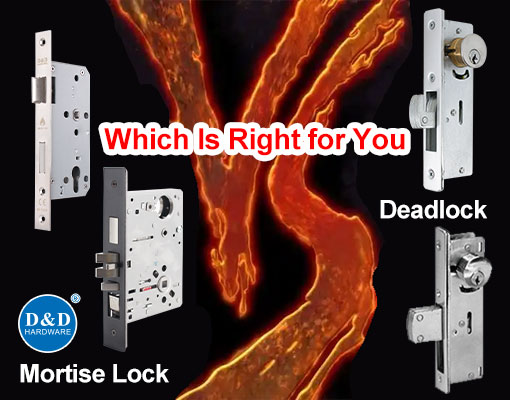
You want your property to be safe, but picking the right lock can be hard. If you need strong security for your business or apartment, a mortise lock gives you better protection. For simple home safety, a deadlock is easy and works well. When you choose, think about these things:
Key Takeaways
Mortise locks give better safety and last longer. They work well in busy places like offices and schools.
Deadlocks are simple to put in and use. They are good for homes and cost less.
Think about what you need. Pick a mortise lock for strong safety. Pick a deadlock for easy and good safety.
Take care of your locks often. Oil them and check them to keep them working well and lasting longer.
Always look at your door's size and type before you buy a lock. This helps you avoid problems when putting it in.
What Is a Mortise Lock?
A mortise lock gives you a strong way to secure your door. You find mortise locks in many commercial buildings and older homes. These locks use a special design that makes them tough and reliable.
Mortise Lock Installation
You install a mortise lock by cutting a pocket, called a mortise, into the edge of your door. This pocket holds the lock body. The process takes skill and the right tools. You need to measure carefully so the lock fits snugly. Most mortise locks have several parts:
Latch
Deadbolt
Mortise pocket
Framework
Strike plate
Faceplate
The latch keeps your door closed when you do not lock it. The deadbolt slides deep into the door frame for extra security. The mortise pocket hides the lock inside the door, which makes it harder for someone to break in.
Tip: If you want to install a mortise lock, you may want to ask a professional locksmith for help. The job can be tricky if you do not have experience.
Mortise Lock Features
Mortise locks stand out because of their strong build. You get a lock body, cylinder, thumbturn, handle or lever, and a strike plate. The lock body sits inside the door, which spreads force across a wide area. This makes mortise locks hard to break or drill. Most mortise locks use thick, high-grade metal parts. These parts last a long time and keep your door safe. Many mortise locks also have more than one locking point. If one part fails, the others still protect you.
Common Uses for Mortise Locks
You see mortise locks in places where people need strong security. Many businesses use mortise locks on main doors. Apartment buildings often use mortise locks for entryways. Some older homes have mortise locks because they last for years. You might choose a mortise lock if you want a lock that can handle heavy use and give you peace of mind.
Mortise locks work well for:
Office buildings
Apartment entrances
Schools
Hotels
Historic homes
You can trust mortise locks to keep your property safe in busy or high-risk areas.
What Is a Deadlock?
A deadlock gives you a simple way to secure your door. You often see this lock on homes and small offices. It works by using a single bolt that slides into the door frame. When you turn the key, the bolt locks the door in place. You cannot open the door without the key, which adds a layer of safety.
Deadlock Mechanism
You find several types of deadlock mechanisms on the market. Each one works in a unique way to keep your property safe. Here is a table that shows some common types and how they work:
Type of Deadlock Mechanism | Description |
|---|
Shotgun / Russian Roulette | One person offers to buy out the other at a set price, or the other can buy them out at that price. |
Texas Shootout | Both sides submit sealed bids; the highest bid wins and buys out the other. |
Auction | The highest bid wins, but there are no penalties for low bids. |
Put Option | One person can require the other to buy their share at a set value. |
Call Option | One person can force the other to sell at a set value. |
Liquidation | If no deal is made, the company dissolves. |
You can see that each deadlock mechanism has a different way to solve a problem. In door locks, the deadlock uses a key to move the bolt. This makes it hard for someone to force the door open.
Deadlock Features
You get a lock that is easy to use and install. Most deadlocks have a single bolt and a keyhole on one or both sides. You can lock and unlock the door from inside or outside. Many deadlocks do not have handles, so you must use a key every time. This feature stops people from opening the door without permission. You also find deadlocks made from strong metal, which helps them last a long time.
Tip: You can add a deadlock to almost any door for extra security. It works well with other locks, like knob locks or lever locks.
Common Uses for Deadlocks
You often use a deadlock on front doors, back doors, and side doors of homes. Many people choose a deadlock for rental properties or small offices. You can use it as a main lock or as a backup to another lock. If you want a simple way to boost your door security, a deadlock is a smart choice.
Key Differences Between Mortise Lock and Deadlock
When you look at mortise locks and deadlocks, you notice some big differences. These differences help you pick the right lock for your needs. Let's check out what makes each lock special.
Security Comparison
Security is very important when picking a lock. Mortise locks and deadlocks both keep your door safe, but they work in different ways. Mortise locks use a strong system with more than one cylinder. This gives you extra protection. Deadlocks use one bolt that goes into the door frame. Both locks can reach Grade 1 security, which means they are tough to break.
Here is a table that shows how their security features are different:
Feature | Mortise Locks | Deadlocks |
|---|
Durability | Made from strong metals like brass or steel, so they are hard to break. | Bolt goes deep into the frame, so it is hard to force open. |
Locking Mechanism | Has more than one cylinder for extra locking. | Uses one bolt with a simple system. |
Use Case | Used in places like offices that need strong security. | Good choice for homes because it costs less. |
Overall Security | More secure because of extra locks and strong build. | Safe enough for most homes. |
Mortise locks are used in places like hospitals and hotels. Experts say mortise locks are best for these places because they last longer and are harder to break. If you want the strongest lock, pick a mortise lock.
Locks with Grade 1 rating, like mortise locks and top deadlocks, pass hard tests. These tests check if the lock can stand up to hammering, prying, and kicking. These locks make it very hard for someone to break in. Most thieves will leave and try somewhere else.
Installation and Convenience
You should think about how easy it is to put in and use each lock. Mortise locks need you to cut a pocket in the door. This job is hard and needs special tools. You might need a locksmith to help. Deadlocks are much easier to put in. You can add a deadlock to most doors with simple tools.
Mortise locks have more parts, like handles and thumbturns. You can lock and unlock from both sides. Deadlocks usually just have a keyhole and no handle. You need a key every time you open the door.
Here are the main things to remember:
Mortise locks: Hard to install, need a pro, have more features, good for busy doors.
Deadlocks: Easy to install, simple to use, good for extra safety at home.
If you want something quick and easy, pick a deadlock. If you need a lock for busy or high-security places, choose a mortise lock.
Cost and Durability
Price and how long the lock lasts are important too. Mortise locks cost more because they use strong materials and have a tricky design. Deadlocks cost less and work well for most homes.
Mortise locks last longer than most deadlocks. Many mortise locks have a lifetime warranty and can be used over 6 million times. Some deadlocks, like ones from Yale, have a 10-year warranty and are also strong.
Lock Type | Warranty Duration | Performance Metrics |
|---|
Mortise Lock | Lifetime | Can be used more than 6 million times |
Deadlock (Yale) | 10 years | Made to last a long time |
If you want a lock that lasts for years and can handle lots of use, get a mortise lock. If you want a cheaper lock for your home, a deadlock is a good choice.
Note: Mortise locks are best for places with lots of people and need strong security. Deadlocks are great for homes and small offices.
Choosing the Right Lock
Choosing the right lock for your door can feel confusing. You want to keep your home or business safe, but you also want something that fits your needs. Here is a simple guide to help you decide.
When to Choose a Mortise Lock
You should pick a mortise lock if you need strong security and long-lasting performance. Mortise locks work best in places where many people use the door every day. They also fit well in buildings that must follow strict safety rules.
Scenario | Key Features |
|---|
Commercial | High traffic, frequent operation, strict fire code compliance, various lock functions for different areas. |
Hospitality | Quiet operation, high durability, safety for guests, compatibility with electronic systems. |
Healthcare | Durability, ease of operation, code compliance, essential for fire-rated corridors and emergency exits. |
You might also want a mortise lock if you have an older home with thick doors. These locks last a long time and give you peace of mind.
Choose a mortise lock if:
You need high security for your business or apartment.
Your door gets used many times each day.
You want a lock that meets fire or safety codes.
You want a lock that works with electronic systems.
When to Choose a Deadlock
A deadlock is a good choice for most homes. It gives you simple security and is easy to install. You can add a deadbolt lock to almost any door for extra safety. Many people use a deadbolt lock as the main lock on their front or back door.
Here are the main things to check before you choose:
Security Grade: Pick a lock with a high security rating to stop break-ins.
Backset Measurement: Make sure the lock fits your door's size.
Latch Type: For outside doors, choose a deadlock with a 5-lever system for strong protection.
Choose a deadlock if:
You want a simple lock for your home.
You need an extra lock for more safety.
You want to install the lock yourself.
You want a lock that costs less but still keeps you safe.
Tip: Always check your door's size and type before you buy a new lock. This helps you avoid problems during installation.
Installation and Maintenance Tips
Mortise Lock Installation Tips
You can install a mortise lock with the right tools and careful steps. Professional locksmiths recommend using a drill with a spade bit or a mortise jig to create the pocket for the lock body. You should chisel the mortise to clean up the hole and make the edges square. Fit the lock body into the cutout and adjust if needed. Mark and cut for the faceplate so it sits flush with the door. Secure the lock body, attach the faceplate, and install the trim pieces on both sides. Attach the strike plate and check that everything lines up. Always test the lock to make sure it works smoothly.
Step | Description |
|---|
1 | Use a drill with a spade bit or mortise jig to drill holes for the lock body. |
2 | Chisel the mortise to clean up and square the edges. |
3 | Fit the lock body and adjust as needed. |
4 | Mark and cut for the faceplate. |
5 | Secure the lock body and attach the faceplate. |
6 | Install trim pieces on both sides. |
7 | Attach the strike plate and check alignment. |
8 | Test the lock for smooth operation. |
Common mistakes include poor measurements, skipping instructions, or choosing the wrong lock for your door. You should always measure carefully and follow the guidelines to avoid problems.
Deadlock Installation Tips
You can install a deadlock more easily than a mortise lock. Start by choosing the right deadlock for your door. Make sure you do not install the lock too close to the center of the door. This helps the bolt slide into the frame without trouble. Use the template that comes with the lock to mark the holes. Drill the holes, attach the lock, and secure the strike plate. Test the lock to make sure it works well.
Mistakes to avoid:
Failing to measure properly
Ignoring the instructions
Installing the lock in the wrong spot
Maintenance Advice
You should check your locks often to keep them working well. Regular inspections help you find wear and tear early. Lubricate moving parts with a good-quality lubricant. Tighten any loose screws or hardware. If you see damage, repair or replace the parts right away. Upgrading security features can help protect against forced entry.
Cause of Lock Failure | Description |
|---|
Misalignment | Doors can shift over time, causing the bolt to jam. |
Maintenance Issues | Skipping maintenance can lead to lock failure. |
Tip: A little care goes a long way. Clean and check your locks every few months to keep your home or business secure.
Conclusion
You have two strong options for door security. Mortise locks give you higher security and work best for businesses. Deadlocks offer simple use and fit most homes. See the table below for a quick comparison:
Feature | Mortise Lock | Deadlock |
|---|
Management | Key only | Key or knob inside |
Security Level | High, for commercial use | Good for home use |
Installation | Needs a locksmith | Homeowner can install |
When you choose, think about these steps:
Check your security needs.
Set your budget.
Decide how easy you want the lock to be.
Pick the lock that matches your life and keeps you safe. Contact a certified mortise lock manufacturer for bulk pricing.
FAQ
Can you install a mortise lock on any door?
You need a thick, solid door for a mortise lock. Thin or hollow doors may not support the lock body. Always check your door's thickness before you buy a mortise lock.
Do deadlocks make your home safer?
Yes! Deadlocks add a strong layer of security. You must use a key to open the door, which makes it hard for someone to break in without permission.
How often should you maintain your locks?
You should check and clean your locks every six months. Lubricate moving parts and tighten screws. Regular care helps your locks last longer and work smoothly.
Can you use both a mortise lock and a deadlock on the same door?
Yes, you can use both for extra security. Many people install a mortise lock as the main lock and add a deadlock for more protection.

 English